[analyse_image type=”featured” src=”https://images.euronews.com/articles/stories/09/99/59/09/1200x675_cmsv2_4cd3f61e-7a82-528e-adca-2a452f1871b3-9995909.jpg”]

Moment Ukrainian drones strike the Kerch Bridge linking Crimea to Russia


Basel, Baia Mare and Omiš named Europe’s Christmas capitals for 2027

Second tanker in two days sinks off Bulgaria’s Black Sea coast

EU warns Temu over failing to stop sale of illegal and unsafe products
Neanderthal gene variant linked to lower schizophrenia risk, study finds
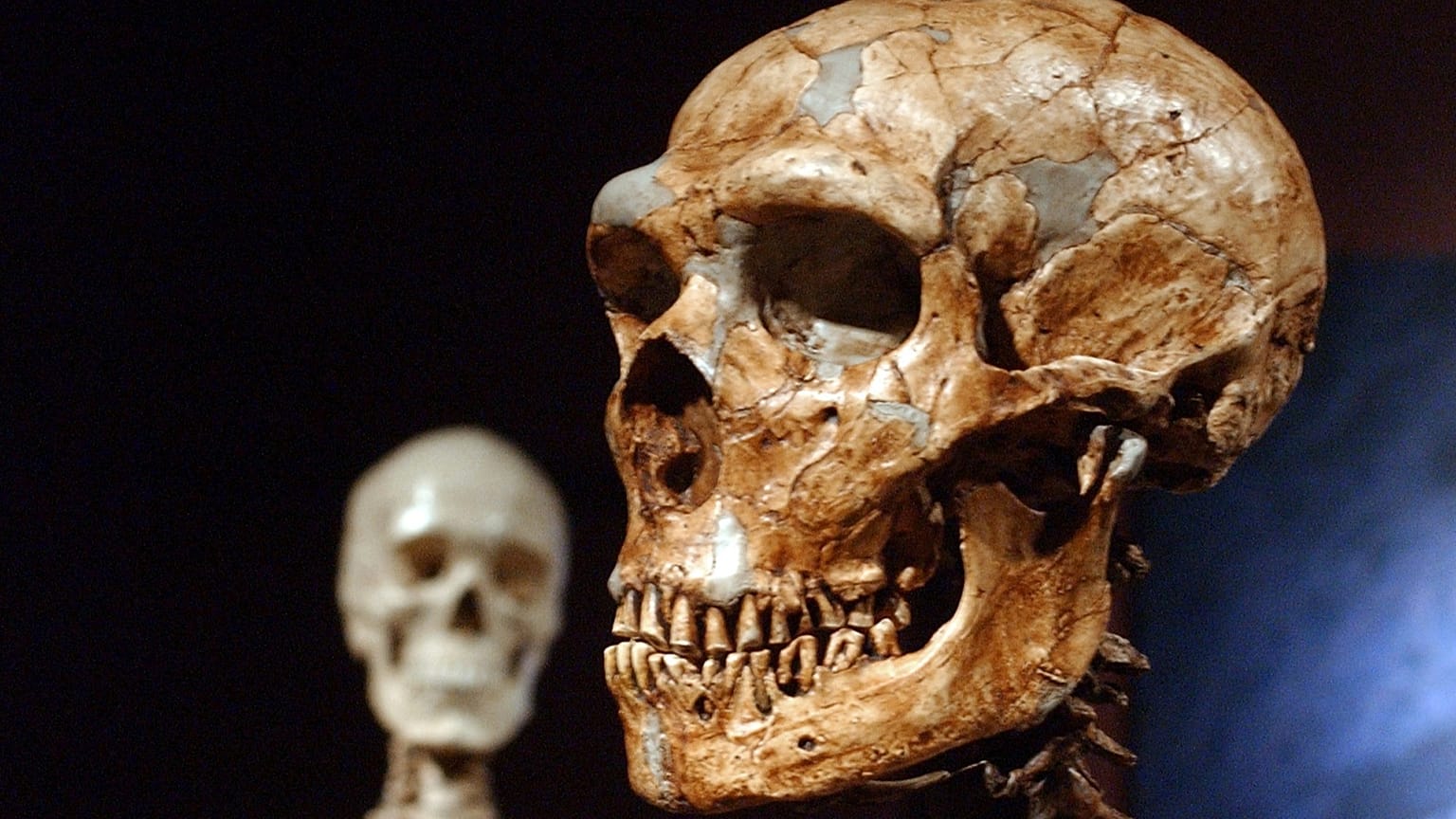
A reconstructed Neanderthal skeleton, right, and a modern human version of a skeleton, left, are shown at the Museum of Natural History in New York in 2003.
– Copyright Frank Franklin II/File/AP Photo

 Facebook
 Twitter
 Flipboard
 Send
 Reddit
 Linkedin
 Messenger
 Telegram
 VK
 Bluesky
 Threads
 Whatsapp
Modern humans have Neanderthals to thank for a common genetic variant that affects the occipital lobe.
A gene mutation inherited from Neanderthals may reduce the risk of schizophrenia by almost 10%, a new study has found.
 ADVERTISEMENTADVERTISEMENT
Neanderthals were close evolutionary cousins of modern humans, but they went extinct about 40,000 years ago. Due to interbreeding between species, modern people outside of Africa have up to 1% to 4% Neanderthal DNA, while sub-Saharan Africans are thought to have far less Neanderthal DNA.
The study found that Neanderthals passed on a common genetic variant affecting the occipital lobe, which is found at the back of the brain. The occipital lobe is home to the brain’s visual cortex and plays a role in vision, mental imagery and reading.
Neanderthals are thought to have had larger occipital lobes than modern humans. Yet modern people with the genetic variant have smaller occipital lobes — a reduction of about 0.85 cubic centimeters per copy, according to the study, which was published in the Proceedings of the National Academy of Sciences.
The variant lies near DAAM1, a protein-coding gene involved in brain development.
In people with two copies of the gene variant, it is also linked to a nearly 10% lower risk of schizophrenia, but the variant does not seem to affect intelligence or other major psychiatric disorders.
“This Neandertal-derived variant is linked to altered brain anatomy in present-day humans and lower schizophrenia risk while having little or no association with general cognitive ability,” wrote study authors and evolutionary geneticists Hugo Zeberg and Svante Pääbo
“These findings caution against equating the size of a brain region with cognitive abilities,” they added.
Zeberg, of the Karolinska Institutet in Sweden, and Pääbo, a 2022 Nobel Prize winner from the Max Planck Institute for Evolutionary Anthropology in Germany, have worked together for years to identify how Neanderthal genes affect human health today.
They previously found that a major Neanderthal-inherited gene cluster on chromosome 3 raises the risk of severe COVID-19. Subsequent research found the same variant protects against HIV.
In 2021,another research teamfound that Neanderthal ancestry may alter the gene pool in a way that affects schizophrenia risk.
But according to Zeberg and Pääbo, any “protective effect” appears specific to the recently identified gene variant.
Go to accessibility shortcuts
Read more

What does science say about protecting brain health as we age?
Polish man loses hair and ability to sweat after red ink tattoo
Measles in Europe: Which countries have the most cases this year?
What does science say about protecting brain health as we age?
Polish man loses hair and ability to sweat after red ink tattoo
Measles in Europe: Which countries have the most cases this year?

What does science say about protecting brain health as we age?
EU-backed project to map 100,000 human genomes
The US lost measles-free status. What does that mean and what’s next?

Scientists uncover new sleep secret: how the body burns fat and builds muscle at night

From mass casualties to AI threats: getting Europe’s healthcare ready
Scientists uncover new sleep secret: how the body burns fat and builds muscle at night
Measles in Europe: Which countries have the most cases this year?
Regular coffee drinking linked to changes in gut motility and microbiome
EU-backed project to map 100,000 human genomes
The US lost measles-free status. What does that mean and what’s next?
[analyse_source url=”https://www.euronews.com/2026/11/17/neanderthal-gene-variant-linked-to-lower-schizophrenia-risk-study-finds”]