[analyse_image type=”featured” src=”https://images.euronews.com/articles/stories/09/99/55/75/1200x675_cmsv2_d05022bc-a5d7-5f95-8033-55211ff1a23b-9995575.jpg”]

Moment Ukrainian drones strike the Kerch Bridge linking Crimea to Russia


Basel, Baia Mare and Omiš named Europe’s Christmas capitals for 2027

Second tanker in two days sinks off Bulgaria’s Black Sea coast

EU warns Temu over failing to stop sale of illegal and unsafe products
Polish man loses hair and ability to sweat after red ink tattoo, undergoes 8 surgeries
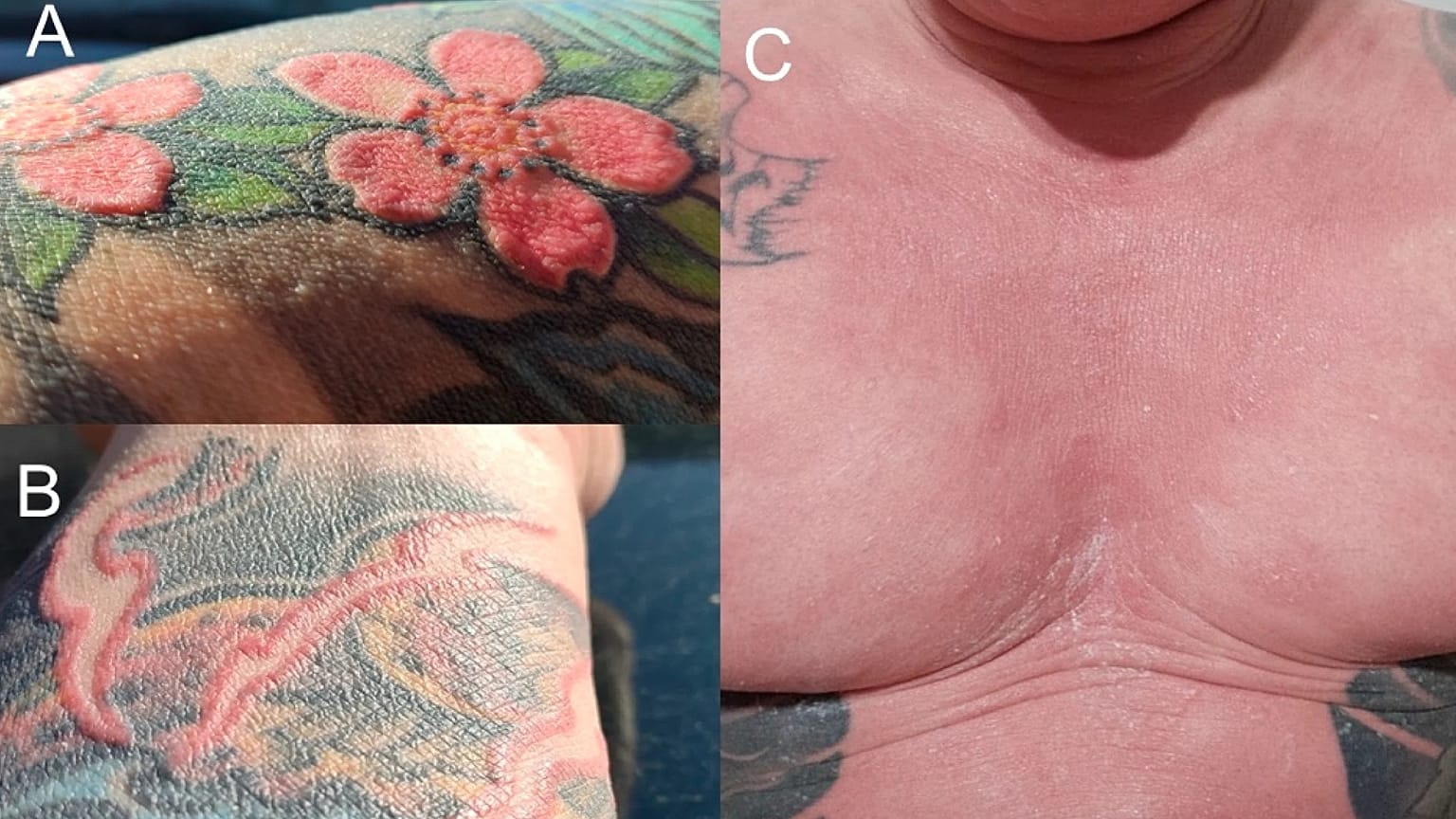
Initial stage of the disease: (A, B) skin changes within the red tattoo ink on the right forearm; (C) erythroderma and total hair loss (alopecia universalis).
– Copyright Erythroderma, Alopecia, Anhidrosis, and Vitiligo as Complications of a Red Ink Tattoo—A Case Report

 Facebook
 Twitter
 Flipboard
 Send
 Reddit
 Linkedin
 Messenger
 Telegram
 VK
 Bluesky
 Threads
 Whatsapp
A 36-year-old man in Poland experienced rare, debilitating complications after a tattoo done with red ink.
A 36-year-old Polish man had a tattoo done with red pigment in the summer of 2020 – and his health quickly took a turn for the worse.
 ADVERTISEMENTADVERTISEMENT
He experienced numerous complications, including erythroderma, alopecia, anhidrosis and acquired depigmentation (vitiligo), according to researchers from the Wroclaw Medical University.
Only after cutting out the skin with the red tattoo pigment did the autoimmune diseases begin to regress.
“No cases of such an extensive nature, involving multiple organ systems, have been recorded so far,” the researchers said.
They emphasised that adverse reactions to pigments used in tattoos are being recognised more and more often, but serious, systemic complications remain rare and poorly understood.
Red tattoo ink is often the cause of hypersensitivity reactions that do not appear immediately after the tattoo is done.
Erythroderma, hair loss, vitiligo and complete lack of sweating
After the tattoo with red ink was done, the man developed a rare and previously undescribed group of complications.
The 36-year-old had the tattoo done on his forearm in the summer of 2020. Four months later he developed itchy lesions. Over the following months these turned into erythroderma, a peeling inflammation of the skin. In the years after getting the tattoo he also lost the ability to sweat, lost all body hair and developed vitiligo.
After months of ineffective treatment, patch tests were carried out, confirming hypersensitivity to components of the red ink. An allergy specialist advised him to have the inflamed parts of the tattoo surgically removed from his forearm. This procedure led to the resolution of the erythroderma, but did not improve his other symptoms. In addition, his vitiligo continued to progress.
In total, the man underwent eight surgeries. Only complete removal of the red ink combined with medication allowed his hair to grow back and halted the progression of vitiligo. Anhidrosis, meaning the absence of sweat secretion from the sweat glands, remained unchanged.
The man had Hashimoto thyroiditis, reported a greatly reduced tolerance for physical exertion and was unable to do any work because of the risk of heat stroke linked to his anhidrosis.
Researchers call for regulations
In their paper, the researchers stress that the link between allergic and autoimmune diseases and adverse reactions to tattoo ink shows the need to raise awareness and exercise caution, especially in people who are prone to such reactions.
“Perhaps introducing regulations on licensing tattoo artists and education on safe tattooing will help reduce the number of complications associated with tattoos,” they recommend.
In 2022, the European Union introduced rules on the composition of tattoo inks to limit the use of hazardous chemical substances. However, appropriate regulations are still lacking in many countries.
In the case of the Polish man, it was not possible to analyse the chemical composition of the tattoo ink, because he did not obtain either a sample of the product or its packaging from the tattooist.
Go to accessibility shortcuts
Read more
Rembrandt’s masterpieces become tattoos in the Netherlands
Can tattoos cause cancer? The truth behind the scary headlines
Could tattoos threaten your defences? Scientists aim to find out
Rembrandt’s masterpieces become tattoos in the Netherlands
Can tattoos cause cancer? The truth behind the scary headlines
Could tattoos threaten your defences? Scientists aim to find out

Neanderthal gene variant linked to lower schizophrenia risk – study

What does science say about protecting brain health as we age?
EU-backed project to map 100,000 human genomes

The US lost measles-free status. What does that mean and what’s next?

Scientists uncover new sleep secret: how the body burns fat and builds muscle at night
Scientists uncover new sleep secret: how the body burns fat and builds muscle at night
Measles in Europe: Which countries have the most cases this year?
Regular coffee drinking linked to changes in gut motility and microbiome
EU-backed project to map 100,000 human genomes
The US lost measles-free status. What does that mean and what’s next?
[analyse_source url=”https://www.euronews.com/2026/11/17/polish-man-loses-hair-and-ability-to-sweat-after-red-ink-tattoo-undergoes-8-surgeries”]