In Charting the Unknown, Crimson Desert doubles down on its maximalism in audacious, faintly sinister style
More like Py-hell.
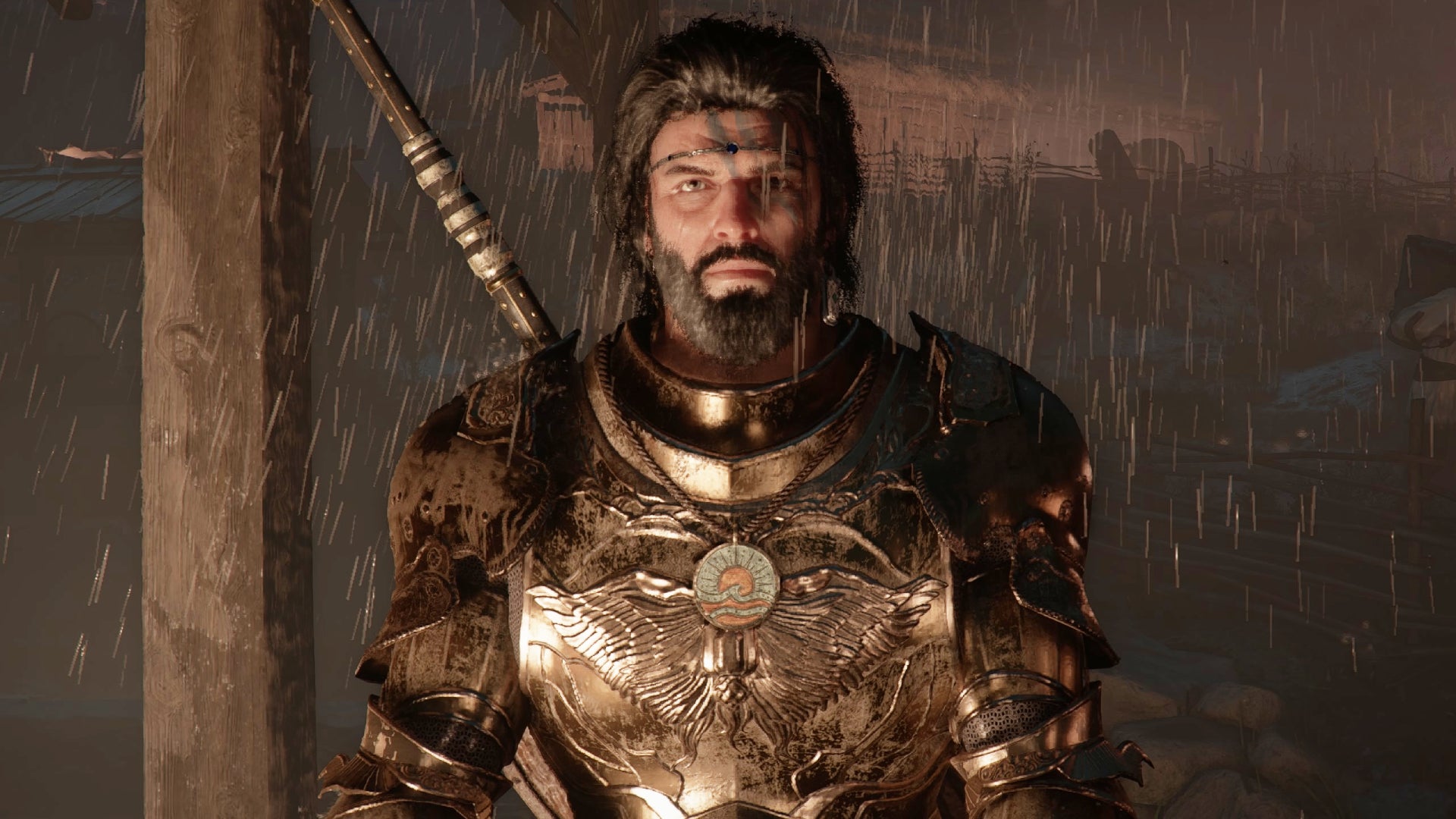

And so we are back in Pywel: the super-sized and often super-pretty realm where the deserts are blood-red, the grass is a lurid shade of green, and Kliff and his merry gang of Greymanes seem to be pissed all the time. Yet what’s this? Peace seems to have broken out across the region, which means our grizzled action hero is in a reflective mood.
At the outset of Charting the Unknown, Crimson Desert’s recently released DLC, I’m tasked with taking Kliff out for a quiet spot of moonlit fishing. The problem is, I seem to have forgotten how to actually fish – and if memory serves, perhaps I never learned because the system was so poorly explained in the base game. So I flail around for a full 15 minutes before eventually relenting and consulting Reddit on how to snag a bite.

You might reasonably assume that these types of basic explanatory wrinkles had been ironed out in the countless updates since Crimson Desert’s release in March. Certainly, developer Pearl Abyss has gone to great effort elsewhere to streamline what was, at times, a frustratingly clunky experience (those menus at launch, oh god) while adding even more stuff, such as all-new cutscenes (to improve the story’s legibility) and the ability to ride wolves and tigers (because why the hell not). But for all the tinkering and wholesale additions, Crimson Desert has retained its essential character: the menus remain a total faff and the narrative, which I started afresh some weeks ago, is still bafflingly incoherent (maybe even more than I initially appreciated).
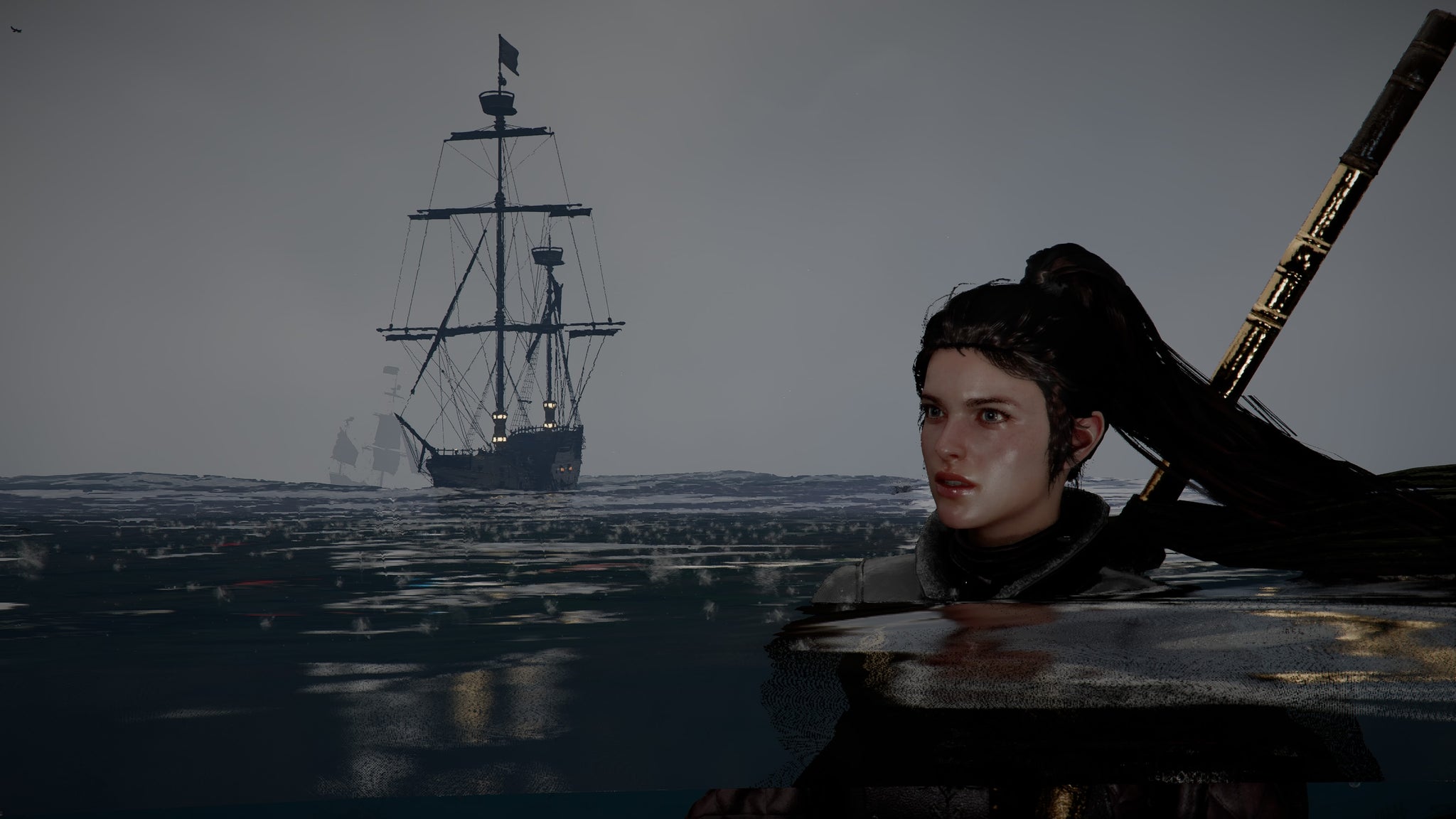
It’s into this churn of ongoing development that Pearl Abyss has produced Charting the Unknown, a DLC which adds even more elements to a game already buckling under the weight of mechanical overload. Now you can build ships and sail them around Pywel’s azure-blue waters. You can dive below the waves and swim with the fishes. You can also fall in love, get married, and – should things not pan out – get divorced. The everything game has become, well, even more everything in quintessentially audacious style. On that note, just wait until you see some of its supermassive Evangelion-esque maritime bosses.
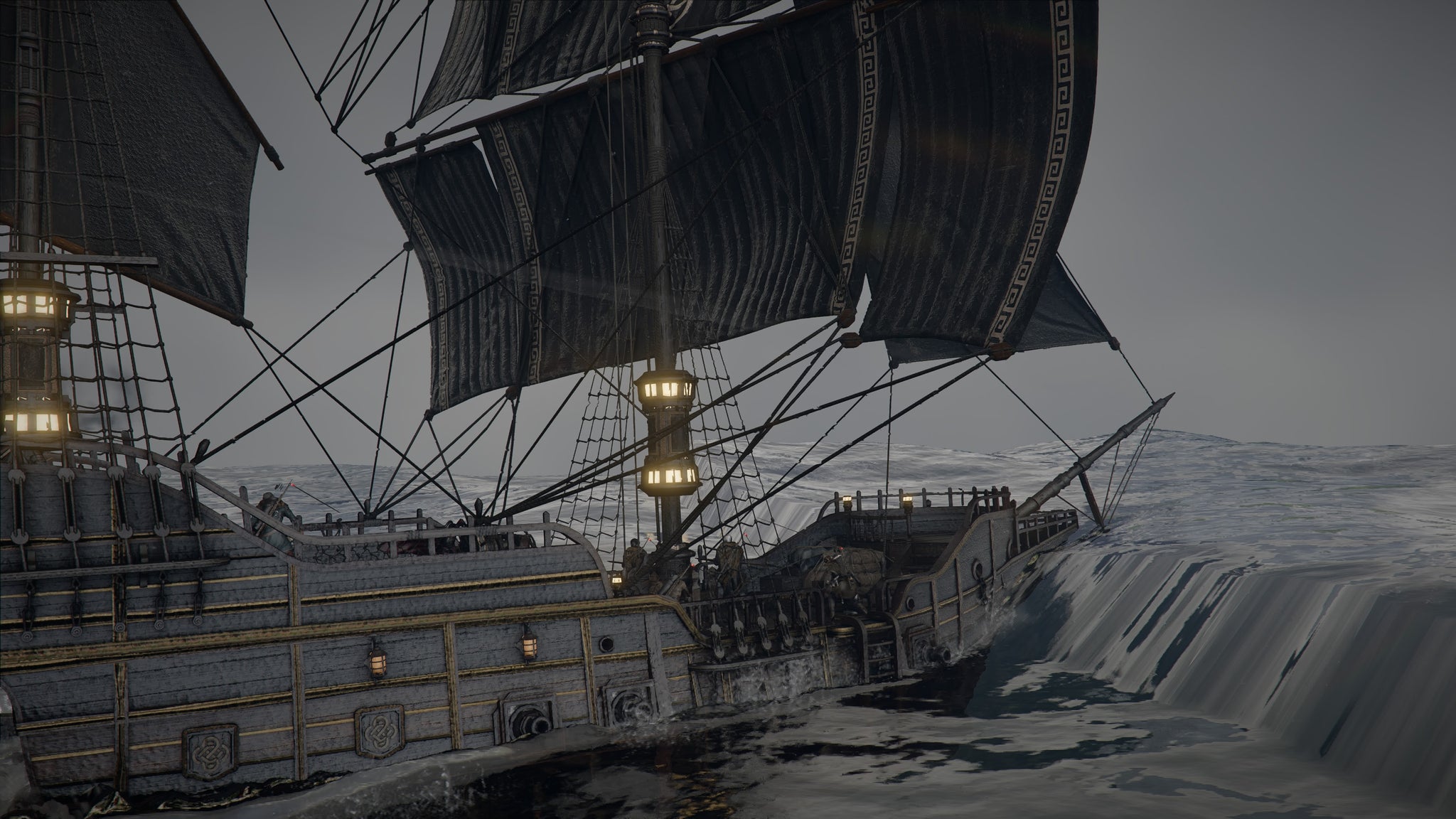
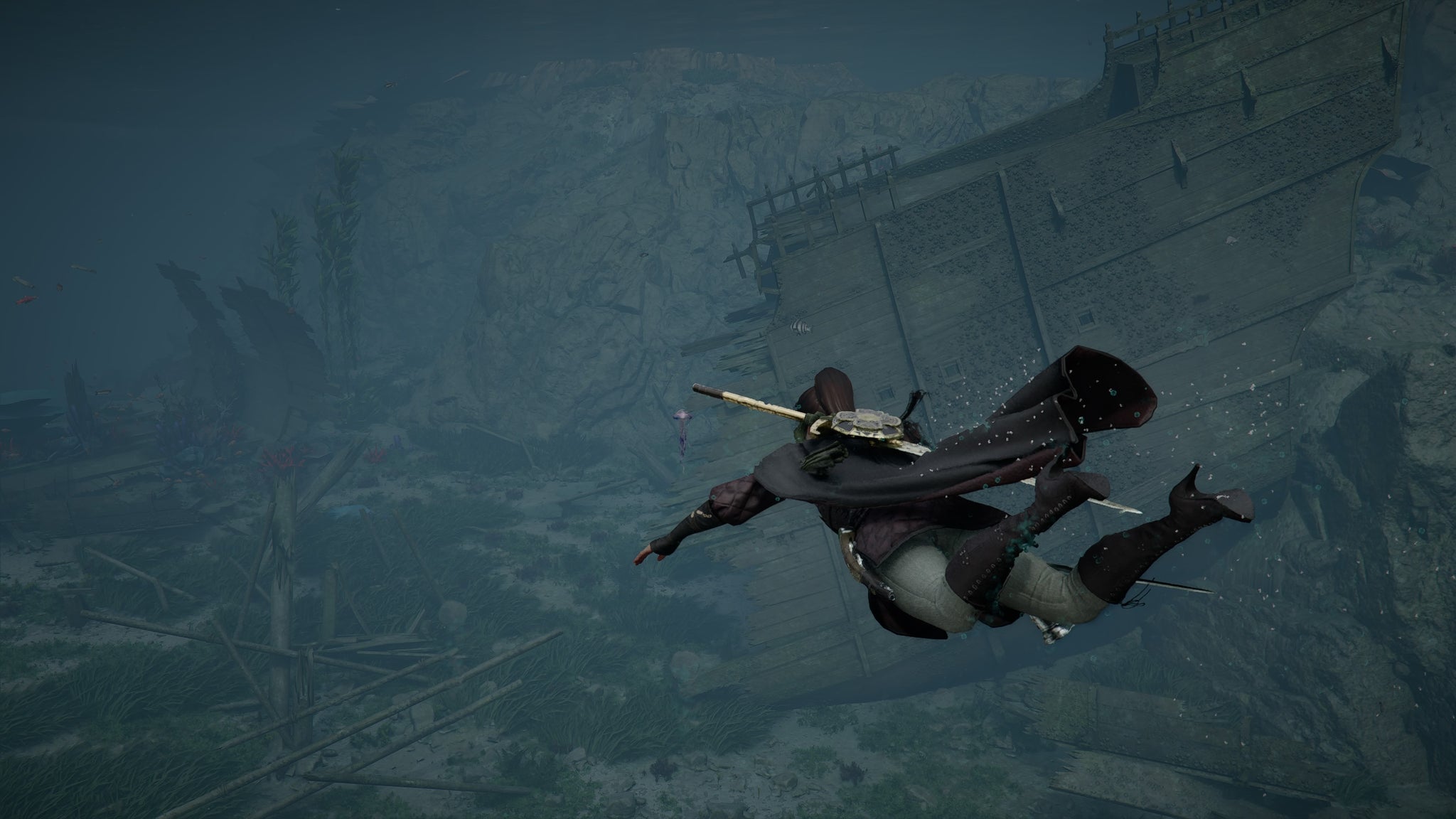
Though don’t get too excited. Like the base game, the DLC is a mixed bag. First, shipfaring lacks any kind of drama. Islands are so spread out as to make the actual journey painfully boring: impressionistic oceanic voyaging à la Wind Waker this is not. The diving, though, is beautifully executed. Underwater locales are notably serene, free from many of the irritating distractions that plague ground traversal.
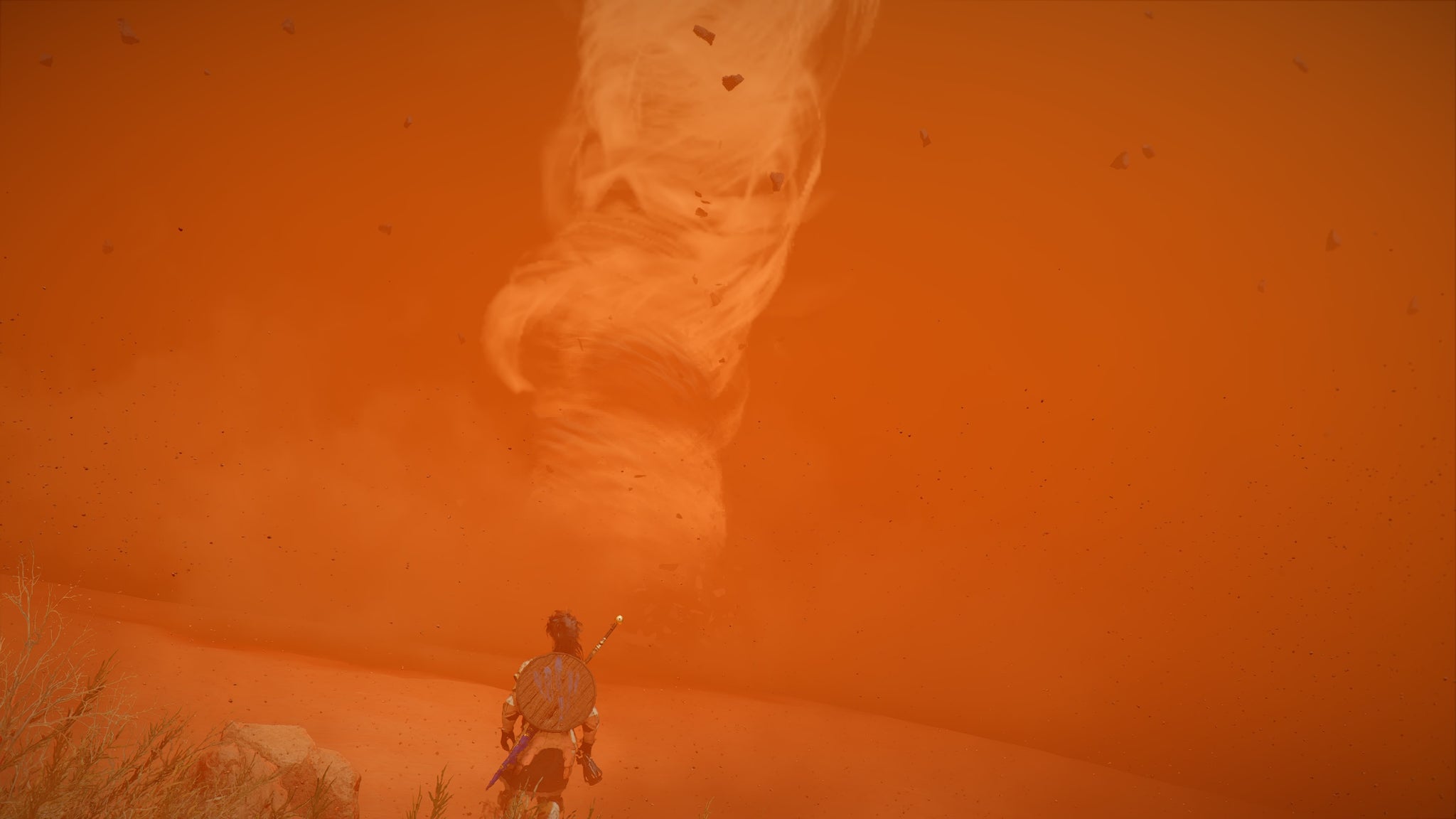
As for the new narrative threads involving all three playable characters – grizzled Kliff, Bayonetta-alike Damiane, and gentle giant orc Oongka – they’re equally uneven. Kliff’s is the most interesting, transplanting the player to a desert cloaked in a thick orange sandstorm that, without the aid of a working compass, must be mapped out using beacons resembling luminescent dongs. It’s pleasingly disorientating, a rare example of Pearl Abyss pushing a kind of intentional design friction, rather than accidentally creating it by inadequately explaining how to interact with the game.
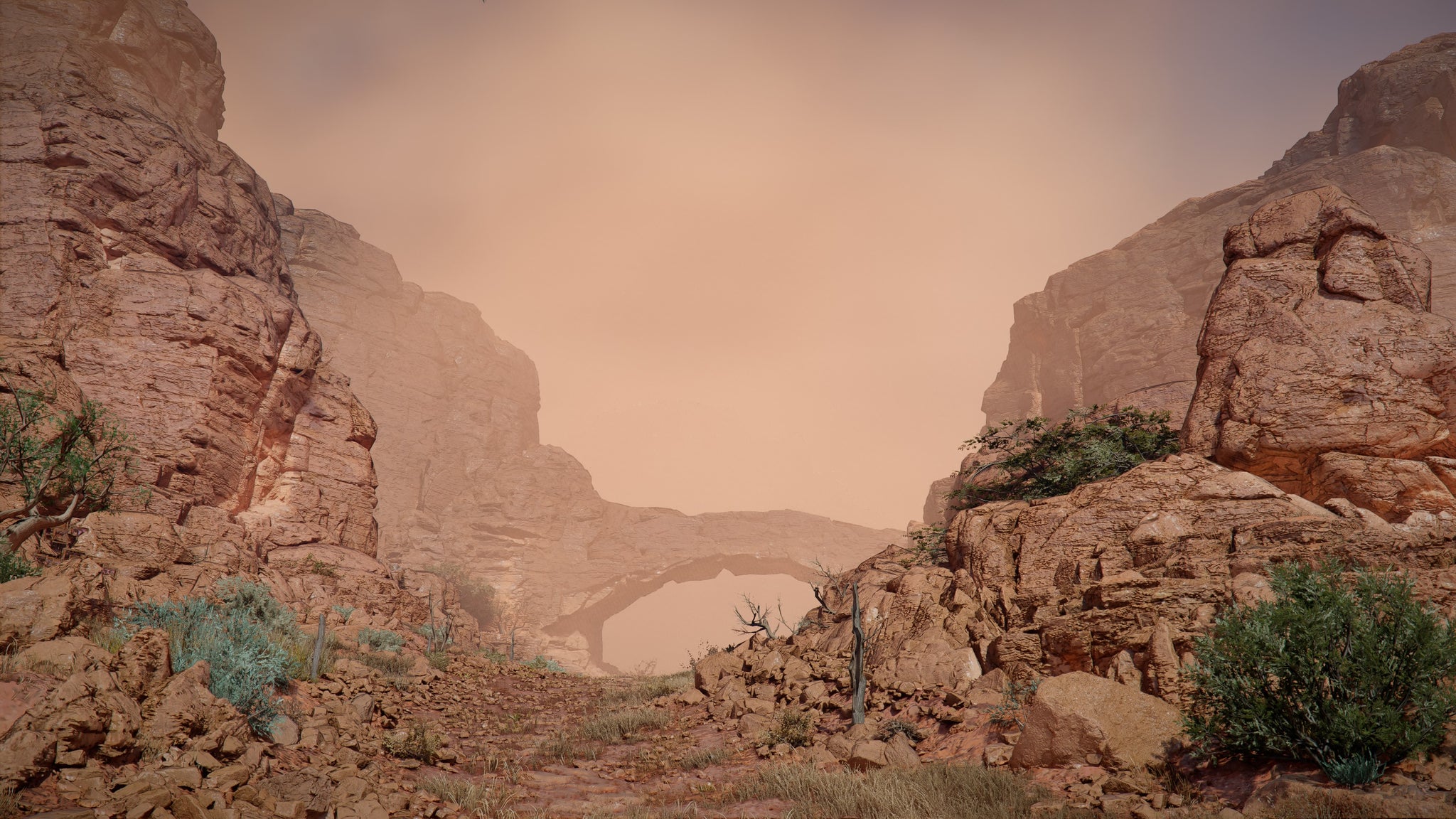
Alas, there are also bugs, one of which was game-halting: Damiane’s steed wouldn’t spawn when I needed to follow Kliff on horseback. It was a reminder that for all the visual splendour, Crimson Desert can often feel like it’s being held together by the code equivalent of gaffer tape.
Everything controls about as well as you’d expect if you’ve played the base game, i.e. not very well at all. Kliff may be able to run on water and soar through the sky like a cross between Matrix star Neo and Jesus, but he remains a bastard to control for even the most basic tasks. Why can’t I lock onto the object a foot away? Why is he doing a three-hit combo somersault through the air when all I tried to do is pull out his lantern? These issues are compounded by the new romance and socialising options that appear every time you target an NPC: Crimson Desert becomes even fiddlier as it introduces these additional layers.
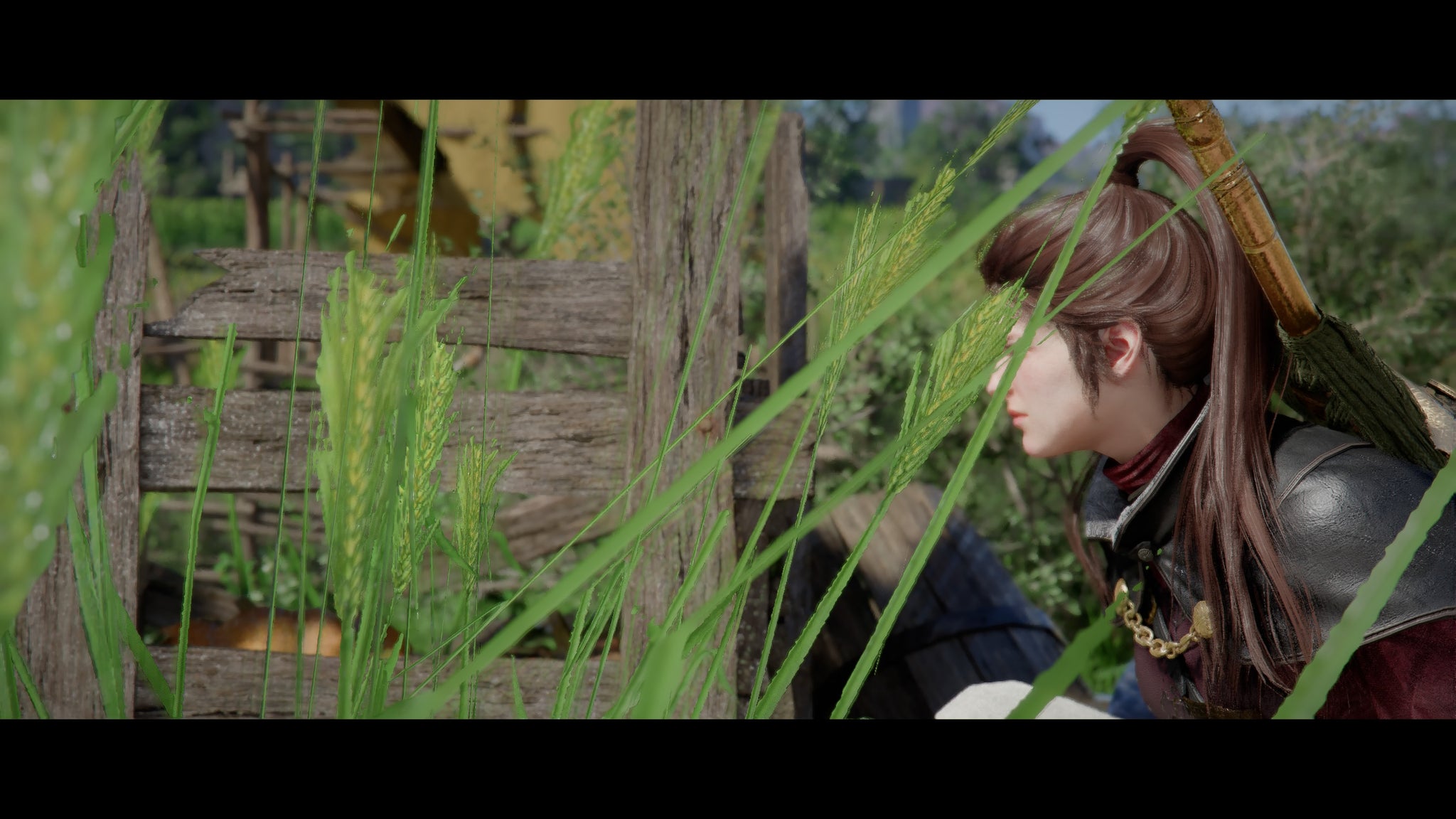
As the hours pass by – as I run, gallop, and bound through the arresting landscape in a manner that is comparatively frictionless compared to the rest of the game – my mind begins to numb. For all the extraneous mechanical gubbins, missions remain brainlessly simple: cavort from one waypoint to another and do a few simple button presses, or crack a few skulls to chug the narrative along. But then perhaps a certain numbing is the point of Crimson Desert? At a time when the real world is markedly inhospitable (diminishing job prospects, the ongoing cost-of-living crisis, the looming threat of geopolitical meltdown), Pearl Abyss’ epic swaddles the player like a swords-and-sorcery comfort blanket. It is a safe space to disappear into for hours. Leave your worldly woes at the start screen.
The impression this mash-up of a game appears to want to impart is generosity: here, Pearl Abyss seems to say, is a product capable of accommodating your every wish, will, and whim. It appears to have left no gameplay stone unturned in its ultimate quest to provide the player with total satisfaction – a kind of blissed-out contentment at the thought of never having to leave this almost divine realm.
But rather than generous, perhaps there is something nefarious about Crimson Desert’s maximalist design philosophy. It strikes me again that this is the most uniquely modern title I’ve ever played, as if the Grand Theft Auto and Assassin’s Creed franchises, countless MMORPGs (the genre in which Pearl Abyss cut its teeth), and many hyper-compulsive mobile titles were squished together in an attention-devouring final form. One so mightily captivating, so singularly consuming, that the player keeps playing until their lifeforce is depleted and they can play no more.
That seems to be the way these “forever” games curve: toward the player’s surrender – of mind, body, and time. And at least until Grand Theft Auto 6 is released in a few weeks, Crimson Desert and its new DLC seem to be the purest expression yet of this type of thing. Wading through its sheer mass of hit-or-miss distractions (which could expand even more), the design ethos begins to grate. As if I’m stuck in an elaborate, endlessly bifurcating maze of hamster wheels, always busy, though never enjoying any discernible pay-off. And so, as its presentational lustre wears off further, and its eye-popping massiveness becomes less of a novelty, Crimson Desert begins to hit differently: much less high-fantasy heaven and more like hell.
And so we are back in Pywel: the super-sized and often super-pretty realm where the deserts are blood-red, the grass is a lurid shade of green, and Kliff and his merry gang of Greymanes seem to be pissed all the time. Yet what’s this? Peace seems to have broken out across the region, which means our grizzled action hero is in a reflective mood.
At the outset of Charting the Unknown, Crimson Desert’s recently released DLC, I’m tasked with taking Kliff out for a quiet spot of moonlit fishing. The problem is, I seem to have forgotten how to actually fish – and if memory serves, perhaps I never learned because the system was so poorly explained in the base game. So I flail around for a full 15 minutes before eventually relenting and consulting Reddit on how to snag a bite.
You might reasonably assume that these types of basic explanatory wrinkles had been ironed out in the countless updates since Crimson Desert’s release in March. Certainly, developer Pearl Abyss has gone to great effort elsewhere to streamline what was, at times, a frustratingly clunky experience (those menus at launch, oh god) while adding even more stuff, such as all-new cutscenes (to improve the story’s legibility) and the ability to ride wolves and tigers (because why the hell not). But for all the tinkering and wholesale additions, Crimson Desert has retained its essential character: the menus remain a total faff and the narrative, which I started afresh some weeks ago, is still bafflingly incoherent (maybe even more than I initially appreciated).
It’s into this churn of ongoing development that Pearl Abyss has produced Charting the Unknown, a DLC which adds even more elements to a game already buckling under the weight of mechanical overload. Now you can build ships and sail them around Pywel’s azure-blue waters. You can dive below the waves and swim with the fishes. You can also fall in love, get married, and – should things not pan out – get divorced. The everything game has become, well, even more everything in quintessentially audacious style. On that note, just wait until you see some of its supermassive Evangelion-esque maritime bosses.
Though don’t get too excited. Like the base game, the DLC is a mixed bag. First, shipfaring lacks any kind of drama. Islands are so spread out as to make the actual journey painfully boring: impressionistic oceanic voyaging à la Wind Waker this is not. The diving, though, is beautifully executed. Underwater locales are notably serene, free from many of the irritating distractions that plague ground traversal.
As for the new narrative threads involving all three playable characters – grizzled Kliff, Bayonetta-alike Damiane, and gentle giant orc Oongka – they’re equally uneven. Kliff’s is the most interesting, transplanting the player to a desert cloaked in a thick orange sandstorm that, without the aid of a working compass, must be mapped out using beacons resembling luminescent dongs. It’s pleasingly disorientating, a rare example of Pearl Abyss pushing a kind of intentional design friction, rather than accidentally creating it by inadequately explaining how to interact with the game.
Alas, there are also bugs, one of which was game-halting: Damiane’s steed wouldn’t spawn when I needed to follow Kliff on horseback. It was a reminder that for all the visual splendour, Crimson Desert can often feel like it’s being held together by the code equivalent of gaffer tape.
Everything controls about as well as you’d expect if you’ve played the base game, i.e. not very well at all. Kliff may be able to run on water and soar through the sky like a cross between Matrix star Neo and Jesus, but he remains a bastard to control for even the most basic tasks. Why can’t I lock onto the object a foot away? Why is he doing a three-hit combo somersault through the air when all I tried to do is pull out his lantern? These issues are compounded by the new romance and socialising options that appear every time you target an NPC: Crimson Desert becomes even fiddlier as it introduces these additional layers.
As the hours pass by – as I run, gallop, and bound through the arresting landscape in a manner that is comparatively frictionless compared to the rest of the game – my mind begins to numb. For all the extraneous mechanical gubbins, missions remain brainlessly simple: cavort from one waypoint to another and do a few simple button presses, or crack a few skulls to chug the narrative along. But then perhaps a certain numbing is the point of Crimson Desert? At a time when the real world is markedly inhospitable (diminishing job prospects, the ongoing cost-of-living crisis, the looming threat of geopolitical meltdown), Pearl Abyss’ epic swaddles the player like a swords-and-sorcery comfort blanket. It is a safe space to disappear into for hours. Leave your worldly woes at the start screen.
The impression this mash-up of a game appears to want to impart is generosity: here, Pearl Abyss seems to say, is a product capable of accommodating your every wish, will, and whim. It appears to have left no gameplay stone unturned in its ultimate quest to provide the player with total satisfaction – a kind of blissed-out contentment at the thought of never having to leave this almost divine realm.
But rather than generous, perhaps there is something nefarious about Crimson Desert’s maximalist design philosophy. It strikes me again that this is the most uniquely modern title I’ve ever played, as if the Grand Theft Auto and Assassin’s Creed franchises, countless MMORPGs (the genre in which Pearl Abyss cut its teeth), and many hyper-compulsive mobile titles were squished together in an attention-devouring final form. One so mightily captivating, so singularly consuming, that the player keeps playing until their lifeforce is depleted and they can play no more.
That seems to be the way these “forever” games curve: toward the player’s surrender – of mind, body, and time. And at least until Grand Theft Auto 6 is released in a few weeks, Crimson Desert and its new DLC seem to be the purest expression yet of this type of thing. Wading through its sheer mass of hit-or-miss distractions (which could expand even more), the design ethos begins to grate. As if I’m stuck in an elaborate, endlessly bifurcating maze of hamster wheels, always busy, though never enjoying any discernible pay-off. And so, as its presentational lustre wears off further, and its eye-popping massiveness becomes less of a novelty, Crimson Desert begins to hit differently: much less high-fantasy heaven and more like hell.
9 comments