[analyse_image type=”featured” src=”https://images.euronews.com/articles/stories/09/97/07/50/1200x675_cmsv2_350f28f3-cb05-55b7-8bf5-5d536011d3f4-9970750.jpg”]

Residents leave Russian-occupied Oleshky amid local ceasefire

EU to fast-track €45 billion for Ukraine amid acute financial crunch

Italy on high alert as thousands take the streets in nationwide strike

Pakistan: Islamabad zoo introduces ‘Coffee with Alpaca’ attraction
What happens to the brain when you eat peanuts daily? New study reveals striking results
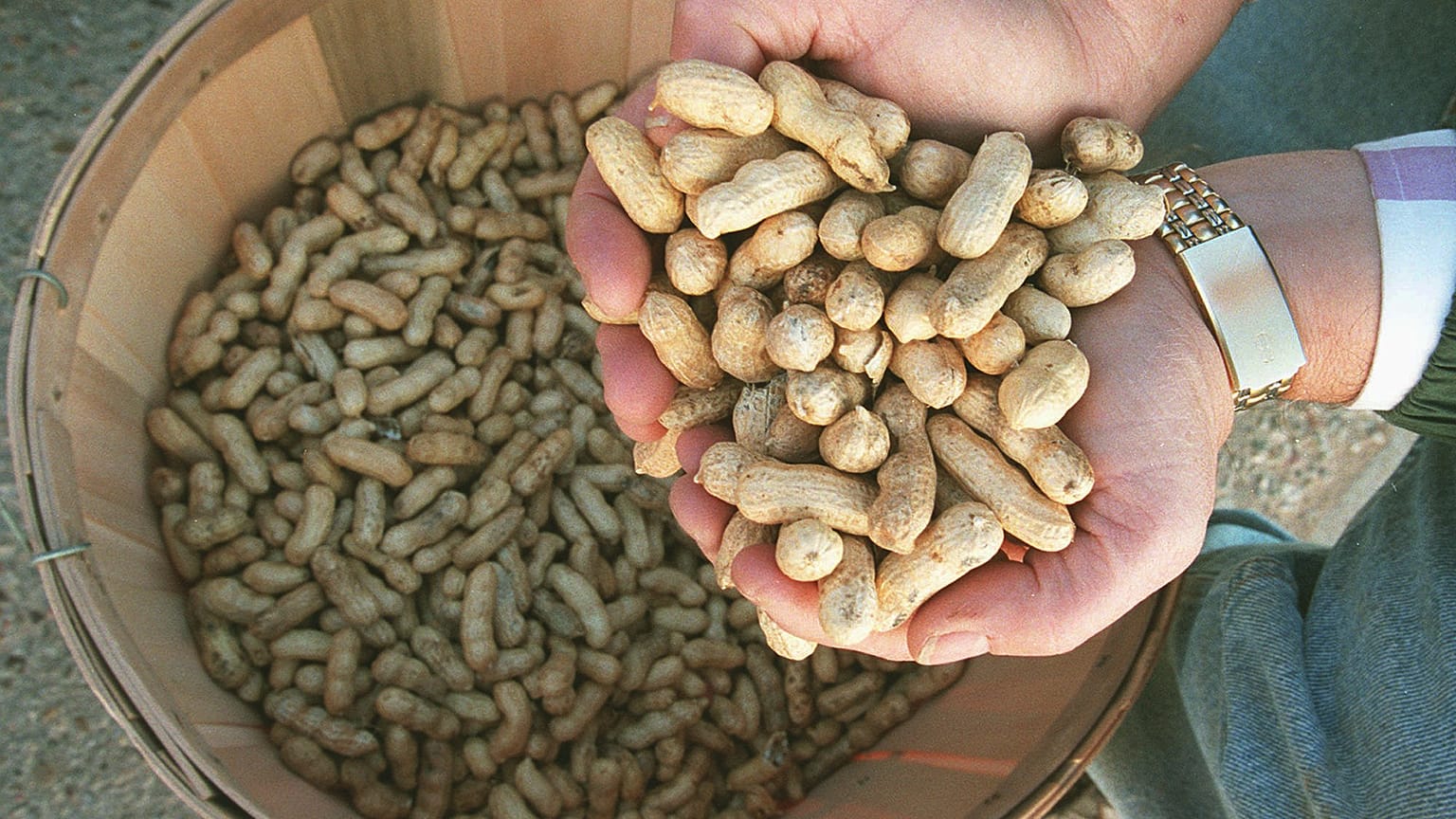
In this archival photo taken on 16 December 1997, feed store owner Jerry Foote of Seminole, Texas, holds a handful of peanuts grown in Gaines County.
– Copyright Brad Farris/AP

 Facebook
 Twitter
 Flipboard
 Send
 Reddit
 Linkedin
 Messenger
 Telegram
 VK
 Bluesky
 Threads
 Whatsapp
Does eating peanuts every day help to maintain memory as we get older?
A recent scientific study indicates that eating peanuts daily may help improve the brain’s response to insulin in areas linked to memory in older adults.
 ADVERTISEMENTADVERTISEMENT
The study was published in the journal “Food & Function”, and was carried out by researchers from the medical centre at Maastricht University in the Netherlands, with the aim of examining the effect of regular peanut consumption on the brain’s response to insulin with advancing age.
The experiment involved 31 healthy people aged between 60 and 75 years.
The participants ate 60 grams of roasted peanuts with their skins and without salt every day for 16 weeks, then the researchers compared the results with another period during which they did not eat peanuts.
Improved brain response to insulin
The results showed an improvement in the response of areas in the right hemisphere of the brain to insulin, including parts of the hippocampus, the parahippocampal gyrus, the lingual gyrus and the posterior cingulate gyrus, which are areas involved in memory processes and other cognitive functions.
To measure this response, the researchers gave the participants insulin through the nose, then used magnetic resonance imaging based on arterial blood labelling to measure changes in blood flow to brain regions.
Insulin plays a role in a number of brain processes linked to learning, memory and communication between nerve cells.
The brain’s response to this hormone may become less effective with advancing age, a change that is associated with age related cognitive decline.
However, the researchers did not demonstrate that eating peanuts prevents cognitive decline or stops dementia from developing, but they observed changes in the response of specific brain regions to insulin.
These findings build on previous research by the same team on the same dietary intervention, published in the journal Clinical Nutrition in 2025, where the results showed a 3.6% increase in total blood flow to the brain, along with a 5.8% improvement in verbal memory after the 16 week intervention period.
The researchers believe that the nutritional composition of peanuts may explain some of these effects, as they contain unsaturated fats, fibre, vitamins, minerals and biologically active plant compounds, as well as plant protein.
Peanuts are also a source of the amino acid L-arginine, which the body uses to produce nitric oxide, a compound that helps regulate blood vessel functions and may in turn be linked to learning and memory processes.
Is eating peanuts enough to protect memory?
These findings still need further research to determine to what extent the recorded changes in the brain’s response to insulin are reflected in memory and mental performance.
The experiment was limited to 31 people, and the indicators observed by the researchers are not enough to state with certainty that peanuts provide protection from Alzheimer’s or other dementia disorders.
Conducting studies on larger numbers of participants and following them for longer periods would help to clarify this relationship and determine whether the potential benefits continue over time.
Go to accessibility shortcuts
Read more
CanSat 2026: Students launch miniature satellite models in Uzbekistan

More than half of pilots say they flew while exhausted, survey finds

The manosphere should be treated as a public health risk, report warns
CanSat 2026: Students launch miniature satellite models in Uzbekistan
More than half of pilots say they flew while exhausted, survey finds
The manosphere should be treated as a public health risk, report warns

The manosphere should be treated as a public health risk, report warns

Which vaccinations should you have this autumn and which are recommend

More greens, higher testosterone? What a Finnish study found

US measles surge reminds of Europe’s vaccination gaps

Wildfire smoke in pregnancy linked to higher autism risk
What happens to the brain when you eat peanuts daily? New study reveals striking results
COVID: Should we fear a new winter wave?
More greens, higher testosterone? What a Finnish study found
Scientists discover first new antibiotics in over 60 years using AI
Which vaccinations should you have this autumn and which are recommend
[analyse_source url=”https://www.euronews.com/2026/10/30/what-happens-to-the-brain-when-you-eat-peanuts-daily-new-study-reveals-striking-results”]