[analyse_image type=”featured” src=”https://images.euronews.com/articles/stories/09/96/75/15/1200x675_cmsv2_9645e28a-92a9-5e20-9102-d879bf3ba12c-9967515.jpg”]

EU approves €319 million state aid to Austrian semiconductor factory

Nord Stream won’t reopen after the war, Brussels tells US and Russia

Spain: Rescuers search mangled train wreckage near Toledo

Brussels approves Hungary’s €5.4bn defence loan
From Baku’s old city to mud volcanoes: discovering Azerbaijan’s wonders


©
– Copyright Euronews

 Facebook
 Twitter
 Flipboard
 Send
 Reddit
 Linkedin
 Messenger
 Telegram
 VK
 Bluesky
 Threads
 Whatsapp

Azerbaijan is a country rich in history, culture, and natural wonders. In this episode of Grand Voyager, Lilly Douse explores Baku’s historic Old City, discovers the ancient rock carvings of Gobustan and visits the region’s mud volcanoes.
Baku, the country’s capital, sits on the Caspian Sea. It’s a city where historic streets and modern architecture sit together.
 ADVERTISEMENTADVERTISEMENT
One of Baku’s most popular spots is the Old City, known as Icherisheher. Here, Lilly meets Seyid Tagiyev from Icherisheher State Historical Architectural Reserve. Surrounded by medieval walls, the UNESCO World Heritage Site is home to narrow streets and important historical sites.
Among them are the Maden Tower, one of Baku’s best-known monuments, the medieval market square, now an open-air museum, and the Palace of Shirvanshahs, a former royal residence. Caravanserais, former inns that provided food and lodging for Silk Road travellers, are also a common sight in the Old City.
Food is an important part of Azerbaijani culture. One of the country’s traditional dishes is Dolma, made with ingredients such as minced meat, herbs, and vine leaves. While staying at the Ritz-Carlton Baku, Lilly joins Chef Vusala Isazade to pick ingredients from the hotel garden and learn the art of Dolma making.
Beyond the capital, Azerbaijan has lots of natural beauty and historical places to visit. At Gobustan State Historical and Artistic Reserve, Lilly meets Nurana Hasanova to discover ancient rock carvings. Many carvings feature animals, hunters, and boats and offer an insight into how life was thousands of years ago.
Azerbaijan is often called the Land of Fire because of the natural gas that has bubbled and burned in parts of the region for centuries. Not far from Gobustan are Azerbaijan’s mud volcanoes. To learn more, Lilly explores the moon-like landscape with Sevinj Hajiyeva from the Mud Volcanoes Tourism Complex.
In 2025, Azerbaijan welcomed 2.5 million international visitors from 198 different countries. With five UNESCO World Heritage sites, rich cultural heritage and unusual landscapes, the country has a lot to offer for visitors.
Go to accessibility shortcuts
Read more

Grand Voyager | Exploring Dubrovnik

Grand Voyager | Exploring Berlin

Grand Voyager | Exploring Bodrum and the Aegean Coast
Grand Voyager | Exploring Dubrovnik
Grand Voyager | Exploring Berlin
Grand Voyager | Exploring Bodrum and the Aegean Coast

Europeans ‘most cautious’ about travel technology, IATA survey finds

Black Friday 2026: Tips for securing the best flight and hotel deals
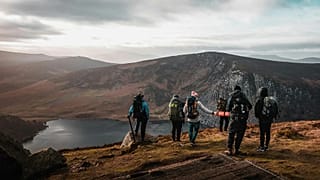
Travellers are making more sustainable choices to ‘enhance’ journeys
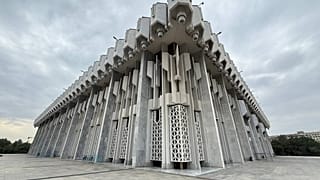
How modernist buildings became part of Tashkent’s identity
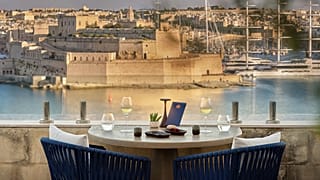
The pact that aims to return tourism’s wealth to residents
These are Europe’s most snow-reliable ski resorts and regions
The pact that aims to return tourism’s wealth to residents
Abandon ship! 200 ‘cruise for life’ passengers stranded in Cambodia
Social media is ruining travel’s element of surprise, survey reveals
How modernist buildings became part of Tashkent’s identity
[analyse_source url=”https://www.euronews.com/2026/10/28/from-bakus-old-city-to-mud-volcanoes-discovering-azerbaijans-wonders”]