[analyse_image type=”featured” src=”https://images.euronews.com/articles/stories/09/95/38/28/1200x675_cmsv2_0362443a-a3a7-502e-9545-85ce3d1c1551-9953828.jpg”]

Alberta votes on Canada secession as PM fights to keep country united

Second day of street clashes in Milan against cost of living

‘Ocean sanctuaries’ could keep leatherback turtles out of danger zones

Latest news bulletin | October 19th, 2026 – Morning
How a $5 billion ‘Gas Ring’ could strengthen Central Asia’s energy security
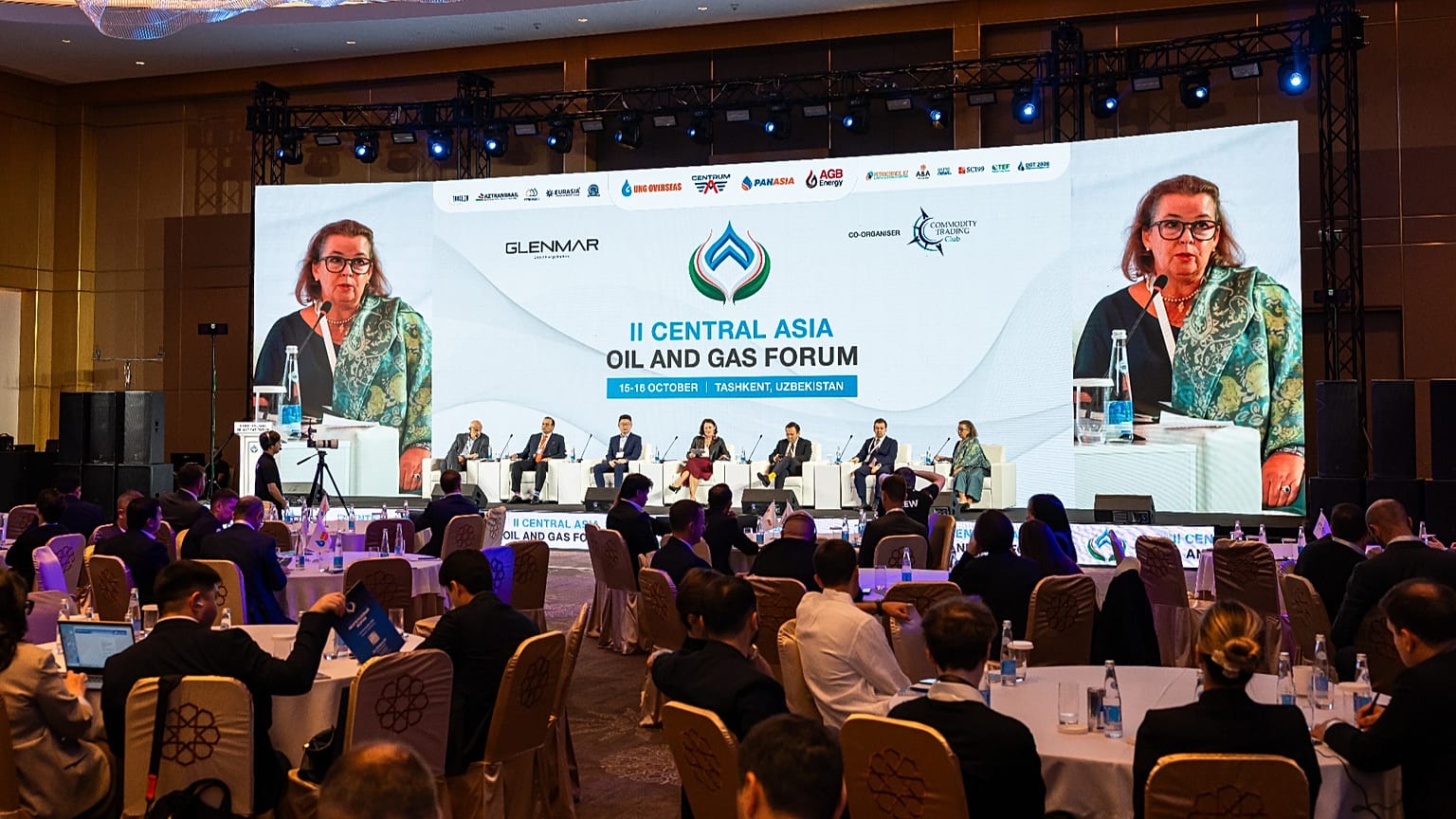
Delegates attend the second Central Asia Oil and Gas Forum in Tashkent, Uzbekistan, on 15–16 October 2026.
– Copyright Central Asia Oil and Gas Forum

 Facebook
 Twitter
 Flipboard
 Send
 Reddit
 Linkedin
 Messenger
 Telegram
 VK
 Bluesky
 Threads
 Whatsapp

A proposed $5bn (€4.45bn) gas network could help five Central Asian countries share supplies and meet winter demand. The ‘Gas Ring’ would link new and existing pipelines, but funding and agreements between governments remain to be finalised.
The Central Asia Gas Ring would connect Kazakhstan, Kyrgyzstan, Tajikistan, Turkmenistan and Uzbekistan through more than 3,000 kilometres of new and upgraded pipelines.
 ADVERTISEMENTADVERTISEMENT
The proposal was discussed at the second Central Asia Oil and Gas Forum in Tashkent.
Kazakh energy expert Askar Ismailov first presented the idea at the forum’s inaugural edition in 2025.
He estimates the core infrastructure would cost $5bn (€4.46bn), including $2bn (€1.78bn) for new construction and $3bn (€2.68bn) for modernisation and digitalisation. The proposed network could carry around 20bn cubic metres of gas annually, he says.
How five countries could benefit from a shared gas network
The proposal reflects differences in gas resources, infrastructure and demand across Central Asia. Turkmenistan, with substantial reserves, could gain additional regional customers, while other countries could obtain more supply options.
Ismailov now advises the Geneva-based Global Gas Centre, a non-profit organisation bringing together gas industry executives and experts, which is actively involved in advancing the proposal.
“The Gas Ring project is a very interesting one because it will enhance the security of supply of all these countries,” the centre’s executive director, Valérie Ducrot, told Euronews.
Uzbekistan is both a major producer and consumer of gas, with demand rising during the winter. Kazakhstan also produces gas, but much of its resource base is in the west, away from major population centres.
Kyrgyzstan relies on imported gas, while Tajikistan generates most of its electricity from hydropower but also imports gas. Tajikistan imported 126.4m cubic metres from Uzbekistan in the first half of 2026, according to its energy ministry.
The countries already trade gas across borders. The proposed ring would build on those connections, adding sections and upgrading existing pipelines to enable more flexible flows.
“When Uzbekistan or some other Central Asian countries like Kyrgyzstan or Tajikistan demand more gas during winter time, we can do it in reverse mode,” said Assylbek Jakiyev, chairman of PetroCouncil Kazakhstan, an oil and gas industry association.
He was describing the potential for reverse flows, rather than an agreed operating arrangement.
From proposal to investment
Ismailov said Uzbekistan’s national oil and gas company, Uzbekneftegaz, had expressed interest after preliminary talks.
He also said the Global Gas Centre had signed a memorandum of understanding in May with authorities in Karakalpakstan, an autonomous republic within Uzbekistan.
He reported discussions with prospective investors from China and the Middle East.
Beyond funding, the project would require agreements on supply volumes, transit rules and the operation of interconnected pipelines, including which sections could carry gas in both directions.
No final financing structure, agreement among all five national governments or construction timetable has been publicly announced. The projected cost and capacity remain estimates from the proposal’s backers.
Uzbekistan expands exploration as gas output declines
Uzbekistan is seeking to strengthen domestic production alongside regional connections. Large industrial enterprises produced 24.2bn cubic metres of natural gas in January–August 2026, down 16.3% year on year, according to national statistics.
At an October review, Uzbek authorities reported that five new gas-condensate fields had been discovered this year and 80 wells had been drilled between January and September, with a further 40 planned for the final quarter.
“Natural gas remains a cornerstone of Uzbekistan’s energy system,” Denis Borodenok of UNG Overseas, a wholly owned Uzbekneftegaz subsidiary and co-organiser of the Tashkent forum, said.
The government is also pursuing deeper exploration in the Ustyurt region and measures to improve output from existing fields.
Domestic drilling and cross-border connections address different aspects of energy security: increasing production and making supplies easier to distribute.
Wider energy links with Azerbaijan and Europe
The Tashkent forum also discussed opportunities to strengthen energy links between Central Asia, Azerbaijan and European markets.
Assylbek Jakiyev of PetroCouncil Kazakhstan said closer cooperation with Azerbaijan and the EU could help Central Asian producers expand hydrocarbon exports.
Some partnerships are already taking shape. Azerbaijan’s SOCAR, Britain’s BP and Uzbekneftegaz are partners in an oil and gas exploration project in Uzbekistan’s Ustyurt region.
Azerbaijan also supplies natural gas to EU countries through the Southern Gas Corridor. Deliveries reached 12.5bn cubic metres in 2025, according to the European Commission. The EU and Azerbaijan reaffirmed their wider energy partnership in March 2026.
Go to accessibility shortcuts
Read more
Indonesian stocks suffer worst fall in 28 years after MSCI warning
Income after rent: How much is left across European cities?
Norway may open €2 trillion wealth fund to nuclear weapons makers
Indonesian stocks suffer worst fall in 28 years after MSCI warning
Income after rent: How much is left across European cities?
Norway may open €2 trillion wealth fund to nuclear weapons makers

Wages vs prices: The economic pressures behind Europe’s protests

Spain’s pension bill is growing: Who will pay as election looms?
China’s economy grows 4.5% in third quarter on export surge

Leisure out of reach for one in eight in the EU: Where is it worst?

Inside the world’s biggest fine jewellery factory: Pandora’s next bet
Income after rent: How much is left across European cities?
Uzbekistan signs $4.7bn energy deals, plans two more nuclear plants
Which European countries are the most expensive?
Leisure out of reach for one in eight in the EU: Where is it worst?
Could Tesla’s flying car send sales and shares soaring?
[analyse_source url=”https://www.euronews.com/2026/10/19/gas-ring-5-billion-proposal-aims-to-strengthen-central-asias-energy-security”]