[analyse_image type=”featured” src=”https://images.euronews.com/articles/stories/09/94/47/70/1200x675_cmsv2_481c908b-168f-570e-b847-64f9fdfcbae8-9944770.jpg”]

Super tanker ablaze after striking mine in Strait of Hormuz: IRGC

North Korea says it tested new AI-powered torpedo system

No Ukraine aid and EU budget cuts: What does Le Pen mean for the EU?

Trump signs executive order waiving new Russia sanctions
A kite-powered snow sled designed in Spain is gliding across Antarctica in world-first
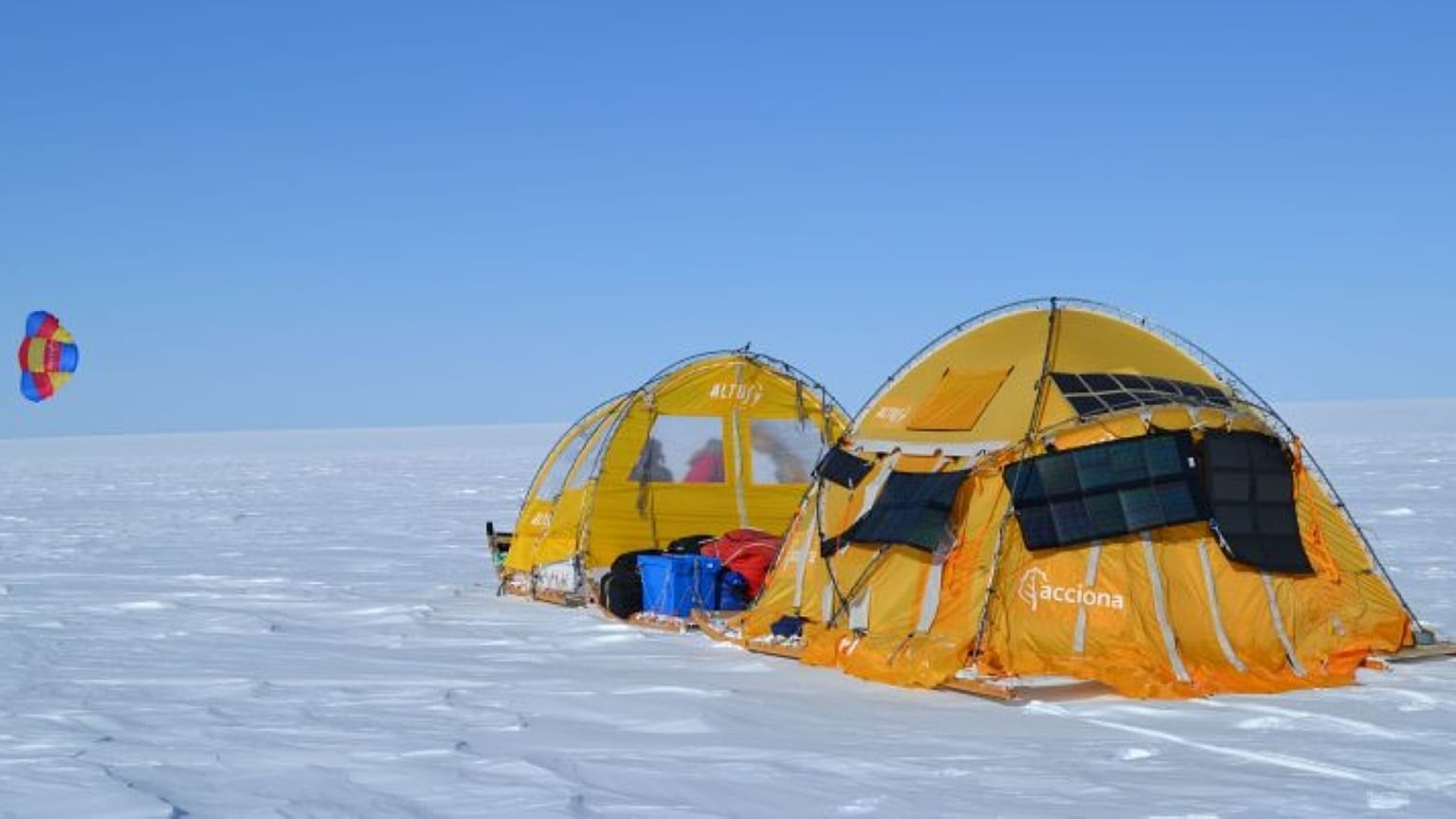
The ninth prototype of the Snow Sled, designed to lighten the vehicle itself so it could carry more scientific equipment.
– Copyright Tierras Polares / Trineo de Viento

 Facebook
 Twitter
 Flipboard
 Send
 Reddit
 Linkedin
 Messenger
 Telegram
 VK
 Bluesky
 Threads
 Whatsapp

Explorer Ramón Larramendi will lead an 80-day, 3,400 km South Pole expedition in a kite-powered vehicle that can travel up to 80kph.
Spanish polar explorer Ramón Larramendi will lead a scientific expedition that will travel around 3,400 kilometres across the interior of Antarctica over roughly 80 days, without using fossil fuels for transport.
 ADVERTISEMENTADVERTISEMENT
The Antarctic Wind Sled 2026-2027 project will carry equipment to conduct 16 research projects in some of the most inaccessible regions on the planet, with the aim of expanding knowledge of ice, climate change and polar ecosystems.
“The wind sled is something completely unique in the world,” Larramendi tells Euronews during an interview in Madrid’s central Plaza de España. The explorer believes that the vehicle he has designed is an exceptional combination of traditional techniques and advanced technology, conceived to cover long distances without combustion engines or air drops.
The expedition will leave Spain on 18 October and is due to return in early February. The route will start near Russia’s Novolazarevskaya base, in Queen Maud Land, and end at the French-Italian Concordia station at Dome C, after crossing the Pole of Inaccessibility and passing close to the Pole of Cold.
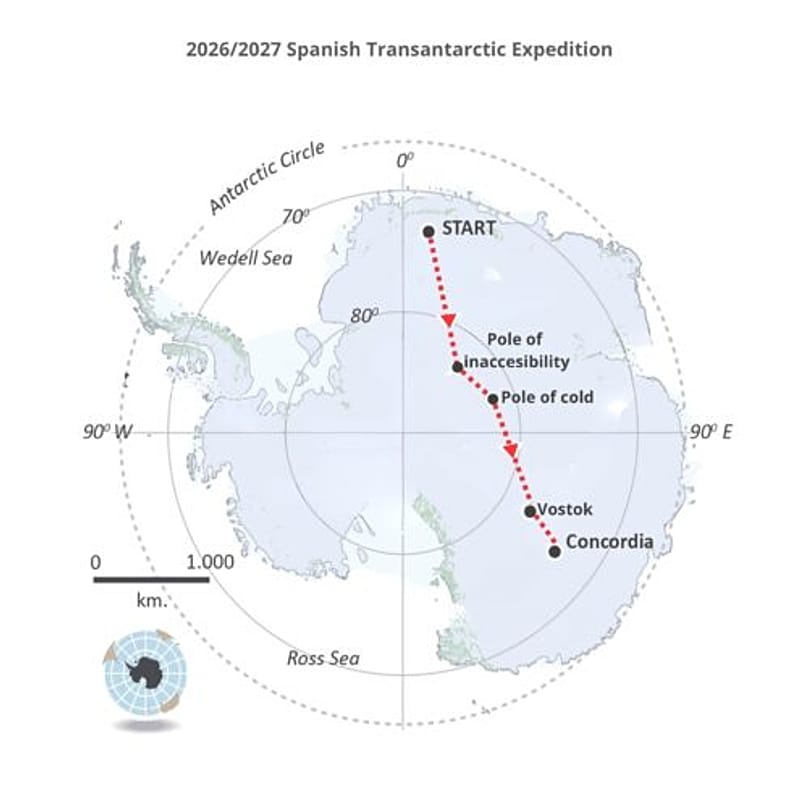
A wind-powered vehicle to cross Antarctica with zero emissions
The Wind Sled is a polar exploration platform that uses kites to harness the power of the wind and solar energy to fuel scientific equipment. Its design, inspired by Inuit culture, as Larramendi explains, is the result of some 25 years of development and experimentation, during which the explorer has travelled more than 28,000 kilometres over ice on different expeditions.
“This sled combines Inuit techniques, which can look like old-fashioned and slightly strange bits of technology. That makes it a very, very unusual mix, but hugely efficient,” says the explorer, who sees sustainability as one of the fundamental pillars of the project.
The vehicle consists of four modules and is 15 metres long. It can carry up to 2,100 kg of cargo, although on this occasion it will initially transport around 250 kg of scientific instruments.
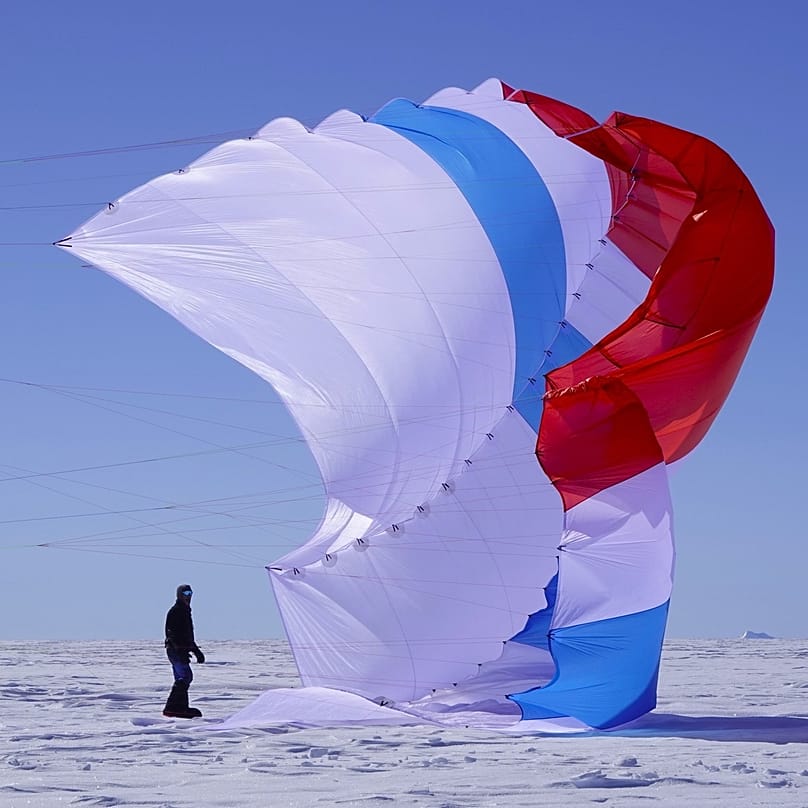
The crew will have 20 kites, with sail areas ranging from five to 150 square metres, which they will deploy according to the weather conditions. In favourable conditions, the sled can reach 80 kilometres per hour, with an average speed of around 25 kilometres per hour.
The absence of fossil fuels reduces both the environmental impact and the logistical needs of the expedition. By way of comparison, the 2011-2012 Scientific Transantarctic Expedition covered a similar distance using tracked trucks, snowmobiles and sleds, consuming around 170,000 litres of fuel in two months.
Larramendi hopes this campaign will showcase the vehicle’s potential as a scientific platform for future crossings. “Other systems powered by renewable energy may emerge to cross Antarctica, but none will be more sustainable and have a lower impact than the Wind Sled,” he argues.
Sixteen projects to study ice, pollutants and microbial life
The expedition will carry out 16 scientific projects selected through a call coordinated by the Spanish Polar Committee. The research, involving CSIC, CIEMAT, INTA, six Spanish universities and international bodies, will provide direct measurements in areas where data is scarce, complementing information gathered by satellites and permanent stations.
Among the projects is a study by NASA’s Ames Research Center, led by Spaniard Alfonso Dávila, which will examine whether conditions favourable to microbial life can exist inside salt rocks exposed to Antarctica‘s extreme cold. Sensors will measure temperature, relative humidity and electrical conductivity to determine whether liquid water may have formed inside them, despite the low temperatures and the arid environment.
Another project, called Dinglac and led by glaciologist Francisco Navarro of the Polytechnic University of Madrid, will use ground-penetrating radar to analyse the top 10 metres of snow. The measurements will help to understand how snow layers accumulate and move and to improve estimates of how Antarctic ice mass is evolving in the context of climate change.
The campaign will also study the presence of microplastics, persistent pollutants and possible microorganisms and viruses, as well as investigating the Earth’s magnetism and the performance of the European Galileo navigation systems. Some of the experiments will use instrumentation linked to space exploration.
For Larramendi, the value of this work also lies in the fact that it will be carried out in territory that is virtually unknown from a scientific point of view. “It is taking place in an area for which there are practically no data,” he explains. The system makes it possible to venture into regions where the difficulties and costs of conventional operations mean research campaigns are especially complex.
Four people isolated for 85 days: An experiment for future space missions
The expedition will be made up of four Antarctic veterans: Larramendi himself; Hilo Moreno, polar guide and mountain technician; Mariusz Potocki, a researcher at the University of Maine in the United States; and Javier Selva, photographer, documentary-maker and head of technical image direction. Selva already accompanied Larramendi on an Antarctic expedition between 2011 and 2012.
As well as taking part in fieldwork, the four explorers will themselves be study subjects. The WindSled Mind project, led by Gabriel G. de la Torre from the University of Cádiz, will analyse the effects of prolonged isolation on the crew’s psychological responses, sleep and social interaction. “We are part of the research project and yes, we do feel a bit like guinea pigs, but we are happy,” Larramendi says with a smile.
The study aims to generate knowledge applicable to future long-duration space missions, in which astronauts will have to face conditions of confinement, danger and extreme remoteness from Earth. Antarctica is one of the most suitable environments on the planet for studying these factors and testing instruments intended for future planetary exploration.
“We are the experiment ourselves. Four people isolated for 85 days in the interior of the Antarctic continent,” Larramendi notes. The explorer explains that there are two projects in which the members of the expedition themselves are the object of research.
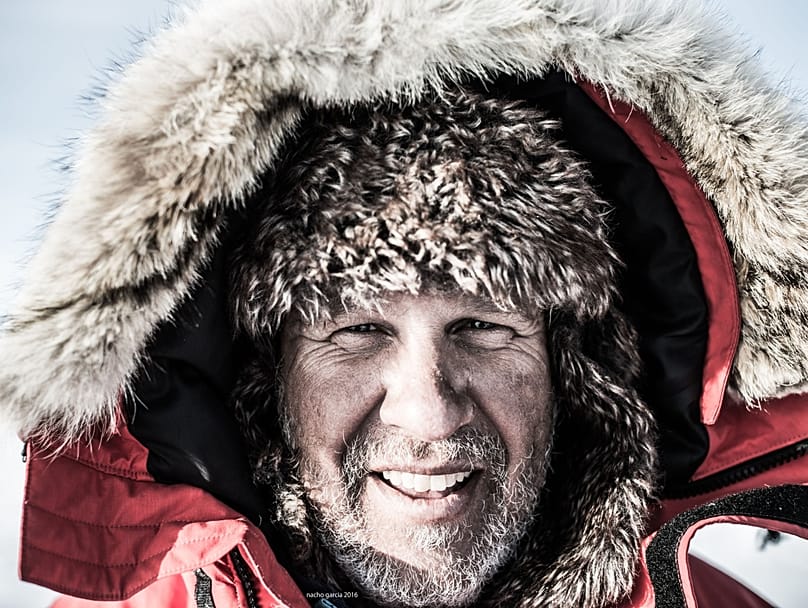
Self-sufficiency will be one of the keys to the journey. The team will carry the supplies and equipment needed to remain for weeks without external support, although they have an evacuation plan in place in case of a medical emergency or any other extraordinary situation.
An unprecedented route with an eye on future expeditions
The crossing, which can be followed live on the Trineo de Viento website, is the culmination of decades of development of the Wind Sled and will test its ability to carry a scientific payload unprecedented in Larramendi’s Antarctic expeditions. The four members will set up five scientific stations along the route, with extended stops to collect samples, carry out experiments and take measurements.
On arrival at Concordia, the explorers will leave the continent by air, while the scientific material will return to Spain with French support. The sled will remain dismantled at the base, ready for a possible future journey in the opposite direction.
The aim is for expeditions to be repeated so that data gathered in different campaigns can be compared, something essential for identifying changes in ice and climate. “Repeated data collection is absolutely key to tracking variations,” Larramendi stresses.
The journey, integrated into the XL Antarctic Research Campaign, which marks the 40th anniversary of the Spanish polar expedition, thus aims to consolidate a low environmental impact route for scientific exploration into the interior of the continent. It offers an alternative that combines research in one of the most extreme regions on Earth with the development of technologies that could contribute to future space missions.
Go to accessibility shortcuts
Read more

Forgotten fossil turns out to be Antarctica’s first dinosaur

Antarctica: Latest report says melting sea ice ‘not yet irreversible’

‘End handouts’ for fossil fuels, urges UN chief ahead of COP17
Forgotten fossil turns out to be Antarctica’s first dinosaur
Antarctica: Latest report says melting sea ice ‘not yet irreversible’
‘End handouts’ for fossil fuels, urges UN chief ahead of COP17
Why Europe’s farmers need more than drought-resistant crops to survive

‘End handouts’ for fossil fuels, urges UN chief ahead of COP17
The Doomsday Glacier is ‘committed’ to melting. Can we stop it?
‘Striking change’: Slovenia’s last glacier is rapidly shrinking
Was El Niño to blame for Hurricane Polo’s record-breaking storm?
‘Completely unique’: Wind sled crosses Antarctica with zero emissions
Mont Blanc rises by almost two metres, now standing at 4,807.47 metres
How a laboratory accident revealed a new way to rescue dying corals
‘Striking change’: Slovenia’s last glacier is rapidly shrinking
The Doomsday Glacier is ‘committed’ to melting. Can we stop it?
[analyse_source url=”https://www.euronews.com/2026/10/16/wind-sled-spanish-invention-to-cross-antarctica-without-emissions-unique-in-the-world”]