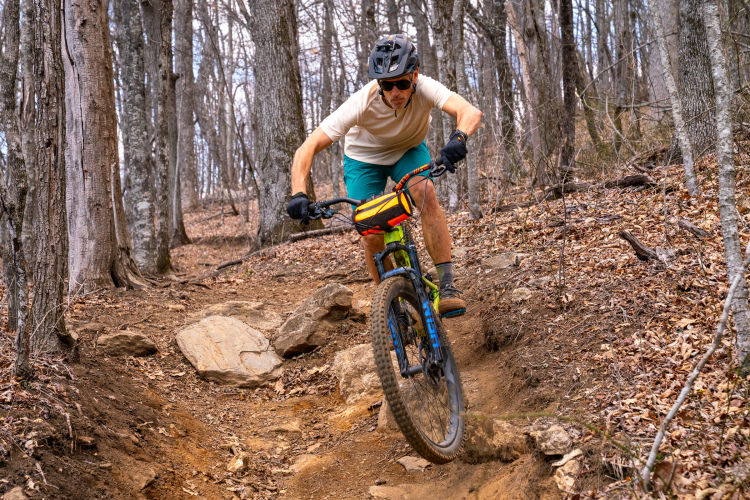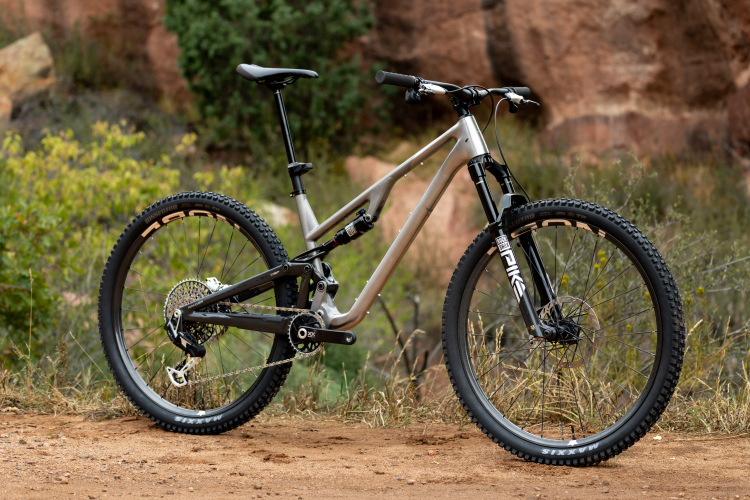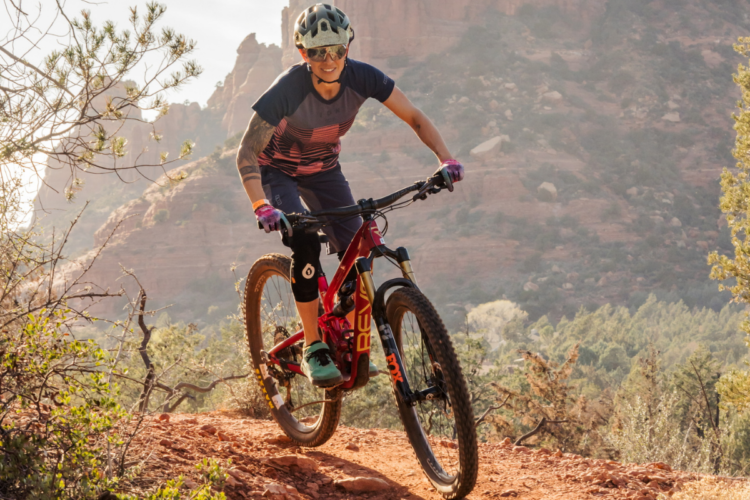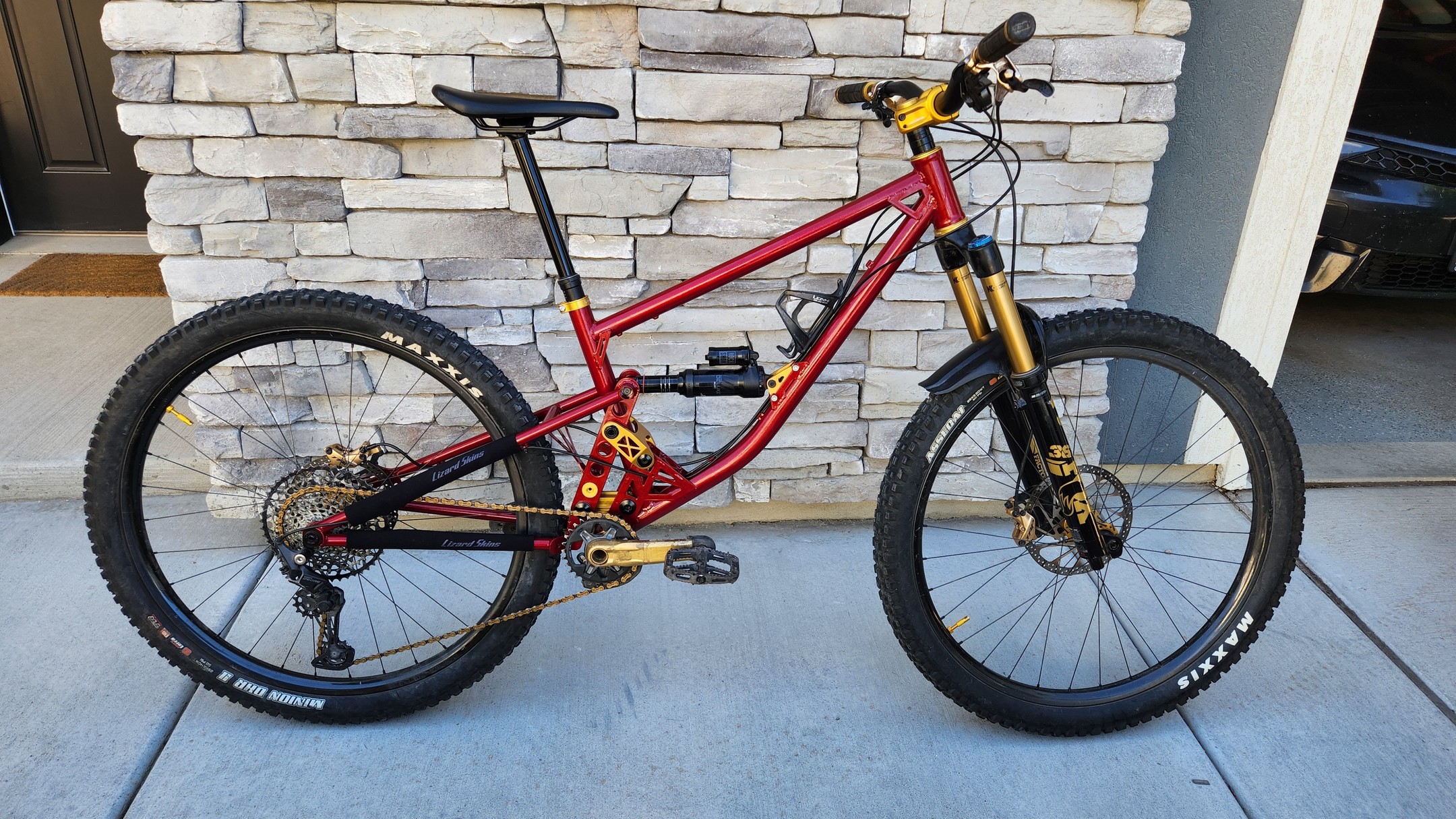
The truth is that the perfect bike doesn’t exist. “Perfection” is subjective, and no matter how good a bike is, I’d always tweak something a little. A degree slacker. A few millimeters longer. Often, bike “perfection” is the combination of, well, two or three bikes — most of this one’s geometry, mixed with that one’s suspension platform, and so on.
If I had the skill — hell, if I even had the faintest idea where to begin — I’d likely design my own bike. This is exactly the route Shae took, and, surprisingly, he didn’t start with a hardtail like many niche, boutique frame builders do. Rather, he jumped right in with a long-travel, full-suspension enduro bike.
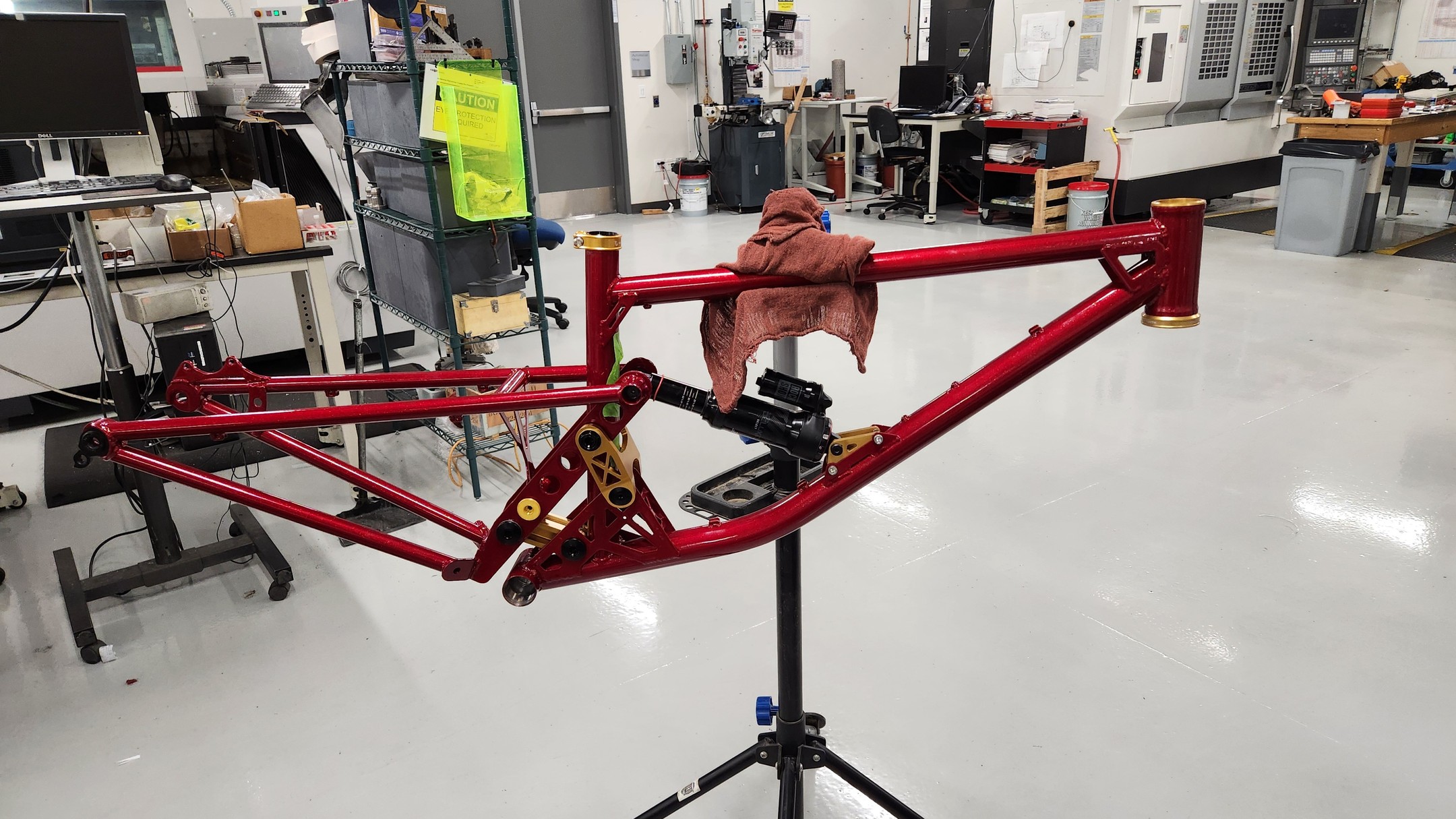
A fake bike company
“Why buy a really well-engineered bike with a warranty when I could make one that has no warranty, by someone who is really untrained, for twice the price?” Shae joked during our conversation about his full-suspension bike-building ventures. I found Shae through his Instagram account and, to be honest, his handle: fake.bike.co. And when I saw that, unlike quite a few frame builders, he was making full-suspension trail and enduro bikes, I wanted to learn the story behind the builds.
To be clear, Shae likely doesn’t give himself enough credit. While he hasn’t been building bikes for long, he is a mechanical engineer and, thanks to his work, has access to a machine shop and welders — after hours, of course.
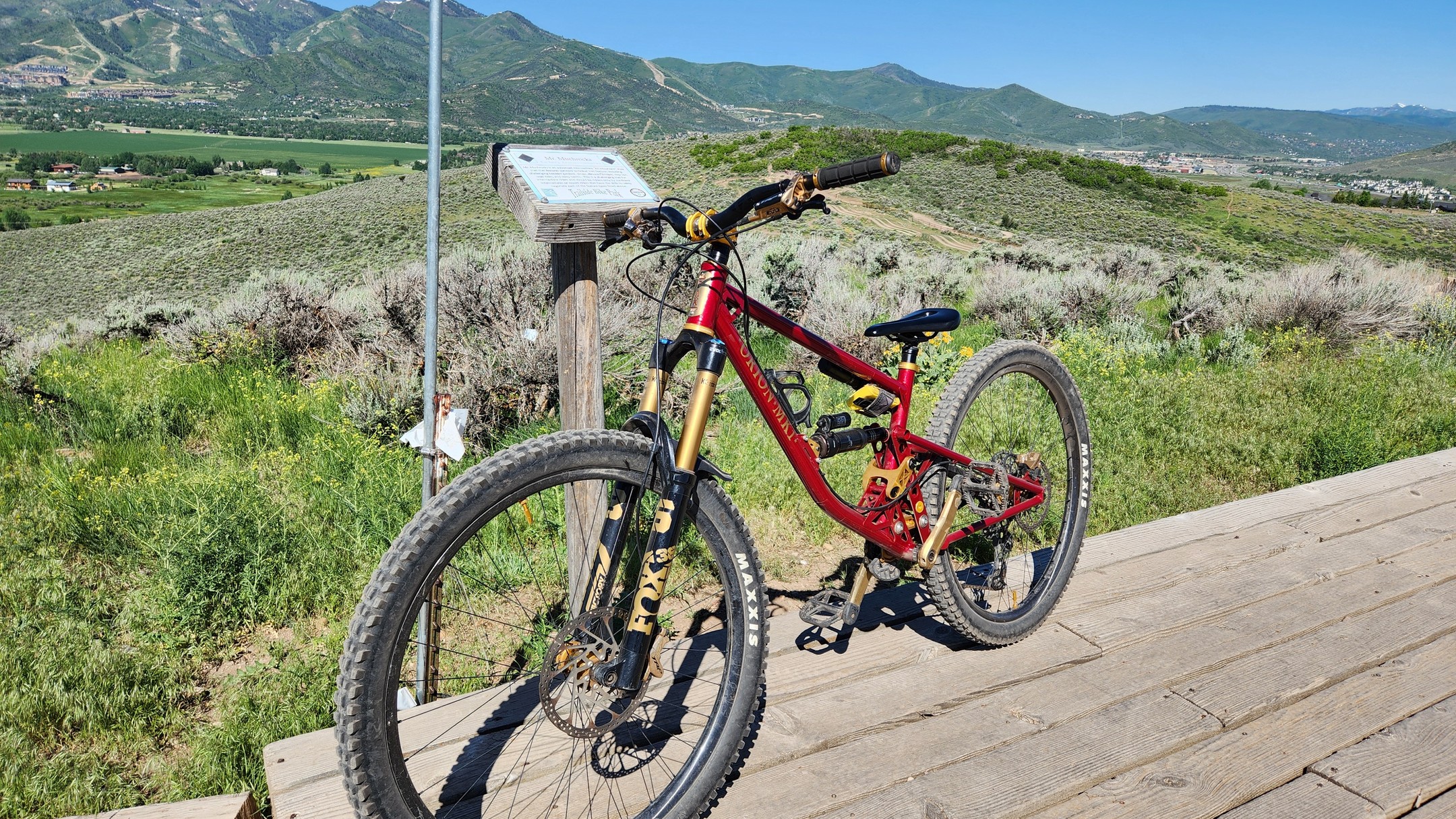
Many boutique frame builders deal exclusively in hardtails because of the complex nature of suspension platforms and the need to figure out kinematics. The artistry and craftsmanship are found in the welding and design details. For Shae, it was the complete opposite. With his engineering background, the suspension platforms were easy — well, the less intimidating part — and welding was the learning curve. Shae took advantage of metal scrap from different machine shops in his area and the “old timers” who can weld in their sleep. Once he could weld a decent bead (with those old timers’ approval), Shae set to work putting his first bike together.
“The first ride was really funny,” he explained. “I went to like this little trail network that’s by where I live. I was on the greenest little kid trail ever, but I was in like full pads and full face, just taking it so easy […] working my way up and doing little drops and then little bigger drops and just checking everything.”
That was a few years ago, and according to Shae, the welds still look good, and he still rides that bike.
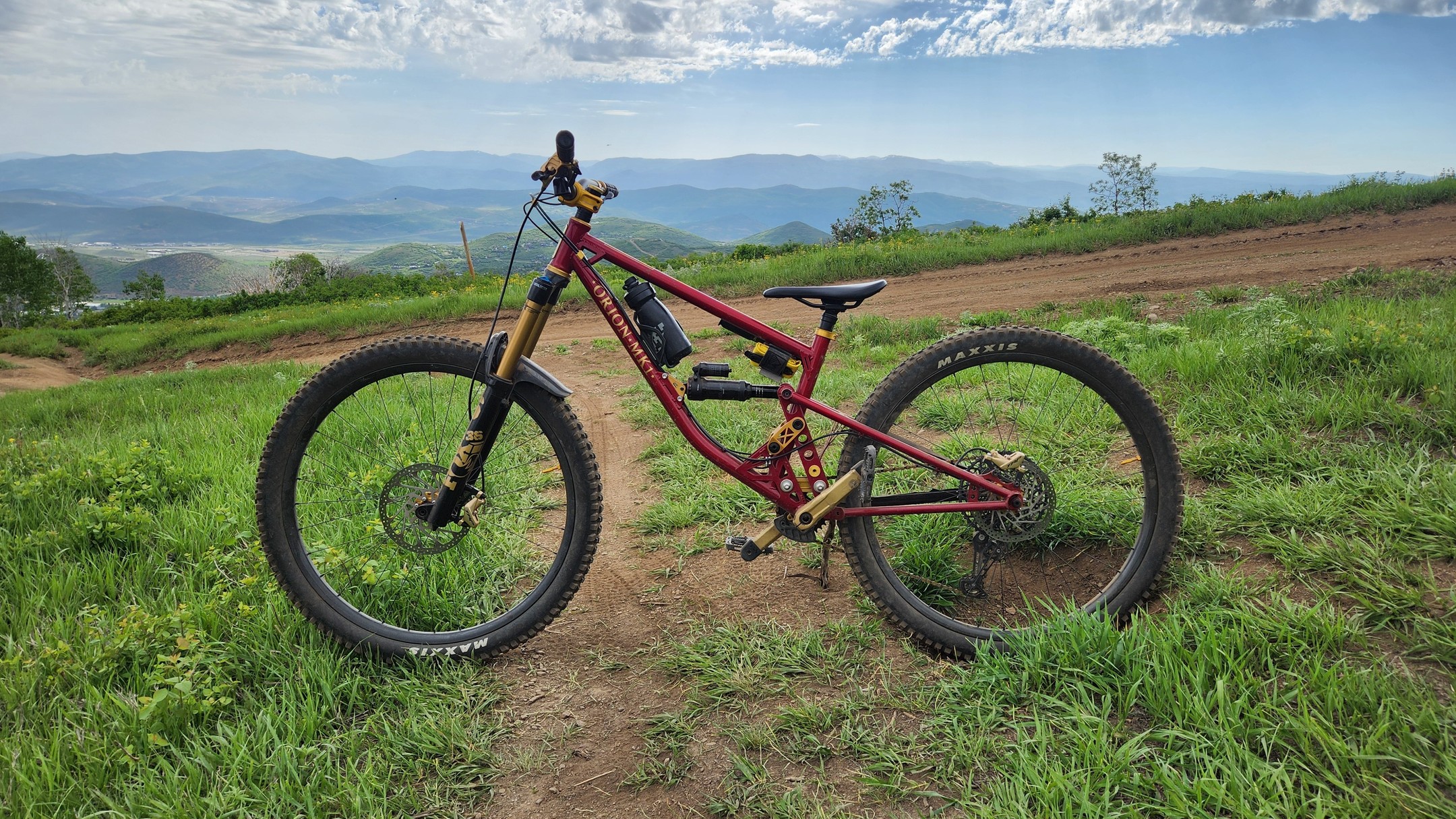
“That bike,” the “High Horse,” was inspired by the Revel Rail and CBF suspension
The first bike that Shae designed and built is a big bruiser of an enduro bike he dubbed the High Horse. It is a 170/160mm (F/R) dual-link bike built out of 4130 chromoly steel. Shae told me that the Revel Rail and its Canfield Balance Formula (CBF) suspension platform inspired his dual-link design.
“My brother bought a Revel Rail,” he explained. “[I rode it] and was like, ‘Whoa, this bike is rad!’ But the seat tube was too tall for me, but I liked pretty much everything else about it.”
He especially liked how the CBF platform worked both up and down the hill. And, since he isn’t selling any bikes and infringing on patents, Shae tried to make the High Horse ride as similarly to the Revel as he could. He tried to find as much information on the Rail as possible, which helped, but he also had the advantage of being able to fit the bike exclusively to him. This meant he could measure his own center of gravity and design the suspension kinematics around that.
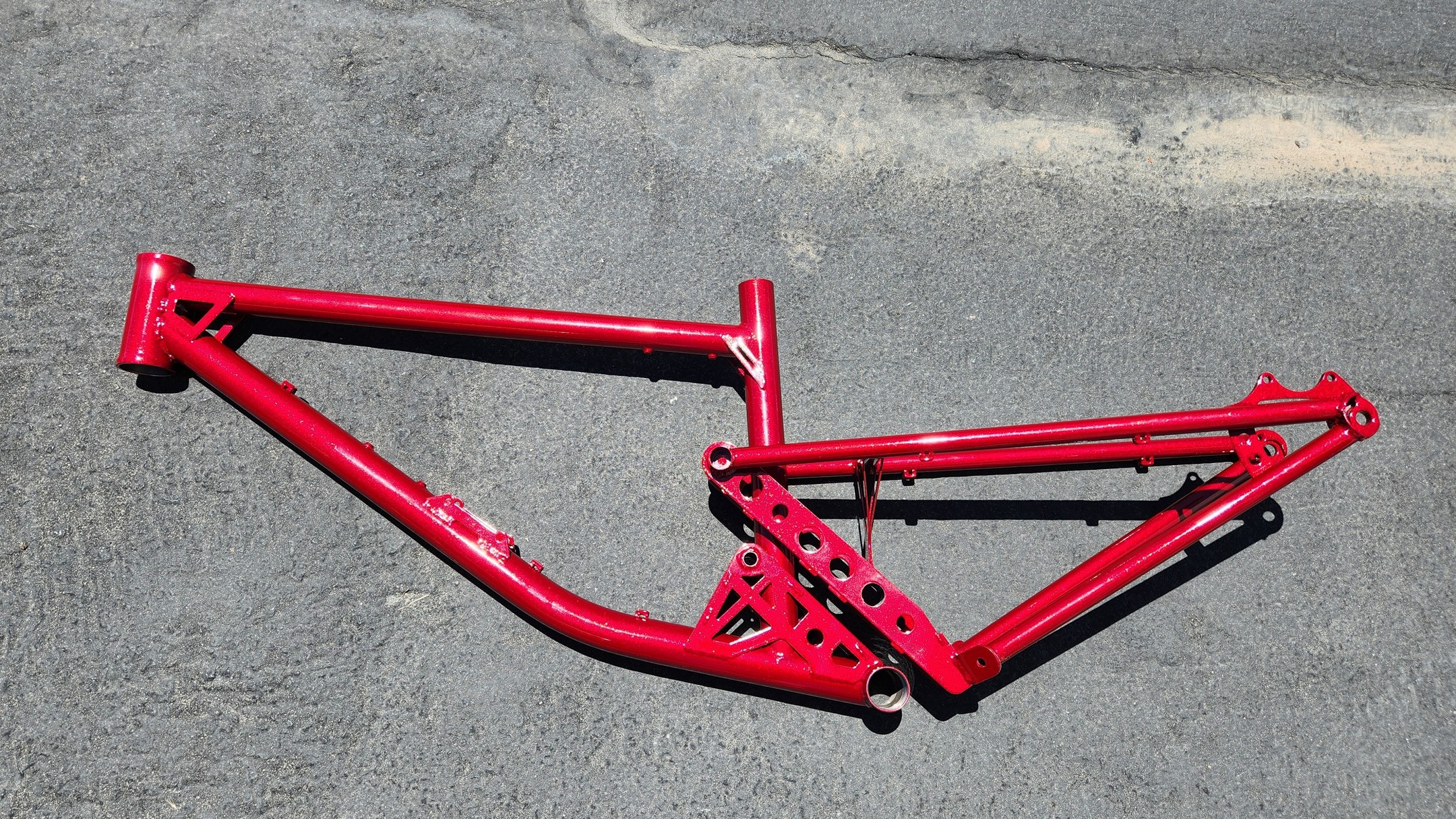
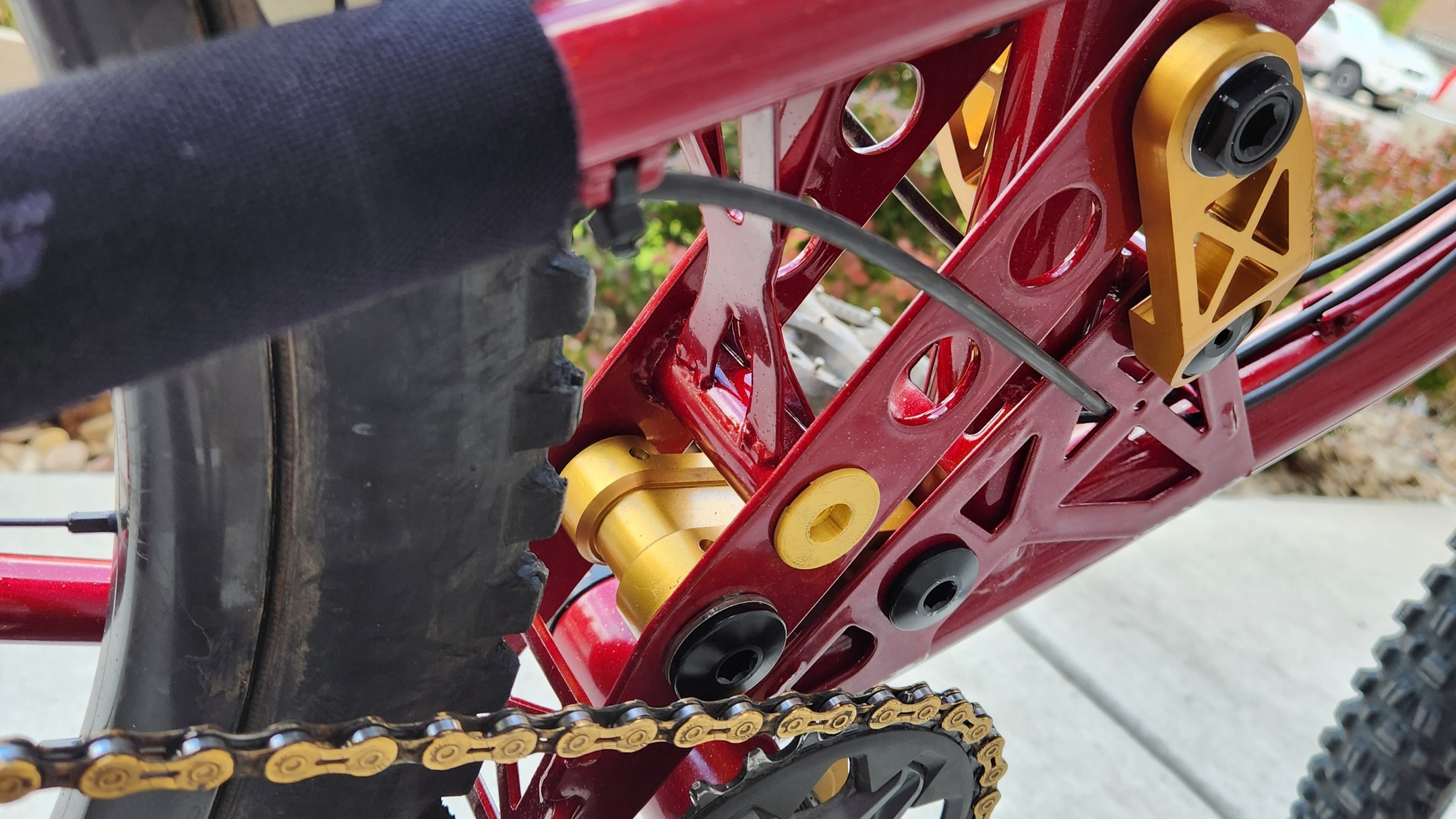
But with different geometry. Shae explained that he leans more toward the “unusual” side when it comes to body proportions. He’s tall (6’1”), with only a 30” inseam. While he typically needed a size large on most bikes to keep the cockpit from feeling incredibly cramped, the seat tubes were almost always too long. Designing his own bike would fix that easily.
The result was a short 400mm seat tube (Shae said that is roughly 40mm less than average) that still accommodates a long dropper post. Aside from the shorter seat tube, the High Horse doesn’t have major geometry standouts — a 480mm reach and 445 chainstays — except for a pretty tall stack at 660mm.
Shae again credits his long torso and short legs for the DH bike-inspired stack height.
The High Horse isn’t the only bike he has built
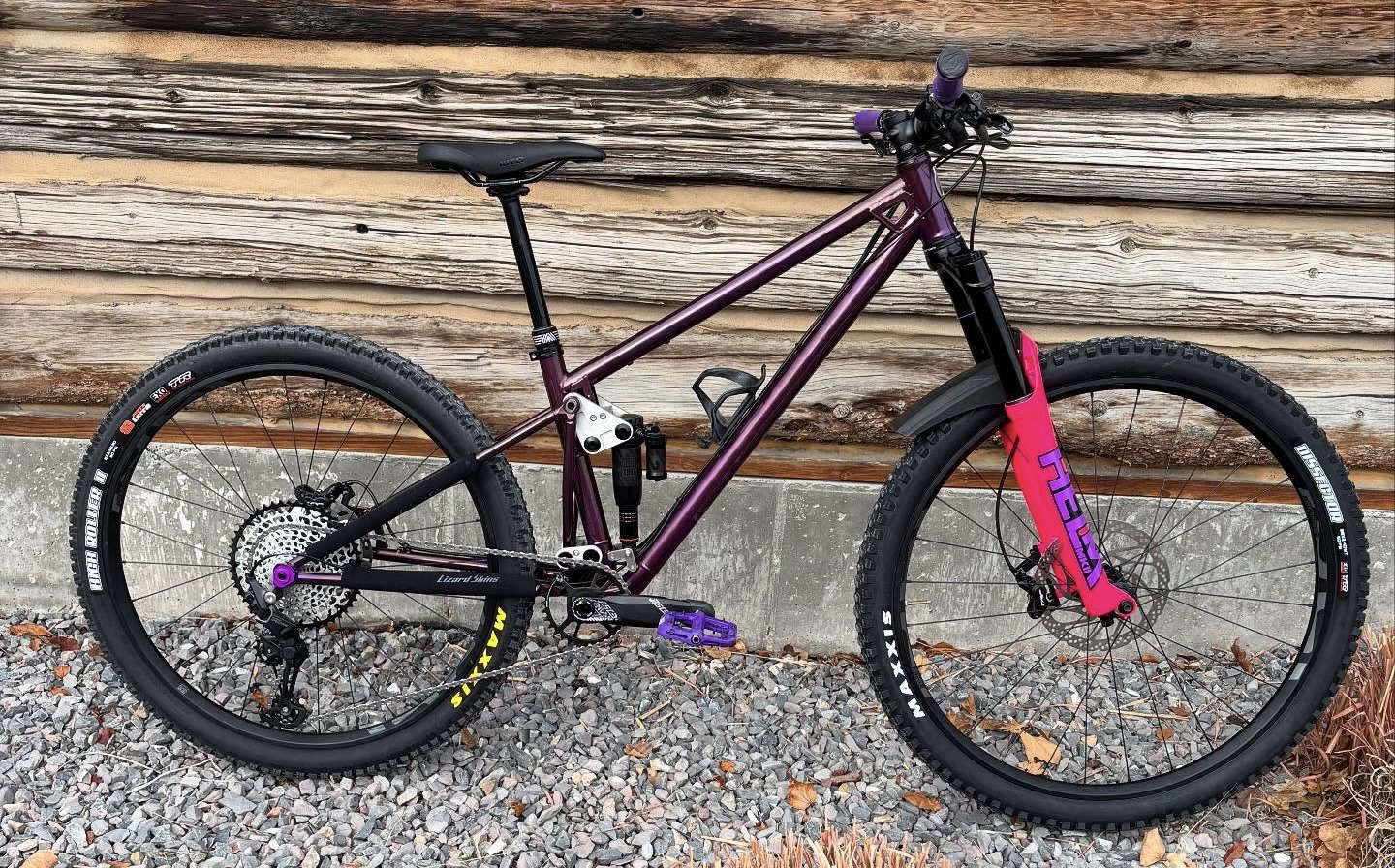
Shae also designed and built a full-suspension bike for his wife. While he still used steel, two key differences set it apart from the frame he made for himself. First, he designed the frame with a DW-Link-like suspension platform. Second, he 3D-printed the bottom bracket and parts of the rear triangle in stainless steel.
Before the steel frame, Shae said his wife was riding a Santa Cruz Bronson that she got along with fairly well. The Bronson inspired much of the new bike’s geometry, with a few minor tweaks here and there.
Bronson-inspired geometry and travel numbers, steel instead of carbon, and DW-Link-style suspension. Shae said the end result is a bike that fits her like a glove and weighs a little over 34lb. (His High Horse is closer to 39lb.)
And an e-bike!?
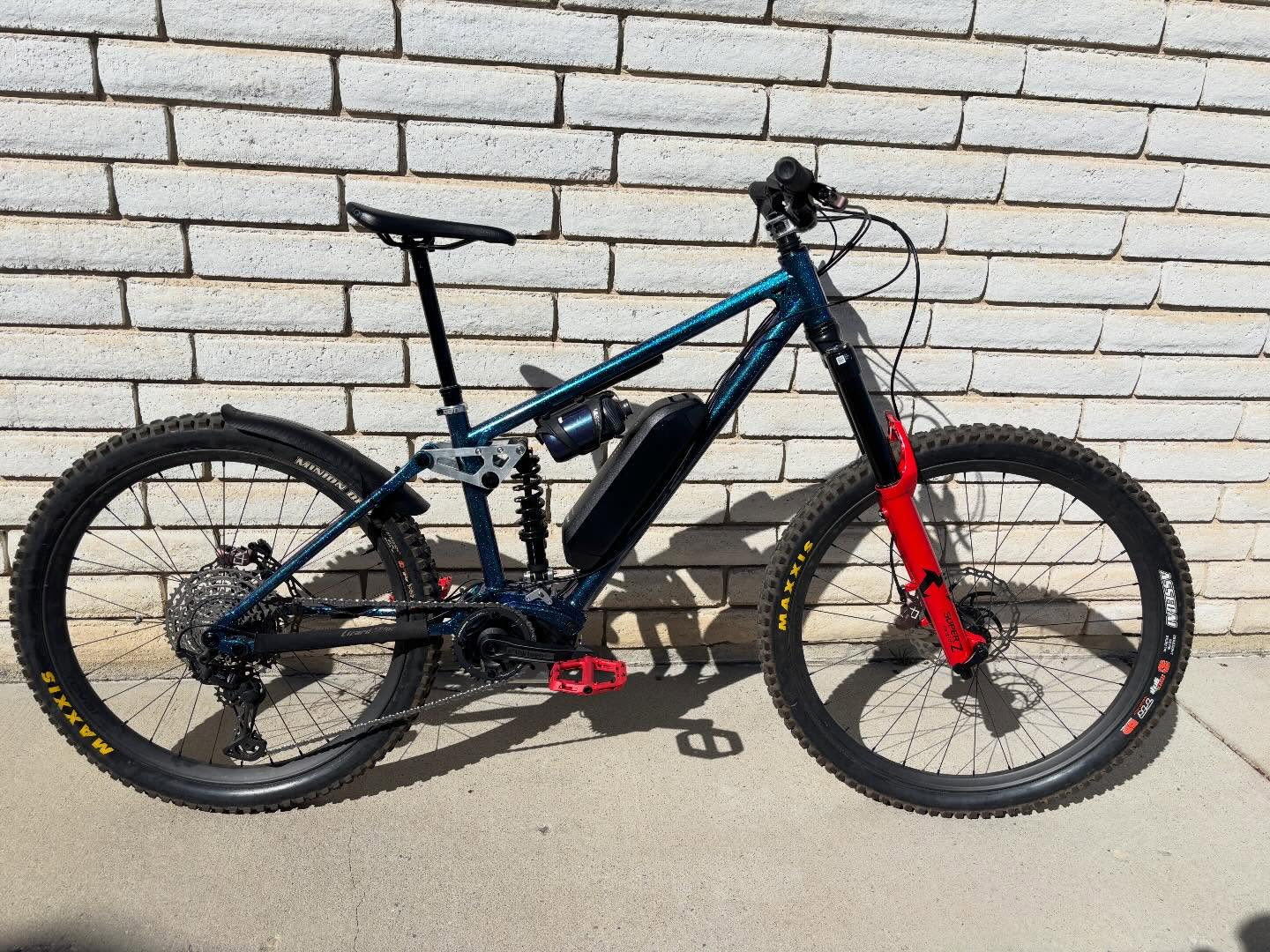
Once you’ve built an enduro bike for yourself and a trail bike for your wife, the next natural step is an e-bike. And Shae went all out — 180/170mm (F/R) travel, Bosch drive unit, and a four-bar suspension platform.
“Four-bars are harder to make, in my opinion,” Shae said. “I thought it was going to be easier, but I think I will only do dual-link bikes from now on.”
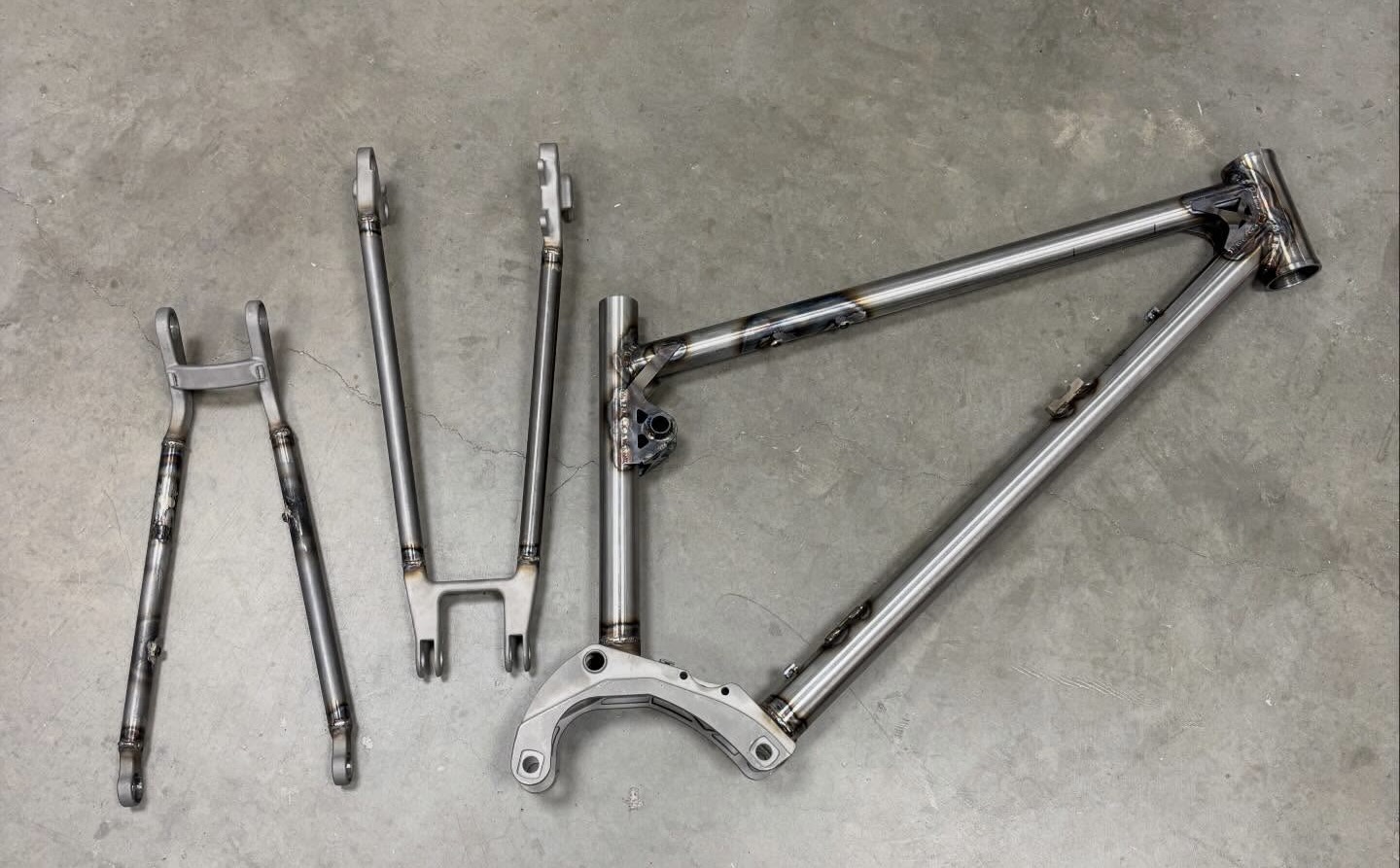
I also assumed a four-bar bike would be easier to build because, well, they are so prevalent. But, in Shae’s experience, dealing with the different jigs for the chainstays, seat stays, and front triangle made it much more complicated. Plus, putting bearings in the frame rather than a link is riskier because links are easier to replace. In his opinion, four-bar bikes are more prevalent because they are easier to tune, not necessarily to make.
Shae’s most recent creation
For his latest bike, Shae is experimenting more with 3D-printing and wants something a little more pedal-friendly. He is thinking short travel — 125mm rear end paired with a 140mm fork. He also says it will be a DW-Link variation.
“It’s kind of like a modified DW link,” Shae said. “The difference is that the rear shock mount is connected to the rear link, so it all floats on one unit.”
This is where the 3D-printing comes in. Shae said he can print a “bottom bracket cluster” as one piece, which cuts out a lot of fabrication. Not only will this reduce overall build time, but Shae thinks it will also knock some weight off. He is shooting for under 32lb.
He also said he is going to tune the anti-squat to vary by only 4% across the entire travel range. “It is going to be a really consistent feeling when I pedal. We’re going to find out if it rides poorly, but regardless, it will pedal consistently!”
Keep up with the latest mountain bike news by adding Singletracks as a preferred source on Google.
<!–
Related articles
–>
jQuery(function() {
postpayloads._686855c453edf6b59b3ac9565773b28f = {“ids”:”290363,719789,727985,617141″,”posts_per_page”:null,”offset”:0,”style”:”4up”};
postcounter._686855c453edf6b59b3ac9565773b28f = {start: 0, step: 0, end: 0};
});