[analyse_image type=”featured” src=”https://images.euronews.com/articles/stories/09/94/94/33/1200x675_cmsv2_c17ad27c-0efa-55d5-a6e5-2d02d674fc45-9949433.jpg”]

Hungary MPs vote to cut anti-LGBTQ+ legislation from Orbán-era law
EU ends anti-corruption funding curbs on Hungary, freeing €4.2bn
Stellantis, Filosa: “Too much capacity in Europe”, strikes deals to avoid closures
From Sofia to Verona: Europe’s 10 best city breaks for 2027
Hungary MPs vote to cut anti-LGBTQ+ legislation from Orbán-era law
EU ends anti-corruption funding curbs on Hungary, freeing €4.2bn
Stellantis, Filosa: “Too much capacity in Europe”, strikes deals to avoid closures
From Sofia to Verona: Europe’s 10 best city breaks for 2027
A talking glove, a 90-second health check and a drone interceptor: Meet Uzbekistan’s young inventors
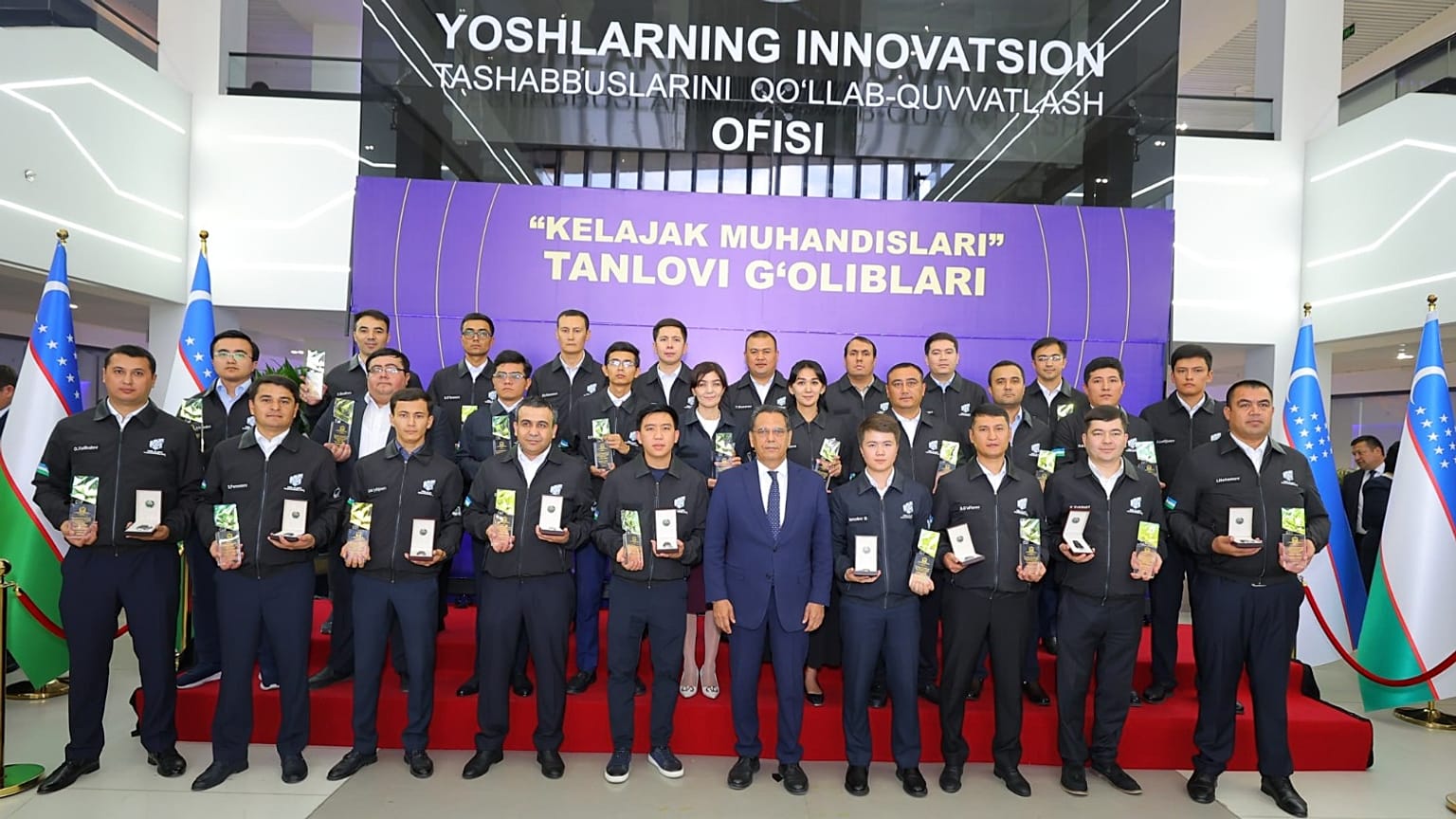
Winners of the Future Engineers competition
– Copyright Ministry of Higher Education, Science and Innovation

 Facebook
 Twitter
 Flipboard
 Send
Send Reddit
 Linkedin
 Messenger
 Telegram
 VK
VK Bluesky
 Threads
 Whatsapp
At an engineering competition in Tashkent, Uzbekistan, 90 finalists were selected from 1,925 applications. The award-winning projects range from early prototypes to devices already in use at clinics and industrial sites, according to their creators.
A sensor-equipped glove designed to convert sign language gestures into speech, a device that takes six basic health measurements in around 90 seconds, and a mining innovation aimed at reducing energy consumption are among the inventions developed by young engineers in Uzbekistan.
 ADVERTISEMENTADVERTISEMENT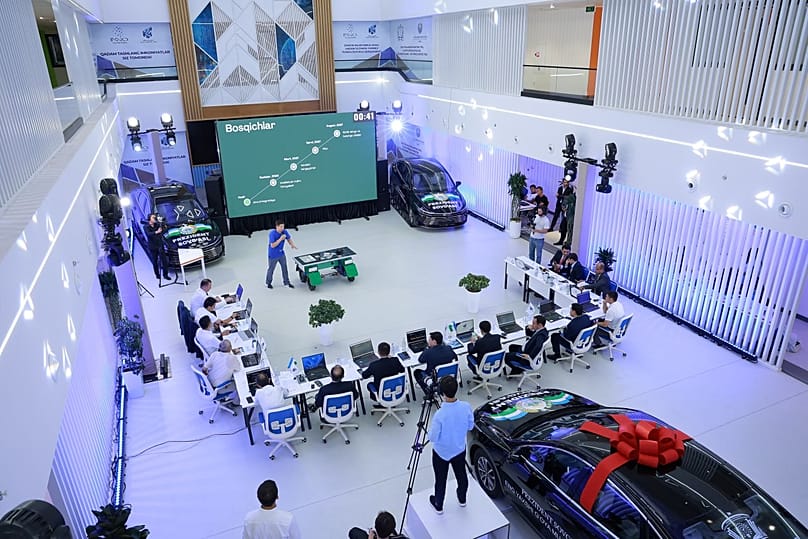
The projects featured in Kelajak muhandislari (Engineers of the Future), a national competition organised by Uzbekistan’s Ministry of Higher Education, Science and Innovation.
The competition attracted 1,925 applications, with 90 finalists selected and the winners honoured in Tashkent on 29 September.
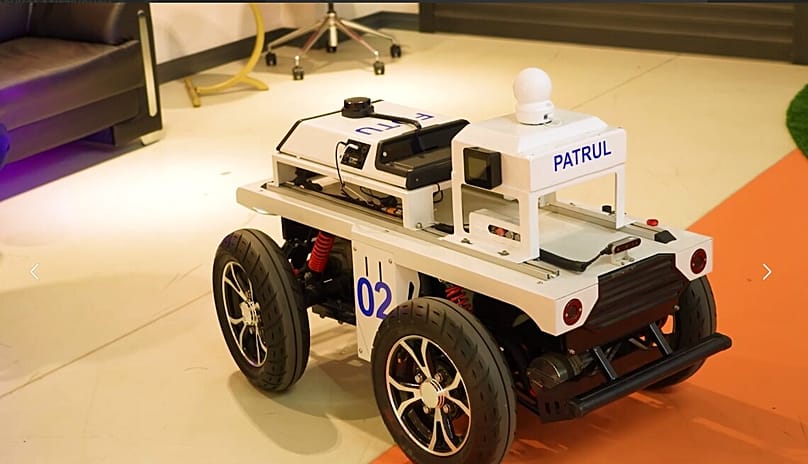
The award-winning inventions are at different stages of development. Some remain prototypes, while others, according to their creators, are already in use beyond university laboratories.
A smart glove to bridge a communication gap
Among the winners was engineering student Abduqodir Latifjonov, whose project, ImoVox, took second place in the student category for Best Idea.
He developed a sensor-equipped glove after witnessing the difficulties some sign language users face when communicating with people who do not understand them.
“I started thinking: in this age of technology, why can’t we create a solution that understands their signs and turns them into speech that everyone can understand?” he told Euronews.
Adapted to Uzbek sign language, the prototype uses sensors to track finger and hand movements in three dimensions.
Individual gestures are recorded and assigned meanings, allowing the device to recognise them and convert them into speech. AI then helps combine individual signs into more natural sentences.
Six health measurements in 90 seconds
Another award-winning invention has moved beyond the laboratory. Asadbek Urunov, a master’s student at Turin Polytechnic University in Tashkent, won third place in the student Best Project category for Body Tester, a device his team calls a “robot doctor”.
The machine measures height, weight, pulse, blood oxygen levels, body temperature and blood pressure in around 90 seconds, storing the results digitally and offering preliminary recommendations.
Urunov says the same measurements can take 20 to 25 minutes when performed separately using conventional equipment.
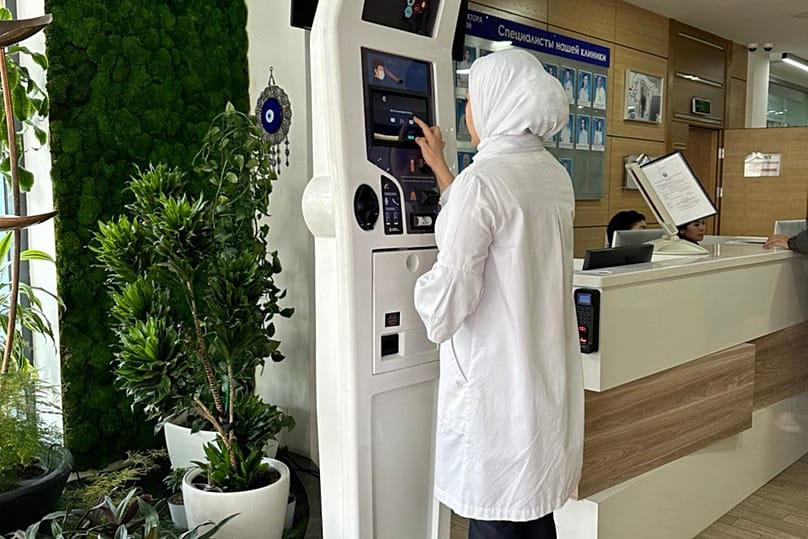
“This is only a preliminary assessment. We should not use it to make a final medical conclusion,” he told Euronews.
According to Urunov, the device is already in use in around 30 organisations, including public institutions and clinics.
Reducing energy use in ore processing
Bekzod Gafforov won first place in the student Best Invention category for a redesigned lining used in industrial ball mills, which grind ore before further processing.
Inside these rotating machines, heavy metal balls crush and grind the ore. The lining protects the machinery from wear and influences how the balls move, affecting grinding efficiency.
A master’s student at the Graduate School of Business and Entrepreneurship, Gafforov developed the new lining with specialists from Navoi State University of Mining and Technologies, combining wear-resistant steel and cast iron.
He says it is already in use at facilities operated by Navoi Mining and Metallurgical Company.
“According to the results, its service life increased by between one and a half and two times, grinding efficiency improved by 30 to 35%, and energy consumption fell by 5 to 10%,” he told Euronews.
A robotic platform moves towards production
Dilmurod Rustamov of Turin Polytechnic University in Tashkent won second place in the student Best Project category for BARLOS, a hybrid unmanned ground vehicle that can operate on electricity or petrol. Its modular design allows different equipment to be fitted for different tasks.
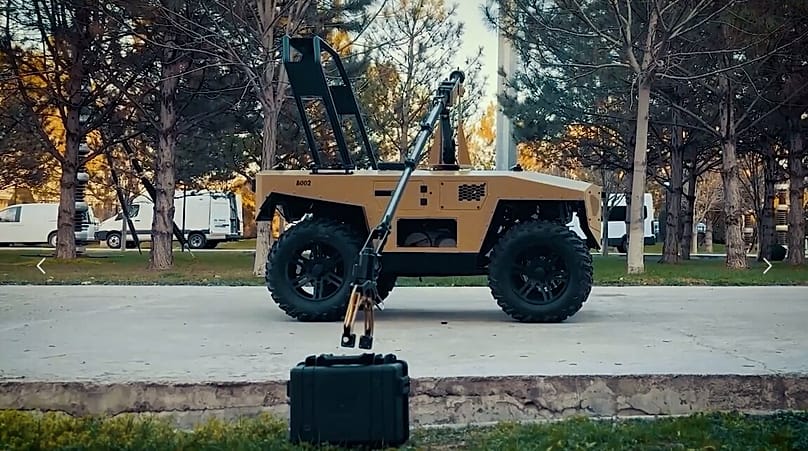
Rustamov says the platform was demonstrated to the head of Uzbekistan’s State Security Service and has publicly described it as military technology.
According to the developer, his team has produced nine vehicles after receiving an order for eight units in four configurations. The team says it has also been tasked with producing 100 units in 2027.
A drone designed to intercept drones
The competition’s first prize in the student Best Project category went to Biloliddin Ismoilov, a second-year student at Tashkent University of Information Technologies, for Shunqor-8, a locally developed drone interceptor.
“We are creating something new, something that has not been done here before,” Ismoilov said.
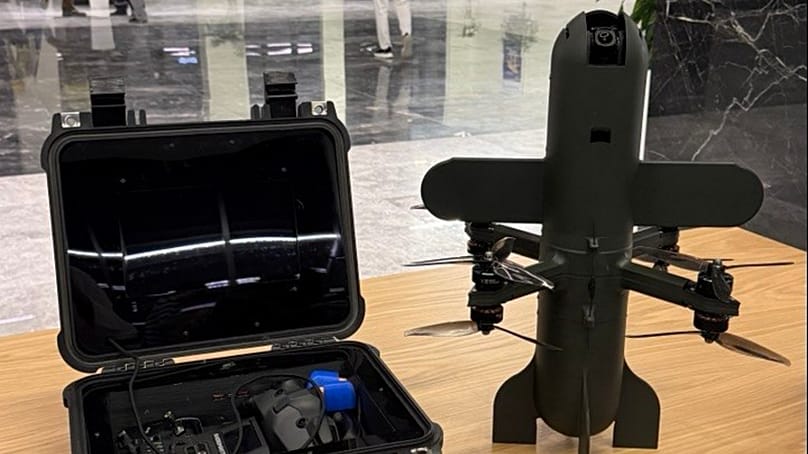
Designed to counter unmanned aircraft, the system can reportedly reach speeds of up to 450 km/h and intercept targets 8–10 kilometres away, according to information released by Uzbekistan’s Ministry of Higher Education, Science and Innovation.
Ismoilov says the technology has undergone eight rounds of field testing, with further trials planned.
Controlling computers with hand movements
Davron Polojanov, who took third place in the student Best Invention category, developed the Hand Control Mouse K10G.
The device uses hand movements in three dimensions to control computers and other electronics without a conventional mouse.
“While an ordinary mouse works on a flat surface, our Hand Control Mouse works in the air, along the X, Y and Z axes,” Polojanov explained. “It allows us to control computers, equipment and other devices through movements in the air.”
One potential application is in education. Teachers could move through presentations while walking around the classroom, rather than repeatedly returning to their computers.
Go to accessibility shortcuts
Read more
Malicious use of AI may end humanity by 2100, study says
Greece’s social media ban for under-15s: What you need to know
Citroën revives its classic 2CV with a new electric concept
Malicious use of AI may end humanity by 2100, study says
Greece’s social media ban for under-15s: What you need to know
Citroën revives its classic 2CV with a new electric concept
Malicious use of AI may end humanity by 2100, study says
Citroën revives its classic 2CV with a new electric concept
Claude AI sent US police a false murder tip, authorities say
Which European countries are winning the tech funding race?

Iran and Russia used ChatGPT for propaganda by ‘fake journalists’, OpenAI says
Citroën revives its classic 2CV with a new electric concept
Spain moves forward with plans to shorten the 40-hour working week
Drivers warned their modern vehicles are ‘wiretaps on wheels’
Malicious use of AI may end humanity by 2100, study says
Which countries are embracing a 4-day workweek and how is it going?
[analyse_source url=”https://www.euronews.com/2026/10/13/a-talking-glove-a-90-second-health-check-and-a-drone-interceptor-meet-uzbekistans-young-in”]