[analyse_image type=”featured” src=”https://images.euronews.com/articles/stories/09/94/39/56/1200x675_cmsv2_ab9372fe-6b94-595a-9510-2fe494aeb0f0-9943956.jpg”]

Uzbekistan’s young engineers build talking gloves and drone hunters
LVMH sales: China slowdown hits Louis Vuitton and Dior

Benjamin Netanyahu orders prosecution of ‘NAZA’ documentary interviewees

Child marriage in Germany: Over 350 cases logged, some brides aged 11
Uzbekistan’s young engineers build talking gloves and drone hunters
LVMH sales: China slowdown hits Louis Vuitton and Dior
Benjamin Netanyahu orders prosecution of ‘NAZA’ documentary interviewees
Child marriage in Germany: Over 350 cases logged, some brides aged 11
Rent surges in Georgia and Armenia as Russians flee fearing mobilisation
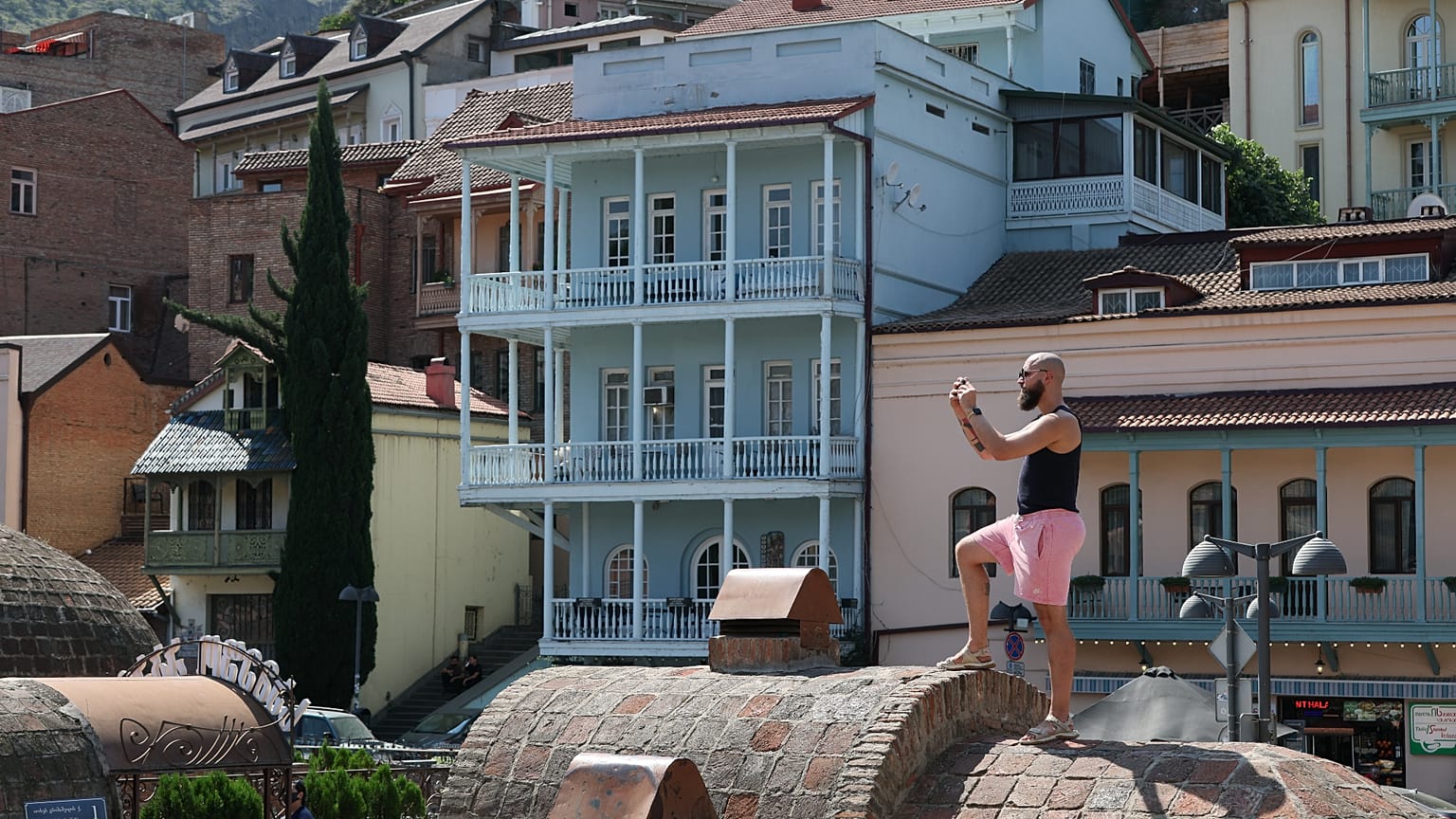
Russians in Tbilisi
– Copyright AP Photo/Zurab Tsertsvadze

 Facebook
 Twitter
 Flipboard
 Send
Send Reddit
 Linkedin
 Messenger
 Telegram
 VK
VK Bluesky
 Threads
 Whatsapp
Monthly rents in Yerevan now run to €800–900 for a two-room flat, up 23.5% year on year in August, while Tbilisi rents have stabilised after 60–70% jumps following the full-scale invasion of Ukraine in 2022. Russian nationals account for 72% of all foreign property transactions in Armenia.
Rental prices in Georgia and Armenia rose 20–30% year-on-year over the summer as Russians fearing a new wave of mobilisation for Russia’s war in Ukraine sought accommodation in neighbouring countries.
 ADVERTISEMENTADVERTISEMENT
Georgia remains the most accessible destination: Russian citizens can stay for up to 360 days without a visa and reset the clock with a brief visit to a neighbouring country. Tens of thousands now live there.
In Tbilisi, monthly rents for standard housing start at €450, rising to €2,700 or more for larger flats or upmarket apartments. The average nominal monthly wage in Georgia stands at around 2,165 lari (€750), according to the National Statistics Office.
After a summer peak, rents in Georgia have fallen and broadly stabilised. The sharpest increases came in 2022–2023, when rents jumped up to 70% following Russia’s full-scale invasion of Ukraine.
Russians accounted for more than 55% of all property transactions involving foreign buyers in 2023, but their share has fallen by a third since.
In 2026, Georgians made up 76% of transactions in Tbilisi’s primary housing market, according to investment bank Galt & Taggart, with Israeli buyers at 11% and Russians at 3%. Demand is more diversified in the Black Sea city of Batumi.
Russians driving up Armenia’s rental market
Demand is most acute in Armenia, where Russians — and Armenians who had been living in Russia and are seeking to avoid mobilisation — are concentrating mainly in Yerevan.
Monthly rent for a two-room flat in the capital currently runs to €850. Russian citizens can enter without a visa and stay for up to 180 days per year.
According to Armenia’s Cadastre Committee, average prices for flats in Yerevan apartment blocks rose 2.9% in August from July and 23.5% year on year. Russian nationals account for around 72% of all property transactions carried out by foreign nationals in Armenia.
A 10% tax, now required when registering lease contracts with the Cadastre, is typically paid by tenants.
In August, foreign citizens took part in 506 purchase and sale transactions nationwide, representing 7.6% of all deals, with 70.2% of those purchases — 177 properties — made in Yerevan.
The average nominal monthly wage in Armenia is 320,763 dram (€790), with substantially higher pay in sectors such as IT, finance and mining.
Next stop Belarus
Belarus has drawn Russians since Moscow’s all-out war began, first as a transit point and later as a place to stay.
After partial mobilisation was announced in September 2022, demand for short and medium-term rentals in Minsk and border cities such as Brest and Gomel surged sharply.
With European borders closed to Russians and sanctions tightening, Belarus has since attracted longer-term residents and property buyers.
Russians can apply for a temporary residence permit, with a rental contract serving as proof of accommodation and while some websites are blocked Belarus has not gone as far as Russia in restricting the internet.
Russians accounted for about 10% of property deals in Minsk in March, according to National Cadastral Agency data, compared with around 2% in 2022.
Demand among Russians for residential property in Minsk has risen over 10% so far in 2026, and the city’s housing price per square metre has increased 25.6% since January.
The two largest waves of emigration from Russia since the full-scale invasion came in 2022: first in February and March, then in September, when President Vladimir Putin announced partial mobilisation.
Go to accessibility shortcuts
Read more
Could the European Security Council be the EU’s answer to hybrid attacks?
No respite for Ukraine despite Trump’s energy truce announcement
Rent surges in Georgia and Armenia as Russians flee fearing mobilisation
Bulgaria to summon Russian ambassador after ships hit in Black Sea
Oleshky official warns against giving Russia more Ukrainian territory

‘Breaking Bad’ actor RJ Mitte dies at age 34, officials say
Child marriage in Germany: Over 350 cases logged, some brides aged 11

Euronews tops rankings as fastest growing news website
Oil prices drop as stocks rise after Trump touts ‘energy ceasefire’
Ukrainian strikes on data centres and Russian bot activity in freefall
Hochvogel mountain at risk of major rockslide
Ukraine passes minority rights law to end Hungary’s EU veto
EU decries Trump-Putin diesel deal, insists sanctions will continue
[analyse_source url=”https://www.euronews.com/2026/10/13/rent-spikes-in-georgia-and-armenia-as-russians-flee-fearing-mobilisation”]