[analyse_image type=”featured” src=”https://images.euronews.com/articles/stories/09/94/81/70/1200x675_cmsv2_083e985c-c6e0-5e29-b41b-88715f92e01f-9948170.jpg”]

Trump claims Ukraine-Russia energy ceasefire as Baltics stay on alert

Inside IKEA’s second-hand marketplace where furniture is 60% cheaper
Why 2027 is the year to explore the United States by train

Latest news bulletin | October 12th, 2026 – Morning
Trump claims Ukraine-Russia energy ceasefire as Baltics stay on alert
Inside IKEA’s second-hand marketplace where furniture is 60% cheaper
Why 2027 is the year to explore the United States by train
Latest news bulletin | October 12th, 2026 – Morning
North Korea fires ‘several ballistic missiles’ into Sea of Japan, Seoul’s military says
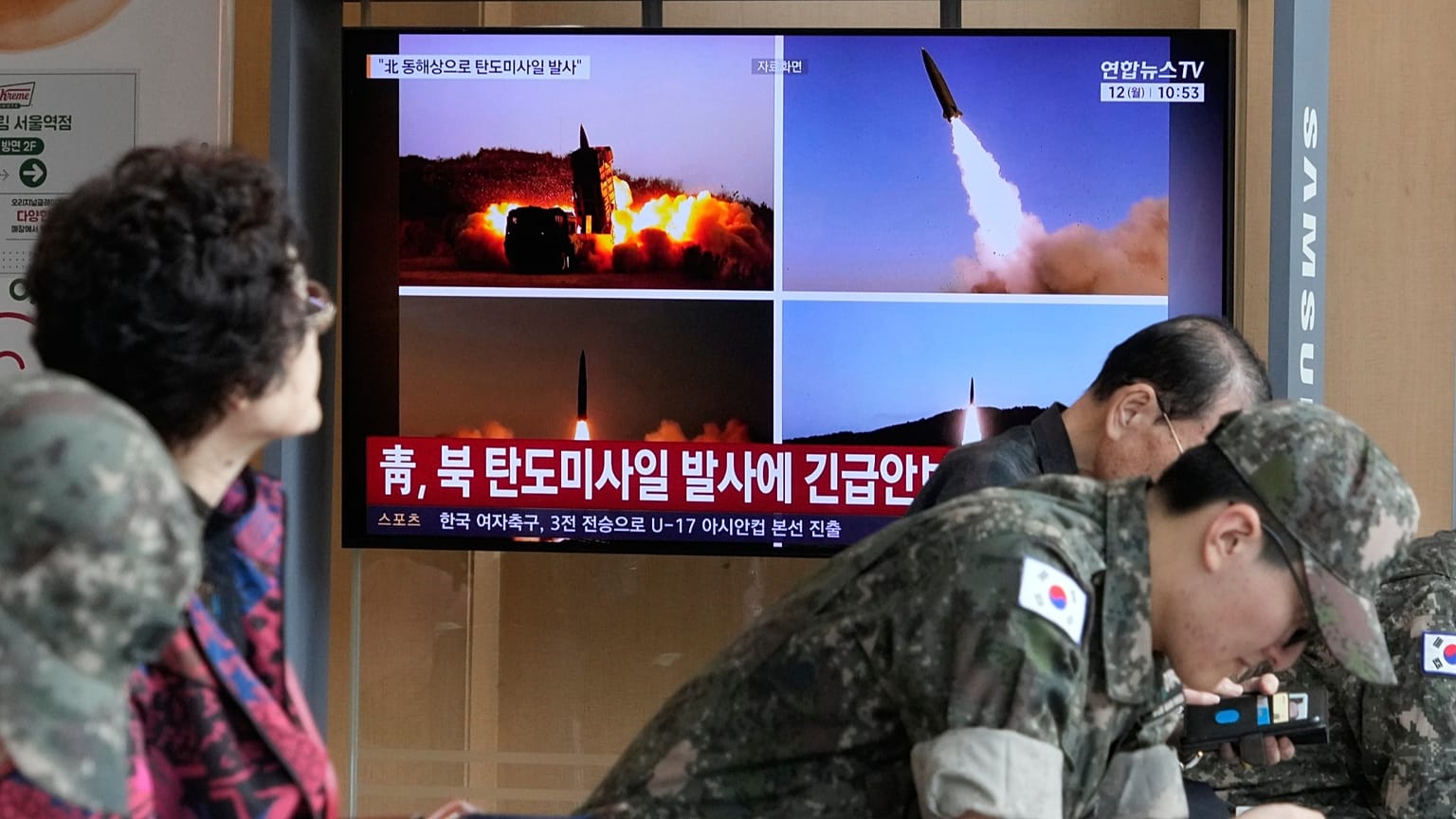
A TV screen shows file images of North Korean missiles launch during a news programme at Seoul Railway Station, 12 October, 2026
– Copyright AP Photo

 Facebook
 Twitter
 Flipboard
 Send
Send Reddit
 Linkedin
 Messenger
 Telegram
 VK
VK Bluesky
 Threads
 Whatsapp
South Korea’s National Security Office convened an emergency security meeting following the launch to review the country’s military readiness.
North Korea fired multiple ballistic missiles off its east coast, Seoul’s military said on Monday, after weeks of mounting friction over a landmine explosion along the heavily fortified border that divides both countries.
 ADVERTISEMENTADVERTISEMENT
Since the blast that injured three South Korean soldiers in the Seoul-controlled area of the Demilitarised Zone (DMZ), both countries have touted the test-firing of upgraded missile technology.
“Our military detected around 09:20 (0220 CET) several ballistic missiles launched from the Pyongyang area towards the East Sea,” the Joint Chiefs of Staff (JCS) said, referring to the body of water also known as the Sea of Japan.
“Our military has stepped up surveillance and vigilance against possible additional launches,” it added in its statement.
Japan’s defence ministry separately confirmed the launch of at least one suspected ballistic missile.
Some of the North Korean missiles detected flew more than 900 kilometres, the JCS said, while Seoul and longtime ally the United States were now conducting an analysis of their exact specifications.
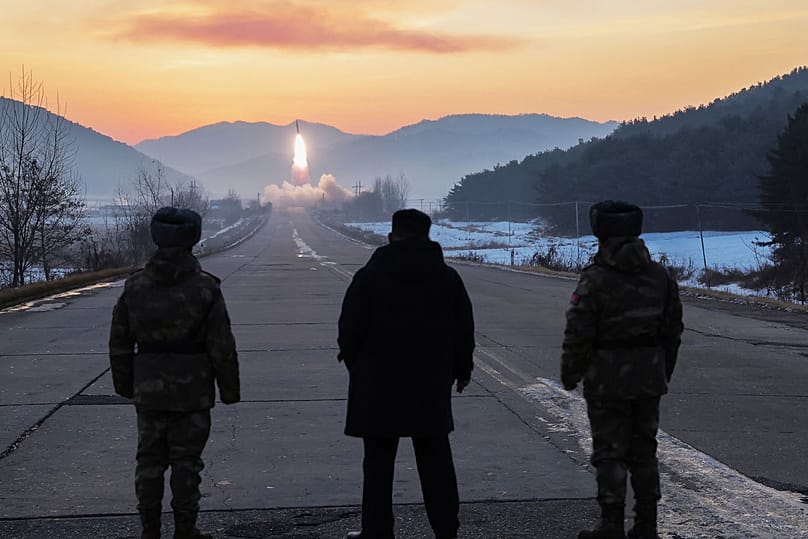
South Korea’s National Security Office convened an emergency security meeting following the launch to review the country’s military readiness.
A joint Seoul-UN investigation last week concluded that North Korea had planted the landmines that exploded in the DMZ over a year ago, something Pyongyang has angrily denied.
Kim Yo-jong, the powerful sister of North Korean leader Kim Jong-un, has blasted South Korean demands for an apology as “despicable” while separately rejecting an offer of medical equipment from Seoul.
Duelling tests
On 3 October, Pyongyang test-fired an intermediate-range ballistic missile that Kim Yo-jong said employed unspecified artificial intelligence technology and was “capable of changing its flight orbit at a low altitude.”
Seoul said days later that it had successfully tested a domestically produced hypersonic glide vehicle (HGV), a weapon carried into the upper atmosphere by rocket boosters or ballistic missiles before gliding towards its targets.

The presidential Blue House said the HGV offered “a new deterrence capability capable of striking key targets within the Korean Peninsula’s operational environment.”
On Thursday, Kim Yo-jong said Seoul must offer “utmost respect” if it hoped to mend ties with the North.
“If they (South Korea) truly wish to restore relations between the DPRK and South Korea, they should be mindful of the other side’s feelings in every word and deed and first demonstrate the utmost respect, consideration and sincerity,” she said Thursday, using her country’s official acronym.
The rising tensions come as US President Donald Trump’s recent overtures to Pyongyang have raised concerns that Seoul, an ally of Washington, could be sidelined in potential nuclear talks involving the North.
In October, North Korea launched several short-range ballistic missiles a day after Trump suggested he might meet with Kim Jong-un this year.
Seoul and Pyongyang remain technically at war as the Korean War ended in 1953 with a truce rather than a peace treaty.
The DMZ is one of the world’s most heavily fortified frontiers and landmine incidents have previously heightened tensions between the two countries.
Go to accessibility shortcuts
Read more
Kyiv open to ‘constructive dialogue’ after Seoul recalls its ambassador amid North Korean POW disclosure row
North Korea fires intermediate-range missile, claiming evasive flight and AI features
North Korea slams South’s claim it was behind DMZ mine blasts, calling it a ‘farce’

Energy ceasefire: Confusion in Kyiv, support from allies

Oil prices tumble as stocks rise after Trump touts ‘energy ceasefire’

Power plants hit in Ukraine despite Trump’s energy ceasefire

Thousands urge EU for climate action at Brussels demonstration

Rent inflation in Europe: Which countries are hit the hardest and why?
Trump says it is time for Ukraine to replace Zelenskyy as leader
Europe’s best Christmas markets to visit this festive season
An El Niño timeline: When will it peak and will it go into 2027?
Protesters take to the streets in Portugal over rising living costs
As Russia escalates, EU realises its Ukraine support won’t be enough
[analyse_source url=”https://www.euronews.com/2026/10/12/north-korea-fires-several-ballistic-missiles-into-sea-of-japan-seouls-military-says”]