{“@context”:”https://schema.org”,”@type”:”Article”,”image”:”https://car-images.bauersecure.com/wp-images/274202/citroen-2cv-concept-20.jpg”,”mainEntityOfPage”:{“@type”:”WebPage”,”@id”:”https://www.carmagazine.co.uk/car-news/first-official-pictures/citroen/2cv-concept/”},”url”:”https://www.carmagazine.co.uk/car-news/first-official-pictures/citroen/2cv-concept/”,”author”:{“@type”:”Person”,”name”:”Gavin Green”,”description”:”Gavin Green is one of the worldu2019s most respected motoring writers u2013 and has written for CAR magazine since the 1980s. Heu2019s twice edited CAR and remains our chief contributor, with a monthly column and bylines in most issues.nA fervent believer in great engineering, simplicity and purity of design, Gavinu2019s love of cars remains undiminished, even at the crossroads where the automobile finds itself in this decade of transformation.”,”image”:{“@type”:”ImageObject”,”url”:”https://car-assets.bauersecure.com/wp-images/14267/gavingreen.jpeg”,”caption”:”Gavin Green”},”sameAs”:[“https://x.com/greenofrichmond”,”https://www.instagram.com/gavingreen49/”],”url”:”https://www.carmagazine.co.uk/author/gavin-green/”},”dateModified”:”2026-10-11T18:00:00+01:00″,”datePublished”:”2026-10-11T18:00:00+01:00″,”headline”:”Citroen 2CV concept: a legend returns”,”publisher”:{“@type”:”Organization”,”name”:”Bauer Media”,”brand”:{“@type”:”Organization”,”name”:”Car Magazine”},”logo”:{“@type”:”ImageObject”,”url”:”https://car-assets.bauersecure.com/images/logos/car.200×88.png”}}}
Citroen 2CV concept: a legend returns


► Citroen brings back the legendary 2CV
► Retro cues, light weight and simple construction
► Concept previews production car for 2028
This is quite possibly the biggest star of the 2026 Paris motor show: the new Citroen 2CV concept.
Was there ever a more challenging brief for reviving a famous old name? Where modern cars tend to be square, the 2CV was round. Where modern cars tend to be low, the 2CV was high. While modern cars tend to be wide, the 2CV was narrow. While modern cars are designed for motorways, the 2CV was designed for muddy unpaved roads. Consequently, while modern cars are fast, the 2CV was (very) slow.
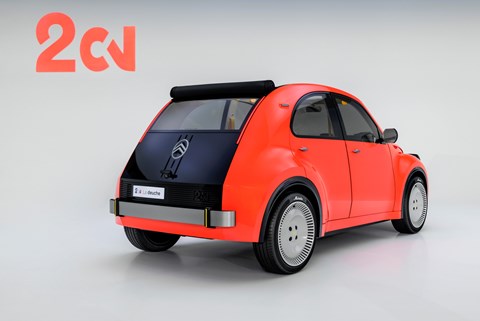
The new 2CV Concept previews a production car on sale in 2028 that will look ‘very close’ to the concept, says design boss Pierre Leclercq, who we meet at Citroen’s R&D HQ in Vélizy, just south-west of central Paris. Target price is 15,000 euros, or under £13,000. Except for the Ami quadricycle, it should be Europe’s cheapest electric car.
Citroen really has brought the 2CV back…
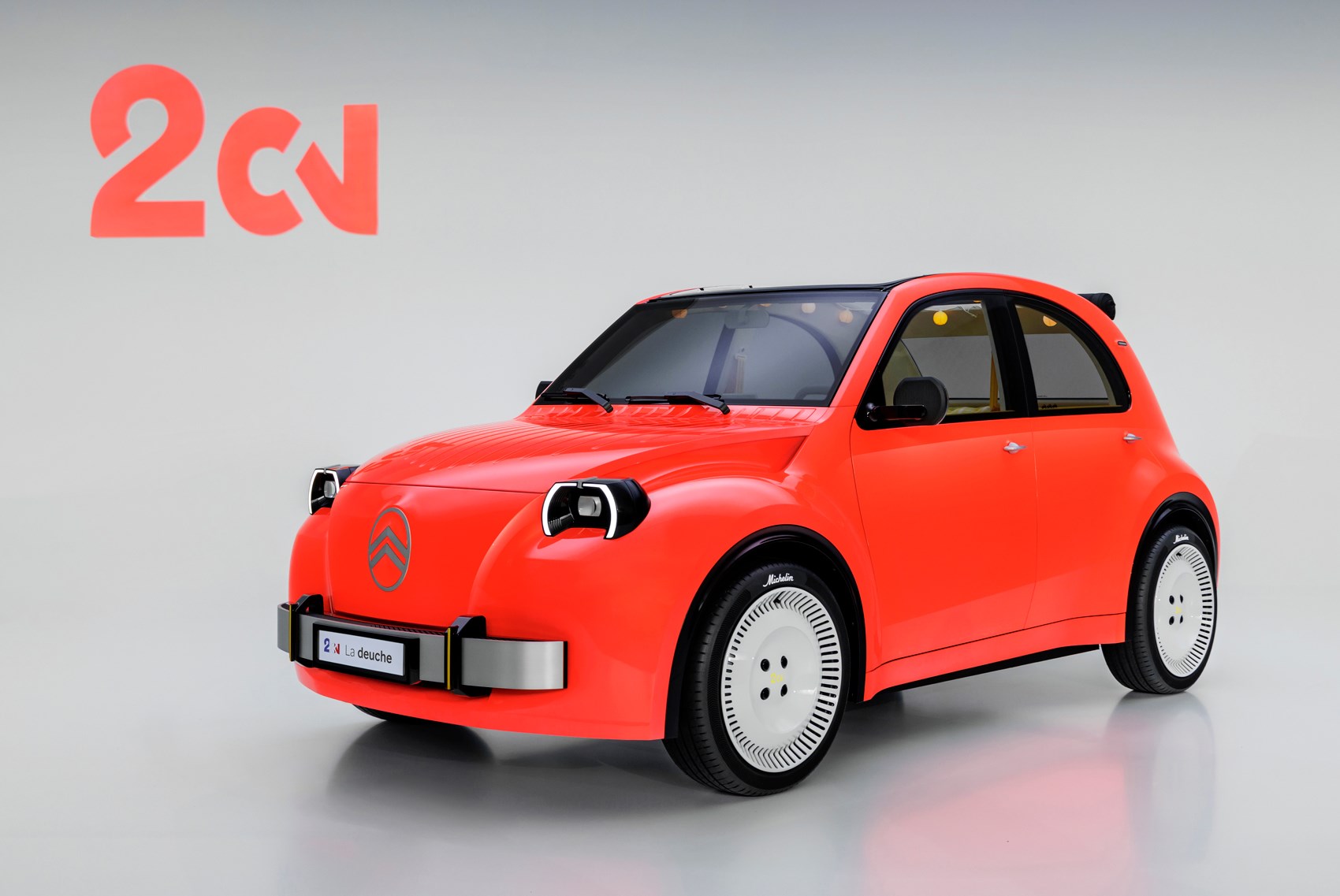
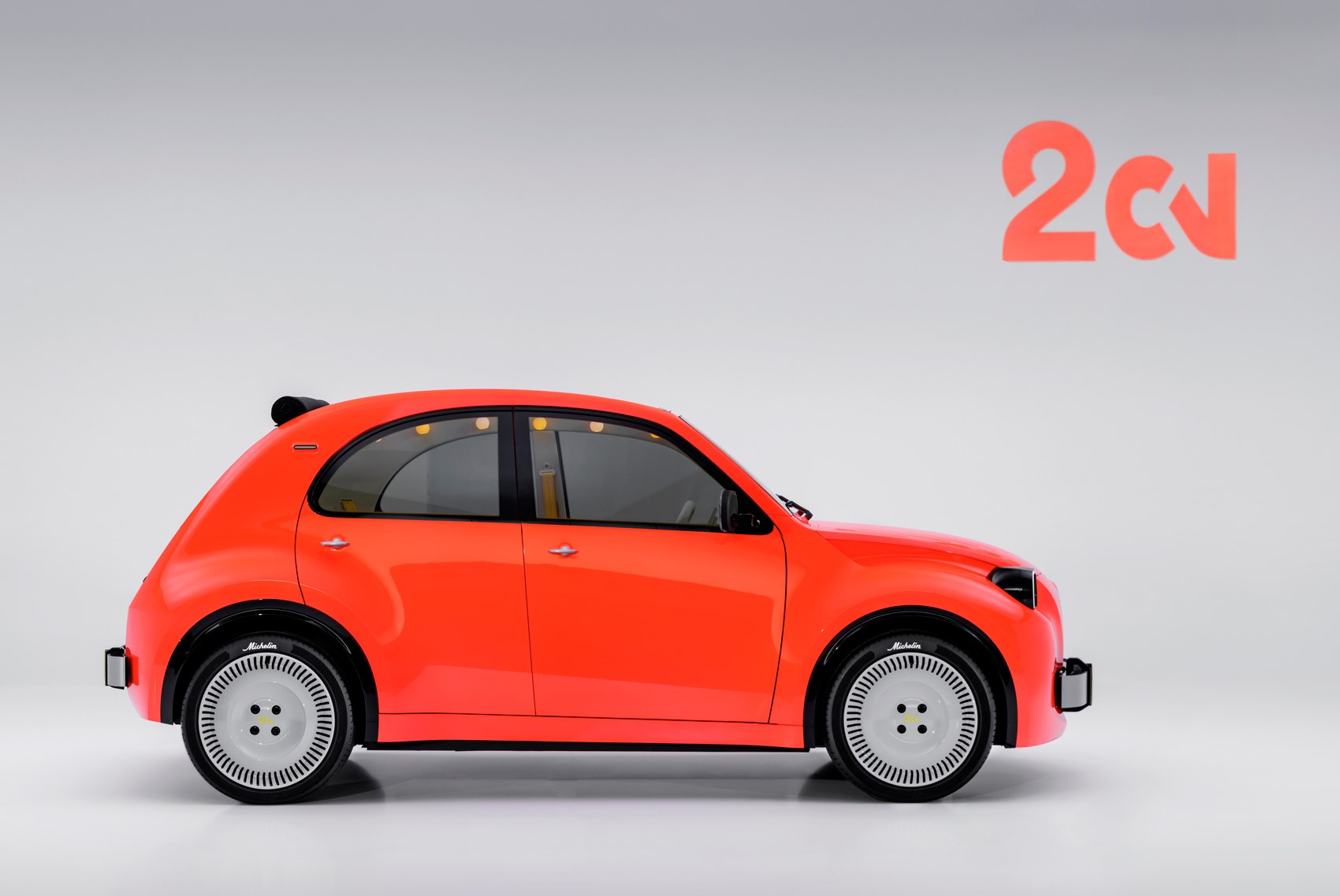
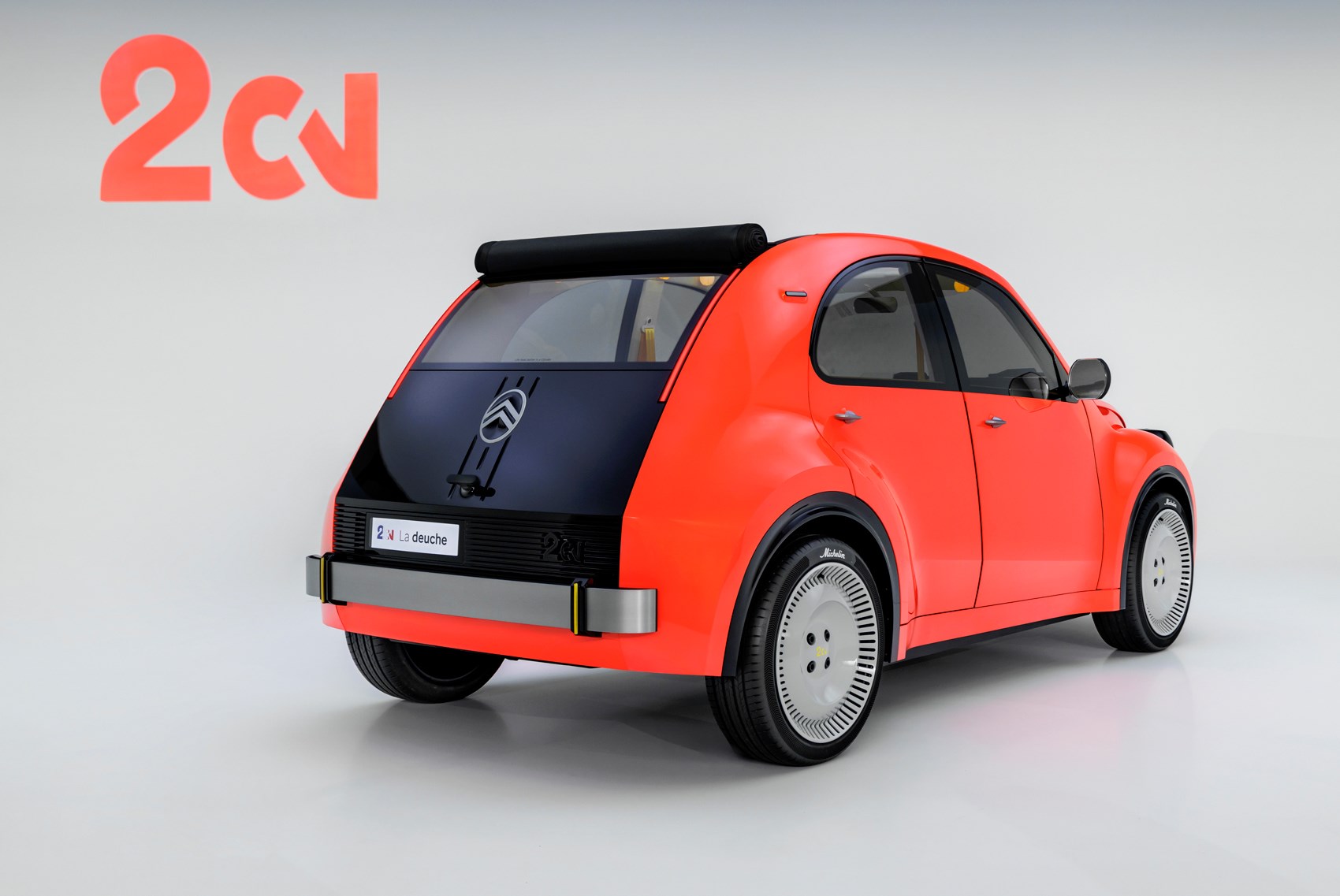
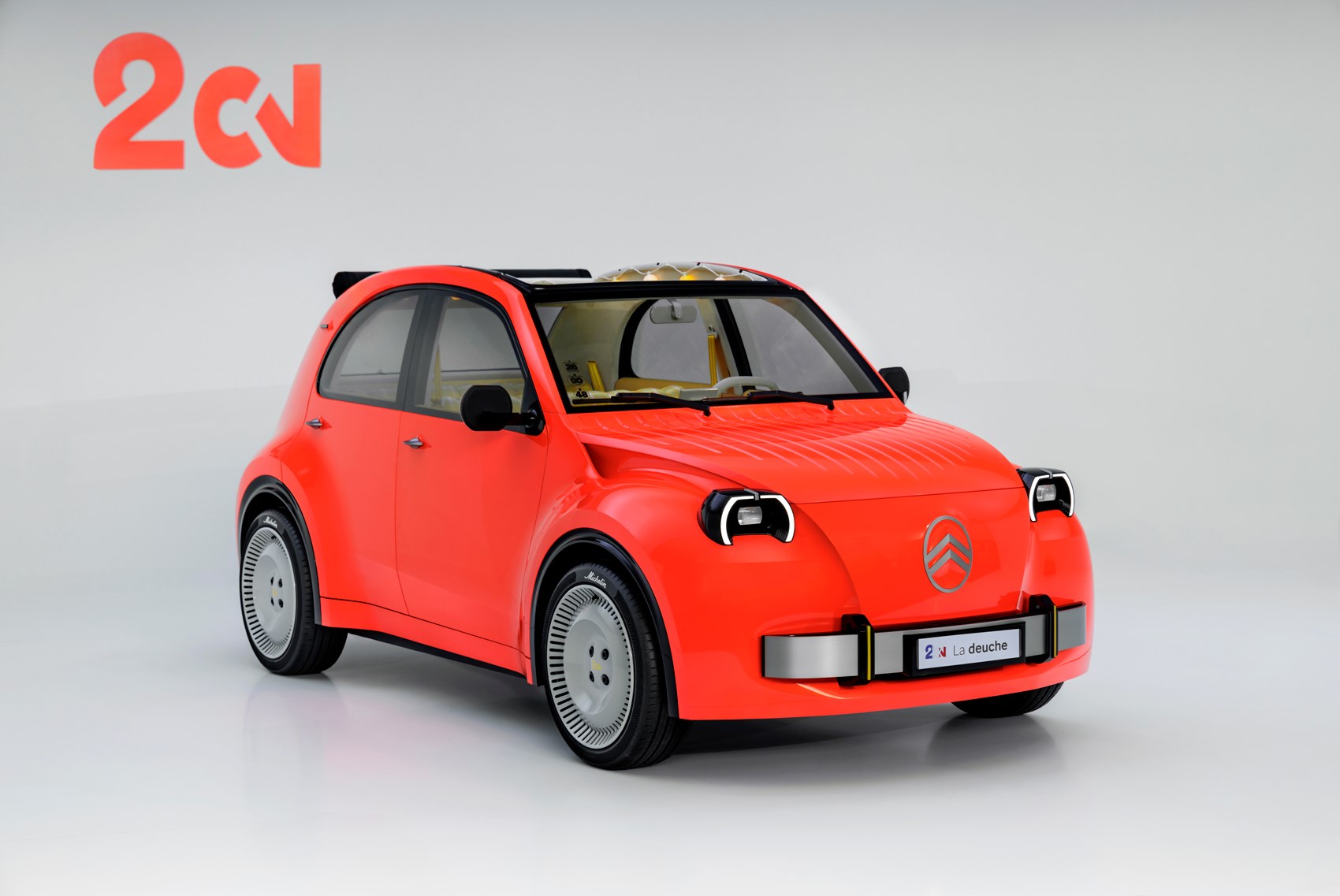
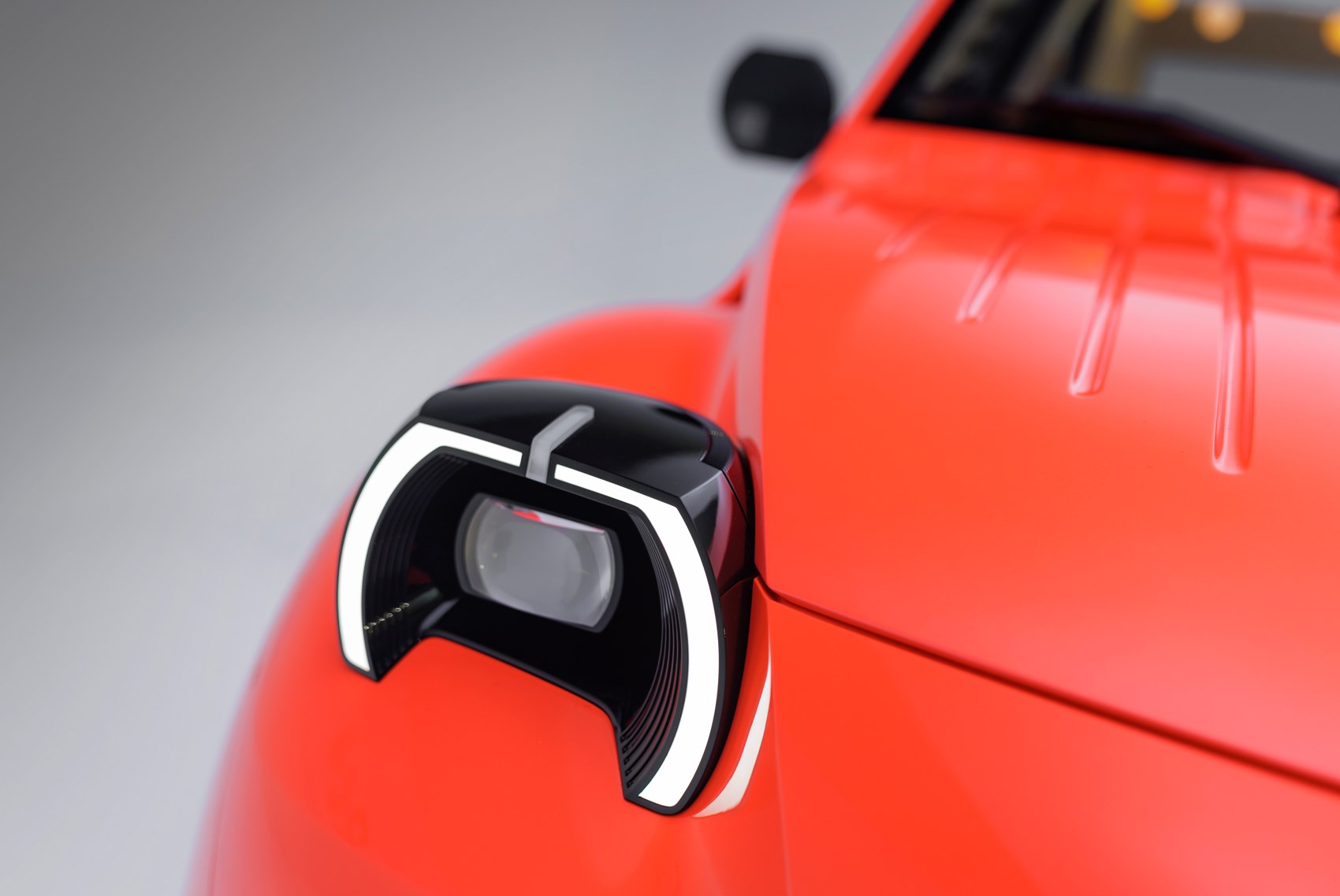
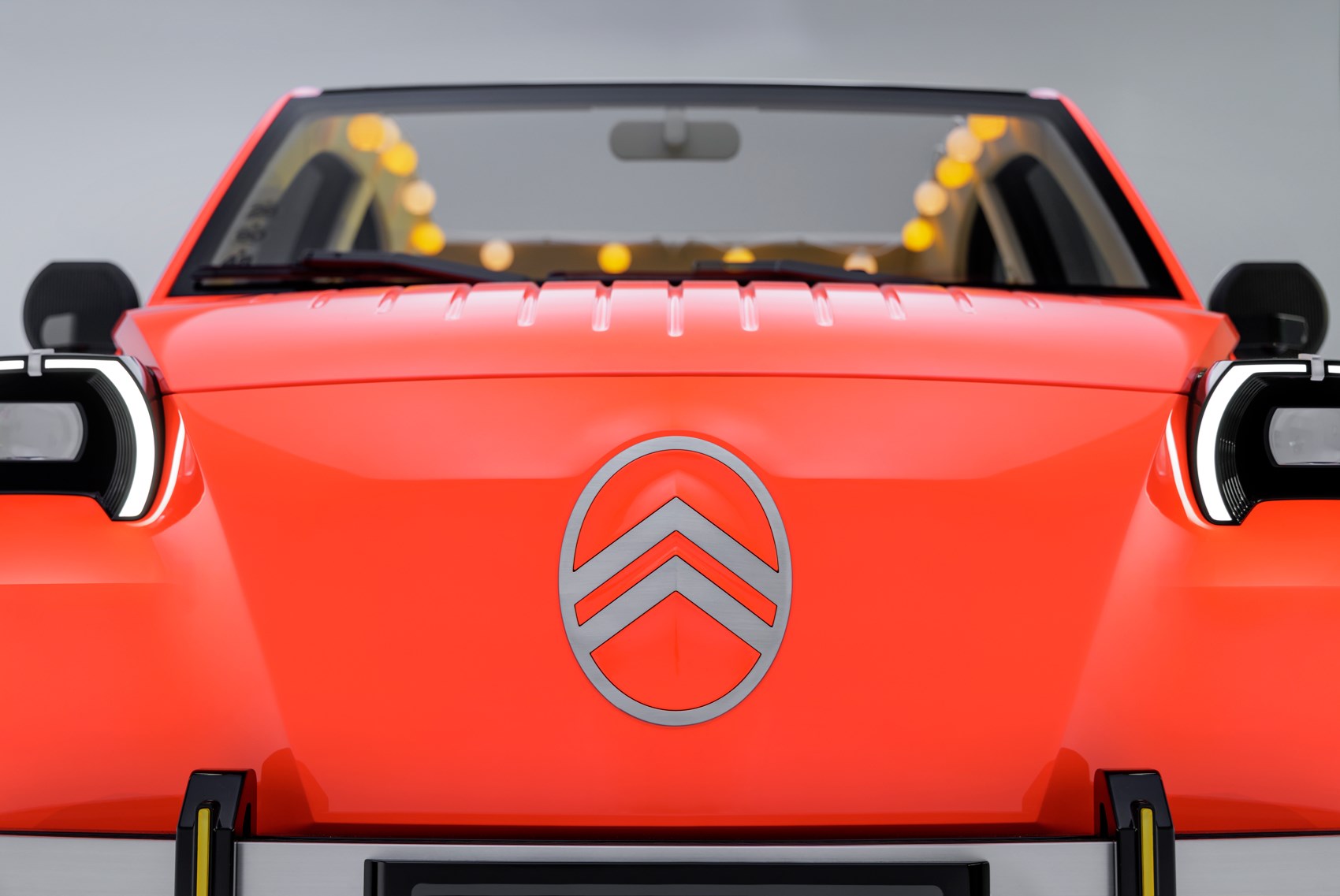
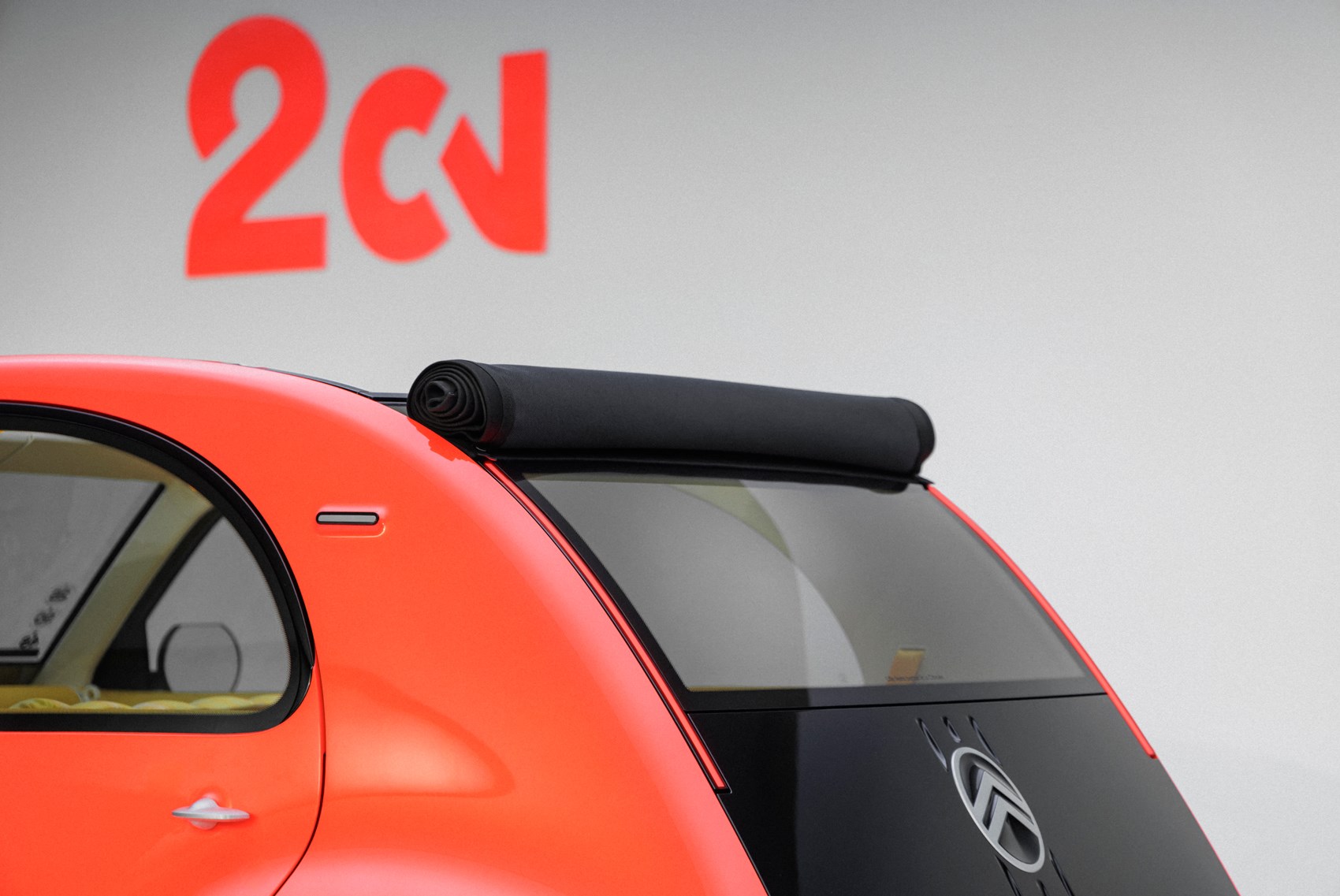
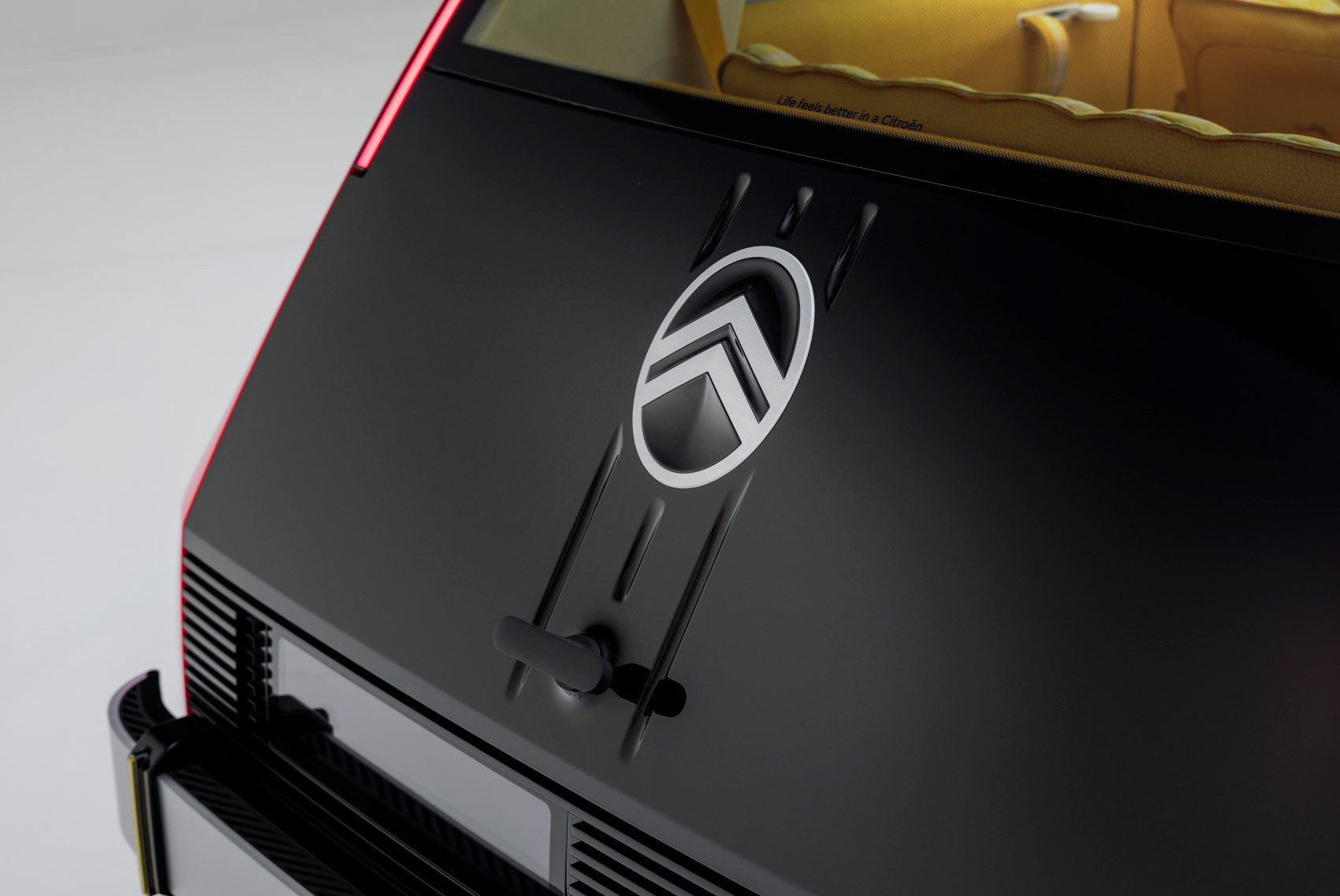
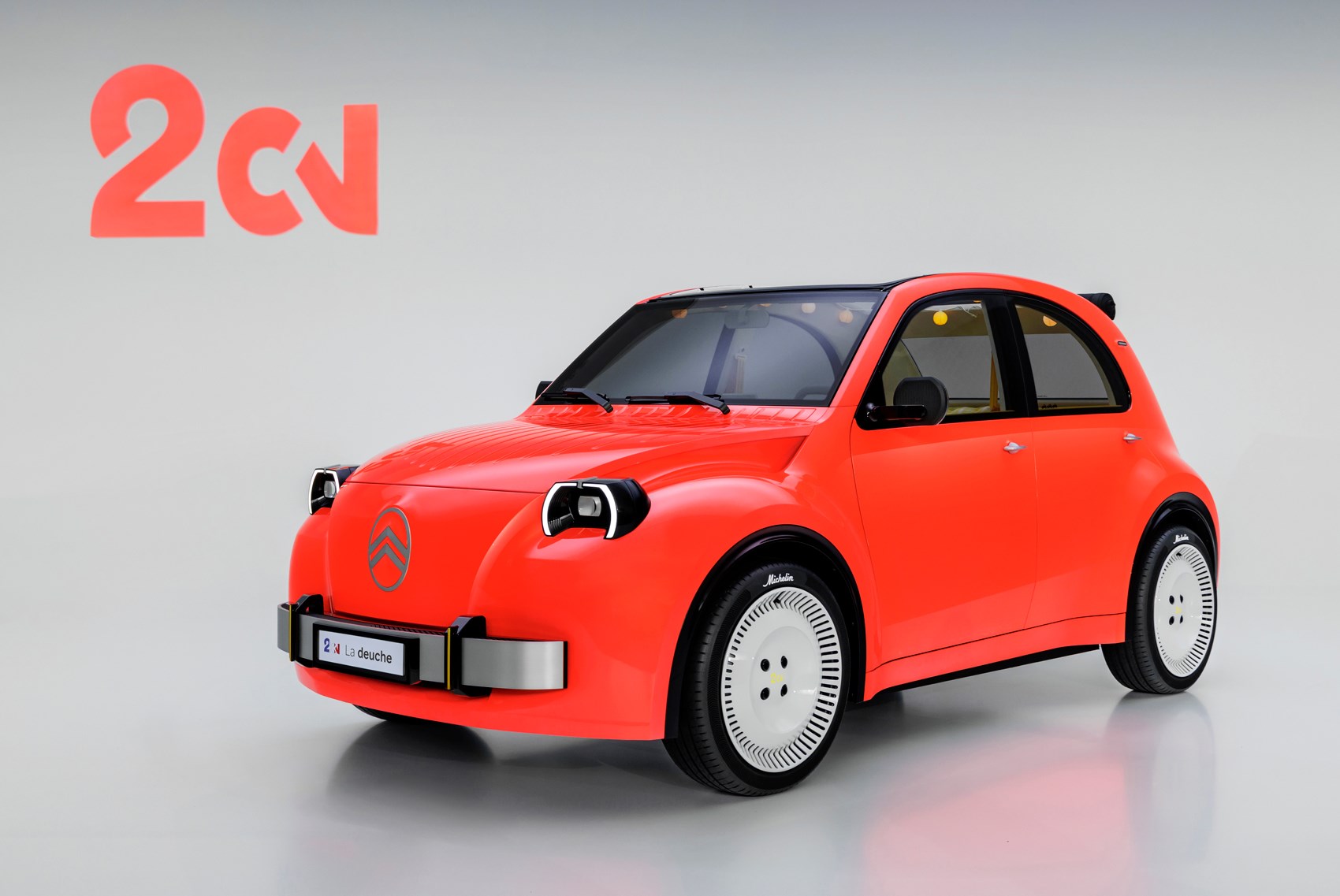
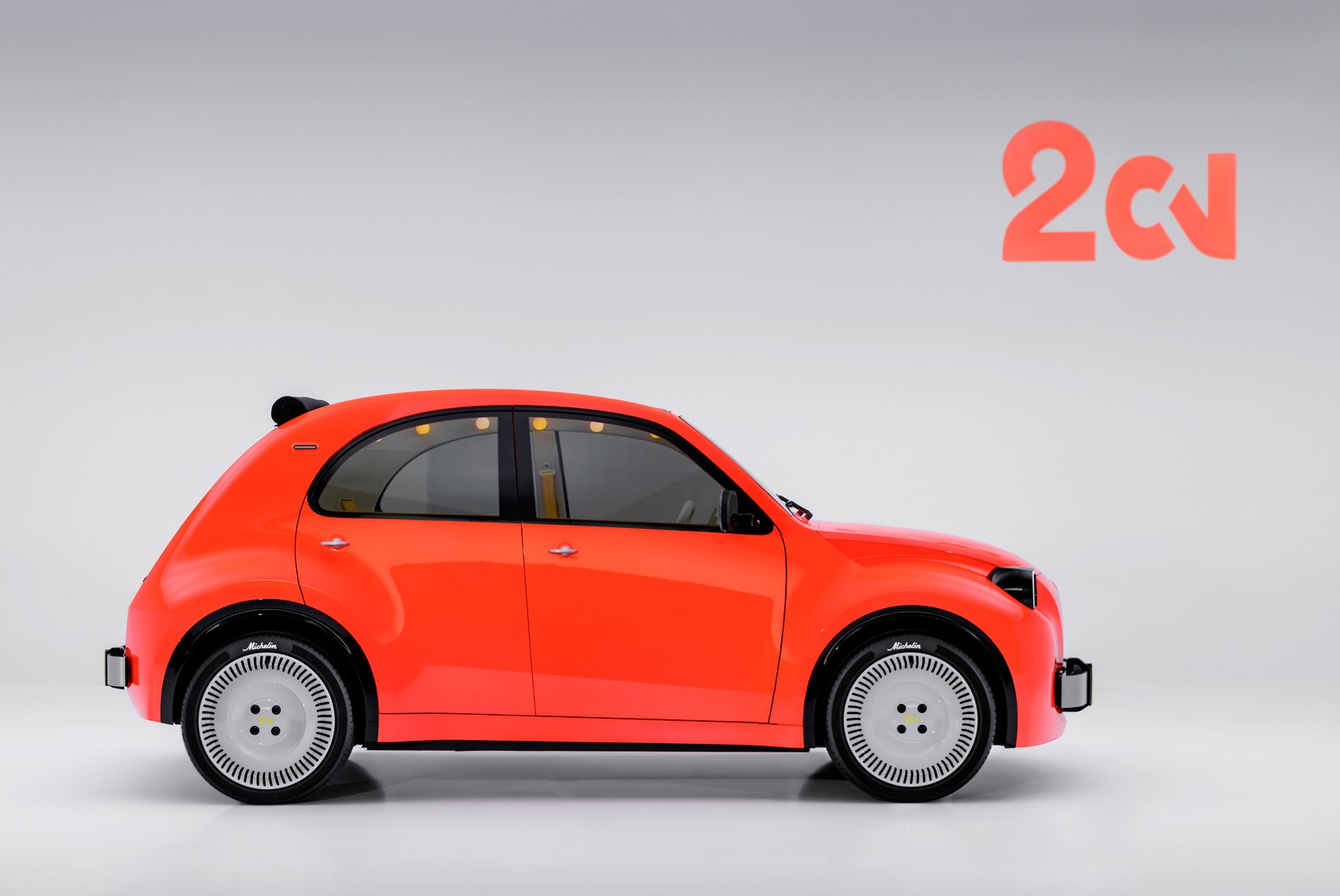
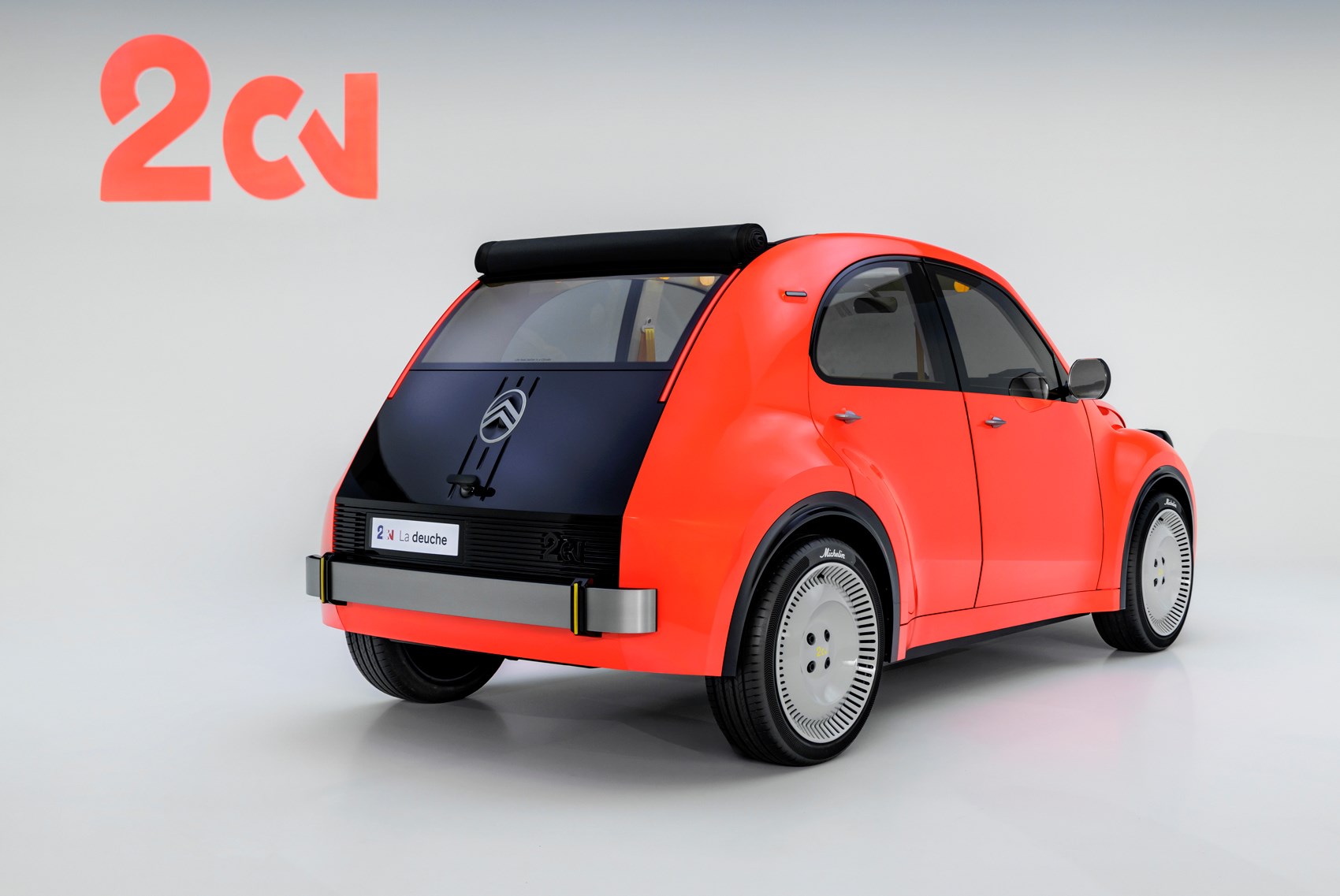
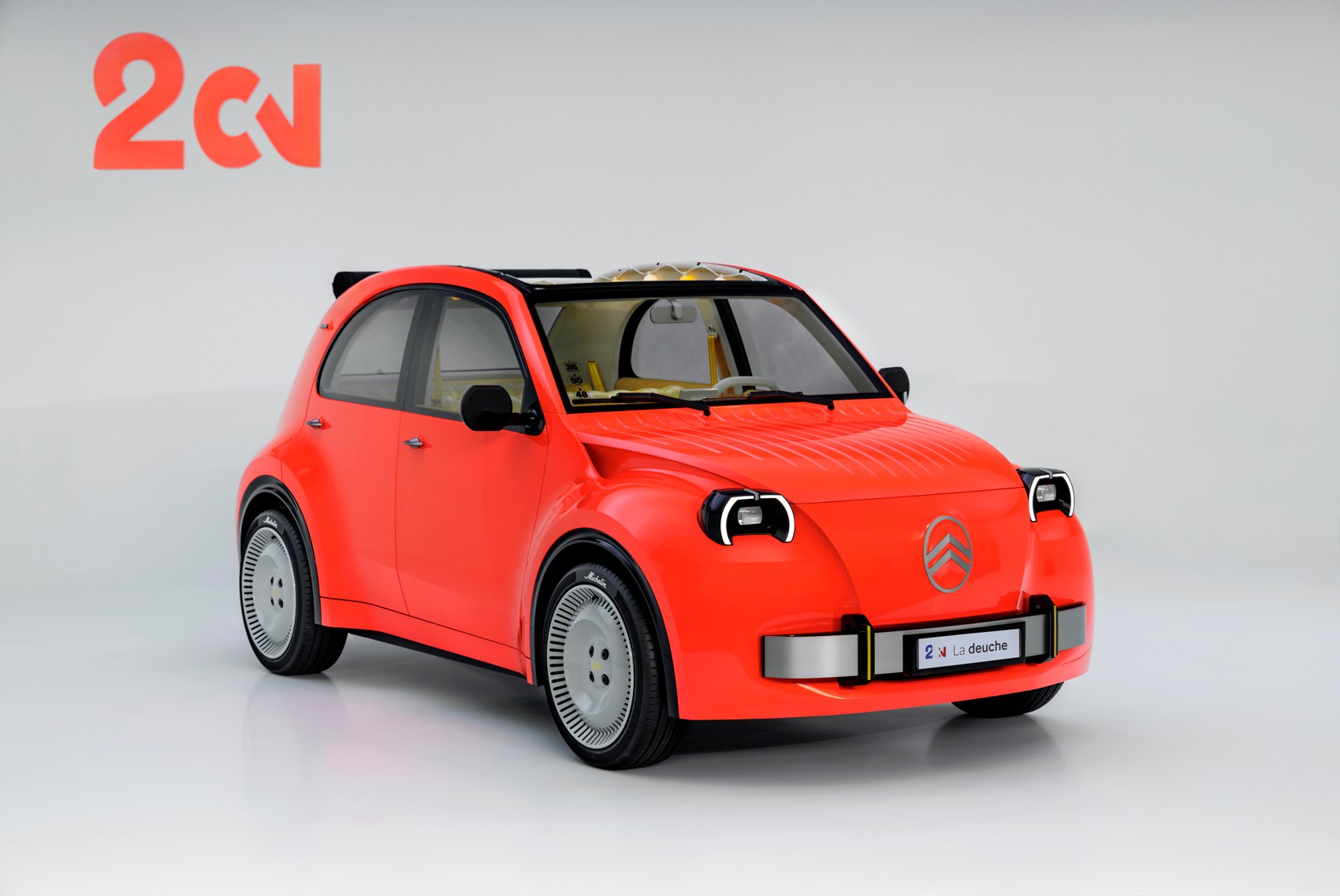
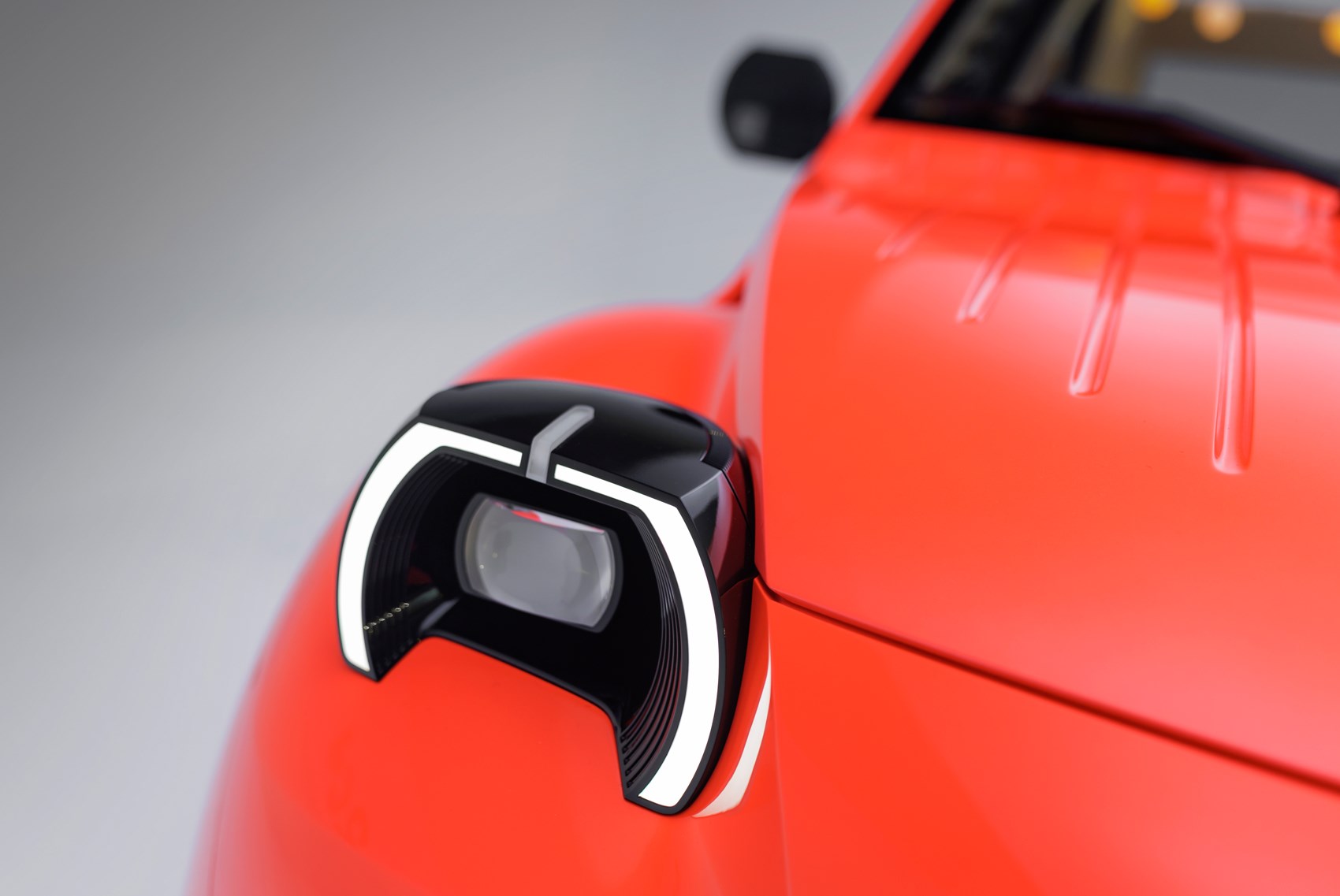
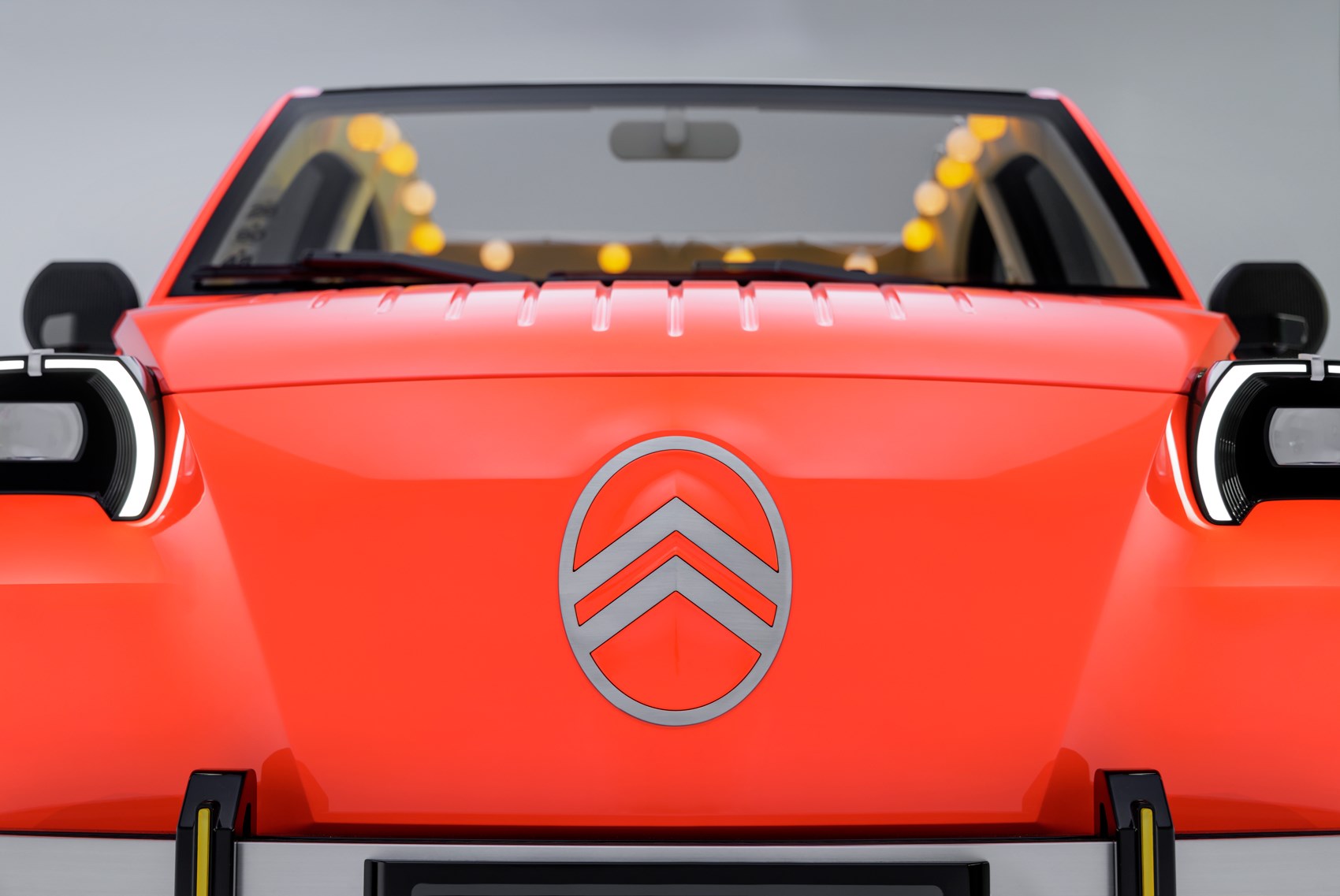
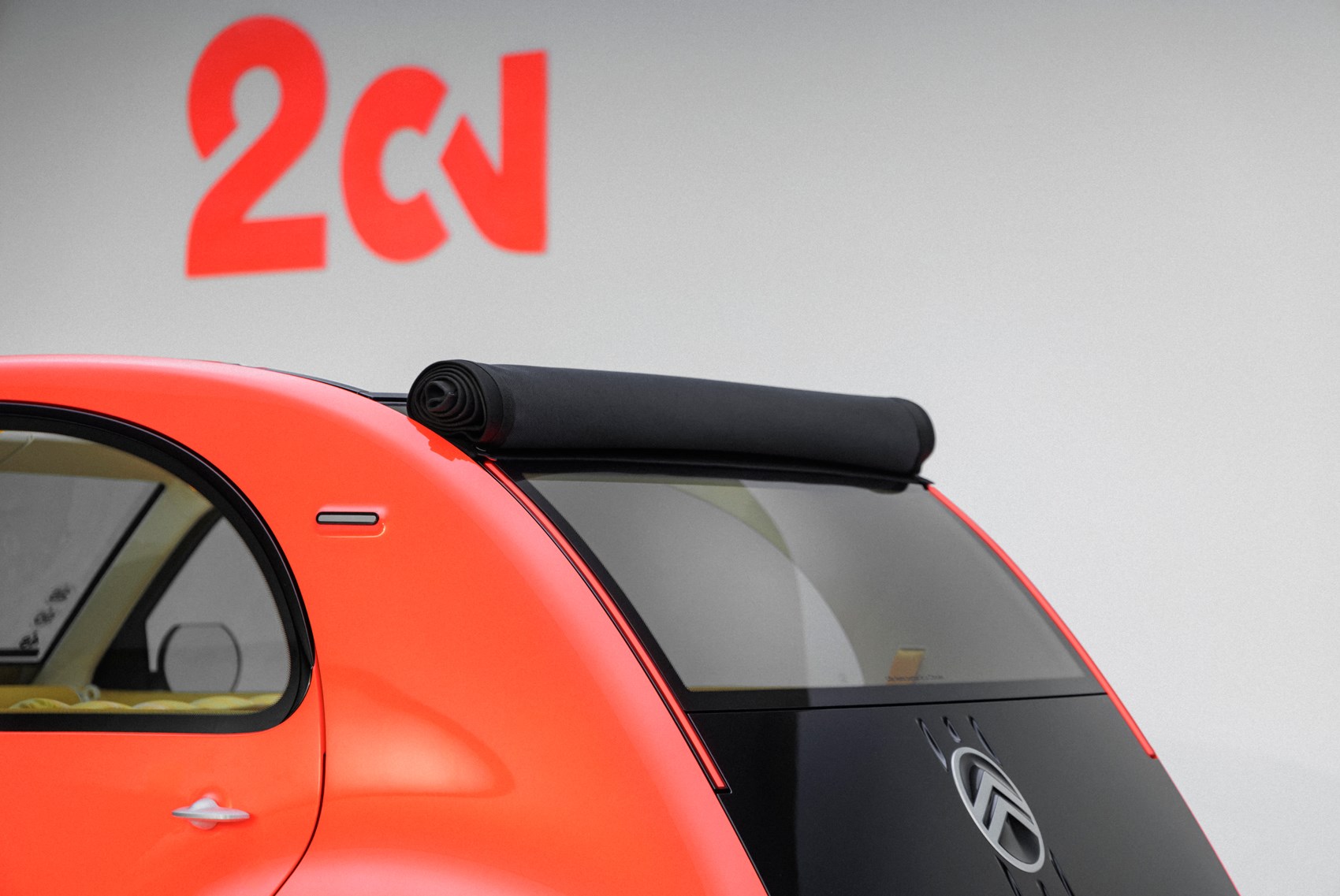
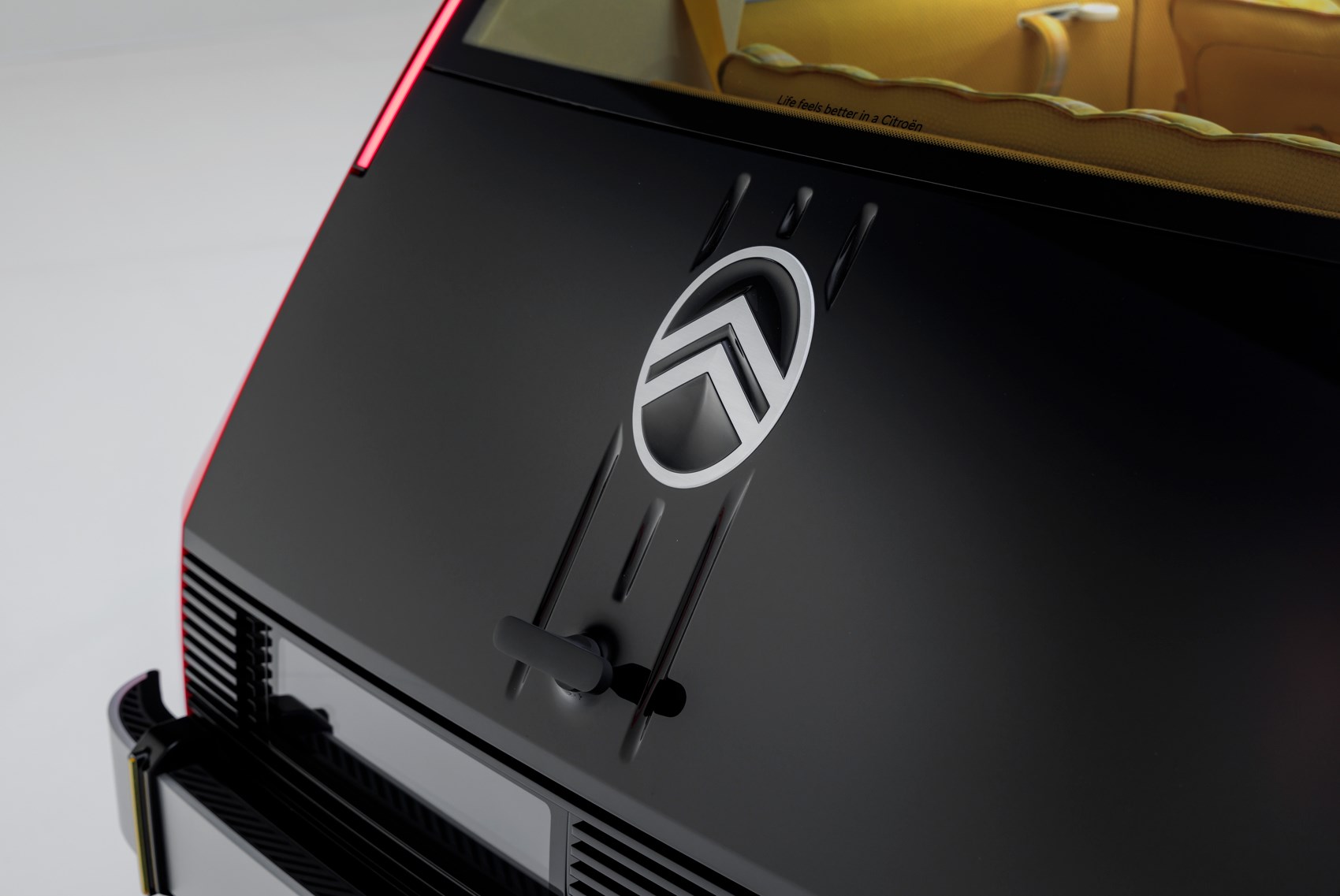
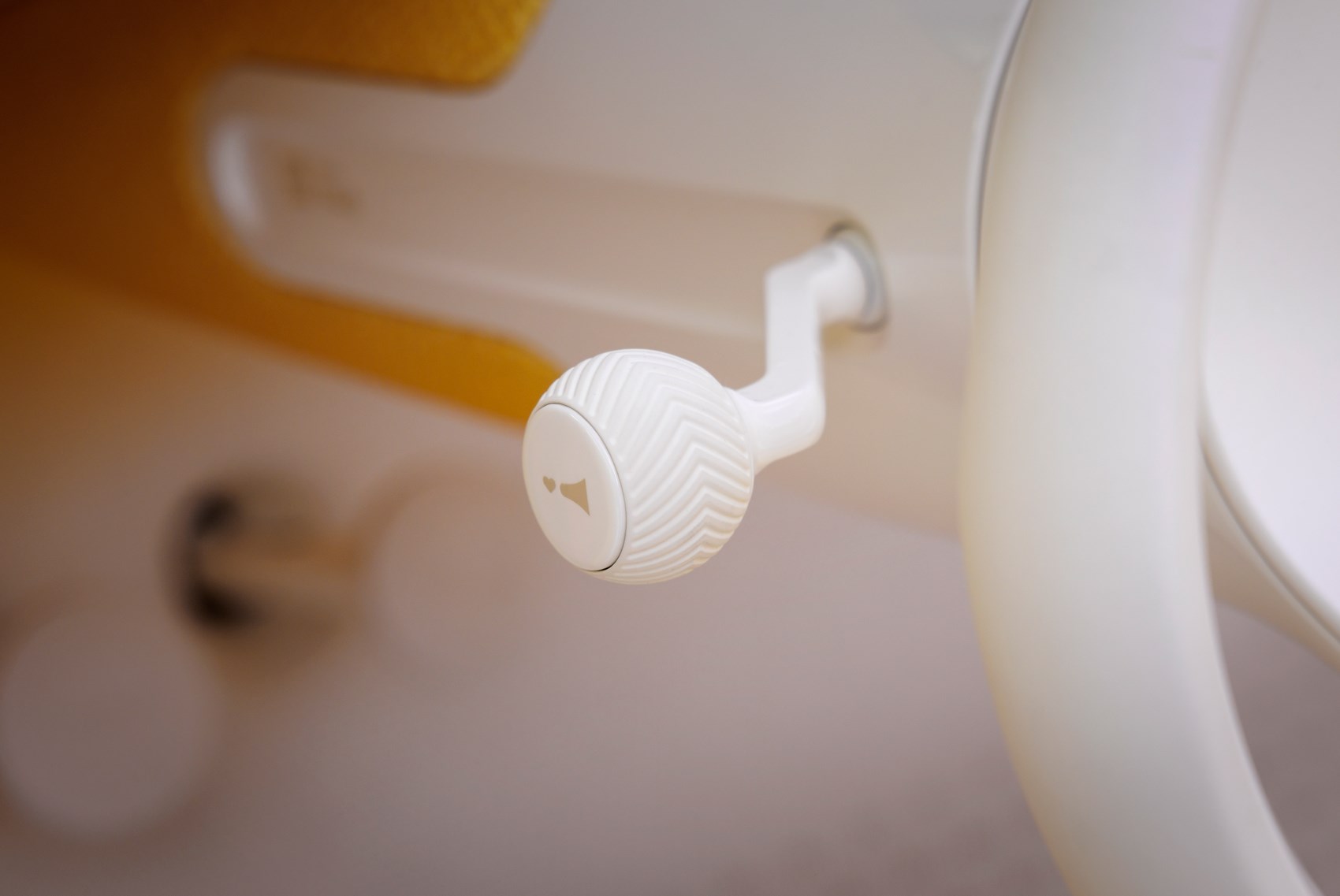
And has done so by copying many of the original’s cues. Clear carryover details include the rounded wheel arches, protuberant headlamps, separate bumpers and the same simple rotating paddle-style doorhandles. There is a visible tailgate handle and tapered indicators on the C-pillars.
But the carryover includes, most importantly, the car’s core philosophy. It’s designed to be simple, clever, light and efficient. The new 2CV is pleasingly and wonderfully ‘think different’ in concept, just as the first Deux Chevaux was.
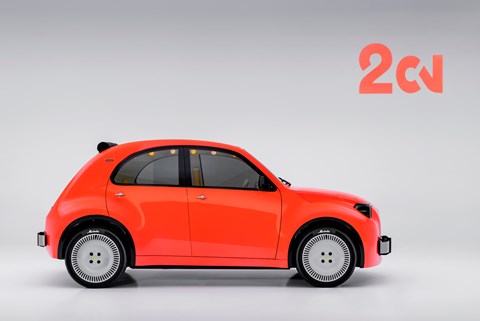
Although unlike the old one, which was designed resolutely as a rural car, the new one is destined for the city. Like the old one, however, it will surely be the most alternative and unconventional car on sale. Citroen also hopes it can put some magic into electric mobility.
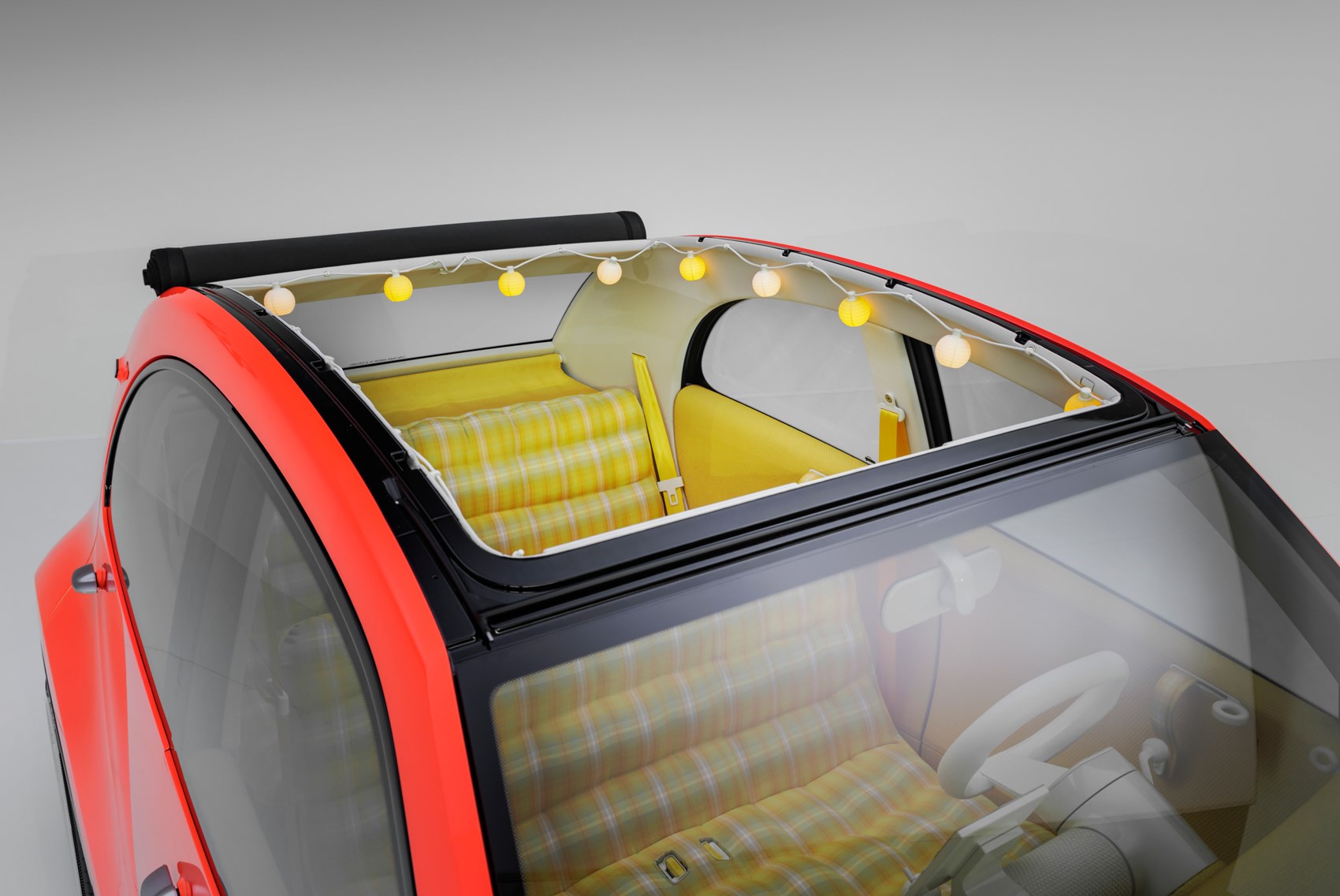
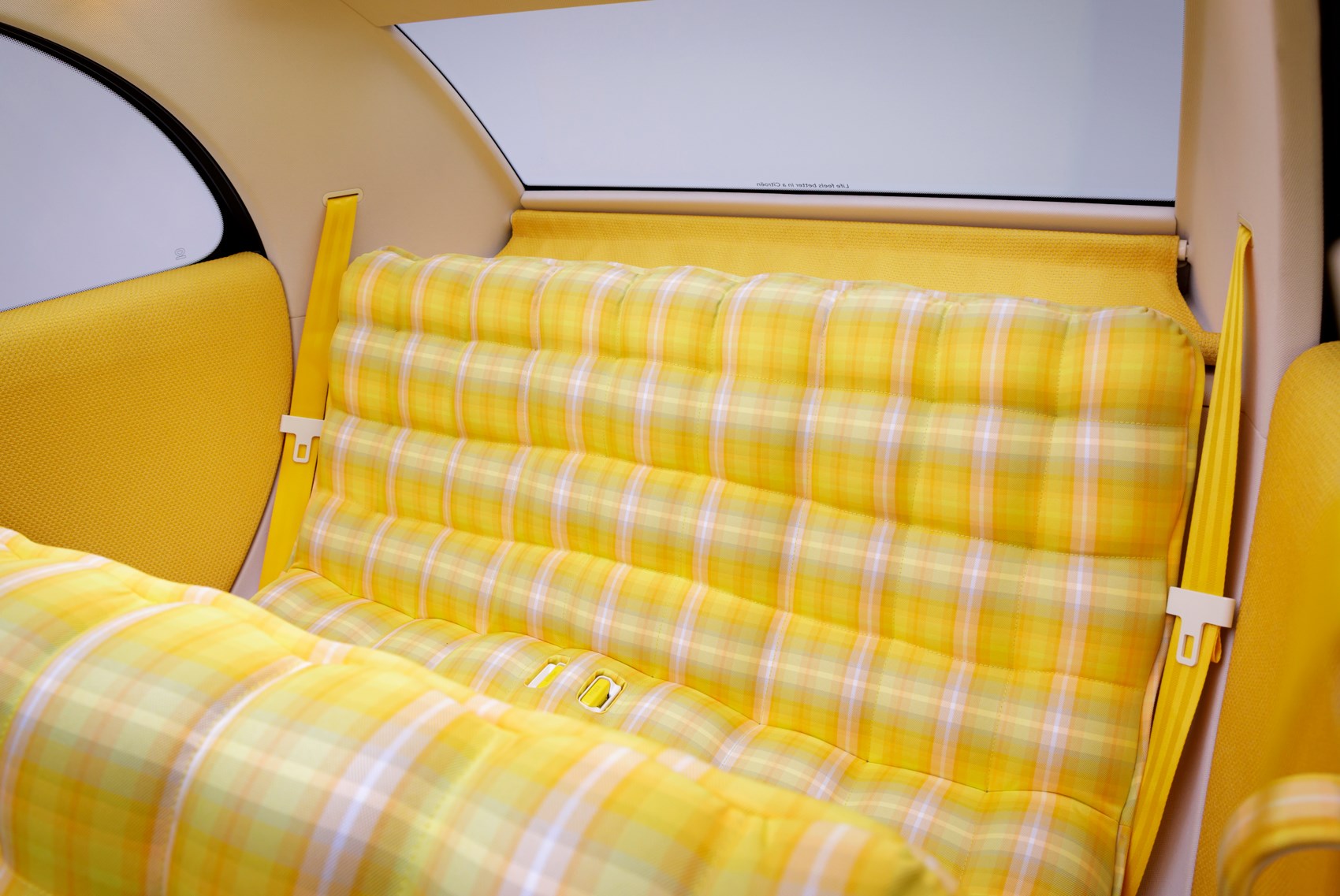
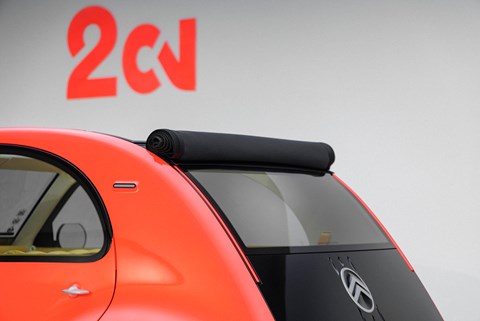
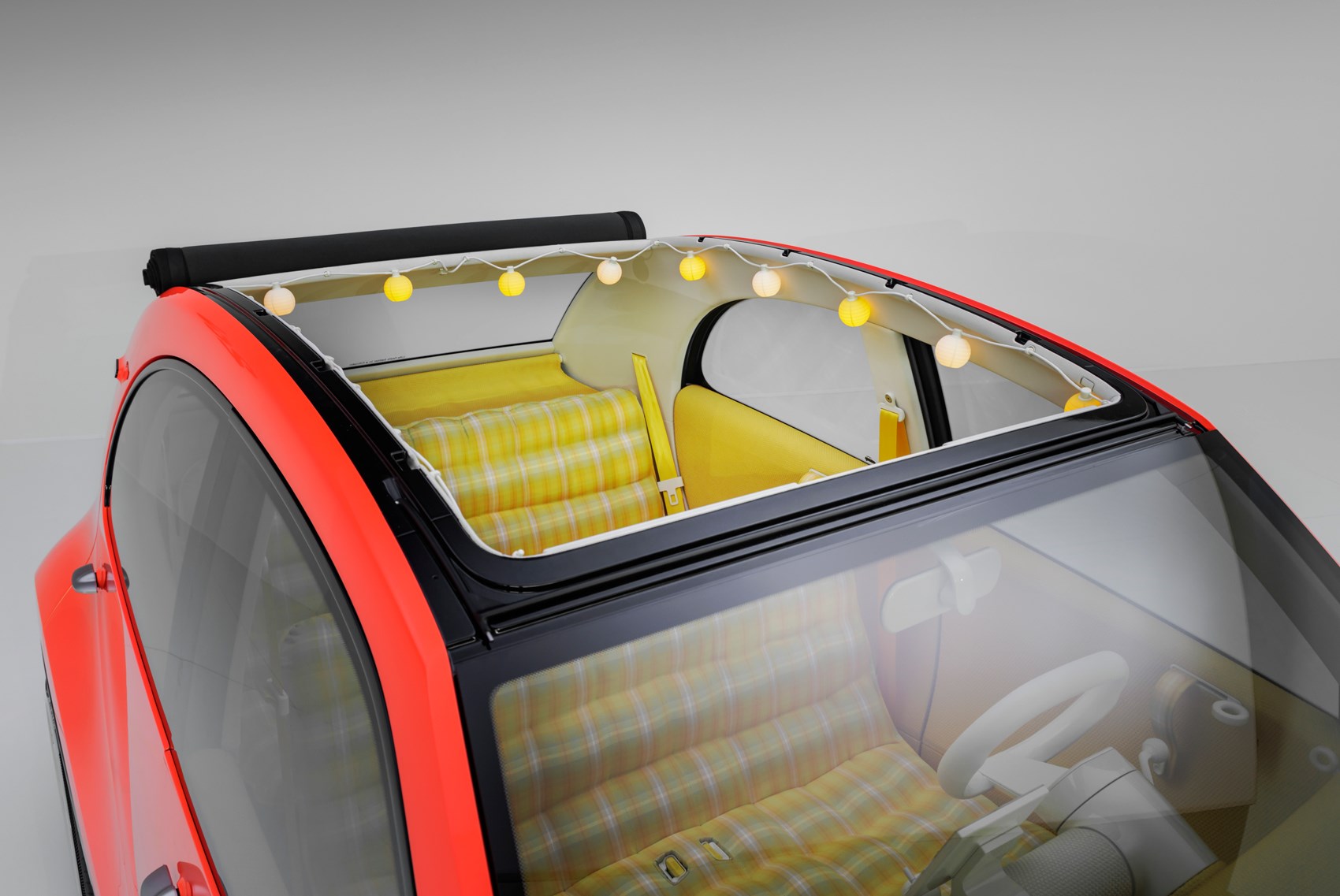
The roof folds from top of the windscreen back to the rear screen, just as in the post-1958 models. (The early cars had roofs that folded nearly all the way to the rear bumper.) Unlike the original, it will be electric. Also unlike the original, the boot is accessed by a hatchback. The rear bench has no split or folding mechanism, although this may change for production.
A welcome 2CV carryover are the tall and narrow simple steel disc wheels, 19inch on the new car, 15inch on the old 2CV. They wear specially developed Michelin tyres, which are thankfully neither wide nor low profiled, and include heritage logo and Citroen chevrons.
CEO Chardon explains that the car will meet European small E-car class regulations, a new category to encourage the development of affordable European EVs. Key features are likely to include 4.2m maximum length, fully electric powertrains, high European content and manufacture, extra CO2 credits and, unlike the Ami quadricycle, full safety compliance. They may however be exempt from more stringent upcoming regulations, including safety.
It will certainly offer something different and fresh either way. There’s that low price – about half the cost of the typical small, inexpensive EV today – and the promise of light weight. The goal is 1000kg. That’s less than half the weight of today’s typically bloated battery EVs, and more than 200kg less than the same-size new Renault Twingo. The 2CV Concept is 3.76m long, marginally shorter than the original. Though, at 500-600kg, depending on age, the original 2CV was much lighter. That’s progress…
Tell me about the dashboard…
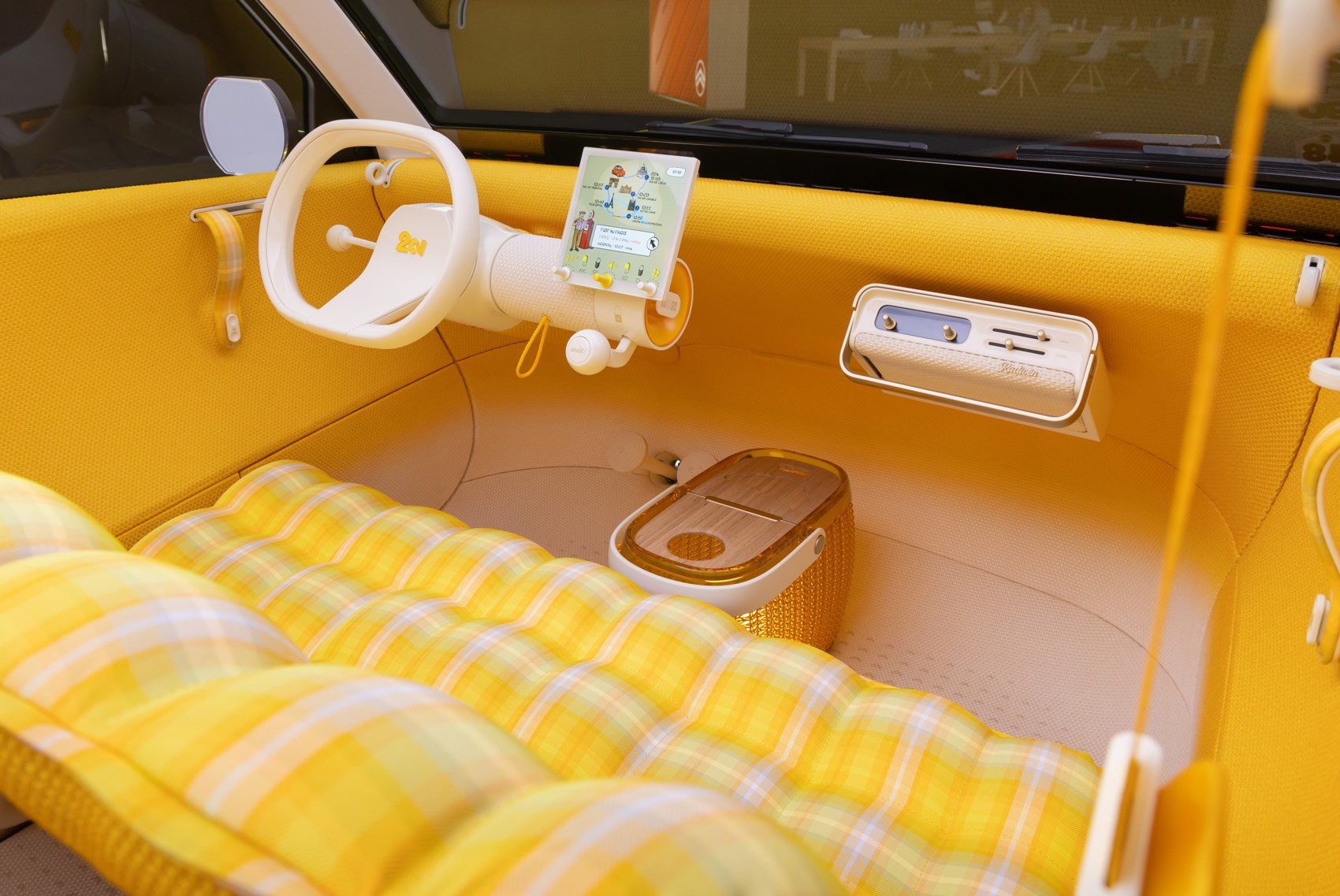
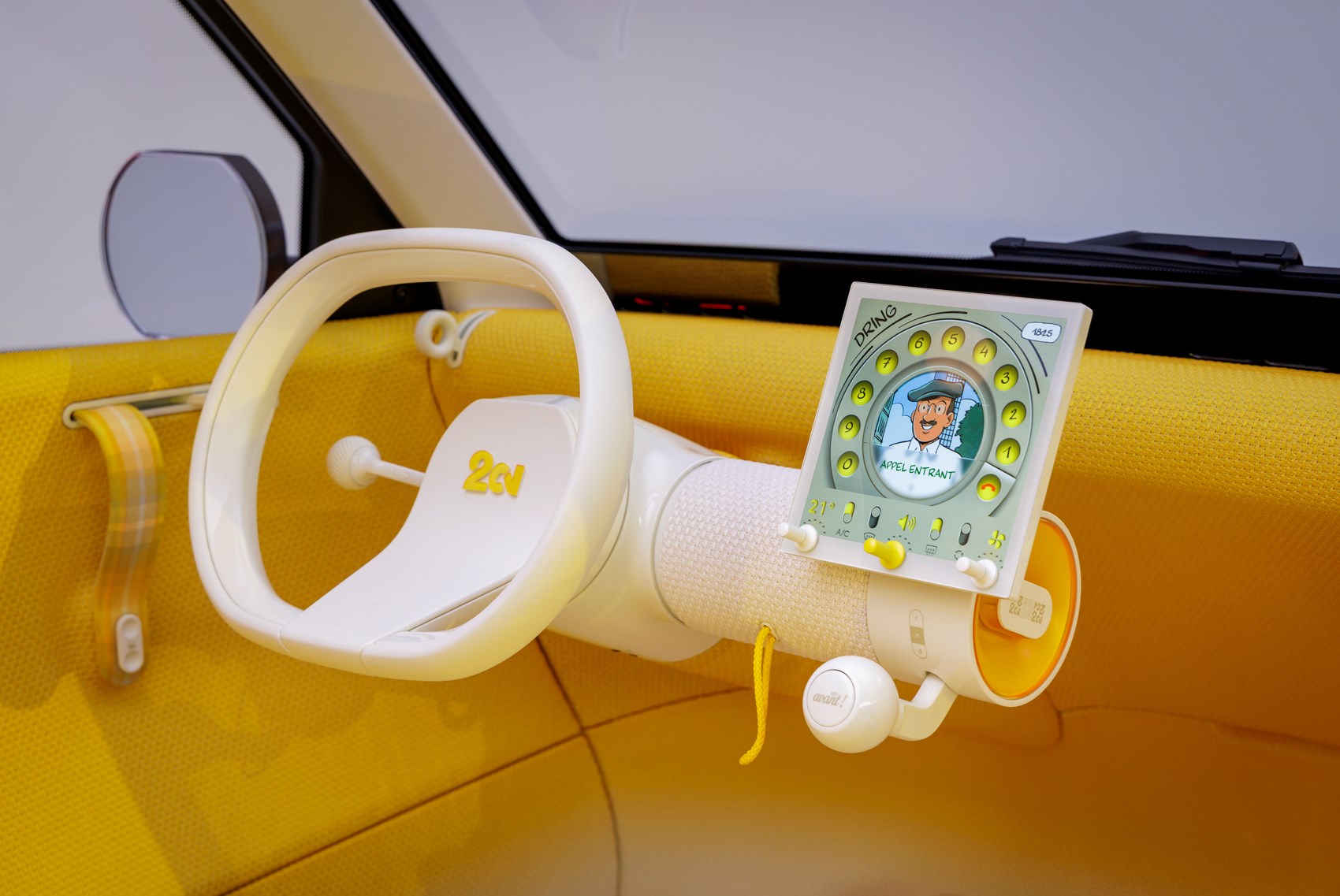
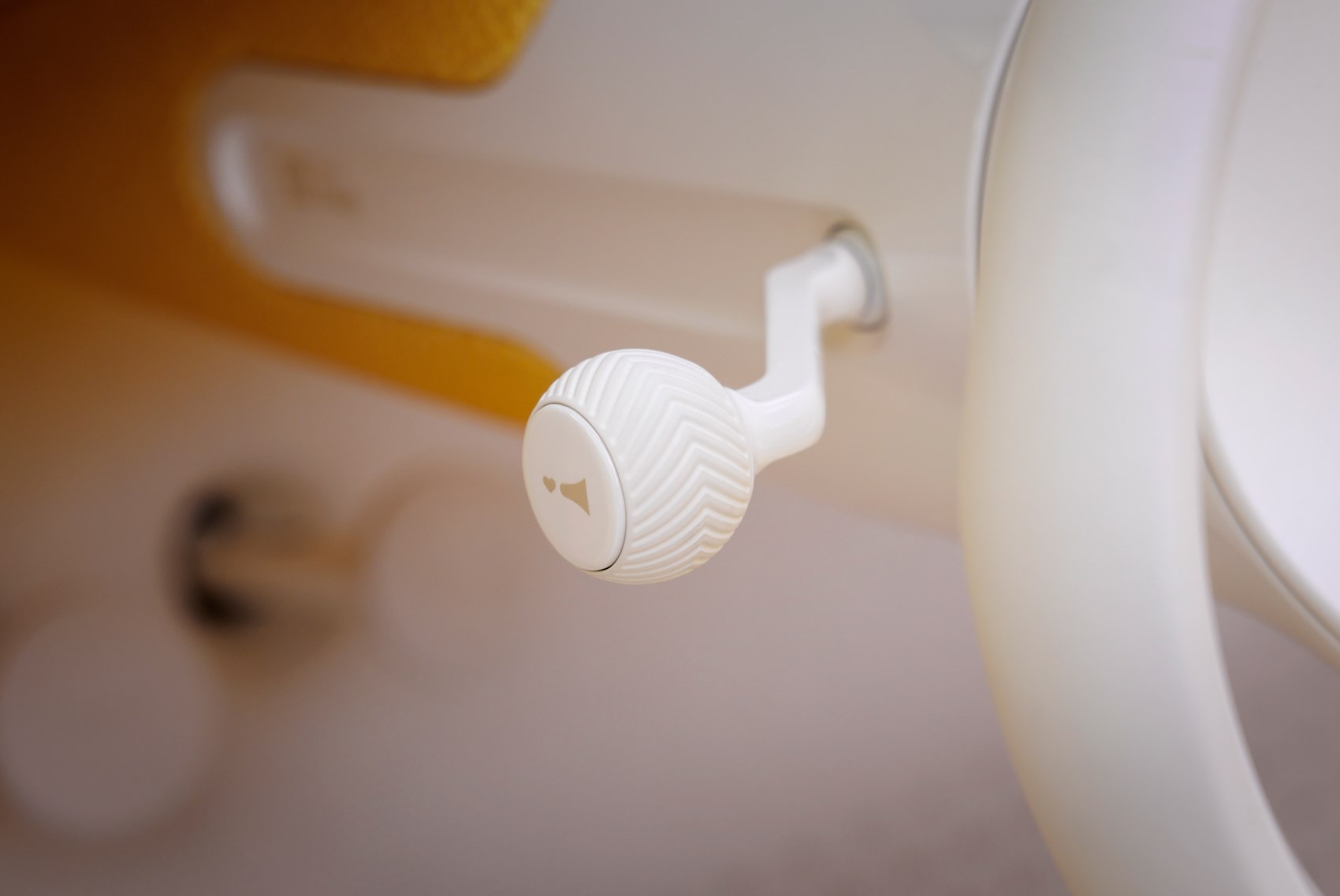
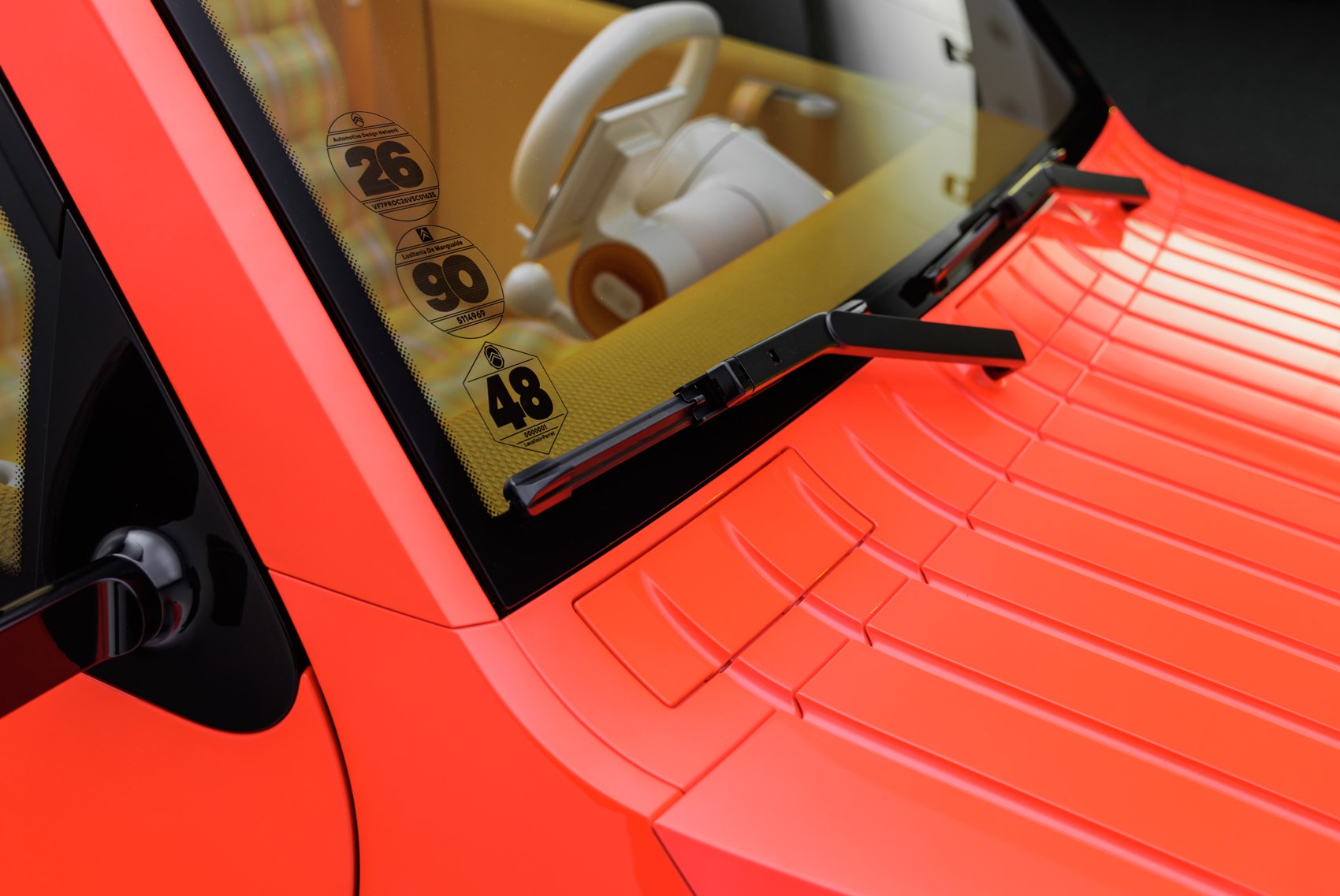
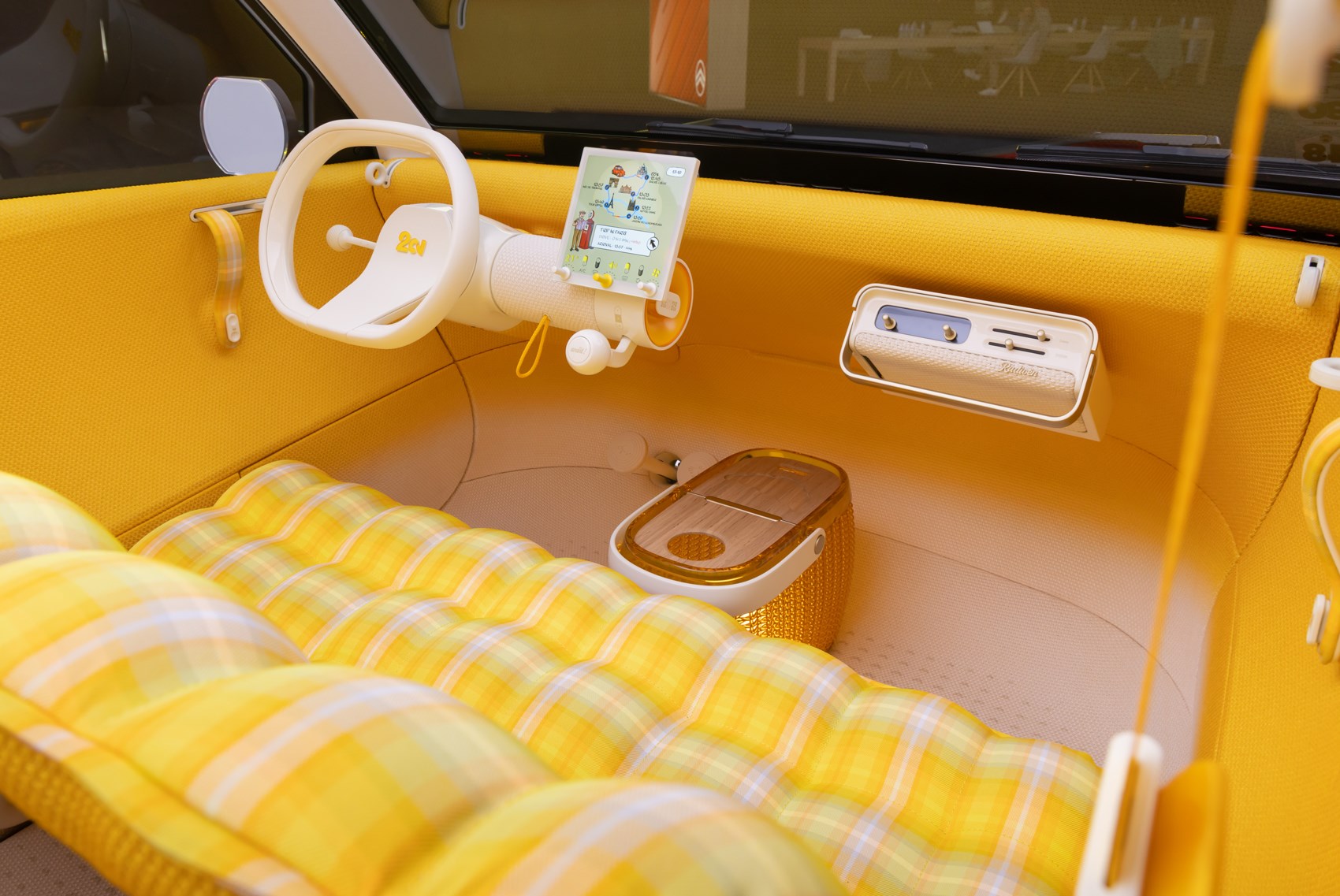
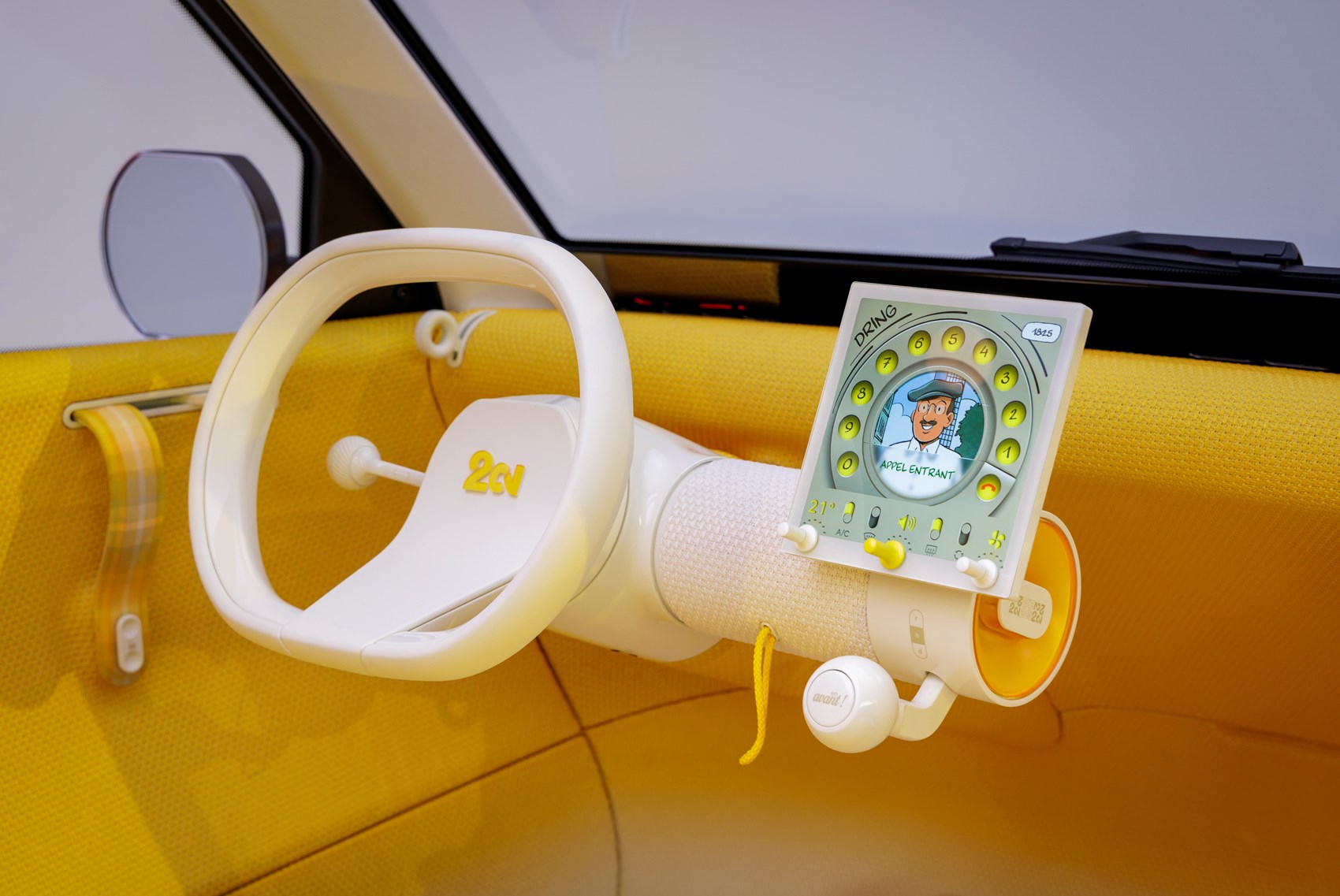
Well… there is no dashboard. Rather, the 2CV has a simple ledge under the windscreen, which liberates a considerable amount of front knee and leg room. We also find a classically Citroen single-spoke steering wheel and a simple gear selector that bears more than a passing resemblance to the old Deux Chevaux’s dash-lever shifter.
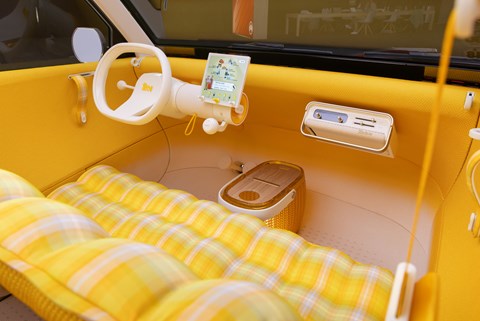
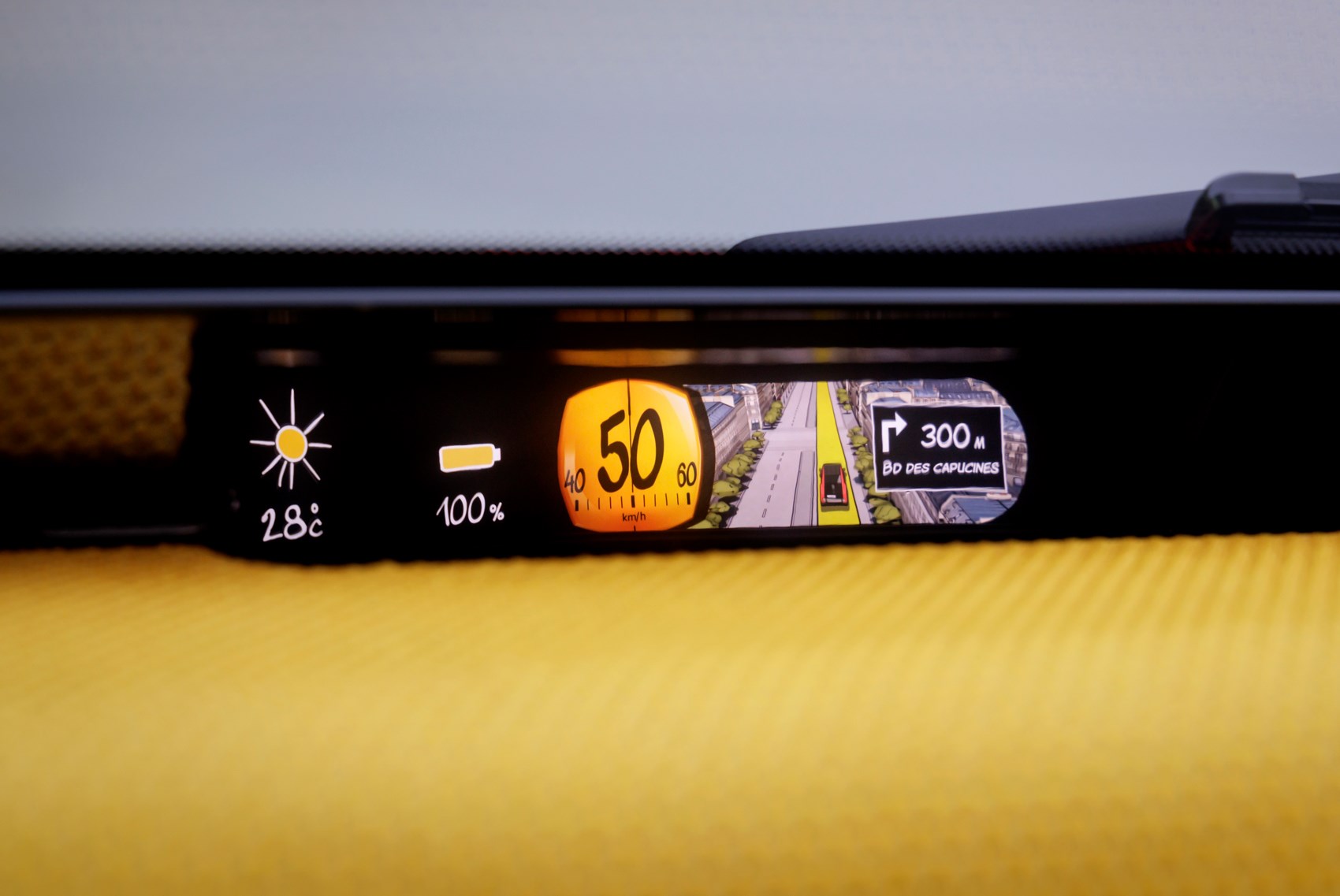
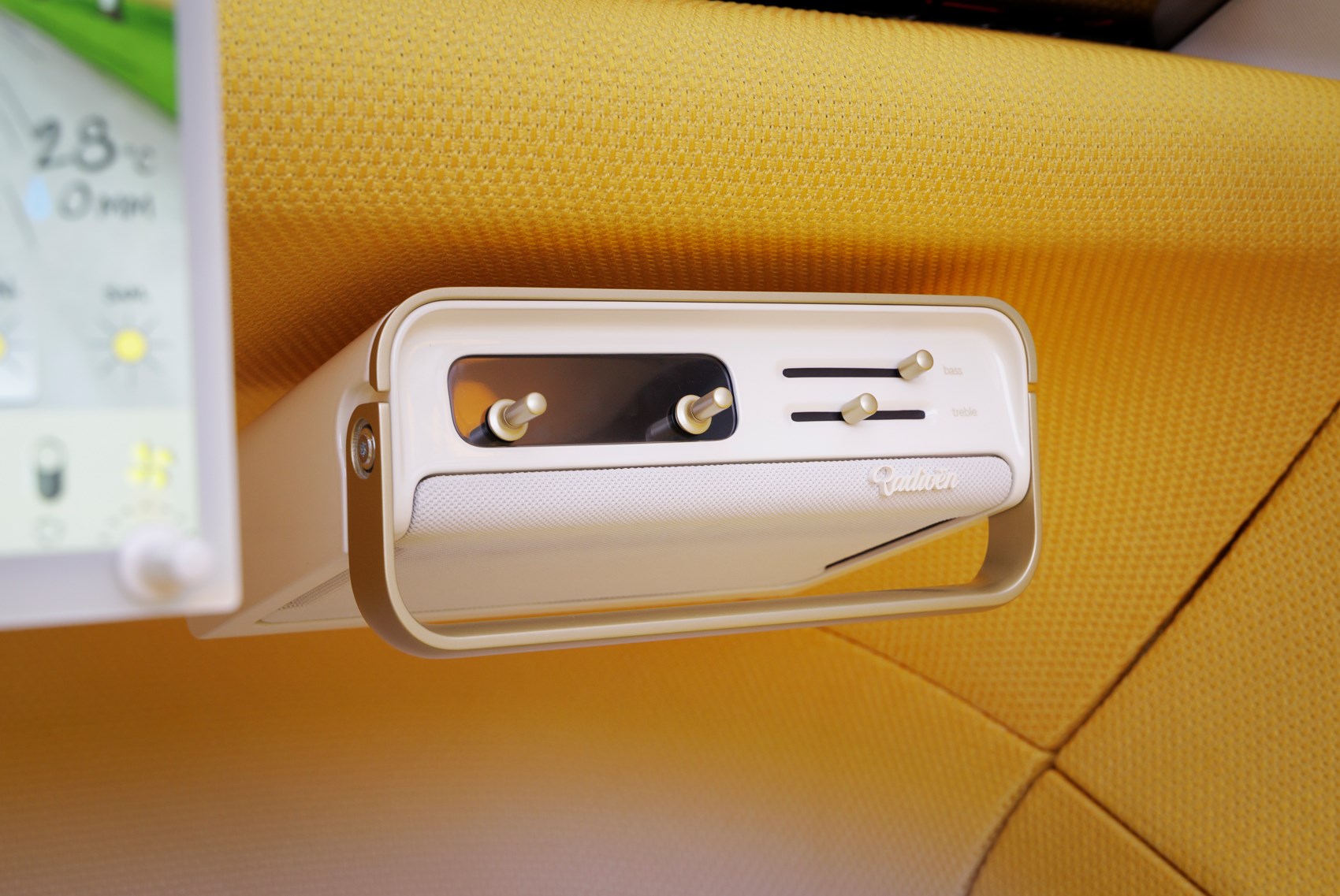
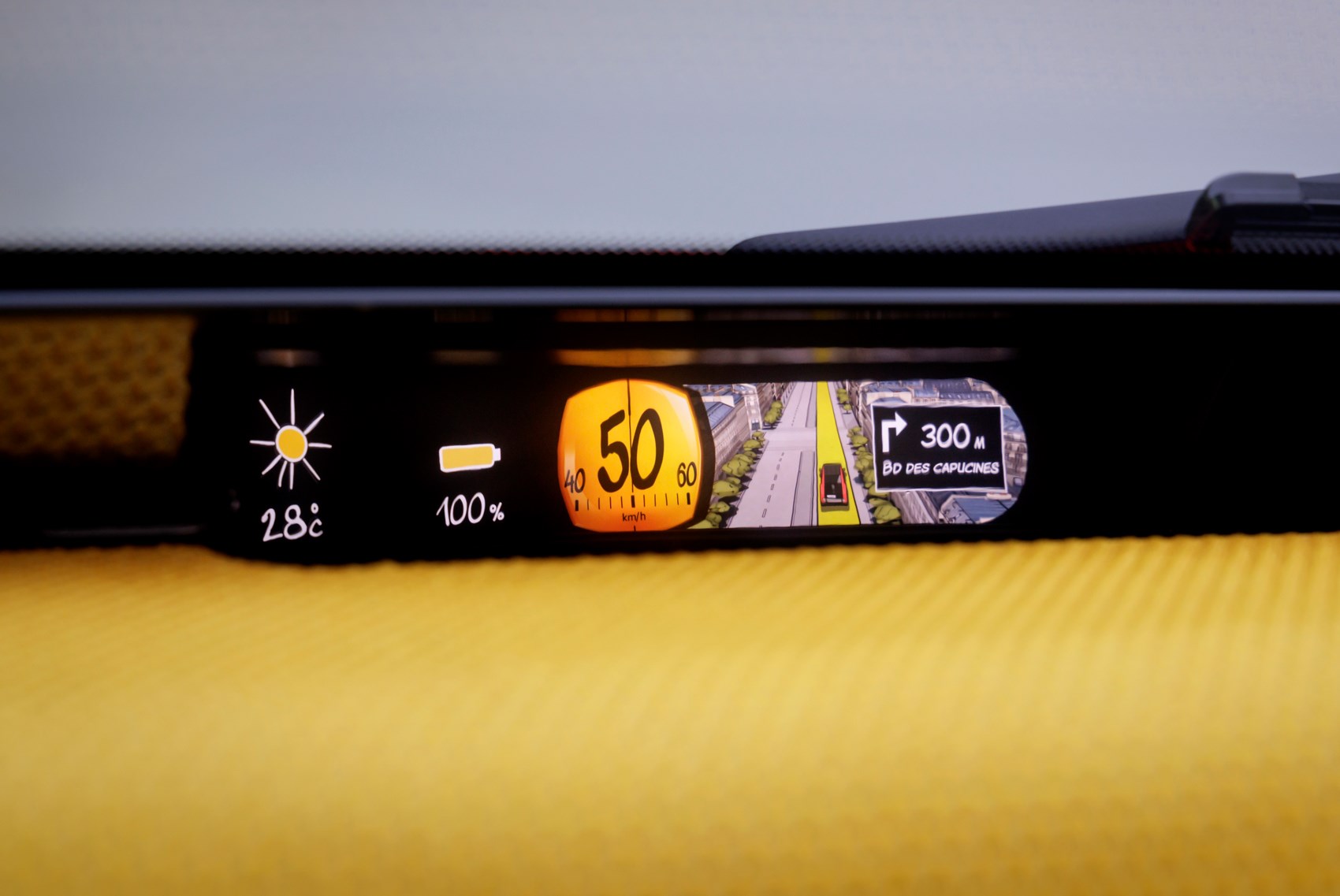
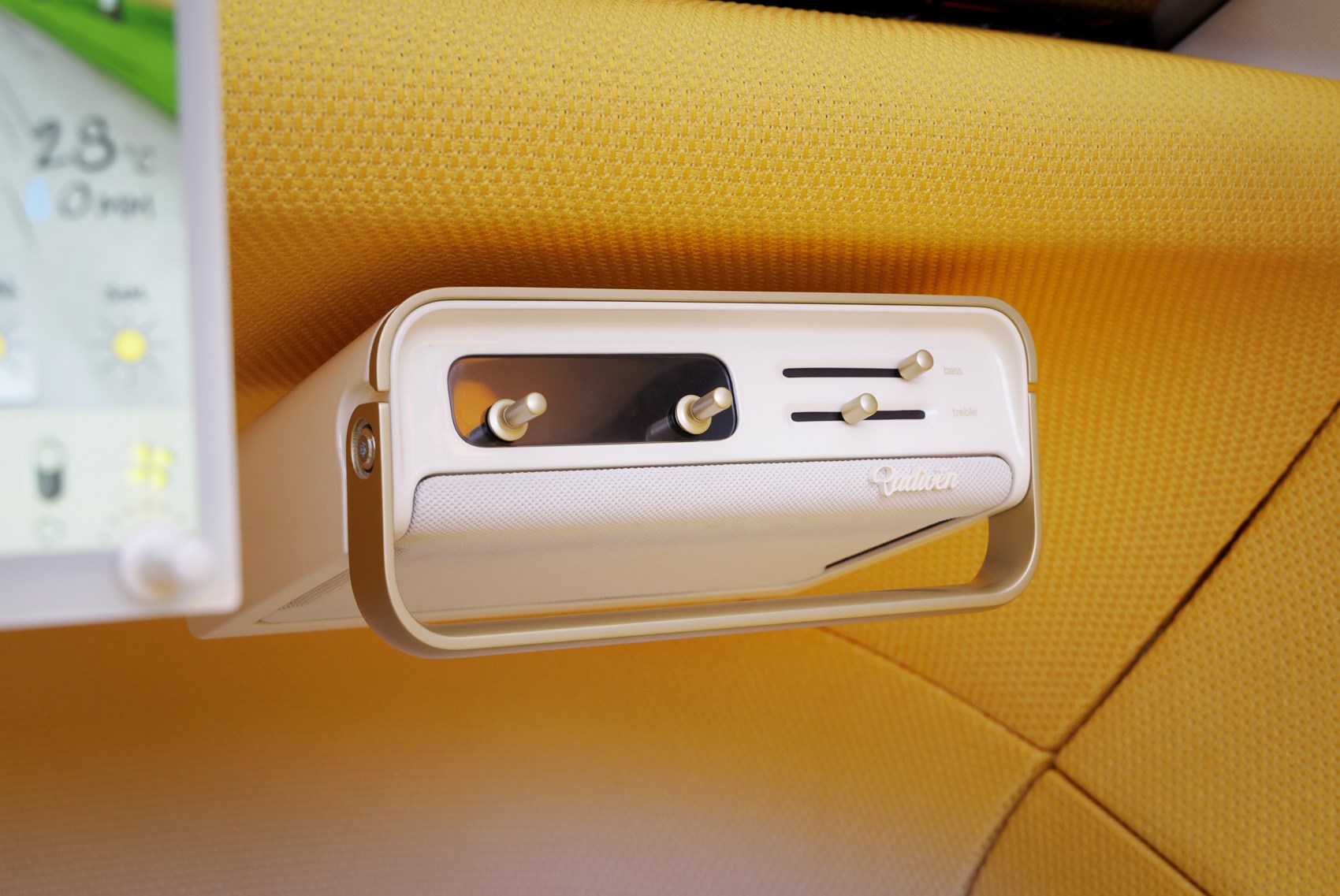
There’s a small 8-inch iPad-like touchscreen, its graphics designed by a Belgian cartoonist in the style of Hergé, creator of 2CV-driving comic book hero Tintin. There’s also a detachable art deco-style radio that also doubles as a speaker. Essential driver info, including vehicle speed, is by simple head-up display.
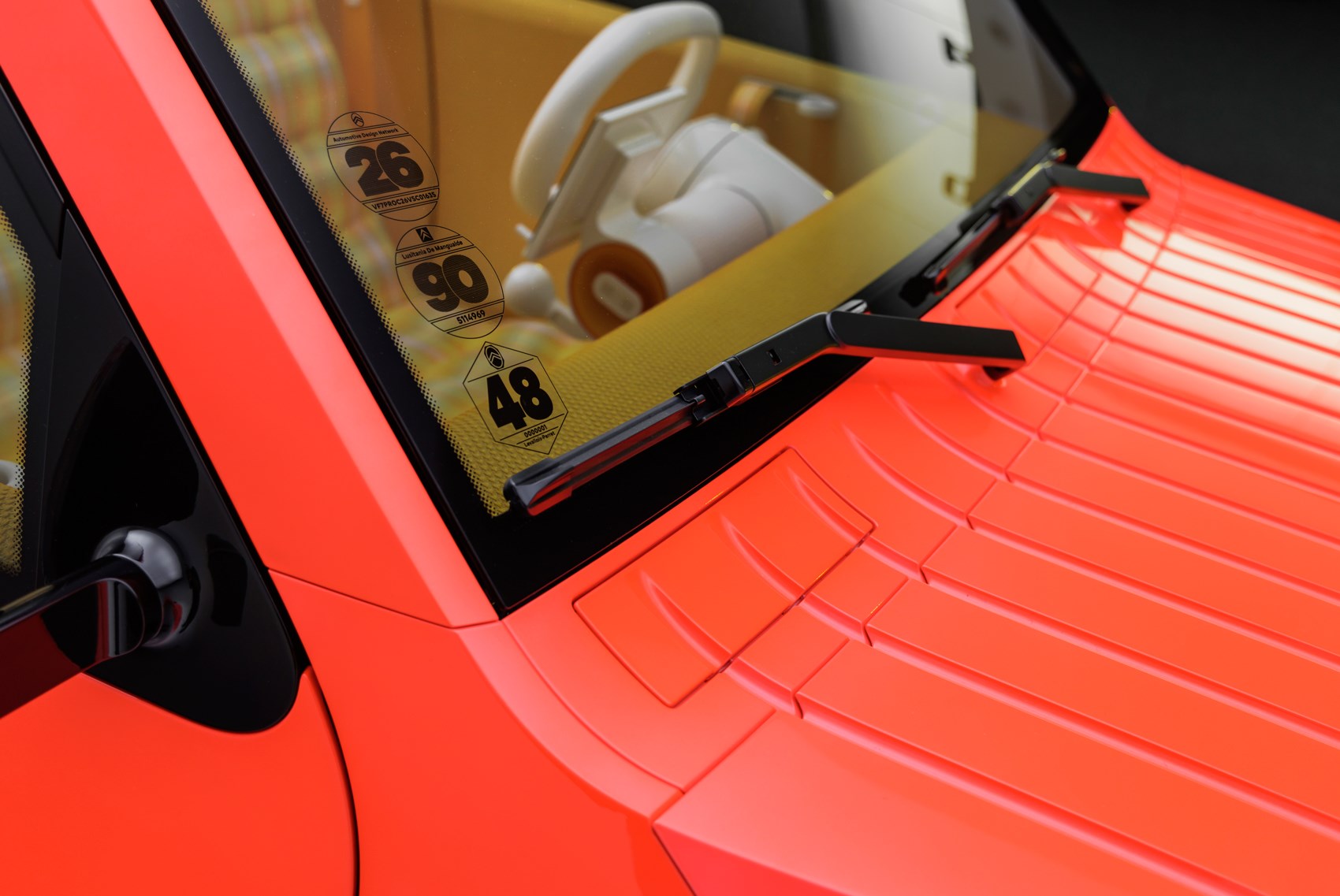
The area in front of the driver looks wonderfully uncluttered. There is standard aircon and, in addition, direct air intakes below the windscreen operated by little flaps, just like in the old car. The front and rear windows will be conventional, rather than two horizontal sections, hinged in the middle with opening lower half. That was on the front of the old car. The rear windows didn’t open at all. The early cars didn’t even have rear windows.
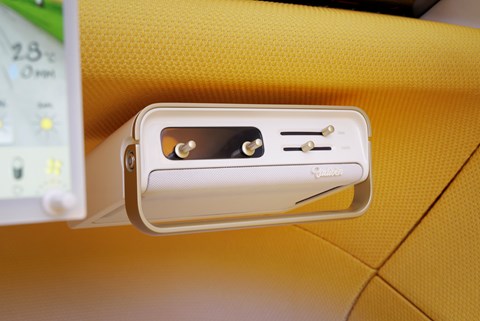
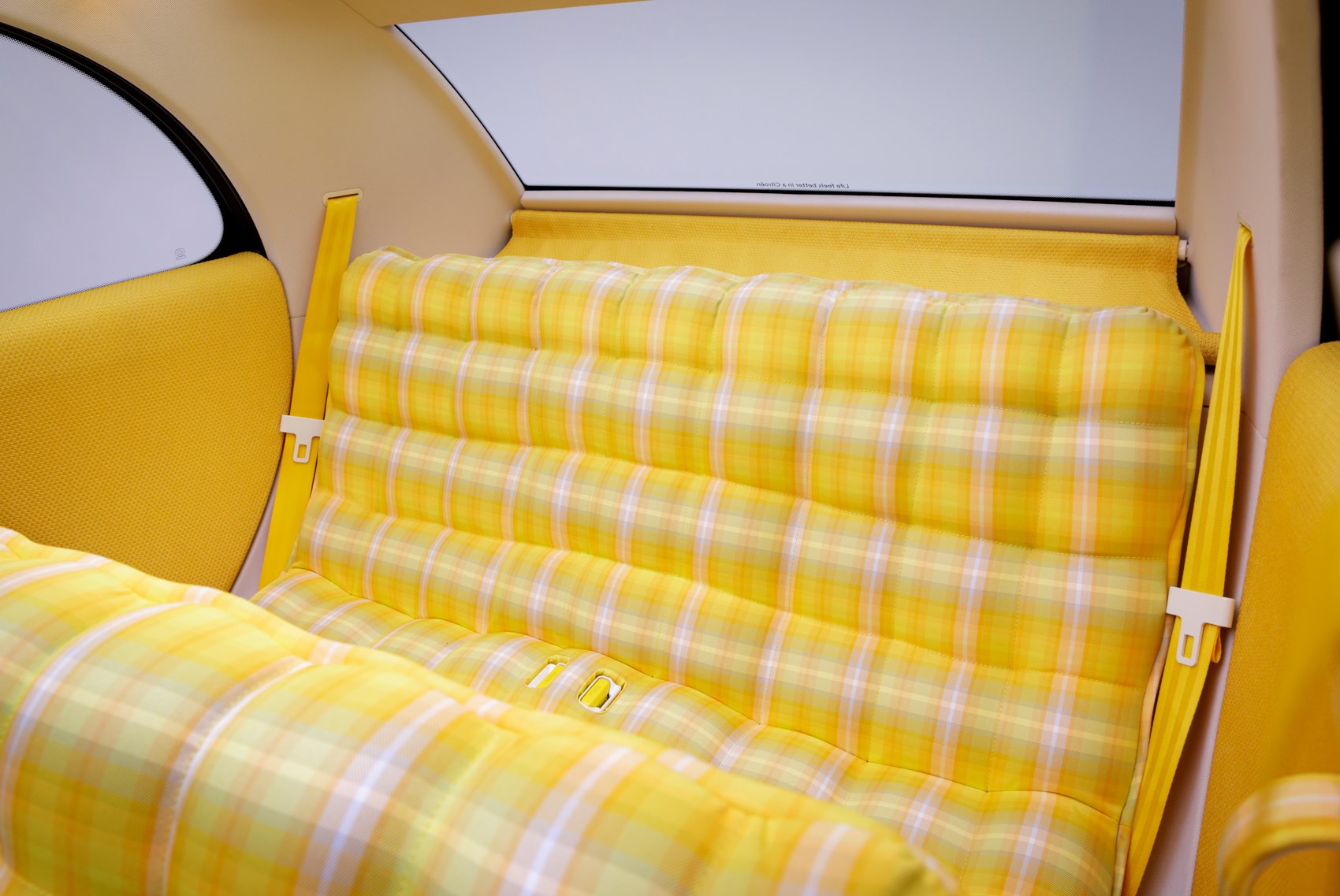
To liberate more cabin room, there is no centre console. Rather, we find spongy and comfy (and colourful) bench seats in the front and rear, complete with upholstery and cushioning that looks and feels more sun lounger than car seat. This is a clear nod to the original’s hammock-like seats. Head rests will need to be added for production.
A removable storage basket, in front of the centre of the front bench, offers plentiful space for oddments. The front bench is on fore-aft runners and, on the production version, so may the rear bench.
Will it still be slow?
Top speed will be faster than an old 2CV’s, Chardon assures me. (Maximum speed in the 2CV’s latter days was about 70mph – with a tailwind). ‘It will be suitable for the autoroute,’ he confirms. This means it should be able to cruise at about 80 – but don’t expect much more.

The light weight necessitates a small battery (size to be finalised), which also eases cost. The range is correspondingly reduced but should be at least 125 miles. That is surely a logical trade off and appropriate for an urban focused car.
CEO Chardon is convinced there is a market for small, inexpensive cars. ‘The sales of smaller, cheaper cars crashed after Covid. We think that will recover, especially if we can offer an inexpensive new electric car that has character and is fun to drive and own.’
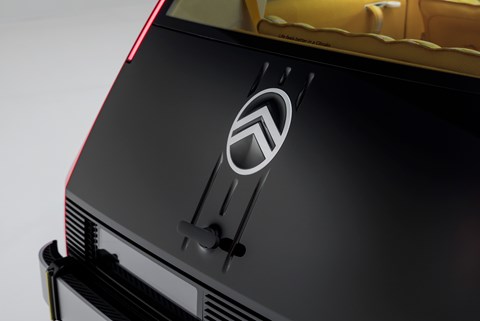
The new 2CV will share a new platform with an upcoming new baby Panda variant and is likely to be built in Stellantis’s Pomigliano factory near Naples, where Pandas are currently manufactured. It will be a four seater.
How will the production version look?
Very similar, confirms design director Pierre Leclercq. ‘This was never designed as a concept. It’s an advanced phase in the development of a production car. I’d like to make it look 100 per cent like this. That’s not possible but it will be very close. The real car must be at least as appealing as this one.’
console.debug(‘taboola container loaded..’)
window._taboola = window._taboola || [];
_taboola.push({
mode: ‘thumbs-feed-1×1’,
container: ‘taboola-below-article-thumbnails-v3’,
placement: ‘Below Article Thumbnails V3’,
target_type: ‘mix’
});

var disqus_shortname = ‘carmagazine’;
var disqus_developer = 0;
var disqus_identifier = ‘article-wp-274202’;
(function () {
var dsq = document.createElement(‘script’);
dsq.type = ‘text/javascript’;
dsq.async = true;
dsq.src = ‘http://’ + disqus_shortname + ‘.disqus.com/embed.js’;
(document.getElementsByTagName(‘head’)[0] || document.getElementsByTagName(‘body’)[0]).appendChild(dsq);
var s = document.createElement(‘script’);
s.type = ‘text/javascript’;
s.async = true;
s.src = ‘http://’ + disqus_shortname + ‘.disqus.com/count.js’;
(document.getElementsByTagName(‘head’)[0] || document.getElementsByTagName(‘body’)[0]).appendChild(s);
})();Please enable JavaScript to view the comments powered by Disqus.