
Readers of Condé Nast Traveler Magazine have rated their 30 favorite ski resorts in the United States. The data reveals significant movement across the American ski landscape. Montana has asserted dominance over the rankings with Big Sky Resort capturing the No. 1 spot. The ranking reflects the culmination of the “Big Sky 2025” master plan, which includes significant infrastructure overhauls like the debut of the Explorer Gondola – the world’s fastest 10-person lift. In an eloquent twist, Montana bookends the roundup, with Whitefish Mountain Resort anchoring the list at No. 30.
Resort consolidation and multi-resort passes continue to influence consumer sentiment and voting trends. Colorado is the powerhouse on the list, holding nine of the top 30 spots, led by the premium terrain of Aspen Mountain and Snowmass. Utah holds down three of the premier spots, with Alterra’s skier-only Deer Valley narrowly missing the crown at No. 2.
Nearly a third of the list is claimed by the East Coast. Whiteface Lake Placid made the cut for New York, while Vermont and New Hampshire also drew loyal voters. In an impressive showing of regional pride, Pennsylvania’s independent night-skiing standouts, Blue Mountain and Camelback, achieved higher scores than some legendary resorts in the west.
The full ranking of the top 30 US ski resorts follows below, counting down to the number one spot.
Trending on SnowBrains
-

 1Central Oregon Avalanche Center Lead Forecaster Gabe Coler Airlifted After Traumatic Whistler, BC, Mountain Biking Accident →
 -
 2Conde Nast 2026 Readers’ Choice Best Ski Resorts in the US →
 -
 3What’s New at Whistler Blackcomb, BC This Season →
 -
 4Northern Rockies Snow Forecast Northern Rockies (MT/WY/ID) →
 -
 5Condé Nast Readers’ Choice 2026: Top 5 Canadian Ski Resorts Ranked →
.sb-trending-widget {
background: #f8f8f8;
border-top: 2px solid #e0e0e0;
border-left: 4px solid #ea2e49;
border-radius: 0 4px 4px 0;
margin: 28px 0;
padding: 14px 14px 6px;
width: 100%;
box-sizing: border-box;
}
.sb-trending-header {
display: flex;
align-items: center;
gap: 8px;
margin-bottom: 12px;
padding-bottom: 10px;
border-bottom: 1px solid #e0e0e0;
}
.sb-trending-icon {
font-size: 18px;
line-height: 1;
flex-shrink: 0;
}
.sb-trending-label {
font-size: 15px;
font-weight: 700;
color: #1a1a1a;
line-height: 1.3;
text-transform: uppercase;
letter-spacing: 0.04em;
}
.sb-trending-list {
list-style: none;
margin: 0;
padding: 0;
}
.sb-trending-item {
border-bottom: 1px solid #e8e8e8;
padding: 9px 0;
border-radius: 3px;
transition: background 0.1s;
}
.sb-trending-item:last-child {
border-bottom: none;
padding-bottom: 4px;
}
.sb-trending-item:active {
background: #fef0f2;
}
.sb-trending-link {
display: flex;
align-items: center;
gap: 10px;
text-decoration: none;
color: inherit;
padding: 2px 4px;
}
.sb-trending-thumb {
flex-shrink: 0;
}
.sb-trending-thumb img {
display: block;
width: 80px;
height: 64px;
object-fit: cover;
border-radius: 3px;
}
.sb-trending-text {
display: flex;
align-items: center;
gap: 8px;
flex: 1;
min-width: 0;
}
.sb-trending-num {
font-size: 22px;
font-weight: 700;
color: #ea2e49;
line-height: 1;
min-width: 22px;
flex-shrink: 0;
}
.sb-trending-right {
flex: 1;
min-width: 0;
}
.sb-trending-title {
font-size: 14px;
font-weight: 500;
color: #1a1a1a;
line-height: 1.45;
text-align: left;
transition: color 0.15s;
display: inline;
}
.sb-trending-arrow {
font-size: 14px;
color: #ea2e49;
font-weight: 700;
white-space: nowrap;
display: inline;
}
.sb-trending-link:hover .sb-trending-title {
color: #ea2e49;
}
.sb-trending-link:active .sb-trending-title {
color: #ea2e49;
}
document.addEventListener(‘DOMContentLoaded’, function() {
var trendingLinks = document.querySelectorAll(‘.sb-trending-link’);
trendingLinks.forEach(function(link) {
link.addEventListener(‘click’, function(e) {
e.preventDefault(); // Prevent immediate navigation
var title = this.getAttribute(‘data-trending-title’);
var position = this.getAttribute(‘data-trending-position’);
var url = this.getAttribute(‘href’);
// Fire GA4 event
if (typeof gtag !== ‘undefined’) {
gtag(‘event’, ‘trending_widget_click’, {
‘event_category’: ‘engagement’,
‘event_label’: title,
‘trending_position’: position,
‘trending_item’: title
});
} else if (window.dataLayer) {
// Fallback for GTM dataLayer if gtag is not available
window.dataLayer.push({
‘event’: ‘trending_widget_click’,
‘event_category’: ‘engagement’,
‘event_label’: title,
‘trending_position’: position,
‘trending_item’: title
});
}
// Navigate after a brief delay to ensure event is sent
setTimeout(function() {
window.location.href = url;
}, 100);
});
});
});
#30 Whitefish Mountain, Montana (Score: 81.86)
Whitefish Mountain Resort, in Montana’s northwest Rocky Mountains, 32 miles west of Glacier National Park, spans 3,020 acres across three distinct faces of “Big Mountain.” Skiers and riders come to Whitefish for its 300 inches of annual snowfall, gladed terrain, low-crowd density, and immediate access to the historic city of Whitefish, a former 1900s logging and railway hub.

#29 Whiteface Lake Placid, New York (Score: 82.01)
Whiteface Mountain, in upstate New York’s Adirondack High Peaks, located roughly an hour south of the Canadian border at Lecolle, Quebec, spans 299 skiable acres across three distinct peaks with a 3,166-foot lift-served vertical drop and 94 marked trails. Skiers and riders travel to Whiteface for its steep terrain, 99% snowmaking coverage, and immediate access to the historic village of Lake Placid, a two-time Winter Olympics host hub.

#28 Waterville Valley, New Hampshire (Score: 82.29)
Waterville Valley Resort, in New Hampshire’s White Mountain National Forest at the end of Route 49, spans 265 skiable acres across Mount Tecumseh with a 2,020-foot vertical drop and 62 marked trails. Skiers and riders come to the resort for its consistently groomed cruisers, 72 kilometers of Nordic tracks, and its legacy as the birthplace of freestyle skiing. The mountain base connects directly to a pedestrian-only resort village centered around Town Square and Corcoran Pond.

#27 Palisades Tahoe, California (Score: 83.55)
Palisades Tahoe, in California’s Sierra Nevada range on the northwest shore of Lake Tahoe, spans 6,000 skiable acres across two connected mountains — Olympic Valley and Alpine Meadows — with a 2,850-foot vertical drop and over 270 marked trails. Skiers and riders come to the resort for its 400 inches of average annual snowfall, expert lift-served zones like KT-22, and its legacy as host of the 1960 Winter Olympics. The mountain base connects to a high-energy resort hub in Olympic Valley, packed with over 50 bars, restaurants, and shops.

#26 Keystone, Colorado (Score: 84.28)
Keystone Resort, in Colorado’s Summit County within the White River National Forest, spans 3,149 skiable acres across three mountain peaks with a 3,128-foot vertical drop and 143 marked trails. Families and day-trippers travel to Keystone because it is the closest major Epic Pass destination to Denver, offers night skiing, and lets kids 12 and under ski free. The mountain features the World’s Largest Mountaintop Snow Fort at the summit of Dercum Mountain, built with an interactive network of ice slides and tunnels.

#25 Buttermilk, Colorado (Score: 84.60)
Buttermilk, located in the Roaring Fork Valley just three miles west of downtown Aspen, spans 470 skiable acres with a 2,030-foot vertical drop and 44 marked trails. Families and beginners love the mountain for its wide green cruisers and uncrowded terrain. The resort layout utilizes its wide slopes to build world-class terrain parks and a 22-foot superpipe as the long-standing home of the Winter X Games.

#24 Winter Park, Colorado (Score: 84.82)
Winter Park Resort, in Colorado’s Grand County along the Continental Divide, spans 3,081 skiable acres across the distinct Winter Park and Mary Jane faces of the mountain, featuring a 3,060-foot vertical drop and 166 marked trails. Skiers and riders come to the resort for its 344 inches of annual snowfall, gladed tree lines, and the relentless mogul fields on the Mary Jane side. The mountain base sits three miles south of the city of Winter Park, which is accessible from Denver via the Winter Park Express ski train.

#23 Beaver Creek, Colorado (Score: 85.28)
Beaver Creek Resort, located in Colorado’s Vail Valley three miles above the town of Avon, spans 2,082 skiable acres within the White River National Forest. The mountain features a 3,340-foot vertical drop and 167 marked trails, drawing skiers and riders for its beginner terrain, Grouse Mountain glades, and the icy pitch of its Birds of Prey World Cup downhill course. At the base, the pedestrian village features heated walkways, outdoor escalators, and a popular 3 p.m. complimentary cookie tradition.

#22 Alyeska Resort, Alaska (Score: 85.38)
Alyeska Resort, in Alaska’s Chugach Mountains within the glacier-carved valley of Girdwood, 40 miles south of Anchorage, spans 1,610 skiable acres with a 2,500-foot vertical drop and 76 marked trails. Skiers and riders come to the mountain for its 650 inches of average annual snowfall, steep north-facing bowls, and night-skiing terrain. The resort base sits at an elevation of just 250 feet above sea level, providing direct views of the Turnagain Arm fjord and immediate access to a pedestrian village anchored by a hotel and Nordic spa.

#21 Tamarack, Idaho (Score: 86.05)
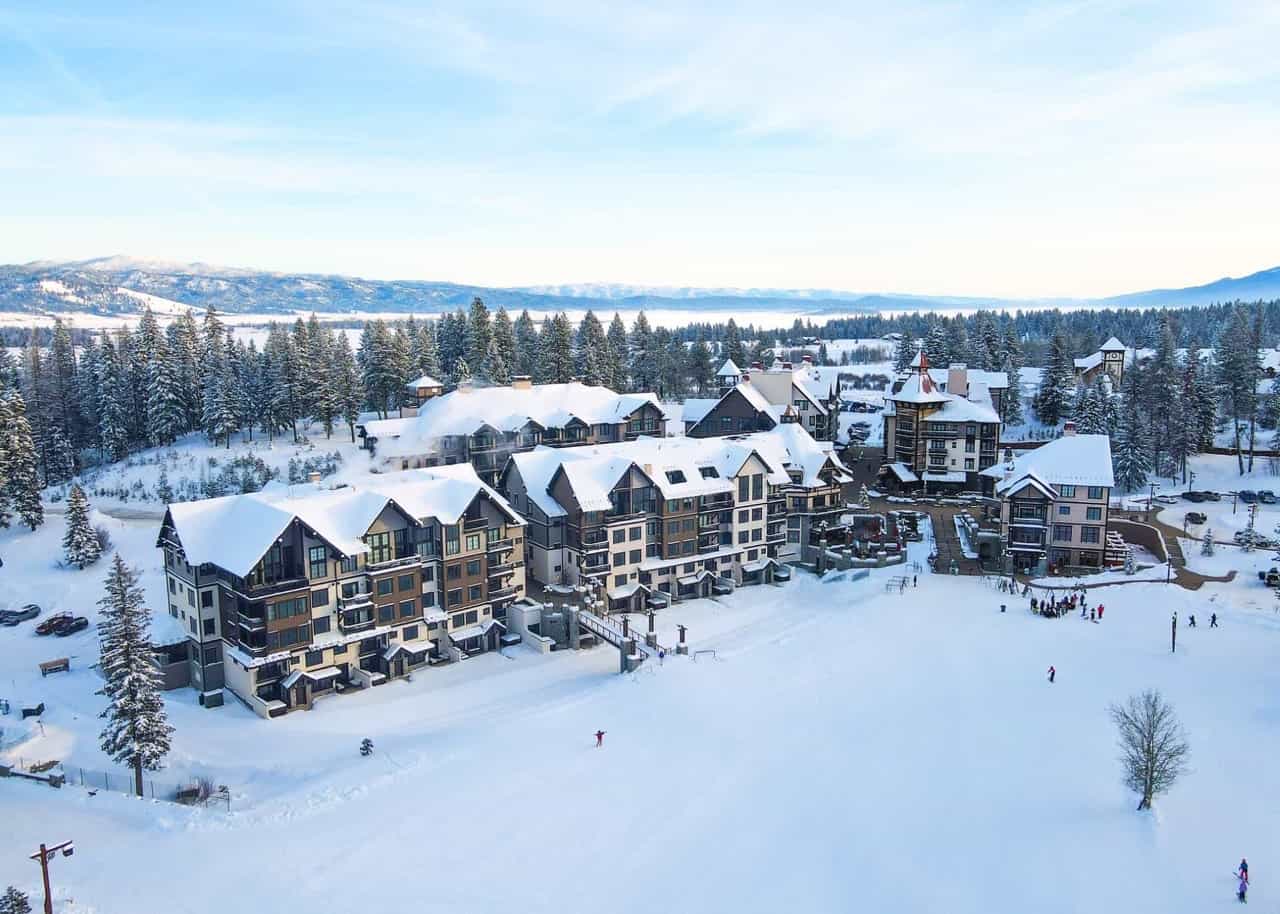
Tamarack Resort, in Idaho’s West Mountain range six miles west of the town of Donnelly, spans 1,610 skiable acres with a 2,800-foot vertical drop and 58 marked trails. Skiers and riders come to the resort for its high-speed lifts, uncrowded slopes, and varied terrain. The mountain base features a pedestrian village centered around The Village at Tamarack, which combines condos, dining, and immediate lift access.
#20 Sundance Mountain Resort, Utah (Score: 87.45)
Sundance Mountain Resort, in Utah’s Wasatch Range, 13 miles northeast of the city of Provo, spans 500 skiable acres directly beneath the 11,752-foot peak of Mount Timpanogos. The mountain features a 2,150-foot vertical drop and 54 marked trails, drawing skiers and riders for its night skiing, and gladed terrain. The resort base connects to an rustic, art and conservation-focused village center featuring mountain cabins, fine dining, and a historic tavern.

#19 Steamboat, Colorado (Score: 87.81)
Steamboat Ski Resort, in Colorado’s Park Range, spans 3,741 skiable acres across six distinct peaks with a 3,668-foot vertical drop and 181 marked trails. Skiers and riders travel to the mountain for its world-renowned aspen glade tree skiing, and trademark champagne powder. The mountain base features a pedestrian village centered around Steamboat Square and the Wild Blue Gondola, located three miles from the historic city of Steamboat Springs.

#18 Aspen Highlands, Colorado (Score: 87.83)
Aspen Highlands, in Colorado’s Roaring Fork Valley, three miles southwest of the city of Aspen, spans 1,040 skiable acres along a narrow ridge with a 3,635-foot vertical drop and 122 marked trails. Skiers and riders travel to the resort for its steep, uncrowded tree lines and high-alpine bowls. The layout requires a 45-minute bootpack hike up a 782-foot vertical rise to reach the summit of the 12,392-foot Highland Bowl, which feeds into 270 acres of expert-only terrain.

#17 Heavenly Mountain Resort, California/Nevada (Score: 87.83)
Heavenly Mountain Resort, straddling the California and Nevada border above the south shore of Lake Tahoe, spans 4,800 skiable acres across the Carson Range with a 3,500-foot vertical drop and 97 marked trails. Skiers and riders travel to the resort for its high-elevation gladed tree skiing, lakefront vistas, and vibrant aprés-ski culture. The mountain base links by gondola directly to the city center of South Lake Tahoe, providing seamless access to outdoor concerts and village nightlife.

#16 Camelback Mountain Resort, Pennsylvania (Score: 88.01)
Camelback Mountain Resort, in Pennsylvania’s Pocono Mountains outside the town of Tannersville, spans 166 skiable acres across the slopes of Camelback Mountain. The mountain features an 800-foot vertical drop and 39 marked trails, drawing regional skiers and riders for its extensive night-skiing and snowmaking infrastructure. Last season, the resort utilized an aggressive late-season snowmaking campaign to stack a 10-foot base on its Cliffhanger trail, extending operations into May for the longest ski season in state history.

#15 Taos Ski Valley, New Mexico (Score: 88.12)
Taos Ski Valley, in New Mexico’s Sangre de Cristo Mountains, spans 1,294 skiable acres with a 3,281-foot vertical drop and 110 marked trails. Skiers and riders come to the resort for its steep chutes, lift-served ridges, and high-alpine expert terrain off Kachina Peak. The mountain layout requires a bootpack hike along the cornices of West Ridge and High Avenue to access its expert terrain, dropping back down into an inviting pedestrian village situated 19 miles northeast of the historic town of Taos.

#14 Blue Mountain, Pennsylvania (Score: 89.36)
Blue Mountain Resort, in Pennsylvania’s Pocono Mountains just north of the Lehigh Valley, spans 171 skiable acres with a 1,082-foot vertical drop and 40 marked trails. Skiers and riders travel to the mountain for its status as the highest vertical drop in the state, its terrain park networks, and its night-skiing footprint, which covers 34 trails.

#13 Stowe Mountain Resort, Vermont (Score: 90.87)
Stowe Mountain Resort, in northern Vermont’s Green Mountains, spans 485 skiable acres across two distinct peaks— Mount Mansfield and Spruce Peak — with a 2,360-foot vertical drop and 116 marked trails. Skiers and riders travel to Stowe for its high-speed lift network, pristine grooming, and the steep, narrow pitches of its legendary Front Four expert trails. An inter-mountain gondola links the two peaks, connecting the rugged alpine terrain of Vermont’s highest summit to the pedestrian village at Spruce Peak.

#12 Jackson Hole, Wyoming (Score: 91.01)
Jackson Hole Mountain Resort, in Wyoming’s Teton Range, spans 2,500 skiable in-bounds acres across Rendezvous and Apres Vous Mountains. The resort features a continuous 4,139-foot vertical drop and 133 marked trails, drawing skiers and riders for its technical cliff zones, open alpine bowls, and the infamous free-fall entry of Corbet’s Couloir.

 Sander Hadley goes big in Corbet’s Couloir. | Image: Jackson Hole Mountain Resort
#11 Vail, Colorado (Score: 91.77)
Vail Mountain, in Colorado’s Eagle County within the White River National Forest, spans 5,317 skiable acres with a 3,450-foot vertical drop and 278 marked trails. Skiers and riders come to the resort for its massive scale, including seven un-groomed Back Bowls at 11,250 feet. The mountain base features a Bavarian-style pedestrian center around Vail Village and Lionshead.

#10 Killington Resort, Vermont (Score: 92.23)
Killington Resort, in central Vermont’s Green Mountains, spans 1,509 skiable acres across seven distinct mountain peaks with a 3,050-foot vertical drop and 155 marked trails. Skiers and riders come to the resort for its sprawling trail footprint and its snowmaking infrastructure, which allows for one of the longest ski seasons in the east. The mountain also serves as an annual host of the Audi FIS Ski World Cup.

#9 Bretton Woods, New Hampshire (Score: 92.43)
Bretton Woods, in New Hampshire’s White Mountain National Forest, spans 464 skiable acres across three mountain peaks with a 1,500-foot vertical drop and 98 marked trails. Skiers and riders come to the resort for its trail grooming, night-skiing footprint, and clear views of Mount Washington. The mountain base connects directly to a pedestrian center anchored by the historic Omni Mount Washington Hotel, located along Route 302

#8 Park City Mountain, Utah (Score: 92.97)
Park City Mountain, in Utah’s Wasatch Range, spans 7,300 skiable acres across two base areas with a 3,226-foot vertical drop and over 330 marked trails. The resort is the largest lift-served ski destination in the United States, with a network of alpine bowls, terrain parks, and groomed trails. The mountain base connects directly to the historic Main Street of Park City via a dedicated town lift.

#7 Telluride, Colorado (Score: 93.15)
Telluride Ski Resort, in Colorado’s San Juan Mountains within the Uncompahgre National Forest, spans 2,000 skiable acres with a 3,845-foot vertical drop and 149 marked trails. The resort features expert chutes, intermediate trails, and hike-to terrain off Palmyra Peak. The trail layout connects the historic box-canyon town of Telluride directly to the pedestrian center of Mountain Village via a free public gondola system.

#6 Sun Valley, Idaho (Score: 93.27)
Sun Valley Resort, in central Idaho’s Smoky and Pioneer Mountains, spans 2,457 skiable acres across Bald and Dollar Mountains with a 3,400-foot vertical drop and 121 marked trails. The resort is North America’s first destination ski resort, featuring long, sustained groomed pitches on Bald Mountain and a separate beginner network on Dollar Mountain.

#5 Breckenridge, Colorado (Score: 93.71)
Breckenridge Ski Resort, in Colorado’s Summit County within the White River National Forest, spans 2,908 skiable acres across five numbered mountain peaks with a 3,398-foot vertical drop and 187 marked trails. The resort features high-alpine bowls above 12,800 feet, terrain parks on Peak 8, and North America’s highest lift, the Imperial Express SuperChair at 12,840 feet. The trail network connects directly down to the historic mining town of Breckenridge.

#4 Snowmass, Colorado (Score: 93.72)
Snowmass, in Colorado’s Roaring Fork Valley, spans 3,342 skiable acres with a 4,406-foot vertical drop and 98 marked trails. The resort is large enough to contain the other three Aspen areas combined, offering ski-in/ski-out lodging and wide cruisers perfect for high-speed turns. The trail network connects directly to a purpose-built pedestrian hub at Snowmass Village.
#3 Aspen Mountain, Colorado (Score: 94.13)
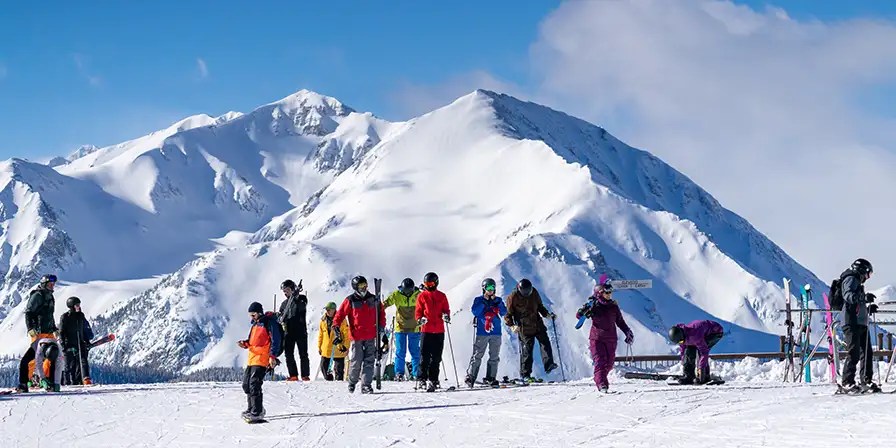
Aspen Mountain, rising directly out of downtown Aspen, spans 828 skiable acres with a 3,267-foot vertical drop and 91 marked trails. Locally known as “Ajax,” the mountain features steep, town-facing ridgelines and pitches with zero beginner terrain. The trail network channels intermediate and expert lines directly into the historic city center, landing right at the base of the Silver Queen Gondola.

#2 Deer Valley, Utah (Score: 94.23)
Deer Valley Resort, in Utah’s Wasatch Range, spans 4,300 skiable acres across six mountain peaks with a 3,000-foot vertical drop and over 200 marked trails. The resort enforces a strict skier-only policy and caps daily lift-ticket sales. The layout features groomed trails and high-alpine bowls that funnel into base lodges situated just two miles southeast of downtown Park City.

#1 Big Sky, Montana (Score: 94.29)
Big Sky Resort, in Montana’s Madison Range, spans 5,850 skiable acres across Lone Mountain and Andesite Mountain with a 4,350-foot vertical drop and over 300 marked trails. The resort secured the top national ranking following the completion of its decade-long infrastructure transformation, featuring the 75-passenger Lone Peak Tram and the high-speed Explorer Gondola. This continuous lift network connects the pedestrian center of Mountain Village directly to high-alpine expert chutes off the 11,166-foot summit.

A side-by-side look at the 30 resorts that made the list shows a true mix of terrain size, scale, and landscape. Ultimately, a resort’s real value lies in what you value. The variety is exactly what keeps things interesting, as American ski country has a lane for every preference — whether that means steep high-alpine exposure or gentle groomers and a great village vibe.