[analyse_image type=”featured” src=”https://cdn.mos.cms.futurecdn.net/wsMmGfdLqAipi5QJGxDgMB-2380-80.png”]
I was unsure about endurance road bikes, but the new Trek Domane SL 5 Gen 5 won me over

Best aero road bikes 2026: Ridden, rated, and wind tunnel tested
‘You can’t simply borrow road metrics’ – Colnago launches new G5-X gravel bike
You thought the triple chainset was dead? Self-shifting, battery-free system for 32″ bikes offers glimpse of the future
News
By
Emily Tillett
Published
Colorado based Marginal Gain is ‘redefining the cycling experience’ with the Orient system

-
Facebook
-
X
-
Pinterest
-
Email
3
Follow us
The past is now the future, according to Marginal Gain, which has unveiled an unusual new drivetrain aimed at addressing what it sees as a limitation of wide-range 1x systems – the increasing chain angle as the chain moves across the cassette.
Over the past decade, we have seen big changes in drivetrain tech, including the widespread adoption of single cranksets and rear cassettes growing in gear range and number of cogs.
Marginal Gain says, “this evolution has progressively shifted the responsibility for providing the bicycle’s full gear range from the front chainrings to the rear cassette. As a result, the chain is being required to operate across increasingly extreme lateral angles”.
A post shared by Blackwater Bicycles | Titanium (@blackwater.bicycles)
How it works
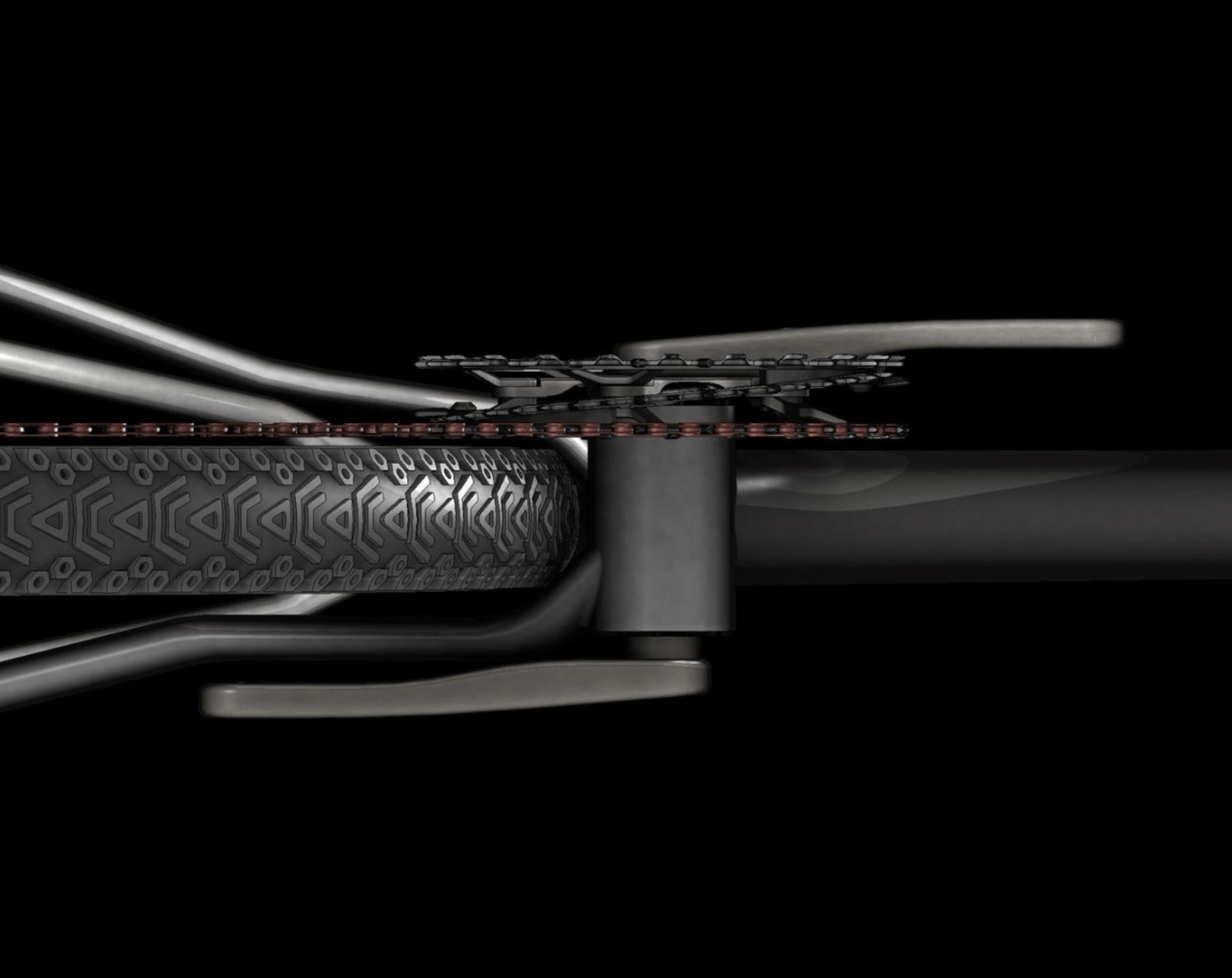
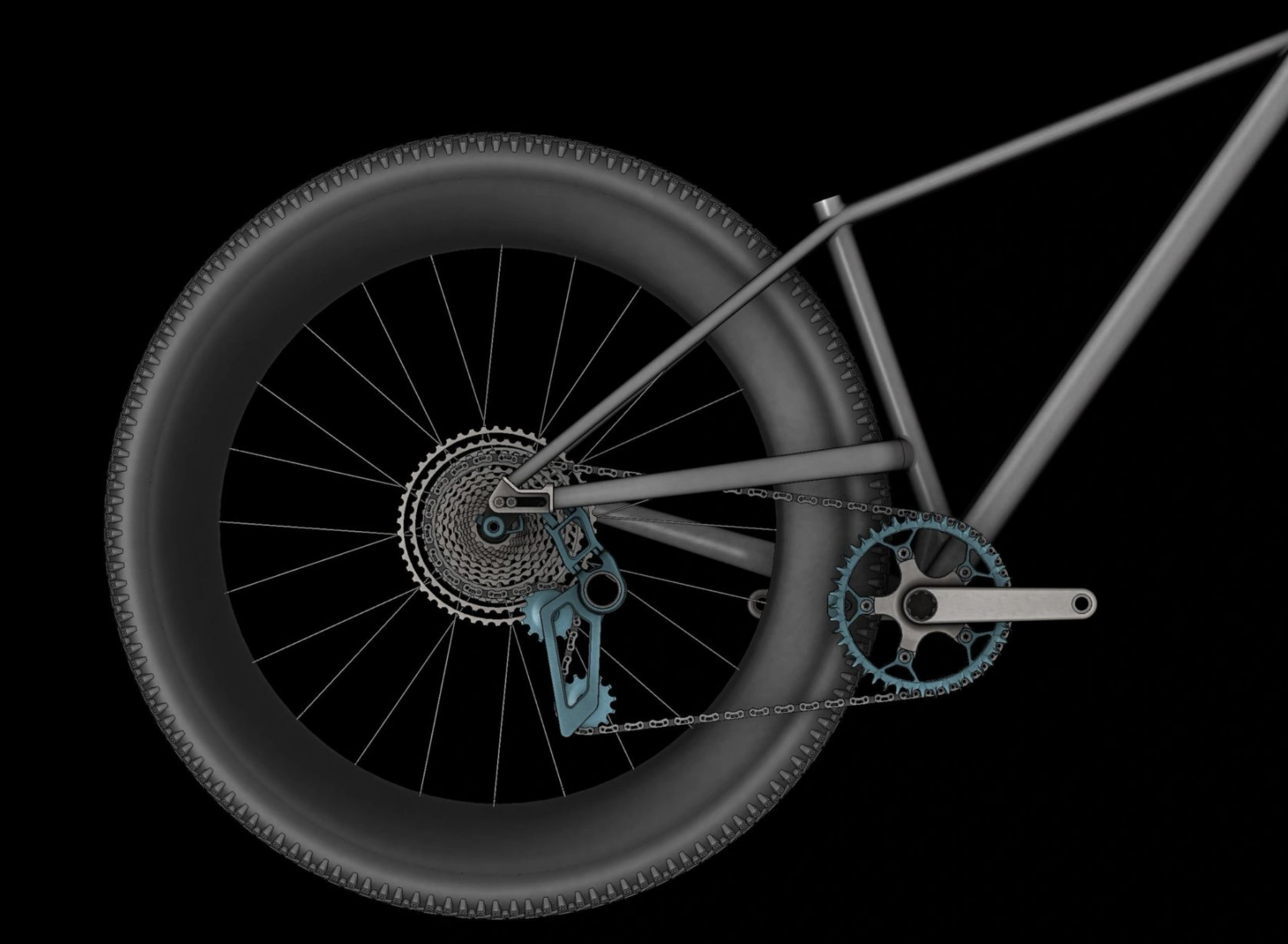
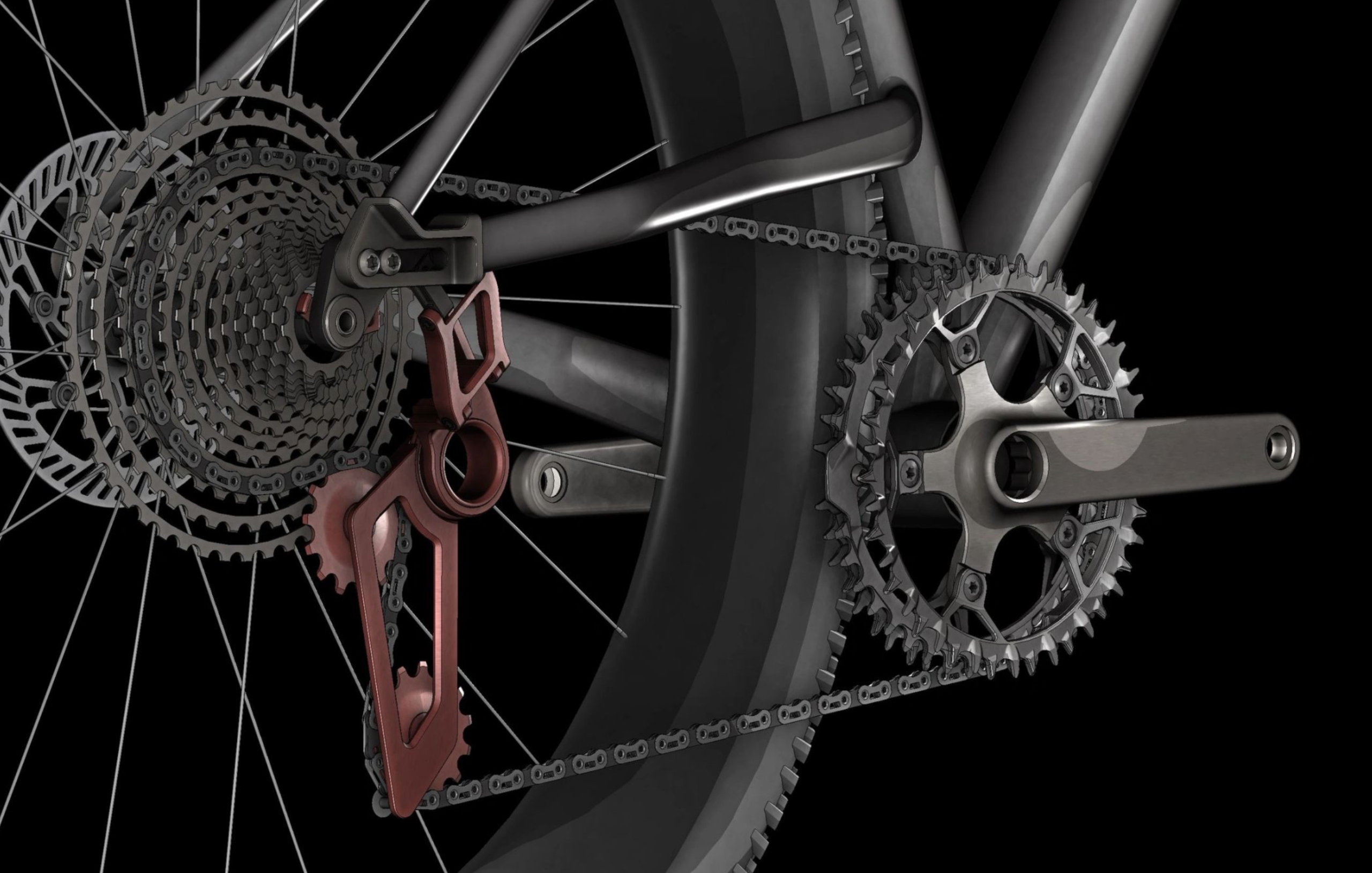
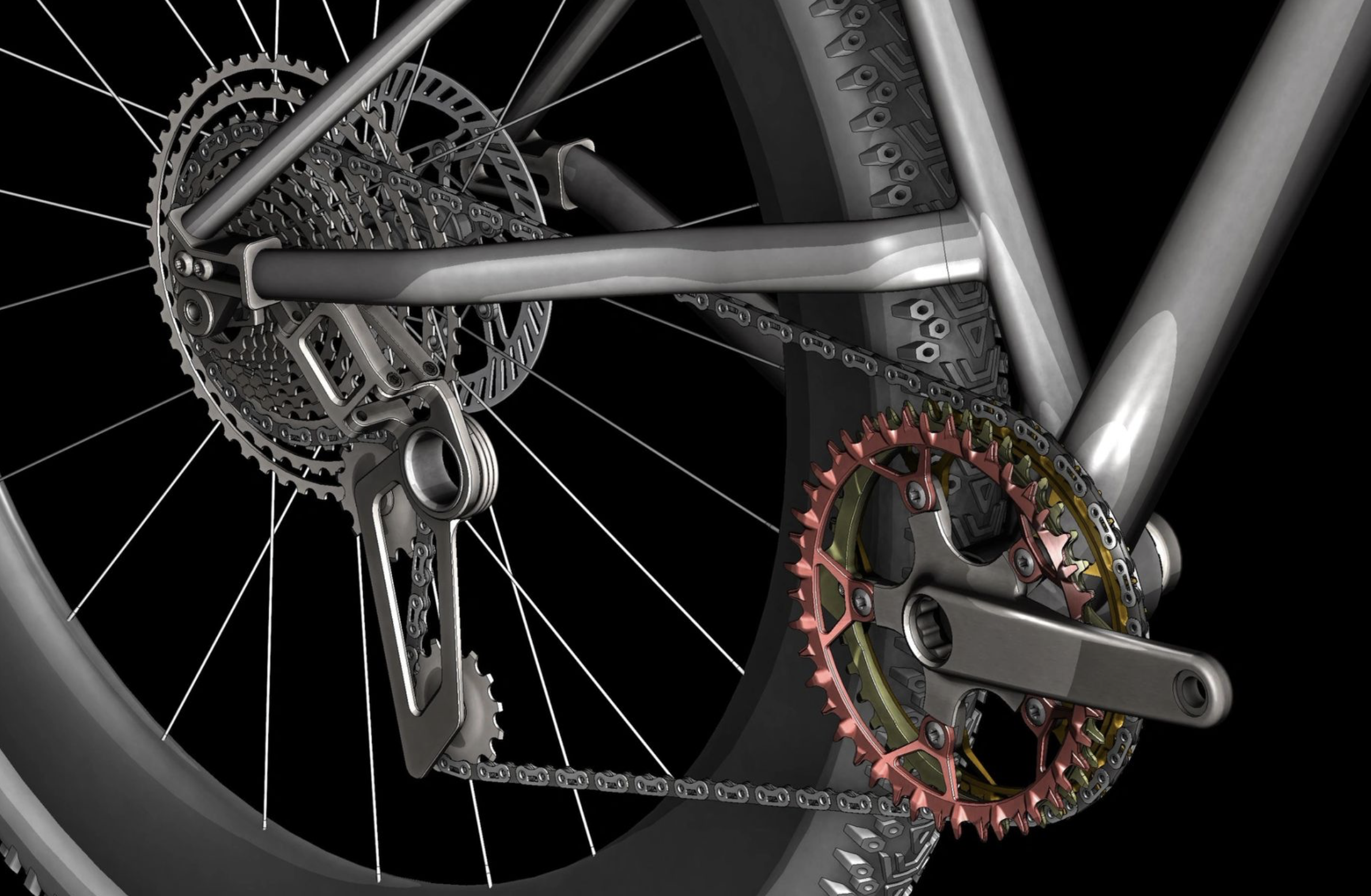
What we have here is essentially a 1x drivetrain with two chainlines, each aligned with a different half of the cassette. The first is used with the smaller cogs and the second with the larger ones, keeping the chain more closely aligned with the selected gear. Marginal Gain says this is intended to offer “the range and versatility of a triple with the simplicity of a single”.
As you shift across the cassette, the chain’s natural lateral movement triggers it to move between the two chainlines, using the middle chainring to guide it between the two outer chainrings.
There’s no front derailleur or input from the rider, and the system operates entirely mechanically, so the shift requires no batteries, electronic controls or charging.
What it hopes to achieve
The aim of Orient is to reduce some of the compromises the company feels are associated with a wide-range 1x drivetrain. By controlling the chain’s movement between two chainlines, Marginal Gain says the system can reduce chain friction, wear and resistance, while allowing for a wider range of gears without relying on increasingly large jumps between sprockets.
The latest race content, interviews, features, reviews and expert buying guides, direct to your inbox!
Focusing on gravel riding, the company believes Orient’s improved chainline could help reduce the effects of mud and dust on the drivetrain, potentially extending chain life. However, the company doesn’t yet have testing to quantify any power savings, particularly in dirty conditions.
Company owner Andre Szucs points to existing testing of SRAM and Shimano chains, which found average power losses of 6.89W with a 0-degree offset angle, increasing to as much as 9.84W with a greater offset angle. He argues that these losses are likely to be greater when contamination is added, and believes Orient’s improved chainline could help reduce some of these losses.
The company claims this system can provide a gearing range corresponding to speeds of 7.6mph to 36.1mph, although it doesn’t state the cadence used to calculate these figures.
Marginal Gain compares this with two road setups. A compact 46/33T chainset with a 10-33T cassette is shown as covering 7.2mph to 33.2mph, while a standard 50/37T setup with a 10-26T cassette is shown as covering 10.3mph to 36.1mph.
The comparisons aren’t entirely like-for-like, however. The Orient example uses a 32-inch wheel, while the more conventional road examples use standard 700c wheels. The 10-26T cassette used for the standard setup is also a relatively unusual choice for general road riding making the comparison less representative of what you’d typically see on the road.
Can it go on a standard bike?
This isn’t a drivetrain you can simply install on an existing bike, as the additional spacing between the chainrings requires a specifically designed frame with enough clearance. However, Orient is designed to work with existing combinations of rear derailleurs and cassettes currently available on the market, supporting 10-speed systems and above.
Marginal Gain has partnered with Blackwater Bicycles, a custom titanium bike builder, to integrate the Orient system into its bikes, and as a result has brought back the elevated chainstay that we saw on many mountain bikes in the late 80s and 90s to create clearance around the drivetrain.
Moving the chainstay above the drivetrain also creates more space around the bottom bracket and rear hub, allowing for greater tyre clearance (2.4 in) and room for future cassette configurations with more than 13 speeds, says the company.
However, a narrower version is also in development. The current system uses two front chainlines that can be spaced by up to 25mm, but Marginal Gain says it is developing a version with 12mm between the chainlines that would be compatible with standard road, gravel and mountain bike frames.
Szucs says the narrower version could also be paired with the company’s 15- or even 16-speed cassette systems and believes the Orient 12mm x 16-speed combination “could very much be suitable to road racing, fully eliminating the front derailleur.”
Weight
Despite adding more chainrings, the Orient system doesn’t claim to be dramatically heavier than existing drivetrains. The lightest Orient 1×16 configuration is estimated at 1,060g, and for comparison, the company’s quoted weight for a traditional flagship 1×13 gravel drivetrain is 1,124g.
These figures are all estimates, and Marginal Gain says the Orient component weights are conservative and likely to come down by the time production versions are available.
Future developments
Future developments are expected to include Marginal Gain’s own rear derailleur, alongside 15- and 16-speed cassette configurations. The company says the two front chainlines, which can be spaced by up to 25mm, allow the derailleur to sit further forward and slightly higher, increasing chain wrap, protection and ground clearance – particularly with 32-inch wheels.
Emily Tillett
You must confirm your public display name before commenting
Please logout and then login again, you will then be prompted to enter your display name.
-
1‘Fingers crossed for that scenario’ – Dutch squad aligned for Marianne Vos to recapture rainbow jersey at Gravel World Championships
-
2
‘I will definitely remember this for the rest of my life’ – No Pogačar, no problem as veteran Primož Roglič saves Slovenia at the last with fairytale European title triumph
-
3
UEC European Championships: Primož Roglič takes ‘beautiful’ victory to win his first European title on home roads
-
4
Joint winners, overturned results and long-lasting controversies – Some of cycling’s most memorable photo finishes
-
5
Designed to withstand ten cutting discs, Kryptonite’s strongest bike lock is now discounted
You thought the triple chainset was dead? Self-shifting, battery-free system for 32″ bikes offers glimpse of the future
News
By
Emily Tillett
Published
Colorado based Marginal Gain is ‘redefining the cycling experience’ with the Orient system
-
Facebook
-
X
-
Pinterest
-
Email
3
Follow us
The past is now the future, according to Marginal Gain, which has unveiled an unusual new drivetrain aimed at addressing what it sees as a limitation of wide-range 1x systems – the increasing chain angle as the chain moves across the cassette.
Over the past decade, we have seen big changes in drivetrain tech, including the widespread adoption of single cranksets and rear cassettes growing in gear range and number of cogs.
Marginal Gain says, “this evolution has progressively shifted the responsibility for providing the bicycle’s full gear range from the front chainrings to the rear cassette. As a result, the chain is being required to operate across increasingly extreme lateral angles”.
A post shared by Blackwater Bicycles | Titanium (@blackwater.bicycles)
How it works
What we have here is essentially a 1x drivetrain with two chainlines, each aligned with a different half of the cassette. The first is used with the smaller cogs and the second with the larger ones, keeping the chain more closely aligned with the selected gear. Marginal Gain says this is intended to offer “the range and versatility of a triple with the simplicity of a single”.
As you shift across the cassette, the chain’s natural lateral movement triggers it to move between the two chainlines, using the middle chainring to guide it between the two outer chainrings.
There’s no front derailleur or input from the rider, and the system operates entirely mechanically, so the shift requires no batteries, electronic controls or charging.
What it hopes to achieve
The aim of Orient is to reduce some of the compromises the company feels are associated with a wide-range 1x drivetrain. By controlling the chain’s movement between two chainlines, Marginal Gain says the system can reduce chain friction, wear and resistance, while allowing for a wider range of gears without relying on increasingly large jumps between sprockets.
The latest race content, interviews, features, reviews and expert buying guides, direct to your inbox!
Focusing on gravel riding, the company believes Orient’s improved chainline could help reduce the effects of mud and dust on the drivetrain, potentially extending chain life. However, the company doesn’t yet have testing to quantify any power savings, particularly in dirty conditions.
Company owner Andre Szucs points to existing testing of SRAM and Shimano chains, which found average power losses of 6.89W with a 0-degree offset angle, increasing to as much as 9.84W with a greater offset angle. He argues that these losses are likely to be greater when contamination is added, and believes Orient’s improved chainline could help reduce some of these losses.
The company claims this system can provide a gearing range corresponding to speeds of 7.6mph to 36.1mph, although it doesn’t state the cadence used to calculate these figures.
Marginal Gain compares this with two road setups. A compact 46/33T chainset with a 10-33T cassette is shown as covering 7.2mph to 33.2mph, while a standard 50/37T setup with a 10-26T cassette is shown as covering 10.3mph to 36.1mph.
The comparisons aren’t entirely like-for-like, however. The Orient example uses a 32-inch wheel, while the more conventional road examples use standard 700c wheels. The 10-26T cassette used for the standard setup is also a relatively unusual choice for general road riding making the comparison less representative of what you’d typically see on the road.
Can it go on a standard bike?
This isn’t a drivetrain you can simply install on an existing bike, as the additional spacing between the chainrings requires a specifically designed frame with enough clearance. However, Orient is designed to work with existing combinations of rear derailleurs and cassettes currently available on the market, supporting 10-speed systems and above.
Marginal Gain has partnered with Blackwater Bicycles, a custom titanium bike builder, to integrate the Orient system into its bikes, and as a result has brought back the elevated chainstay that we saw on many mountain bikes in the late 80s and 90s to create clearance around the drivetrain.
Moving the chainstay above the drivetrain also creates more space around the bottom bracket and rear hub, allowing for greater tyre clearance (2.4 in) and room for future cassette configurations with more than 13 speeds, says the company.
However, a narrower version is also in development. The current system uses two front chainlines that can be spaced by up to 25mm, but Marginal Gain says it is developing a version with 12mm between the chainlines that would be compatible with standard road, gravel and mountain bike frames.
Szucs says the narrower version could also be paired with the company’s 15- or even 16-speed cassette systems and believes the Orient 12mm x 16-speed combination “could very much be suitable to road racing, fully eliminating the front derailleur.”
Weight
Despite adding more chainrings, the Orient system doesn’t claim to be dramatically heavier than existing drivetrains. The lightest Orient 1×16 configuration is estimated at 1,060g, and for comparison, the company’s quoted weight for a traditional flagship 1×13 gravel drivetrain is 1,124g.
These figures are all estimates, and Marginal Gain says the Orient component weights are conservative and likely to come down by the time production versions are available.
Future developments
Future developments are expected to include Marginal Gain’s own rear derailleur, alongside 15- and 16-speed cassette configurations. The company says the two front chainlines, which can be spaced by up to 25mm, allow the derailleur to sit further forward and slightly higher, increasing chain wrap, protection and ground clearance – particularly with 32-inch wheels.
[analyse_source url=”https://www.cyclingnews.com/cycling-tech-components/groupsets/you-thought-the-triple-chainset-was-dead-self-shifting-battery-free-system-for-32-bikes-offers-glimpse-of-the-future/”]