[analyse_image type=”featured” src=”https://velo-cdn.outsideonline.com/wp-content/uploads/2026/10/Worlds-Bike-McNulty-Sub-Head-e1790985974636.jpg”]
It’s been just under a week since the 2026 UCI Road World Championships, and the paint shops at Colnago and Specialized have been hard at work.
To celebrate the two new elite world champions, Brandon McNulty and Demi Vollering, the champions’ bike sponsors have been hard at work to deliver them two unique liveries for the next year of racing. Interestingly, despite the two design teams working from the classic black, white, and rainbow color scheme, the two iconic brands have created dramatically different designs.
For McNulty, many fans will be excited to see that Colnago has gone beyond simply running it back with Tadej Pogačar’s design. McNulty’s Y1Rs has big, bold stripes on the front and rear of the bike, with a glossy black base. There are some other flourishes, but the oversized stripes steal the show.
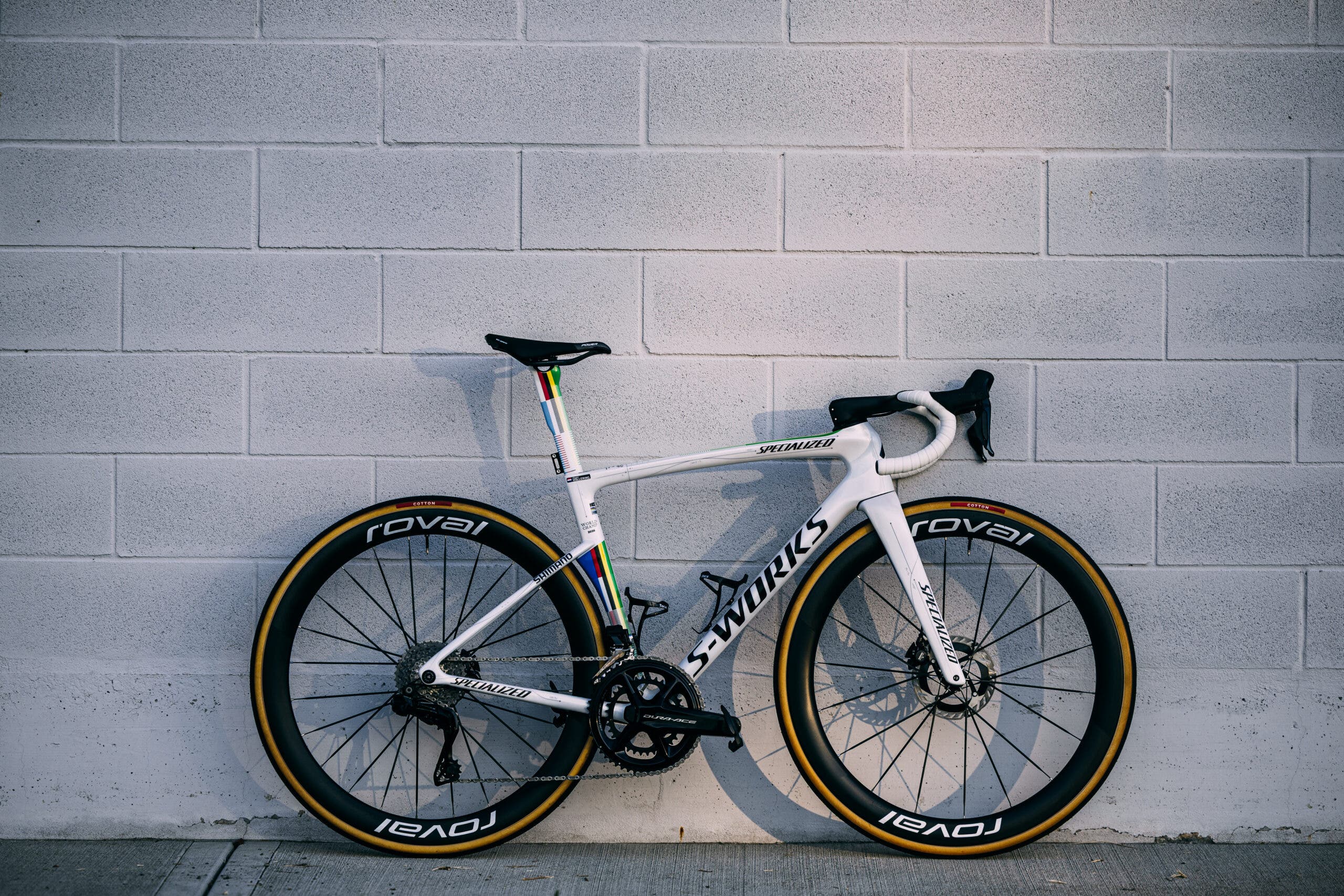
Vollering, on the other hand, has gone much more minimalist. Her Specialized Tarmac SL9 is mostly white with clean accenting stripes of rainbows spread around the bike. Yet, the bike resembles Vollering herself, as it focuses on intentionality, and its flair is reserved for the fringes of the bike. Compared to McNulty’s Y1RS, Vollering’s Tarmac SL9 has a white base, with grey connective tissue.
We assembled the details of both of the bikes below, as well as a collection of some of our favorite rainbow bike liveries from the past few seasons.
Brandon McNulty’s Colnago Y1Rs
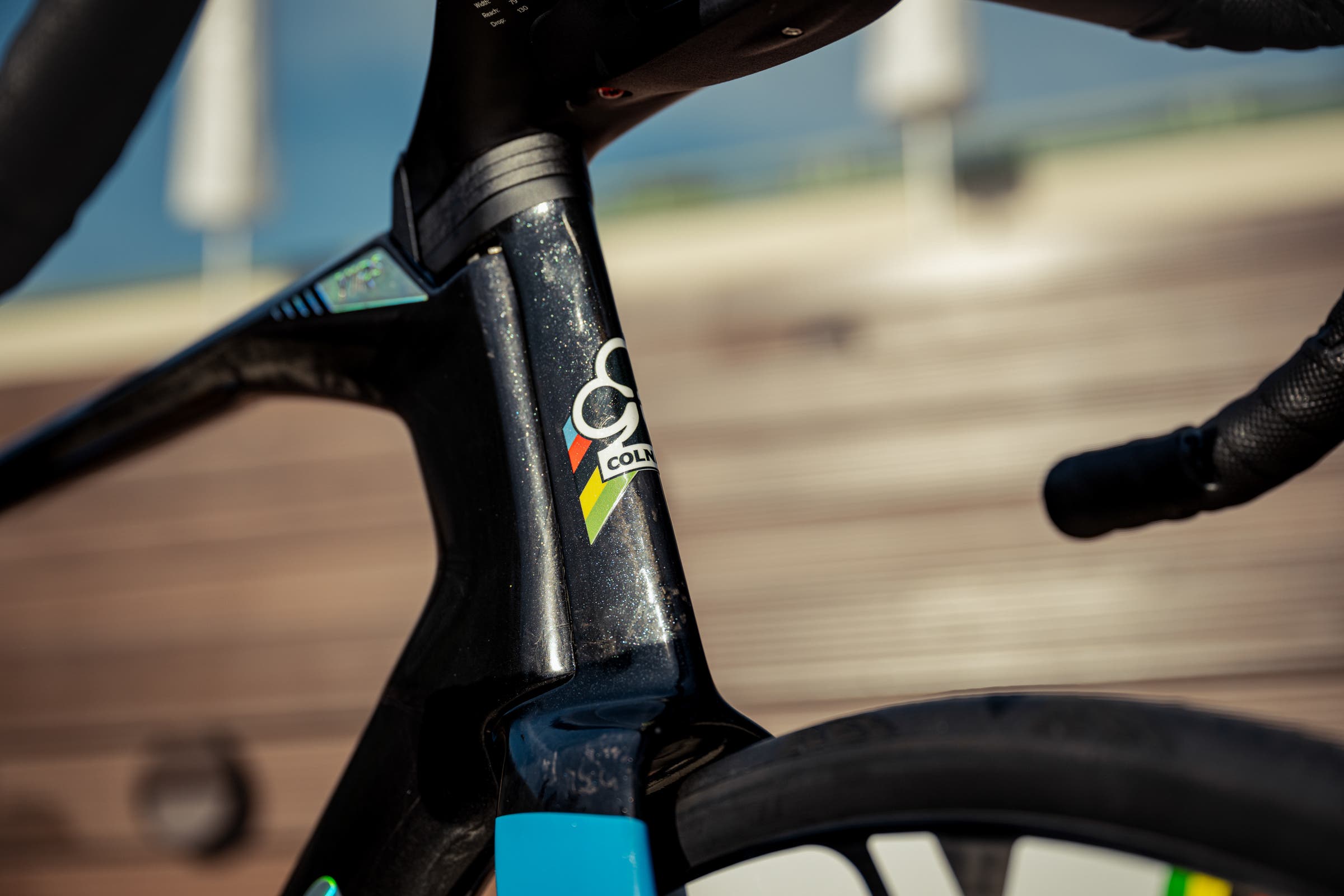
To celebrate McNulty’s surprising Worlds win, Colnago has rewarded the American with a striking, bold rainbow design. The obvious showstopper is the amount of color on the frame. The design is anchored with a set of broad, clean rainbow stripes that cut horizontally across the bottom half of the bike. Like Pogačar’s Y1Rs, McNulty’s design has a black base rather than a white frame.
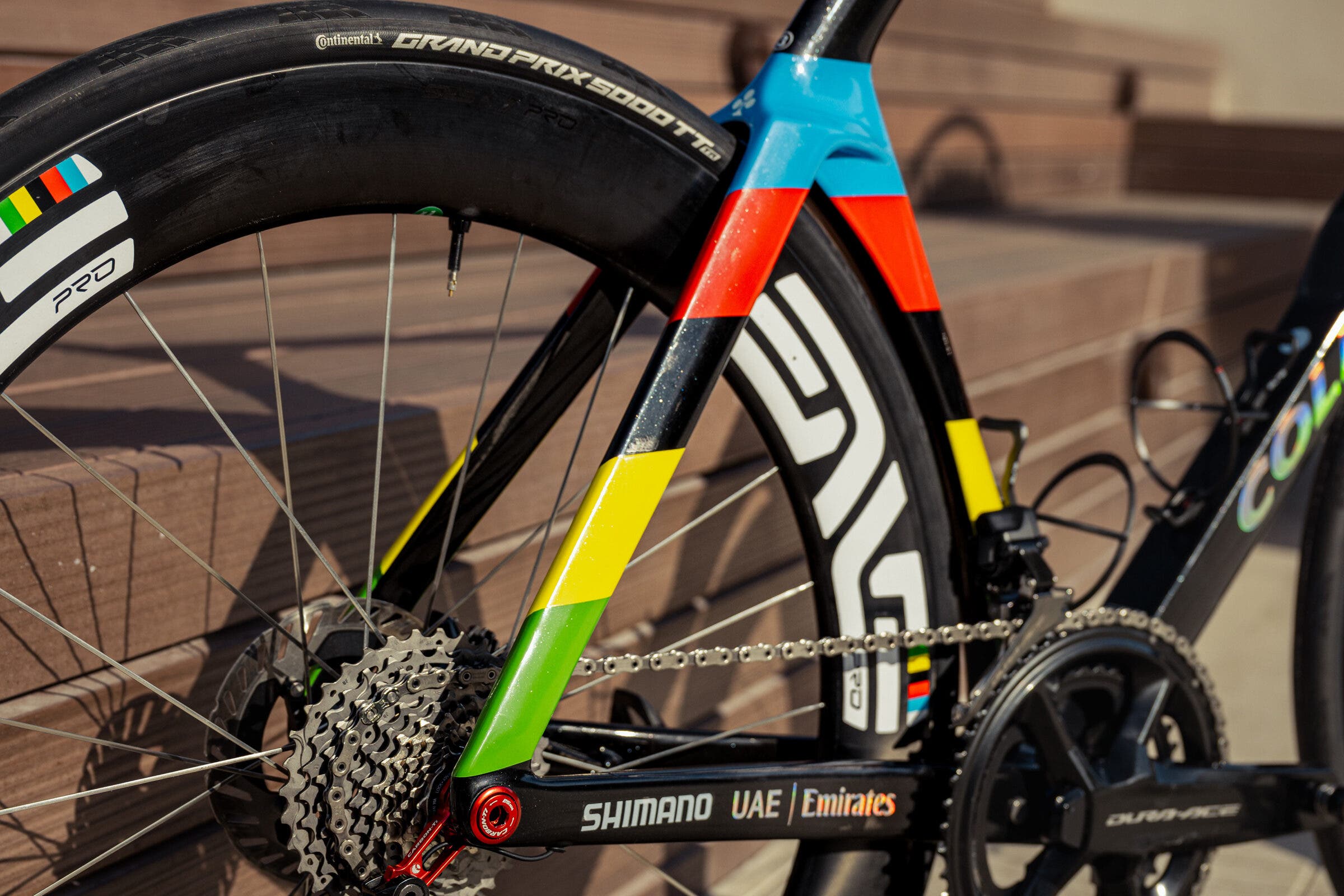
Beyond the bands, the black base itself has a few flourishes. Colnago coated the black base with a subtle glitter finish. That glitter doubles down on the glossiness of the look, while the brand says the effect is also a nod to the stars in the American flag as they glint in the sunshine. That kind of subtle extra detailing is also found in some of the other decals. The Colnago logo on the down tube, for instance, has an iridescent, holographic finish, adding to the shiny look of the frame.
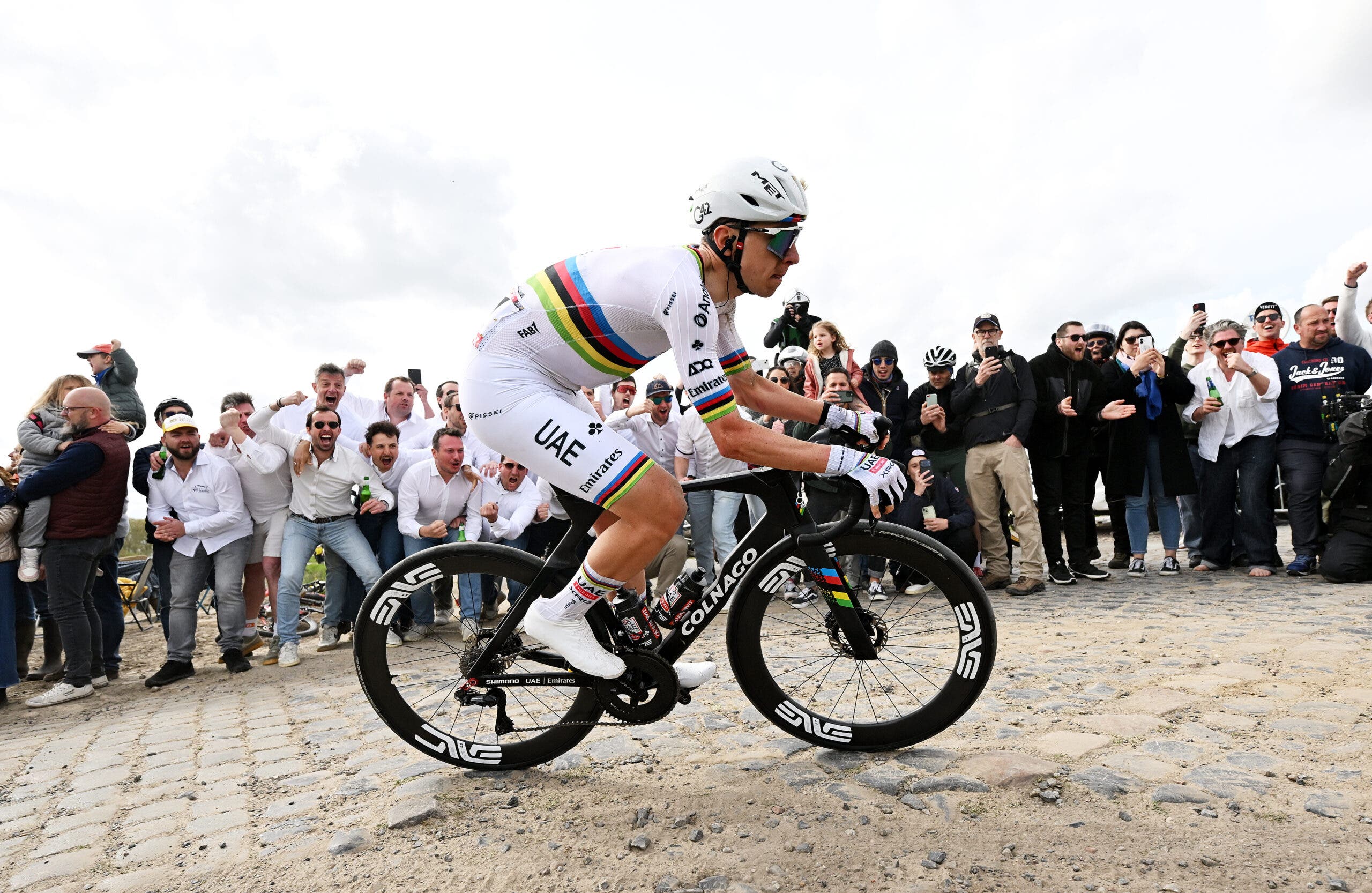
Of course, Colnago is no stranger to outfitting a bike for the rainbow jersey. Pogačar, the winner in 2024 and 2025, had both a custom V5Rs and a Y1Rs. Nevertheless, in both cases it was a bit of a “less is more” approach, especially on his stripped-down lightweight Y1Rs we profiled at the Tour de France last year.
With McNulty, there wasn’t any subtlety—and why should there be!? If you look at the collection of custom bikes Colnago has made for Pogčar, they could fill several bike racks. For McNulty, this was the first. Boldness is imperative.
Demi Vollering’s Specialized Tarmac SL9
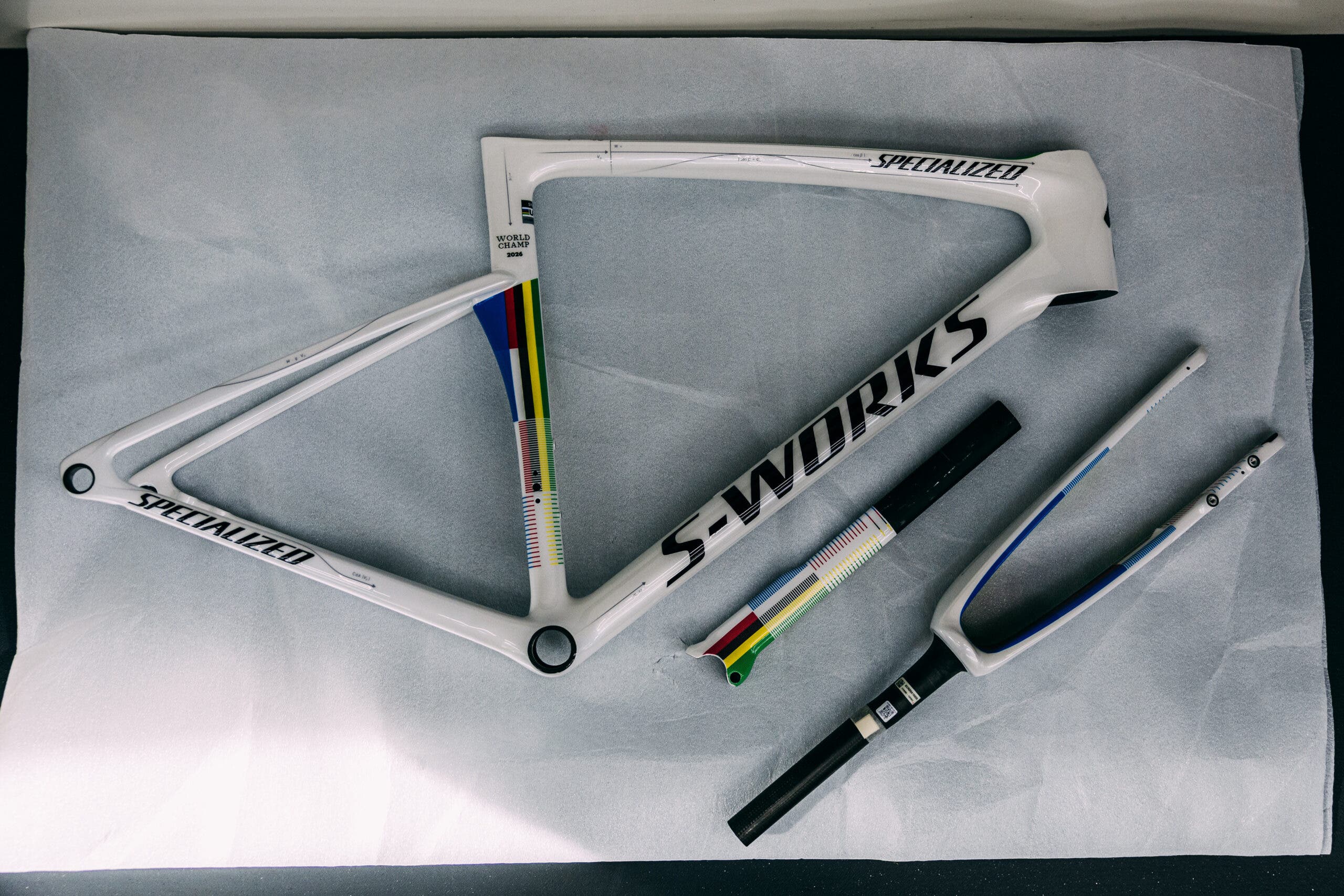
Compared to McNulty, Vollering has been striving for the rainbow bands for years. Her win was no surprise; it was the culmination of meticulous planning and tenacious riding that Vollering has leaned on for her career of success. Dutifully, Specialized has delivered a custom-painted Tarmac SL9 that fits that ethos.
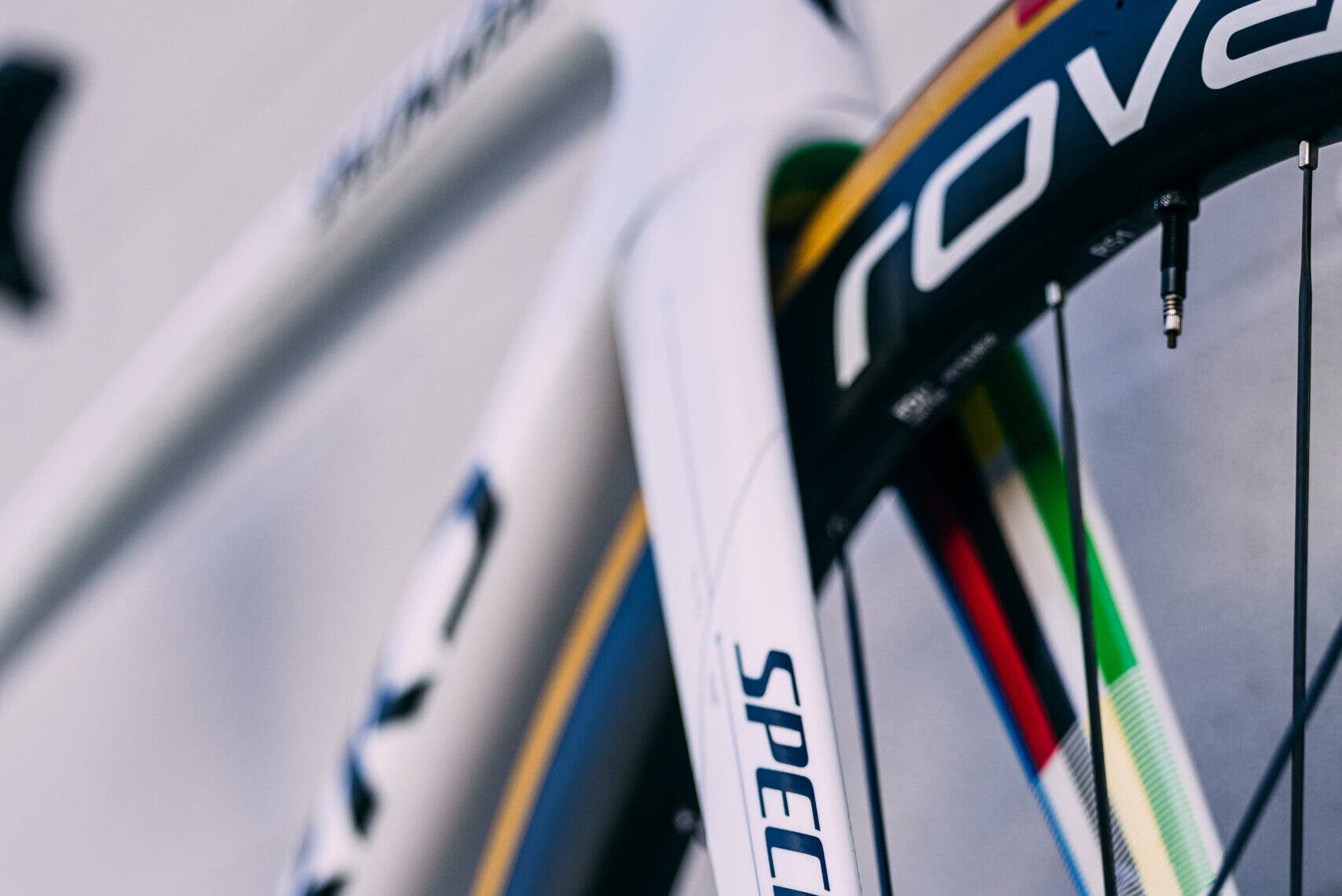
“Winning world championships doesn’t just happen in one big moment; it’s thousands of small decisions leading up to it,” Emily Halwell, Concept Graphic Designer at Specialized, said. “This design celebrates that process. Riders spend years training, testing, and refining tiny gains, and the bike graphics reflect that. It’s a visualization of all those micro decisions building upon one another, ultimately leading to one goal: earning the rainbow stripes.”
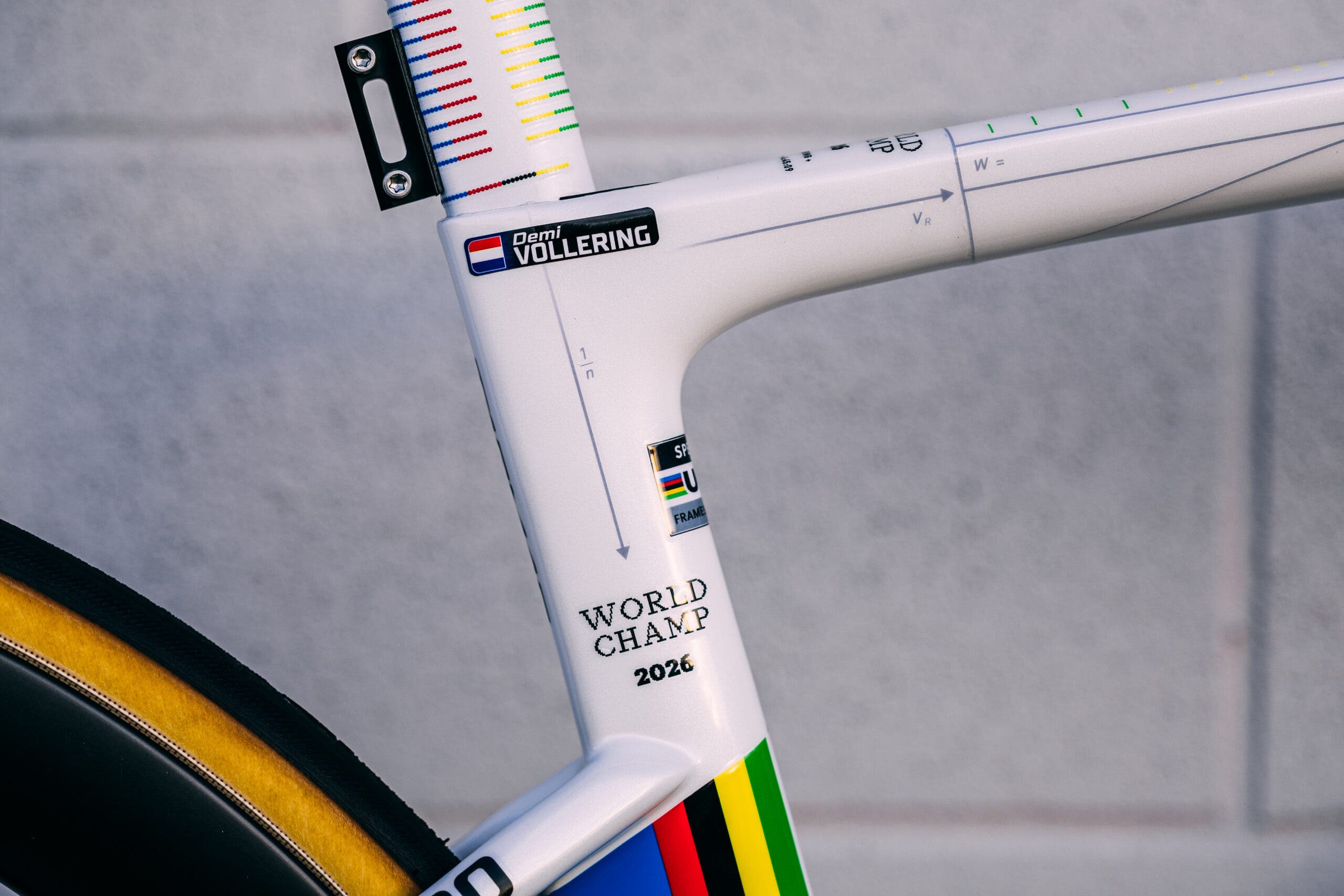
Vollering’s design is mostly white with black Specialized details. The rainbow color was reserved for key areas of the frame, including the aptly named “win fin” on the back of the seat tube, the inside of the fork blades, and the top tube. Those rainbow colors on the frame, seat post, and fork are arranged in geometric patterns and lines that create an intricate design that can only be seen up close.
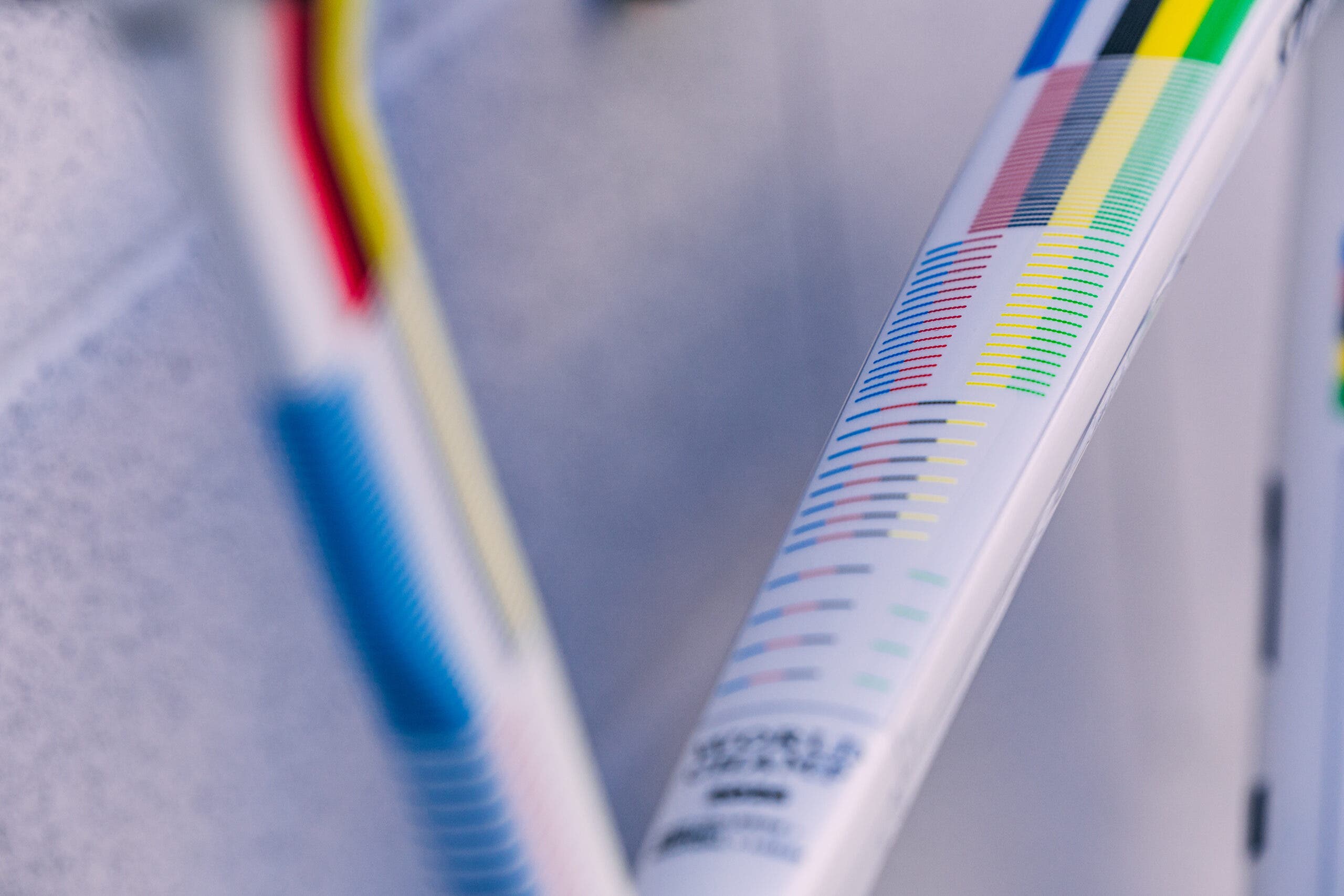
Throughout the frame, the design has a series of arrows, mathematical notation, and other notes that tie back to the Fastest to the Finish moniker, Specialized’s new central concept guiding its racing programs. The bike, in its small details, color flourishes, and design itself, is all about what the brand calls “the Equation of Speed.”
The two frames build on a history of designs that take a wide range of visual tactics
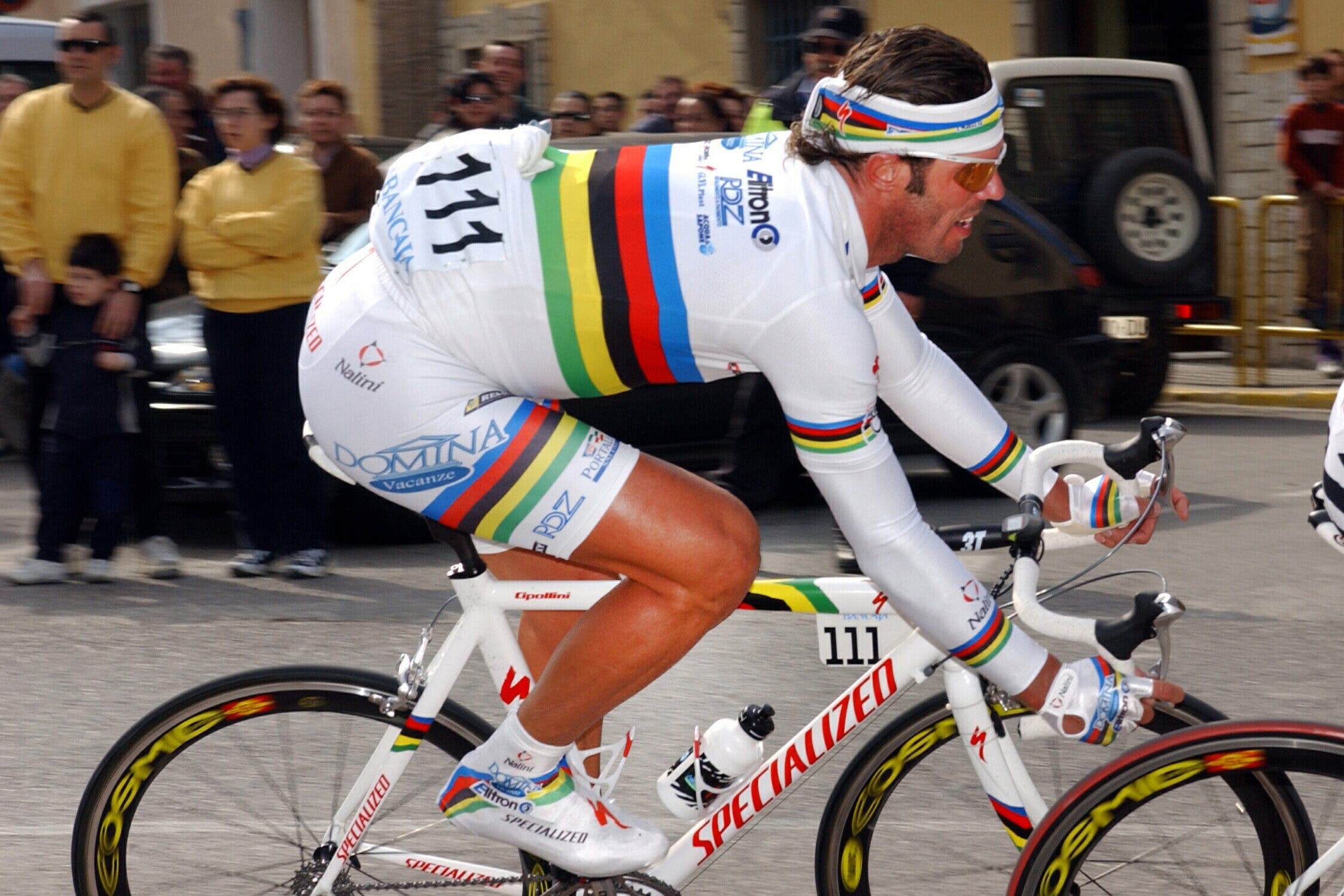
Even though the rainbow jersey was introduced in the 1920s, the rainbow bike is very much a 21st-century phenomenon. And, like so many of the fashion-adjacent cycling advances of the early 2000s, Mario Cipollini is at the center of it.
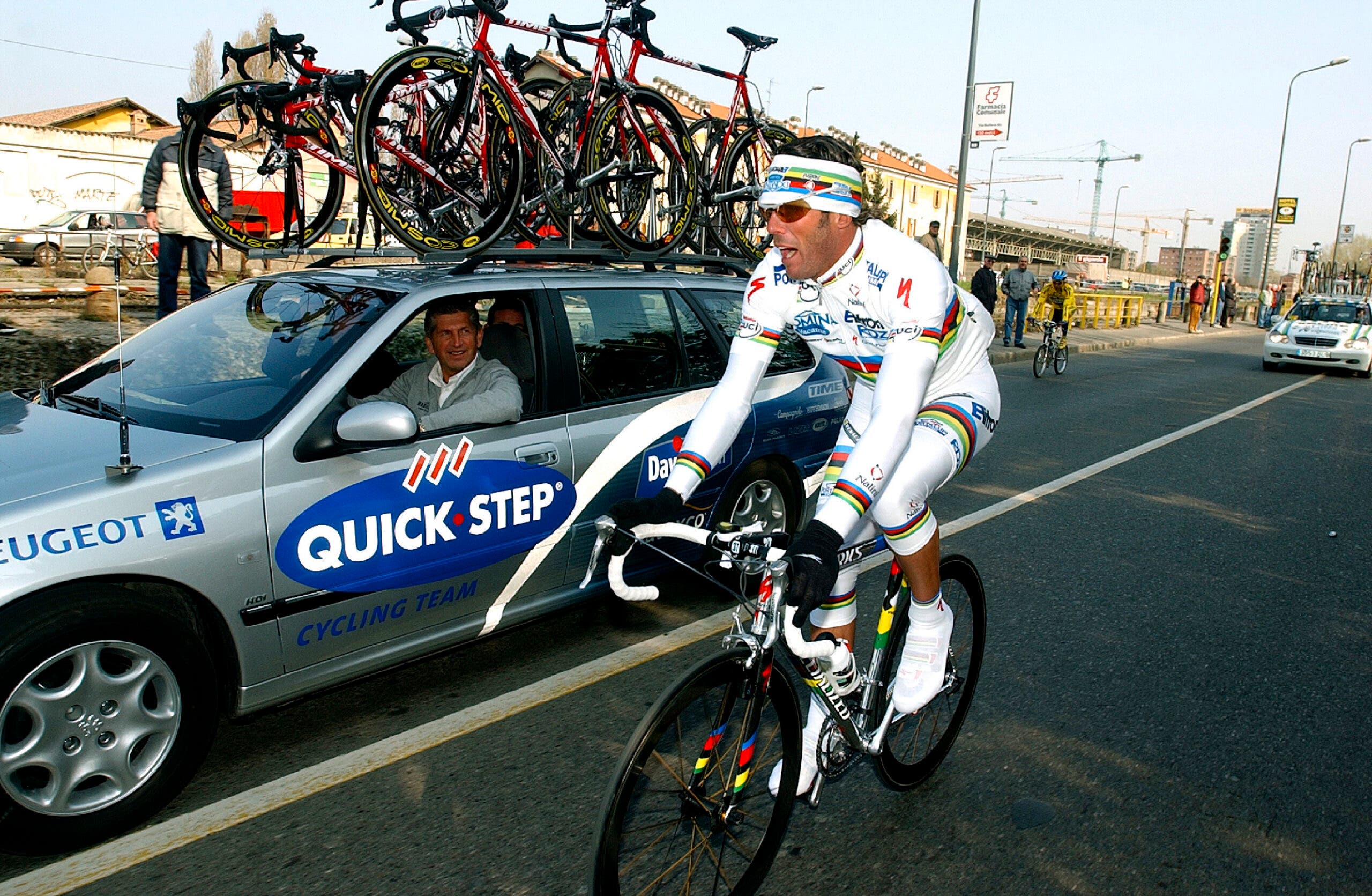
Cipollini only won Worlds once, but that was enough for him to change what it meant to wear the rainbow jerseys. The flamboyant Italian wore white shorts, rainbow bands everywhere, and had multiple Specialized bikes with big, bold rainbow decals. Love it or hate it, what is undeniable is how that look launched a new frontier for the rainbow jersey and everything that came with it.
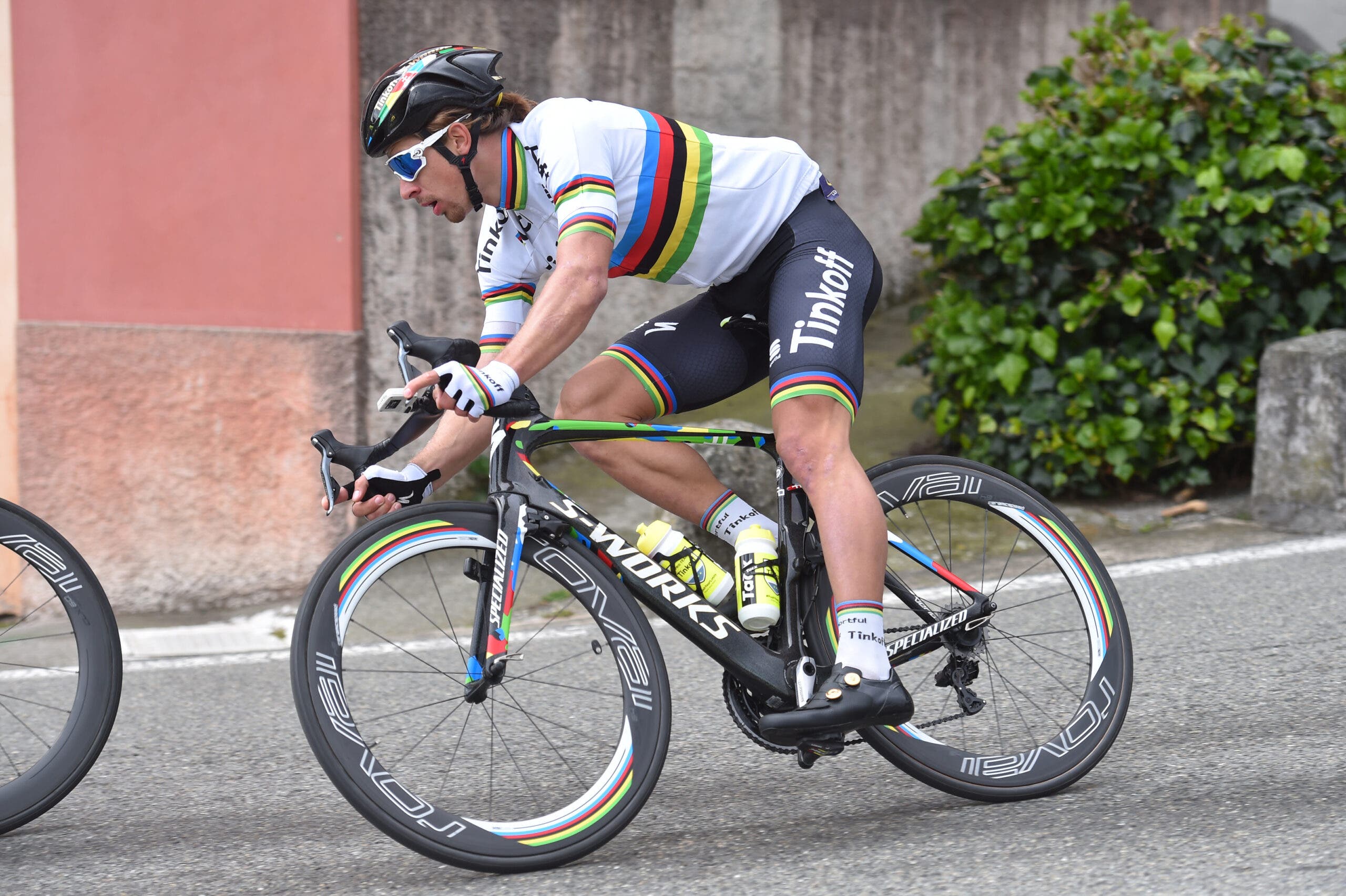
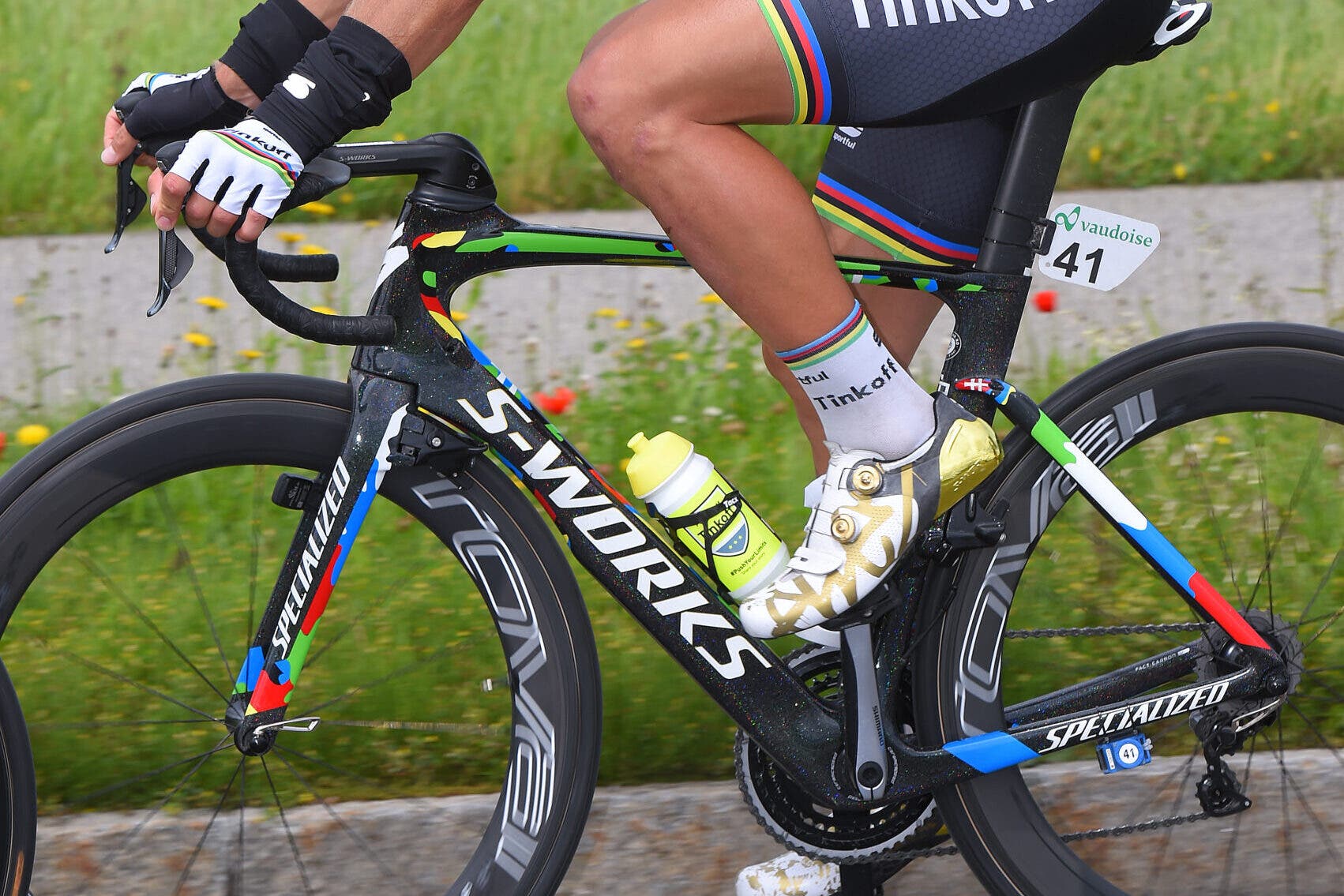
Fast forward a decade, and cycling’s next master of panache, Peter Sagan, got three tries at the rainbow jersey and bike. Significantly, Sagan was a proponent of the bolder, black-based world championship bikes throughout his tenure in the rainbow jersey.
For many, the 2016 vintage of his rainbow Specialized Venge will bring back intense memories of envy. That bike can still be found in the annals of Facebook Marketplace, as the rainbow-bands-turned-camo will also loom large for a certain type of cycling fan.
One of the more underrated rainbow bike designs, and perhaps the one that is closest to McNulty’s design, is Mads Pedersen’s Trek Madone that followed his 2019 Worlds win. The bike was white, but was dominated by a broad, bold block of rainbow bands that cut diagonally along the front of the bike.
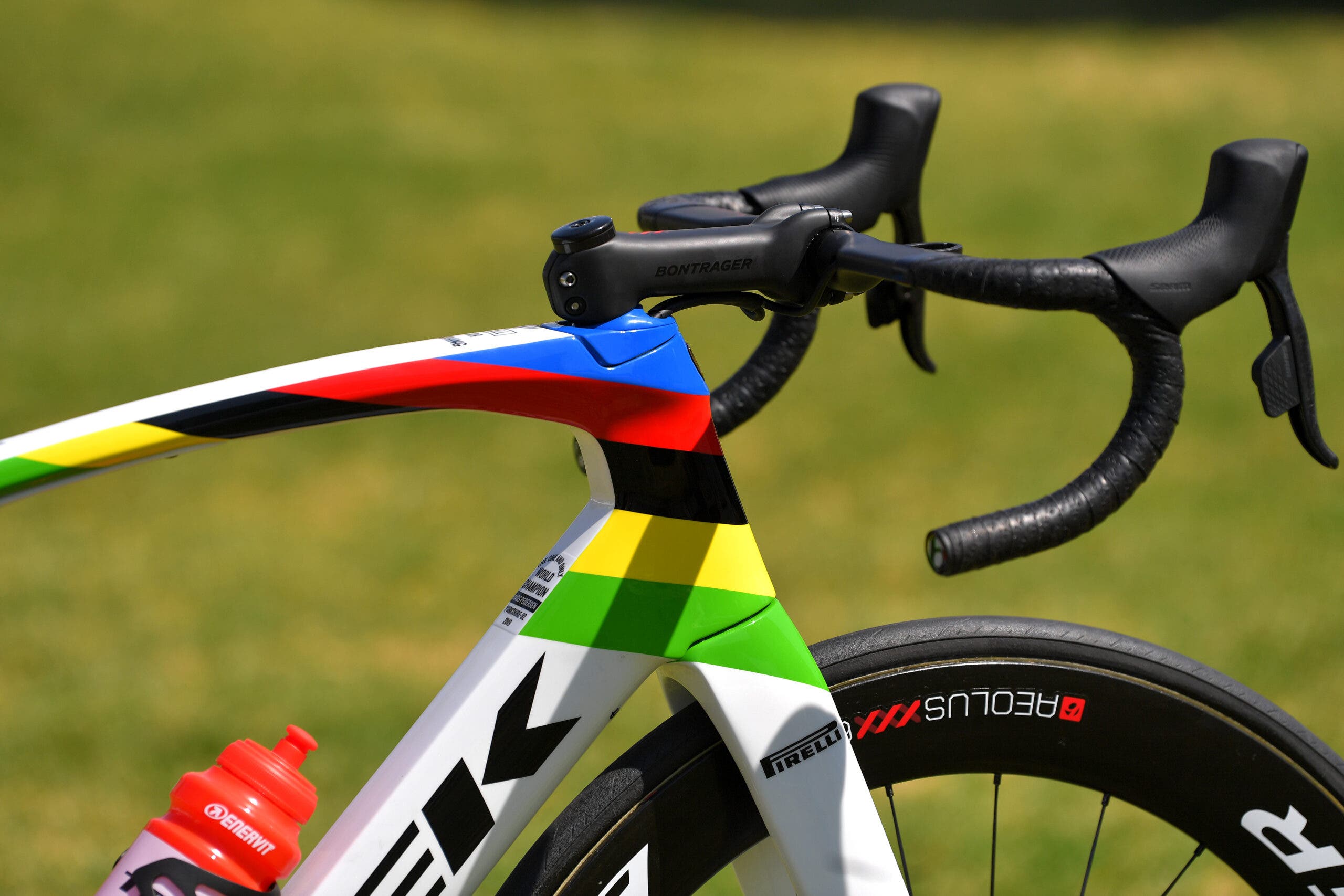
Perhaps it isn’t a coincidence that Pedersen’s unexpected 2019 victory is also the most recent example of a truly surprising result in the men’s world title.
Since Sagan, Specialized has largely been more subdued with their rainbow bike design. They have also used mostly white color bases, which have made many of their recent rainbow celebrations look pretty similar.
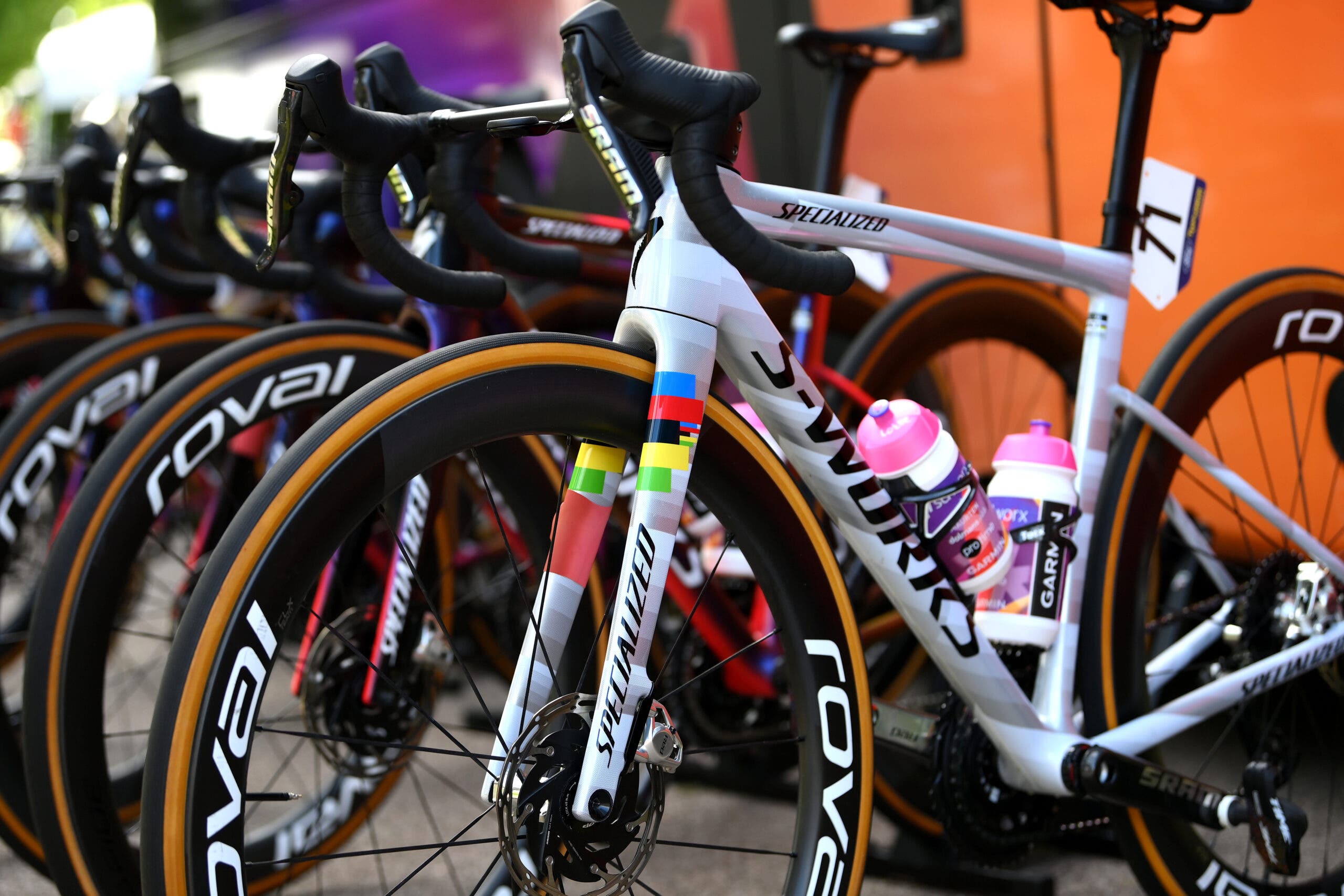
Of that collection of bikes, Lotte Kopecky’s is one that stands out. Most of the rainbow color was reserved for the fork, with a cubed arrangement of the rainbow bands wrapping around both fork legs. Yet, what really capped off the subtle yet powerful aesthetic of the bike was the continuation of that sharp, geometric design that alternated white and grey patterns throughout the frame.
[analyse_source url=”https://velo.outsideonline.com/road/road-gear/mcnulty-vollering-rainbow-bikes/”]