[analyse_image type=”featured” src=”https://images.euronews.com/articles/stories/09/92/46/85/1200x675_cmsv2_b08f6e7c-53c6-5038-9c0c-2e52e0c8b94f-9924685.jpg”]

Turkey’s fund probe: Asset freezes lifted as AKP deputy chair quits
North Korean hackers suspected in €332.8m crypto heist as it leads global hacks

Latest news bulletin | September 28th, 2026 – Midday

Hungarian parliament lifts immunity of PM and Orbán-era ministers
Turkey’s fund probe: Asset freezes lifted as AKP deputy chair quits
North Korean hackers suspected in €332.8m crypto heist as it leads global hacks
Latest news bulletin | September 28th, 2026 – Midday
Hungarian parliament lifts immunity of PM and Orbán-era ministers
How successful is Europe at closing the gender gap between men and women?
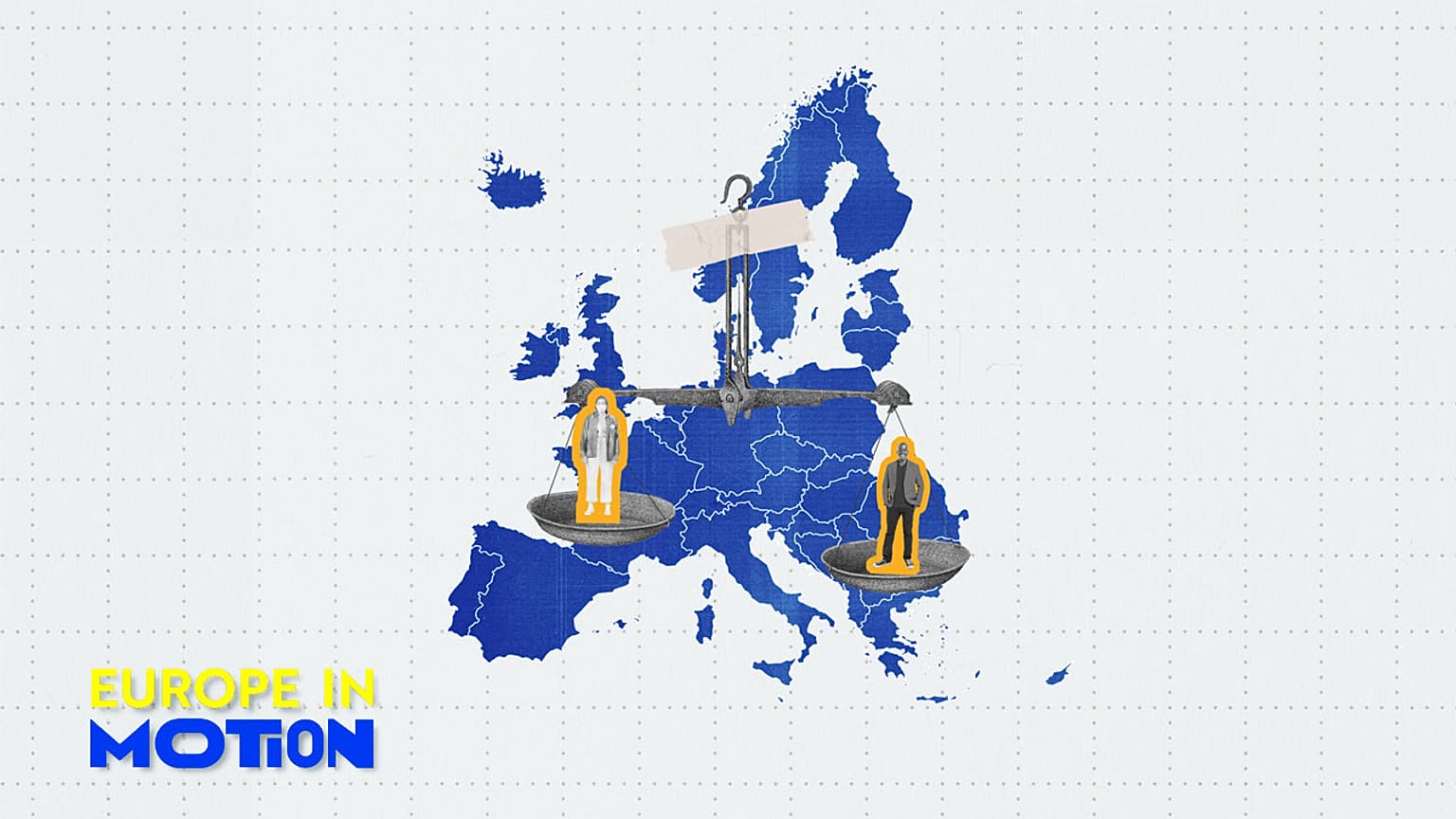
Europe in Motion
– Copyright Euronews

 Facebook
 Twitter
 Flipboard
 Send
Send Reddit
 Linkedin
 Messenger
 Telegram
 VK
VK Bluesky
 Threads
 Whatsapp
Europe continues to be a global leader when it comes to what is possible for men and women, but huge gaps exist between European countries, and full equality remains a very distant reality.
It is widely known that a gap remains between men and women in the world, not only when it comes to equal pay, but also to access to the labour market, education and health. This difference in opportunities is referred to as the gender gap.
 ADVERTISEMENTADVERTISEMENT
Europe has regained its position as the global leader in closing this divide, according to new data from the World Economic Forum (WEF), which has measured this gap since 2006.
The continent closed 75.7% of its overall gender gap this year. This leaves a 24.3% gap to achieve equal representation. It narrowly overtook North America, which ranked first last year.
Since 2006, Europe’s gender parity has improved by 7 percentage points. It is not expected to reach full parity — meaning there is no difference in the opportunities for men and women, or a zero percent gender gap — in 70 years.
The report looked at education, health, economic participation and politics. Europe is the champion in the latter category with a score of 37%. It is closely followed by Latin America and the Caribbean (34.2%). Other regions trail behind by ten percentage points or more.
Europe continues to maintain near parity in the categories of Educational Attainment (99.5%) and Health and Survival (96.9%). Still, it is in third and fourth place in these indexes compared to other regions.
When it comes to Economic Participation and Opportunity, it ranks in fifth position (69.5%), almost eight percentage points below the table’s leader, North America (77.1%).
Uneven growth
Of all regions in the world, Europe accounts for the most countries in the top ten. “Since the index was launched in 2006, Europe has occupied 69% of all top 10,” the WEF report noted. “Continuing the trend established in prior editions, this year’s top performers include seven European economies.”
These countries are Iceland, Finland, Norway and Sweden (which have featured in every top ten for the past two decades), as well as the United Kingdom, Germany and Ireland.
Only Iceland has closed more than 90% of the gender gap (93%).
“Iceland has demonstrated a consistently positive trajectory towards gender parity over the past two decades, remaining in the global top 10 throughout the period and holding the top position since the 2009 edition,” the WEF report read.
It scores particularly well when it comes to Political Empowerment (95.4%). This is driven by the country’s intentional public policies promoting gender balance and its history of female representation in top positions of power: Iceland was the first country in the world to democratically elect a woman, Vigdís Finnbogadóttir, as president in 1980.
Despite Europe’s top position, a deep divide remains within the continent. The countries topping the region’s ranking are mainly located in Northern Europe, while many of the states trailing behind are located in the East.
The bottom three performers, Türkiye (0.649%), Romania (0.698%) and Hungary (0.707%), stand more than 20 percentage points below Iceland.
In Romania, this low score is largely due to its low score in the Political Empowerment category (0.145%), placing it in 104th place for this category. This is driven by a lack of mandatory quotas and closed internal party systems.
This category is also the driving factor for Hungary’s low score (0.132% in Political Empowerment). It has no women in ministerial positions, giving it a score of 0% in this particular category of this subindex.
The European Union wants to close the broader gender gap through a range of policies and measures, ranging from EU Pay Transparency Rules requiring companies to share information on salaries in a bid to bring down the pay gap, to rules on parental leave and flexible working hours to help divide care and work duties.
Go to accessibility shortcuts
Read more
Women dominate Europe’s health workforce but earn 19% less per hour, WHO warns
Cost of pay gap in the EU: Women earn €3,900 less than men a year
Which EU countries fight pay gaps? New transparency rules split the bloc
Increased Russian sabotage attempts prompts EU response

UK police probe Iran link to suspected bomb plot at RAF base
Seoul demands apology after Kyiv reveals transfer of North Korean POWs
Trump offered to sell arms to China, US ambassador tells Fox News

Euronews Travel & Tourism Summit: Speakers, topics and how to watch
Poland and Lithuania preparing cross-border evacuation plan
IRGC claims, US denies seizure of underwater US drone in Hormuz
Seoul demands apology after Kyiv reveals transfer of North Korean POWs
EU tells capitals to cut gas demand amid rising supply concerns
Etna erupts again: chaos at Catania airport, risk of higher air fares
[analyse_source url=”https://www.euronews.com/2026/09/28/how-successful-is-europe-at-closing-the-gender-gap-between-men-and-women”]