[analyse_image type=”featured” src=”https://images.euronews.com/articles/stories/09/92/14/05/1200x675_cmsv2_340550ba-88d5-5015-a929-4a935caa2290-9921405.jpg”]

New Zealanders pick endangered black robin as Bird of the Year

400 people rally against Google data centre in rural Austria

Macron says talks with Trump on Red Sea and Ukraine ‘constructive’

Brad Pitt returns as Cliff Booth in new trailer – and everyone is complaining about the same thing
New Zealanders pick endangered black robin as Bird of the Year
400 people rally against Google data centre in rural Austria
Macron says talks with Trump on Red Sea and Ukraine ‘constructive’
Brad Pitt returns as Cliff Booth in new trailer – and everyone is complaining about the same thing
‘Planetary boundaries’ necessary for life breached, scientists warn. How do we change course?
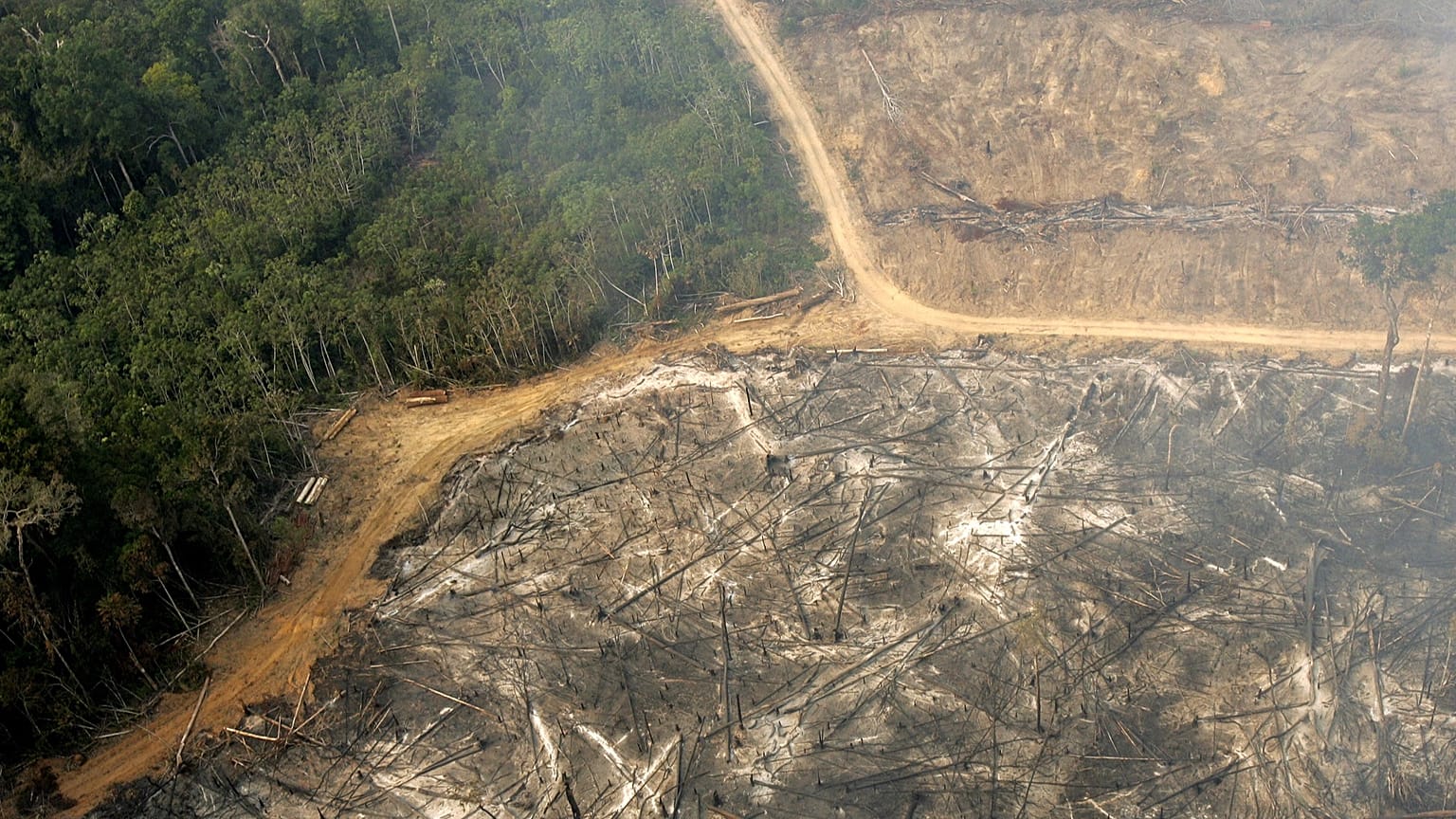
Deforestation is seen near the city of Santarem in the Brazilian state of Para, Dec. 2, 2004.
– Copyright VICTOR R. CAIVANO/AP2004

 Facebook
 Twitter
 Flipboard
 Send
Send Reddit
 Linkedin
 Messenger
 Telegram
 VK
VK Bluesky
 Threads
 Whatsapp
The latest Planetary Health Check warns that seven of Earth’s critical life support systems are experiencing record transgression.
Pressure is mounting across Earth’s critical life support systems, as scientists warn that seven already-breached Planetary Boundaries continue to worsen.
 ADVERTISEMENTADVERTISEMENT
The latest Planetary Health Check, authored by more than 60 scientists and produced by the Potsdam Institute for Climate Impact Research (PIK), comes after 12 months of record ocean heat, floods, wildfires and extreme heat that have defined 2026.
It found that all seven breached Planetary Boundaries are now at their highest recorded levels of transgression – but says we have the “knowledge, capacity and solutions” to change course.
“The diagnosis is unambiguous,” says Boris Sakschewski, PIK scientist and lead author of the report.
“Pressure is rising across every Planetary Boundary already outside the safe operating space. It means that the risk of large-scale, persistent and potentially irreversible change is increasing while our margin for error in tackling these problems is shrinking.”
What are the 9 Planetary Boundaries?
Launched in 2023, Planetary Boundaries Science aims to address critical gaps in our understanding of Earth’s life support systems.
It coined nine boundaries that must remain within safe limits in order to keep humanity “safe” and the natural world “resilient”. Scientists have been monitoring these boundaries for decades to track the planet’s condition.
The seven transgressed boundaries are climate change (the long-term shift in Earth’s temperature and weather patterns), change in biosphere integrity (the overall health, function and resilience of Earth’s living system), land system change (from human-driven activities such as agriculture), freshwater change, modification of biogeochemical flows, introduction of novel entities (such as microplastics) and ocean acidification.
The latter was breached last year, after scientists found that the pH of the ocean’s surface has dropped by around 0.1 units, a 30 to 40 per cent spike in acidity, since the start of the industrial era.
Now, the only Planetary Boundaries that humans haven’t breached are stratospheric ozone depletion (the thinning of Earth’s protective layer) and atmospheric aerosol loading (air pollution) – which have shown signs of improvement over the last decade.
However, scientists warn that global progress may “unmask” unsafe aerosol levels persisting in some regions.
‘We have solutions to change course’
The report identifies natural carbon sinks, such as the oceans, forests and peatlands, as essential to achieve net zero.
Vegetation and soils absorb a substantial share of human-caused carbon dioxide emissions, but repeated extreme weather – made more likely by climate change – is degrading these systems. In some regions, ecosystems have actually turned from carbon sinks to carbon sources, meaning they now produce more CO2 than they absorb.
Sakschewski warns that our planet now risks losing its “buffering capacity against the increasing pressures” we’re putting on it – arguing that we may be overestimating the resilience of land carbon sinks.
“We do not have the luxury of time but we do have the knowledge, capacity and solutions to change course,” says Johan Rockström, PIK Director and co-author of the report.
“Accelerating action to return to the safe operating space across all Planetary Boundaries is essential to protect lives and livelihoods and to deliver on the promise of shared future prosperity.”
Landmark new research from The Earthshot Prize and the University of Exeter recently revealed 51 solutions that can trigger “rapid and transformative change” to repair the planet over the next five years.
Out of these 51 solutions, five priority clusters – or ‘Earthshots’ – were identified.
These are cutting fossil fuel reliance by transitioning to clean energy, reducing solid fuels for cooking, ocean conservation, and clamping down on deforestation.
“To reverse damage to our ecosystems before it’s too late, we need to unlock positive tipping points where progress builds on itself, costs fall with scale and recovery becomes self-propelling,” says Professor Tim Lenton, chair in climate change and earth system science at the University of Exeter.
Go to accessibility shortcuts
Read more

In Argentina, solar power from the Andes keeps this train running

Why Barcelona’s €150m plan to widen its beaches could be prize-winning

More than 12 trillion tonnes of ice lost in climate change’s big melt
In Argentina, solar power from the Andes keeps this train running
Why Barcelona’s €150m plan to widen its beaches could be prize-winning
More than 12 trillion tonnes of ice lost in climate change’s big melt
Europe’s waste heat alone could power Paris for 48 years

New Zealanders pick endangered black robin as Bird of the Year

Naxos potatoes: A centuries-old traditional crop is under threat
Europe’s babies face 84% more ‘fire weather’ than their grandparents

Europe’s clean air crisis: Cities act to cut pollution deaths
In Argentina, solar power from the Andes keeps this train running
Europe’s clean air crisis: Cities act to cut pollution deaths
Europe’s babies face 84% more ‘fire weather’ than their grandparents
Scientists discover new wild cat species for first time in a century
Climate Week warns of challenges in delivering the energy transition
[analyse_source url=”https://www.euronews.com/2026/09/22/pressure-is-rising-weve-already-breached-7-out-of-9-planetary-boundaries-can-we-change-cou”]