[analyse_image type=”featured” src=”https://images.euronews.com/articles/stories/09/89/28/87/1200x675_cmsv2_cf0060a9-182f-5584-9b31-b5fcad3b7d05-9892887.jpg”]
Norway mourns king Harald V as crown prince Haakon becomes king
Europe’s monarchs and world leaders mourn Norway’s King Harald V
Number of missing in Nepal floods passes 2,400 as EU pledges aid
Ceuta ‘on the brink of collapse’ as Spain seeks Frontex support
Norway mourns king Harald V as crown prince Haakon becomes king
Europe’s monarchs and world leaders mourn Norway’s King Harald V
Number of missing in Nepal floods passes 2,400 as EU pledges aid
Ceuta ‘on the brink of collapse’ as Spain seeks Frontex support
Warsh flags inflation concerns as he rejects Fed forward guidance
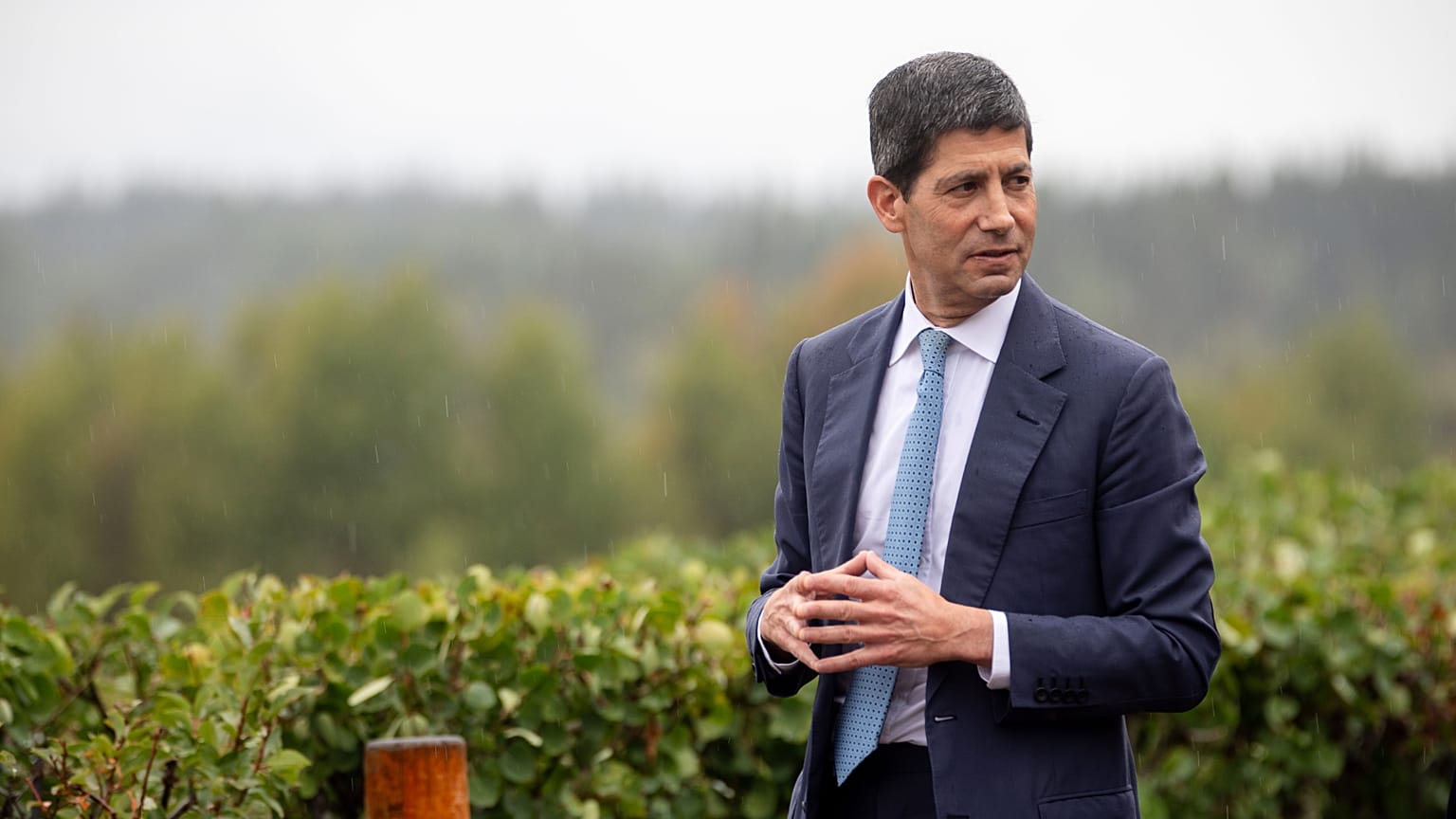
FILE – Fed Chair Kevin Warsh arrives at the annual Jackson Hole Economic Policy Symposium on Friday, Aug. 28, 2026, in Moran, Wyo. (AP Photo/Amber Baesler)
– Copyright AP Photo

 Facebook
 Twitter
 Flipboard
 Send
Send Reddit
 Linkedin
 Messenger
 Telegram
 VK
VK Bluesky
 Threads
 Whatsapp
Federal Reserve Chair Kevin Warsh used his first Jackson Hole address on Friday to argue that financial conditions are not restrictive and that underlying inflation has not meaningfully improved, a hawkish assessment that strengthens the case for a rate hike, while ruling out forward guidance.
Marking his 100th day in the job, Federal Reserve Chair Kevin Warsh told the Kansas City Fed’s symposium in Wyoming that the US economy has strengthened rather than weakened under recent shocks, that the labour market is consistent with full employment, and that inflation remains the central bank’s dominant concern.
 ADVERTISEMENTADVERTISEMENT
Warsh declined to say what he would do next month, but he removed most of the arguments against acting and bolstered the ones in favour of a rate hike.
“For my part, today I am impressed by the overall performance of the economy, which appears to have strengthened,” Warsh stated.
“One indicator of strength is how well an economy holds up to shocks. On that score, both Main Street and Wall Street have been remarkably resilient,” he added.
On inflation, Warsh noted that the PCE index stood at 3.7% over twelve months and 4.1% over six, and 54% of the basket’s components rose by more than 3% over the past year, against 32% in the two decades before the pandemic.
Summer readings that beat expectations “do not tell me that underlying trends have meaningfully improved,” Warsh stated.
The Federal Reserve Chair’s conclusion was blunt: “the Fed’s predominant focus right now should be on prices.”
The standard set was equally direct. “We must be confident that underlying inflation is moving to our objective, clearly and at sufficient speed. Otherwise, we have work to do,” Warsh declared.
That assessment matters because it eliminates the case for supporting growth with further stimulus and potentially opens the door for restrictive measures as markets moved in response.
At the time of writing, the 10-year Treasury yield has fallen 0.5% from its Friday high to 4.67% and the 30-year dropped around 0.9% to 5.16%, while the dollar index rose 0.4% from the intraday low to roughly 99.4 points.
Traders raised the implied probability of a 0.25% hike at the 15 and 16 September Fed meeting to 55%, from around 35% before Warsh’s speech.
Performance of the US economy
Warsh opened his speech with what he called a hinge point in history, arguing that artificial intelligence has advanced faster than even its advocates predicted.
Annualised AI token sales at the two leading labs alone exceed $100 billion, he said, up more than 500% in a year.
AI is “a new variable, potentially a new factor of production,” raising questions the Fed cannot answer yet such as whether it will lift productivity and when, whether it complements or replaces labour, and where the returns will ultimately land.
A new Federal Reserve task force on productivity and jobs is examining it, though he stressed its recommendations will have no bearing on current policy decisions.
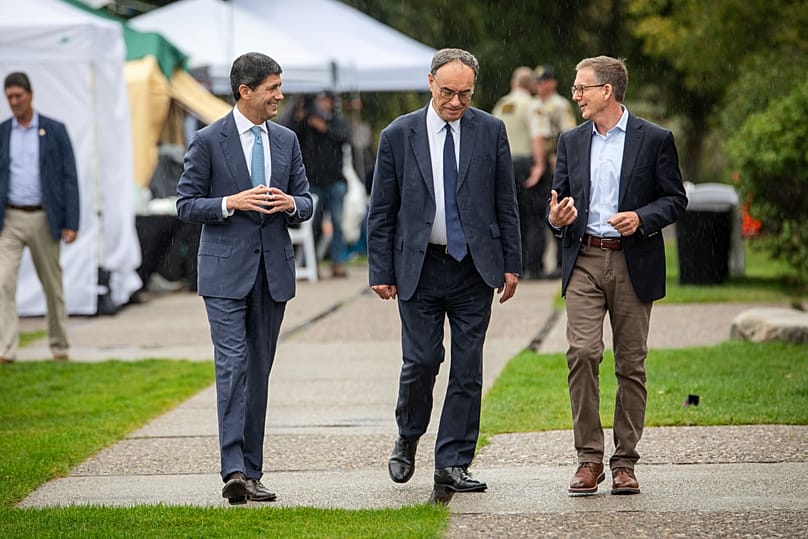
Warsh then listed extensive evidence for his positive outlook on the US economy.
Business investment in equipment and intangibles is growing at around 9%, its fastest since 2021, with more than half of this year’s capital expenditure growth attributable to the AI buildout.
S&P 500 profits went up more than 20% over the year, credit spreads are near historic lows, and banks are easing lending standards. Housing and agriculture are strained, Warsh acknowledged, but on balance he “would be hard pressed to describe broad financial conditions as restrictive.”
Unemployment at 4.1% is low by historical standards, with jobless claims near their lowest in decades, leaving inflation as the outlier.
No forward guidance
The Federal Reserve Chair devoted a substantial section to defending his refusal to signal future moves, a stance that has drawn criticism since he took office in May.
Forward guidance was adopted during the 2008 crisis by colleagues including himself, he said, and was essential then, but “the practice has overstayed its welcome” and now “risks creating ambiguity in the name of clarity.”
Warsh warned of a hall-of-mirrors problem in which markets read the Fed while the Fed reads markets, leaving both blind to new developments.
“We should not indulge a regime in which market participants are looking primarily to the Fed for their next trade,” he said, adding that the costs of such errors fall not on “financial high-fliers” but on households facing high inflation or insecure jobs.
Warsh also rejected calls to publish an explicit reaction function, arguing economic knowledge does not permit a mechanical rule.
Instead he set out six principles: interrogate incoming data rather than trust stale figures, accept that judging supply against demand is imprecise; treat the 2% PCE target as firm and fixed; pursue both mandates without treating them as a trade-off; rely on short-term rates rather than unconventional tools; and remember that money itself matters.
“I stand here today committed to a discipline, not to a decision,” Warsh said in closing.
The decision comes on 16 September at the next Fed meeting.
Go to accessibility shortcuts
Read more
Nordics weigh merging their stock exchanges into one regional market
Syria’s president pays for coffee with Visa card as sanctions era ends
Nvidia bets on another blockbuster year, guiding for 70% growth into 2028
Nordics weigh merging their stock exchanges into one regional market
Syria’s president pays for coffee with Visa card as sanctions era ends
Nvidia bets on another blockbuster year, guiding for 70% growth into 2028

European education spending: Does more money mean better grades?
Austria under fire over business park on ex-Nazi camp site
French presidential candidates clash in first debate of campaign
Chinese imports plunge 30% to 40% after EU tax on small parcels
Nordics weigh merging their stock exchanges into one regional market
EU GDP shares: Which countries are rising and which are falling?
Chinese imports plunge 30% to 40% after EU tax on small parcels
European education spending: Does more money mean better grades?
Syria’s president pays for coffee with Visa card as sanctions era ends
Nordics weigh merging their stock exchanges into one regional market
[analyse_source url=”https://www.euronews.com/business/2026/08/28/warsh-flags-inflation-concerns-as-he-rejects-fed-forward-guidance”]