[analyse_image type=”featured” src=”https://images.euronews.com/articles/stories/09/88/86/58/1200x675_cmsv2_28ed1864-121a-5160-9d05-40d8a6c69a23-9888658.jpg”]

‘Unique and irreplaceable’: Dolly Parton tributes from public figures and celebrities

More than 1,000 volunteers pull historic castle back to its original site in Japan

Back-to-school: How to reset children’s sleep schedules

Fire haze threatens health of millions in Indonesia, ministry warns
‘Unique and irreplaceable’: Dolly Parton tributes from public figures and celebrities
More than 1,000 volunteers pull historic castle back to its original site in Japan
Back-to-school: How to reset children’s sleep schedules
Fire haze threatens health of millions in Indonesia, ministry warns
Kyiv residents adapt to life under Russian bombardment
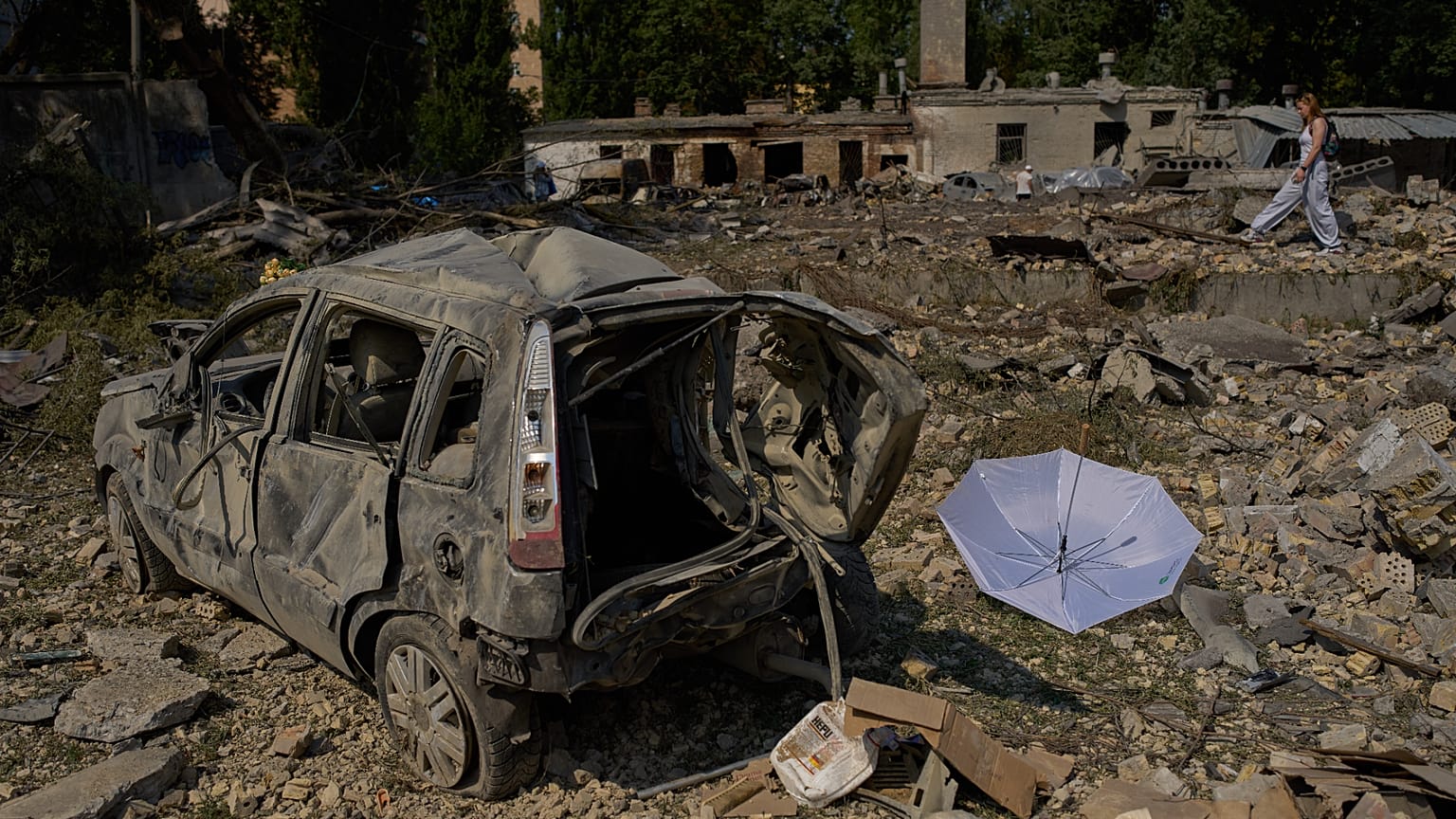
A local resident walks past destroyed vehicles and scattered debris the day after a Russian missile and drone attack in Kyiv.
– Copyright AP Photo/Efrem Lukatsky

 Facebook
 Twitter
 Flipboard
 Send
Send Reddit
 Linkedin
 Messenger
 Telegram
 VK
VK Bluesky
 Threads
 Whatsapp
Kyiv residents describe how repeated Russian missile attacks have transformed daily life as the war reaches far beyond the front lines.
Russia’s intensifying missile attacks on Kyiv are forcing residents to adapt to nights spent in shelters as the Ukrainian capital suffers repeated strikes on residential areas.
 ADVERTISEMENTADVERTISEMENT
One of the deadliest came overnight on 2 July, when 30 people were killed and 99 injured, according to Kyiv authorities, with damage reported at 40 locations across the city.
A 36-year-old resident who was at home with her husband and eight-year-old child described windows being shattered and a fire breaking out after the attack.
“My husband opened our apartment door and people managed to escape through our apartment, through the broken window,” she said. “Since then, every night, we sleep in shelters.”
Kyiv’s health authorities say emergency medical teams attended 1,687 locations following Russian attacks between February 2022 and June this year, treating more than 2,500 people.
Russia has continued large-scale attacks, with another barrage on 20 August, killing at least 12 people in Kyiv.
Ukraine has meanwhile stepped up its own long-range strikes inside Russia, targeting oil refineries, fuel facilities and military sites. Recent attacks have hit facilities in Krasnodar and Tatarstan, while a strike on the Afipsky refinery on Tuesday killed two people, according to Russian authorities.
Despite the nightly threat, many Kyiv residents remain determined to stay.
“We go to shelters. We prepare the children for school,” one woman said. “We live.”
Go to accessibility shortcuts
Read more
Ukraine’s €23 billion funding gap puts EU in a bind as Zelenskyy seeks fast cash
Next Atlantic tropical storm will be named Dolly but no connection to Parton’s death
Partial lunar eclipse on Friday: Where to see it in Spain, Italy, France, Portugal and Germany

Ukraine’s funding gap puts EU in a bind as Zelenskyy seeks fast cash

Europe’s gas prices are surging. Who will be the first to pay more?

More than 200 migrants rescued off Crete at dawn

‘Unique and irreplaceable’: Dolly Parton tributes from public figures and celebrities

Anthropic IPO: Five things to know before its Wall Street debut
Conservatives, liberals call to freeze EU cash for Romania over mayor
Netherlands withdraws from ‘no longer’ neutral 2027 Eurovision
Canada walked away from Trump. Could the EU ever do the same?
Meloni made migrant ‘returns’ popular in the EU. Now it’s backfiring
Iranian state TV airs video targeting Barron Trump with $10m bounty
[analyse_source url=”http://www.euronews.com/my-europe/2026/08/26/kyiv-residents-adapt-to-life-under-russian-bombardment”]