{“@context”:”https://schema.org”,”@type”:”Article”,”image”:”https://car-images.bauersecure.com/wp-images/268386/car_range_extender_explained_1.png”,”mainEntityOfPage”:{“@type”:”WebPage”,”@id”:”https://www.carmagazine.co.uk/car-news/tech/range-extenders-explained/”},”url”:”https://www.carmagazine.co.uk/car-news/tech/range-extenders-explained/”,”author”:{“@type”:”Person”,”name”:”Jamie Turner”,”description”:”Jamie Turner is a specialist in automotive propulsion, having spent a career in the area spanning industry and academy. He spent 28 years in the auto industry, with over 21 working at Lotus Engineering, where he led Powertrain Research for a decade. He originally started working on Wankel rotaries at Norton Motorcycles, which triggered a lifelong fascination with unusual engines, and also worked in F1 and IndyCar at Cosworth Racing, very much the cilmination of being a long-time racing fan. While at Lotus he studied for his Ph.D. from Loughborough University, but still views the u201CUniversity of Hethelu201D as providing the best practical education a car enthusiast could ever hope for. He finished his industry career leading gasoline engine research at Jaguar Land Rover.nnnnAfter this, he joined the University of Bath as part of its Powertrain and Vehicle Research Centre. Heu2019s now a Professor of Mechanical Engineering at KAUST where he is researching all aspects of vehicle propulsion and decarbonization, both on the vehicle side via the fuel path.nnnnSomewhere along the line he club-raced hydroplanes for a couple of seasons (having discovered that he was unlikely to become a four-wheeled racing colossus through sitting in cars next to Lotus test drivers) and he owns a couple of motorcycles as well as a highly-cherished Elise; for several years in his previous life he adored daily-driving those and canu2019t really understand why anyone wouldnu2019t want tou2026nnnnFor the record he has over 37 years of experience in the field of internal combustion engines and is a specialist in spark-ignition combustion, alcohol fuels, and engine and powertrain concepts.u00A0Heu2019s published over 200 papers and book chapters in these areas.u00A0As well as his pieces for CAR he writes for Bike magazine, and really enjoys the contrast between formal writing in his day job and writing for a real-world audience in magazines.nnnnIn addition to his specializations, heu2019s interested in renewable energy and its application to the transport sector, with particular emphasis on the potential ofu00A0alcohol fuels and hydrogen.u00A0As such he believes heu2019s doing something meaningful to help solve the challenges of the day, even if he is an unabashed IC engine fan.”,”image”:{“@type”:”ImageObject”,”url”:”https://car-assets.bauersecure.com/wp-images/210607/jamie.jpg”,”caption”:”Jamie Turner”},”sameAs”:”https://www.linkedin.com/in/james-turner-84688b57/?originalSubdomain=uk”,”jobTitle”:”CAR contributor”,”knowsAbout”:”Automotive”,”worksFor”:{“@type”:”Organization”,”name”:”CAR magazine”}},”dateModified”:”2026-08-25T09:37:05+01:00″,”datePublished”:”2026-08-25T09:37:05+01:00″,”headline”:”Need to give your EV an engine? Range extenders explained”,”publisher”:{“@type”:”Organization”,”name”:”Bauer Media”,”brand”:{“@type”:”Organization”,”name”:”Car Magazine”},”logo”:{“@type”:”ImageObject”,”url”:”https://car-assets.bauersecure.com/images/logos/car.200×88.png”}}}
Need to give your EV an engine? Range extenders explained

► We explain how range extenders work
► EREV? REEV? REx? Which is best?
► Can they get you more use out of your EV?
Welcome to the weird world of range extenders – a place of terminological nightmares and quite a lot of confusion around what the term even means. But with big-money luxury EVs selling like cold cakes, the concept is back in the spotlight.
Let’s start with the EV: one in which the entirety of the propulsion is provided electrically. The primary goal of fitting a range extender should be to extend the EV’s range by generating electrical power. Subject to a detail exception I’ll come back to, this means that in a range extended electric vehicle (or REEV, as I prefer, although to some it’s an EREV) there is no mechanical transmission of power from the range extender to the wheels.
Our next necessary definition is the series hybrid, where there is no mechanical link between an engine and the wheels; the engine is powering the electric motor. In the other main type of hybrid, the parallel hybrid, power can be transmitted either mechanically or electrically, giving two paths in parallel.
If you attach the electrical part in any hybrid to a ‘shunt’ battery you have the ability to smooth the power required from the engine by either taking extra energy from the battery or putting it in. This gives greater flexibility in operation, for instance by enabling recovery of kinetic energy through brake recuperation. By adding a larger capacity battery than is just required for driving around, you provide the ability to take energy aboard from outside the car – by plugging it into the grid, and thus achieving the plug-in (rather than ‘self-charging’) hybrid.
In an REEV, the aim is to cover nearly all of the vehicle mileage using battery energy. The range extender is there to alleviate range anxiety; if the battery is running low, you know the range extender (usually but not necessarily a combustion engine) is there to help out.
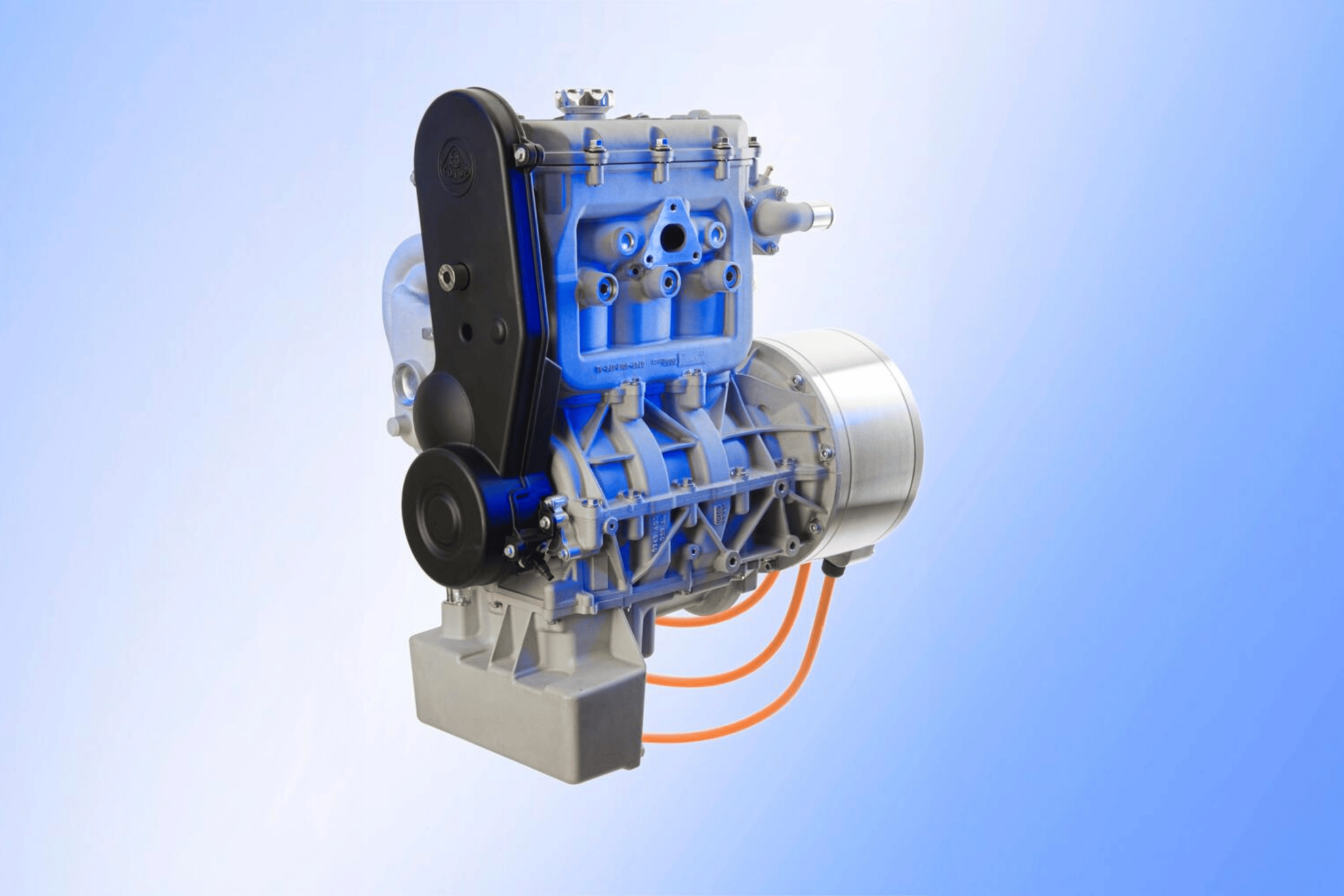
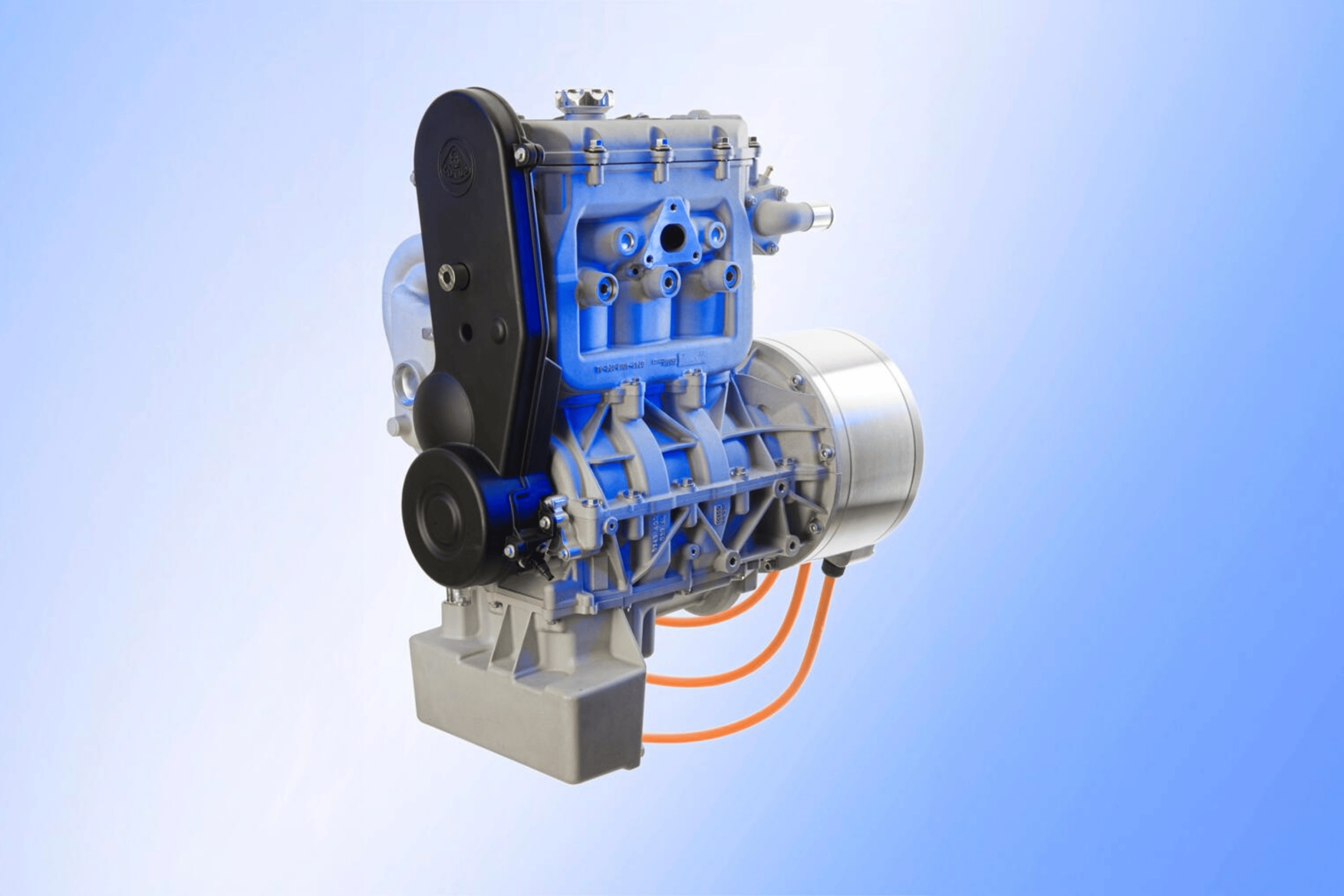
It’s a technology very close to my heart. We developed one of the first dedicated range extenders at Lotus in 2010, and this elicited commercial interest – a proposed production version started development, but in hindsight we were too far ahead of the market.
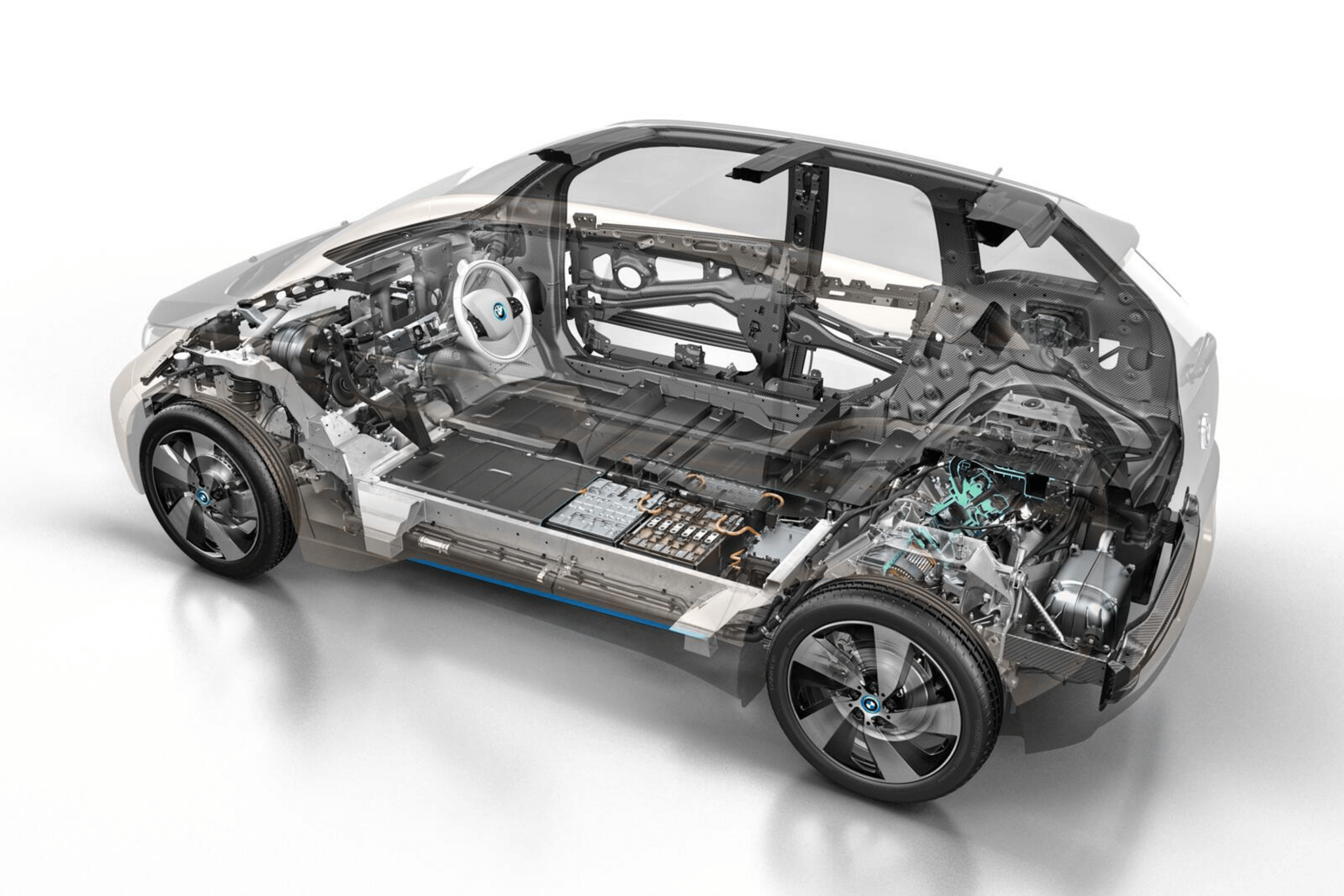
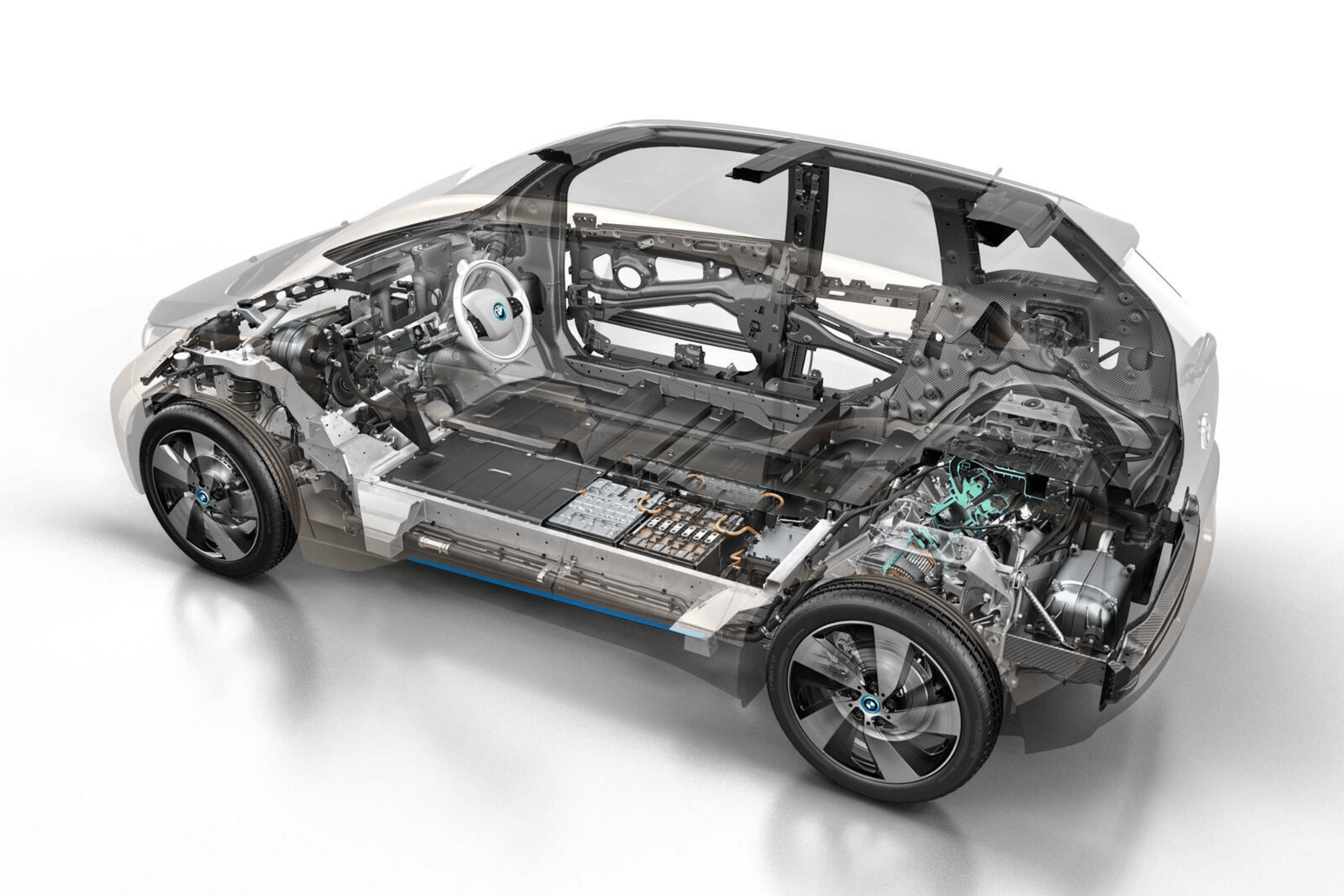
BMW separately launched the i3 range extender in 2013, using a modified engine from one of its maxiscooters. The thinking is that the range extender only needs to be powerful enough to propel the vehicle to a useful speed (not the maximum achievable when the battery is sufficiently charged) and thus to have some excess power over any lower steady-state cruise to charge the battery. A small range extender is sometimes termed an auxiliary power unit, or APU.
A range extender can be constrained to operate in a highly-restricted power range and thus be simplified versus a conventional engine (because it doesn’t need to cover the whole operating range, or react as quickly), while being optimised for efficiency. However, this is where philosophies diverge again.
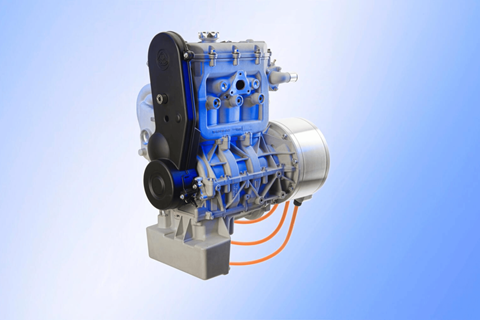
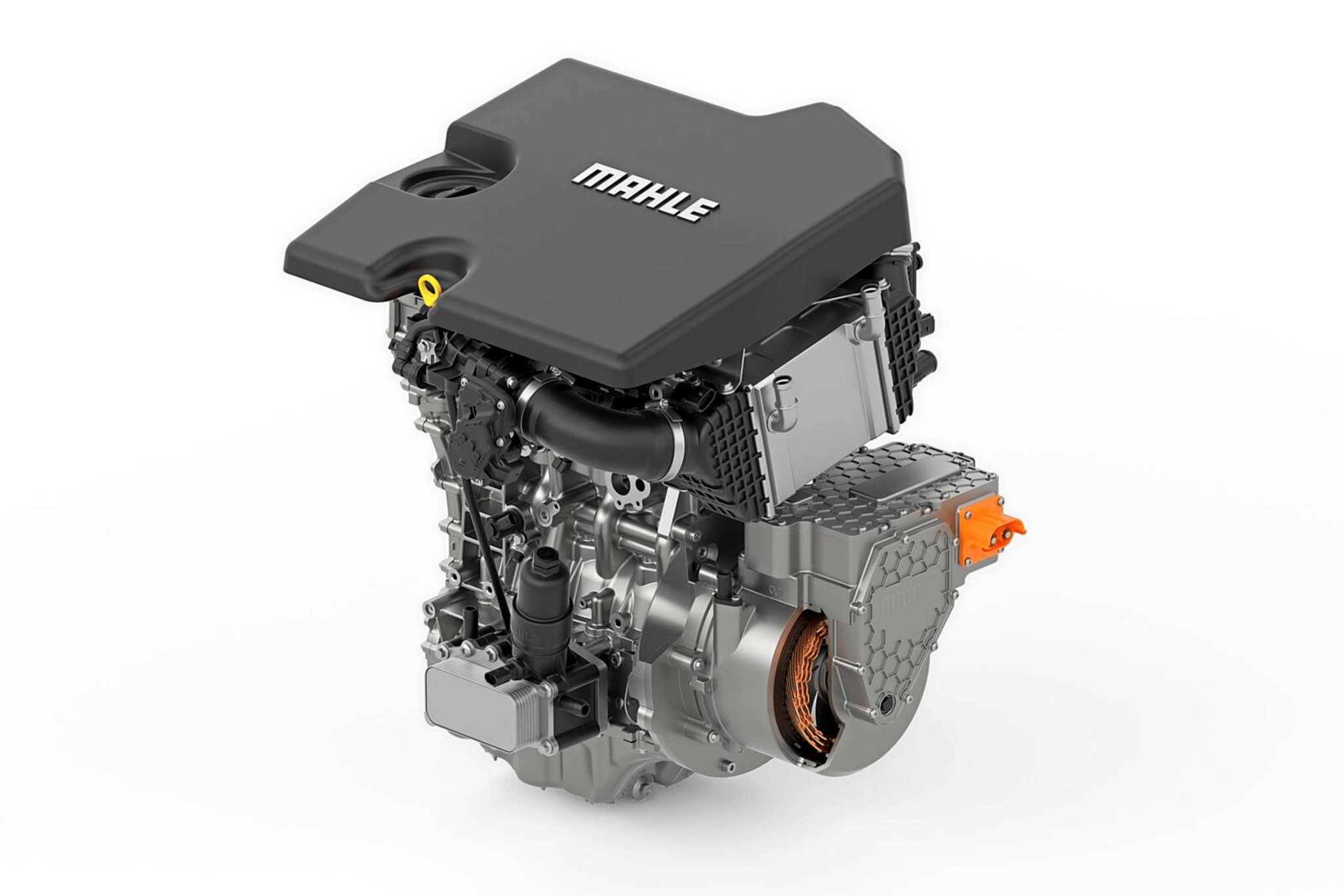
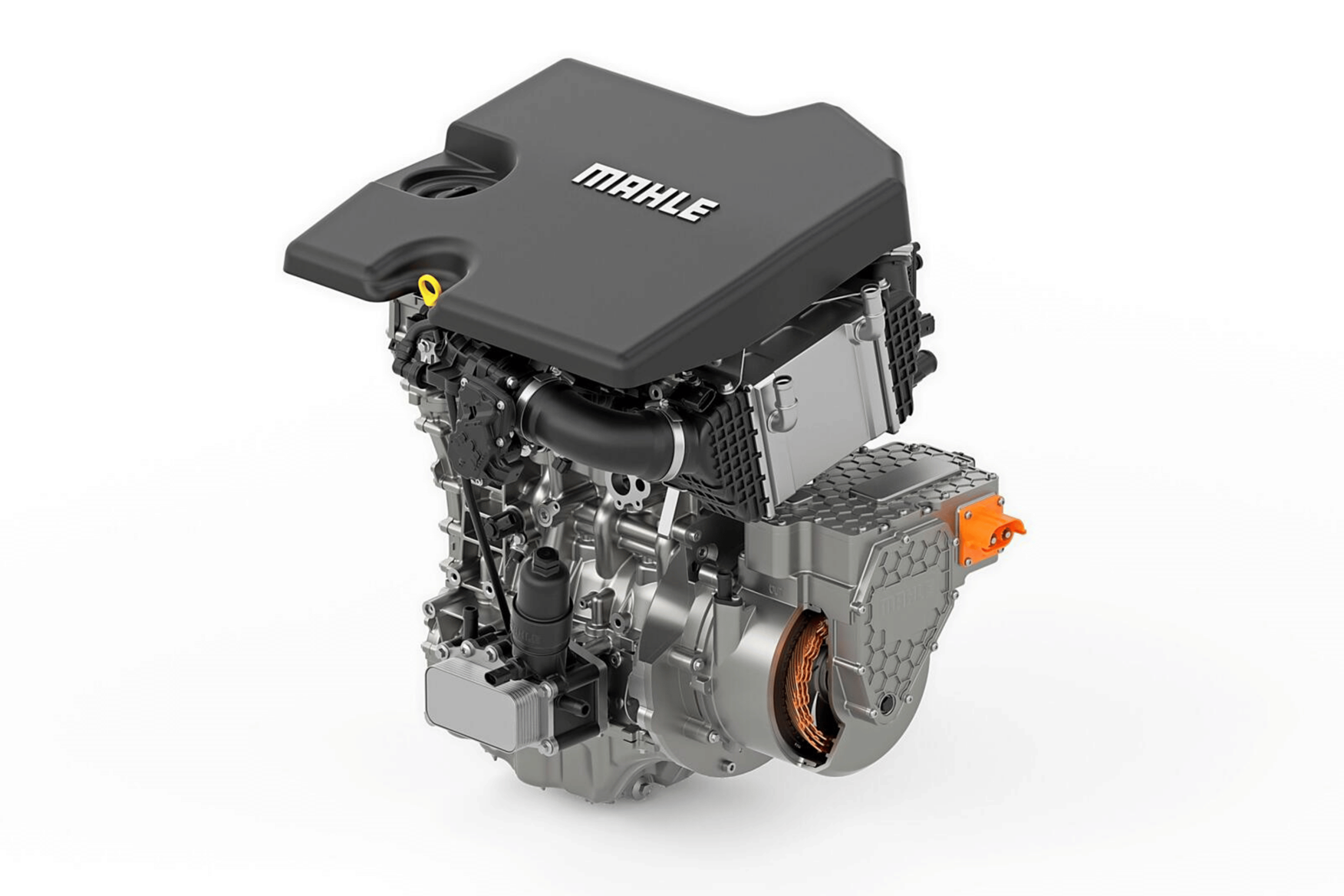
For a truly optimised, practical daily REEV, the most desirable attribute of a range extender is low installed mass, because it’s carried all the time and so is always a draw on energy. Low mass is actually more important than outright efficiency – because the vast majority of driving should use stored electrical energy taken from the grid. We knew this at Lotus, and Mahle arrived at the same thinking, as did Austrian consultancy AVL, who proposed – and nearly got into production with Audi, in the form of the A1 e-Tron – a Wankel range extender.
However, people now seem hell-bent on developing very powerful REEVs, where a much greater proportion of the performance is covered by the engine; Audi’s Dakar-winning RS Q e-Tron takes this to extremes. These ‘power REEVs’ could be desirable for more luxurious applications. Lotus’s new Eletre X is an example. Because a much wider range of operation is now in play, the engines end up looking much more conventional. They are no longer APUs. Many Chinese manufacturers seem to favour range extenders with more power than is strictly necessary for everyday use.
That exception I mentioned earlier to the REEV definitions? Sometimes manufacturers mechanically connect the running range extender to the wheels. This is not really the same as a parallel hybrid because the electrical power is much greater than that of the engine, but it can be worthwhile – even over a range extender’s restricted operating range – because it reduces the losses involved in converting engine power to electricity and back to mechanical power at the wheels. The original Chevrolet Volt from 15 years ago was an example of such a ‘battery-dominant’ EV.
Now that engines will officially be with us for a while yet, customers are committing to PHEVs in ever greater numbers, while REEVs are attractive to brands who have sunk billions into potentially-stranded EV platforms that can relatively easily be modified to take range extenders but not conventional engines. The advent of the power REEV may even help to break down some of the reticence towards pure electric propulsion among high-end car buyers: I really hope Lotus succeeds in this.
When people realise how little the range extender is active that will be a useful step towards mass acceptance of full EVs. The opportunities are myriad.
console.debug(‘taboola container loaded..’)
window._taboola = window._taboola || [];
_taboola.push({
mode: ‘thumbs-feed-1×1’,
container: ‘taboola-below-article-thumbnails-v3’,
placement: ‘Below Article Thumbnails V3’,
target_type: ‘mix’
});
var disqus_shortname = ‘carmagazine’;
var disqus_developer = 0;
var disqus_identifier = ‘article-wp-268386’;
(function () {
var dsq = document.createElement(‘script’);
dsq.type = ‘text/javascript’;
dsq.async = true;
dsq.src = ‘http://’ + disqus_shortname + ‘.disqus.com/embed.js’;
(document.getElementsByTagName(‘head’)[0] || document.getElementsByTagName(‘body’)[0]).appendChild(dsq);
var s = document.createElement(‘script’);
s.type = ‘text/javascript’;
s.async = true;
s.src = ‘http://’ + disqus_shortname + ‘.disqus.com/count.js’;
(document.getElementsByTagName(‘head’)[0] || document.getElementsByTagName(‘body’)[0]).appendChild(s);
})();Please enable JavaScript to view the comments powered by Disqus.