[analyse_image type=”featured” src=”https://velo-cdn.outsideonline.com/wp-content/uploads/2026/08/Hero-Image-EDRg.jpg”]
Pros
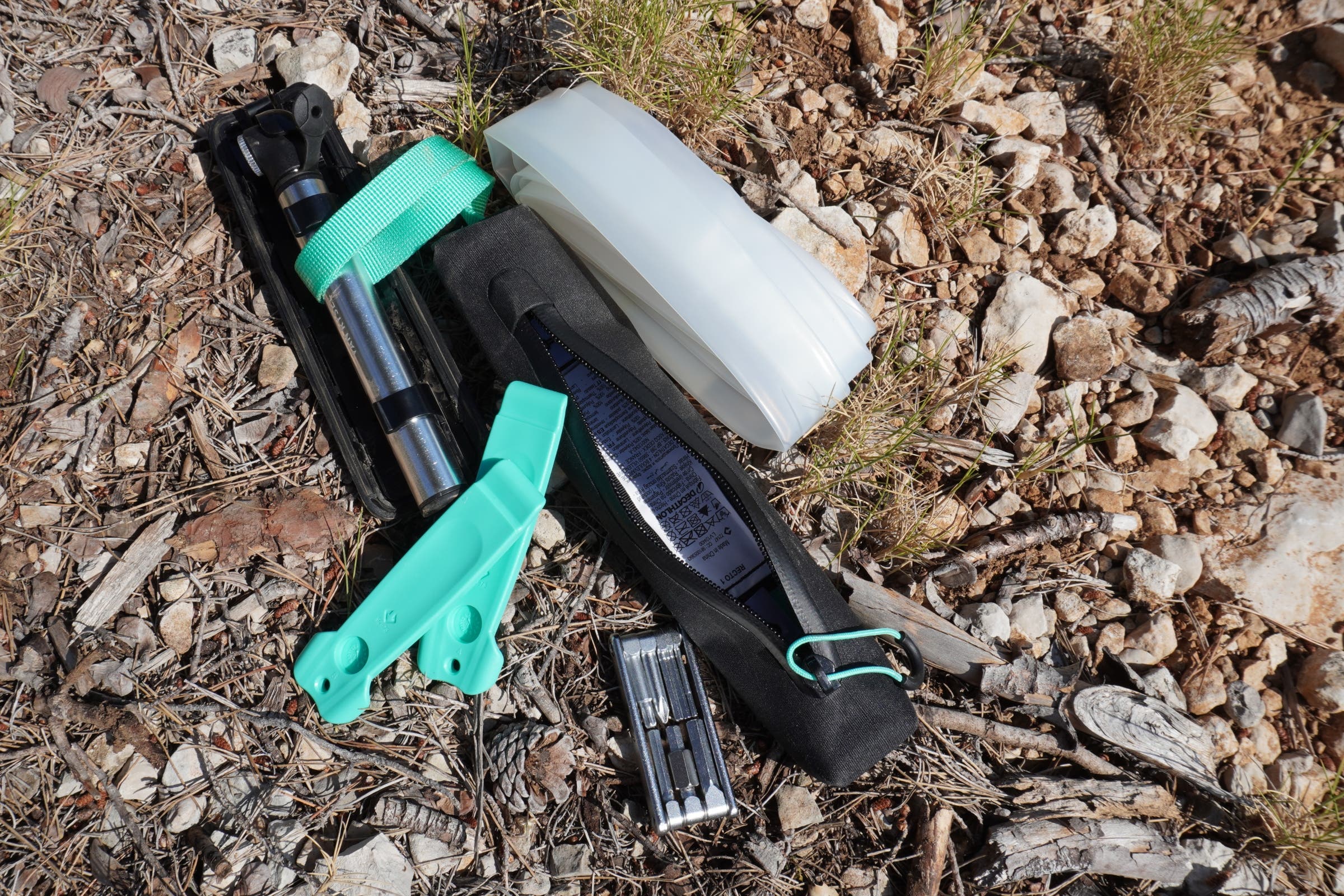
Downtube storage with integrated tool roll that includes a pump, multi-tool, tire levers, and inner tube
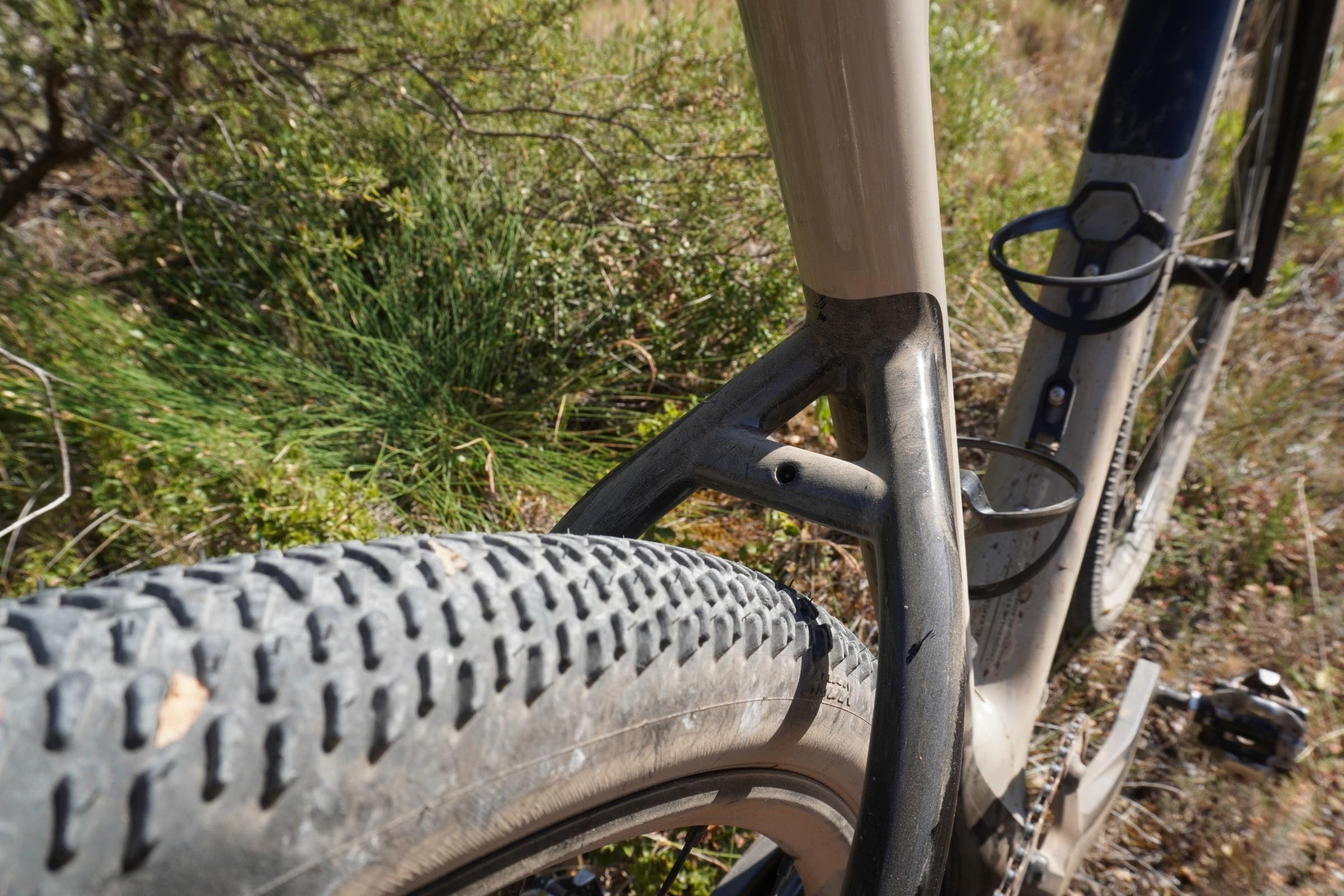
15 mounting points across the frame and fork (including fender mounts)
Dynamo-compatible fork
24-degree flare on the Deda Gera handlebar adds stability
Three build configurations, including a front suspension option
Comfortable, upright riding position
Cons
3-degree sweep on the tops of the handlebar feels overengineered
1600g is heavy for a carbon wheelset
No full-carbon cockpit option
Specs
Size tested: Small
Weight: 21.1lbs / 9.6kg ready to ride minus pedals
Price: £2100 / €2199
Brand: Van Rysel
Verdict
It’s often said that smooth is fast. But with the Van Rysel EDR-G, smooth translates into something else entirely—confidence. The result is a bike that’s accessible, capable, and priced to make any adventure, big or small, totally within reach.
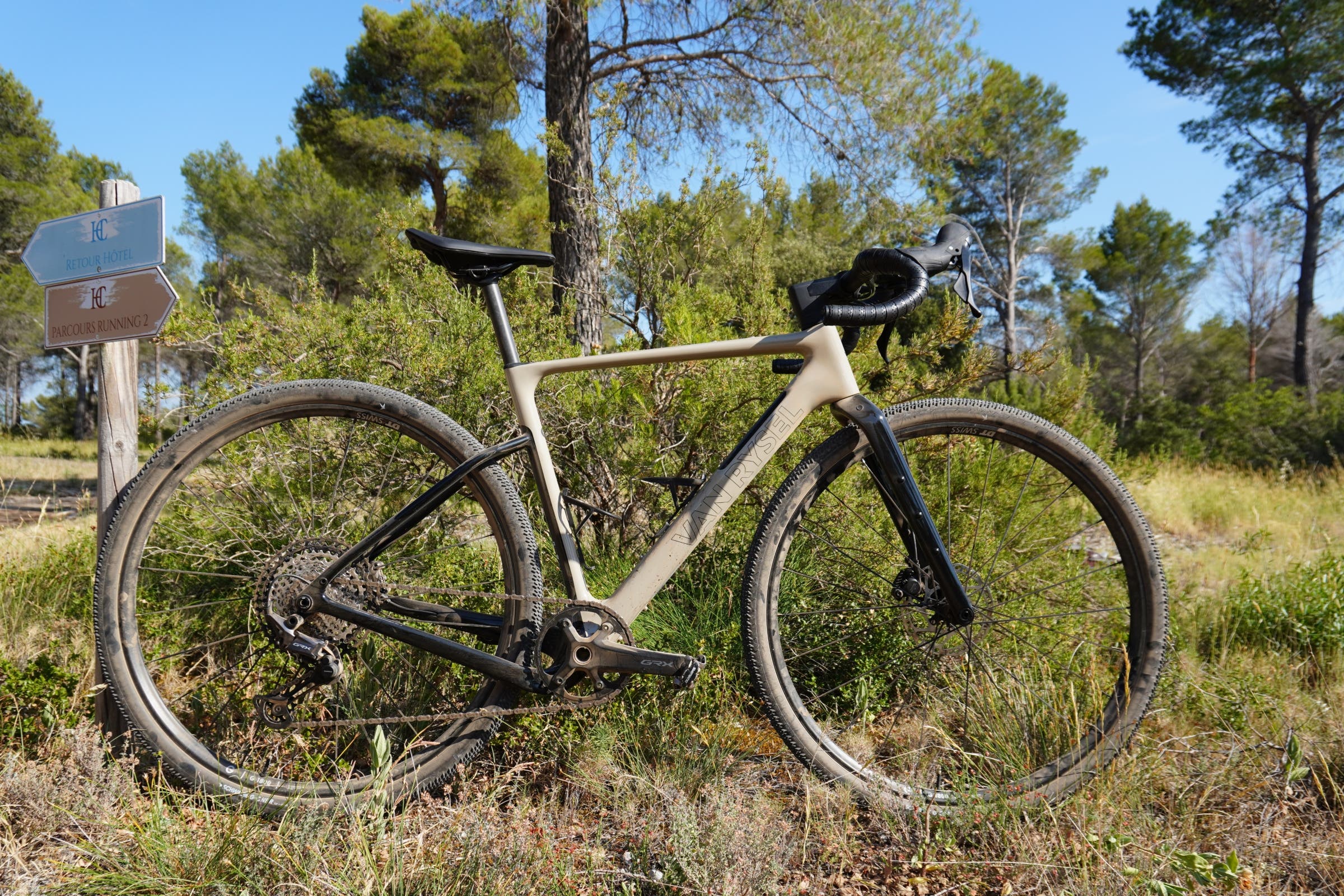
When you think of a gravel bike brand, Van Rysel isn’t usually the first name that comes to mind. That changes today with the launch of the new Van Rysel EDR-G. With “EDR” standing for endurance and “G” for gravel, the name signals a clear focus on adventure.
This is a bike built for a broad spectrum of riders, from big-ride seekers to gravel newbies. Every design decision revolves around one simple philosophy: smoother is faster and, ultimately, more comfortable. If you regularly ride washboard terrain, you’ll quickly concur. By reducing the physical toll of a typical ride, the bike helps you feel fresher for longer. I asked Rachel Gassier, product manager for the EDR-G and a skilled ultra-distance privateer, exactly who this bike is for. “Someone who wants to have fun and enjoy with their friends,” she says. “They want to go further, to increase their distance, to feel a bit more performance, but keep an upright position. Not racing, but really ready for adventure.” The choices throughout the bike reflect exactly that. Here’s what worked and what didn’t.
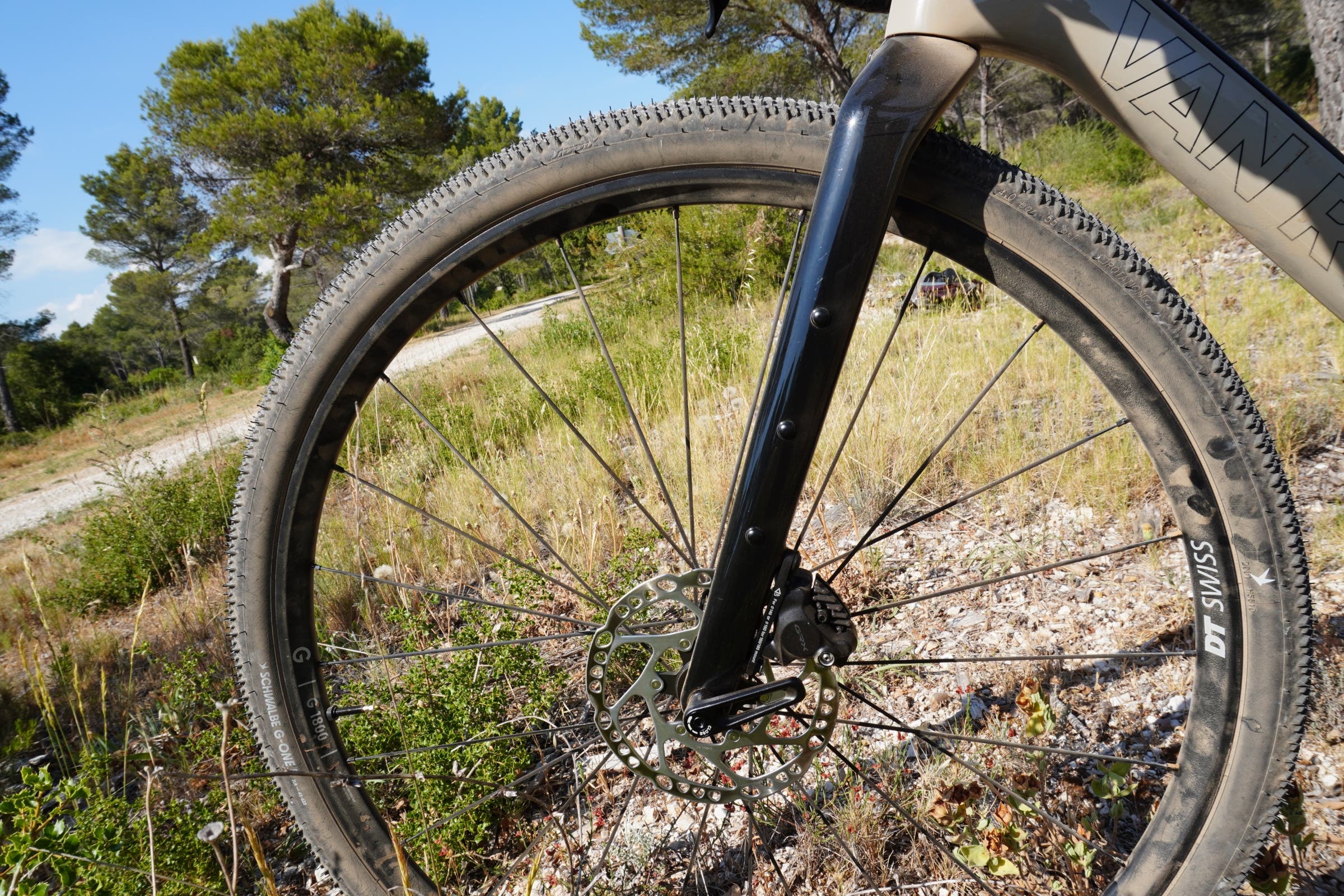
Quick hits: 7 standout details of the Van Rysel EDR-G
- Downtube storage with proprietary tool roll built into the frame; includes a mini-pump, multi-tool, tire levers, and inner tube
- Bikepacking ready with 15 mounting points across the frame and fork, including fender mounts
- Dynamo-compatible fork
- Universal Derailleur Hanger
- Specced with a Deda Gera alloy handlebar with multiple hand positions
- 50mm max tire clearance
- Optional model with RockShox Rudy XPLR 40mm suspension fork
- For more information, visit the Van Rysel website
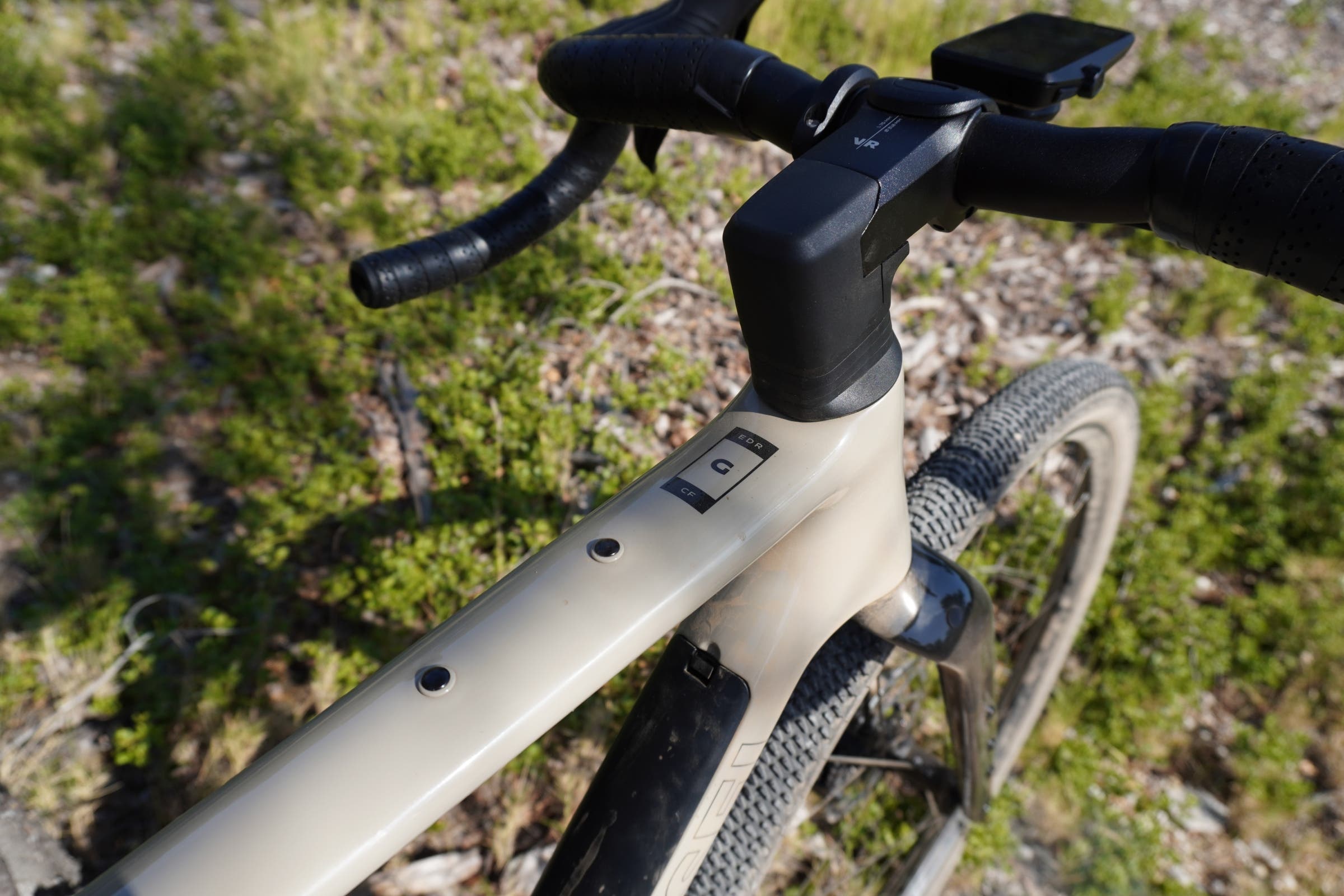
Van Rysel EDR-G Frame Details
With the EDR-G, Van Rysel has made a meaningful entrance into the gravel scene, creating a bike that’s not only purpose-built but also designed to look as approachable as it rides.
The soft curves in the seat stays, cascading off the seatpost, caught my eye right away. According to Gassier, this was a very deliberate choice. Not for performance, but for style. “For the endurance bike, we want to have more round shapes. Something softer than the race bike, which can be a bit aggressive. We wanted to have comfort, but also look like a comfortable bike.”
The geometry reflects this with a notably slack 69-degree head tube angle on a size small. Even by gravel standards, it’s very relaxed. The result is a front end that holds a line confidently and stays incredibly composed, especially when the gravel gets rowdy.
Comfort is a central theme on this build. With 545mm of stack, 358mm of reach, and a 70mm stem, the EDR-G is not an aero monster. Nor should it be. The geometry deliberately puts riders in a more upright and centered position. Add to that a wheelbase of 1004mm, with 428.7mm chainstays, and the picture becomes even clearer. This is a bike built for stability and big days out. Pair this with the 15 mounting points across the fork and frame and the EDR-G is genuinely ready for just about anything. Yes, even rain thanks to the fender mounts.
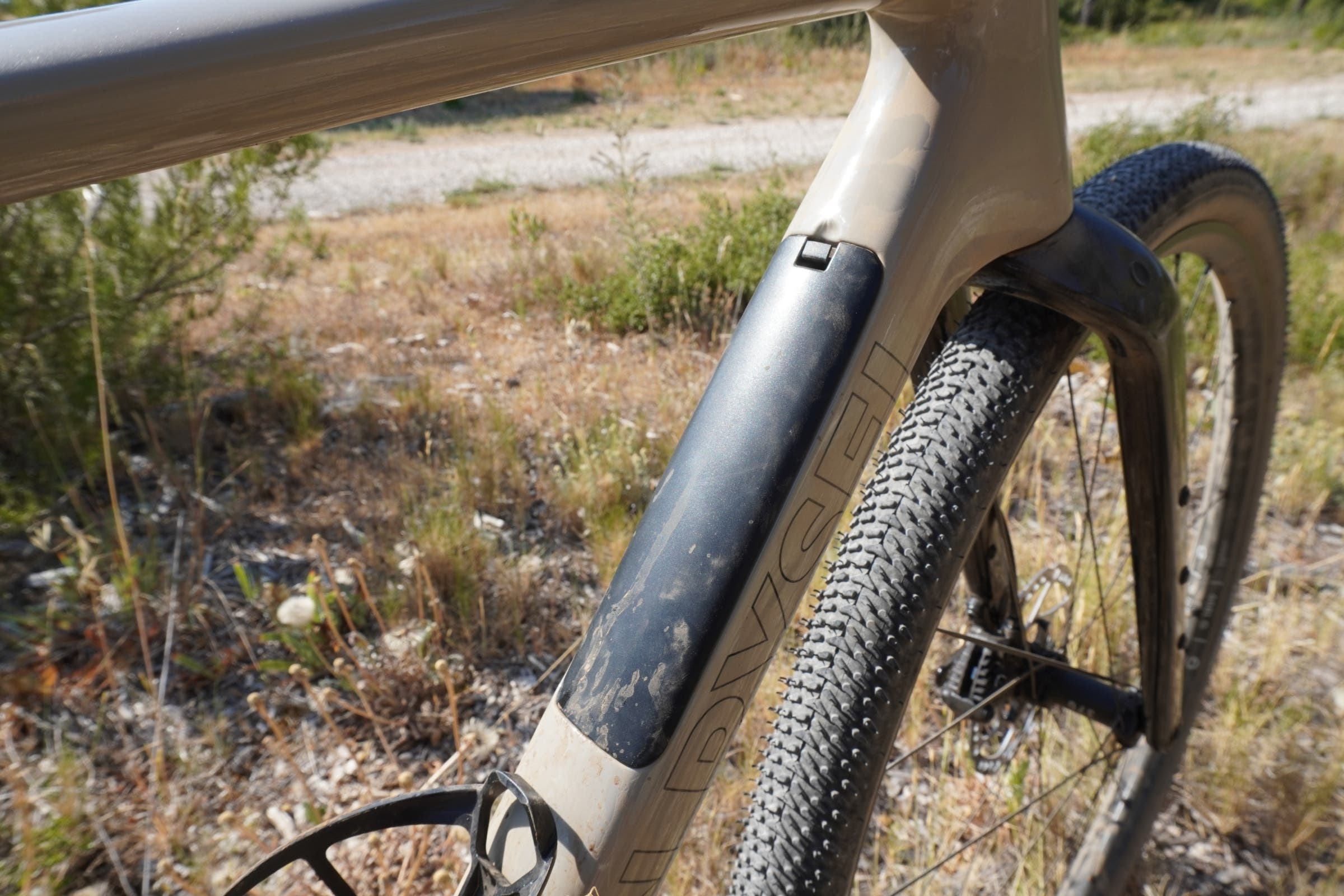
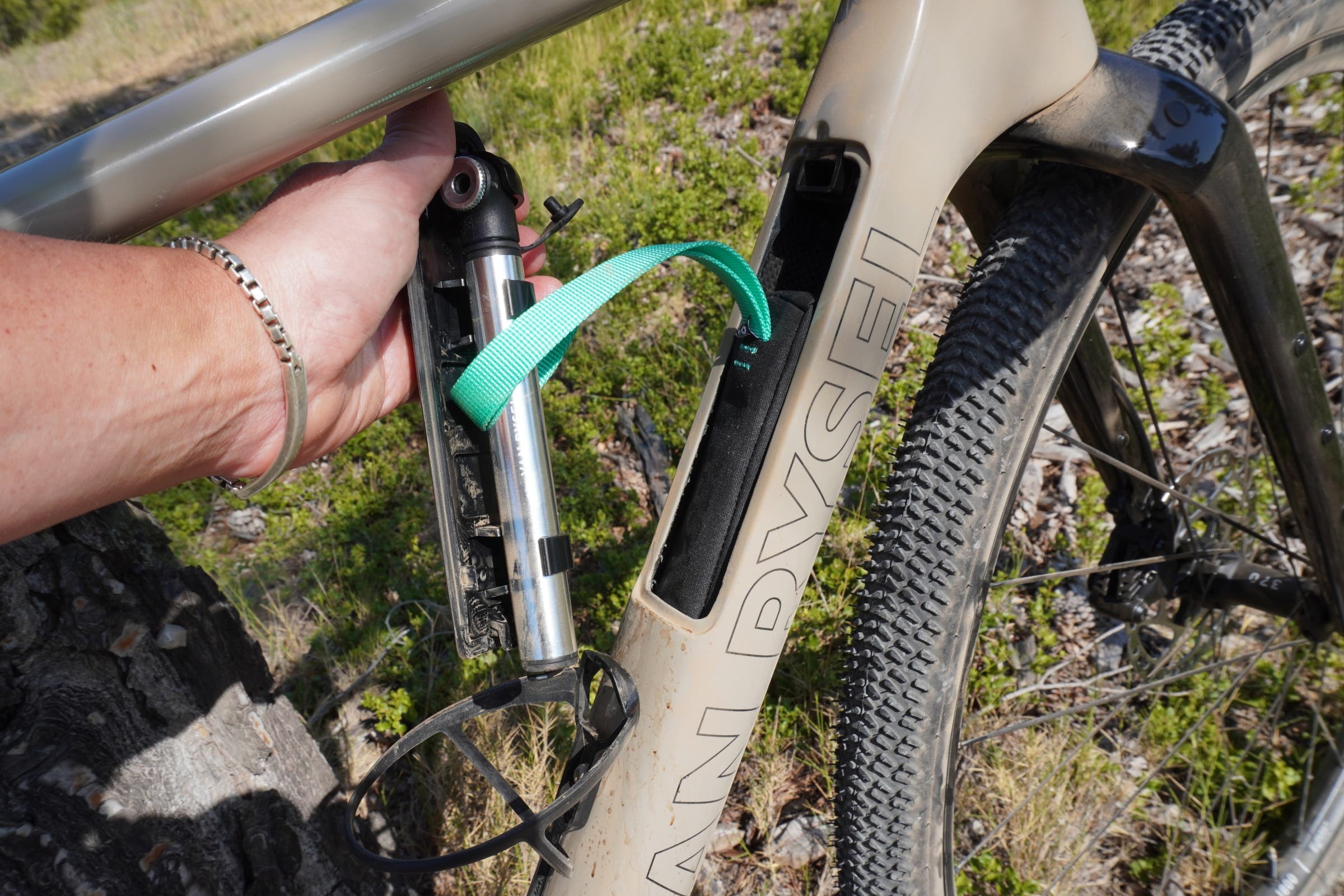
This confidence-inspiring philosophy is reflected in other design choices, such as the addition of in-frame storage. Is this revolutionary? No, but it’s another example of the brand looking to ease anxieties and solve real problems. The custom tool roll, complete with a pump, tire levers, a multi-tool, and a tube, is standard on every model at no extra cost. It’s a nice touch. However, I’d still pack my electronic pump and reserve the included mini-pump as an emergency backup.
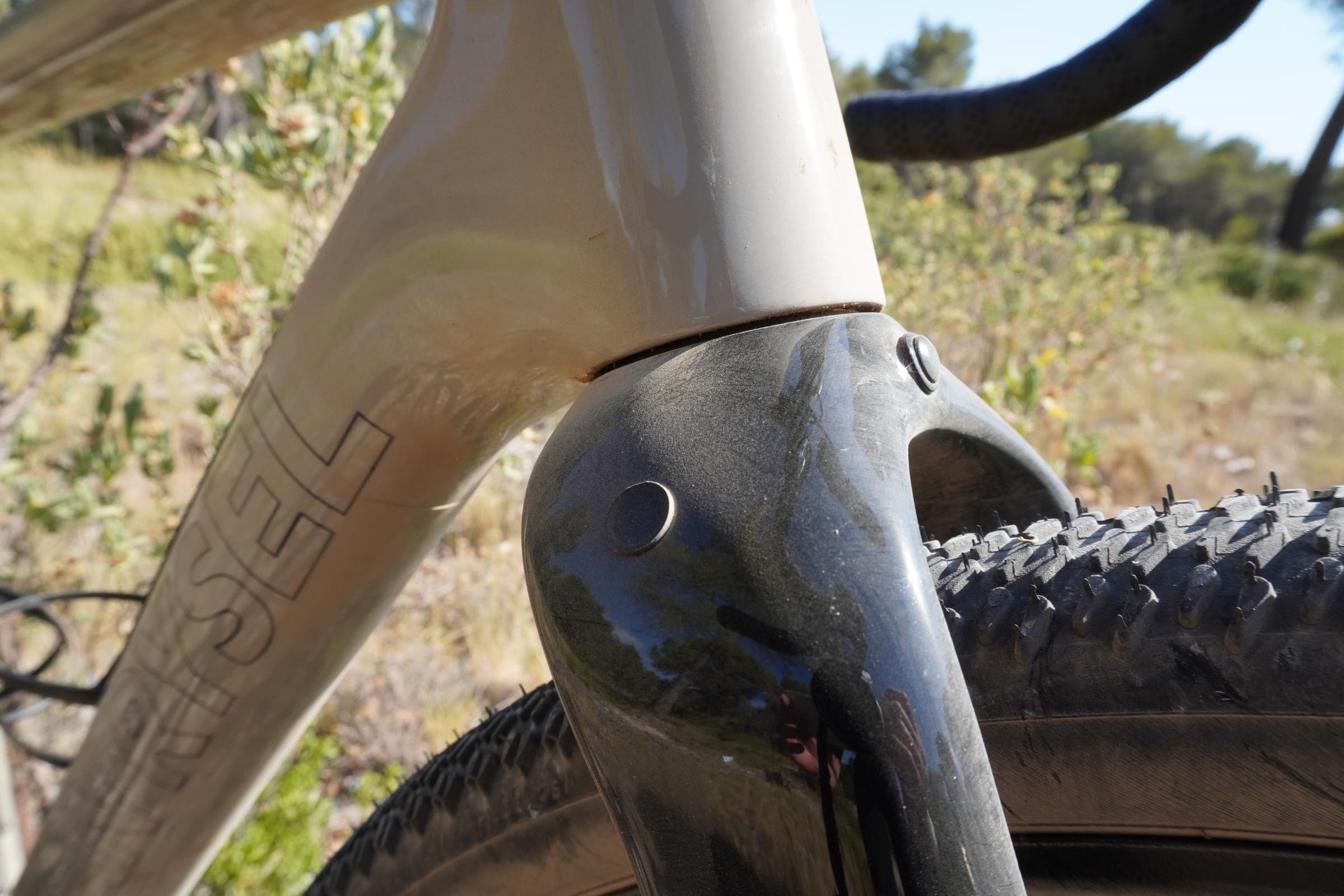
That self-sufficiency theme continues on the fork. “There is a hole on the top so you can add a dynamo,” says Gassier. “For bikepacking, it could be interesting for people who don’t want to manage lights.” For self-supported multi-day riders, or honestly, even wintertime commuters, it’s a nice perk.
Beyond those utilitarian frame details, the component spec takes a similarly pragmatic approach across the board. Each build features an alloy bar and stem combo paired with the carbon frame and fork, and one option offers a front-suspension fork with 40mm of travel. That uniform approach to the cockpit means the higher-end build sends mixed signals regarding weight. It includes Van Rysel’s VR32 carbon gravel wheels, which makes the lack of a full carbon bar-and-stem feel like a missed opportunity. Yet those carbon wheels aren’t particularly light, weighing 1,600g compared to the 1,450g Reserve 32 GRs on my Cervelo Aspero. The reality is, if you are counting grams this closely, this is probably not the right bike for you anyway.
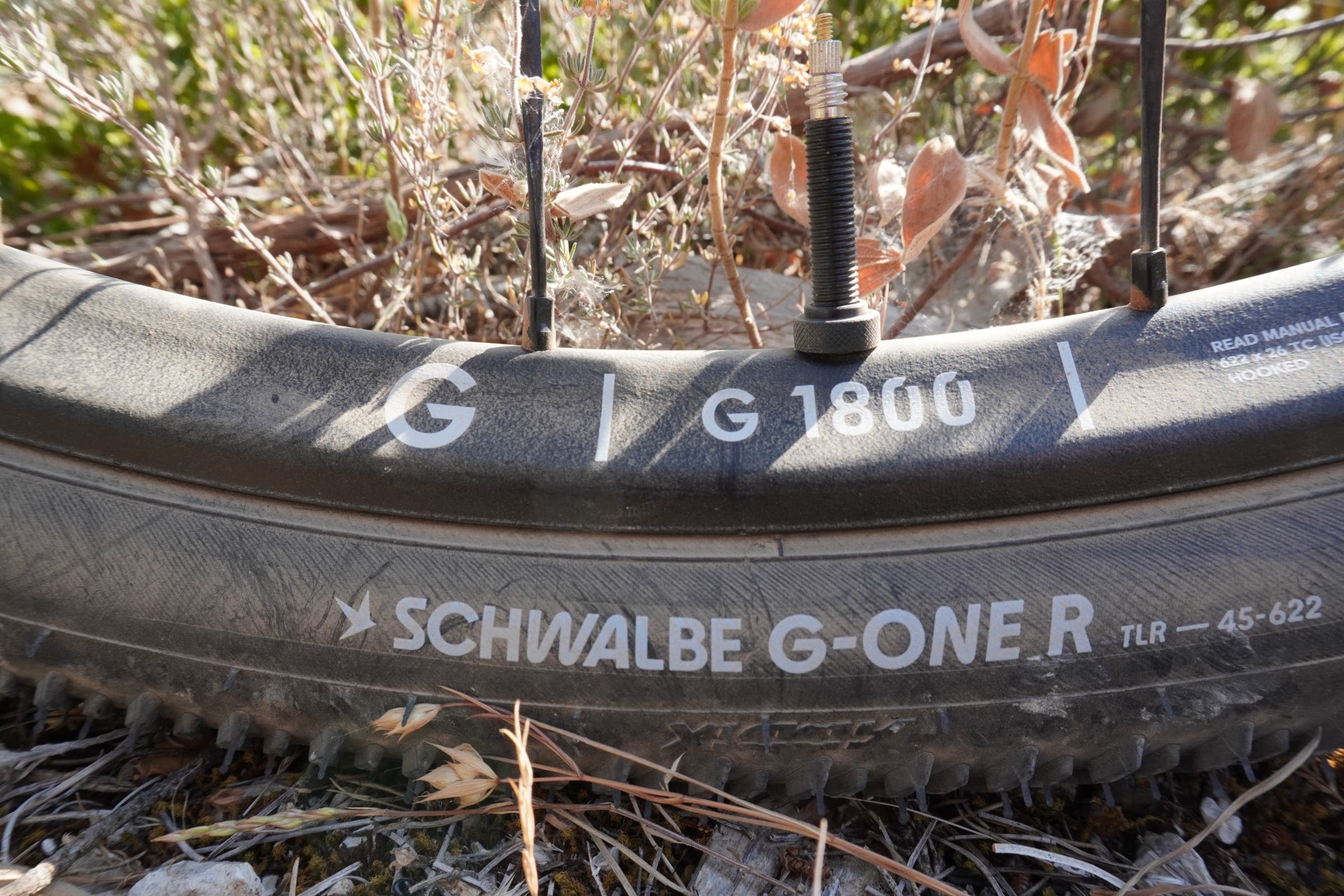
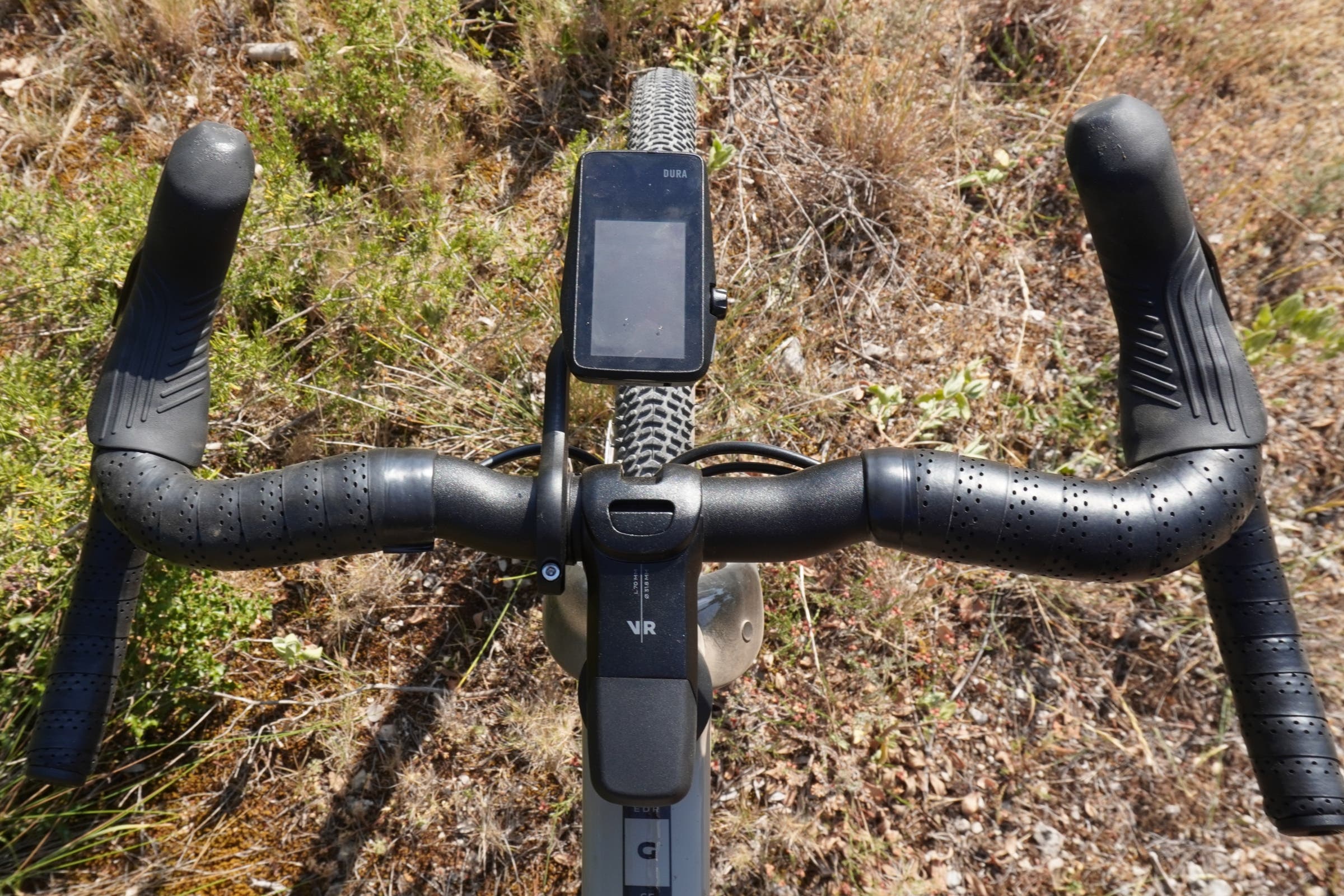
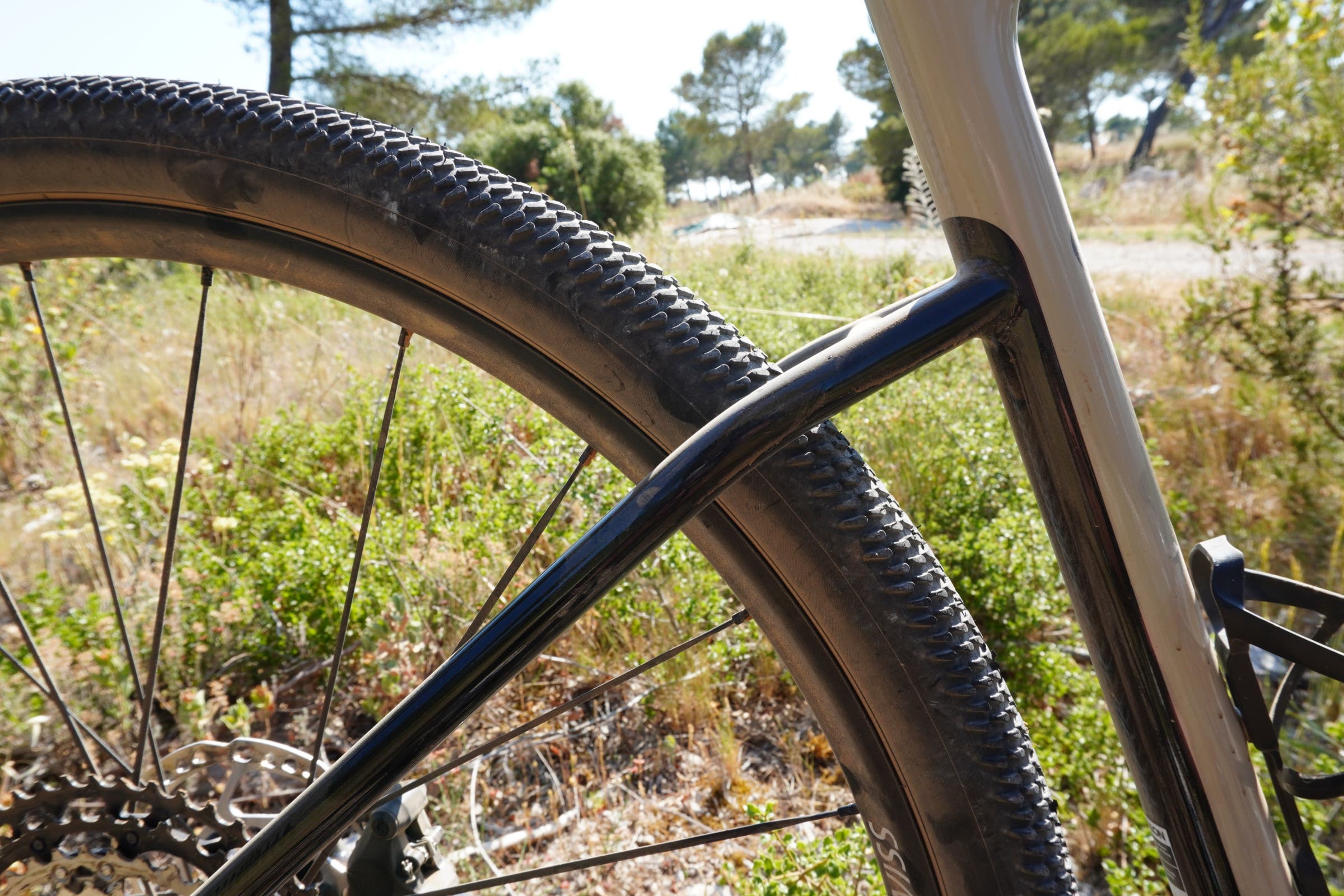
All wheelsets are tubeless-ready and come fitted with Schwalbe G-One R Pro 45mm tires. These are a solid, all-around option for most rides—especially on hardpack and compact gravel—and the frame leaves room to max out the clearance at 50mm. Moving back up to that aforementioned alloy cockpit, the Deda Gera handlebar has a unique profile that is worth discussing. The 24-degree flare in the drops definitely delivers a confidence boost on descents and tricky sections. The tops, however, are a different story. Deda added a 3-degree outsweep on the left and right, essentially taking a flat bar and tilting it slightly outward from the center. It’s not bad, but it is different. It is the kind of shape you either absolutely adore or despise.
Van Rysel EDR-G Build Details
The EDR-G comes in three builds. Each starts with the same carbon frame and is then customized from there.
| EDR-G Force AXS | EDR-G Suspended Fork | EDR-G GRX | |
| Frame / Fork | Carbon | Carbon / RockShox Rudy XPLR 40mm | Carbon |
| Stem / Handlebar | Deda Gera Alloy 24° | Deda Gera Alloy 24° | Deda Gera Alloy 24° |
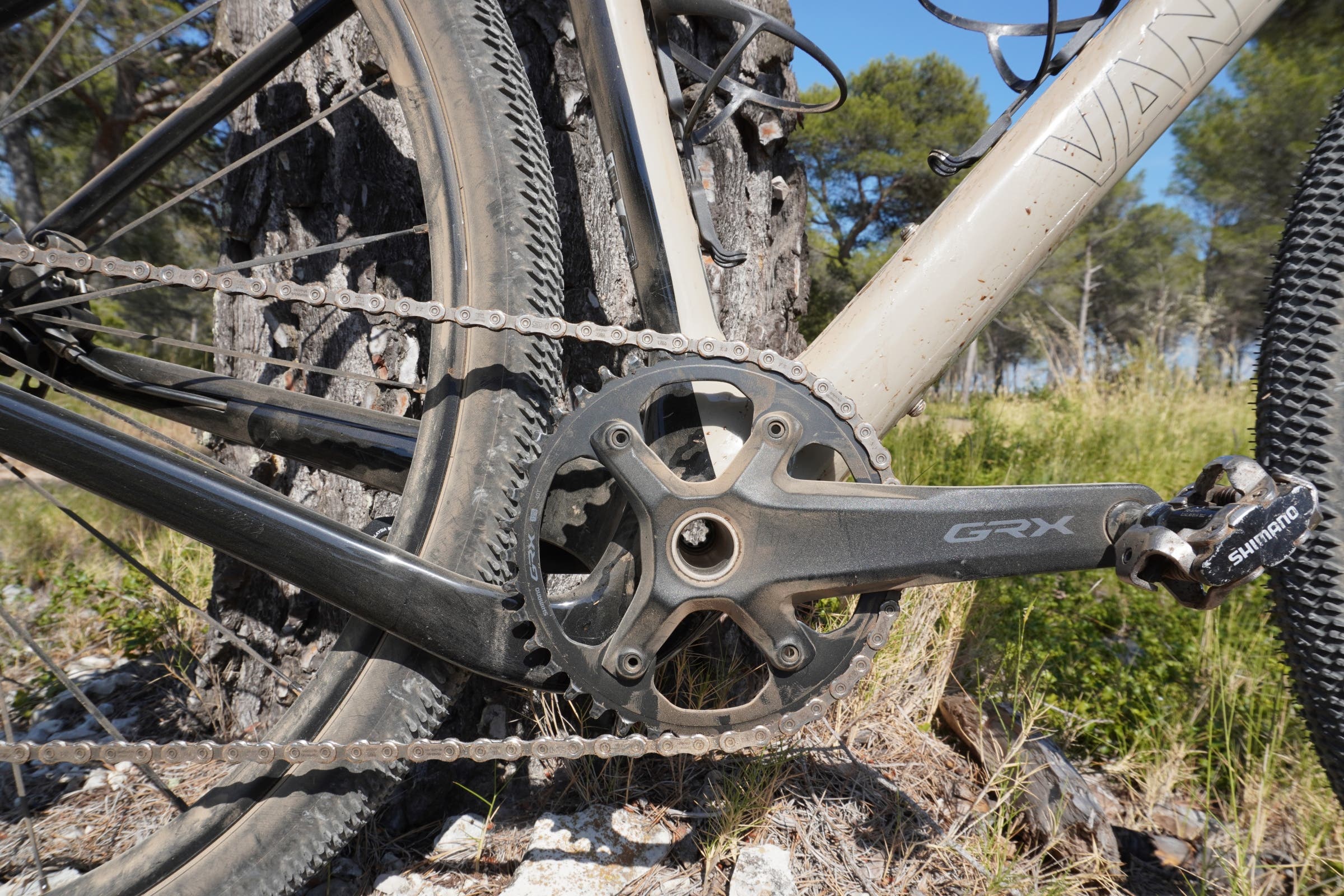
| Groupset | SRAM Force XPLR AXS (40-10/46) | SRAM Force XPLR AXS (40-10/46) | Shimano GRX 610 12s (40-10/51) |
| Wheels | VR32 Gravel Carbon | VR32 Gravel Carbon | DT Swiss G1800 |
| Tyres | Schwalbe G-One R Pro 45mm | Schwalbe G-One R Pro 45mm | Schwalbe G-One R Perf 45mm |
| Sizes | XS – XL | XS – XL | XS – XL |
| Weight (Size M) | 8.85kg | 9.7kg | 8.75kg |
| RRP (£) | N/A | £3,500 | £2,100 |
| RRP ($) | $6,299 | N/A | N/A |
| RRP (€) | €3,199 | €3,499 | €2,199 |
Van Rysel EDR-G Geometry
| Length: mm // Angle: degree | XS | S | M | L | XL |
| Head tube length (mm) | 115 | 125 | 150 | 170 | 196 |
| Head tube angle (°) | 68 | 69 | 71 | 71.5 | 71.5 |
| BB drop (mm) | 73.9 | 73.9 | 73.9 | 73.9 | 73.9 |
| Fork length (mm) | 395 | 395 | 395 | 395 | 395 |
| Fork rake / offset (mm) | 50 | 50 | 50 | 50 | 50 |
| Chainstay length (mm) | 428.7 | 428.7 | 428.7 | 428.7 | 428.7 |
| Wheelbase (mm) | 990 | 1004 | 1033.7 | 1022 | 1042 |
| Top tube, horizontal (mm) | 510 | 530 | 550 | 570 | 590 |
| Standover height (mm) | 707 | 739 | 777 | 794 | 817 |
| Seat tube length (mm) | 464 | 495 | 506.3 | 550 | 564 |
| Seat tube angle (°) | 72 | 72.5 | 72.5 | 72.5 | 72.5 |
Van Rysel EDR-G Ride Experience
I can’t think of a better testing environment than getting off a 14-hour plane ride, in 100-degree heat, and hopping on a brand new bike for a 4-hour gravel ride. What could go wrong? Surprisingly…nothing.
And perhaps that’s the key takeaway. The EDR-G is a bike that feels good for just about everyone. No break-in period. No getting used to it. It’s the definition of grab-and-go. It was a refrain echoed by the other journalists in attendance, too.
After all, bike handling on gravel—no matter how tame—is still more technical than riding on the road. This means the learning curve for less-experienced riders is steep. You need a bike that will make the ride feel more intuitive and less intimidating. That’s the EDR-G.
Right away, you get a sense of just how steady and planted this bike feels. Which isn’t to say it can’t conquer more rocky routes (don’t worry, we went there). While the stability and rideability are good, the enjoyability on those more technical sections was touch-and-go.
I was riding the EDR-G with the GRX build including an alloy cockpit and wheels. Needless to say, that carbon fork was working overtime. On the really rowdy terrain, I would have loved a little more compliance from some carbon wheels and cockpit.
Riding the EDR-G versus my Cervelo Aspero, the difference is clear—steady and composed versus lively and sharp. Think of driving a minivan versus a sports car. And before you think that’s awful, you need to think of the broader picture. Every bike is built with a specific intent, and trying to make one build be the jack of all trades is a recipe for disappointment. In the context of the EDR-G, this bike is built for exploration, not exhilaration. It’s a steady hand that will shepherd you through just about anything and keep the ride fun and enjoyable, while supporting the rider in an active, controlled stance. And that’s entirely the point.
The upright riding position, relaxed geometry, and ergonomic bars will have you building routes and making bikepacking plans before you even get the bike out of the box. What it won’t have you doing is pinning on a number and aiming at a podium.
Everything that makes this bike so intuitive and confidence-inducing is also what makes it less animated and responsive. The long wheelbase results in cornering that isn’t as sharp. The stack height keeps you less aero. The shorter reach means you aren’t as stretched out. All this is exactly why the EDR-G is so fun. It’s simply a different riding style.
While I wasn’t packing this bike down with road gear, I found the mounts well-placed and sensible. Adding a third bottle cage and top tube bag makes sense for almost any day in the dirt. Plus, I adore the idea of outfitting this with a dynamo. Sure, maybe a niche offering, but it’s taking a purpose-built philosophy and putting it into action.
The downtube storage was solid. No rattling. No finicky clips to futz with. It was easy to load and unload without needing to perfectly refold everything to fit all the gear back in. The fact that the tools come standard is also a nice perk, especially for new cyclists. Too often riders are left having to source basic items themselves. When you’re new to the sport this is another cost, and another area of confusion. Now it’s everything you need, right out of the box.
The DT Swiss 1800 alloy wheels I was running were paired with the Schwalbe G-One R Pro 45mm tires. Like most gravel tires, this option could be perfect—or painful, depending on what the terrain is like in your area. Dialing in the right rubber for your local trails is key. While in France, I found the Schwalbes to lack the grip I needed to really dig into some of the gnarlier sections.
Speaking of the tires, I did ask about the 50mm max clearance. If this truly is a bike for adventures, wouldn’t you want to add a little more clearance to make that journey as enjoyable as possible? Gassier answered with a smile. “Maybe the next generation will be 55, or maybe at that moment we will be at 60.” Given where we’re at with 32” wheels, she could be onto something.
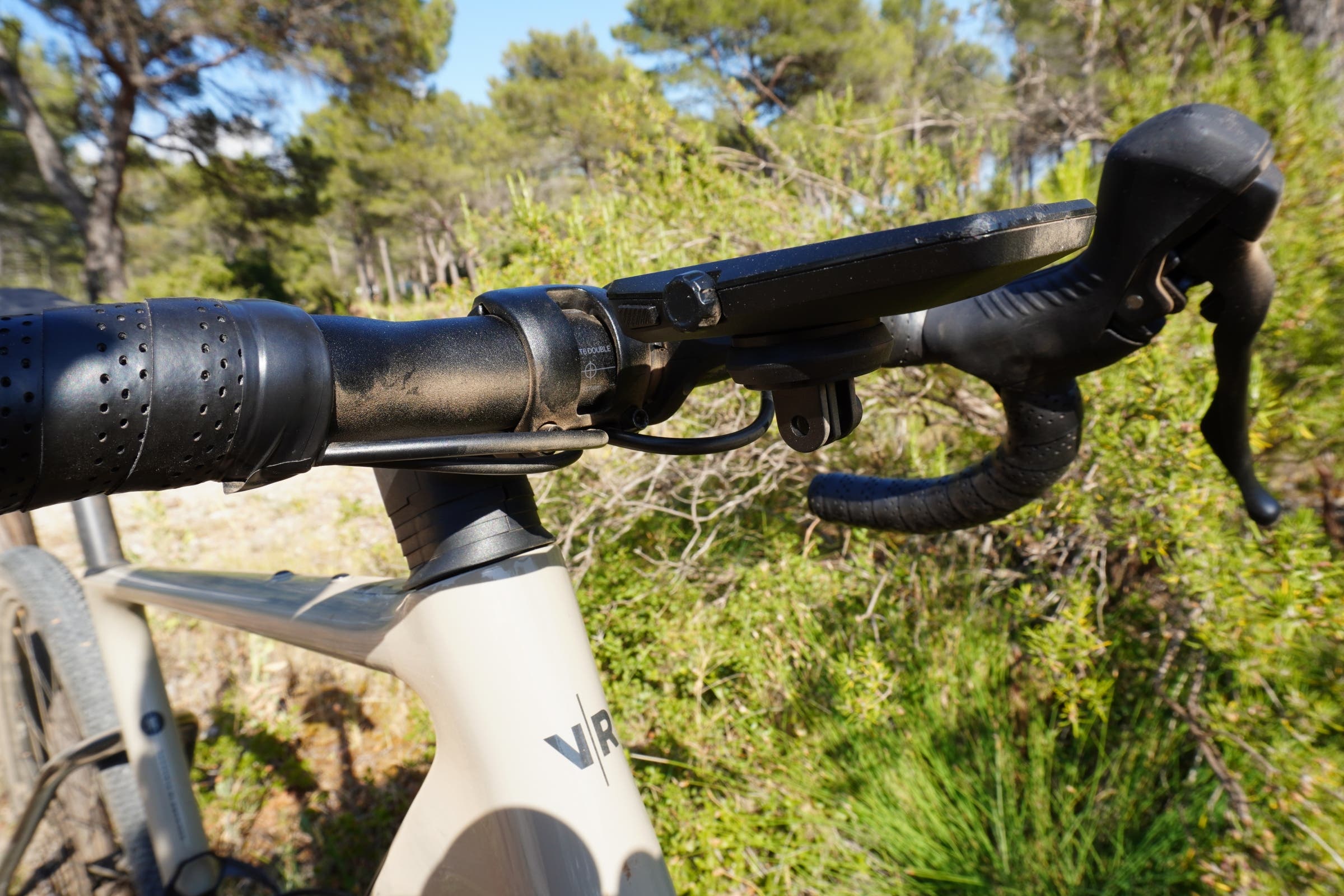
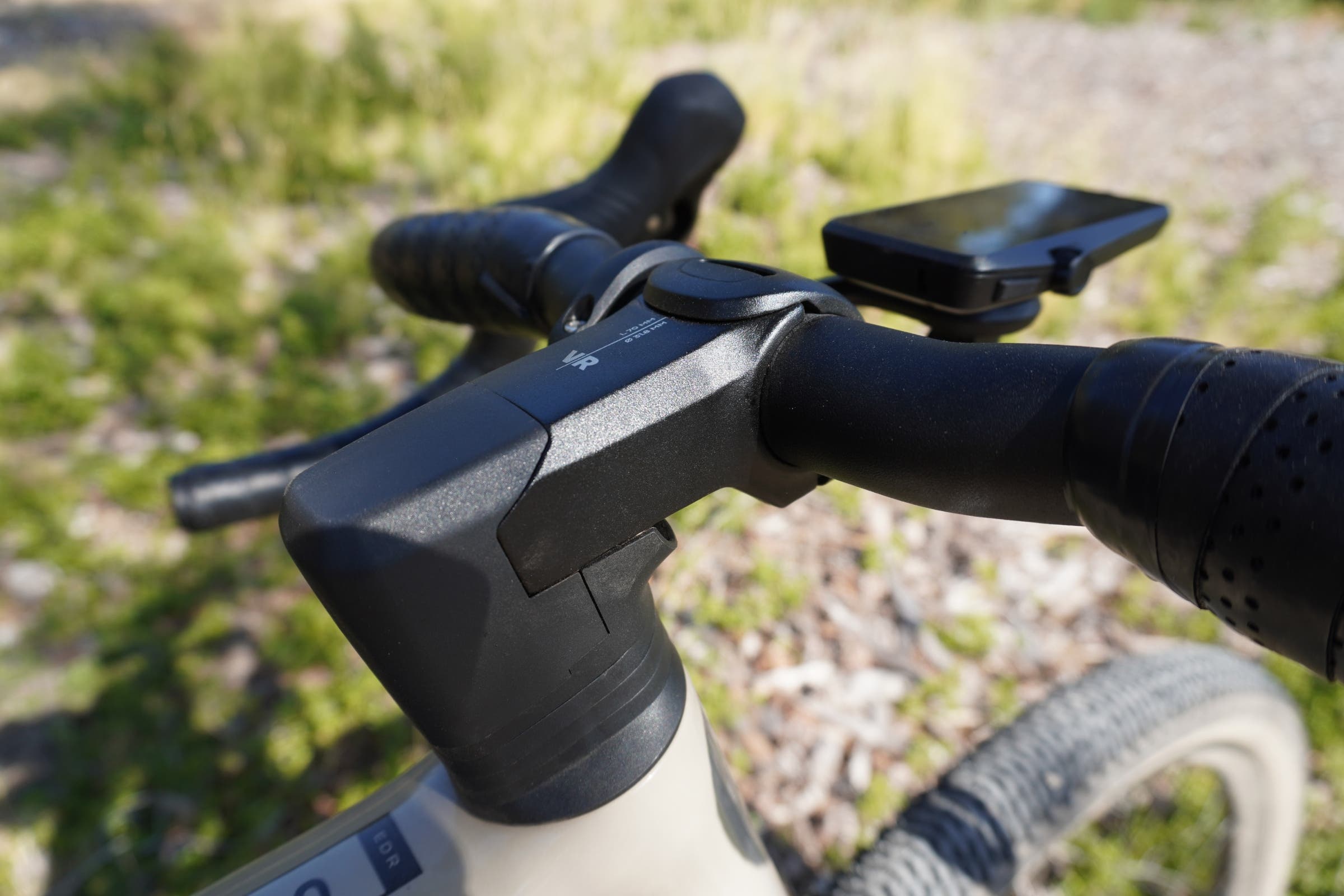
The Deda Gera handlebar is another example of the EDR-G’s comfort-first approach. The 24-degree flare inspires confidence on descents, but the various hand positions can feel awkward. The 3-degree sweep on the tops was comfortable, but the adjustment feels a bit like switching from a standard keyboard to a split, ergonomic one. In theory, it might make sense, but old habits are hard to break, and I’m not convinced I fully adapted. That bend in the bar also limits space for mounting lights, aerobars, or other accessories. Gassier sees it differently. “When you are riding for a long time, it’s good to sometimes be here, on the tops. The purpose was to be able to change position to feel more comfortable.” The logic is sound. The execution, not so much.
Van Rysel EDR-G Usability
Beyond the ride feel, there are some practical things to think about when it comes to the long-term ownership of this bike. And while I was only able to ride the EDR-G when I was in France, there are a few elements that definitely caught my attention. First off, the Universal Derailleur Hanger is a notable and beneficial addition. It helps future-proof the bike and alleviate any potential bikepacking disasters should you need to swap out a hanger while out on the trail.
While I do love the downtube storage on the frame, I wasn’t able to test how waterproof the storage seal is. Is this a massive issue? Probably not, but I always approach these with a little caution. After all, seals can wear down and crack with time. Doors can break. Latches snap. It’s just another place where different items can fail. Is this an immediate concern? Again, probably not. But for long-term wear and tear, it’s worth keeping in mind.
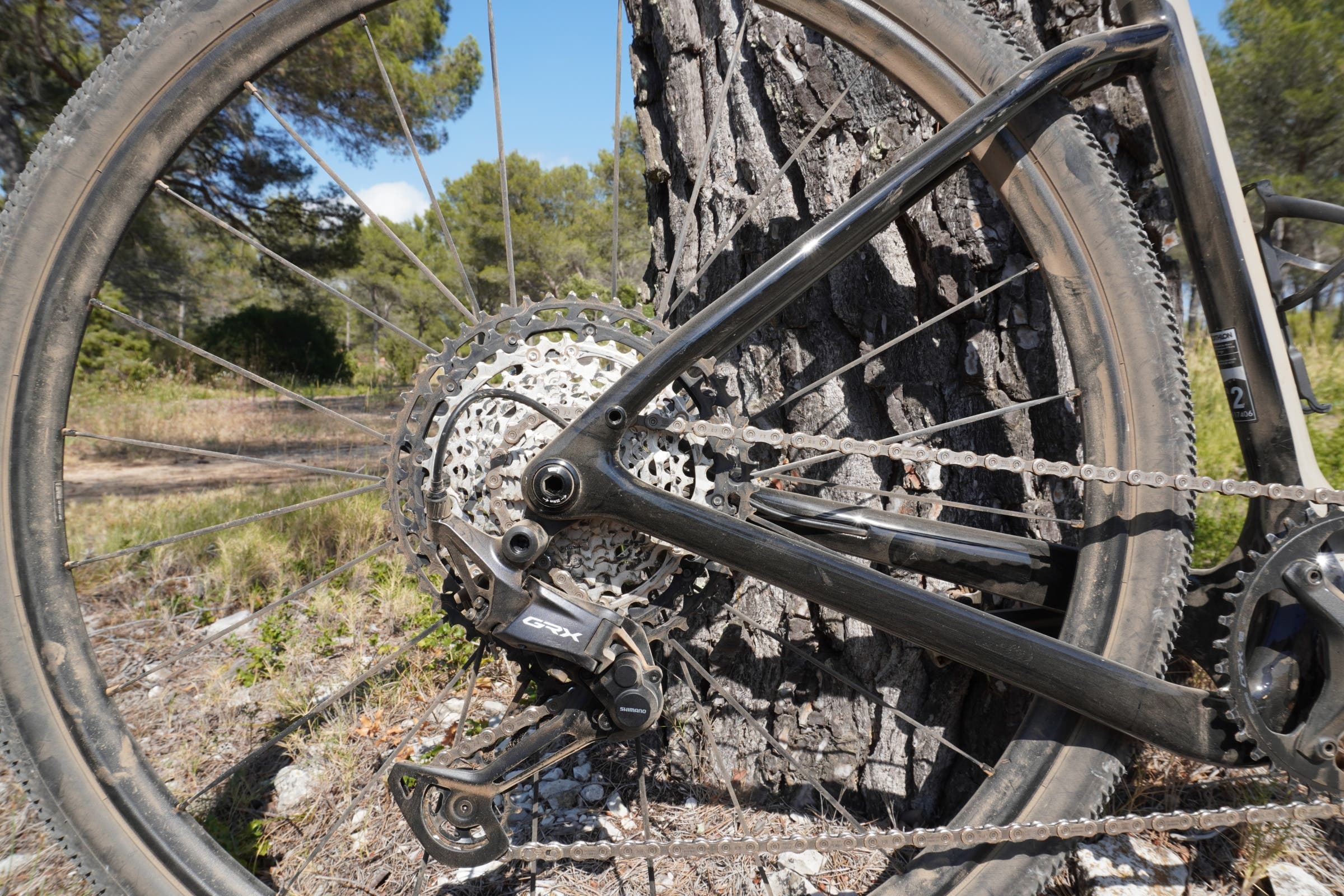
For riders considering the suspended fork build, it’s worth knowing that regular service intervals come with the territory. This isn’t exclusive to this bike, it’s standard with any suspension fork system. I feel like this usually surprises gravel riders (we certainly aren’t MTB folks). The lower-leg service is recommended every 50 hours. Plus, there’s a much larger job, servicing the damper and air spring, and that’s done once a year or every 200 hours.
Another thing to keep in mind is the bottom bracket. It’s not shocking that the EDR-G uses a PressFit 41 (86.5mm wide shell with a 41mm internal). It’s widely available, which makes it an easy part to find. However, anyone who’s been on a group ride has definitely heard that familiar creak, the siren song that it’s time to replace it. It’s not the easiest to swap out on your own, so this might be a job for your local bike shop.
Something else you could consider having help from the pros would be the semi-internal cable routing. Is it impossible for the home mechanic? No. Is it annoying? Maybe. But I’m not here to yuck anyone’s yum. If you love tinkering on your bike and need to replace your brake hose, have at it. Personally, I’d rather spend my time riding than wrenching, but that’s just me. The semi-internal routing is genuinely a nice touch. Not only does it leave the bike with a clean look, but it also ensures your adventure bags won’t get caught on any cables.
Finally, these bars. While I wasn’t swapping the bar tape on this trip, it did make me wonder how challenging it would be to wrap these. After all, any extra bend is another opportunity for an inexperienced home mechanic to mess it up. Perhaps another great chance to support your local bike shop to ensure a tidy job.
Conclusion
Often, these reviews discuss shaving grams, highlighting wind-tunnel testing numbers, and showcasing watts savings that disappear the second you ride in the real world. With the EDR-G, Van Rysel optimized around something harder to measure: confidence. Van Rysel added tools to ensure you have what you need, mounts for endless configuration options, an upright geometry to keep handling manageable, and a price that makes access easier. Every decision on this bike points to the same outcome—getting more people onto more ambitious terrain and helping them stay out there longer.
Whether that means bikepacking, tackling rougher gravel, or just starting out in the dirt in the first place, the EDR-G is a welcome wagon to exploring new places. It’s accessible, genuinely capable, and priced to make any macro- or micro-adventure more achievable.
[analyse_source url=”https://velo.outsideonline.com/gravel/gravel-gear/van-rysel-edr-g-review/”]