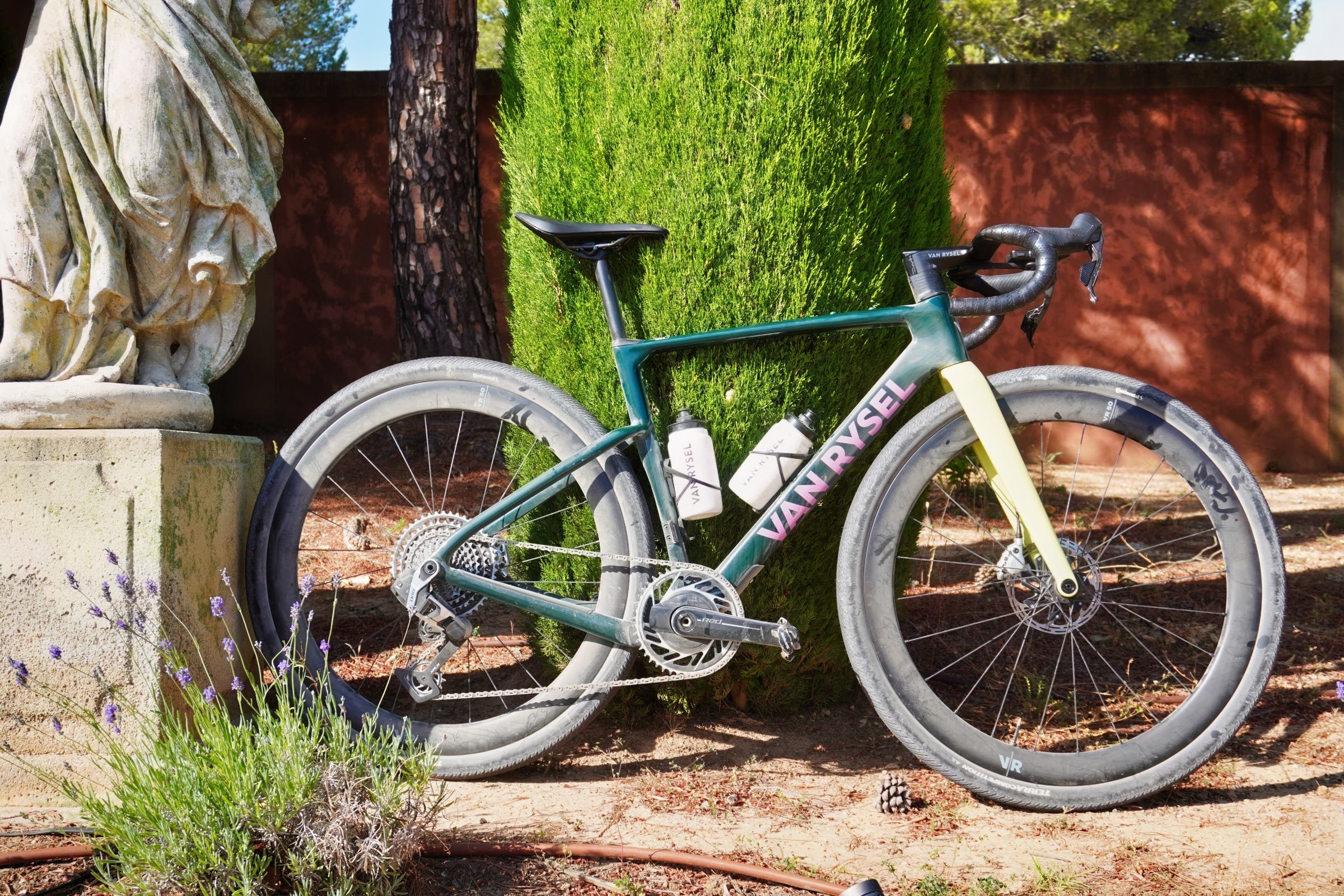
[analyse_image type=”featured” src=”https://velo-cdn.outsideonline.com/wp-content/uploads/2026/08/hero-shot-rcr-header.jpg”]
Pros
Aero-optimized, claiming 8.6 watts faster than previous generation
Dropper post compatible
Top tube mounts plus 3 bottle cage mounts
All builds include a power meter and Universal Derailleur Hanger
50mm tire clearance
Cons
Low front stack might not work for all riders’ flexibility
Flat, aerobar shape can limit add-ons like lights, clip-on bars, etc.
Stock tire best for smooth gravel (not ideal for more aggressive terrain)
One-piece barstem means fit must be dialed (also expensive to replace)
Loses composure on rutted, chunky and more technical gravel
Specs
Size tested: Small
Weight: 16.7lbs (7.6kg) Size S
Price: £6500 / $10999 / €6599
Brand: Van Rysel
Verdict
Call it a gravel race bike or a road bike with gravel clearance, the Van Rysel RCR-G is built for one thing—speed. Whether you’re ripping on hardpack or paved roads, this is a bike that can shapeshift and will keep you at the front of the pack, no matter where you’re riding.
Today, Van Rysel adds a new bike to their RCR lineup. Meet the Van Rysel RCR-G.
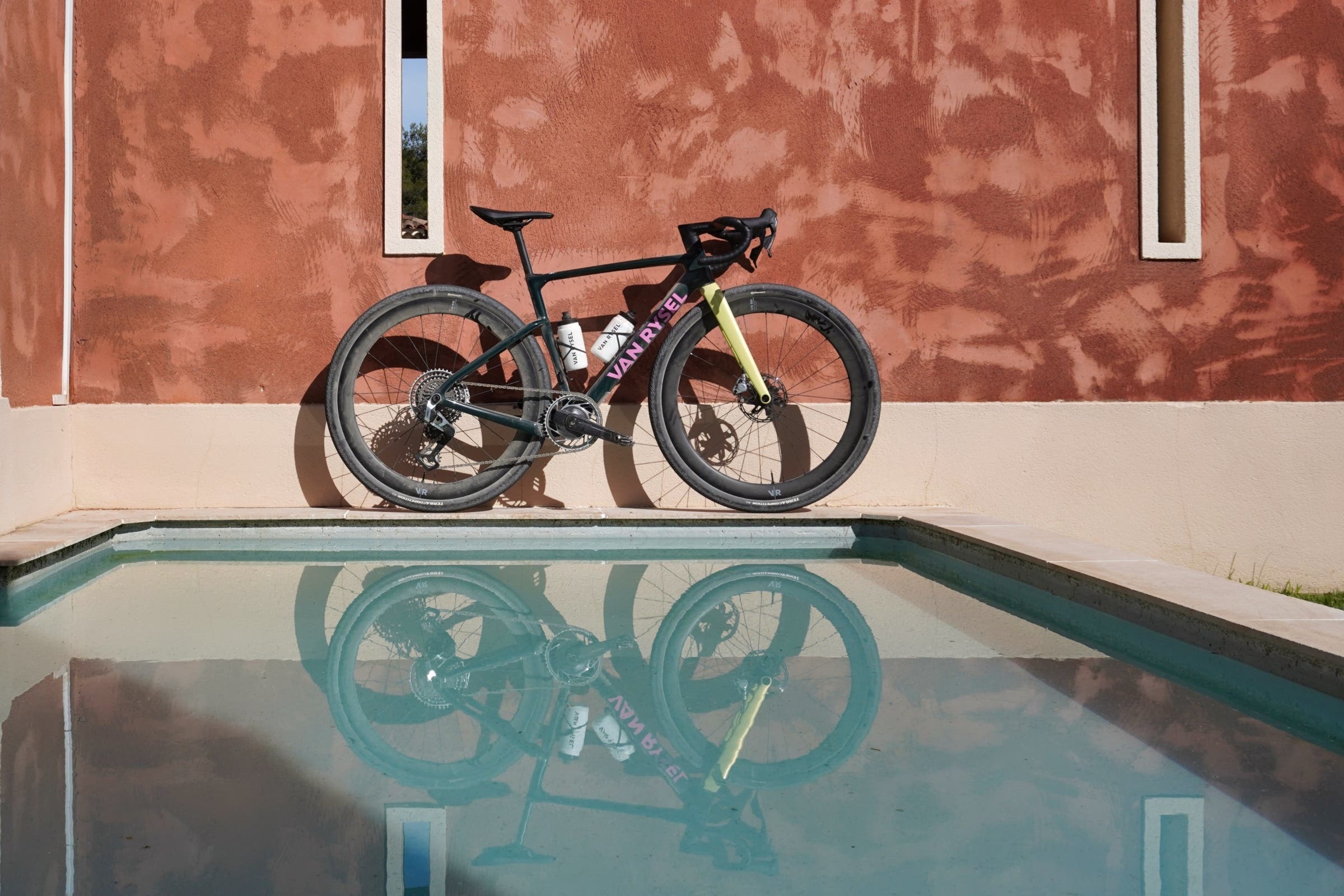
On paper, it might look like just one letter difference—RCR-R for road, RCR-F for aero, and now RCR-G for gravel. In reality, it’s a bike that wants to make a big statement about the future of racing on dirt. Maybe that’s what happens when you use WorldTour riders as your product testing team.
This is a bike built for speed, and it makes no excuses about that. It’s aggressive. It’s agile. And it’s a whole heck of a lot of fun, even if you aren’t pining on a race number.
I went all the way to Marseille, France to spend some time with this bike. Plus, I got to meet the product team and engineers who built it, and most importantly, take this machine for a spin around the bucolic French countryside. And I can confidently say, it did not disappoint.
Quick hits: 7 standout details of the Van Rysel RCR-G
- Tool roll with mini-pump, multi-tool, tire levers, and inner tube comes standard, not an upgrade
- Semi-integrated cable routing keeps the frame clean and snag-free
- Standard 27.2mm diameter seat post makes replacements and upgrades simple
- Carbon frame offered across all three builds
- 50mm max tire clearance
- All builds include a power meter
- Optional model with RockShox Rudy XPLR 40mm suspension fork
- For more information visit the Van Rysel website
Van Rysel RCR-G Frame Details
With former WorldTour pros taking the start line at some of North America’s biggest gravel races, it’s safe to say that gravel has officially grown up. Which means bike brands from the WorldTour are serious about getting in on that action, including Van Rysel. With the RCR-G, Van Rysel is making the case that road racing pedigree belongs on the gravel racing scene. And it certainly could—for a particular kind of rider.
After all, this build is not for everyone. And that’s ok. Gravel can mean a lot of different things to a lot of different people. If you raise your hand for going fast at all costs, then congratulations, you found your match.
With a low stack (537mm on my size small) and long reach (384 mm), Van Rysel is making a big bet on speed. It’s the kind of race-tuned geometry that puts riders in a more stretched-out, aero-optimized position. One would even say, more aggressive. This is a feature, not a bug. If you’re looking for a comfort fit that’s more in line with traditional endurance riding, keep looking.
You have to appreciate when a company is clear in its intentions. This isn’t about compromise and trying to please everyone (which usually results in pleasing no one). In fact, the RCR-G is really built for two use cases. The first, tearing up compact, champagne gravel at high speeds. The next, catering to those who prefer a road bike feel on a gravel-optimized platform.
To put an even finer point on it, this is an Unbound race machine, not Unbound XL. While you can certainly make any bike work for just about anything, the real sweet spot for this build isn’t in multi-day or ultra-adventure races. Why? It all comes down to geometry, and the key here is “short and steep”.
Short chainstays (426mm), short wheelbase (1014mm), and a steep 71.2-degree head tube angle on my size small. For a gravel bike, that’s significant. And if these sound like road bike numbers, you’re not wrong. This is a bike that doesn’t just feel like a road machine; it’s built like one. Snappy, reactive, lively and sharp.
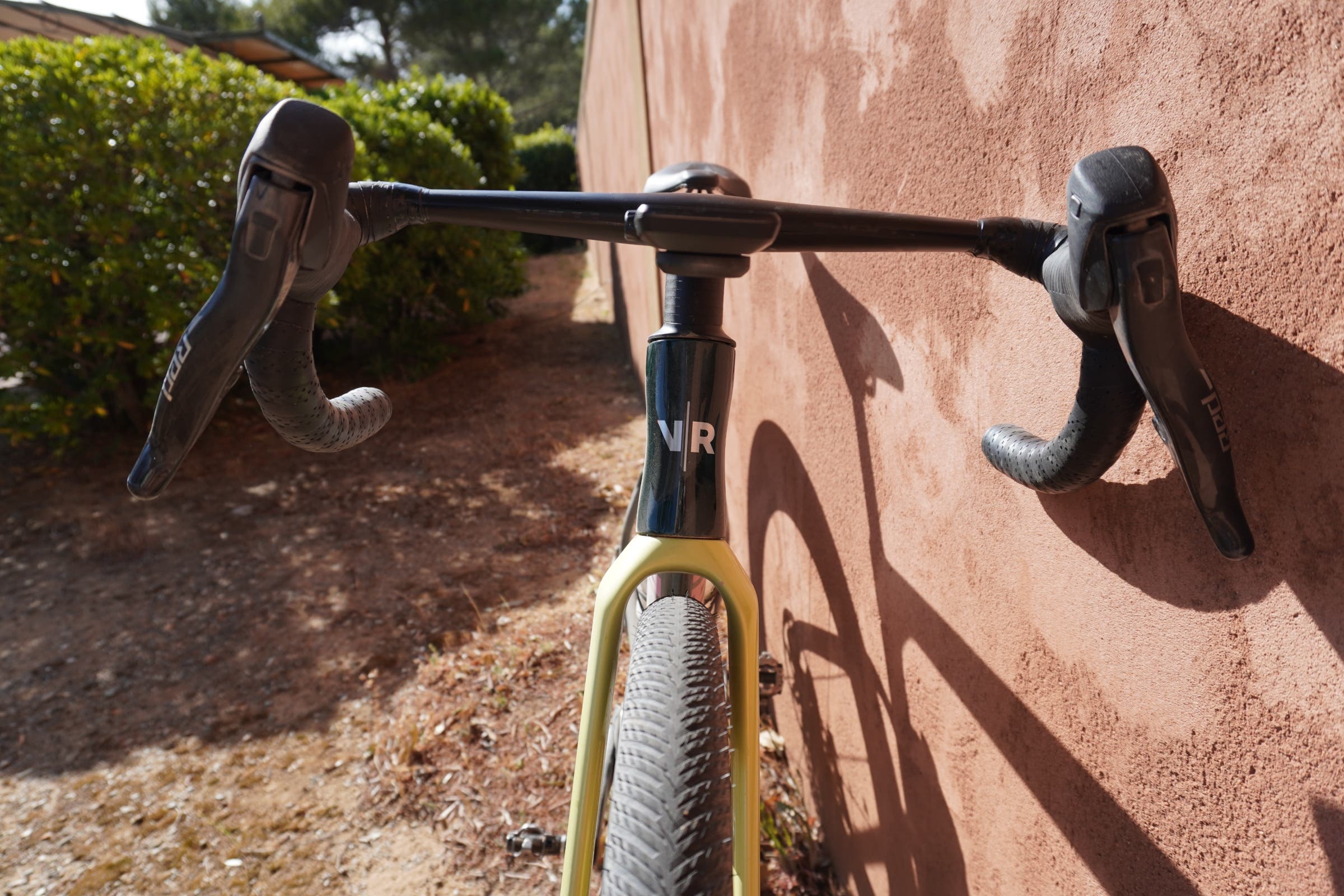
So how did we get here? It started with the RCR-R and RCR-F (Van Rysel’s road and aero offerings). The engineering team wanted to leverage the aerodynamic learnings from these bikes and see how it could be applied to a gravel platform. Through several rounds of CFD (Computational Fluid Dynamics) analysis and wind tunnel testing, they optimized the overall geometry. They borrowed that steeper head and seat tube angles from the road build, while increasing the wheel clearance for 50mm tires.
But the development process was anything but straightforward. While at the gravel camp in Marseille, France, hosted by the brand to unveil this new bike, I had a chance to meet with the team behind the build, including Alexis Grosgeorge, lead engineer of the RCR-G. He describes the central challenge plainly. “We have to take into account that we have more constraints because we can have bigger rock impacts while riding gravel. So you have to reinforce that. But while you reinforce that, you don’t want the bike to be stiffer. So that’s what’s difficult.”
This translated to lots of trial and error, Grosgeorge explains, including eight frame layups, 12 fork iterations, and a nearly full compromise on crankset clearance that almost derailed the entire project. Jérémie Debeuf, the RCR-G’s product manager, was in the room for all of it. “We wanted to make sure to fit 50mm tires,” he says. “And I know we spent a lot of time on that. Lots of hard discussions.”
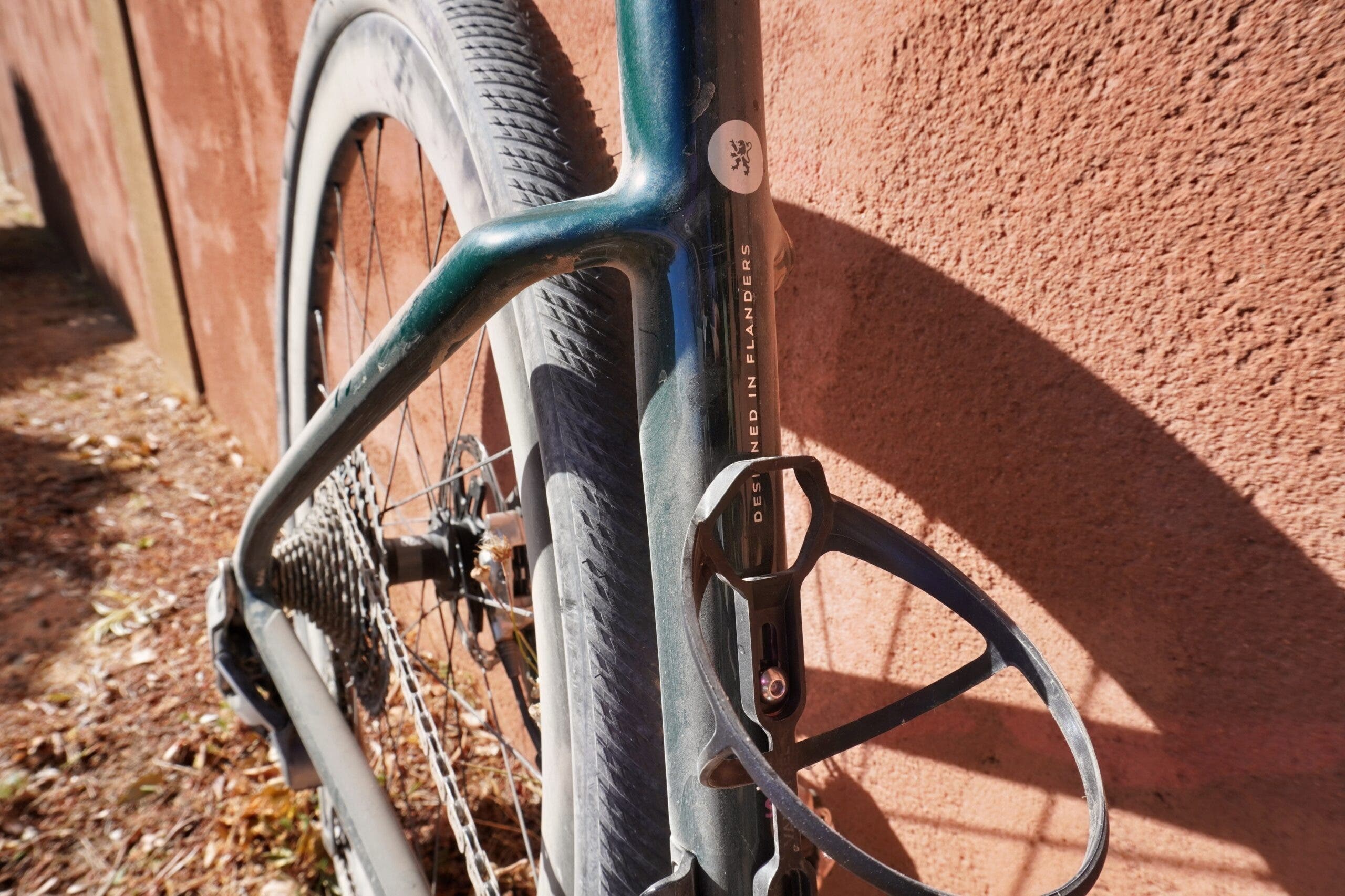
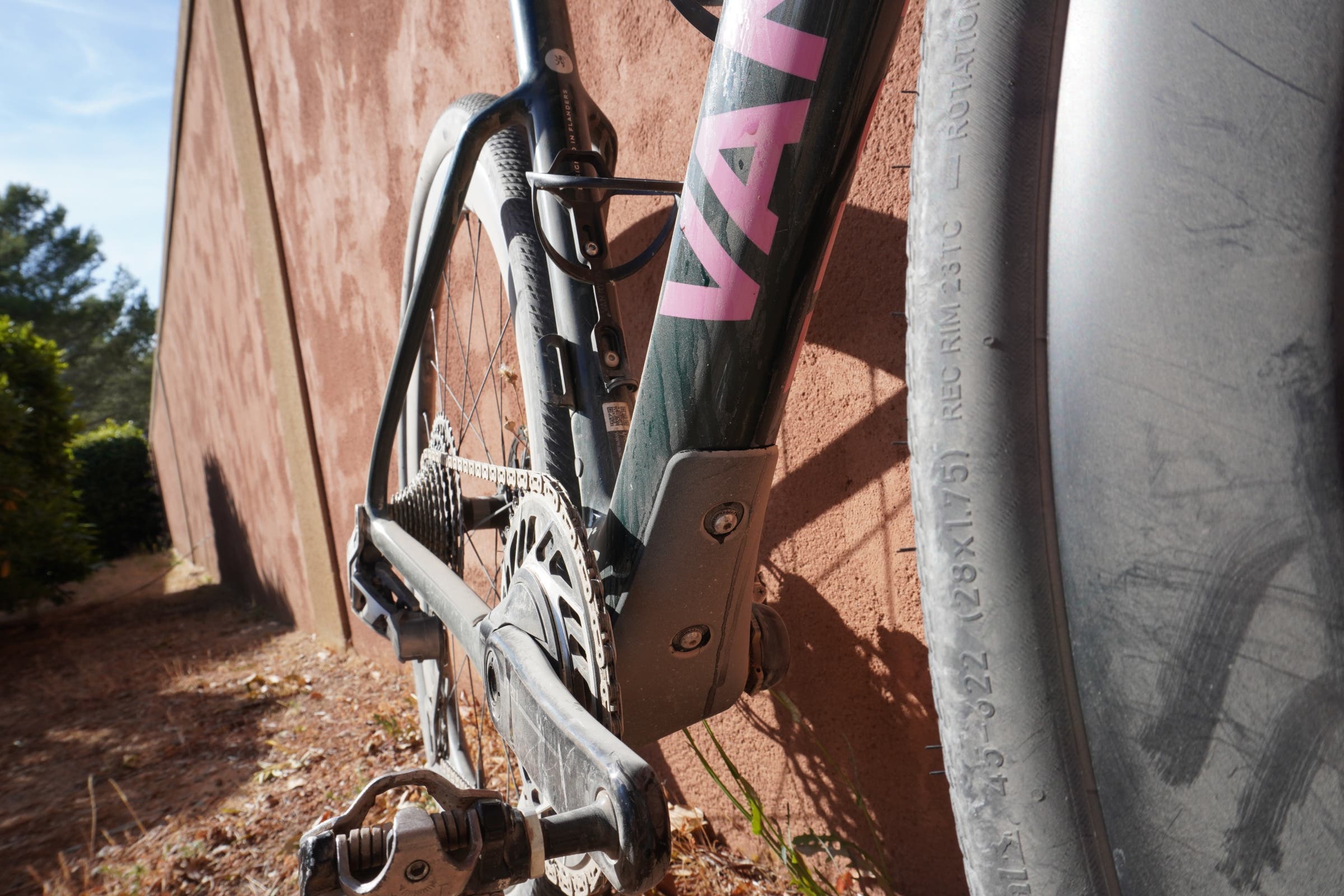
And then there’s the trickiest engineering feat that most will never notice. I asked Grosgeorge what he was most proud of, and he pointed straight to the chainstay. “It’s quite a big challenge, but you don’t see it. The shape is dropping a bit, and it’s really thin—I think it’s 30 millimeters thin at this place.” Getting that chainstay narrow enough to keep the rear end compact and snappy while maintaining the rigidity a race bike demands required its own round of testing and trials.
Despite everything, the team was able to produce a bike that isn’t just aero and light, but also saves 8.6 watts compared to the previous Van Rysel gravel option.
At 885g for a size medium frame (unpainted), the RCR-G frame is genuinely competitive among its peers in the gravel race category. The only frame that meaningfully beats it from a weight perspective is the Specialized S-Works Crux at 725g.
It’s no surprise that the carbon choice is the biggest weight factor here. The RCR-G uses high modulus carbon. If you’re unfamiliar, carbon fiber is graded by stiffness—standard is the entry level, followed by intermediate, high modulus, and ultra-high modulus. Brands often give the carbon they use their own proprietary names. Trek calls theirs OCLV with a different series of numbers to qualify the grade, like OCLV 700. Specialized is similar, using FACT and then their own numbers like 10r.
To put this into perspective, both the Trek OCLV 700 and Specialized FACT 10r sit in the high modulus performance tier—just like the RCR-G. And one step below the ultra-high modulus used in frames like the new S-Works Crux.
For the RCR-G, the challenge with the carbon layup was finding the balance between race stiffness and the minimum comfort required to survive a four-to-five hour race. Debeuf puts it simply: “I remember when we did the brief, Alexis told me—you’re crazy. It will be complicated to combine all the aspects we want to combine.” Turns out it was a lot easier than they thought thanks to a simple seatpost.
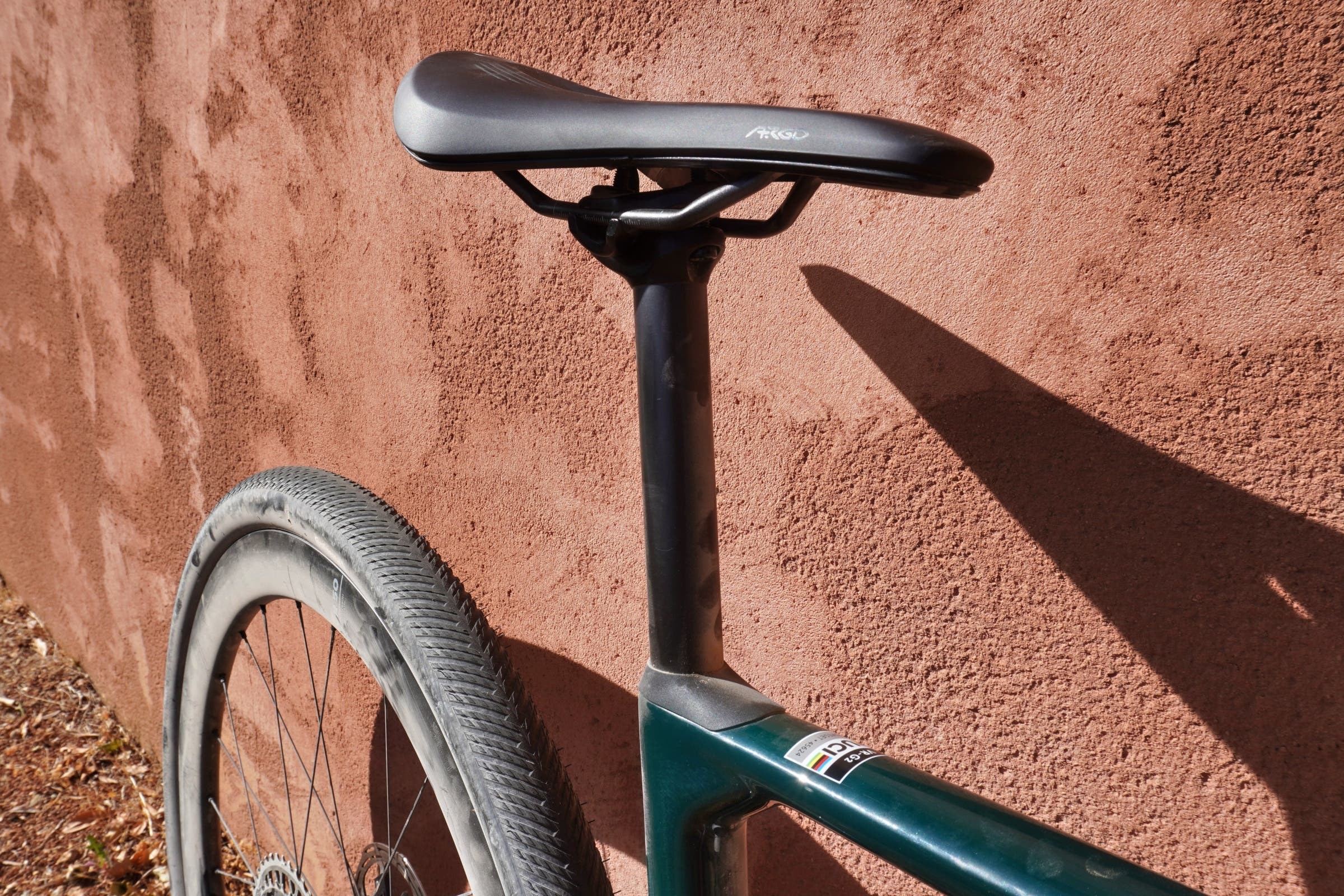
By using a 27.2mm round seatpost, the team was able to smooth out the road chatter and dampen some of that gravel-induced vibration, without added weight or the further complexity of a full aero post.
Plus, being a standard diameter gives racers even more flexibility with the option to swap to a dropper seatpost. Given where gravel racing is going, it’s a thoughtful nod to perhaps a few more marginal gains.
Van Rysel RCR-G Build Details
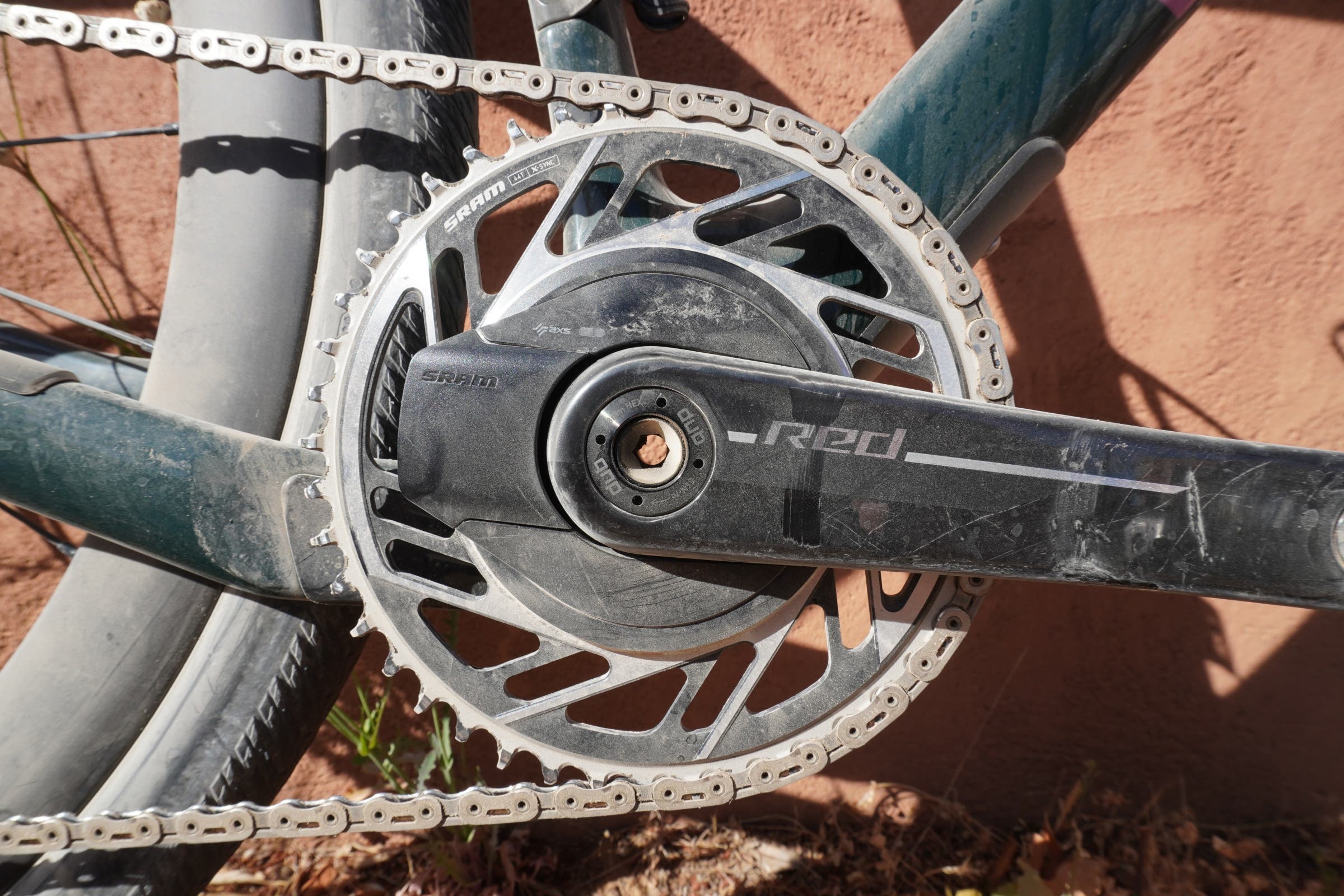
The RCR-G is available in three complete builds, all of which include a power meter as standard, not an upgrade.
| RCR-G RED AXS | RCR-G Force AXS | RCR-G Rival AXS | |
| Frame / Fork | High Modulus Carbon | High Modulus Carbon | High Modulus Carbon |
| Cockpit / Stem / Handlebar | Integrated RCR-R Carbon cockpit (as used on Decathlon CMA CGM WorldTour team) | VR AL stem / VR Carbon bar | VR AL stem / VR AL bar |
| Groupset | SRAM RED XPLR AXS 13s (44T – 10/46) | SRAM Force XPLR AXS 13s (42T – 10/46) | SRAM Rival XPLR AXS 13s (40T – 10/46) |
| Wheels | VR50 Carbon | VR35 Carbon | VR30 AL |
| Tires | Continental Terra Comp TLR 45mm | Continental Terra Comp TLR 45mm | Continental Terra Comp TLR 45mm |
| Sizes | XS – XL | XS – XL | XXS – XL |
| Weight (Size M) | 7.8kg | 8.2kg | 8.6kg |
| Price | £6,500 / $10,999 / €6,599 | £4,000 / $7,399 / €4,199 | £3,000 / $5,299 / €3,199 |
Van Rysel RCR-G Geometry
| Length: mm // Angle: degree | XXS | XS | S | M | L | XL |
| ST: seat tube length | 445 | 465 | 475 | 495 | 520 | 550 |
| HT: head tube length | 96 | 103 | 115 | 130 | 150 | 175 |
| TT: top tube length | 495 | 515 | 538 | 555 | 570 | 595 |
| HTA: head tube angle | 69.5 | 70 | 71.2 | 73 | 73 | 73 |
| STA: seat tube angle | 76 | 75 | 74 | 73.5 | 73.5 | 73.5 |
| FL: fork length | 390 | 396 | 396 | 396 | 396 | 396 |
| FR: fork rake | 50 | 50 | 50 | 50 | 50 | 50 |
| CS: chain stay | 426 | 426 | 426 | 426 | 426 | 426 |
| BB: bottom bracket drop | 74 | 74 | 74 | 74 | 74 | 74 |
| S: stack | 509.6 | 521 | 537 | 554 | 573 | 597 |
| R: reach | 367.9 | 375 | 384 | 391 | 400 | 412.5 |
| E: wheel base | 1005.4 | 1010.8 | 1014 | 1019 | 1034.5 | 1054.5 |
Van Rysel RCR-G Ride Experience
While I’ve never pinned on a race number, if anything could convince me, it would be this bike. From the second I hopped on, it just felt fast. Did the legs respond? That’s a different story.
To test the RCR-G we took to the Gucci Gravel east of Marseille. It’s always a little tricky to get a complete ride impression from a brief four-hour spin, but I was struck by how much feedback I was able to gather. It was weird. The bike felt really familiar. And then I looked at the geometry.
I was essentially riding my extra-small, Allied Echo from back home. With just seven millimeters of stack and three millimeters of reach difference between the two, the ride feel was pretty darn similar. Snappy, reactive, lively and energetic. And this is with the Echo in the road configuration—that’s significant.
The RCR-G is a roadie’s gravel bike. And when taken on the quick, compact, European gravel it was built for (think Girona pistes and Strade Bianche), then your roadie heart will sing. These are the kind of conditions where the RCR-G rewards you with precise, energetic, and responsive handling.
Take it somewhere with rougher, looser gravel, and it’s a different story. I often found myself sliding out of corners and losing the back end, which honestly is also a little fun too. But you have to be ok with it.
This bike doesn’t feel planted. It isn’t a steady hand on rough roads. It’s loose, it’s snappy, it’s reactive, and it’s zippy. It’s the kind of handling that you can’t really fight. It’s easier to surrender to it and let the bike do what it wants. And honestly, that’s ok. Nothing makes you feel more like you’re an absolute ripper than skidding out of corners and kicking up some dirt. It’s the kind of riding that might feel low-key sketchy, but without any real high-key consequences. The bike never felt like it was getting away from me, but it certainly was not as composed as other bikes in similar instances.
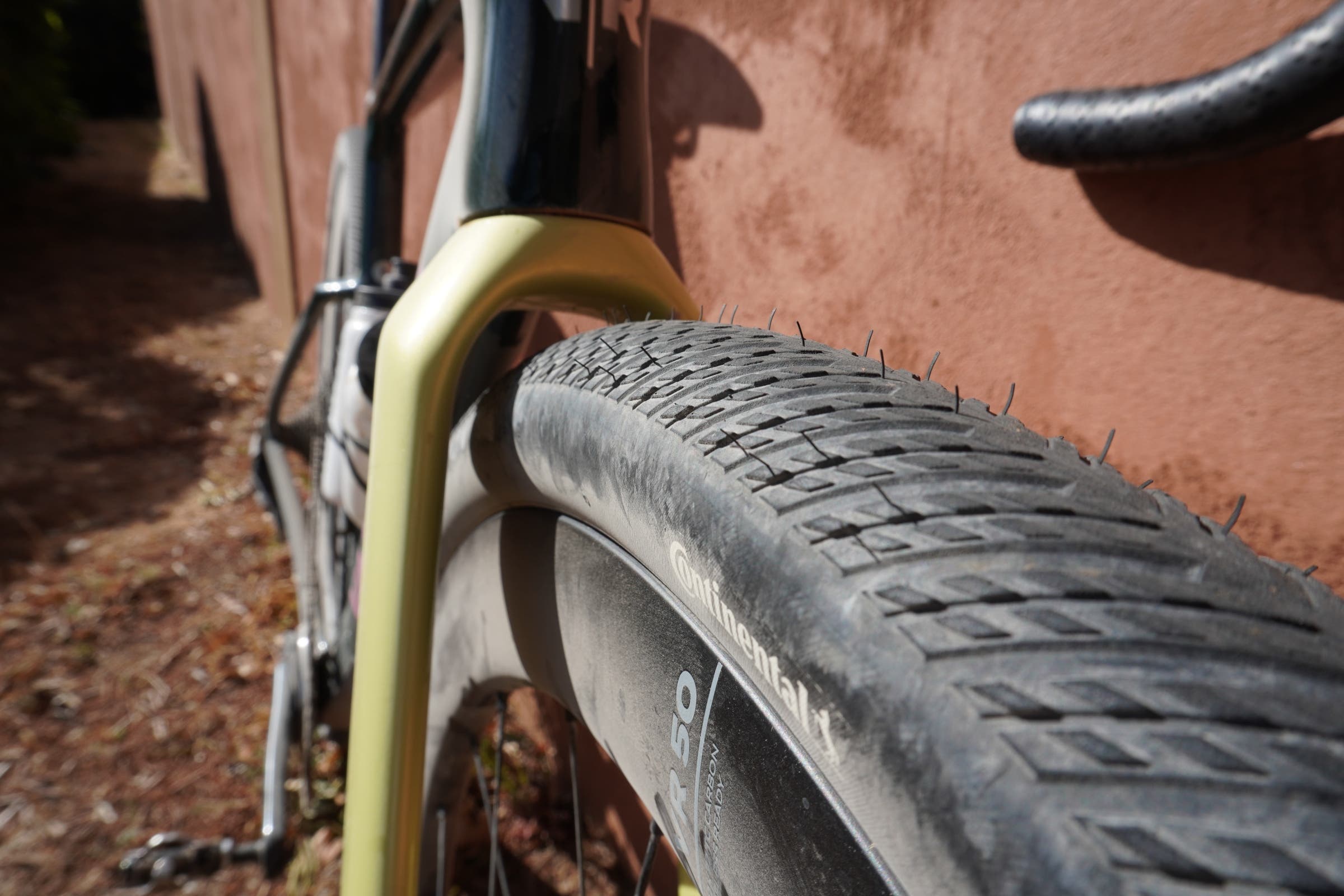
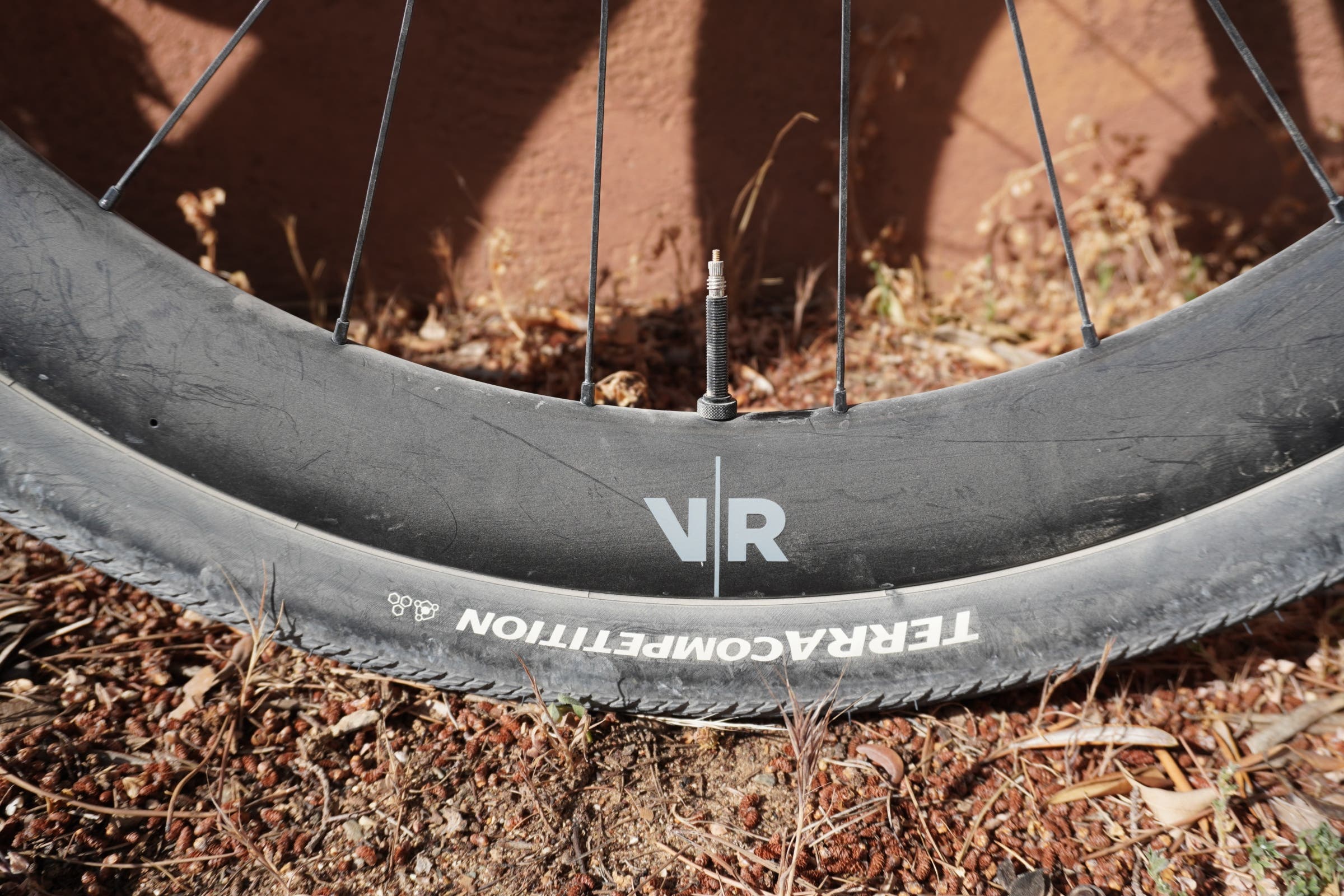
Naturally, tire choice is key to this conversation. So much of the handling and grip is unique to the terrain you’re riding in your own locale. Out of the box, the RCR-G is fitted with a pair of 45mm Continental Terra Comp TLR tires. All in all, they’re a great option, and felt really good on the hard-pack dirt. On the looser stuff, they’re less stellar. Again, dialing in your tire choice will make a massive difference in your overall ride happiness.
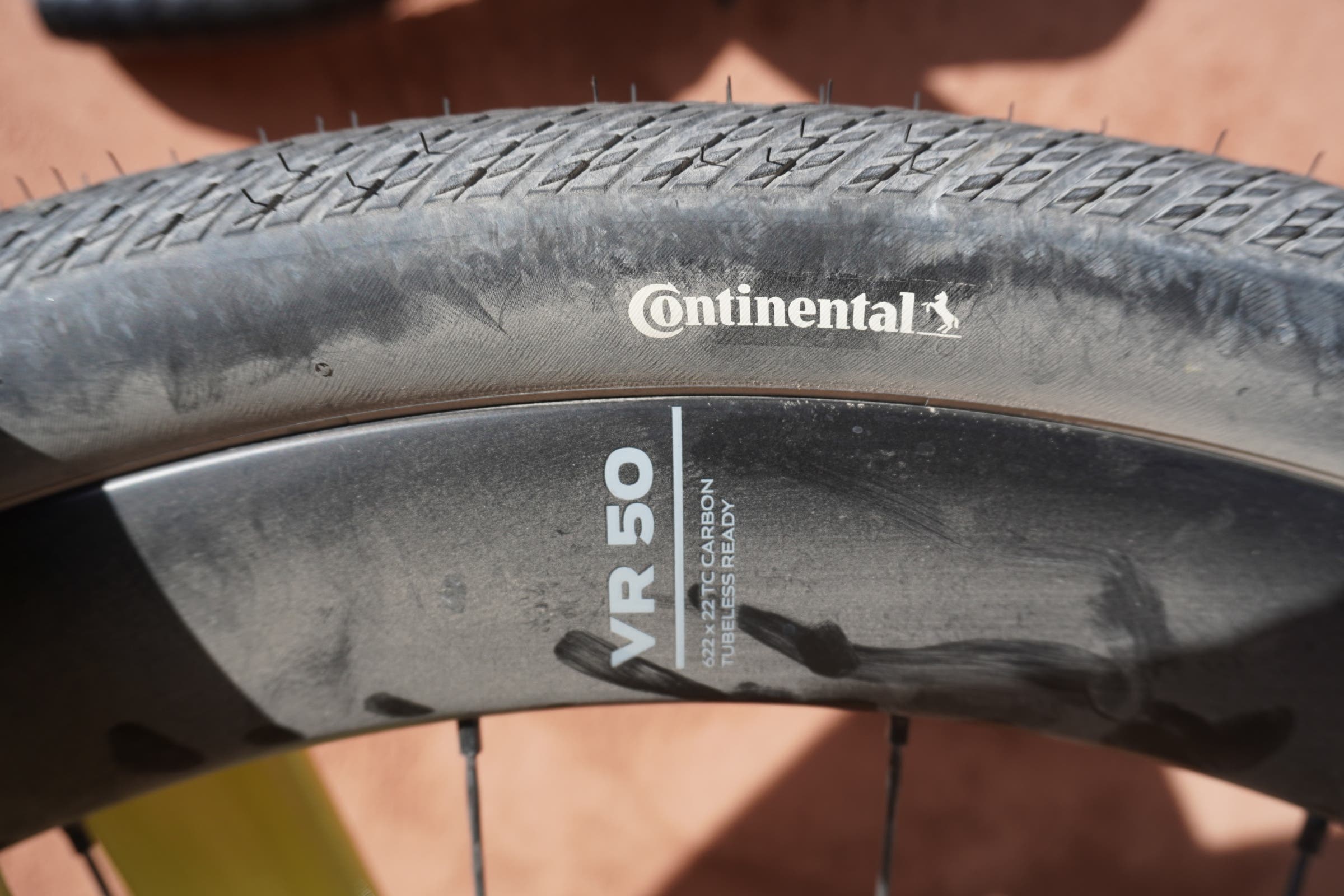
Now move those tires onto the road, and it’s a different story. In fact, swap them all together to a GP5000 and this bike will absolutely sing. Even on the brief efforts I did on some fresh tarmac, it was divine.
The power transfer and spring I felt after getting out of the saddle and throwing in some big digs was truly confidence-inspiring. The bike was balanced and controlled. I could throw it around without anything getting unwieldy or awkward, which for a “gravel” bike is pretty impressive. This is road bike handling for sure.
At the end of our ride, someone instigated the classic town sign sprint (I blame the guy in the white bibs), which was the perfect excuse to go full gas and see what we could do. That competitive moment really demonstrated just how lively the RCR-G can be, from holding a paceline to putting in the power and trying (with everything I had) to get as fast and as aero as I could. The bike was steady and super comfortable in the drops. Again, squarely in road bike territory.
I’m not a huge fan of having two wheelsets. Mostly because I feel like no one actually swaps them, but the RCR-G could be the bike that changes my mind. It performs so well on the road that you might want that flexibility. Run slicks on Saturday for the group ride and knobbies on Sunday for the dirt. It’s not a crazy idea…if you actually do it.
Van Rysel RCR-G Usability
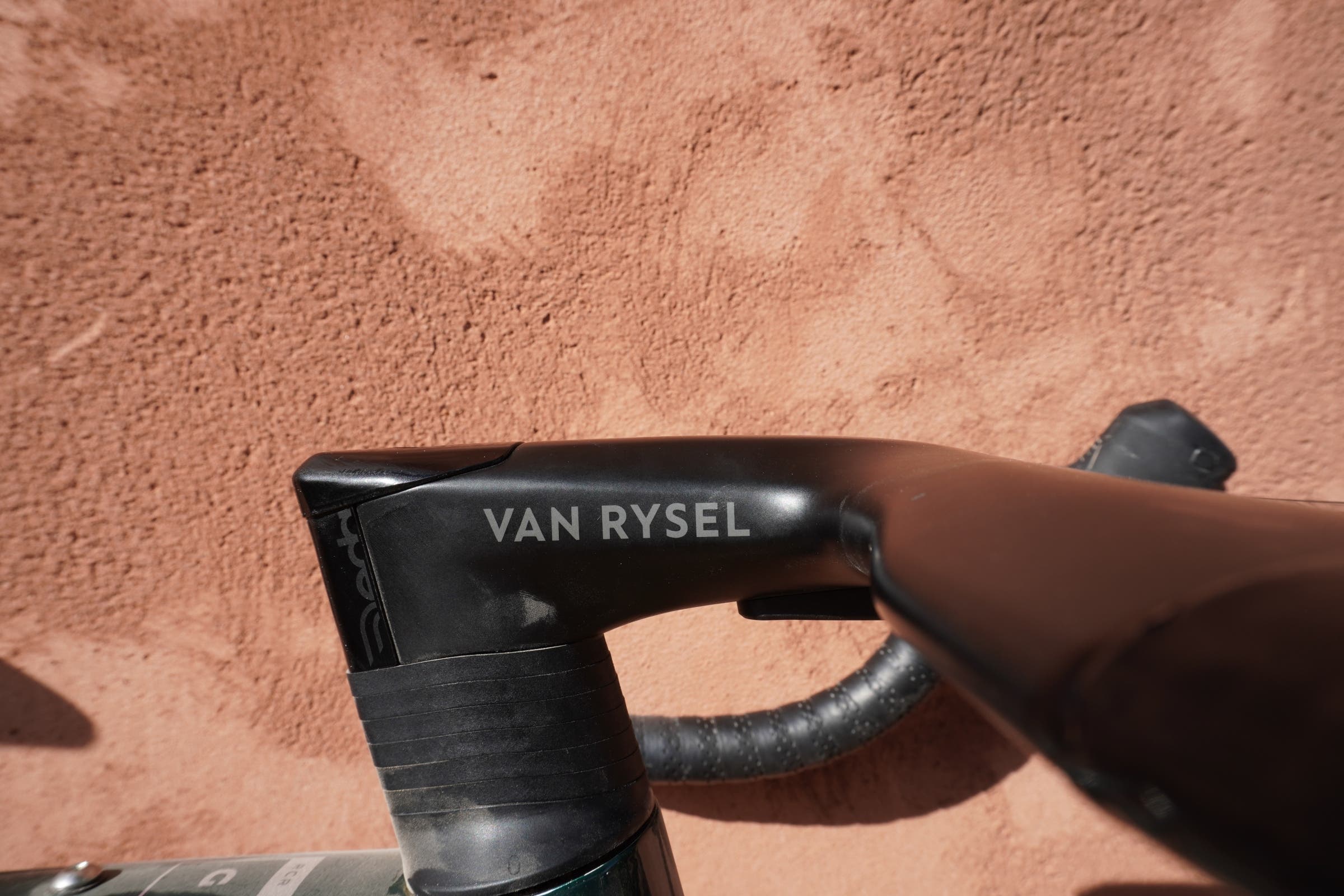
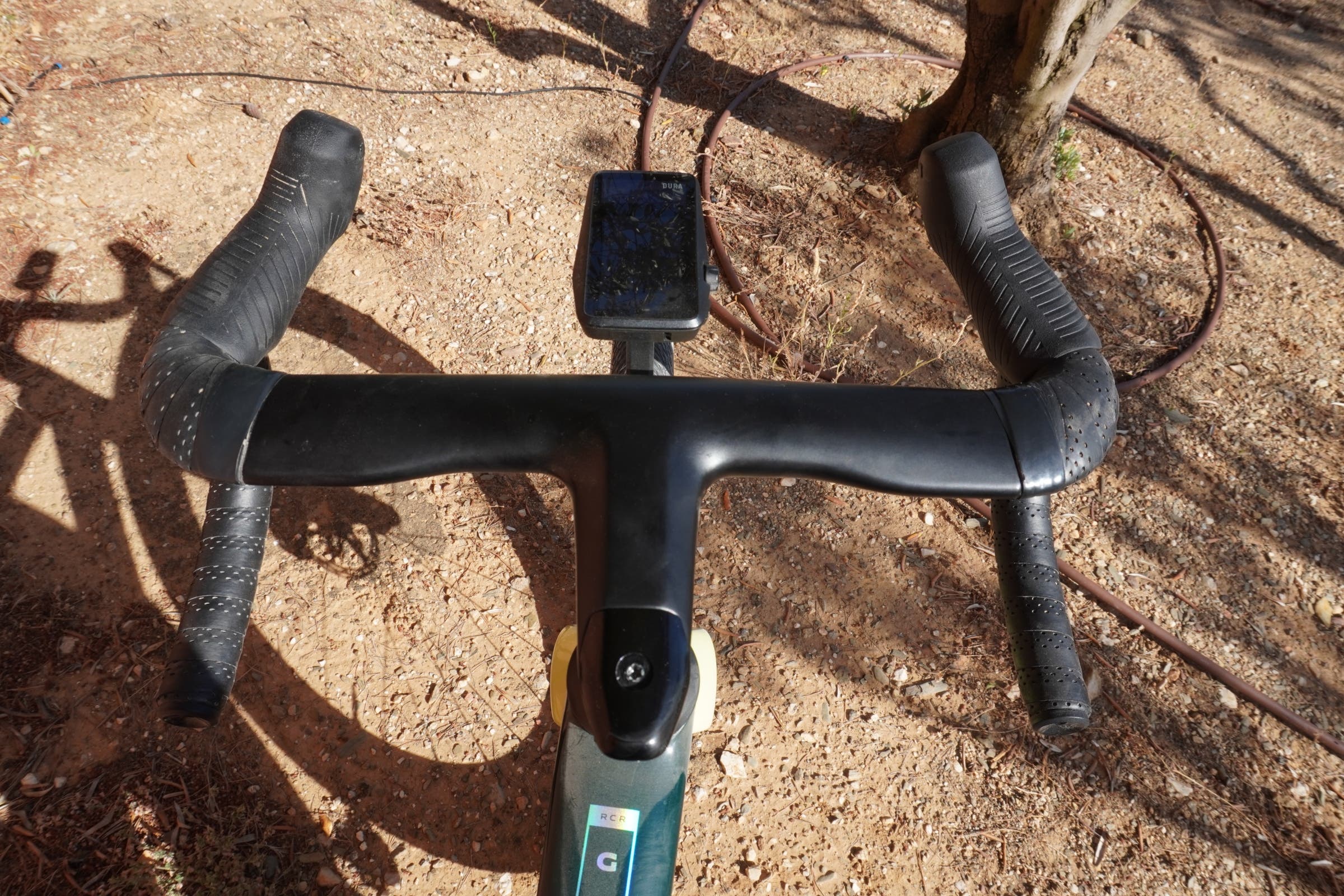
I was testing the highest option of the fleet, the RCR-G Red Axs, which comes with the same integrated bar stem cockpit as the RCR-R Pro WorldTour bike. It’s beautiful. It’s aero. And it’s also something to be mindful of. I’m always wary of any one-piece bar. Your fit must be dialed; otherwise, this is a very expensive mistake. Not to mention the hassle of trying to source another size.
Then there’s the potential hassle of replacing this if (or hopefully never) in the event that you crash, damage the bar, or have any warranty issue. Again, I fully understand the aero and weight advantages. But it’s also a real-world practicality that needs to be considered. Ask yourself if you’re ready for this level of commitment and potential risk.
The next thing on these bars is the aero shape on the top. While they’re amazing and purpose-built for racing, they also introduce the practical issue—where do I put my light? Or clip-on aerobars? While this might not be a concern for the racing privateers, if you’re looking to make this bike a little more of your everyday all-rounder, this will quickly be an issue—especially for the folks on smaller-sized bars. That real estate upfront is cramped.
Beyond the cockpit, the rest of the build is refreshingly pragmatic. A Universal Derailleur Hanger is always going to be a safe bet for long-term peace of mind. While it might not save your race, it could save you an Uber home. Any bike shop, anywhere in the world, can get you back on the road.
The one exception to that pragmatism is the bottom bracket. It utilizes a press-fit design, which may work fine, but I always prefer to see a threaded bottom bracket for ease of maintenance.
Finally, this seatpost. It’s a breath of fresh air to see a traditional 27.2mm round option. In a world of proprietary aero offerings, seeing Van Rysel stick with something tried and true is a win. Get a little too rowdy and break this, no sweat. Replacements are simple and easy. Plus, the option to swap this to a dropper will provide the most committed racers even more range.
Conclusion
If your ideal gravel ride involves stopping for pastries, taking photos, and wandering down whatever road looks interesting, this is not the bike for you. However, for folks who truly love their road bikes and see gravel as yet another discipline for pouring all their sweat and watts into the pedals, this is a bike worth considering.
In the world of gravel racing, there are many options, and Van Rysel is taking a big bet on WorldTour pedigree earning the brand a place of consideration. I think it’s valid. This is a lot of bike for the price, so the idea that you can get away with this as your “one bike to do it all” isn’t beyond the pale. Ultimately, if you’re pinning on a race number, chasing podiums, or want that unmistakable “top-of-the-box” feeling, the RCR-G is here and ready to rip.
[analyse_source url=”https://velo.outsideonline.com/gravel/gravel-gear/van-rysel-rcr-g-review/”]