“Robert is not a clever boy,” wrote Bob Carlos Clarke’s housemaster at the prestigious Wellington College in a letter to his father. “He would do well to put more thought into goals and waste less time on girls and guitars.” This obsession with girls and, to a lesser extent, guitars would go on to propel Carlos Clarke through an iconoclastic career as one of photography’s most engaging provocateurs. Yet the alienation and unhappiness he experienced at boarding school would shadow him long afterwards. Carlos Clarke died by suicide in 2006, aged 55.
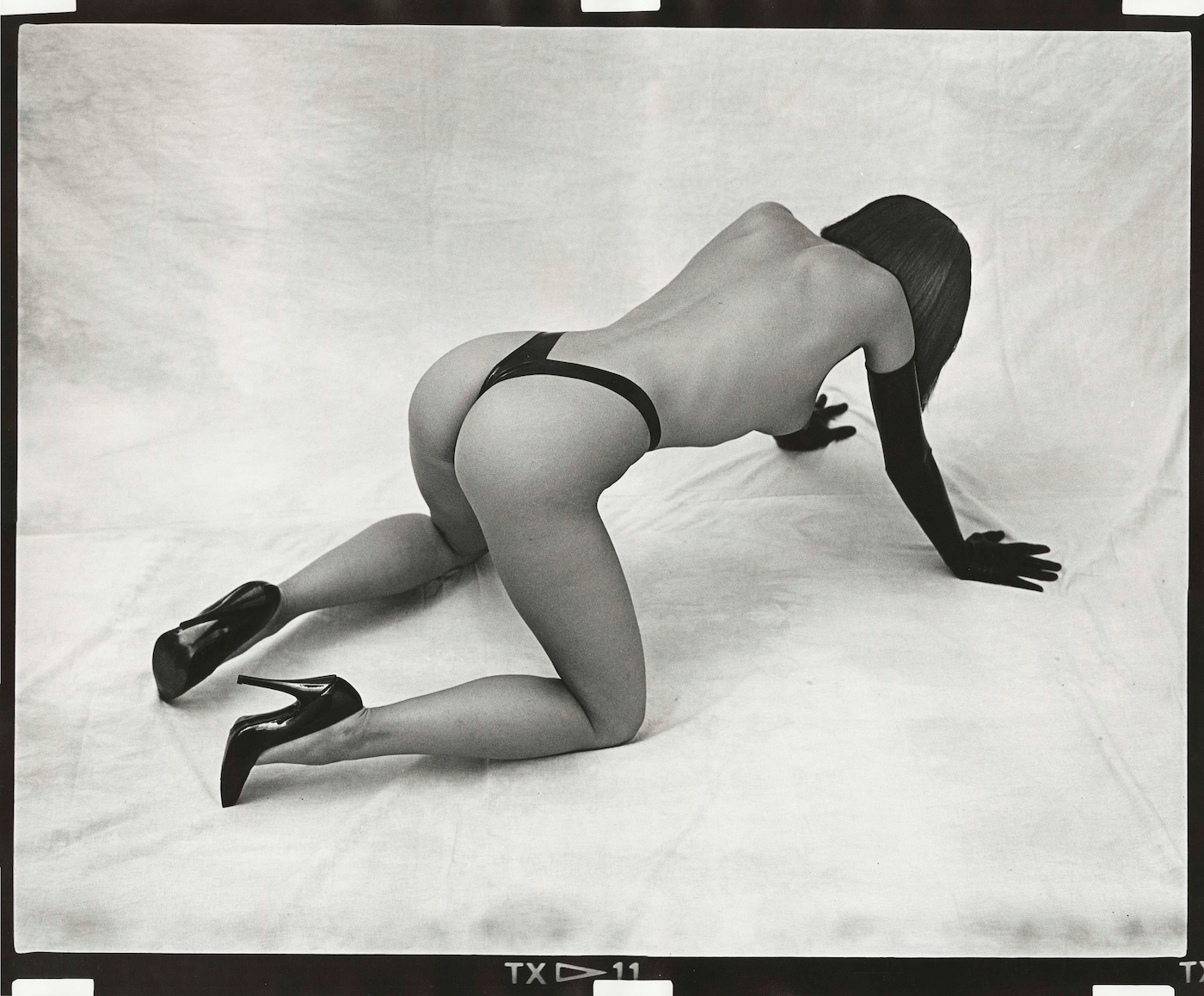
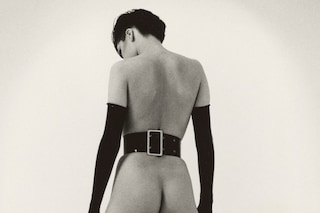
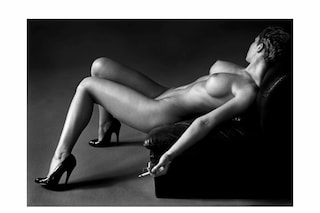
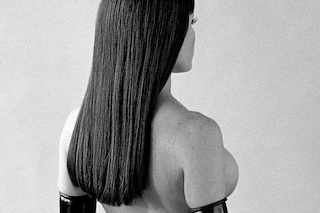
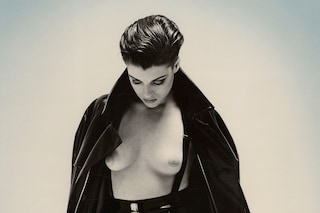
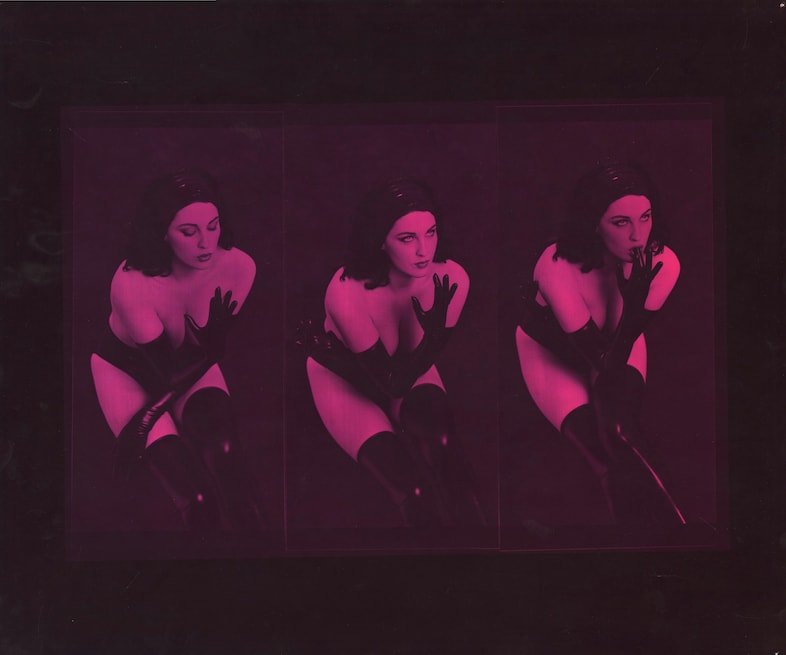
A new exhibition at London’s Atlas Gallery marks the 20th anniversary of his passing, revisiting his legacy with a display of rare and unique prints, previously unseen collages, and iconic works from Carlos Clarke’s last major series, titled Love Dolls Never Die. Carlos Clarke’s work was versatile, spanning celebrity portraits of fellow troublemakers such as Keith Richards and Marco Pierre White, to campaign work for brands including Levi’s and Smirnoff. However, it was his darkly erotic studio work, shamelessly fetishistic but sharply intelligent, that made his name. These richly toned black-and-white images often rendered women as objects – quite literally, with on/off switches or wind-up keys – but also as goddesses, aliens and mythical beings, as terrifying as they were sexy. In Carlos Clarke’s most striking images, his models appear almost beyond human: powerful, assertive, commanding, untouchable.
Carlos Clarke had escaped to West Sussex College of Art after his years as a boarder, but never intended to become a photographer. It was a means to an end: he had developed a crush on a woman who worked part-time as a model, and so he offered her a photo shoot to see if he could seduce her. It worked, and they married a few years later. The marriage didn’t last, but Carlos Clarke had by that point learned the worlds a camera could give him access to: models, notoriety and a life charged by pure adrenaline that would prove dangerously addictive.
It was during his student years that he met an older man known only as The Commander, who published an underground magazine for fans of latex and rubber wear. The Commander had once been a frogman in the Royal Navy, and it was the sensorial qualities of his diving suit that had encouraged a fetishistic interest in rubber; he introduced Carlos Clarke to styles of fetish photography that went beyond titillating glamour into darker, more ambiguous and psychologically charged worlds. Later studying at the Royal College of Art, he became good friends with the artist Allen Jones, who would also court controversy for his sculptural works featuring latex-clad female forms. While both artists would face critique from feminist thinkers who felt the work was sexually demeaning to women, Carlos Clarke and Allen Jones were nevertheless drawn to a visual language of fetishism that could be read as both reproducing and interrogating popular representations of desire, commodity culture and the human psyche.
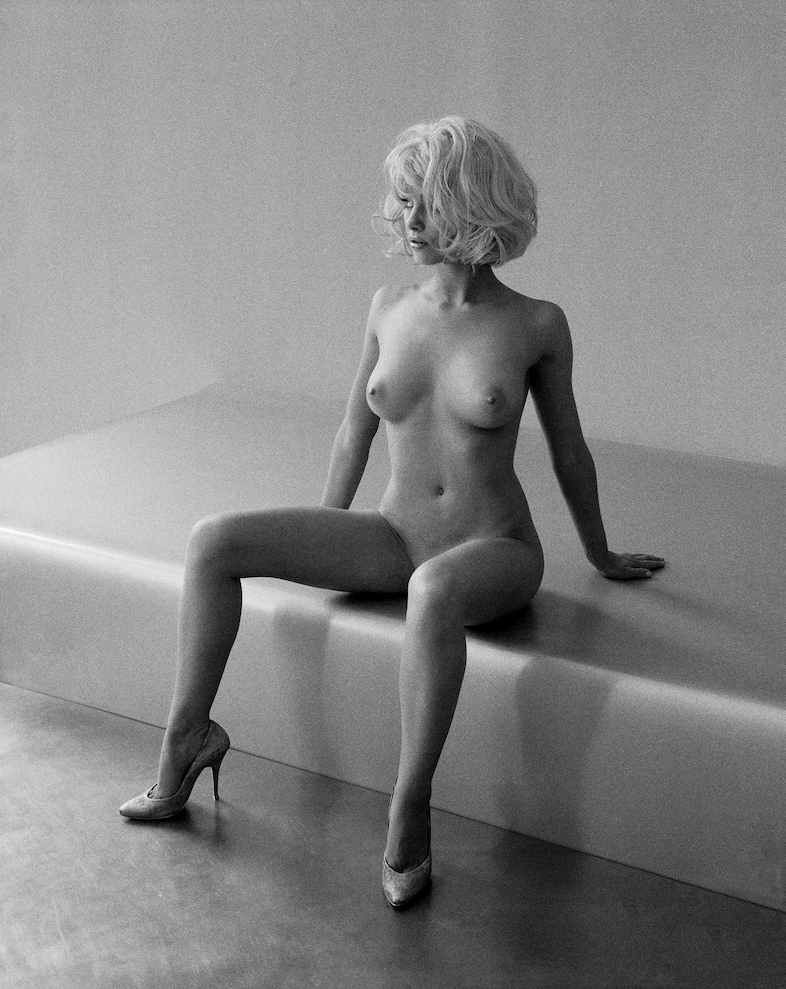
Carlos Clarke was also indelibly drawn to the craftsmanship and formal qualities of latex. He was a deliberate, meticulous artist, working obsessively in the darkroom on images ranging from precise, richly detailed large-format exhibition prints to more experimental, expressive, gold-toned and one-of-a-kind artworks. Both appear in this exhibition and emphasise what Carlos Clarke’s daughter Scarlett sees as his ongoing influence on contemporary imagemakers. “I think that, with the rise of digital and AI imagery, photographers are returning to analogue and darkroom processes,” she says. “Process itself, now more than ever, has made tangible objects like prints and books so much more desirable.”
The exhibition also features a series of grainy still lifes of cutlery, a handful of dozens of found objects that Carlos Clarke collected during walks along the Thames at low tide. These images have a more contemplative, mournful atmosphere than his sexually charged portraits, and hint at a softer, more poetic side to a man who was, by most accounts, boisterous and confrontational company. “He had an ability to take an inanimate object and somehow make it feel human,” continues Scarlett Carlos Clarke. “If he wasn’t in the darkroom, he was always collecting or making things.” Reflecting on his work twenty years on from his death, it is perhaps a sense of tension or oscillation that characterises his images: between indexical and chemical, wildness and restraint, and human and object.
The Last Dollsby Bob Carlos Clarke (in partnership with The Little Black Gallery) will be showing at Atlas Gallery, 49 Dorset Street, London W1U 7NF, from 5 September to 26 September 2026.
Escape the algorithm! Get The Drop
Get must-see stories direct to your inbox every weekday.
“Robert is not a clever boy,” wrote Bob Carlos Clarke’s housemaster at the prestigious Wellington College in a letter to his father. “He would do well to put more thought into goals and waste less time on girls and guitars.” This obsession with girls and, to a lesser extent, guitars would go on to propel Carlos Clarke through an iconoclastic career as one of photography’s most engaging provocateurs. Yet the alienation and unhappiness he experienced at boarding school would shadow him long afterwards. Carlos Clarke died by suicide in 2006, aged 55.
A new exhibition at London’s Atlas Gallery marks the 20th anniversary of his passing, revisiting his legacy with a display of rare and unique prints, previously unseen collages, and iconic works from Carlos Clarke’s last major series, titled Love Dolls Never Die. Carlos Clarke’s work was versatile, spanning celebrity portraits of fellow troublemakers such as Keith Richards and Marco Pierre White, to campaign work for brands including Levi’s and Smirnoff. However, it was his darkly erotic studio work, shamelessly fetishistic but sharply intelligent, that made his name. These richly toned black-and-white images often rendered women as objects – quite literally, with on/off switches or wind-up keys – but also as goddesses, aliens and mythical beings, as terrifying as they were sexy. In Carlos Clarke’s most striking images, his models appear almost beyond human: powerful, assertive, commanding, untouchable.
Carlos Clarke had escaped to West Sussex College of Art after his years as a boarder, but never intended to become a photographer. It was a means to an end: he had developed a crush on a woman who worked part-time as a model, and so he offered her a photo shoot to see if he could seduce her. It worked, and they married a few years later. The marriage didn’t last, but Carlos Clarke had by that point learned the worlds a camera could give him access to: models, notoriety and a life charged by pure adrenaline that would prove dangerously addictive.
It was during his student years that he met an older man known only as The Commander, who published an underground magazine for fans of latex and rubber wear. The Commander had once been a frogman in the Royal Navy, and it was the sensorial qualities of his diving suit that had encouraged a fetishistic interest in rubber; he introduced Carlos Clarke to styles of fetish photography that went beyond titillating glamour into darker, more ambiguous and psychologically charged worlds. Later studying at the Royal College of Art, he became good friends with the artist Allen Jones, who would also court controversy for his sculptural works featuring latex-clad female forms. While both artists would face critique from feminist thinkers who felt the work was sexually demeaning to women, Carlos Clarke and Allen Jones were nevertheless drawn to a visual language of fetishism that could be read as both reproducing and interrogating popular representations of desire, commodity culture and the human psyche.
Carlos Clarke was also indelibly drawn to the craftsmanship and formal qualities of latex. He was a deliberate, meticulous artist, working obsessively in the darkroom on images ranging from precise, richly detailed large-format exhibition prints to more experimental, expressive, gold-toned and one-of-a-kind artworks. Both appear in this exhibition and emphasise what Carlos Clarke’s daughter Scarlett sees as his ongoing influence on contemporary imagemakers. “I think that, with the rise of digital and AI imagery, photographers are returning to analogue and darkroom processes,” she says. “Process itself, now more than ever, has made tangible objects like prints and books so much more desirable.”
The exhibition also features a series of grainy still lifes of cutlery, a handful of dozens of found objects that Carlos Clarke collected during walks along the Thames at low tide. These images have a more contemplative, mournful atmosphere than his sexually charged portraits, and hint at a softer, more poetic side to a man who was, by most accounts, boisterous and confrontational company. “He had an ability to take an inanimate object and somehow make it feel human,” continues Scarlett Carlos Clarke. “If he wasn’t in the darkroom, he was always collecting or making things.” Reflecting on his work twenty years on from his death, it is perhaps a sense of tension or oscillation that characterises his images: between indexical and chemical, wildness and restraint, and human and object.
The Last Dollsby Bob Carlos Clarke (in partnership with The Little Black Gallery) will be showing at Atlas Gallery, 49 Dorset Street, London W1U 7NF, from 5 September to 26 September 2026.
Escape the algorithm! Get The Drop
Get must-see stories direct to your inbox every weekday.