[analyse_image type=”featured” src=”https://velo-cdn.outsideonline.com/wp-content/uploads/2026/08/GettyImages-1027444476.jpg”]
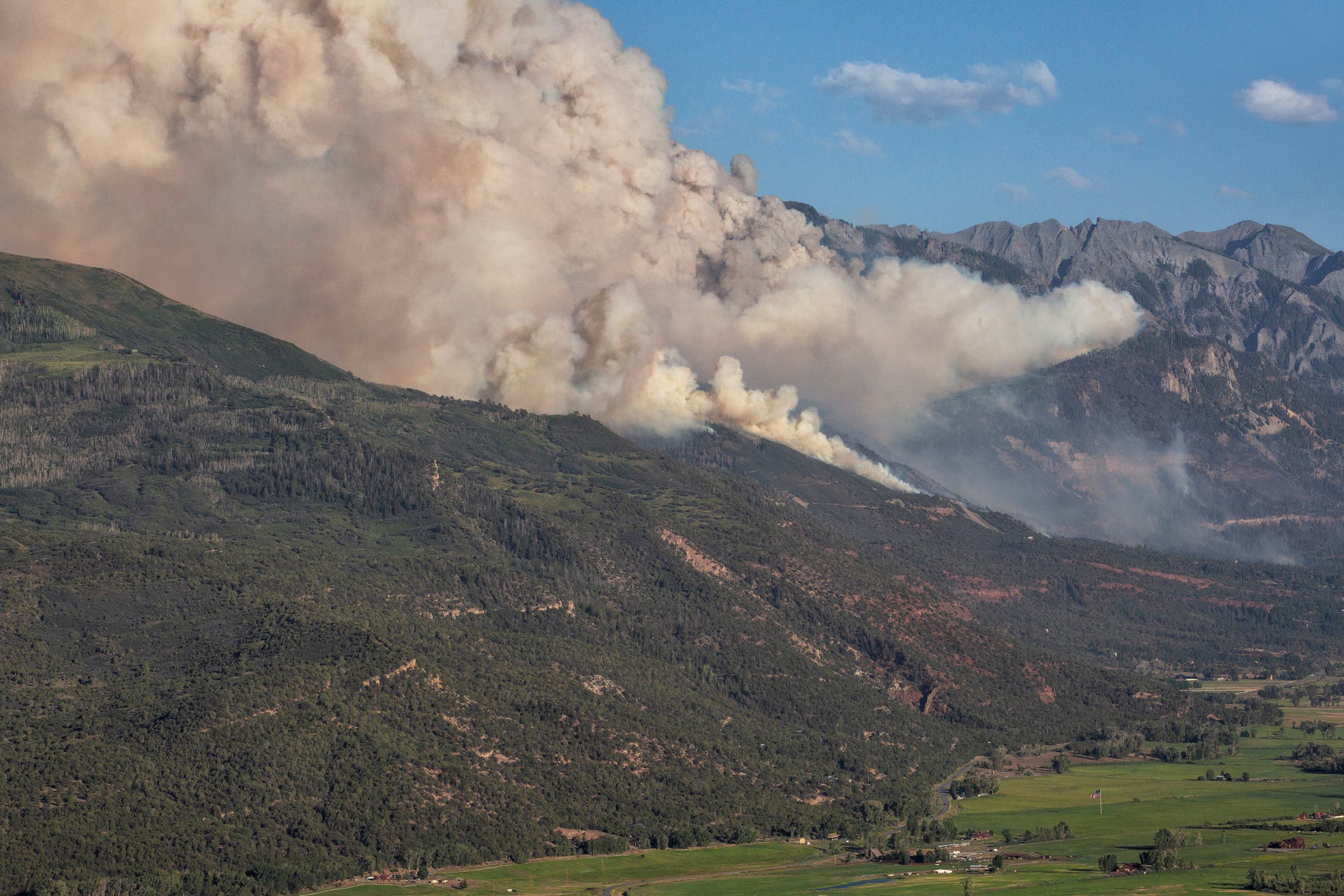
Climate change is cooking the Earth. Wildfires are now a regular thing.
Devastating burns like those that just swept through North America and swaths of Europe are destroying the environment and tearing apart communities.
They wreak havoc on every corner of daily life, both big and small.
And wildfires might put your training program at threat, too.
A fire’s smoke is laden with dangerous particulates that degrade air quality and pose a serious health risk.
In the short term, these fine particles choke you up and inflame your system.
In the long term, they can more than offset the mental and physical benefits of your daily bike ride. Multiple severe health problems await those frequently exposed to wildfire smoke.
And that leaves outdoor athletes facing a new existential question. One far more important than which socks to wear or whether to bin off the intervals.
At what point does it become too smoky to risk riding outside?
Fortunately, there is guidance to help you make an informed decision. You needn’t resign yourself to the indoor trainer every time you peep an ominous haze in the sky.
Here’s what cyclists need to know about wildfire smoke and the importance of air quality.
The increasing threat of wildfires
But first, why should air quality be a new consideration for cyclists?
Wildfires have been smoking out our airspace since day one. Likewise, ozone pollution — the smog that forms when chemicals from vehicles and industry react with light — was discovered way back in the ’50s.
However, this year, wildfires burned their way into the world’s conscience like never before. Fires have raged from California to the UK and on to Siberia as an exceptionally hot, dry summer torched the Northern Hemisphere.
Not even the small niche of pro bike racing was spared from a season of unprecedented heat.
Wildfire damage, or the strain that blazes put on local resources, impacted Leadville 100 MTB, the Tour de France, and Crankworx SilverStar, to name but a few.
Over the athletic divide, several famous Colorado ultramarathons were shuttered by the Willow Fire that forced Leadville 100 to reroute its historic course.
And sadly, this fiery summer isn’t an exception. It’s just part of a trend.
Data shows fires are less frequent but significantly more damaging now than they were 20 years ago. The number of people exposed to fires globally increased by 40 percent between 2002 and 2021.
And a fire’s smoke isn’t only an issue at the source of the blaze — it can spread thousands of miles. An NPR analysis found that one in seven Americans is exposed to wildfire smoke.
This alarming uptick in smoke exposure won’t see any immediate reversal.
Climate change is pushing temperatures up and precipitation down. The reduced use of controlled burns for land management has increased fuel availability. These factors combust together to form a perfect storm of wildfire risk.
Meanwhile, urbanization and industrialization are not slowing down. Ozone pollution continues to trend up.
A fine particulate problem
Both ozone pollution and smoke — whether from wildfires, vehicles, or industry — are damaging to health.
Wildfire smoke is particularly problematic.
It’s loaded with “fine particulate” PM2.5 — matter so tiny that it can cross from the lungs and enter the bloodstream.
PM2.5 is found in multiple sources of pollution. However, the University of California discovered that the extreme heat of wildfire burn produces fine particles that are significantly more chemically active and toxic than those from other sources.
In the short term, exposure to wildfire smoke promotes inflammatory responses that hit the respiratory, cardiovascular, and immune systems.
In the longer term, the health impacts can extend to heart disease, lung cancer, pulmonary disease, respiratory infections, diabetes, and more.
When is it too smoky to ride? A step-by-step guide to assessing risk and altering workouts
1. Check the AQI
Outdoor athletes need to pay particular attention to air quality.
To state the obvious, we suck in gallons more air when we’re exercising outside than we do as we go about our regular day. Upwards of eight times more, in fact.
Athletes concerned by potentially high pollutant levels should use the Air Quality Index (AQI) as their first source of guidance.
The AQI is a scale of particulate and ozone pollution that helps users assess risk.
It’s ranked from 1 to 500 and divided into tiers.
As you’ll see in our condensed version of the AQI below, these tiers provide a clear indication of the healthfulness of your local environment.
The Air Quality Index
| AQI | Rating | Color | Impact / Consideration |
| 0-50 | Good | Green | Go nuts. Work out all you want. |
| 51-100 | Moderate | Yellow | Generally healthy athletes: As above – ride as you like. Unusually sensitive groups: Consider reducing outdoor activity and be mindful of symptoms. |
| 101-50 | Unhealthy for sensitive groups | Amber | Sensitive groups: Reduce length and volume of outdoor activities and be mindful of symptoms. |
| 151-200 | Unhealthy for all | Red | Generally healthy athletes: Reduce length and volume of outdoor activities. Sensitive groups: Avoid long or intense outdoor activity. |
| 201-300 | Very unhealthy | Purple | Generally healthy athletes: Avoid long or intense outdoor activities. Sensitive groups: Avoid all outdoor activities. Ideally, take a break altogether. |
| 310-500 | Hazardous | Deep purple | Just don’t do it. Load up Watopia or take a break. |
You can also check the full official AQI guidance here.
For those in the U.S., AirNow.Gov is the best way to check your local AQI. It should be a bookmark alongside the training plan, Strava, and, OK, maybe Instagram. Air quality scores are also included on many weather websites and apps, provided you look hard enough.
It’s also worth noting wind direction and speed while you’re checking your chosen forecast — being downwind of a blaze could cause air quality to deteriorate while you’re out.
2. Consider timing, duration, and intensity
Consulting the AQI should be considered the essential first step in deciding the fate of your day’s ride.
Those with chronic conditions should always err on the side of caution. Adults who are generally healthy should assess their own appetite for risk and consider the following workarounds.
The duration, timing, and intensity of a ride can all be tweaked to lessen exposure to smoke and smog.
Obviously, the longer a ride, the greater the time to suck up harmful particles. Likewise for intensity. Total gas exchange at the lungs increases in line with the increased ventilatory depth and rate of a hard workout.
One or both of duration and intensity should be tweaked when AQI rises into three figures. Those two dials should be twisted further as the index score increases.
Another important consideration: time of day.
Studies have shown that PM2.5 inhalation is higher during morning activity. Air density decreases as temperatures rise over the course of the day, meaning particulate count per breath lessens toward the evening.
However, riders in urban areas should also consider the impact of ozone pollution from afternoon rush-hour traffic.
And how about a mask?
An N95 will help filter contaminants from the air, yes.
But if air quality is so poor that you’re considering this as a legitimate option, you’re basically acknowledging a ride is a bad idea. Just take a rest or get on the trainer if you’re that concerned.
3. Accept that some days are indoor trainer days
The trainer is — sorry to say it — the obvious solution to the athlete’s existential air quality question.
If it’s smoky outside, stay safe and suffer in your own steamed-out indoor pain cave. A period of peak smoke density might stretch no longer than two or three days, and let’s face it, you’ve probably been avoiding your interval workouts for weeks.
Or failing that, take a rest day and do all the things you neglect during your training cycle. Clean the crust off your bikes, get on the foam roller, or maybe even chat to your family.
Amateur athletes are notoriously bad at allowing themselves time for recovery. Smoke and smog should be considered a perfect excuse to get on the sofa.
[analyse_source url=”https://velo.outsideonline.com/road/road-training/cyclists-guide-wildfire-smoke-air-quality/”]