[analyse_image type=”featured” src=”https://velo-cdn.outsideonline.com/wp-content/uploads/2026/08/Mosaic-32-Cover-Final.jpg”]
Mosaic has released a new 32-inch gravel bike, the GT i55 32, which offers one of the most aggressive, race-capable 32-inch geometries to the wider gravel market. The bike, which is a close sibling of the Mosaic GT i55 released earlier this month, uses a fork design that greatly reduces the axle-to-crown of the bike. This one change is a massive improvement compared to new 32-inch gravel bikes that rolled out earlier this spring and summer.
Those bikes rely on rigid, suspension-corrected mountain bike forks that have high axle-to-crown dimensions. This has led to bikes with very slack angles and prohibitive stack figures, even for taller riders.
Through a new venture called Zero Components, Mosaic has changed this. Zero Components has targeted the lack of solid gravel-specific forks by building out a full line of carbon forks to support Mosaic and other small builders. Zero Components has entered the market with a large selection of forks that support a wide range of use cases. Road, all-road, gravel, and 32-inch gravel are all available now as the brand launches alongside its new 32-bike.
Yet, given where the landscape is currently, nowhere is that new investment in forks more important than for 32-inch gravel. Straight away, the stripped-down, 445mm axle-to-crown fork with 60mm offset is unique in how it unlocks gravel geometry for smaller sizes and more aggressive positions. Mosaic can capitalize on the advantages by bringing a bike to market now where the geometry is less restrained by the dimensions of imperfect front-ends.
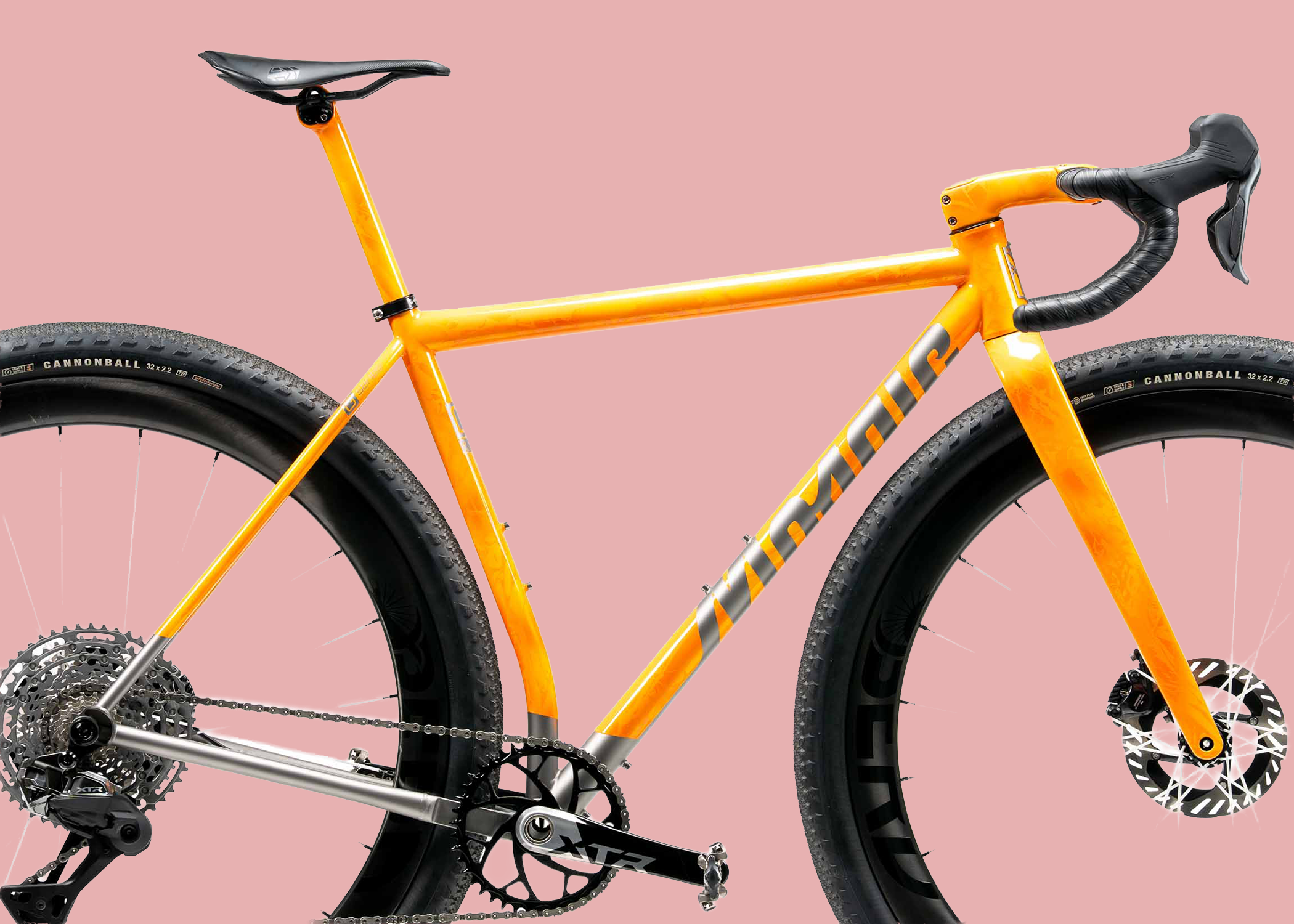
Eight quick hits about the Mosaic GT i55 32:
- 32x55mm of tire clearance.
- Specific Zero Components 32-inch fork, built specifically for the frame with a low 445mm axle-to-crown height.
- Custom 3D printed titanium yoke to provide clearance for 55mm tires and 46t chainrings.
- 148x12mm rear and 110×15 front axle standard to balance the unique structural demands of larger wheels.
- 440-445mm chainstays and offset seat tube to provide a tight rear triangle with a reasonably effective seat tube angle.
- Compatible with major gravel groupsets with standard bottom bracket spacing and chain offset.
- Available now through Mosaic’s Made to Order program, which means all bikes will have custom geometry to accommodate flexibility across sizes.
- The bike will later be added to the Batch Built program, with set sizes and more affordable pricing.
- You can learn more about the GT i55 32 on Mosaic’s website.
Why is axle-to-crown so important?
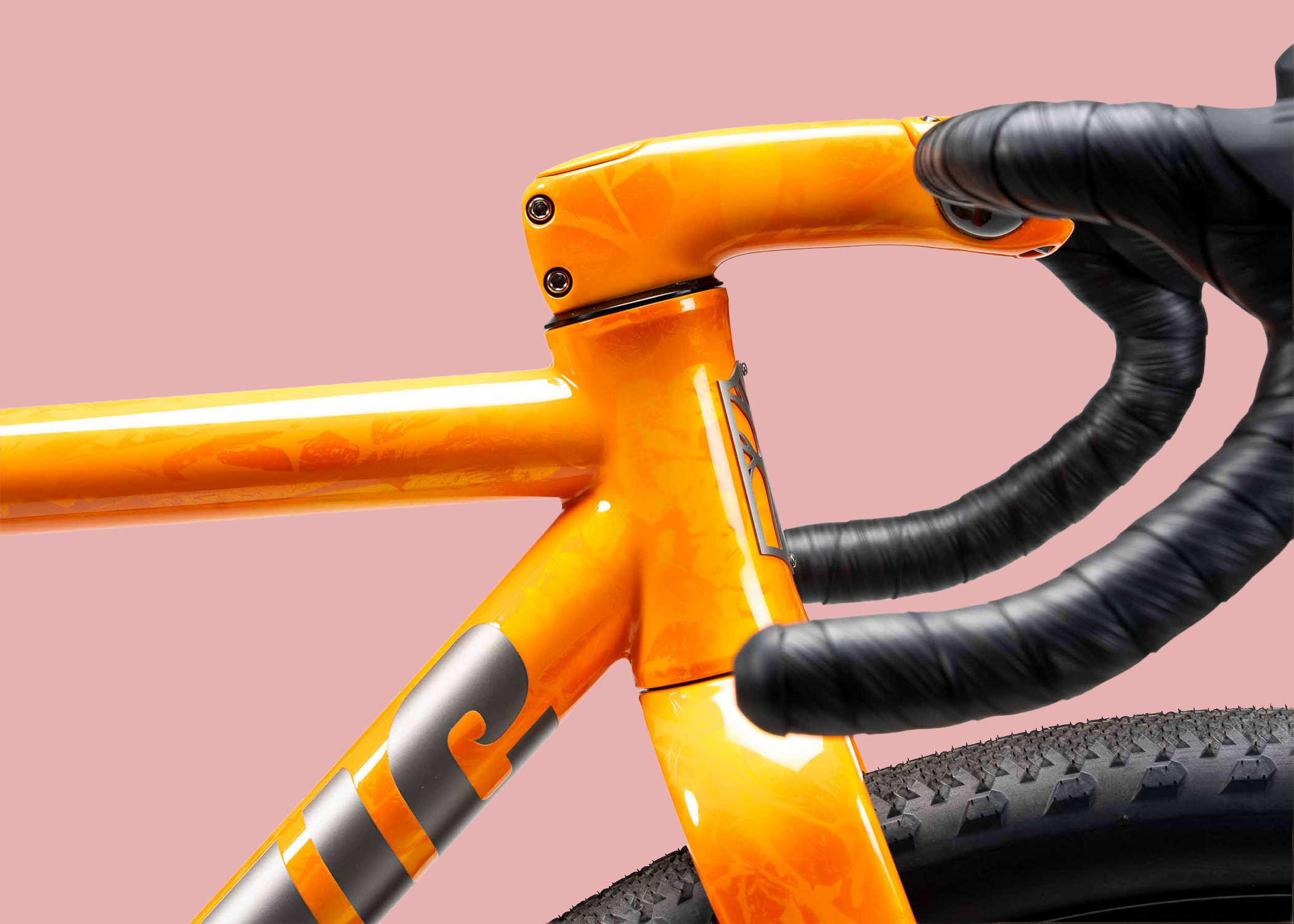
In presenting the bike, Mosaic makes it abundantly clear how important the fork is to the bike. “Perhaps the biggest challenge wasn’t the frame,” the press release detailing the new bike read. “It was the fork.”
For many companies, the number-one aspect holding back 32-inch bikes is good carbon fork options. While metal frames can be developed and produced very quickly, especially in the prototype phase, they all rely on carbon forks to feel complete. In 2026, it is very rare to see custom bikes without carbon forks because it is quite simply a massive improvement to the overall feel and function of a bike.
Especially with the added material needed in 32-inch bikes, it is hard to develop a valid prototype with a metal fork. So, experimental metal builders have turned to the next best thing: rigid 29-inch mountain bike forks. The crux of the issue, as I learned when riding one of these bikes earlier in the year, is that the front end is just way too high to feel natural for a gravel position. Even for me, as a six-foot-tall rider who likes an upright position, it was several inches higher than I would normally be.
Unlike 29-inch mountain bikes that can use these very high axle-to-crown forks and feel reasonably aggressive, 32-inch bikes also require a large amount of bottom bracket drop to compensate for the big wheels. This means a high axle-to-crown measurement feels even higher since the bottom bracket is significantly lower than the axle, especially compared to mountain bikes that the fork is designed around.
It is very hard to exaggerate just how limiting that geometric challenge is. There just isn’t enough headtube to get rid of to adjust the bike to feel close to what is a familiar bike fit and handling characteristics. There are still gains to be had—a 10% boost in off-road rolling resistance is typically what is cited as the gains from 32-inch bikes—but that 10% is easily wiped away by the aerodynamic losses of a taller front end.
To get a sense of how a race-capable 32-inch gravel bike would play, Mosaic felt it was imperative to first source a fork that could actually work through this problem.
Keeping dimensions within reason, while offering only custom geometry
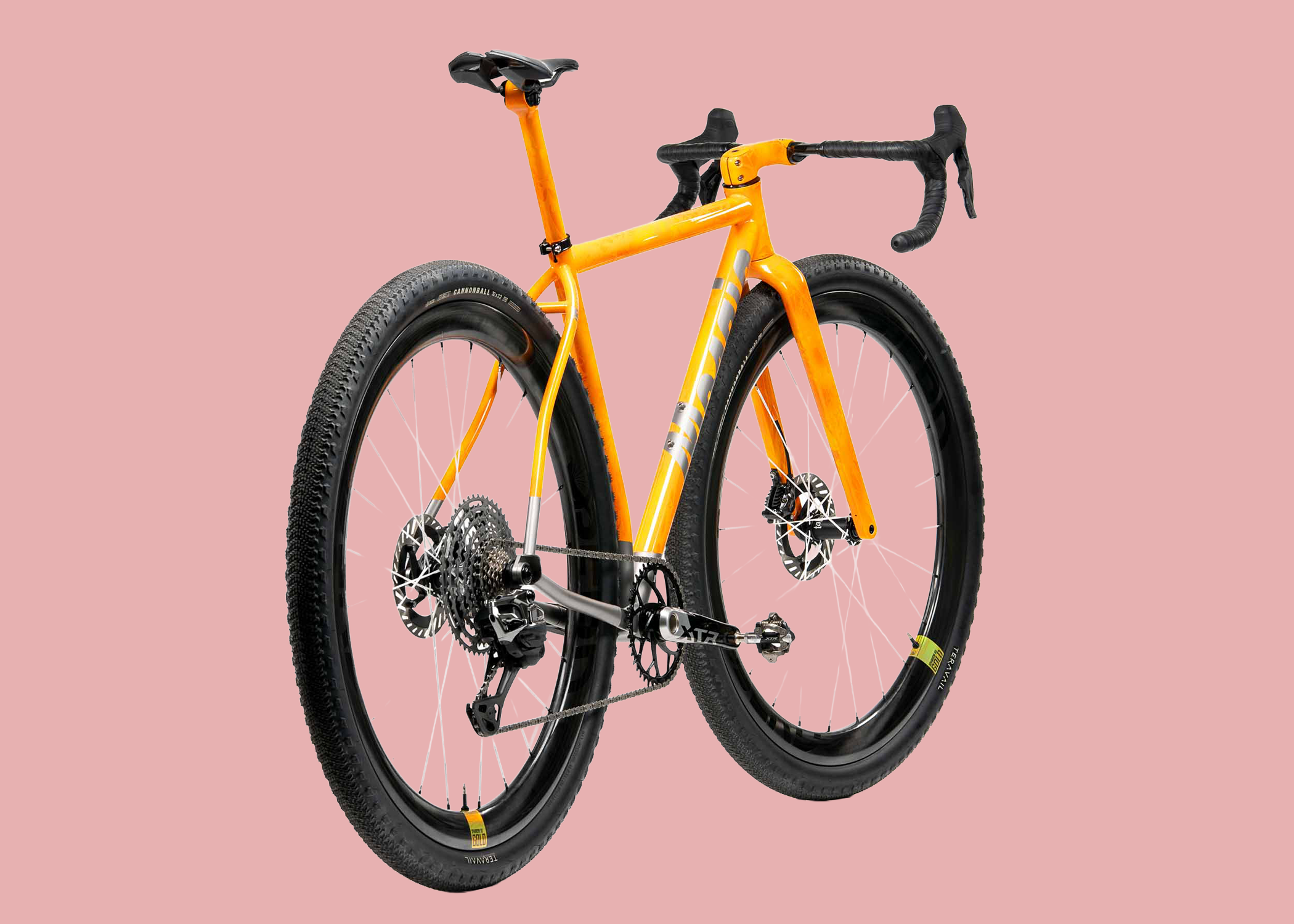
One aspect of this bike that does make it tricky to digest at first blush is that the GT i55 32 will be highly customizable. Beyond the axle-to-crown and chainstay length range, we don’t know what many of the specs of the bike are because it is only available in custom geometry. Aspects like weight, general geometry, and build options are all case-by-case.
At this point in the 32-wheel arc, that seems to be a benefit for two big reasons. First, few aspects of 32-geometry have calcified, especially with smaller sizes. Second, it is deeply woven into Mosaic’s nature to offer custom builds, and changing that now would be strange given the known-unknows of 32-inch bikes.
Nevertheless, it is difficult to break down the bike at this point beyond the broad strokes that Mosaic has committed to. Namely, a tight rear triangle, a low axle-to-crown, generous tire and chainring clearance, and aspects like bottom bracket, headset, and axle standards. In these regards, Mosaic has checked many of the boxes that have been open questions in the world of 32-inch gravel.
The capacity for 55mm tires and a 46t chainring, in particular, catches the eye as those are quickly becoming non-negotiables in gravel racing. While it is true that most riders will be content with 32-40t chainrings and 50mm tires for gravel, racing often demands much more speed and tire volume. These two features are a massive win for the bike. Without them, the benefits of 32-inch bikes might not be worth the loss of speed and efficiency from smaller tires and chainrings; they are that important to the overall equation of gravel speed.
Build options and pricing
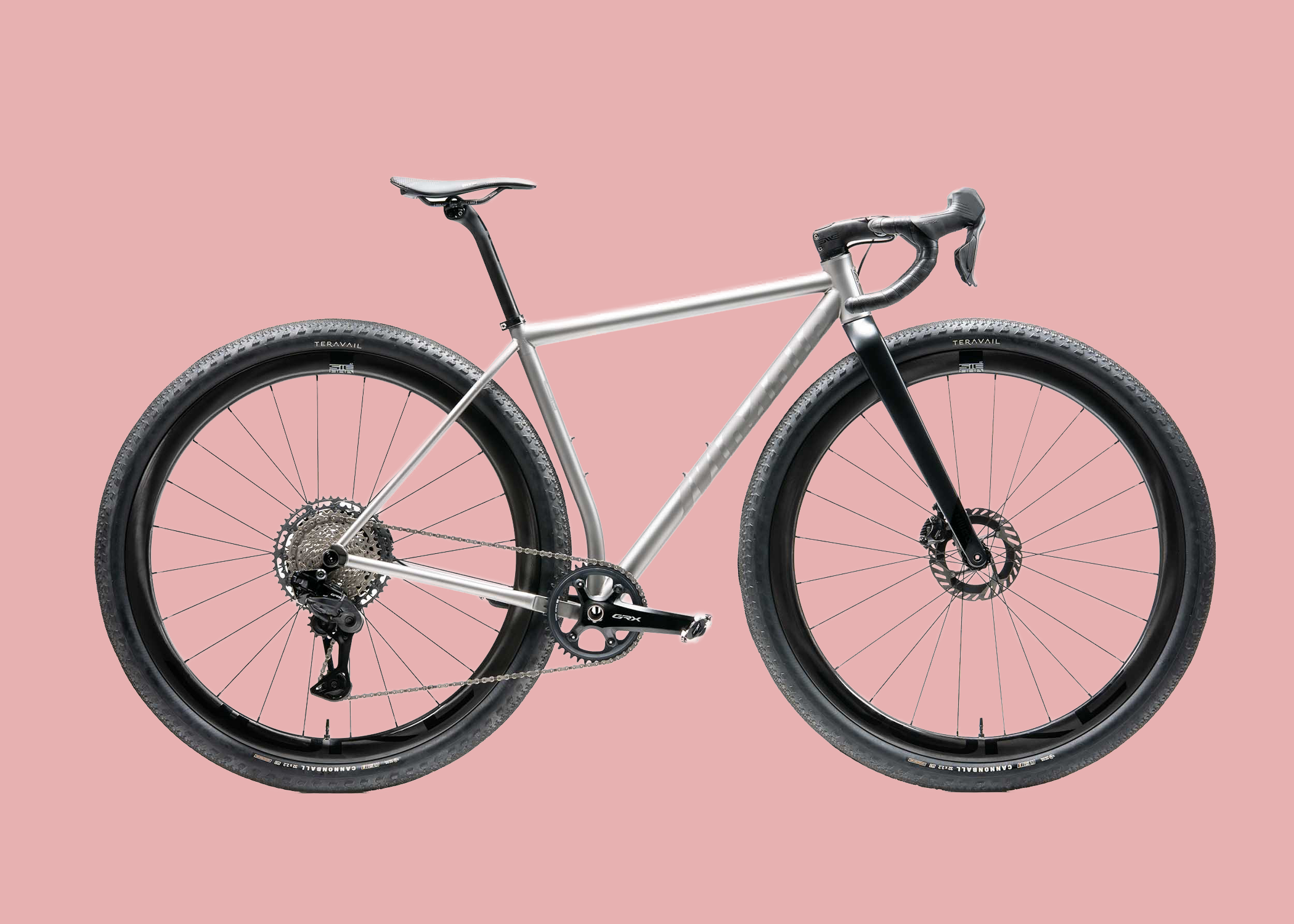
Although the geometry and build options of the bike are currently custom only, Mosaic has specified the bike will be available in two levels: the GT-1 i55 32 and the GT-2 i55 32. The GT-1 will be the premium spec, with internal routing, a T47 bottom bracket, and a collection of color layouts. The GT-2 will be more value-oriented, with semi-integrated routing, a T68 bottom bracket, and a standard naked titanium finish.
| Builds | GT-2 i55 32 | GT-1 i55 32 |
| Head Tube | IS52 | IS52 |
| Bottom Bracket | T68 | T47 |
| Brake Routing | Semi-integrated via Cane Creek HCR | Fully internal |
| Geometry | Ride-specific custom | Rider-specific custom |
| Finish | Titanium Ghost Finish | Mosaic standard paint layouts |
| Starting Price | $5,000 | $8,250 |
We will be digging into the Mosaic GT i55 32 in much more detail when it debuts at MADE this week in Portland. Additionally, we will have the GT i55 32 in for extensive testing this fall. Expect a comprehensive and wide-ranging review, as we continue to digest the strengths and weaknesses of 32-inch bikes.
[analyse_source url=”https://velo.outsideonline.com/gravel/gravel-gear/mosaic-fixes-32-inch-gravel/”]