[analyse_image type=”featured” src=”https://velo-cdn.outsideonline.com/wp-content/uploads/2026/08/pog-now-vs-then.jpg”]
Tadej Pogačar will return to the Vuelta a España this summer almost unrecognizable from the baby-faced unknown who showed up to the Spanish tour in 2019.
Physically, mentally, physiologically – Pogačar fully transformed in the seven years between his explosive grand tour debut and his long-awaited return to the race where it all began.
He’s stronger, leaner and fitter.
The puppy fat has been trimmed from his once-rounded cheeks.
He pedals differently, eats differently, and trains differently.
He traded his penchant for pizza and PlayStation with a steady diet of heat training, strength work, and extra VO2 Max intervals.
Only the off-beat humor and occasional hair tuft remain from the Pogačar who delivered one of the greatest grand tour debuts in recent history in 2019.
A new era of dominance began seven years ago when a 20-year-old Slovenian kid stunned the cycling world with three stage wins, the young rider’s jersey, and a third-place finish on GC.
Pogačar: A career through the high-speed evolution of pro cycling
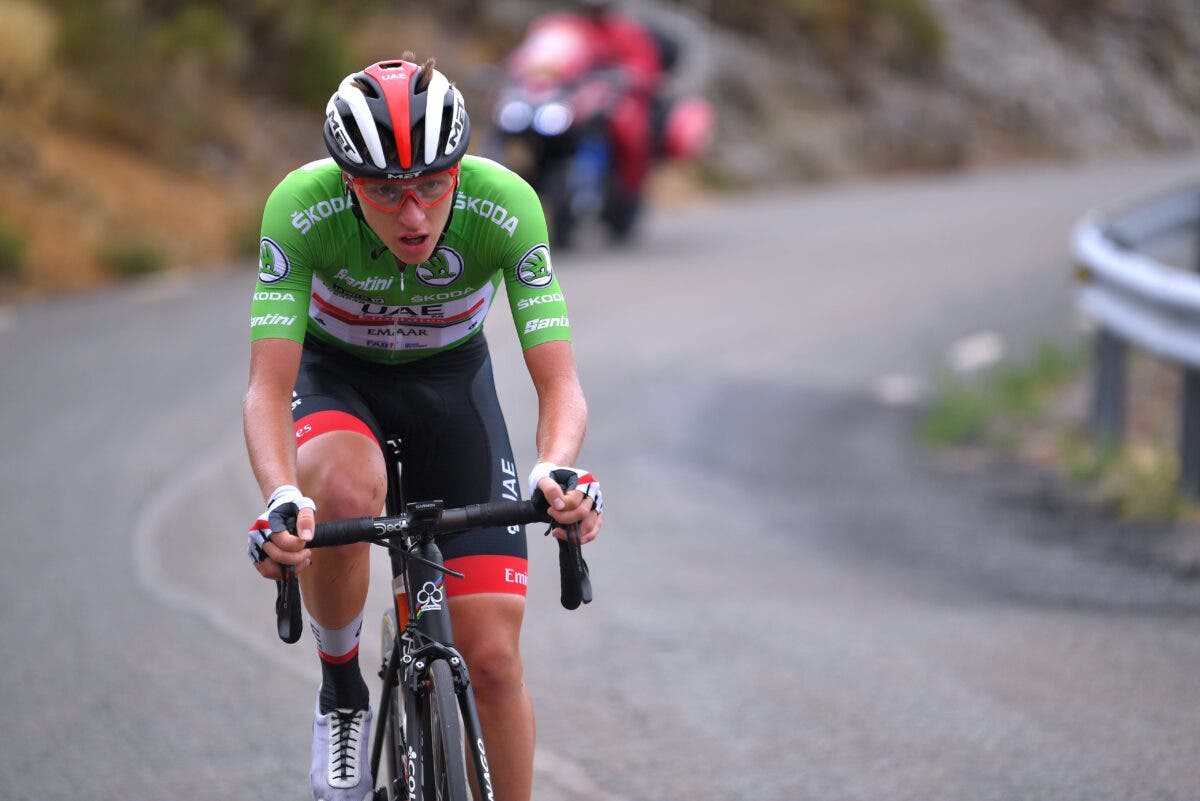
Comparing Pogačar v.2019 to Pogačar v.2026 is like writing a case study on the evolution of pro cycling.
The sport became a different game during his journey from a rogue wunderkind who just won the Tour of California to a cycling GOAT who just won a fifth Tour de France.
The COVID lockdown of 2020 and the years directly after it were a key tipping point in the high-speed evolution of the sport.
High-carb fuelling was becoming commonplace.
Year-round heat and strength training was being pushed as “a thing.”
Rim brakes, specific “climbing bikes,” and default 175mm cranks were battling to survive a slow extinction.
Meanwhile, an influx of sponsorship dollars kick-started a super-team era of hyper-professionalization.
Pogačar directly benefited from everything that drove this transformation.
His progression through the cycling hierarchy follows the same trendline as the steady increases in racing speeds, power-to-weight ratios, and climbing performances.
When layered atop a freakish capacity for recovery, they made him a winning machine with a peerless VO2 Max and an insane FTP.
Before we dive in and illustrate the evolution of Pog, here’s a fun side-by-side comparison.
It helps contextualize how much Pogačar, and the sport, have changed.
Tadej Pogačar at the Vuelta a España: Then and now
| 2019 Vuelta debut | 2026 Vuelta return | |
| Team | UAE Team Emirates | UAE Emirates-XRG |
| Age | 20 | 27 |
| WorldTour experience | Eight months | Seven years, eight months |
| Palmarès | Stage win + GC at Volta ao Algarve Stage win + GC at Tour of California |
Six grand tour victories Two world titles 13 monument victories |
| Est. annual earnings | €70k salary | €8 million salary + c.€5m personal partnerships, merch, and prize money |
| Est. annual team budget | c.€30m | €60m+ |
| Key members of team roster | Fabio Aru, Dan Martin, Alexander Kristoff | Isaac del Toro, Joao Almeida, Brandon McNulty |
| Go-to team bike | Colnago V2RS | Colnago Y1RS |
| Bonus: Roglič Vuelta wins | Zero: His first came that year. | 4 |
From boy to man
First, the most obvious thing to point out.
Pogačar showed up at the 2019 Vuelta a España as a genetically freakish raw diamond.
The Pogačar who was scouted from the depths of conti-level Slovenian cycling was just a college-age kid doing college kid things. He wasn’t blitzing altitude camps and tracking calories like Paul Seixas was doing before he rose to fame in 2025.
Pogačar’s teammate Domen Novak explained it brilliantly earlier this year.
“As far as I know, Tadej didn’t do any altitude training in those years when he was racing for the Gusto Ljubljana team,” Novak told Siol. “I can say that he won his first Tour while eating pizza, drinking beer and playing PlayStation.”
You can see it in his face – Pogačar was a supertalent, not a sportsman.
The coaches
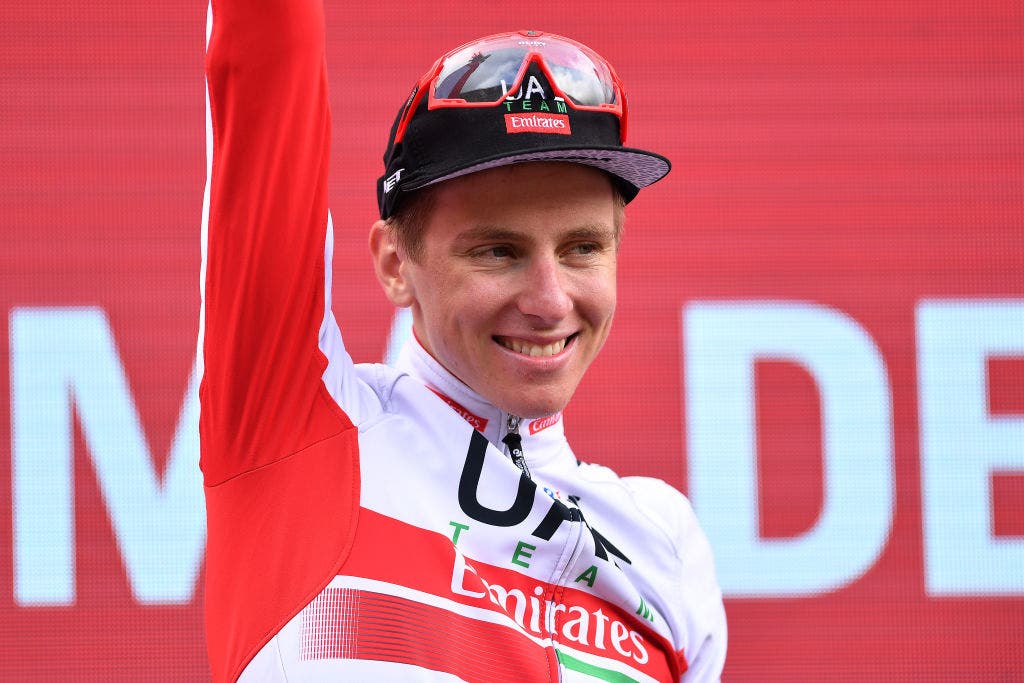
Former UAE Emirates performance director Íñigo San Millán turned Pogačar from boy wonder to Tour de France winner when he first arrived at the team.
“I met Tadej at the end of 2018,” San Millán said after Pogačar won the 2020 Tour. “At that moment, I realized what he was: a boy with incredible physiological parameters coupled with mental qualities reminiscent of Indurain.”
San Millán’s role in mentoring and training baby Pogi was huge.
He and former UAE director Allan Peiper were the masterminds behind his early rise.
But it was Javier Sola who turned Pogačar into the rider he is now – an athletic anomaly who hangs with Mathieu van der Poel on the cobbles and crushes climbing records in the Alps.
The Sola effect
Pogačar transitioned from San Millán to Sola for the start of 2024.
After a second straight humiliating defeat to Jonas Vingegaard at the Tour, Pogačar needed something new.
What came next pushed him to GOAT status.
Sola rejigged the focus on Pogačar’s training program and turned up the dials on heat training, strength work, torque sessions, and high-intensity intervals.
Simultaneously, Pogačar and his entourage decided to downsize to the 165mm crank length he favors now.
The overhaul worked, fast.
In 2024, Pogačar became the first to win the triple crown of Giro d’Italia-Tour de France-road world championships since Stephen Roche in 1987.
He’s been unstoppable ever since.
Key changes since 2019:
1. Heat training
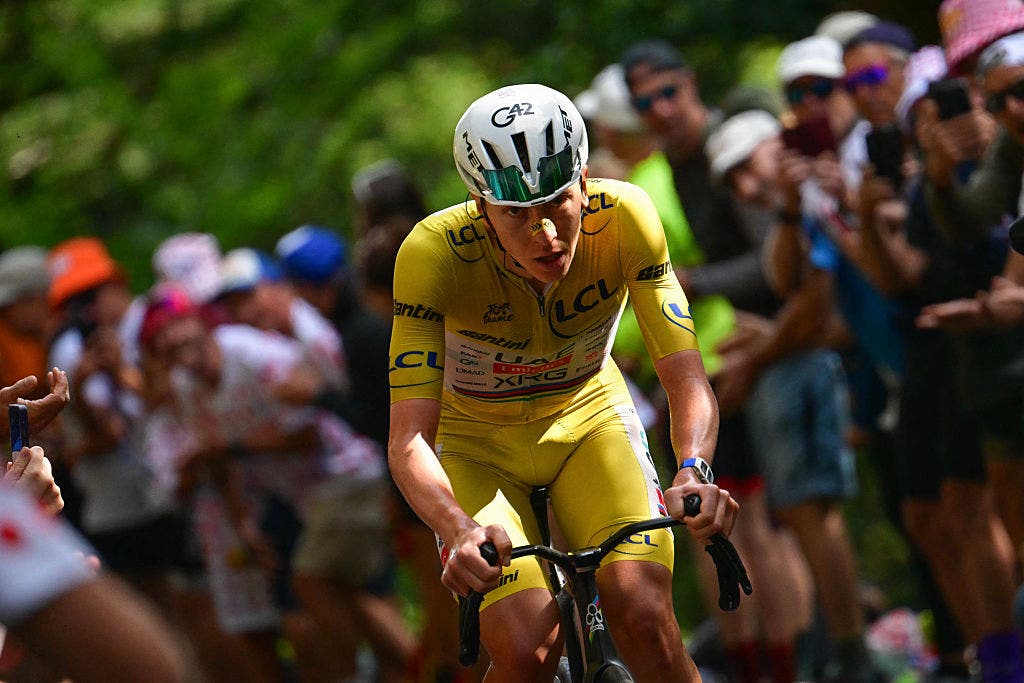
Pogačar’s grand tour debut at the 2019 Vuelta announced him onto the world stage. It also illustrated that he thrives when the weather goes foul, and that heat and humidity were his kryptonite.
It was a flaw that F’d him twice at the Tour de France.
He overheated, blew up, and melted away under the pressure of two Jumbo-Visma onlaughts on the Col du Granon in 2022 and the Col de la Loze in 2023.
When Sola came in at the start of 2024, so did specific heat training. “Passive” and “active” heat sessions protected Pogačar from mid-summer heatwaves and boosted his blood markers.
They were worth the sweat.
Pogačar was untouched by the brutal heat wave that swept through the first half of the recent Tour de France.
He even specifically cited his climate-tuned engine as fundamental to his modern dominance during a press conference at this summer’s Tour de France.
“My body temperature is simply lower at this Tour de France than it was in 2022 or in the Tours before that,” he said. “There is more focus now.”
The second thing Pogačar highlighted when he was asked how he became such a winning machine?
Nutrition.
2. Nutrition
The carbohydrate revolution is cited as one of the most important factors behind the high-speed evolution of the sport.
The wave of new gel and drink formulations that crept into endurance sport at the turn of this decade protected riders from the bonk without them risking their guts.
Pogačar described with characteristic charm how he benefited from modern-era sport nutrition when he spoke with Peter Attia on the Drive podcast in late 2024.
“Five years ago, [eating] 120 grams of carbs per hour was impossible,” he said. “Five years ago, I would always go shit my pants after the stage races or long races. And now, even eating 120 grams, no stomach problems.”
It’s unknown how Pogačar fuelled in 2019.
However, the norm was still south of 100 grams of carbohydrate per hour in the pre-pandemic, lower-carb era.
He’s now known to eat upward of 130 grams per hour in the hardest grand tour stages and in the cobblestone classics.
After devastating bonks on the Col du Granon and Col de la Loze, he’s barely had a hunger flat since.
3. Strength training and cobblestones
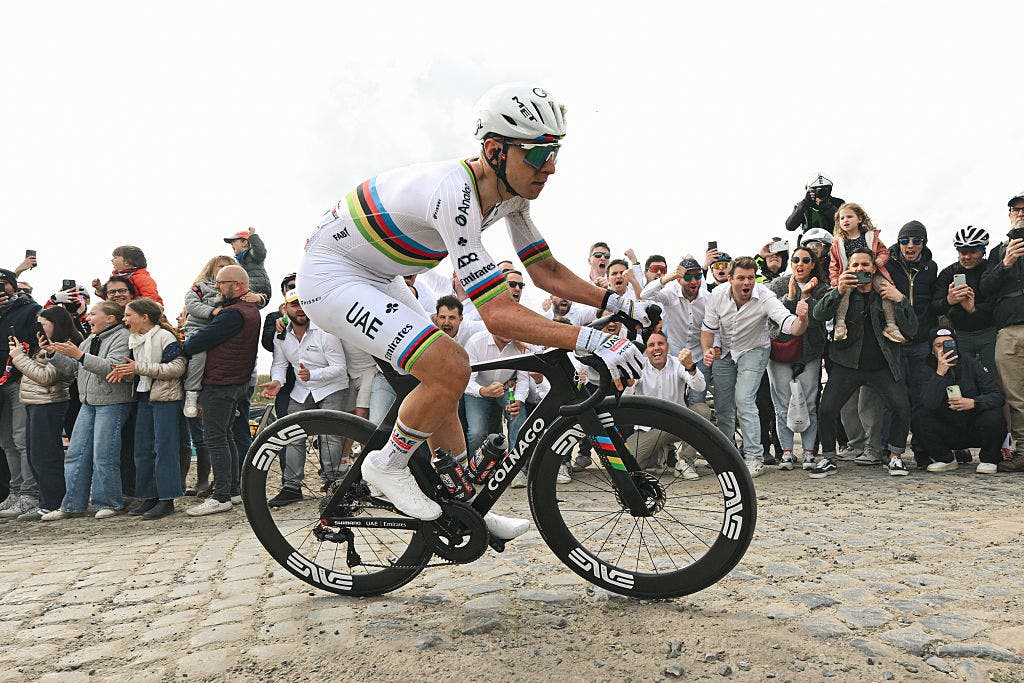
Pogačar had never come close to a Flandrien cobblestone when he showed up to the Vuelta a España in 2019.
He’ll line up for stage 1 in Monaco next weekend with three Tour of Flanders victories and two second-place finishes at Paris-Roubaix on his resume.
Pogačar’s embrace of the northern classics from 2023 onward led to two key change in his performance program – more strength training, and a little strategic bulking.
Pogačar gained durability and explosive power when he started working in the pain cave of VIP personal trainer Alexandre Bacilli.
He drilled his core so he could crank outrageous high-cadence seated attacks on the bergs of Flanders.
He grew muscle in the weight room and improved his torque on the bike so he could hang with Van der Poel and Wout van Aert over the final sectors of Roubaix.
The S&C also gave him the strength and flexibility to hold a better position over his TT bike, for longer.
Pogačar will show up to the Vuelta a few kilos short of his cobblestone weight. We explored here how he bulks for the spring and cuts for the summer.
However, it’s clear that much of the benefit of his strength regimen remains when Pogačar is at his climbing weight.
Unlike seven years ago, he won’t need to wait for the Vuelta a España to point uphill before he starts winning.
Pogačar was a climber in 2019. He’s an all-terrain monster in 2026.
4. Smaller cranks
Pogačar was riding 172.5mm cranks at the 2019 Vuelta a España.
He’ll twiddle around the 2026 Vuelta a España on spindly 165mm micro cranks.
Pogačar and his entourage’s decision to downsize in 2024 was a key step in The Evolution of Pog.
When combined with his new dedication to the gym, a switch to shorter cranks improved his position on the bike, his torque through the pedals, and his overall cadence.
The results were immediate, and incendiary.
Some of Pogačar’s most vicious attacks in recent seasons have been while seated and spinning at 110rpm. They’re ruthlessly efficient on slick cobbles. On grippy tarmac, they allow him headroom for a second kick by standing in the pedals.
Pogačar the modern winning machine
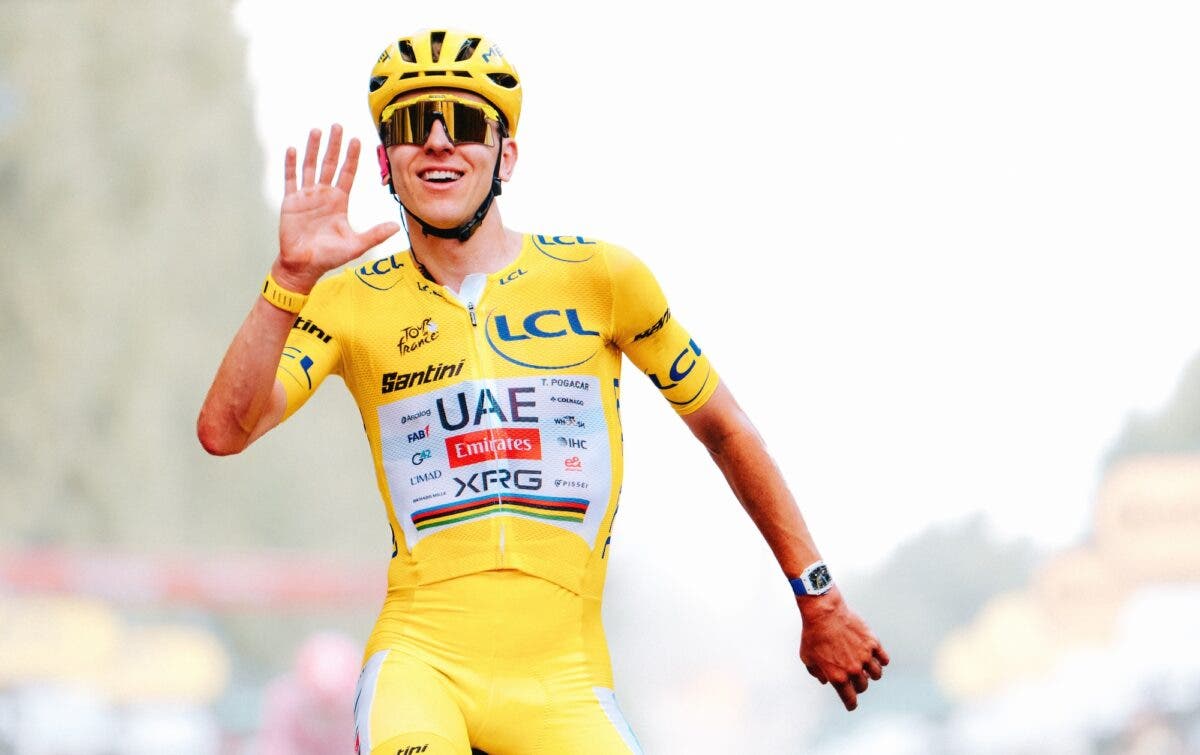
Of course, the above doesn’t capture it all. Sadly, we’re no fly-on-the-wall.
However, Pogačar and team UAE have repeatedly cited nutrition, heat, strength, and bike fit as fundamental to the rider’s evolution from Slovenian boy wonder to superstar world-beater.
And to point out the obvious – the 27-year-old Pogačar is seven years wiser than the hotly tipped 20-year-old who showed up to the gran salida in 2019.
“Tadej has very big potential,” UAE Emirates-XRG team manager Mauro Gianetti said at the start of the 2019 Vuelta. “He has the full package. He has big promise in the grand tours.”
Gianetti was extremely correct.
Buckle up for the older, wiser, stronger, leaner Pogačar to obliterate the 2026 Vuelta a España.
[analyse_source url=”https://velo.outsideonline.com/road/road-racing/vuelta-a-espana/tadej-pogacar-2019-vs-2026-vuelta-espana/”]