[analyse_image type=”featured” src=”https://velo-cdn.outsideonline.com/wp-content/uploads/2026/08/EG2_4197-2376794.jpg”]
Everyone loves to brag about their Functional Threshold Power (FTP), the highest sustained power output a cyclist can hold for an hour. Remember, your FTP is your friend’s FTP + 10 watts. But when you start comparing yourself to the pros, you can be quickly humbled.
Most professional cyclists have an FTP that starts with the number 4, and there have perhaps been a few riders in history whose FTP started with the number 5. But when we’re talking about the best cyclists in the world, that range is narrowed down to about 450w.
Heavyweights like Mathieu van der Poel, Wout van Aert, and Mads Pedersen can push 300-400w for hours. That makes more sense because they weigh 75-80 kg, so their w/kg isn’t completely off the charts. But then you start considering riders like Jonas Vingegaard, Remco Evenepoel, and Paul Seixas who weigh 60-63 kg. An FTP of 450w would be well over 7w/kg at their weights, something we think is not humanly possible.
Then there is Tadej Pogačar. He is a special rider in so many ways, but it all comes back to his pure strength on the bike. In this article, we’re going to lay out the best riders’ FTPs, and explain why this can be a strength or a weakness for each rider.
Tadej Pogačar | Estimated FTP: 450w
There is no doubt that Tadej Pogačar has the highest FTP in w/kg of any rider in cycling history. Some riders may have more raw power, but none of them weigh less than 70kg. Not only is Pogačar lighter than that, he is closer to 65kg at his ideal race weight. That makes for an FTP of 6.9w/kg, an unfathomable amount of power that most amateurs would be happy to hold for just a few minutes.
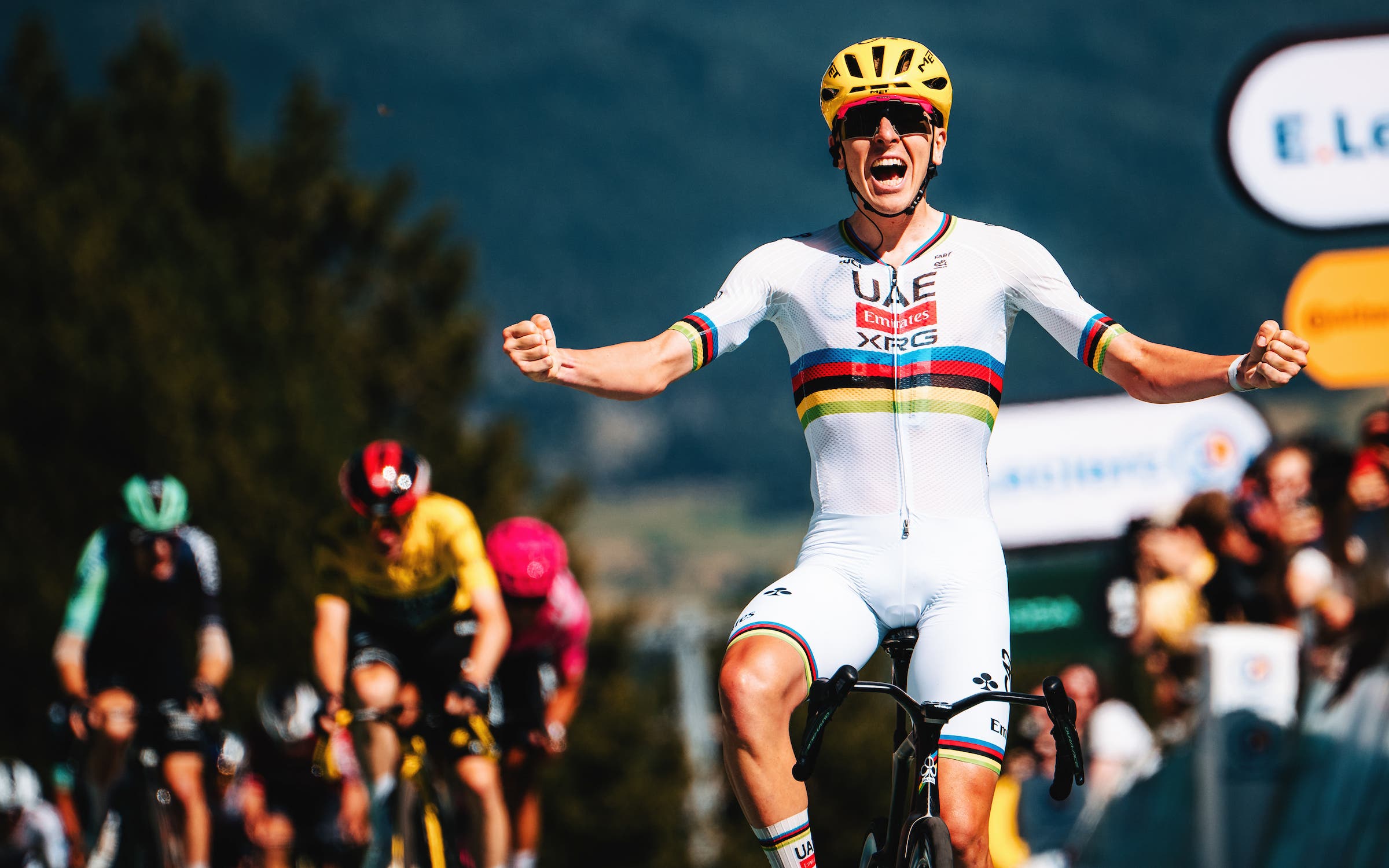
This makes sense with Pogačar’s top-level climbing performances, both on Plateau de Beille in 2024, and on Alpe d’Huez in 2026. On each occasion, Pogačar pushed 6.9-7w/kg for 35-40 minutes at the end of a multi-hour stage in the third week of the Tour de France. It’s safe to assume he had at least a little bit of fatigue in his legs, so his fresh numbers could be even higher.
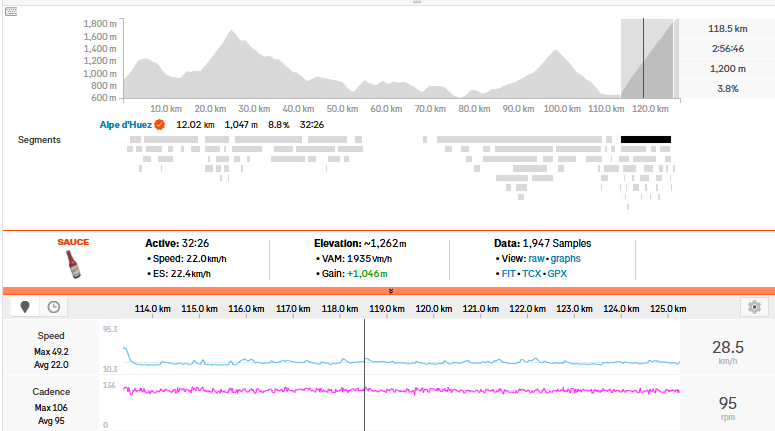
Pogačar – Alpe d’Huez Climbing Record
- Time: 35:27
- Estimated Power: ~6.9w/kg
Pogačar’s biggest advantage over his number-one grand tour rival, Jonas Vingegaard, is raw power. While the Dane’s FTP is awfully close to Pogačar’s, the Slovenian has an estimated wattage advantage of 50w.
Jonas Vingegaard | Estimated FTP: 410w
The two-time Tour de France winner has posted multiple climbing performances at more than 6.5w/kg for 30 minutes or more. On the day that Pogačar won on Plateau de Beille, Vingegaard did his best numbers ever, pushing 6.8w/kg for over 40 minutes at the end of a five-hour, 198km stage. With an estimated FTP of 410w, that puts Vingegaard at 6.8w/kg FTP assuming a race weight of 60 kg. There have been rumors that Vingegaard has gained a few kilos in 2026, a deliberate attempt to close the wattage gap to Pogačar.
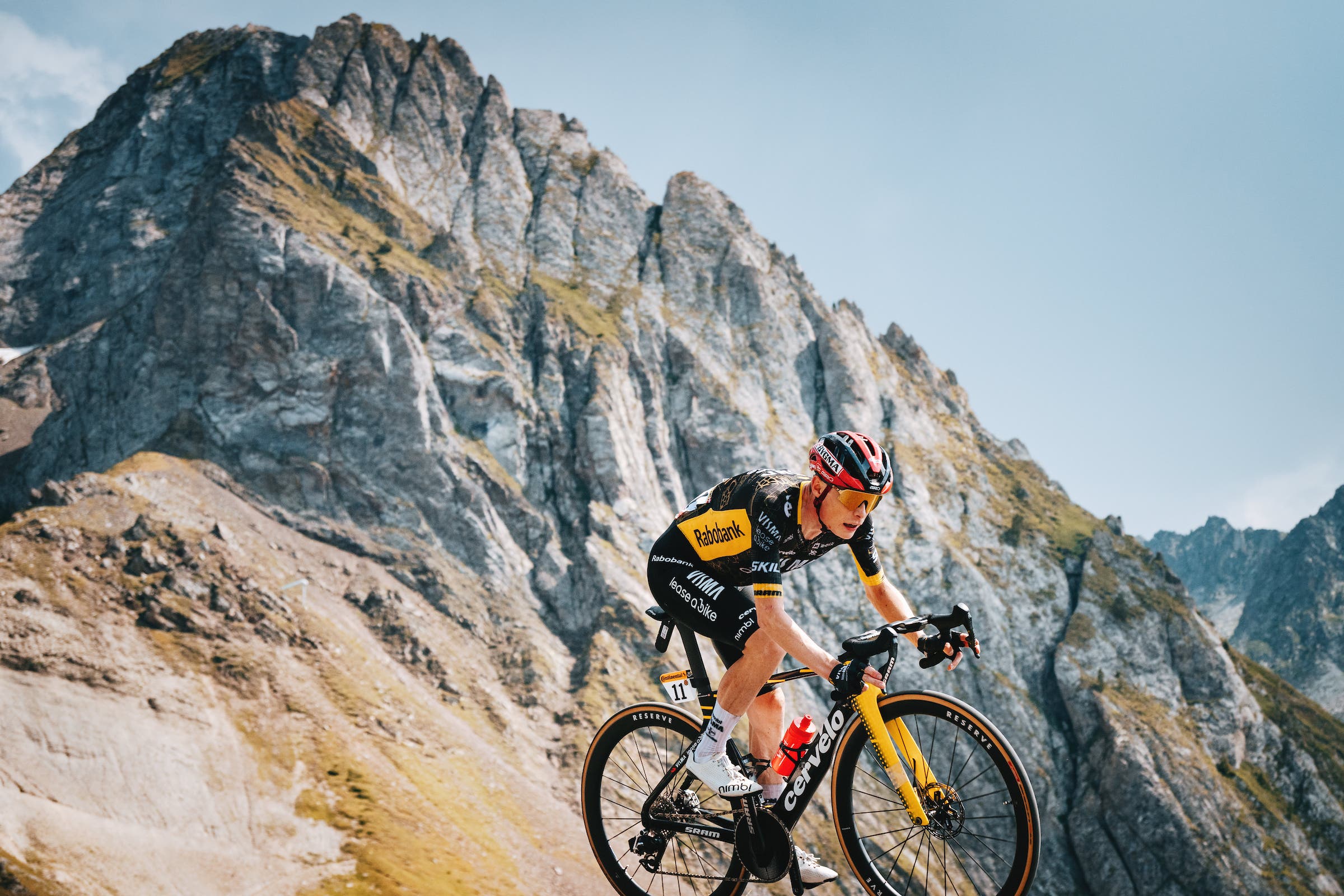
On the steepest climbs, Vingegaard is clearly the second-best climber in the world behind Pogačar. The Dane can drop Evenepoel, Paul Seixas, Florian Lipowitz, and Isaac Del Toro on 10% grades, but things change as the gradient lessens. This discrepancy was on full display in stage 6 of this year’s Tour de France where Pogačar dropped Vingegaard on the Col du Tourmalet. The Dane was only 30 seconds behind at the top of the Tourmalet, but that gap grew to nearly three minutes on the gradual climb to Gavarnie-Gèdre which averaged 3.7%.
You could try to argue that Vingegaard blew up, and that’s why the gap expanded. But Vingegaard was actually flying. After descending alone for 20 kilometers, he held off a chase group that included Evenepoel, Del Toro, Lipowitz, Seixas, Juan Ayuso, and more. For a 60kg rider to hold off a group like that on shallow gradients, Vingegaard must have been pushing 400w.
The raw power discrepancy also hurts Vingegaard on the flats and in time trials. When Pogačar is pushing 550w in crosswinds, he is riding in his VO2 Max zone. But Vingegaard pushing the same raw power is working in his anaerobic zone, an unsustainable effort if only for a few minutes. The best way to close the performance gap on the flat—putting aside the ability to just get stronger—is potential aerodynamic improvements. We’ve seen Vingegaard beat Pogačar in a handful of time trials, many of which included long sections on the flat. This is the secret of double Olympic Champion Remco Evenepoel, a rider who has a lower raw FTP than Pogačar, and a lower w/kg FTP than Vingegaard. Yet, Evenepoel has beaten them on many occasions.
Remco Evenepoel | Estimated FTP: 425w
A video posted to Evenepoel’s YouTube channel earlier this season said his threshold is about 425w. That would be 6.7w/kg at 63kg. However, Remco has said that he lost multiple kilograms between the Classics and the Tour de France. So if his TDF race weight is 63kg, he likely weighed 65-66kg during the January training camp when this video was posted. That gives us an estimated FTP of 6.5w/kg at 65.5kg, well below Vingegaard’s FTP by w/kg.
This is why we see Evenepoel consistently get dropped on the longest and steepest climbs at the Tour. He simply cannot match the w/kg of Pogačar and Vingegaard for 30-60 minutes. But he can hold 6.5-6.7w/kg for an extended period of time, putting him squarely above the rest of the field.
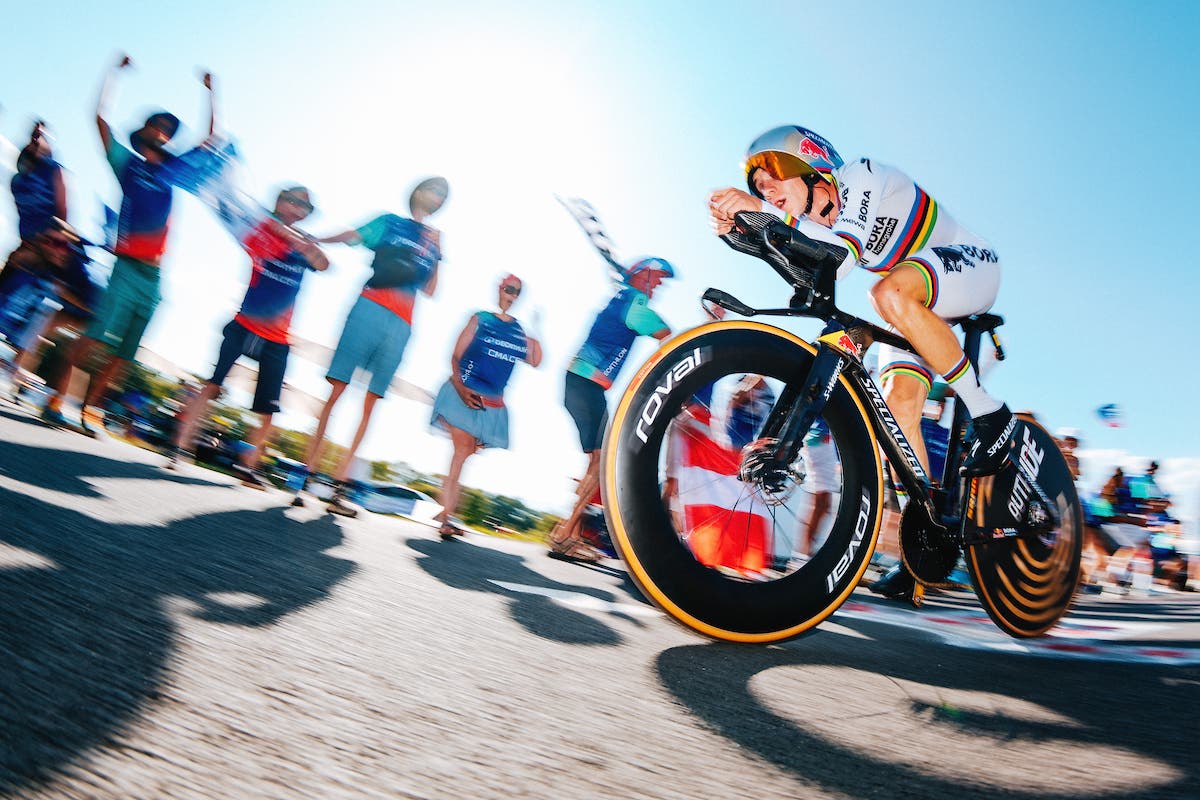
However, Evenepoel’s true ability shines through on the flat, especially on the time trial bike. While he is putting out fewer watts than Pogačar, and even more so compared to TT heavyweights like Filippo Ganna and Josh Tarling, Evenepoel is still the fastest TT rider in the world. He is just that aero, simple as that.
This is the key to Evenepoel’s success in road racing. If he can hang with the strongest riders on the climbs, then he can attack on the flats or downhills and build an insurmountable gap. The only way to beat him at that point is to put out so much power that you can close the gap at 55 kph. There are few riders in the world who can do that, and one of them is Mathieu van der Poel.
Mathieu van der Poel | Estimated FTP: 470w+
Like Pogačar, Mathieu van der Poel used to post his power data on Strava. He even posted the file from his unforgettable win at the 2019 Amstel Gold Race. But in the last few years, MVDP’s power data has been hard to come by. But that all changed earlier this year at the E3 Saxo Classic. Van der Poel attacked from a long way out and was solo for the entire finale, but then it looked like a chase group of four was going to catch him. The group completely floundered, and MVDP rode away to victory, posting a 90-minute power personal best of 446w on his social media. That is 5.7w/kg at 78kg, but like Evenepoel, MVDP’s weight likely fluctuates throughout the year. I have heard numbers as high as 80kg for the flat Classics like Paris-Roubaix, and 75kg for hilly stage races like the Tour de France. Either way, Van der Poel’s FTP is nearly 500w, giving him a massive advantage on flat roads.
Mads Pedersen and Wout van Aert are also in the 450-480w range, and it was actually Pedersen’s coach who was recently quoted with the 450w figure. Van Aert is likely a few kilograms heavier, so his raw power is even higher. This is what put Pedersen, Van Aert, and Van der Poel on a level playing field with Pogačar in the flatter Classics.
Raw power equalizes on flatter roads, especially on the tough and bumpy classics courses of Flanders and Roubaix. Evenepoel can get away with fewer watts on smooth roads because he is much more aerodynamic than Pogačar, Van der Poel, etc. But on the cobblestones of Flanders and Roubaix—where the races are most often decided—it is impossible to ride in the ‘aero bullet’ position.
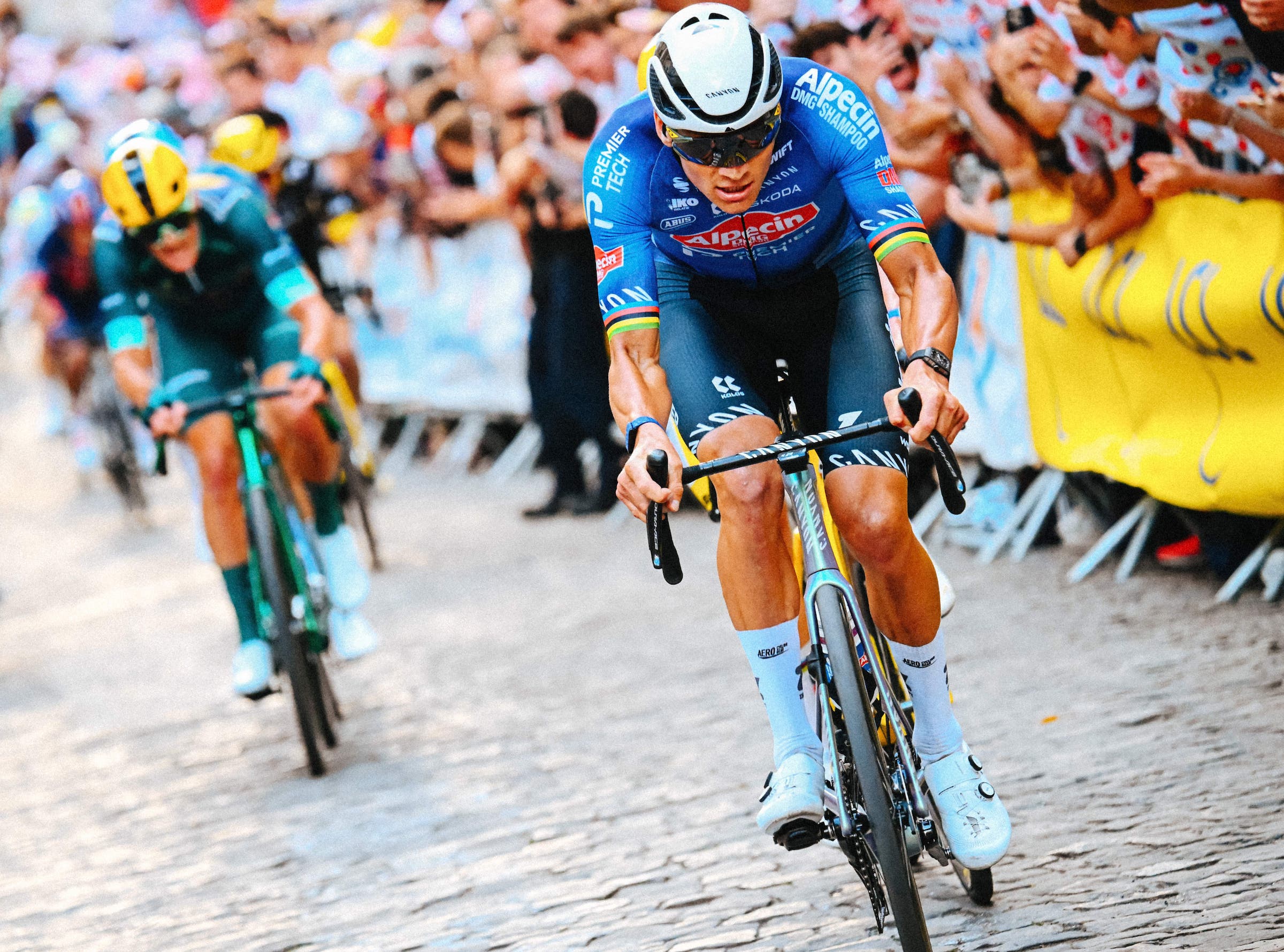
But on high-speed climbs shallower than 5%, 450w is 450w. There isn’t a significant w/kg advantage until you get to the steeper gradients. That’s why it is so difficult for Pogačar to drop Van der Poel at Paris-Roubaix. Both riders can push 550w for three minutes on a cobblestone sector, but it doesn’t matter that Pogačar is doing 8.3w/kg and Van der Poel is only doing 7w/kg. At the same raw power output, they will basically go the same speed.
Isaac del Toro and Paul Seixas | Estimated FTP: unknown
Two of the scariest riders in professional cycling are Isaac del Toro and Paul Seixas. Not because they are the strongest riders in the world, but because they are already among the best at 22 and 19 years old, respectively. Their estimated FTPs are roughly 410w, but that doesn’t really matter because they are improving so rapidly.
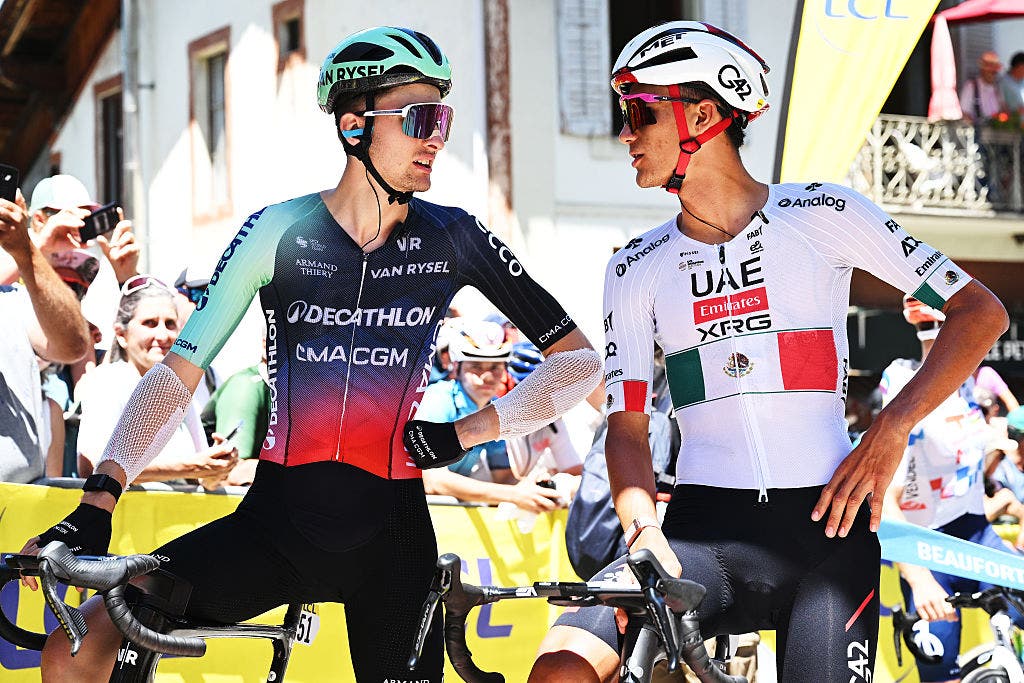
Del Toro wasn’t yet considered among the Top 10 best climbers in the world in 2025. Instead, he was more of a punchy rider with limitless potential. We’re hardly halfway through 2026 and he has already won three WorldTour stage races and finished third at the Tour de France while also winning the white jersey.
Seixas is only a half-step behind Del Toro despite being three years younger. The Frenchman finished second at Strade Bianche and Liège-Bastogne-Liège, clearly the best of the rest behind Tadej Pogačar. After a hard crash and tough lead-in to his first Tour de France, Seixas was fourth in the GC and finished in the top-10 in 10 out of 21 stages. While it’s hard to imagine Pogačar, Vingegaard, and Evenepoel gaining 20 more watts at this point in their careers, the same cannot be said for Del Toro and Seixas who seem to be improving on a monthly basis.
[analyse_source url=”https://velo.outsideonline.com/road/road-training/ftp-best-cyclists-world/”]