[analyse_image type=”featured” src=”https://velo-cdn.outsideonline.com/wp-content/uploads/2026/08/Z8D_9257.jpg”]
“F*** marginal gains,” Allen Lim tells Velo. “And f*** anyone who says that word.”
“The bottom line is marginal gains don’t matter if you don’t take care of the communications bottleneck first.”
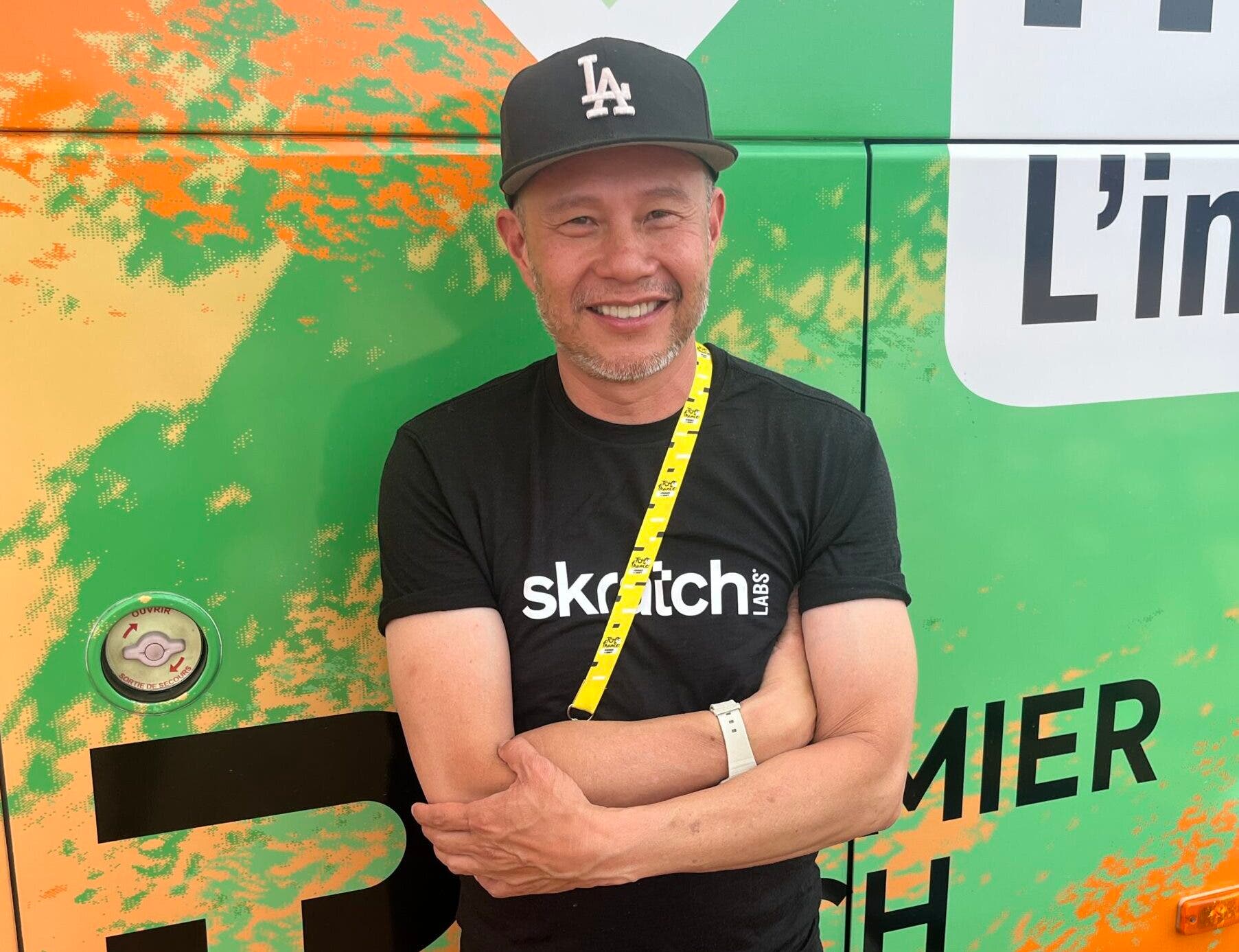
Working on how riders trust and interact with one another is just one of the changes the colorful Boulder-based physiologist has sought to make to St Michel-Preference Home-Auber 93, a French squad in the UCI’s ProTeam second tier, this season.
Having worked with top teams and riders such as Lance Armstrong, Floyd Landis, Tejay van Garderen, Christian Vande Velde and Taylor Phinney in the past, this is taking on a very different challenge.
In his own words: “How do you take the worst team at the Tour de France and, with the smallest budget at that race, actually make them better?”
How Lim landed at St Michel
That is no exaggeration. The long-running squad, based in the Paris outskirts, finished 21st out of the 21 teams in the race’s teams classification 12 months ago.
This squad, backed by a beloved French baked goods brand, and Lim make for an unlikely couple.
The Skratch Labs founder says he got involved through top US cyclocross racer Tim Johnson, who linked him up with the president of the cycling club through a Parisian restaurateur.
“They were lamenting that last year at the Tour de France, St Michel had finished in last place,” Lim says.
“They were struggling with how to make things better with a very limited budget, with only $1.5 million to spend on the team.”
Lim was ”not interested at all” in helping out initially, feeling there was no incentive for him to collaborate with a French team.
However, Lim was, and remains, engaged in helping talented American racers. He feels they lack opportunities in Europe, given what he sees as the “gatekept” entry point to pro cycling, primarily limited to younger European women who can live at home.
He asked if they could combine their sports science and technology expertise with their opportunities in some of the sport’s biggest races.
It was a deal, with Skratch Labs officially coming on board as a major partner and nutrition supplier in February 2026.
The North American connection
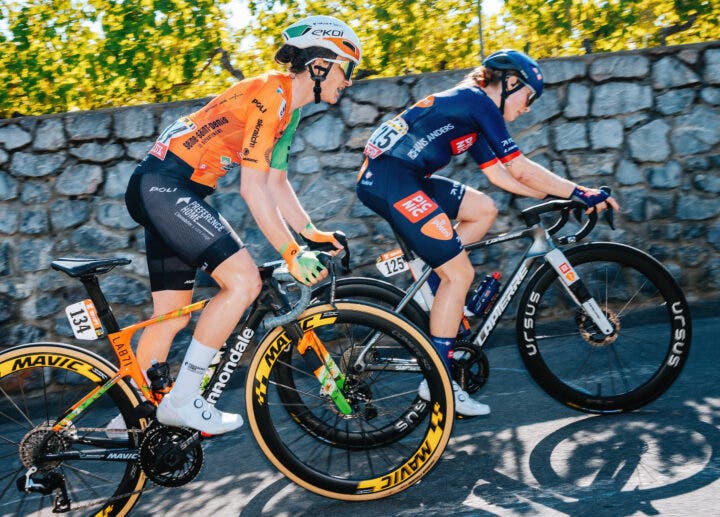
St Michel have been looking west for growth for some years. They have had Cannondale as a bike sponsor for four seasons, with SRAM and Premier Tech on board as partners too.
“We found people who love cycling, who want to invest and who can invest,” team CEO Stéphan Gaudry says. “It’s true that in France and Europe, it’s complicated with the economy currently.”
They have already decided to stop their long-running men’s team at the end of 2026 to focus on the women’s team.
As a by-product of all these trans-Atlantic connections, the roster looks very different. Having had one North American rider in 2025, there are five in 2026, including former Paris-Roubaix winner Alison Jackson, Giro stage winner Clara Emond and climber Heidi Franz – all fueled, hydrated, and optimized for performance by Lim and his Skratch Labs team.
Starting from Skratch
While Lim has worked for top-tier powerhouses like Phonak, Radioshack and Garmin in the past, he has also experienced times when his relationship with the sport was damaged and peppered with trauma.
He finds this challenge a lot more fun.
“Ultimately, I love helping the underdog,” he says. “But I also love innovation and when you get to a level of a bigger team, I think people are less willing to experiment and want to change anything.
“Because they’re already in a situation where things are working.”
Crucially, St Michel management were curious and open to change. “It’s really, really hard on a big team to try new ideas because if you don’t succeed, you blame the new thing. Of course, you blame the outsider, you blame the innovation,” Lim says.
Lessons from Colorado camp
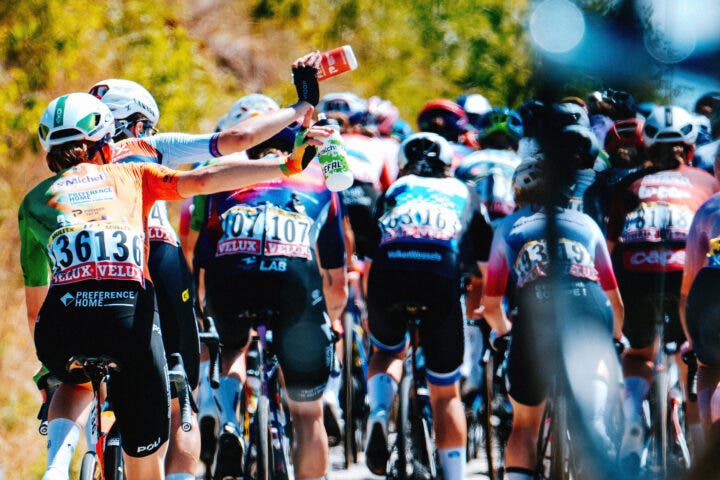
He has not been shy to introduce new ways of working and systems.
A three-week July training camp in Boulder, Colorado was a big shift for a team with predominantly French riders and staff.
Working year-long on hydration and fueling, they were able to do lab testing before and after sessions there.
Lim and his team looked at substrate utilization and the ratio of carbohydrate to fat being burned at different intensities of riding.
They weighed each rider pre-and-post training to work out total body water loss. “It’s not just about how dehydrated you are, it’s whether that dehydration is happening inside or outside the cell,” Lim says.
“And when it comes to performance, it’s the water outside the cell, in your blood stream and plasma volume, which is most important.”
Secrets of the blood
The Skratch Labs staff carried out finger tip blood samples before and after each Tour de France Femmes stage too. A more dilute result means a gain in plasma, a more hemoconcentrated one means they’ve lost plasma, which also damages red blood cells considerably.
Sodium is a key governor of that, so it has led to them exploring individual sodium loss in fueling.
“Replacing sodium in athletes who are losing plasma volume, so that we’re not forcing them to drink more, which could cause hyponotraemia, but we’re making them more thirsty,” Lim says.
“We’re adding more sodium to those athletes who drop in plasma volume, so that they naturally want to drink more. We stay in water balance, electrolyte balance.”
Who needs altitude camps?
They also did work with high-intensity hypoxia using the portable Hepox device.
Essentially, it involves rebreathing into a bag with a CO2 filter, dropping oxygen saturation significantly.
“We saw improvements in hemaglobin mass in all the riders here, significant changes that I believe are better than altitude training or [altitude] tents,” Lim says.
Playing, communicating, and training
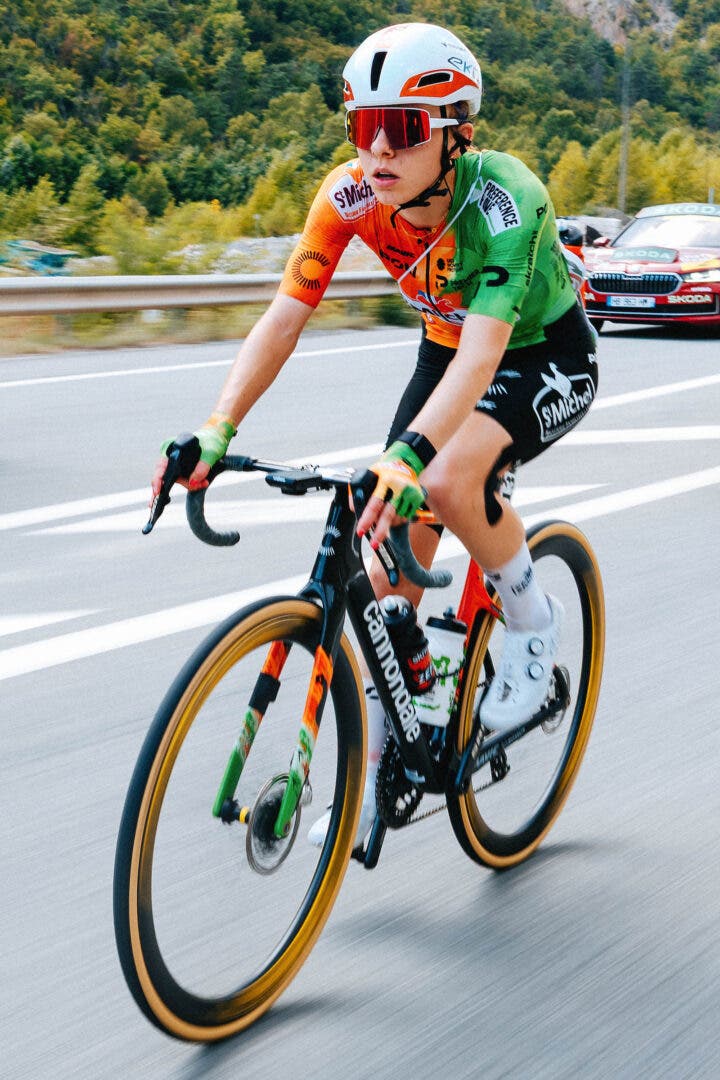
It goes beyond sports science. A simple shift was spending dedicated time training together mid-season, which Lim likens to kicking the ball to each other in soccer.
For the physiologist, the biggest bottle-neck in the sport is communication and learning to trust one another.
“Everybody is getting really good at getting really fit, everybody is optimizing for their power to drag or their power to weight, but as a team, racing a bicycle is still about communication between one another,” Lim says.
In Colorado, they did dynamic race simulation in training, putting in several daily 5 to 10 kilometer races on all kinds of terrain, from the flat to Flagstaff Mountain.
Lim acknowledges that for all the work on better communication, they “probably had to really sacrifice engine building.”
Students, cooks, and cool customers
It did not stop there. Lim was there for the whole team, with a Skratch Labs team including three chefs.
They work on cooking breakfast, pre-ride meals, recovery food, snacks and dinner as well as hydration and recovery drinks.
With the likes of pineapple braised beef, sesame avocado toast, mochi-dusted crispy chicken and pan-seared salmon on the dinner table, St Michel’s riders were kept energized with some novel fare.
Dr Peter Kim and a team of three students from the University of Colorado Boulder were also with the team, experimenting and innovating.
In a Tour of sweltering heat, cooling was another focus. Before the stage 4 TT, riders swallowed ingestible temperature sensors to monitor their core temperature.
Process over results
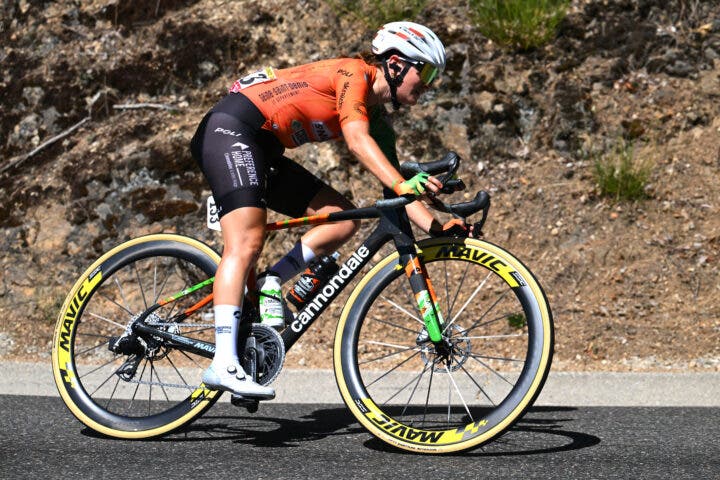
Lim is not a fan of pro cycling’s traditional hierarchy. He has no official title; he simply “tries to go where the help is needed.”
“The other issue with sport and business as a whole is people are so fixated on outcome goals,” he says.
“Did we win or not win? Did we get a jersey, get on the podium or get a result?
“Those results bias process goals. You win and it masks the fact that you got everything wrong with training, nutrition, whatever else. Or you get all of those things right, you lose and think whatever you do isn’t working.”
Lim has gone back to the process of performance, likening getting that right to “card counting,” a technique to help beat the odds and make one’s own luck.
St Michel’s improved Tour performance
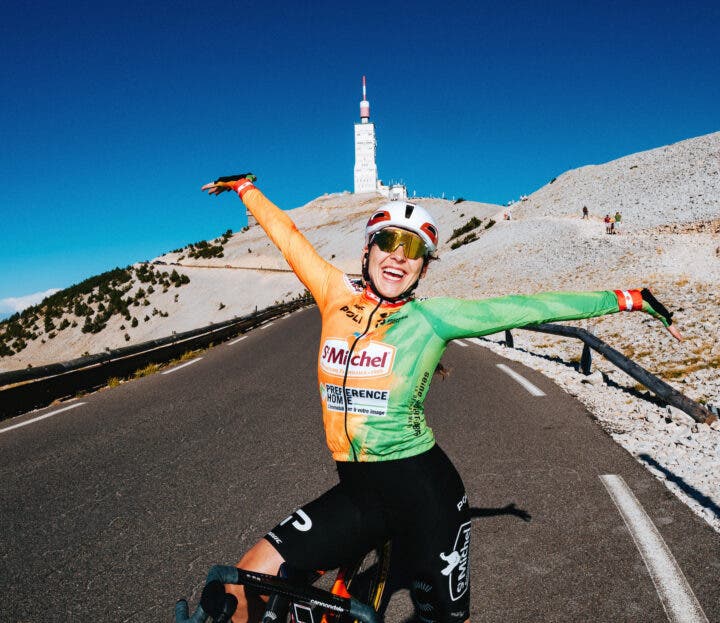
That said, sport is a results business and St Michel-Preference Home-Auber 93 have the aim of being the best UCI ProTeam in the next two years.
So, how did things go for this year?
Better than 2025, for one.
St Michel has been far from the worst team. They finished 15th out of 21 in the teams classification and their best stage result was 14th for Emilie Morier on the final day into Nice, helping her to move to 19th overall.
Alison Jackson joined breakaways as they earned €1,420, three times more than last year – even if three abandons on the final day meant they had two finishers.
It is still a battle to get into escapes let alone fight for the win against richer WorldTour powerhouses.
There is a “Moneyball” part to this endeavor; wealth means less friction.
“If you want to talk about doping and cycling today, doping is called the almighty dollar. Or Euro, or Swiss franc,” Lim says.
Focusing on data and the process
Of course, even if the Tour de France Femmes is the biggest race in women’s pro road racing, this is about a lot more than one event and its results.
For Lim, this is a “long-term investment in these processes that over time will pay off.”
Knowledge – and all the data gained – can be power.
“The process is way more important than the result,” he says. “But – and this is where it is hard, right? If you focus on the way, I think over the long haul, I think you create a culture where success can beat the odds.”
[analyse_source url=”https://velo.outsideonline.com/road/road-racing/tour-de-france-femmes/from-moneyball-sweat-science-allen-lim-transforming-tour-de-france-femmes-worst-team/”]