[analyse_image type=”featured” src=”https://velo-cdn.outsideonline.com/wp-content/uploads/2026/08/Z8B_1436.jpg”]
When Kasia Niewiadoma-Phinney launched with just over 9km to go on Mont Ventoux, we all thought it was too early. Even the most devout Niewiadoma fans would admit they were nervous when the Canyon-SRAM rider attacked on stage 7 of the Tour de France Femmes avec Zwift. She had just accelerated off the pace of Demi Vollering, the current European champion and former Tour winner. The only other rider in the group was Marlen Reusser, the time trial world champion and current yellow jersey racing with the best legs of her life.
Before today, Niewiadoma hadn’t won a stage of any race since 2019, even though she won the Tour de France Femmes overall in 2024. The Polish rider has been in the top 10 a countless number of times, and finished on the podium on so many occasions. She’s almost always there but can seemingly never break through. But on the queen stage of the biggest race in professional cycling, Niewiadoma grabbed the bull by the horns. This is how Kasia Niewiadoma won on Mont Ventoux with the best performance of her career.
Mont Ventoux: The hardest climb ever raced at the Tour de France Femmes
Mont Ventoux is one of the most feared and famous climbs in cycling, both because of its difficulty and landscape. The 15.6km ascent averages 8.8%, but that doesn’t include the 6km of climbing from Bédoin which precede Ventoux. In total, Mont Ventoux is close to an hour-long climb for the fastest riders in the world. For an amateur, it could take half a day to ascend to the observation tower at the summit.
On top of that, Mont Ventoux began 125km into stage 7 of the Tour. This wasn’t a fresh power test, or any form of an uphill time trial. Coming after a week of racing, the overall classifications set the stage for a tactical battle, not just a power-based one. Reusser led the GC at the start of stage 7, 12 seconds ahead of Vollering and 1:17 ahead of Niewiadoma. The Swiss and Dutch riders were marking each other heavily, not too concerned about Niewiadoma, who was more than a minute behind. That would turn out to be a huge mistake.
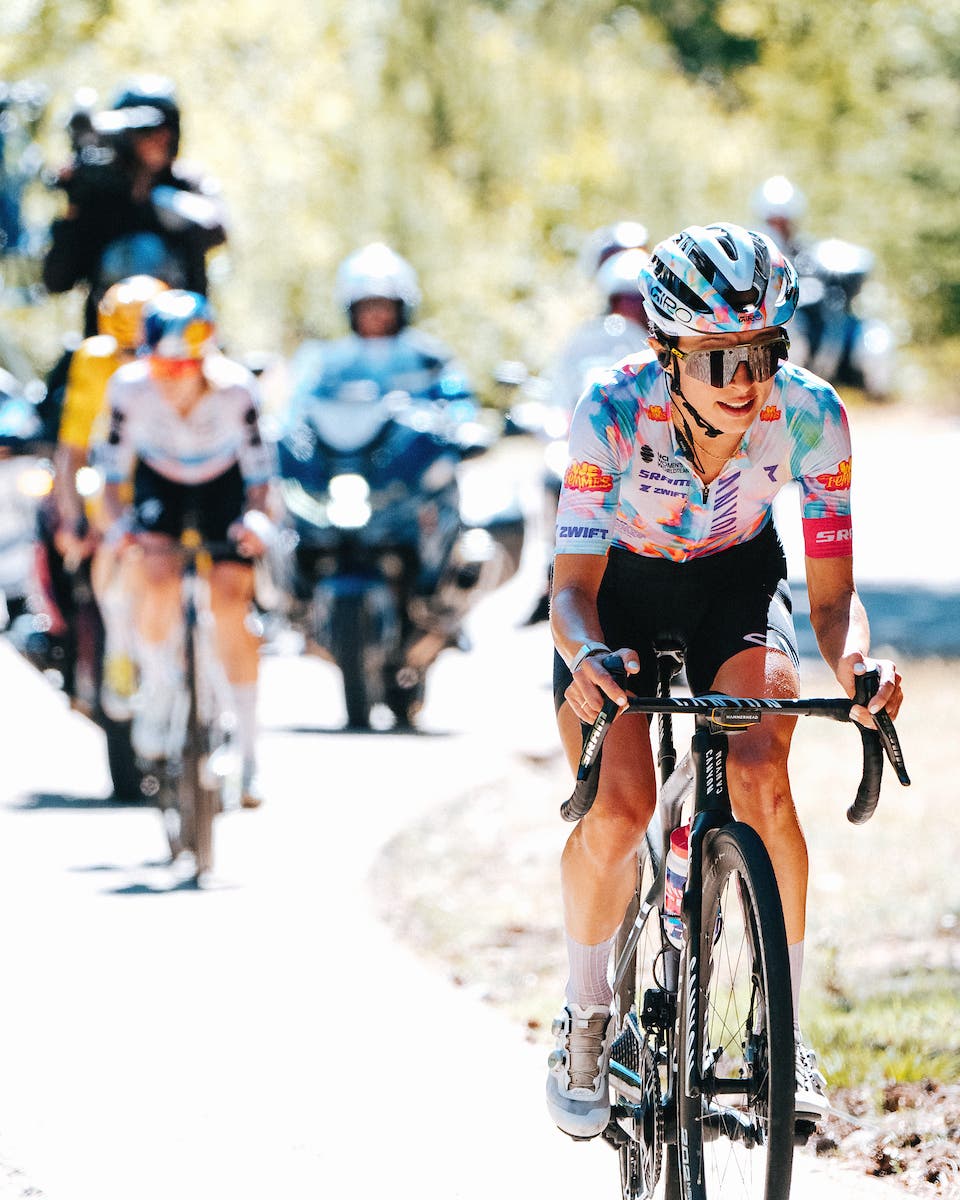
At the base of Mont Ventoux, FDJ United-Suez did the leadout for Vollering. An attack wasn’t coming straight away, but the pace was high enough to drop multiple riders as soon as the climb began. Within a few minutes, the top 10 had ridden away from the rest of the peloton. Among the leaders were Vollering, Reusser, and Niewiadoma, as well as Elisa Longo Borghini, Antonia Niedermaier, Paula Blasi, and a few others.
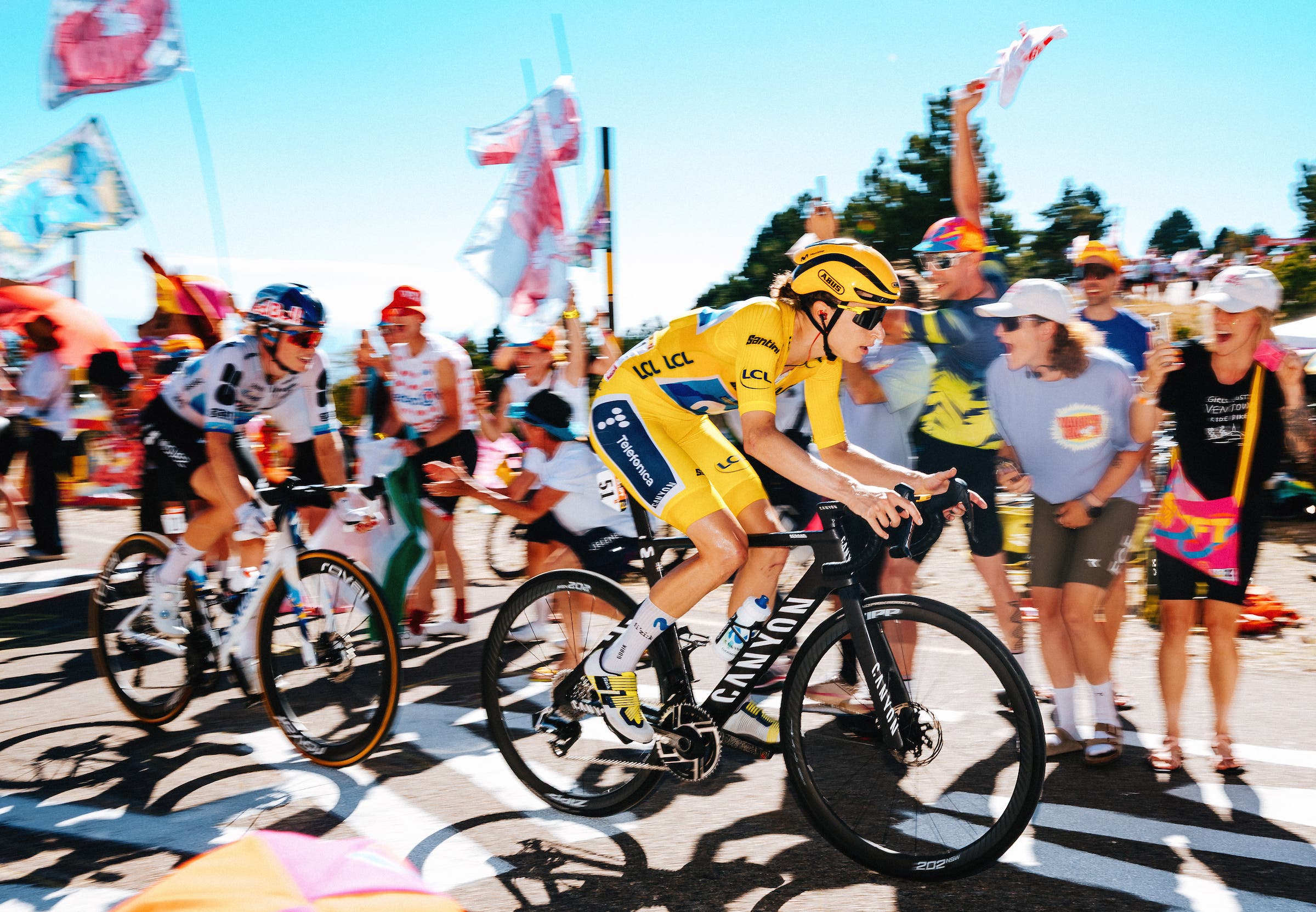
With more than 10km to go, Vollering attacked around a right-hand switchback, immediately shredding the group and solidifying the GC podium. Only Reusser and Niewiadoma could follow the oddly-timed move by Vollering, who continued pushing the pace on one of the steepest sections of the climb. Despite being second in the GC, Vollering was still considered the favorite by many to win the yellow jersey in Nice. That’s because the Dutchwoman has an incredible punch and strong sprint which she could use to drop her rivals and take bonus seconds in the final few stages. But Vollering had other ideas, and it wasn’t until 9km to go that she flicked her elbow for someone else to pull through.
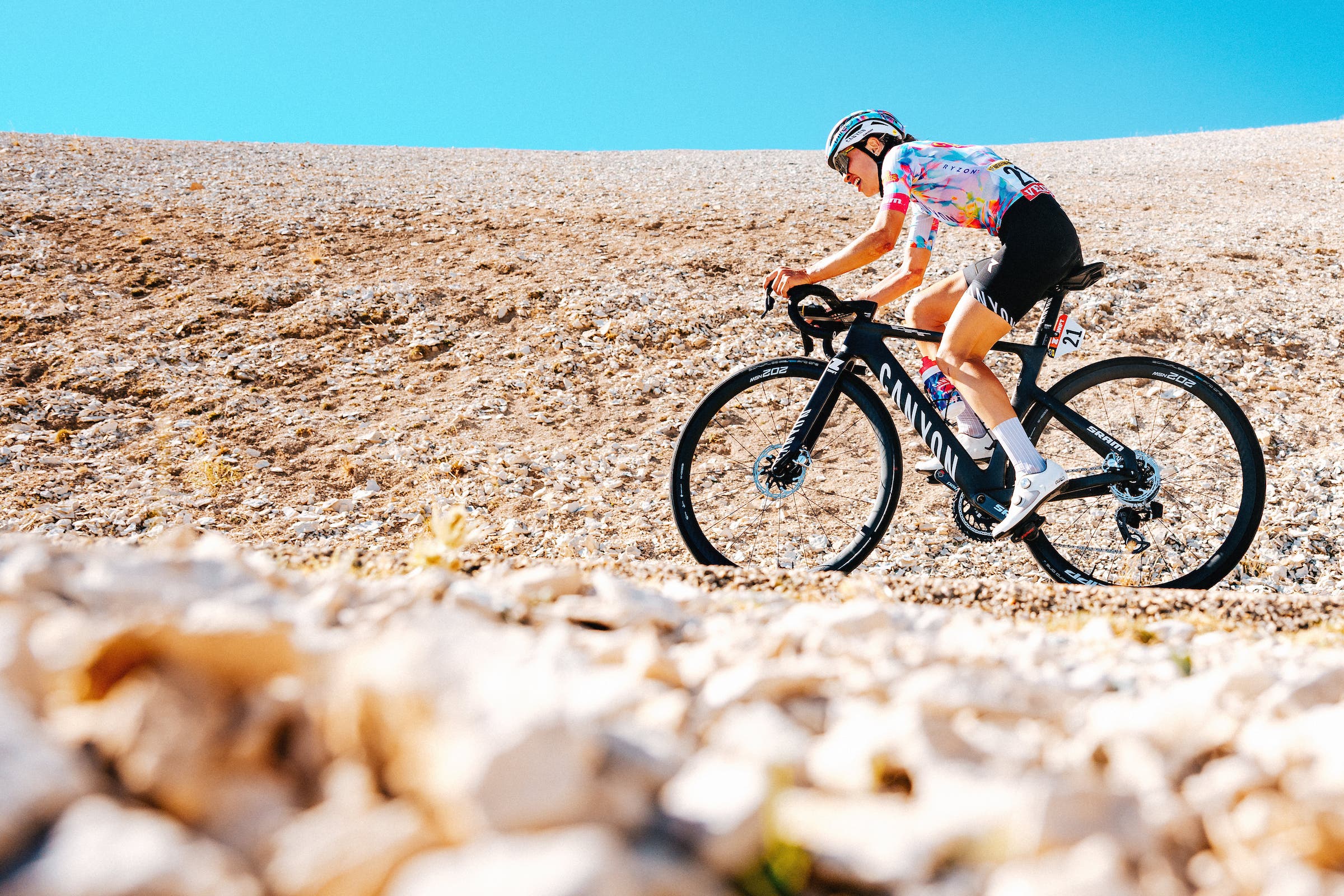
Instead of swapping turns, Niewiadoma immediately attacked up the left side of the road. Vollering and Reusser didn’t even twitch, choosing to look into each other’s eyes rather than watching Niewiadoma ride up the road. Soon the gap was 10, 15, then 20 seconds. Vollering put in a big acceleration to try and close the gap, and the chasing pair got within five seconds of Niewiadoma before stalling again.
The Canyon-SRAM rider kept chugging along, never looking back and continuing to push at her own pace. Eventually, she was out of sight, with Vollering and Reusser even bleeding time to the chase group. When Niewiadoma turned out of the forest section, she began riding straight into a headwind that would buffet her for the rest of the climb. The top section of Mont Ventoux is completely exposed, and that typically means that a cooperating group will go faster than a solo rider. But as the kilometers went by, Niewiadoma continued to extend her gap. Vollering and Reusser were riding in the drops, trying to keep their faces out of the wind and avoid getting caught by the chase group.
Pedal stroke by pedal stroke, Niewiadoma made her way to the final kilometer with nearly a two-minute lead on the chasers. At over 1,300 meters (4,265 feet), Niewiadoma became the first woman to ever win atop Mont Ventoux in the Tour de France. Vollering destroyed Reusser in the final kilometer, putting 30 seconds into the Swiss rider in just a few hundred meters. Reusser was even caught by Longo Borghini for third on the stage, losing the yellow jersey and slipping to third overall.
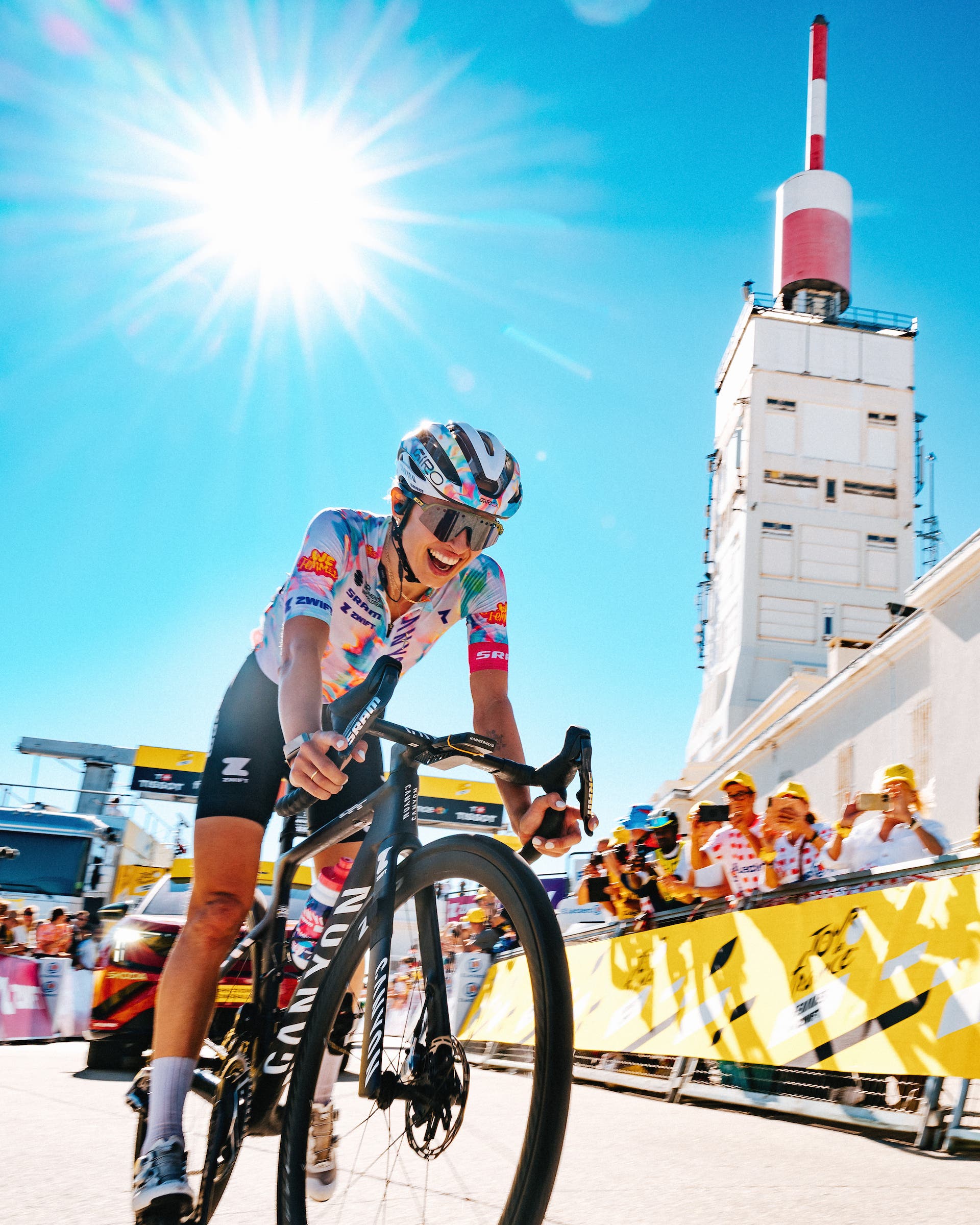
Niewiadoma did one of, if not the, greatest climbing performances in cycling history on Mont Ventoux. This was better than Pauline Ferrand-Prévot’s win on the Col de la Madeleine in 2025, and better than Vollering’s Tour-clinching Alpe d’Huez in 2024. Here are the numbers.
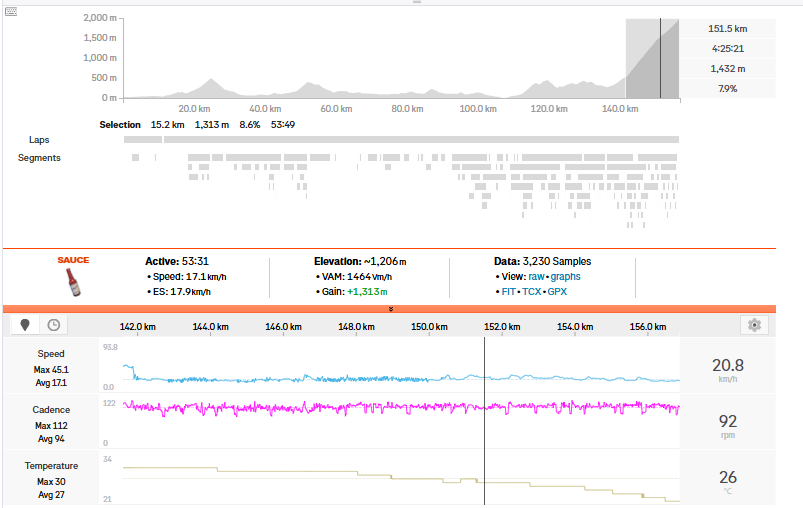
Niewiadoma – Mont Ventoux
- Time: 55:20
- Estimated Average Power: ~5.3w/kg
- VAM: 1,464 Vm/h
Steep Section to Chalet Reynard: 32:09 at 5.4w/kg (1,540 Vm/h)
The most impressive aspect of Niewiadoma’s performance is that she basically rode at threshold for the entire climb. The two biggest surges were following Vollering’s attack with 10km to go, and then attacking herself with just over 9km to go. Neither surge was an all-out sprint, and that allowed Niewiadoma to settle into a hard but sustainable tempo for the rest of the climb.
The Pole’s pace hardly changed from the bottom of the climb to the top, which is even more impressive when you factor in the wind and altitude after Chalet Reynard. This was the point at which Niewiadoma turned into the exposed headwind section, a spot so tough for a solo rider that most crack under the pressure.

While Vollering put in a massive acceleration to close more than 30 seconds in the final kilometer, it was far too late to catch Niewiadoma. With two stages to go in the Tour, Niewiadoma is in the driver’s seat. Sitting 15 seconds ahead of Vollering, and 39 seconds ahead of Reusser, Niewiadoma needs to do more than just defend. She needs to fight for bonus seconds in addition to closing gaps. But with these legs, we shouldn’t be surprised if she manages to drop everyone again.
Power Analysis data courtesy of Strava
Strava sauce extension
Riders:
Kasia Niewiadoma Phinney
[analyse_source url=”https://velo.outsideonline.com/road/road-racing/tour-de-france-femmes/power-analysis-kasia-niewiadoma-mont-ventoux-best-climbing-performance-career/”]