[analyse_image type=”featured” src=”https://velo-cdn.outsideonline.com/wp-content/uploads/2026/08/Hannah-interviewing-at-the-tour.jpg”]
Welcome to Dropped, a new weekly road and gravel cycling newsletter from Velo that brings you the latest ideas we’re debating endlessly on group rides, and a look behind the scenes of our coverage.
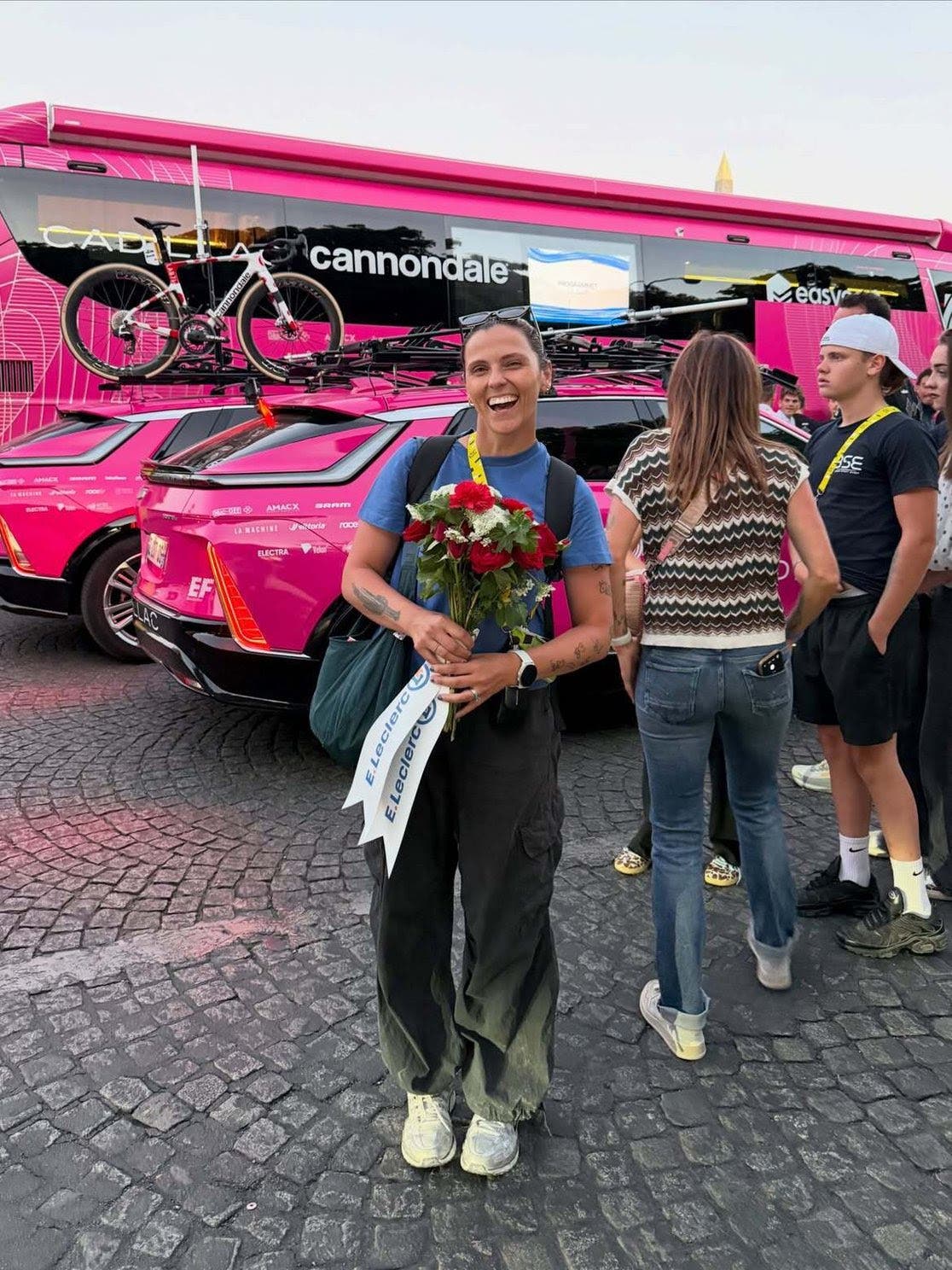
Hello, Velo! This is Hannah Gross, your trusty social media manager who’s been overseeing the Velo social channels for the last few years, including this year’s edition of the men’s Tour de France.
This year marked my second full Tour for Velo. Along the way I’ve had some tremendous wins, and I’ve learned a lot in the process. All of those lessons make up what Velo contributor, and one of my mentors, Andy McGrath, calls “Tour University.” It’s learning how to do the Tour as media, day in and day out, and surviving arguably the hardest-to-cover race in the world.
For those of us working on the ground, the Tour is a 24-hour cycle repeated over and over again, for close to 26 days. It’s waking up in a different hotel, trying to make the best decisions for the whole day with limited time, not letting perfect be the enemy of the published, and then doing it all again the next morning.
It’s the hardest, and best, time of my work year. Here is a look behind the scenes at what graduating Tour University actually takes.
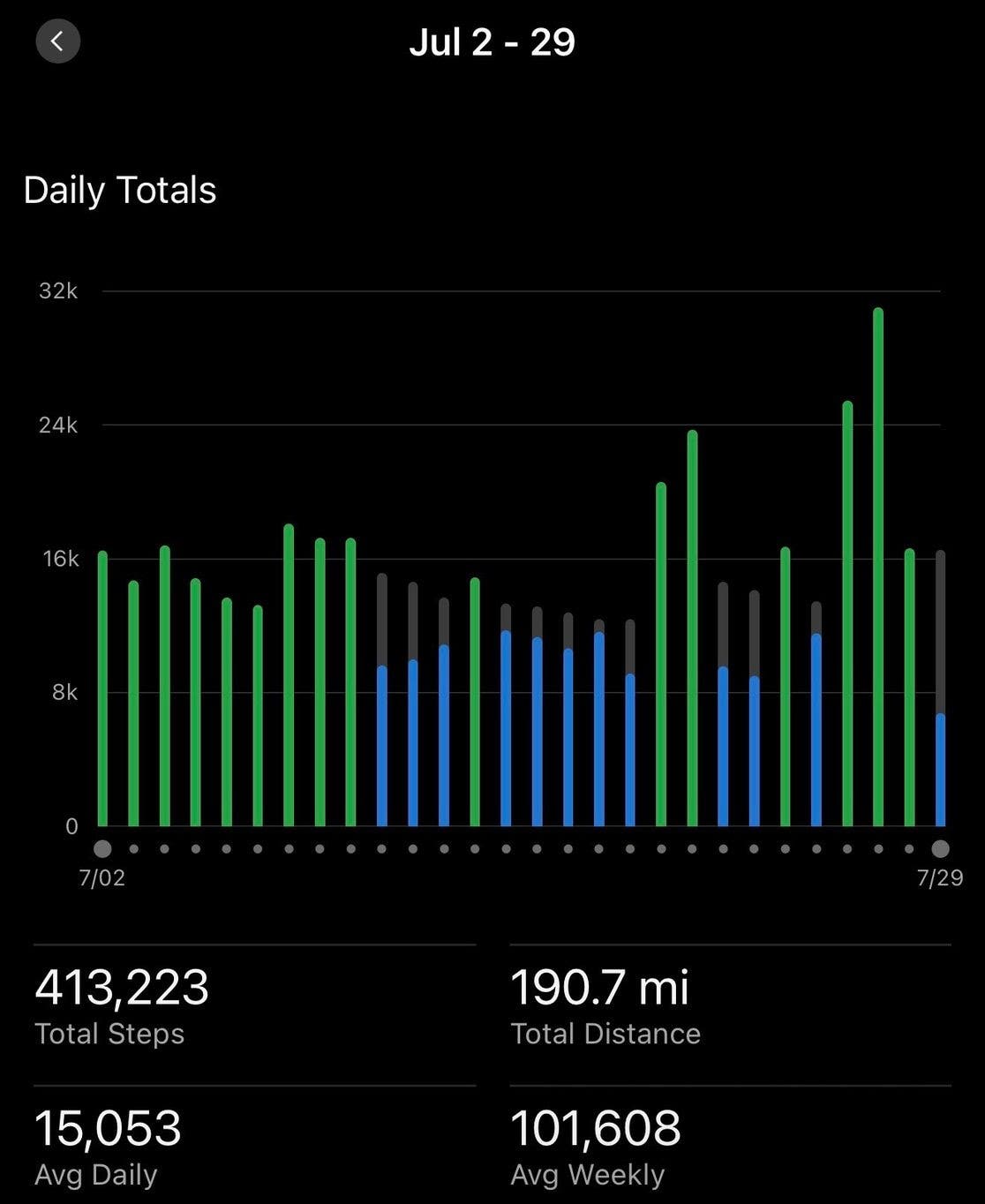
190.7 miles on foot
People kindly ask me what it’s like to watch the Tour for 21 days. They mean so well and I feel like I’m breaking their heart when I tell them the truth: they usually watch more of the real race than I ever do.
The truth is, us on the ground reporters actually spend very little time watching the race itself. We spend most of our time driving near it, getting to it, and running around on the ground when we get there.
The race doesn’t typically roll out until around 1:30 p.m., with most stages finishing sometime after 5 p.m. Before that happens, we need to get to the start village, interview riders, chase whatever story carried over from the day before, film content, edit clips for social, and get ourselves positioned to make it to the finish before the roads close.
That’s just the start of my day. The bulk of our work begins once the stage finishes, or as I mentally refer to it: “second shift.”
To give some context to how much literal running around I did, by the end of July, my Garmin had logged 413,223 steps, or 190.7 miles walked, simply trying to be where the stories were happening or get to/from needed destinations. Admittedly, that includes some running during the Tour to manage my mental sanity; I ran 17 times before stages, 22 miles total, equating to roughly 44,000 steps.
So I logged 168.7 miles directly covering the Tour de France, moving between start villages, team buses, media centers, finish lines, and everything in between.
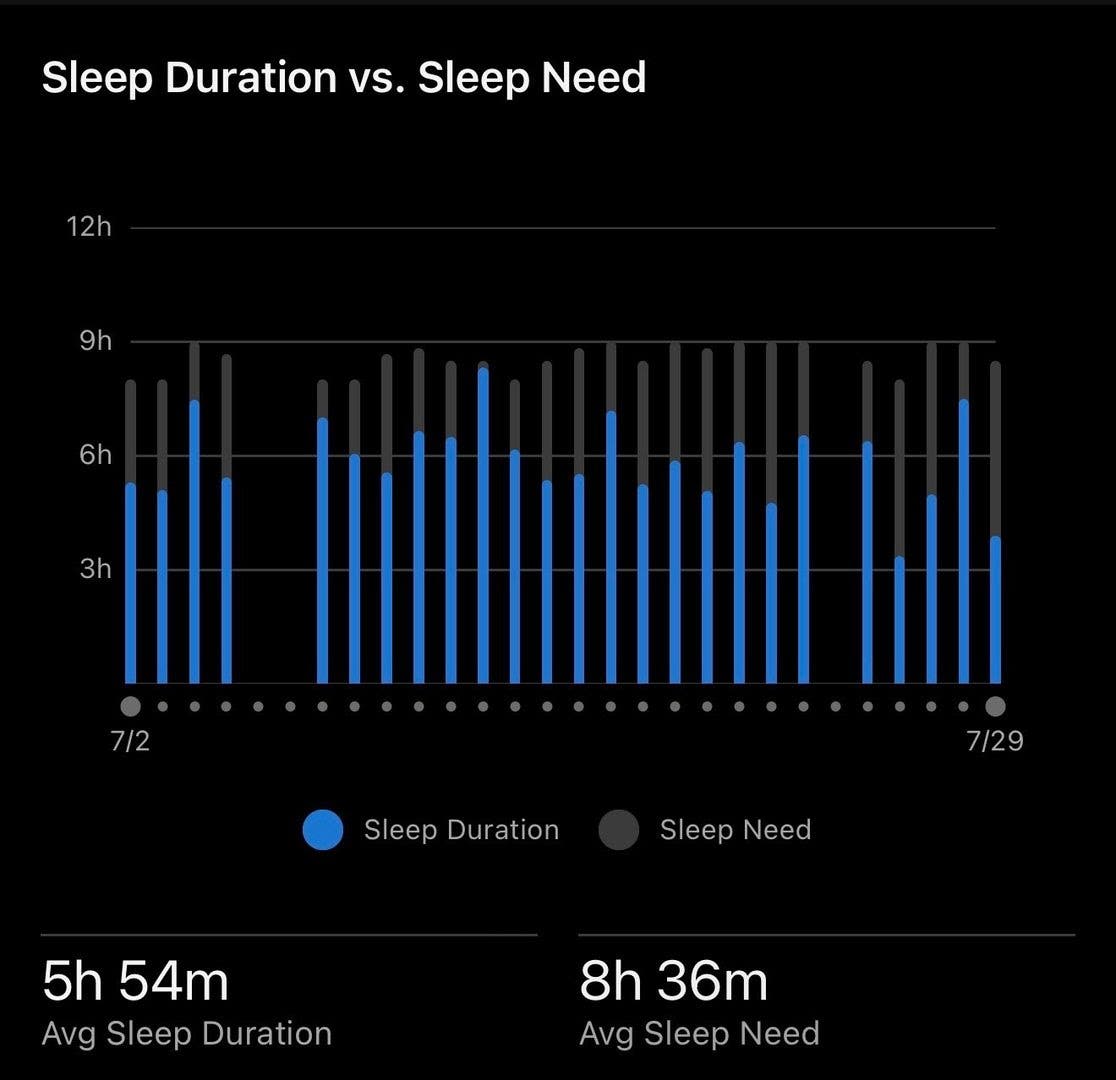
Sleep is rare
If there was one thing I consistently traded for more time for work at the Tour, it was sleep. According to my Garmin, I averaged just 5 hours and 54 minutes of sleep per night, despite my watch estimating I needed 8 hours and 36 minutes to recover.
I’m both embarrassed and proud of how little I slept. Proud because my work product showed my dedication, but embarrassed because I have to improve this next year or I’ll be cooked, as the kids say.
While I am stupid proud of getting some mileage in my legs during the Tour (while dreaming of my bikes at home), sleep is the main area I need to significantly improve. Crazy concept, I know.
I can’t wait to see if I can maybe hit a 7-hour average next year.
Time management wins my Tour
Nothing matters more in the Tour than being in the right place at the right time. Making that happen is a logistical nightmare that depends entirely on time management. Time management determines your experience and both the quantity and quality of your work.
The Tour will expose poor time management almost immediately. Leaving the hotel even five minutes late means missing your chance to get ahead of the caravan, which means losing parking for morning interviews. Leaving the start village a little late means arriving at the press center to find every seat already taken.
Each seemingly irrelevant, tiny mistake completely changes what you’re able to produce that day. Those are the moments you drive back to the hotel thinking, “I just worked 16 hours and somehow missed the story I came here to tell.”
The hard days are worth it when you manage your time well. They feel like insanity when you don’t.
The Tour is a series of choices
The Tour is really just thousands of small decisions stacked on top of one another. This is the most challenging four weeks of my year, and it all boils down to deciding where to go every morning when everything feels important.
Do I head to the UAE bus because the El Torito crowds are raging? If I go to the El Torito bus, am I going to miss Pidcock? He had such a good day today. Do I try to catch the Americans at EF in the mixed zone tomorrow? Let me double-check how they all did today. What are the chances of van der Poel talking while he cools down on the trainer? Maybe I can get Jasper as a backup.
Credentials only go so far
There are roughly five different groups of media working at the Tour, each with a different level of access: ASO producing the race itself, television rights holders, news organizations like Velo, team media crews, and photographers.
As written press, we fall somewhere in the middle. When a stage ends and the real scramble begins, television broadcasters understandably get first access. Riders have just finished racing for five or six hours, and they don’t want to answer the same question 10 different times in four different languages by the time we get our turn.
Because of that, getting a quote is never a given. But when the stars align—when the rider you’ve been hoping to talk to actually stops and gives you exactly what you need—it honestly feels like bringing home treasure. There’s an immediate feeling of relief: “Okay. I got it. The team is going to be proud.”
The hard way is the only way
I could write pages and pages of lessons from Tour University. Graduating from this school is not easy, and it can only be done the hard way. Maps don’t read themselves, time management at this level comes naturally to nearly no one, and the physical toll is far greater than you would imagine.
But I wouldn’t change it for anything.
[analyse_source url=”https://velo.outsideonline.com/road/road-racing/tour-de-france-femmes/what-it-takes-covering-tour-de-france/”]