[analyse_image type=”featured” src=”https://velo-cdn.outsideonline.com/wp-content/uploads/2026/07/GettyImages-148772947.jpg”]
Much ink is being spilt about the internal strain between Remco Evenepoel and Florian Lipowitz at the 2026 Tour de France.
Red Bull-Bora-Hansgrohe’s simmering dynamic is kid’s stuff compared to some of the legendary team blowups and open civil wars across Tour history.
The Tour de France has a long history of turning teammates into rivals. Once someone gets a sniff of the yellow jersey, friendships and team spirit can disappear in a hurry.
Some of the greatest Tours ever raced have also been the most dysfunctional, with riders refusing orders, attacking each other, and splitting teams into rival camps.
Whether Evenepoel and Lipowitz boil over remains to be seen, but sharing leadership at the Tour has rarely ended well when there’s a podium spot or career-defining yellow jersey in play.
From Bernard Hinault’s feud with Greg LeMond to Alberto Contador’s standoff with Lance Armstrong, and the tension between Bradley Wiggins and Chris Froome, these are the most notorious team mutinies in Tour de France history.
5. Carlos Sastre vs. the Schleck brothers — 2008
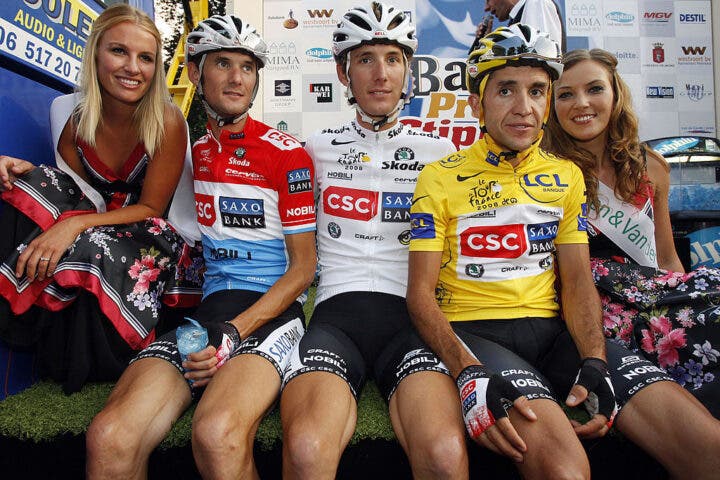
The 2008 Tour de France was one of those “transitional” editions between multiple winners. On one side was Lance Armstrong and his now-erased seven straight yellow jerseys. Waiting up the road in a few years was the dawning of the Sky era, which would produce the Tour’s most prolific franchise.
Sandwiched in between those two were a string of one-off winners, from Floyd Landis and his notorious 2006 win (and disqualification) to Cadel Evans’ historic first yellow jersey for Australia in 2011.
The 2008 Tour saw ex-pro Bjarne Riis and his “Bjarne’s Army” at CSC finally win a yellow jersey, but it wasn’t without controversy. The Schleck brothers were setting the tone across the team, with Fränck Schleck carrying the slender lead over Cadel Evans on the yellow jersey into the decisive Alpe d’Huez stage, with a teammate Carlos Sastre at 49 seconds in arrears.
The ever-steady Sastre, the perennial nearly man in grand tour racing, could sense he wasn’t going to get any help from anyone, so he struck out on his own to lay claim to the yellow jersey.
He defied team orders, attacked everyone on the 21 lacets to win the stage, and clawed back two minutes on his teammate, and 2:15 on the heavily favored Evans. The Australian could only reel back 30 seconds back on Sastre in the final TT, and Schleck fell off the podium with the TT losses.
Sastre bet on himself, and he came home with his lone grand tour win of his career.
4. Fausto Coppi vs. Gino Bartali — 1949
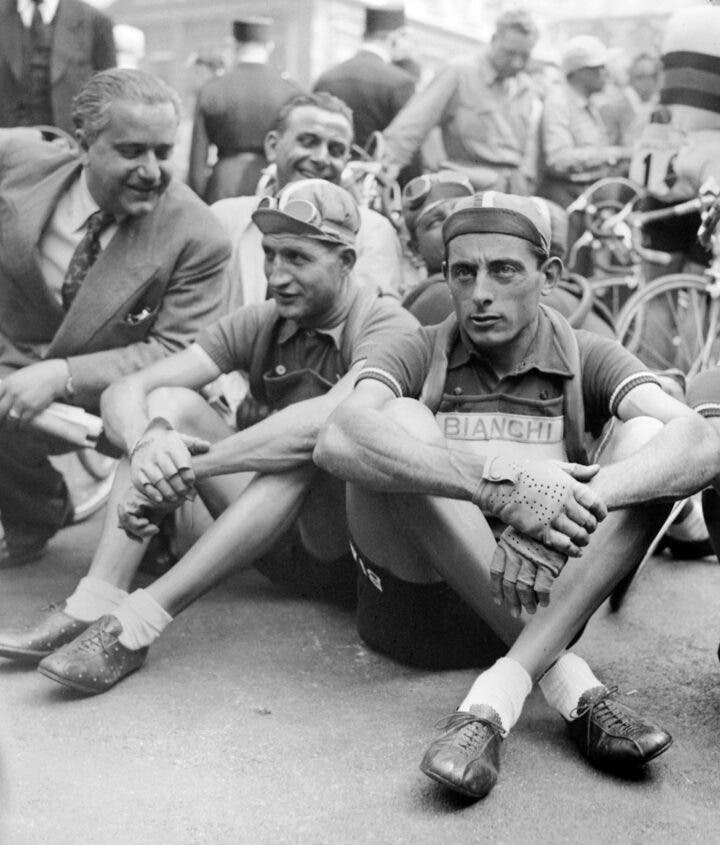
The 1949 Tour featured national teams, akin to the world championships, rather than the traditional professional trade teams. Italy brought a superteam with Fausto Coppi and defending champion Gino Bartali.
There was tension even before the Tour started as both riders believed they deserved leadership. Bartali is the only rider who won yellow jerseys on both sides of World War II, yet Coppi was the ascending star.
They agreed to put aside their rivalry and work together for Italy, but things started to fray when Bartali left a struggling Coppi behind in an early stage.
Once in the Alps, a day after winning a stage, Bartali punctured and crashed on the descent of the Petit Saint Bernard during stage 17. Coppi initially stopped to wait, but team boss Alfredo Binda ordered Coppi to ride on alone, a decision that handed him the yellow jersey and his first Tour win.
Bartali was second, and the Tour soon reverted back to trade teams, but the idea of racing as national teams is still floated everyone once in a while.
3. Bradley Wiggins vs. Chris Froome — 2012
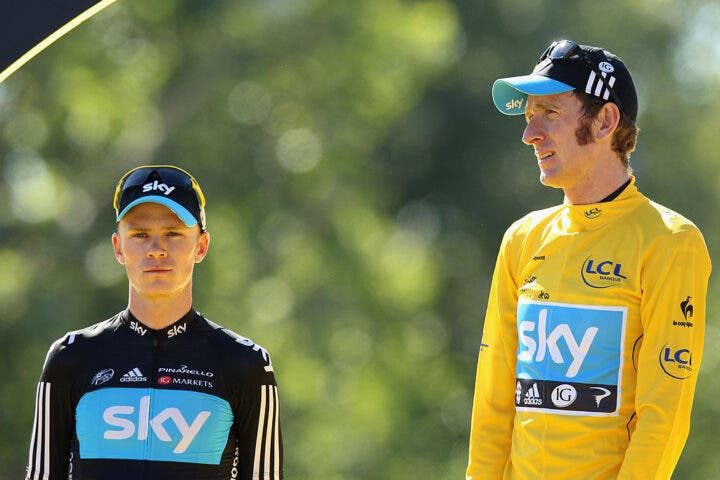
The 2012 Tour saw Team Sky delivering on its promise of winning the yellow jersey within five years with a British rider, but it wasn’t without drama.
Bradley Wiggins’ most dangerous rival emerged from within the ranks from the surprising Chris Froome. The previous fall, Froome emerged out of nowhere to nearly win the Vuelta a España, and was later awarded the victory after Juan José Cobo was nabbed in biological passport.
It soon became apparent that Froome was stronger than Wiggins in the mountains. The team was split between the two camps, and even the respective wives got into the act by trading barbs over social media.
In stage 17 to Peyragudes, Froome attacked so hard he dropped yellow jersey Wiggins. Froome eventually obeyed the famous “Wait, Chris! Wait!” orders over the Team Sky race radio. He paced Wiggins to the finish, and settled for second overall behind his teammate in Paris.
Though the team played down the split publicly, the internal fracture was much bigger than was first led to believe. Froome only grudgingly agreed to lay off when he was promised outright leadership the following season.
Wiggins hung on to win the historic yellow jersey, but he never started another Tour again. Sky lived up to its end of the bargan, and Froome later went on to win four yellow jerseys, each time as the undisputed leader of the team.
2. Bernard Hinault vs. Greg LeMond — 1986
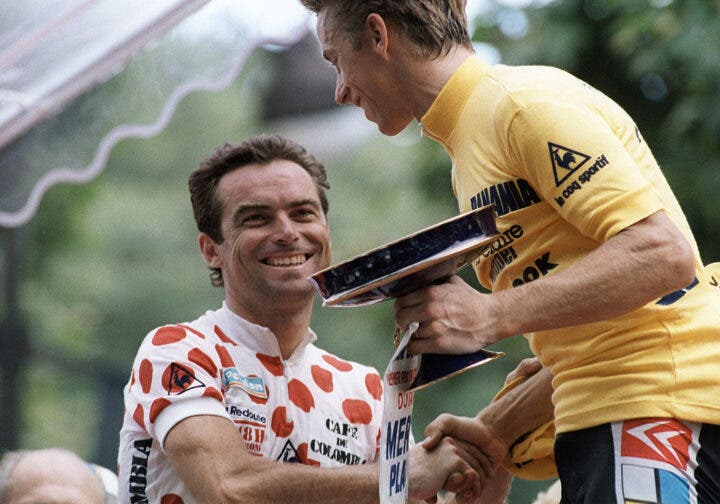
The 1986 Tour was the stuff of legends. Not only was it the first non-European and first American yellow jersey winner, the fight for the maillot jaune was forged in an emotional power struggle between French legend Bernard Hinault and the ascendent Greg LeMond.
Hinault went into the 1986 promising, at least publicly, of helping LeMond achieve the yellow jersey milestone. The previous July, LeMond held his ambitions in check to clear the way for Hinault to win the record-tying fifth yellow jersey, still the last by a French rider.
Though he insisted he was also going to hold up his end of the bargain, Hinault’s compliance came at a maddening price.
The Badger seemed to be, for a lack of better word, badgering LeMond at every turn. He’d attack when he shouldn’t have, he’d raced to win the time trials, and he was picking on at LeMond in the press.
LeMond was flabbergasted at the actions from his alleged ally, and soon had to race against his teammate.
Things came to a head in the Pyrénées, when Hinault attacked on the road to Pau to build a 5:25 lead, then launched another assault at Superbagnères before cracking as LeMond slashed his advantage to just 46 seconds.
Hinault later lost time in the Alps and the pair famously rode across the finish line on Alpe d’Huez hand-in-hand after a backroom detente was reached.
That truce didn’t last long and Hinault pressed his case all the way to the final 58km time trial on stage 20, when LeMond finally secured yellow for good.
Hinault laughed his way all the way to Paris, insisting he was simply playing games to make his final Tour “fun,” with no intention of fully betraying the ever more suspicious LeMond.
The events are chronicled in the book, Slaying the Badger, and later in a ESPN 30/30 series. One of the best Tours ever.
1. Alberto Contador vs. Lance Armstrong — 2009
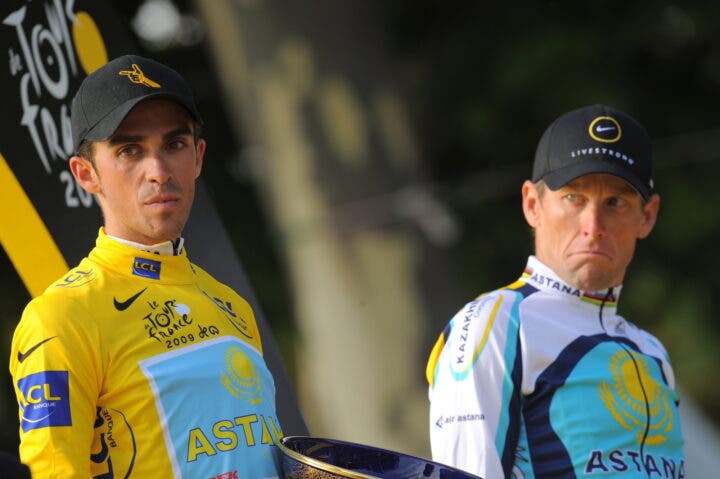
In terms of internal strife, a clash of egos, and a battle of wills, it doesn’t get better than the notorious 2009 “cohabitation” at Astana between Lance Armstrong and Alberto Contador.
The intrigue, treachery, and outright sabotage reached Cold War levels across arguably one of the most notorious Tours ever.
Armstrong came out of retirement convinced he could win another yellow jersey, especially after watching riders like Sastre win when he wasn’t there.
In 2009, it was Contador who was emerging as the Tour’s next great dominator, and the hard-to-crack Spanish rider proved a worthy opponent to the strong-willed Armstrong, long accustomed to getting his way.
Tension built long before the Tour, and the pair were already on non-speaking terms before the race even started. Team manager Johan Bruyneel was torn between his allegiance to Armstrong and the reality that Contador was the superior rider.
Bruyneel eventually proved loyal to Armstrong, and the rift played out on the road for three wild weeks.
It was obvious that Contador and Armstrong were racing against one another right from the start. After Contador was gapped and isolated by his teammates in stage 3, Armstrong threw a barb his way hinting that the Spaniard was out of position.
Armstrong missed capturing the maillot jaune the next day by fractions of a second to Cancellara in a team time trial, and then Contador promptly attacked Armstrong up Arcalis in the Pyrénées against team orders.
The pair were still only separated by two seconds when Contador attacked with fury on Verbier to drop everyone, including Armstrong, to claim yellow for good. “El Pistolero” rode into yellow with a 1:37 advantage over the Texan to bury any hopes of comeback win.
The back-room games continued all the way to the stage 18 time trial at Annecy. There were reports of hidden wheels, missing team cars, and even race-day sabotage, although much depends on which side of the story you choose to believe.
They don’t make Tours like that anymore.
[analyse_source url=”https://velo.outsideonline.com/road/road-racing/tour-de-france/tour-de-france-yellow-jersey-teammate-rivalries-history-2/”]