[analyse_image type=”featured” src=”https://velo-cdn.outsideonline.com/wp-content/uploads/2026/07/Pogacar-TDF-2026-Bike-Check-3.jpg”]
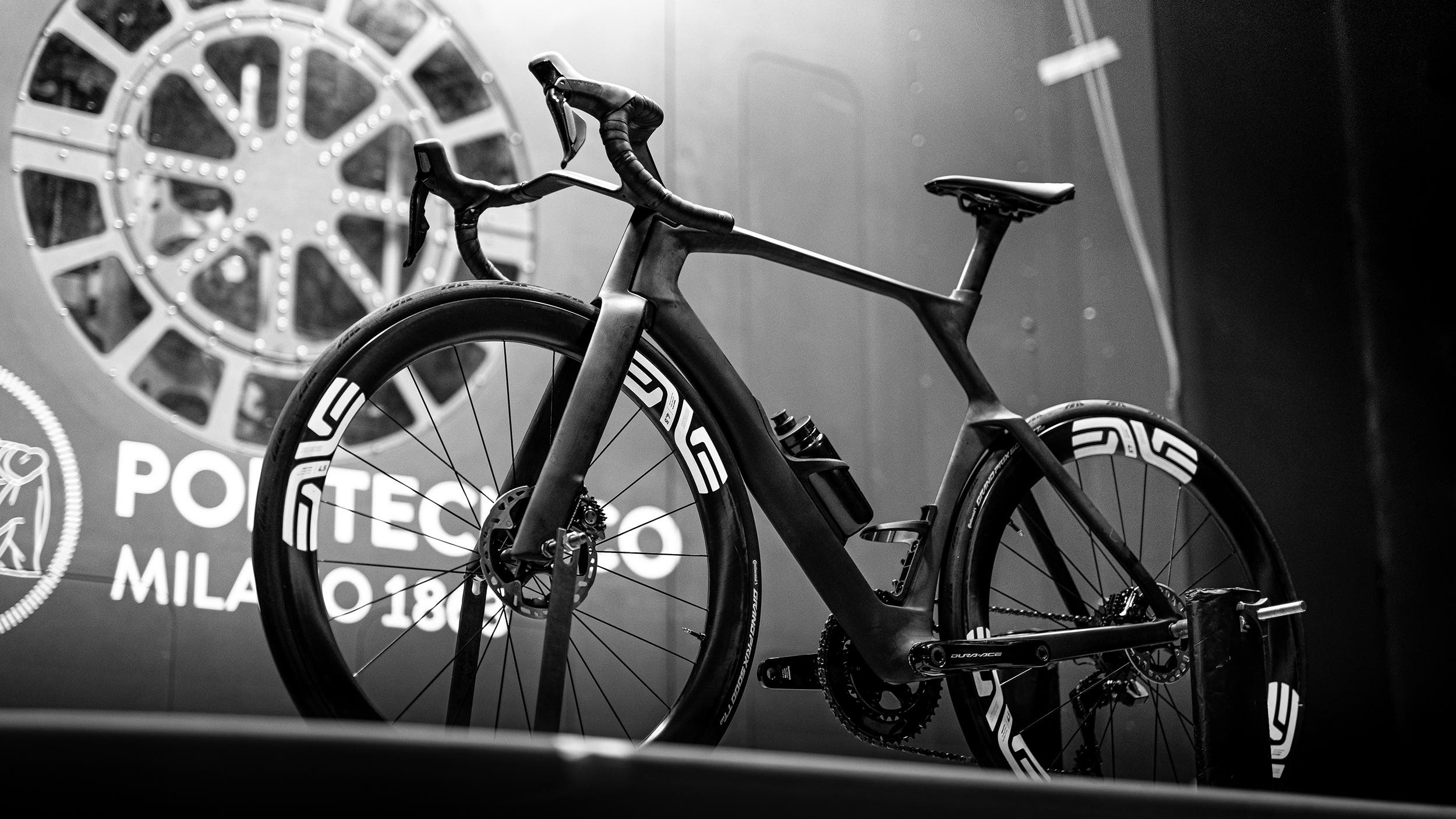
Tadej Pogačar’s Tour de France bike is the answer to how aerodynamics and weight come together in a modern race bike. The Colnago V5Rs is not being raced; instead, the team has gone all in on the Colnago Y1Rs. The only way that works is through careful weight management.
That starts with stripping the paint. The raw carbon Colnago Y1Rs he’s riding through the 2026 Tour is finished in what Colnago calls “no paint, no frills, only speed” — a matte black weave broken only by white logos and a thin band of world champion stripes on the fork.
You can buy a version of that, but only theoretically and not exactly. Colnago says only 300 of the Dark Series will be produced, and even if you snag one, it wears slightly different graphics. Look closer, though, and almost nothing on this bike is stock. Start pricing what’s actually bolted to it, and things get expensive fast—especially when you remember Pogačar’s Tour fleet runs seven of them. But when you consider who Tadej is and everything on the line, the final price per bike is actually far less than you might expect. For just under $20,000, you are looking at the absolute pinnacle of custom racing technology built to win the Tour de France. In what other elite professional sport can a fan buy the exact championship-winning equipment for the price of a used car?
The $7,500 frame
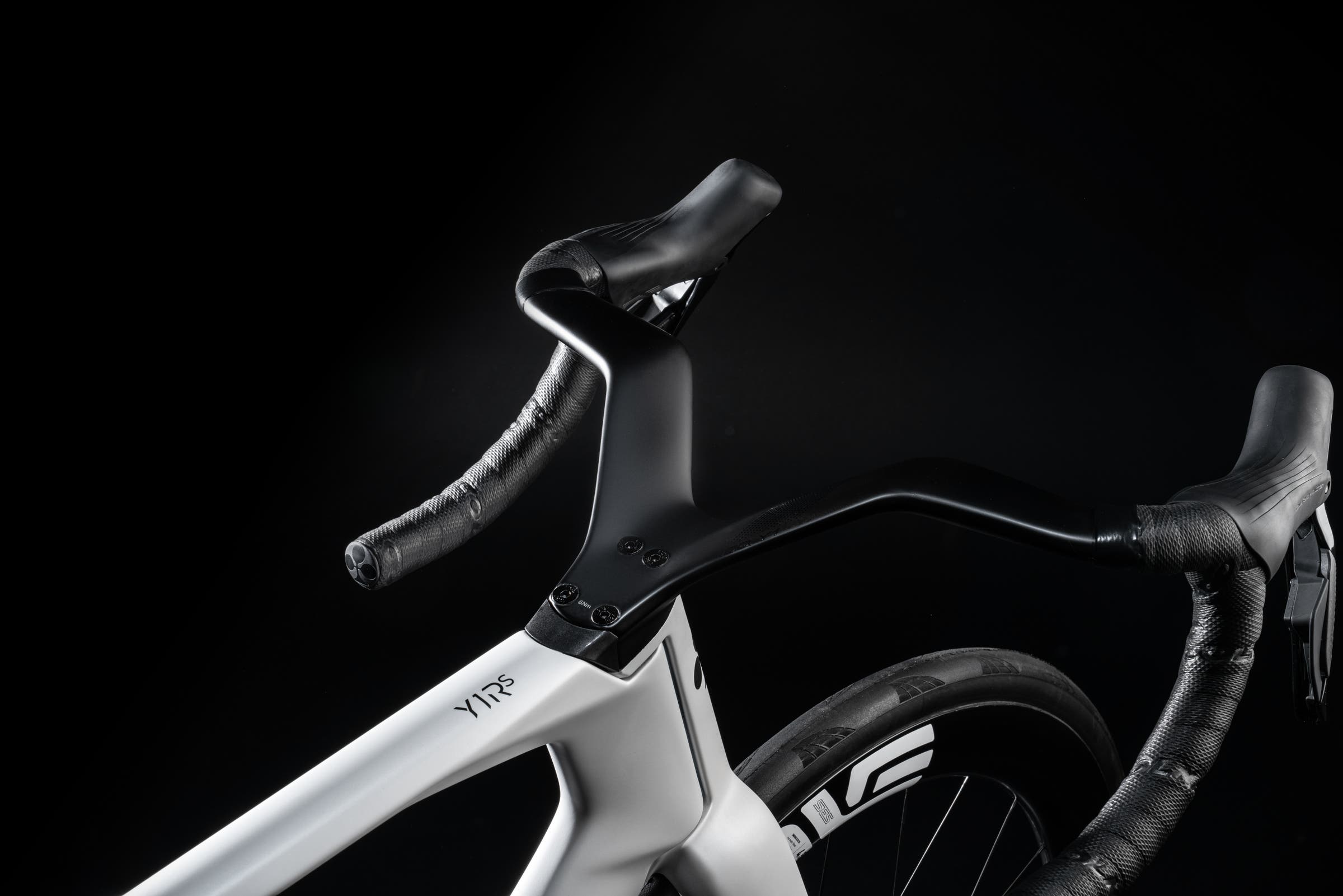
The Colnago Y1Rs was a bike that made all the headlines for, among other things, really ushering in the era of the spaceship bike—or, in other words, the bayonet fork style bike. Instead of routing a standard steerer tube inside the frame, a bayonet fork extends up the outside of the head tube to act as a seamless aerodynamic fairing. While the Cervélo S5 had already utilized this style front end for years, it had largely been viewed as an outlier until the Y1Rs pushed the design into the mainstream.
If we are being real, though, Pogačar is what pushed the design into the mainstream and Colnago kind of went along for the ride. Without the star power backing it, the Y1Rs may not have left the mark it did. Regardless, Colnago actually claimed the real innovation was far more about CFD modeling.
At launch, the brand really leaned on a radical change in how new designs were tested versus the final result. Yes, the result was different from anything else, but according to Colnago, it was a drastically more accurate CFD model that created the new design. Colnago claimed that going back and forth to the wind tunnel to test reality against the modeling was how the software got more accurate, and by extension, why the bike looked the way it did.
In the end, the bike is priced at $7,500 and Colnago claims it saves around 20 watts at 50 km/h over the V4Rs. That price does include the full chassis, which means the bars and stem (obviously a single piece), fork, headset, and seatpost. Pogačar hasn’t raced anything else on the road since midway through the 2025 Tour.
Shimano Dura-Ace Plus Upgrades: $6,680
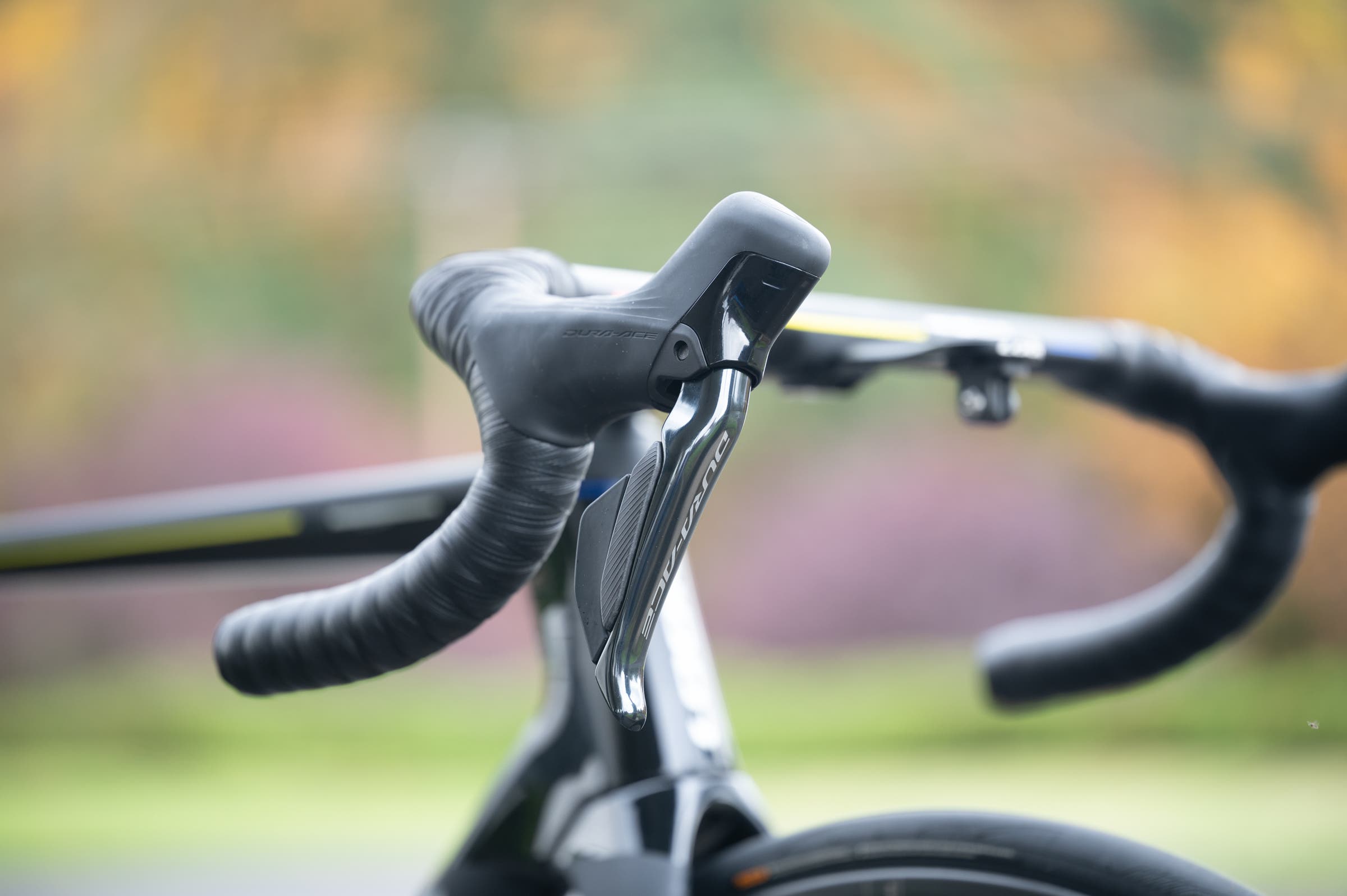
Like many of the teams at the Tour, UAE is running Shimano’s Dura-Ace Di2 R9270 groupset, and Pogačar uses the dual-sided power meter crank with 165mm arms and a 2x setup. Retail pricing is about $5,000.
What’s unusual about the Pogačar setup is how custom it is. In an effort to get weight down, the stock chainrings come off in favor of Carbon-Ti’s X-CarboRing carbon-bodied rings at roughly $560 for the pair. The stock rotors are swapped for Carbon-Ti’s X-Rotor SteelCarbon 3 discs—the Center Lock version was developed in collaboration with UAE Team Emirates—at $220 each, or another $440 per bike. The derailleur hanger (about $70), thru-axles (about $65 apiece), pulley-wheel bolt, and even the bottle cage bolts (call it $40 for the assorted titanium hardware) are all replaced with the Italian brand’s red-anodized parts—the little flashes of red visible around the rear dropout in team photos. All in, the Carbon-Ti treatment runs close to $1,300 per bike, most of it replacing parts Shimano already supplied.
Even the bottom bracket is aftermarket. Spanish brand Bikone developed its BSA Road Ceramic Aero UAE unit with the team. At a claimed 77 grams, it pairs hybrid ceramic bearings with a completely smooth non-drive-side cup designed to tidy up airflow around the shell. It launched for 2026 at €349 (about $380).
Wheels and tires: $3,990
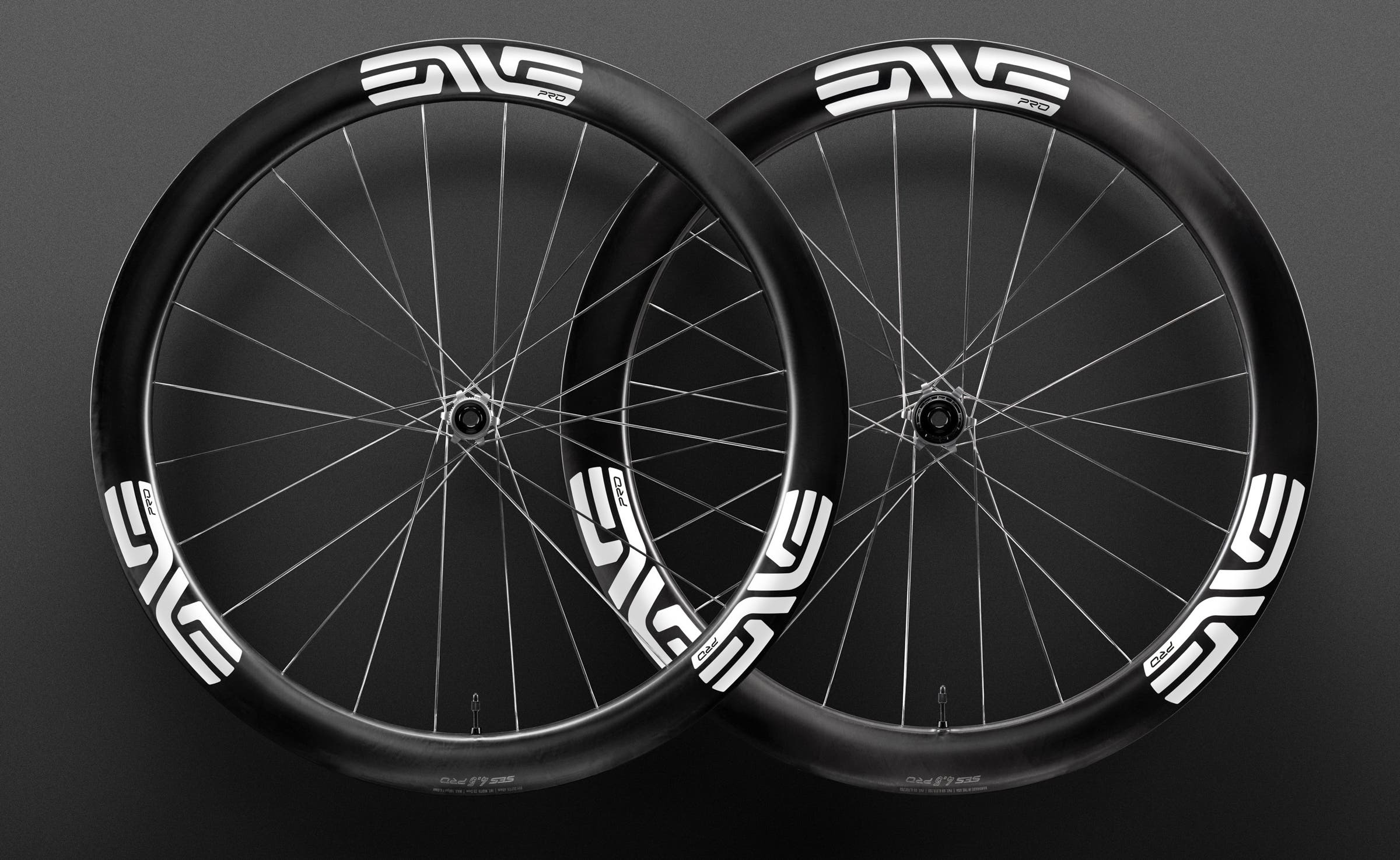
The ENVE SES 4.5 is a wheel that ENVE has always claimed to be aerodynamically one of the fastest on the market. Granted, every company claims that, but ignore it for the moment because it’s not super important here. For this discussion, what’s important is that part of the identity of the SES 4.5 includes that it is usable off-road and comfortable for long days. To achieve that, it features a thick bead edge with a rounded-over top, making it stronger and less likely to cut a tire and cause a pinch flat. It is also 25mm internally.
Pogačar and UAE didn’t need a wheel built for off-road durability. Pogačar also wanted to run 28mm tires for the weight and aero benefits, but because of UCI and ETRTO rules, the minimum tire width on a 25mm internal rim is 29mm. So, the team worked with ENVE to design a new wheel.
The new wheel is the ENVE SES 4.5 Pro. It’s very close to the original, but with some important details changed. Probably the biggest is that the internal width shrunk to 23mm, but there are also significant weight savings. The bead edge got hollowed out to shed weight, and the hub got a redesign for the same reason. The result is 198g of weight savings for a total of 1,295g and a price of $3,750.
Now with the ability to run a 28mm tire, UAE and Pogačar use the 28mm Continental GP 5000 TT TR. That’s the fast, fragile time-trial version of the GP 5000, and it’s run tubeless with sealant. Figure about $240 a pair—replaced constantly.
The contact points and cockpit extras: $1,505
The saddle is a Fizik Vento Argo in the brand’s custom-fit “One to One” program—around €460 (roughly $500), and the single most expensive contact point on the bike. Pedals are Look’s Keo Blade with carbon bodies, ceramic bearings, and titanium axles at roughly $450. A Wahoo Elemnt Bolt computer (about $330 and cheaper than the BB) sits in a 3D-printed team-only aero mount that money can’t buy. If you wanted to upgrade the stock Colnago out-front mount—which isn’t great—to a non-3D-printed piece that claims some aero benefit, FramesandGear has you covered for $95. Finally, two Elite carbon cages and bar tape round out the build for about $130 combined.
Now multiply by seven
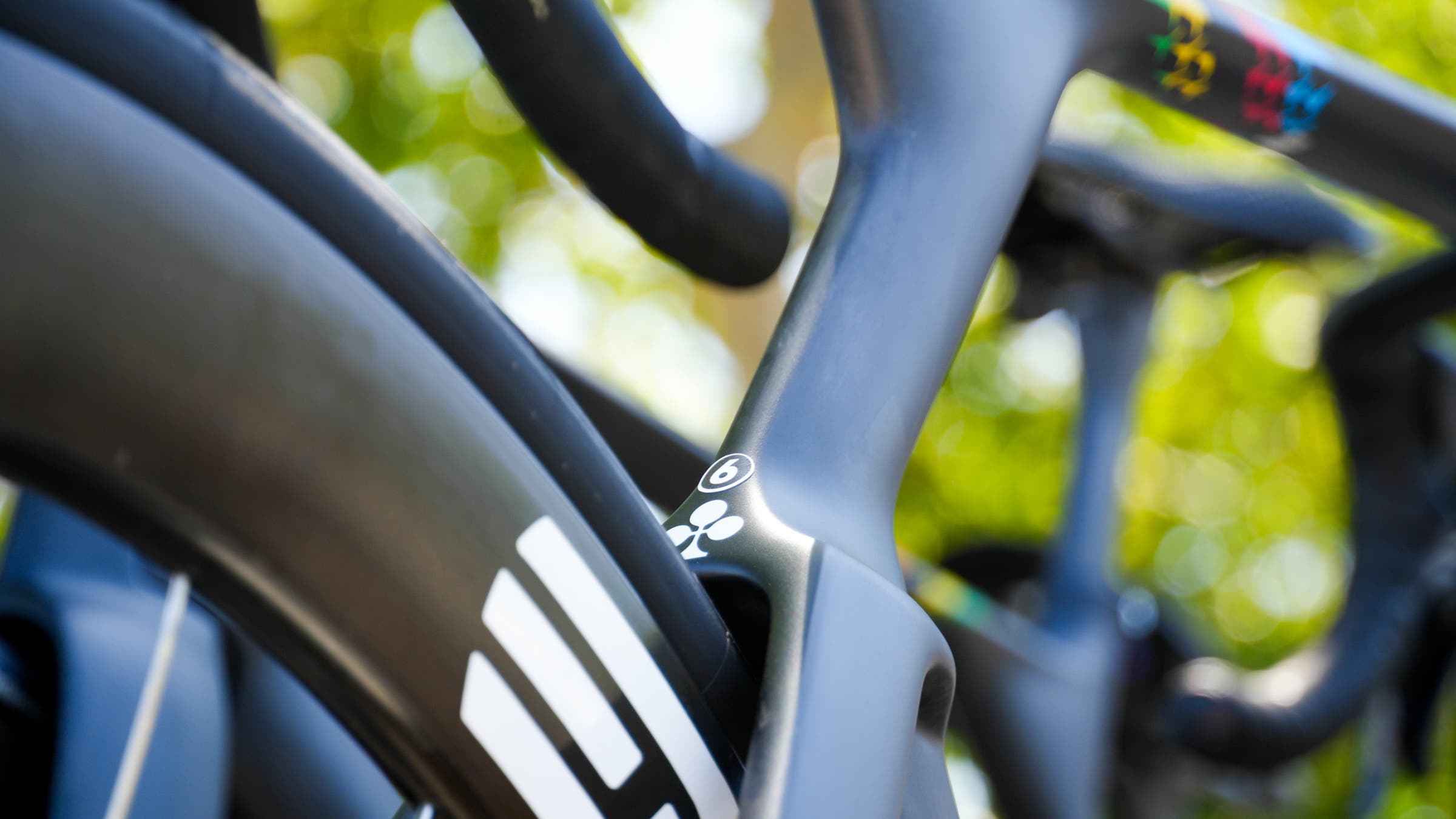
Pogačar means everything to UAE, and the last thing the team wants is for him to have to think about his bike setup at an important moment. To make sure the Tour runs smoothly, Pogačar has seven bikes. Each one is built to identical spec, down to the saddle height and the titanium bolts, so that a mid-race swap costs him nothing but the seconds it takes to change bikes. Many of the media spent time handling a bike in Barcelona that wore a “#2” sticker marking it as the first backup. We also caught a glimpse of the #6 bike, but they are all exactly the same, and each one is $19,675.
Pogačar’s road-bike fleet alone comes in at exactly $137,725, and that’s not the full cost of his race machines. There are also his time trial bikes, spare wheelsets stacked on the team car, and the tires burned through over 3,333 kilometers of racing. That’s a well-equipped team car’s worth of value following one rider around France, all so that if something goes wrong on a random Tuesday in the Alps, the bike he grabs feels exactly like the one he left on the tarmac.
The fun part about bike racing—and why that $19,675 price tag is lower than you might expect for championship equipment—is that most of it is available to anyone. The frame, the wheels, the groupset, and even the obscure Spanish bottom bracket are all retail products. The only things you can’t buy are the 3D-printed computer mount… and the legs.
| Category | Component | Estimated Price |
| Chassis | Colnago Y1Rs Frame (includes one-piece bar/stem, fork, headset, seatpost) | $7,500 |
| Groupset | Shimano Dura-Ace Di2 R9270 (with dual-sided power meter crank) | $5,000 |
| Drivetrain Upgrades | Carbon-Ti X-CarboRing chainrings (pair) | $560 |
| Carbon-Ti X-Rotor SteelCarbon 3 discs (x2) | $440 | |
| Carbon-Ti derailleur hanger | $70 | |
| Carbon-Ti thru-axles ($65 each) | $130 | |
| Carbon-Ti assorted titanium hardware (pulley & bottle cage bolts) | $40 | |
| Bikone BSA Road Ceramic Aero UAE bottom bracket | $380 | |
| Wheels & Tires | ENVE SES 4.5 Pro wheelset | $3,750 |
| Continental GP 5000 TT TR 28mm tires (pair) | $240 | |
| Cockpit & Extras | Fizik Vento Argo “One to One” saddle | $500 |
| Look Keo Blade pedals (carbon/ceramic/titanium) | $450 | |
| Wahoo Elemnt Bolt computer | $330 | |
| FramesandGear out-front mount (consumer equivalent) | $95 | |
| Elite carbon cages (x2) & bar tape | $130 | |
| Total (Single Bike) | $19,675 | |
| Total (7-Bike Fleet) | $137,725 |
[analyse_source url=”https://velo.outsideonline.com/road/road-gear/tadej-pogacar-tour-de-france-bike-cost/”]