[analyse_image type=”featured” src=”https://images.euronews.com/articles/stories/09/83/87/33/1200x675_cmsv2_9f2bd1c8-165f-51cb-b603-4633b3f1d340-9838733.jpg”]

UK plans voluntary overnight social media curfew for teens

Fontainebleau: Birthplace of nature tourism saved by firefighters

Venice Film Festival to honour ‘Exorcist’ star Ellen Burstyn

Von der Leyen and Zelenskyy sign EU-Ukraine drone deal
UK plans voluntary overnight social media curfew for teens
Fontainebleau: Birthplace of nature tourism saved by firefighters
Venice Film Festival to honour ‘Exorcist’ star Ellen Burstyn
Von der Leyen and Zelenskyy sign EU-Ukraine drone deal
‘Once we were like you’: Ancient Roman faces brought back to life in Budapest exhibition
The faces of ancient Romans have been brought back to life in Budapest
– Copyright Credit: AP Photo

 Facebook
 Twitter
 Flipboard
 Send
Send Reddit
 Linkedin
 Messenger
 Telegram
 VK
VK Bluesky
 Threads
 Whatsapp
Using archaeology, anthropology and DNA analysis, experts reconstructed Roman-era faces and paired them with imagined life stories inspired by historical evidence.
A peasant girl, a soldier and a slave who lived nearly 2,000 years ago have been given new faces – and imagined stories – in a fascinating new exhibition in Budapest.
 ADVERTISEMENTADVERTISEMENT
At the Aquincum Museum, Roman-era skulls discovered at the ancient city of Aquincum have been transformed into lifelike facial reconstructions, offering visitors a glimpse of the people who once lived on the empire’s distant frontier.
The exhibition, titled “Once we were like you”, utilised archaeology, anthropology, genetics and historical imagination in the hopes of reconnecting modern audiences with those whose remains have survived for almost two millennia.
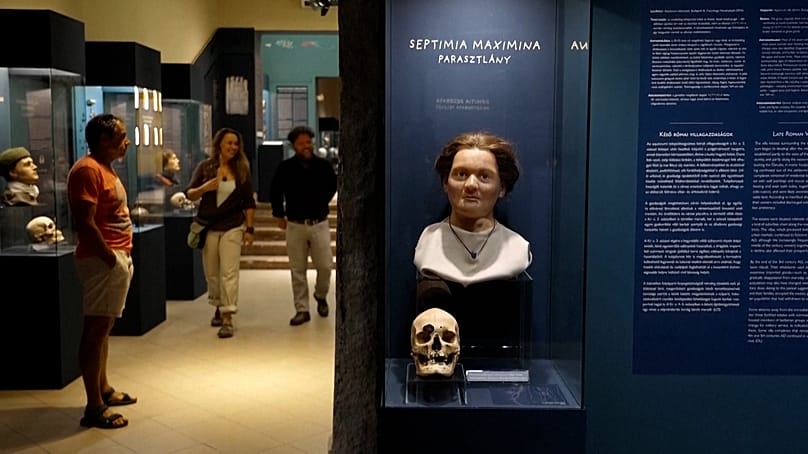
Displayed alongside their original skulls, the reconstructed faces are accompanied by fictional names, occupations and possible life stories – an attempt to make the ancient residents of Aquincum feel less like archaeological objects and more like real people.
“During the excavations we find the skulls, the skeletons, we document them, we roughly can tell whether they belonged to a man or a woman and the findings end up in the appropriate storage room, but that’s it. The bodies have no weight, no life, no soul,” said Dr. Lóránt Vass, archaeologist and exhibition co-curator.
He continued: “In connection with this exhibition, we thought what happens if we bring these people closer to the visitors by using archaeological findings, information provided by inscriptions, results of anthropological studies and results of archaeogenetics.”
How were the ancient faces brought back to life?
Experts analysed the shape and structure of the skulls, alongside archaeological evidence and DNA research, to estimate details such as facial structure, possible ancestry, and even characteristics like hair, skin and eye colour.
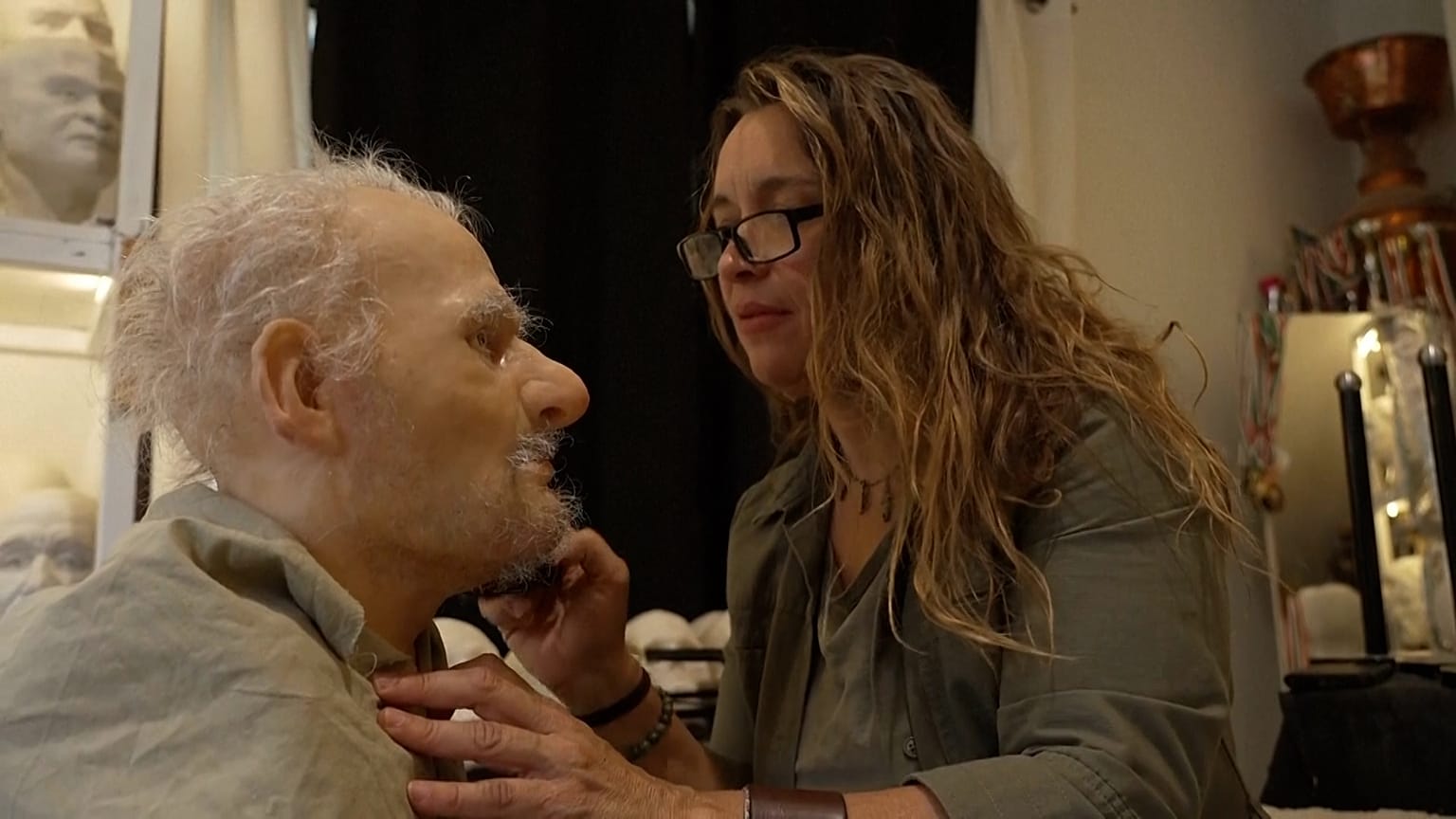
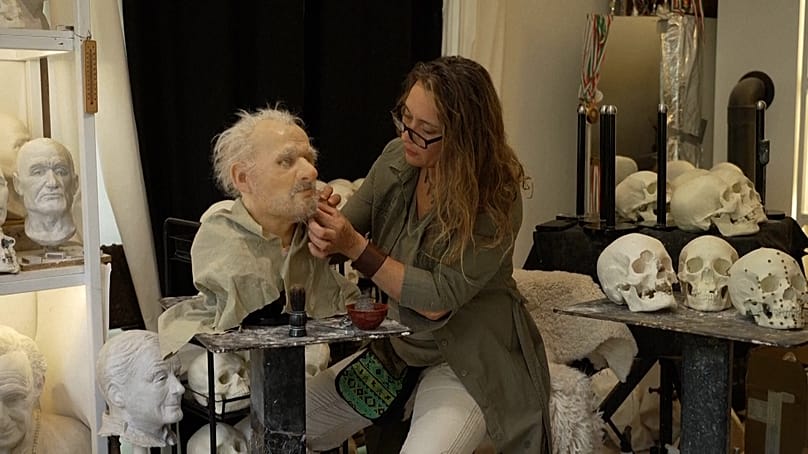
The most realistic reconstructions were created by facial reconstruction artist Emese Gábor, who works from a studio in Budakeszi, near Budapest.
Using 3D-printed replicas of the original skulls, she carefully rebuilt the faces layer by layer, studying the bones before modelling muscles and features.
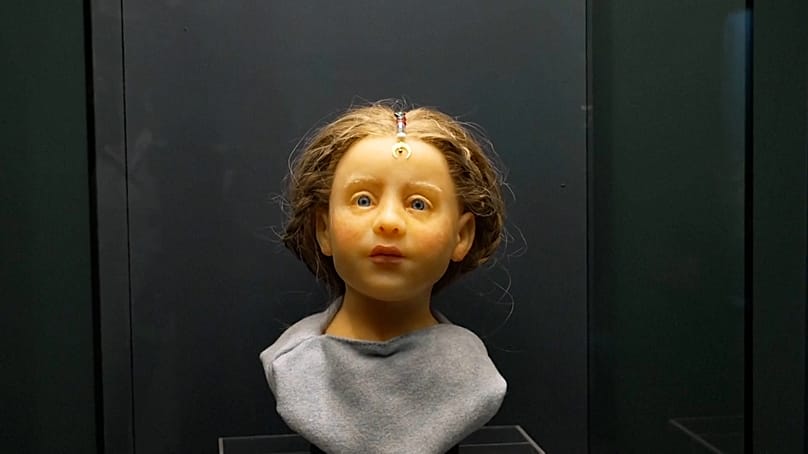
But while the faces are based on scientific evidence, the identities and biographies attached to them are not real. The curators created possible names, jobs and backgrounds based on what researchers know about life in Aquincum.
“It’s all fiction. We don’t even know the real names of these people, unfortunately. We tried to incorporate into their imagined life stories everything that anthropology and genetic studies have offered. But no matter what, it’s still fiction. In fact, we can not say that they lived like that, it happened that way, but they could have been living that way,” said Dr. Péter Vámos, archaeologist and exhibition co-curator.
Researchers used historical naming customs, inscriptions and anthropological studies to create plausible scenarios for the individuals.
Alongside the facial reconstructions, visitors can see a reconstructed burial site and a Roman-era mummy.
“Once we were like you” is on show at the Aquincum Museum in Budapest until 31 October 2027.
Go to accessibility shortcuts
Read more
How Casa Batlló reconnects Gaudí, Miró and Gomis with digital art
How Frida Kahlo became Tate Modern’s hottest ticket
London exhibition explores how NIGO reshaped fashion and hype culture
How Casa Batlló reconnects Gaudí, Miró and Gomis with digital art
How Frida Kahlo became Tate Modern’s hottest ticket
London exhibition explores how NIGO reshaped fashion and hype culture

‘AI parasite’: Would you pay to watch the AI version of ‘The Odyssey’?

FIFA goes all out for A-list cameos at first World Cup halftime show

Venice Film Festival to honour ‘Exorcist’ star Ellen Burstyn

Erling Haaland goes viral (again) for his unique US souvenir
How Casa Batlló reconnects Gaudí, Miró and Gomis with digital art
Disney’s live-action ‘Moana’ capsizes at the box office
Erling Haaland goes viral (again) for his unique US souvenir
Dutch archaeologists uncover stunning 3,000-year-old Egyptian tomb
The story behind the photo of Lionel Messi with baby Lamine Yamal
‘Digger’: Will this film land Tom Cruise his first Oscar win?
[analyse_source url=”https://www.euronews.com/culture/2026/07/15/once-we-were-like-you-ancient-roman-faces-brought-back-to-life-in-budapest-exhibition”]