[analyse_image type=”featured” src=”https://velo-cdn.outsideonline.com/wp-content/uploads/2026/07/CORE_Q365.jpg”]
Heat training has become the latest non-negotiable of the Tour de France training plan.
Whether training in the basement wearing a hazmat suit or steaming out in a sauna, the importance of tuning the body for extreme heat can no longer be ignored.
As this Tour de France is proving, pro cycling is cooking – and it’s not going to cool down.
But climate acclimation is only the tip of heat training’s physiological powers.
This so-called “poor man’s altitude” packs a blood-boosting punch similar to the benefits of living like a monk on top of a volcano.
The world is cooking, and pro cycling has to keep up
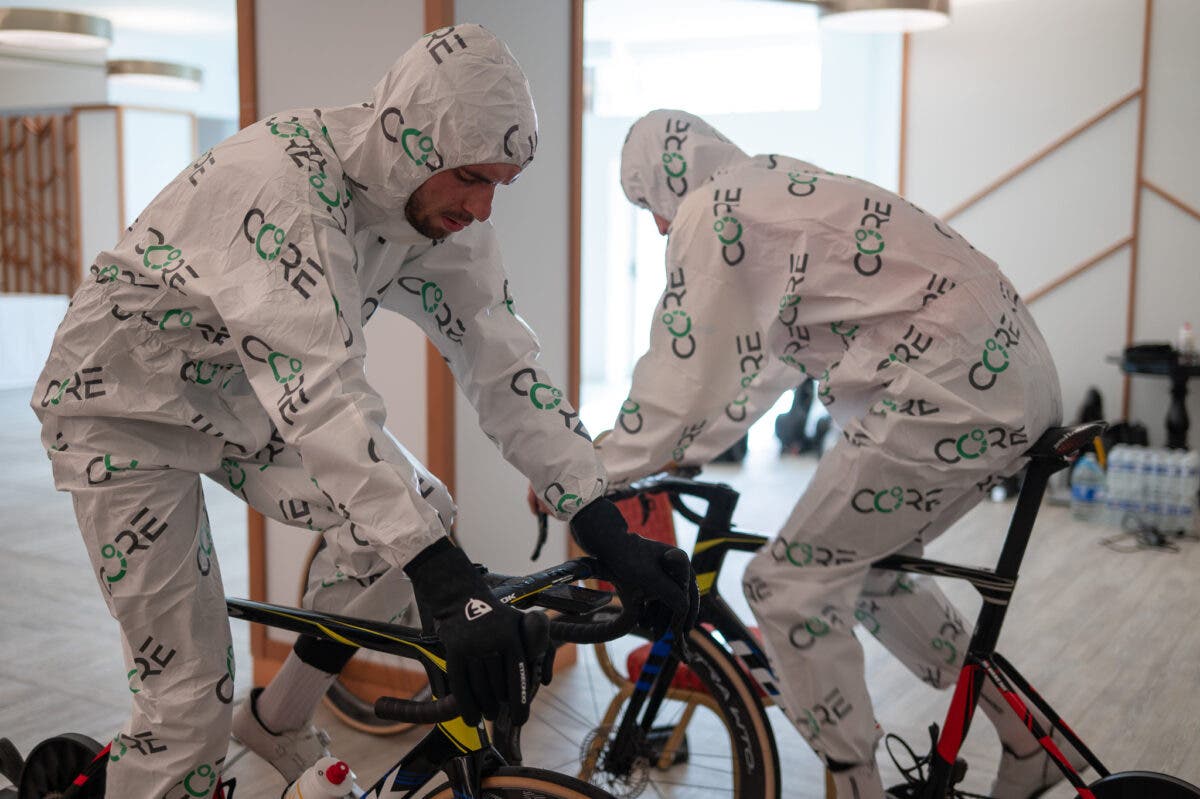
Eagle-eyed doomscrollers will have noticed a growing deluge of content showing athletes suffering in saunas or training indoors wearing painter’s overalls.
Heat training is one of the hottest, most powerful trends of the post-pandemic peloton.
In fact, it’s widely considered one of the driving forces behind the high-speed evolution of the sport – alongside high-carb fueling, torque workouts, and the brutal modern take on zone 2 training.
And this year’s Tour de France is showing just how important it is to brave these awful overheated workouts.
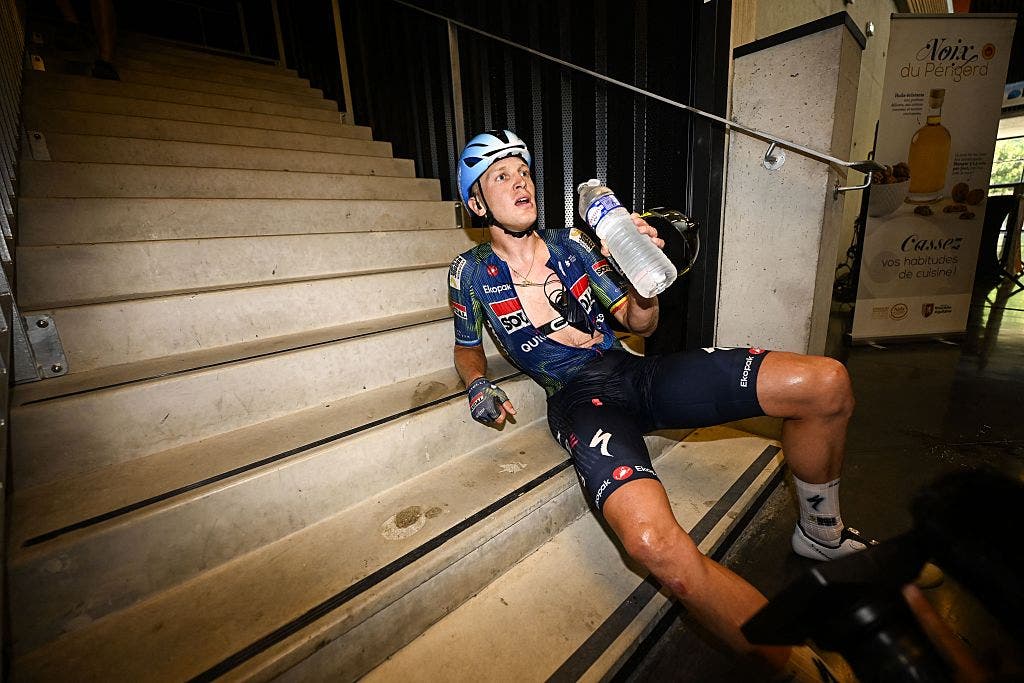
The mercury barely moved from the mid-30s in the first week of the race. Temperatures averaged 37°C on stage 4 into Foix and stage 8 into Bergerac, making them the two hottest days of the Tour de France in 20 years.
Temperatures have gotten so extreme that officials even pressed the emergency red button to cut 30km from stage 9 due to exceptional heat.
Maintaining performance in a Tour de France heatwave
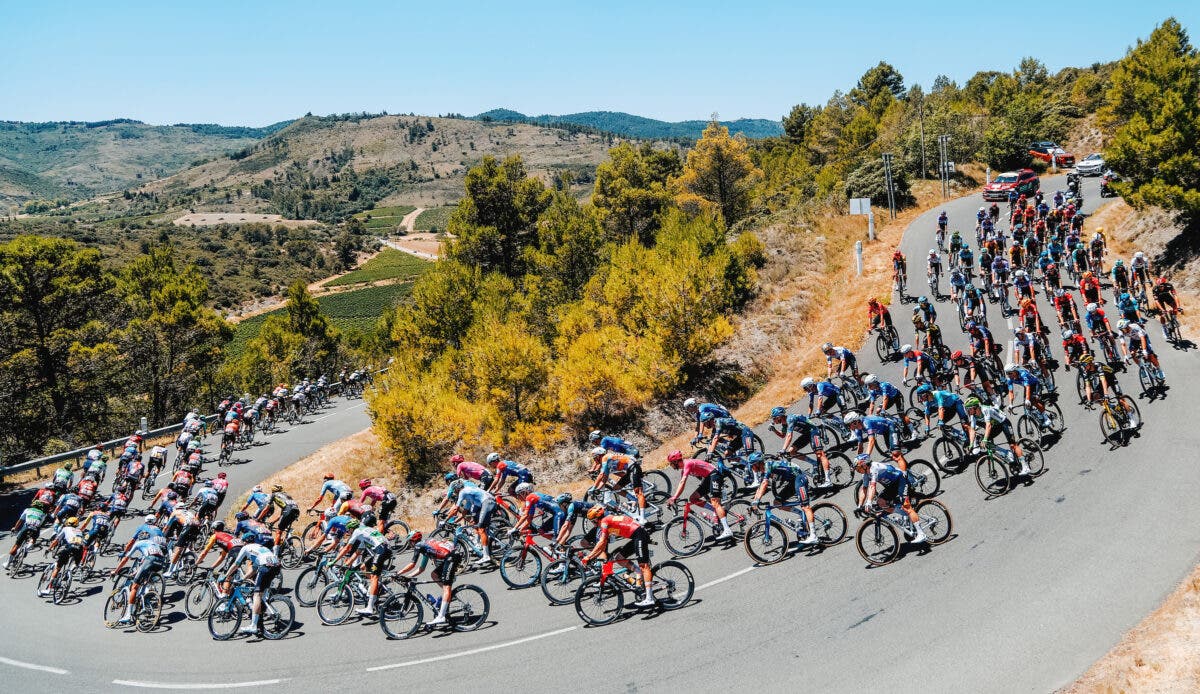
Topical cooling with “ice socks” or freezing the guts with slushies is no longer enough in this rapidly warming world.
The world’s biggest teams now proactively prepare for extreme heat rather than react to it when it comes.
Specific heat training preserves performance at extreme temperatures by increasing sweat rate and blood plasma volume and lowering heart rate.
“Heat training is definitely a much bigger part of our preparation now,” Decathlon CMA-CGM head of performance Stephen Barrett told Velo.
“We’re seeing it has a positive impact on riders’ abilities in the heat,” he said. “In terms of tolerating the temperatures at this Tour, we’ve definitely had fewer issues than in the past.”
As Barrett suggests, this freak European heatwave isn’t slowing the peloton down.
Red Bull-Bora-Hansgrohe head of performance John Wakefield likewise told Velo he sees a correlation between heat training and sustained performance in what’s been the hottest Tour in recent memory.
The numbers reinforce their suspicions.
Mads Pedersen and Tim Merlier rattled to victories in the 37°C cookers of Foix and Bergerac at an average of 44kph and 46kph, respectively. Tadej Pogačar blasted up the sun-baked Col du Tourmalet on stage 6 in a new record time.
Taking heat training beyond temperature acclimation
Heat training is a hot topic in modern endurance. But it’s certainly not “new.”
Athletes have been steaming up in their winter jackets to prepare for mid-summer racing for decades.
What has changed is that recent research demonstrating heat training’s impact on blood markers has pushed this “accessory” workout further forward in the training mix.
Studies through the turn of this decade showed heat training triggers a powerful physiological cascade that improves performance at all temperatures.
Blood plasma volume increases when the body is put under repeated heat stress. This dilutes red blood cell concentration and triggers a release of natural EPO (yes, that EPO). This stimulates the production of performance-boosting red blood cells. Et voila, hemoglobin mass increases, VO2 Max improves, and exercise efficiency increases.
In a sport where athletes do almost anything for the most marginal gains, those are things worth sweating for.
Boiler suits and sweat-rotten winter outfits are now stored alongside nose strips and blood flow restriction cuffs in “the weird drawer” of a Tour de France rider’s training wardrobe.
Active vs. passive heat training
Heat training has moved from being a niche component to a crucial non-negotiable in the WorldTour training program.
But all teams approach it differently.
Pogačar recently spoke of his team’s increased focus on actively training in the warmest sun of his recent altitude camps.
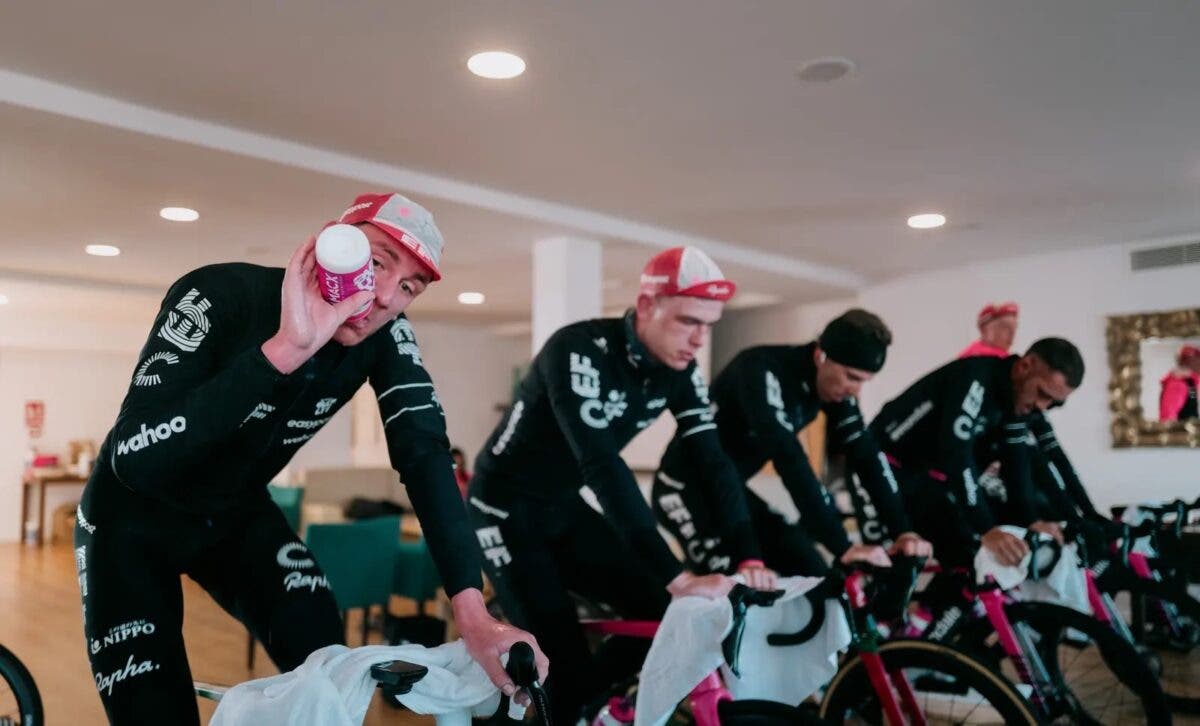
Others use gruesome indoor sessions that have riders wearing hazmat suits or a full winter wardrobe in low-intensity boil-on-a-bike workouts.
Many use a hybrid of the two.
All of these strategies are typically supplemented with “passive” sessions where riders sizzle in a sauna or bubble in an extra-hot bath.
And of course being the data-obssessed WorldTour, heat training is tracked, monitored, and measured.
Many teams use CORE temperature sensors to ensure riders heat up enough to trigger a heat stimulus without the risks associated with overheating. The brand claims UAE Emirates-XRG, Lidl-Trek, and Soudal Quick-Step as part of its blockbuster roster of leading WorldTour teams.
Others are skeptical of the CORE tracker’s accuracy and stick to old-school internal temperature pills or even RPE.
A recurring theme in the Tour de France training program
Heat training for temperature acclimation is most effective performed in concise blocks. Around 10-14 sessions across 2-3 weeks is thought to be best.
Velo‘s training guru Zach Nehr detailed a full heat training guide, here.
Tour de France teams typically introduce these acclimation sessions before early-season desert racing and again ahead of summer.
Targeting heat training around altitude camps adds the bonus of bigger, redder blood to the thermoregulation benefits.
Heat training before altitude “prepares” riders for thin air and boosts the efficiency of costly camps to Teide or Sierra Nevada. Active heat training after a trip to altitude prolongs the hard-earned hypoxic benefits.
No hiding from heat training
For now, there’s no clear consensus on how to best turn up the dial on heat training, whether for improved thermoregulation or a hemoglobin boost.
Boiler suits, indoor trainers, and temperature sensors? Or burning up on the tarmac of Sierra Nevada?
Ongoing research will likely answer many of the questions that still circle around heat training.
For example, EF Education-EasyPost and CORE recently released a study suggesting that riding outdoors in the heat won’t produce meaningful adaptations unless workout intensity is sufficiently high.
What is certain is that some type of heat training is a non-negotiable. The longevity of the peloton’s collective handlebar tape has never been shorter.
[analyse_source url=”https://velo.outsideonline.com/road/road-racing/tour-de-france/heat-training-tour-de-france/”]