[analyse_image type=”featured” src=”https://images.euronews.com/articles/stories/09/83/57/39/1200x675_cmsv2_5f40dc16-cf67-5541-9ef8-5350538daa60-9835739.jpg”]

Paris to summon Russia envoy over ‘vast cyber campaign’

Shark fin trade slows in the EU, but how far off is a total ban?

Europe records 10,000 excess deaths during June heatwaves, data shows

Disney’s live-action ‘Moana’ capsizes at the box office
Paris to summon Russia envoy over ‘vast cyber campaign’
Shark fin trade slows in the EU, but how far off is a total ban?
Europe records 10,000 excess deaths during June heatwaves, data shows
Disney’s live-action ‘Moana’ capsizes at the box office
Cruises worsen overtourism and pump out emissions, so why are they taxed less than hotels?
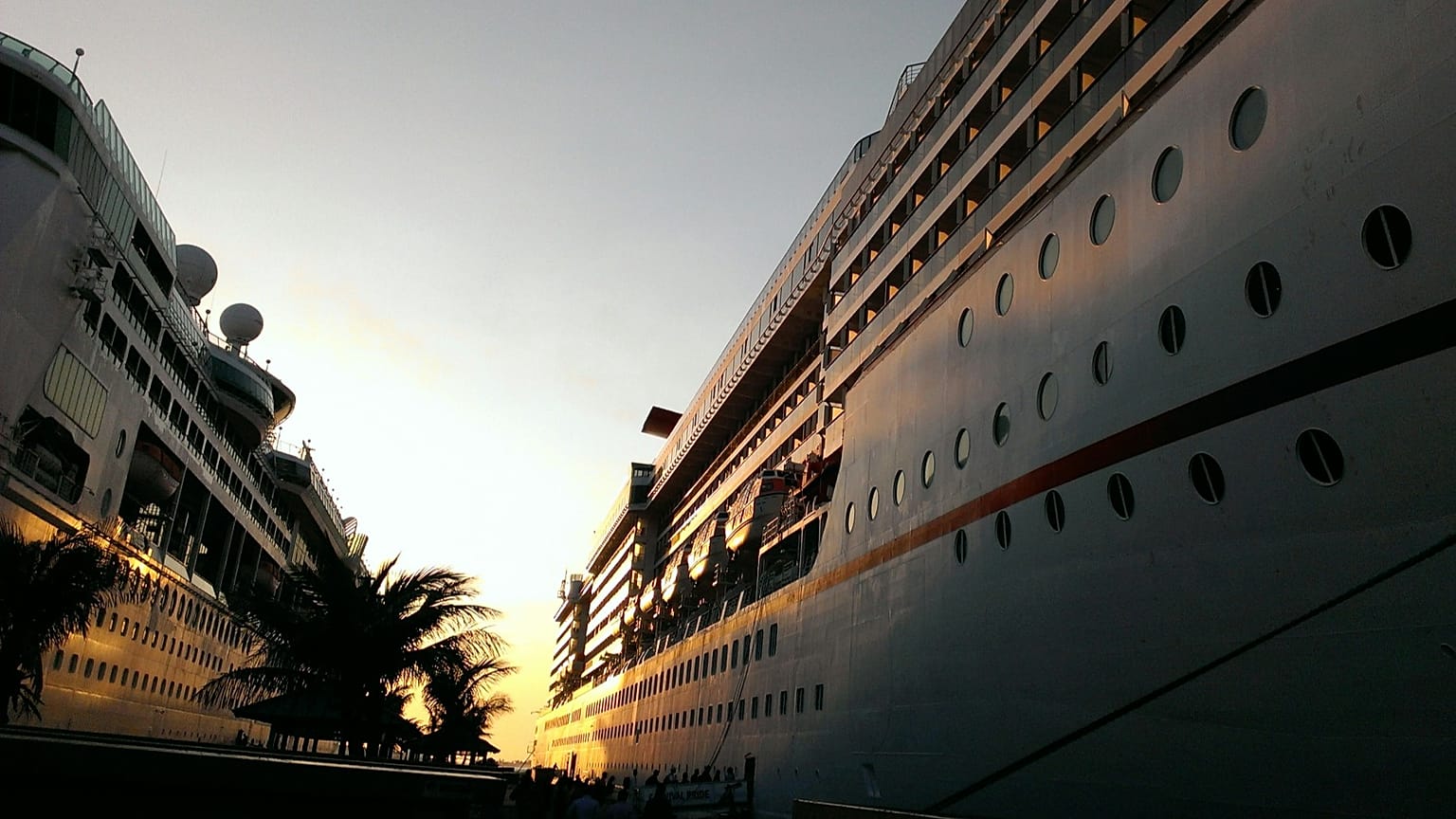
Transport & Environment (T&E) is calling for tax reforms to ensure that cruise ships ‘pay their fair share’
– Copyright Photo by Linval Ebanks on Unsplash

 Facebook
 Twitter
 Flipboard
 Send
Send Reddit
 Linkedin
 Messenger
 Telegram
 VK
VK Bluesky
 Threads
 Whatsapp
A €15 tax per passenger per port call would raise €335 million a year in Italy, France, and Spain combined, according to Transport & Environment’s modelling.
A night on a European cruise is taxed almost half as much as a night in a hotel despite their high environmental costs and contribution to overtourism, a new study has found.
 ADVERTISEMENTADVERTISEMENT
The NGO Transport & Environment (T&E) found that a loophole allows cruise liners to avoid paying VAT and fuel taxes, among other things.
The organisation is calling for tax reforms to ensure that ships “pay their fair share”.
Cruises have ‘same benefits as freight transport’
A night on a cruise ship is taxed 40% less than a hotel, the T&E study shows. That is despite their high environmental and climate costs, and the strain they put on local infrastructure.
The analysis looked at the taxes for €100 a night hotels in France, Italy and Spain, and compared them to cruises with similar prices. On average, people who stay at hotels will pay 23% of the price in taxes, while cruise passengers will only pay 12%.
Cruises are legally classified as a form of maritime transport, while in practice they function as holiday accommodation. This loophole allows them to avoid paying VAT and fuel taxes, among other things, the organisation says.
“We are treating floating hotels like they are essential maritime infrastructure,” said Fanny Pointet, Shipping Manager at T&E.
“Cruises are not a mode of transportation but the destination itself, yet we are giving them the same benefits as freight transport. Taxing cruise ships properly would help cities to tackle the pollution and to address concerns of overtourism.”
The study shows that a large share of negative emissions – greenhouse gases and air pollutants – generated by cruise ships are not covered by existing tax policies.
In France, Spain and Italy, those external costs (i.e. real-world damage) ranged between €790 million and €1.3 billion in 2025, according to the research.
On average, the climate-related external costs of this sector exceed what it pays under the EU’s carbon trading system (ETS) by a factor close to two to three. For costs related to air pollution, there is no such tax existing at the EU level.
Higher taxes, caps and VAT needed
A €15 tax per passenger per port call would raise €335 million a year in Italy, France, and Spain combined, according to T&E’s modelling.
These revenues could go back to national budgets, be earmarked for the protection of ecosystems in coastal areas or used to finance green infrastructure like onshore power supply.
But these taxes won’t be enough by themselves to close the gap between the environmental cost of cruises and what they pay to compensate, the organisation says.
“A cruise ship levy must be viewed as part of a broader regulatory mix,” Pointet said. “To fully mitigate the sector’s environmental footprint, parallel supply-side policies are necessary.”
T&E recommends strengthening EU regulations on sustainable marine fuels (FuelEU Maritime) and tightening energy efficiency benchmarks.
Cruise ship traffic could also be restricted when necessary, for example by capping the number of daily or annual port calls. Finally, VAT for cruise ships should be aligned with land-based tourism, says T&E.
Go to accessibility shortcuts
Read more
Barcelona proposes to nearly triple tourist tax on cruise passengers
Inside one of the world’s most popular cruises around Europe
Could this giant floating city become the world’s biggest cruise ship?
Barcelona proposes to nearly triple tourist tax on cruise passengers
Inside one of the world’s most popular cruises around Europe
Could this giant floating city become the world’s biggest cruise ship?

F1 driver Esteban Ocon reveals his holiday hidden gems

Euronews Travel Channel – Travel News, Guides, Magazines & Inspiration | 24/7

From Pompeii to Bratislava: Europe’s top sightseeing stops this summer

Airline stopover programmes you need to know about
Europe’s surprising beach rules travellers should know this summer
Norwegian adopts British Airways logo after 2-1 loss to England
Nine European countries urge EU to ease EES border checks
UK’s first live-action historical show park to open in July
Airline stopover programmes you need to know about
Newly released map reveals untouched nature spots in Sweden
[analyse_source url=”https://www.euronews.com/travel/2026/07/13/cruises-worsen-overtourism-and-pump-out-emissions-so-why-are-they-taxed-less-than-hotels”]