[analyse_image type=”featured” src=”https://velo-cdn.outsideonline.com/wp-content/uploads/2026/07/GettyImages-2284342304.jpg”]
Jonas Rickaert crossed the finish line of a brutally hot Tour de France stage 10 pounds lighter than when he started.
That eye-popping number reveals the brutal dehydration riders are facing each day in the sweltering 2026 Tour.
“Yesterday, I lost quite a lot, but I think now it’s already stable again. Yesterday 4.5 kilos and the day before, a good 5 kilos,” Rickaert told TNT this week. “It’s quite a lot, but I think it’s normal for a heavy guy.”
With temperatures pushing 100 degrees during the opening week, riders are sweating away pounds of body weight in every stage.
Rickaert’s Alpecin-Premier Tech has the challenge that every Tour team is facing in this heat: refill the tank before the next stage.
“Every night we try to recover as much as possible of that fluid loss to make sure that the net loss is as little as possible,” Alpecin’s head of performance Kristof de Kegel told Velo.
“If you miss one window of opportunity, then you’re behind for the rest of the Tour.”
Every stage is a race to the finish line, and in this heat-ravaged Tour, it’s another one to replace every lost liter before the next day’s start.
Losing 5kg, then guzzling it back in
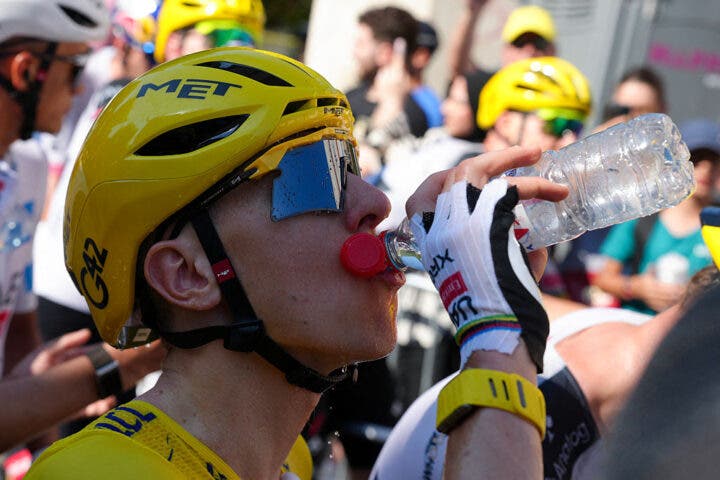
The 6-foot-2 brawny Belgian is an extreme case, because bigger riders sweat and struggle more to keep up in the heat.
“Generally a lightweight rider is more efficient overall, and they are much more efficient at staying on top of hydration,” De Kegel told Velo.
“Of course, a big guy like Jonas Rickaert — don’t forget that he’s one of the biggest riders — his example is a bit extreme. He is around 87-88 kilos.
“So then losing 4 to 5 kilos in 38-degree heat over five hours is not completely normal. Of course it shows that the conditions are extreme, but it’s not something completely abnormal.”
Of course, not every rider is sweating out 5kg every stage and it’s not a running tally over three weeks.
De Kegel said the daily weight loss is almost entirely fluid, and the goal is to replace it overnight so riders start each stage fully hydrated.
With temperatures hovering around 100 Fahrenheit during the opening week of the Tour, every team is fighting the same battle to keep riders hydrated, cool, and performing.
Speaking outside the team bus, De Kegel walked Velo through Alpecin-Premier Tech’s hydration routine that begins the moment a stage ends.
Staffers ply riders with bottles of recovery drinks as soon as they cross the line, and then they’re weighed at the team bus to calculate exactly how much weight they lost.
Then the clock starts, with roughly 16 to 18 hours to replace fluid and sodium before the next day’s racing begins.
The first hour after the finish may be the most important of the day. That’s when teams start trying to replace everything the riders just sweated out.
“We know that the body is really sensitive in the first hours after exercise for rehydration,” De Kegel said. “Then we use all the time until the next morning before the start to catch up on the fluids and on the salt reserves as well.”
That can mean riders are guzzling five to six liters of liquid before going to bed.
“The riders are always traveling. Some hours they’re in the bus, later they’re at massage, then they’re in their room,” he said. “You have to make sure the complete rehydration process follows the riders.”
Checking weight and tracking bathroom breaks
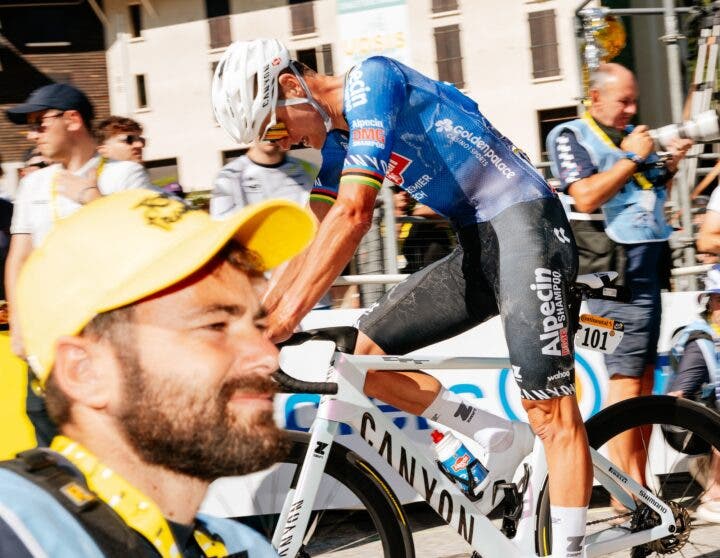
It’s not as simple as chugging water. Riders also need sodium to help hold onto the fluid they’re drinking.
“We know that water is not the greatest thing if you want to keep the fluid in the body,” De Kegel said. “We have to add sodium to make sure the body takes it up and keeps it there.”
Riders are weighed again in the morning to see how much of the previous day’s loss they’ve recovered.
Teams even factor in bathroom stops when calculating how much fluid a rider actually lost.
The stakes go beyond water weight and reach into performance and health.
“Because if you lose your plasma volume, blood-wise, your cardiac output drops a lot, and then you see high heart rates and low power outputs,” he said. “That’s of course what we want to avoid.”
Staff also monitor riders closely for warning signs, using everything from urine color to hydration strips to track how well each rider is recovering.
“The color of the urine is a good first indicator, how much there is and what color it is. Then we also use hydration strips that give us extra information,” De Kegel said.
“Of course, at a certain point the doctor can say, ‘Now it gets dangerous for the kidneys, liver, or whatever.’ But I think all the teams are surrounded with the right people to make sure this doesn’t happen.”
The race to stay hydrated
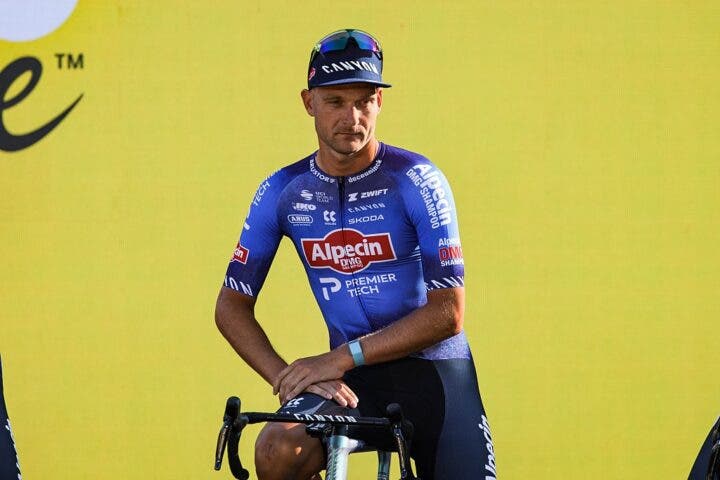
The most complicated part of the hydration process comes during the race itself.
Getting bidons passed up to the riders buzzing along at 45kph is already a logistical and practical challenge.
And the harder riders push, the harder it becomes for their bodies to absorb the fluids they desperately need.
Add 100-plus-degree days, and that problem is compounded.
“The blood is going to the heart, the lungs and the muscles, and at the same time you’re asking the stomach and the gut to absorb energy and, in this case, fluid,” De Kegel said. “That makes it hard for the riders.”
Some riders are taking 10 to 12 bottles in a single stage and the rider in Wednesday’s breakaway emptied 15.
And they can still finish the day dehydrated.
“That’s extreme,” he said. “Just try that yourself while exercising, taking in 1 liter or even more every hour while making a hard effort. Of course the stomach starts protesting.”
That’s what riders are facing during this heatwave edition of the Tour de France.
Lose 10 pounds in one stage, spend the next 16 hours trying to get it back, then do it all over again.
[analyse_source url=”https://velo.outsideonline.com/road/road-racing/tour-de-france/riders-lose-10-pounds-day-heat-how-they-hydrate-tour-de-france-heat/”]