[analyse_image type=”featured” src=”https://velo-cdn.outsideonline.com/wp-content/uploads/2026/07/DSC_5795-Edit.jpg”]
Pros
Use of rare Torayca M40X carbon fiber increases stiffness to weight
35mm tire clearance is progressive for a race bike
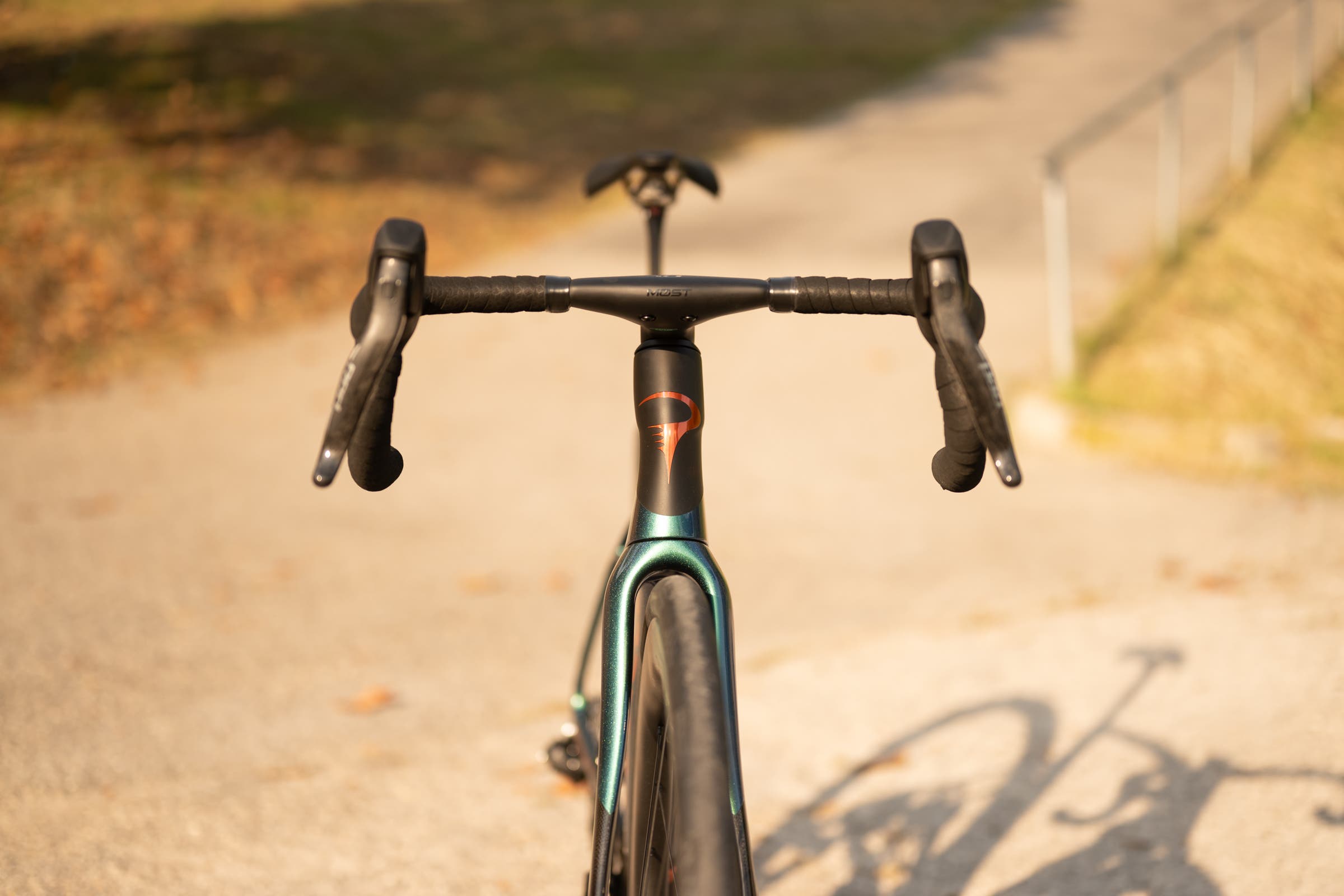
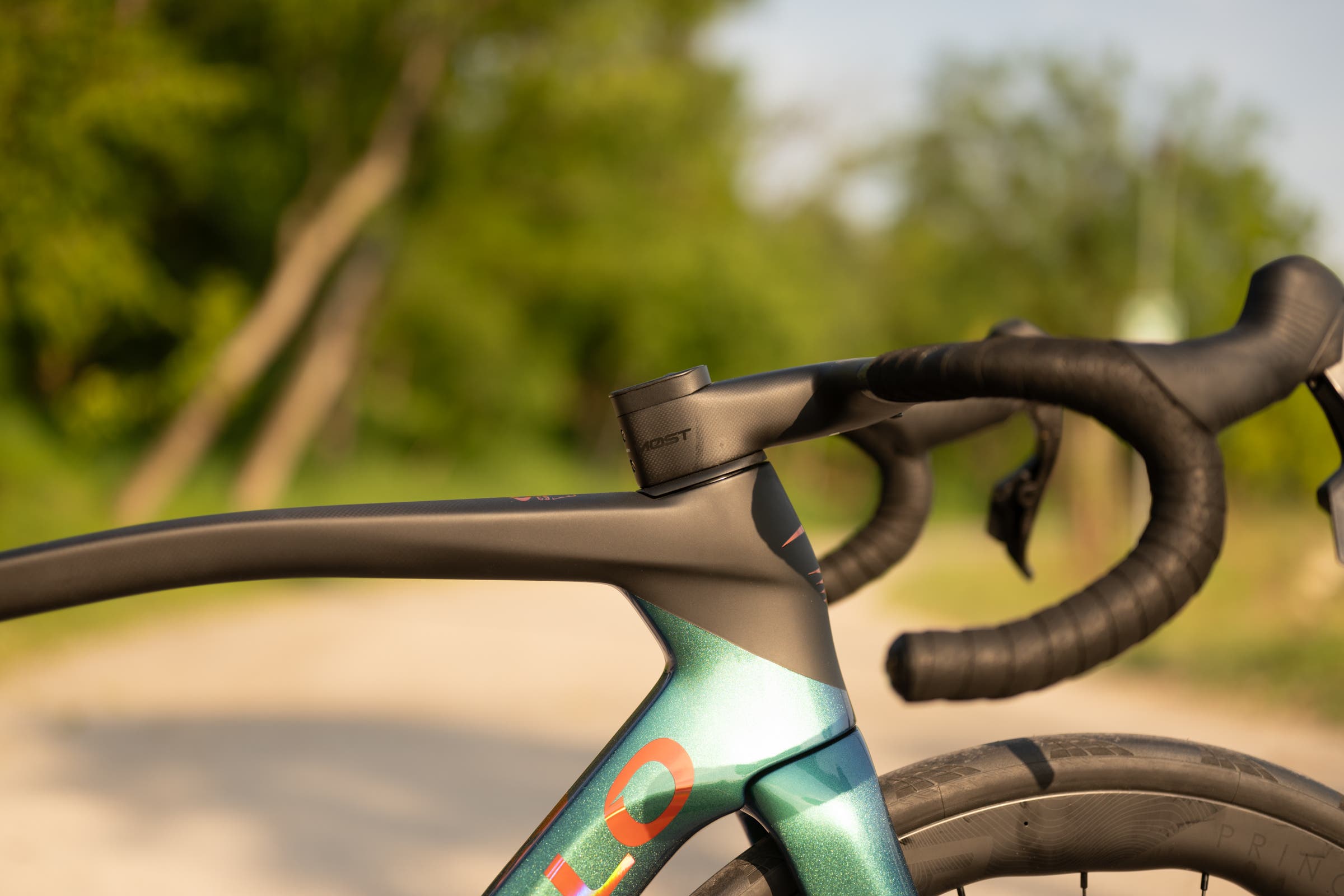
Elliptical steering tube and tapered downtube reduce the width of the front end to improve aerodynamics
Geometry changes are minimal compared to a race bike
SRAM UDH compatibility via a dual-mount dropout system
Pinarello offers more sizes than many brands
Cons
The X-Stays add material to the rear triangle to address vibration damping that is already handled by tires and layup
Despite endurance or all-road marketing the Dogma X is a race bike
The Pinarello Dogma X feels like it could easily be a flagship race bike but it fits slightly bigger tires and has a little more stack with a little less reach. Endurance bike isn’t the right description, instead consider it a modern race bike.
| Frame | Toray M40X Carbon, eTICR™ Cable Routing, Italian BB |
| Fork | Toray M40X Carbon, Elliptical Steering Tube |
| Integrated Handlebar | MOST Talon Ultra Fast |
| Tire Clearance | 35mm |
| Weight | 7.2kg ready to ride minus pedals in size 55 |
| Groupset Options | Shimano DuraAce Di2, SRAM Red AXS, Campagnolo Super Record 13 |
| Wheel Options | Princeton Grit 4540 Evolution, Campagnolo Bora Ultra WTO 45 |
| Rear Dropout | SRAM UDH compatible dual-mount system |
| Colorways | Moonlight Frost, Jade Eclipse, Etna Lucente, Aqua Veil |
| More info | Pinarello Website |
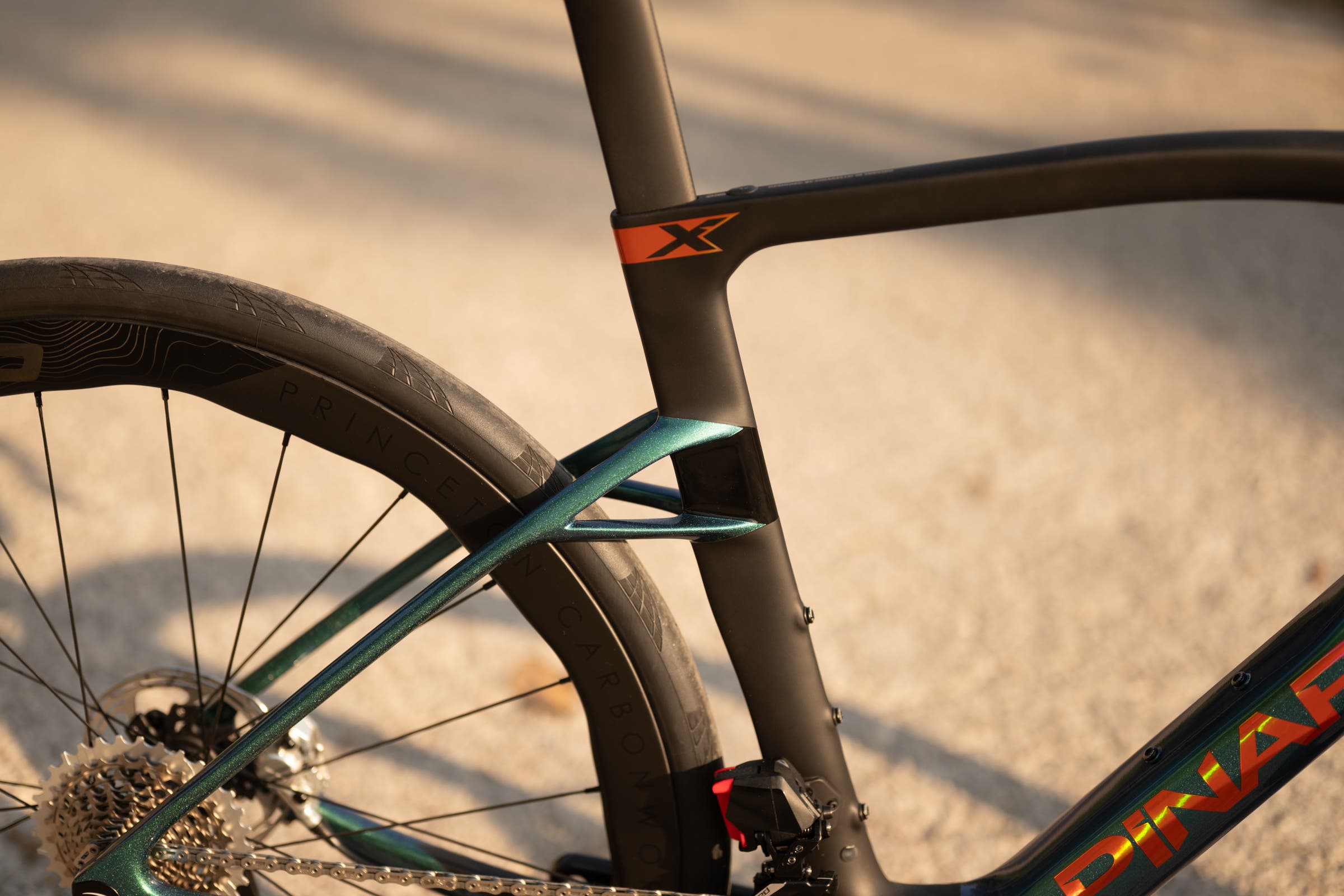
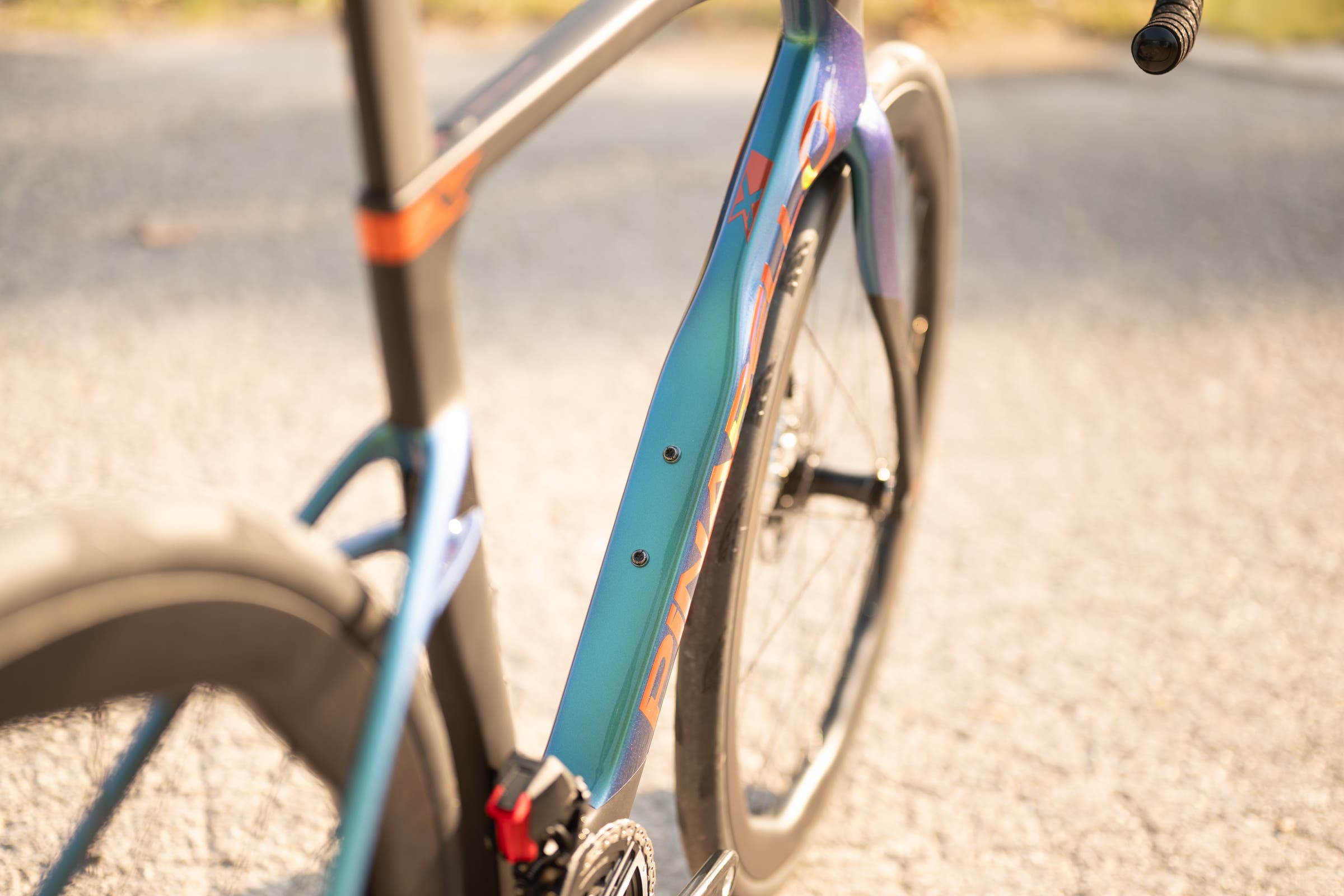
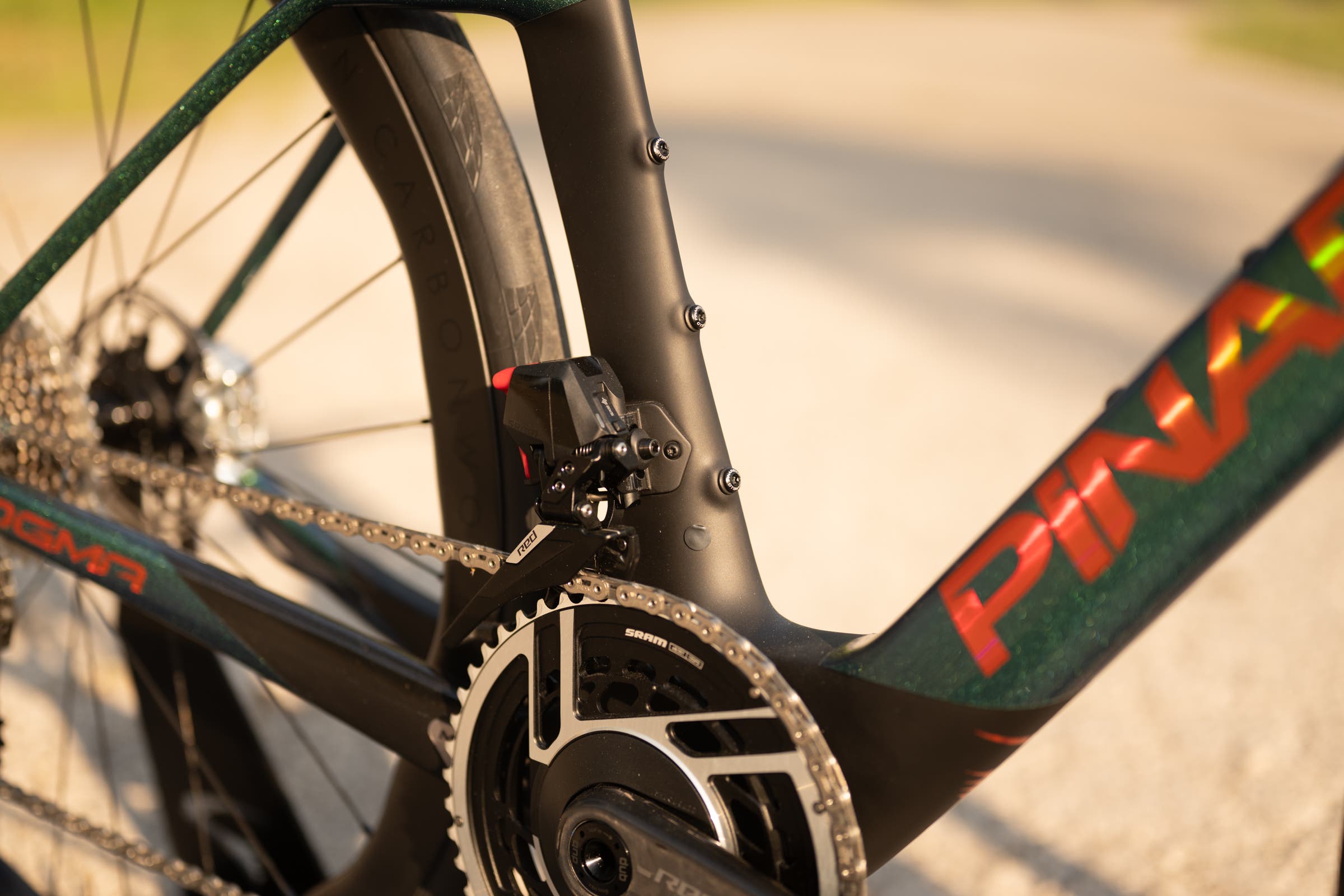
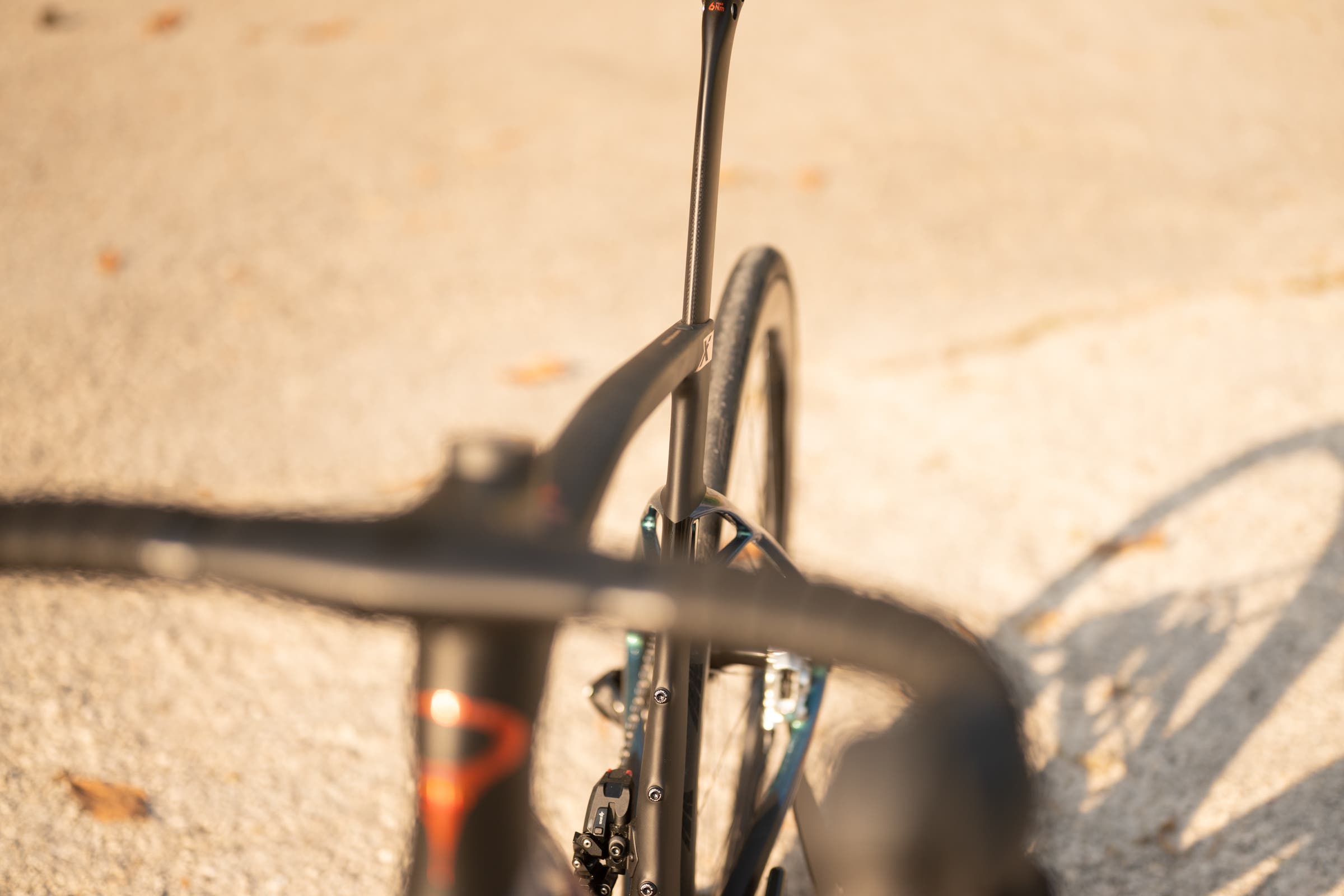
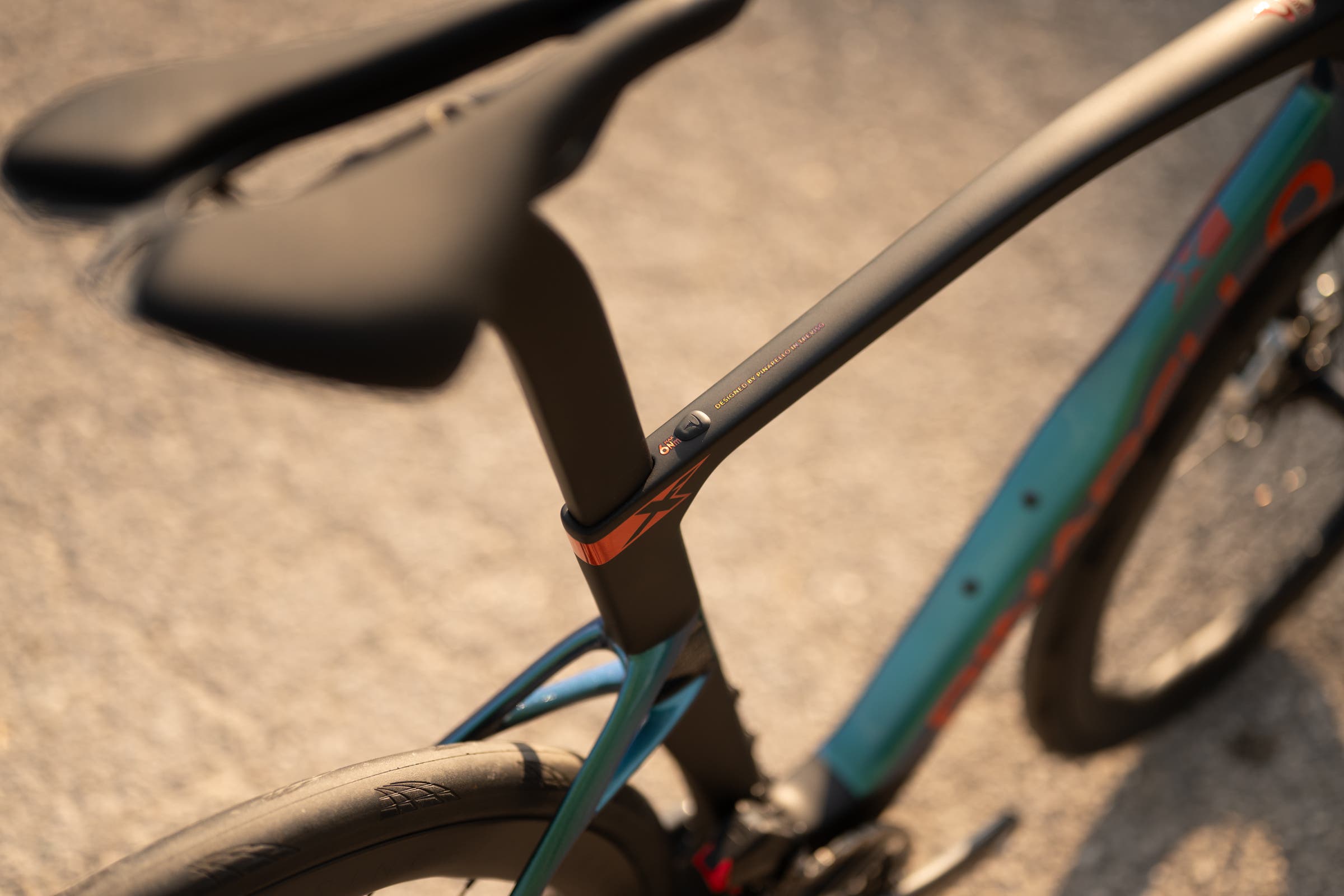
Today, Pinarello is launching a new version of the Dogma X. It is the latest in a line of bikes that carries the X moniker, marking it as an endurance platform rather than part of the race-focused F line. Pinarello also includes a clever visual on the Dogma X, with seat stays that form an X when viewed from the right angle.
That is not really what this bike is about, though. I was in Italy riding it not long ago, and that time on the road gave me a chance to understand what this bike truly is. This bike is a Dogma, and in Pinarello parlance, that means it represents the best of what the brand offers. In many ways, this bike mirrors the flagship in the F series race line. Innovations in construction, like the use of M40X carbon, show up here as well.
That carbon is something I covered when discussing the XDS X-LAB RT9, and it is reasonably unique in the bike world. The RT9 uses it, but otherwise, its use is largely limited to Pinarello, as Toray strictly controls access to the material. The advantage is that you get an exceptionally high-modulus, stiffer material. That means less carbon is needed to achieve the desired frame stiffness, which ultimately saves weight.
XDS uses that property to make a lighter bike, but Pinarello instead uses it to solve a classic engineering problem. When a frame relies on lower-modulus carbon, the material is less inherently stiff. Preventing the bike from flexing laterally under pedaling forces requires thicker tube walls and more layers of carbon. By the time those walls are thick enough to transfer power efficiently, the structure is too rigid to move vertically and the ride suffers.
Upgrading to M40X allows Pinarello to maintain high lateral stiffness using significantly thinner tube walls. That allows for greater flexibility. Because the tubes no longer rely on thickness for rigidity, engineers can manipulate the geometry of the tubes to create compliance. The thinner carbon walls can deflect under a vertical load to absorb road chatter, then spring back, without losing the sharp, responsive feel expected from a race bike.
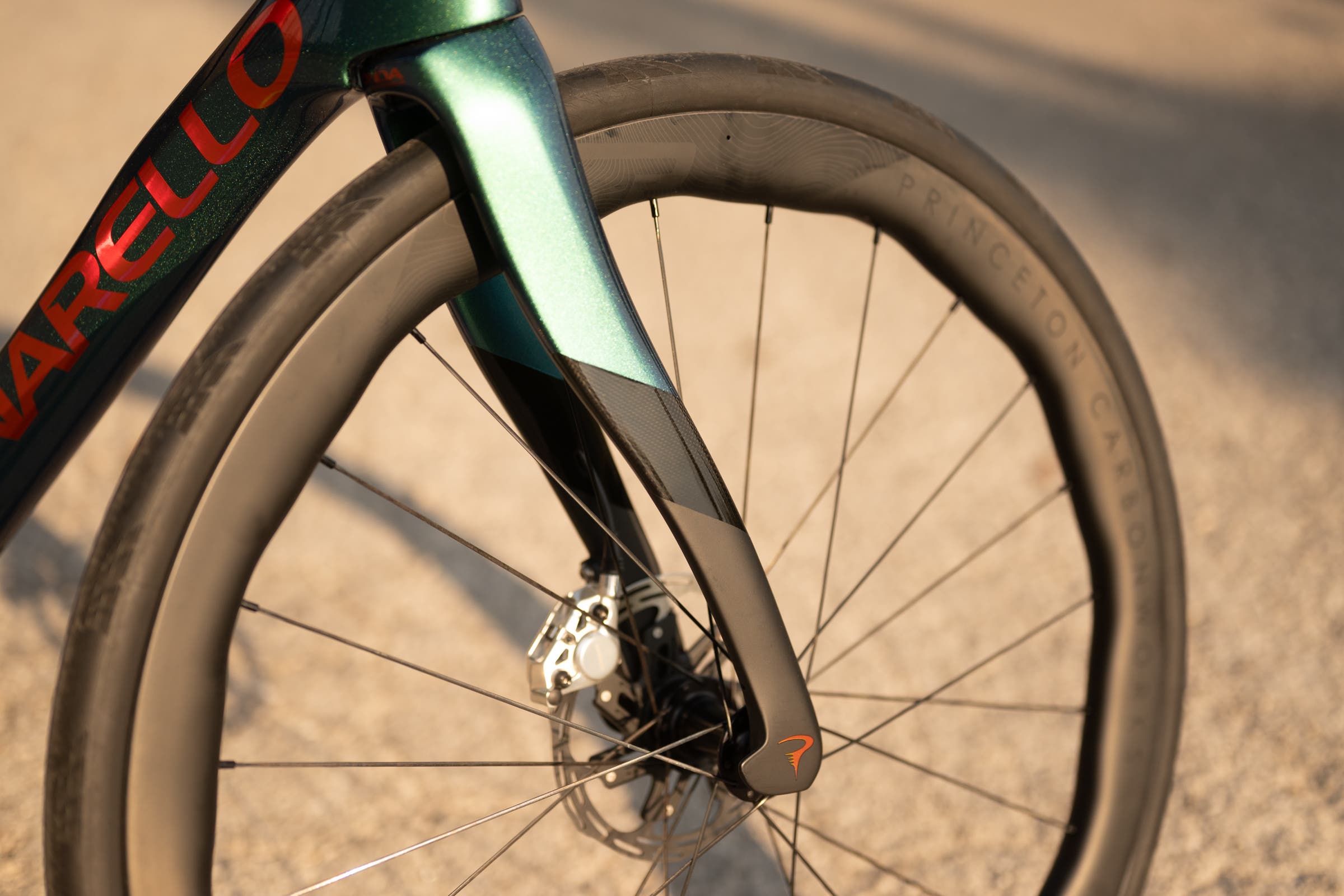
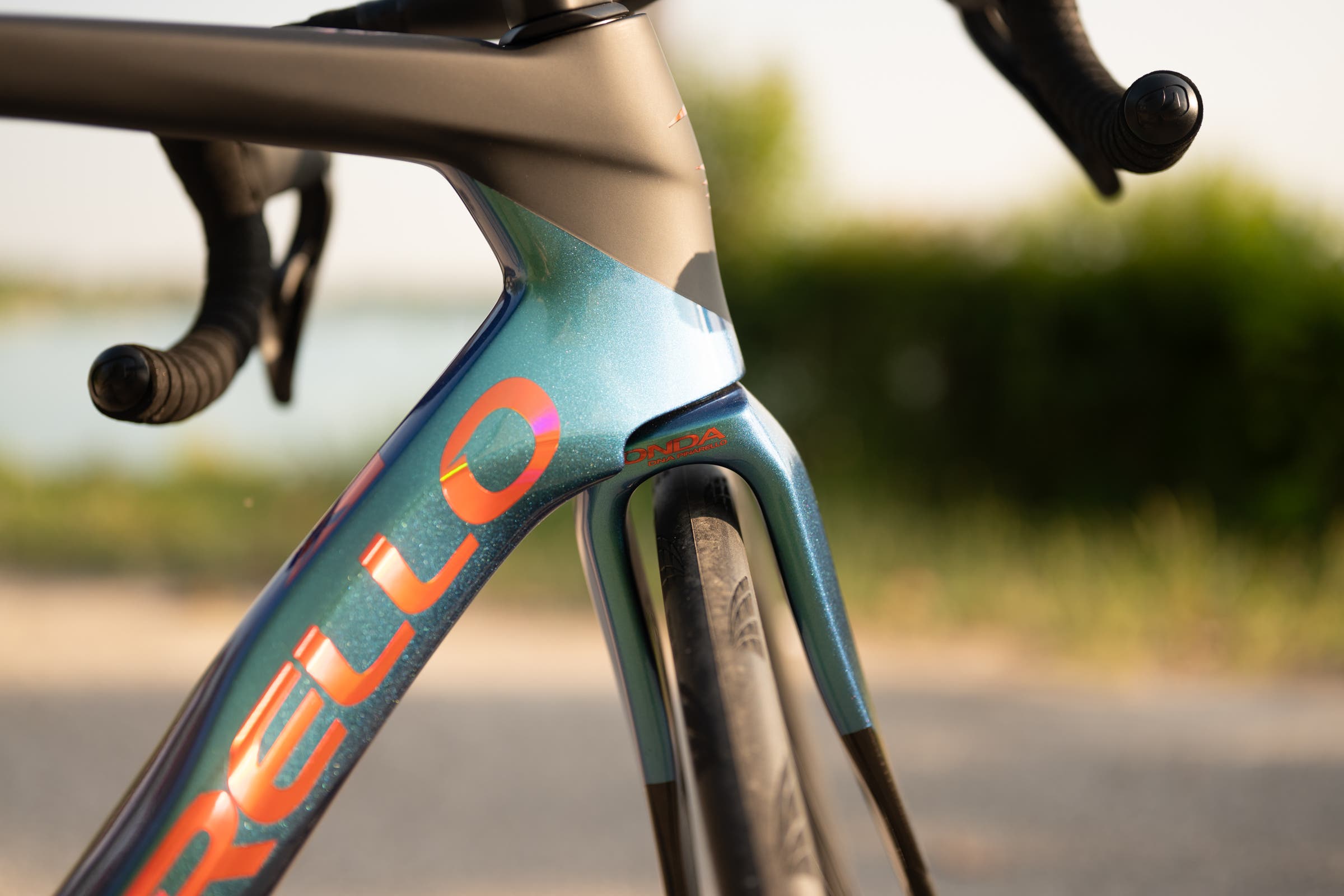
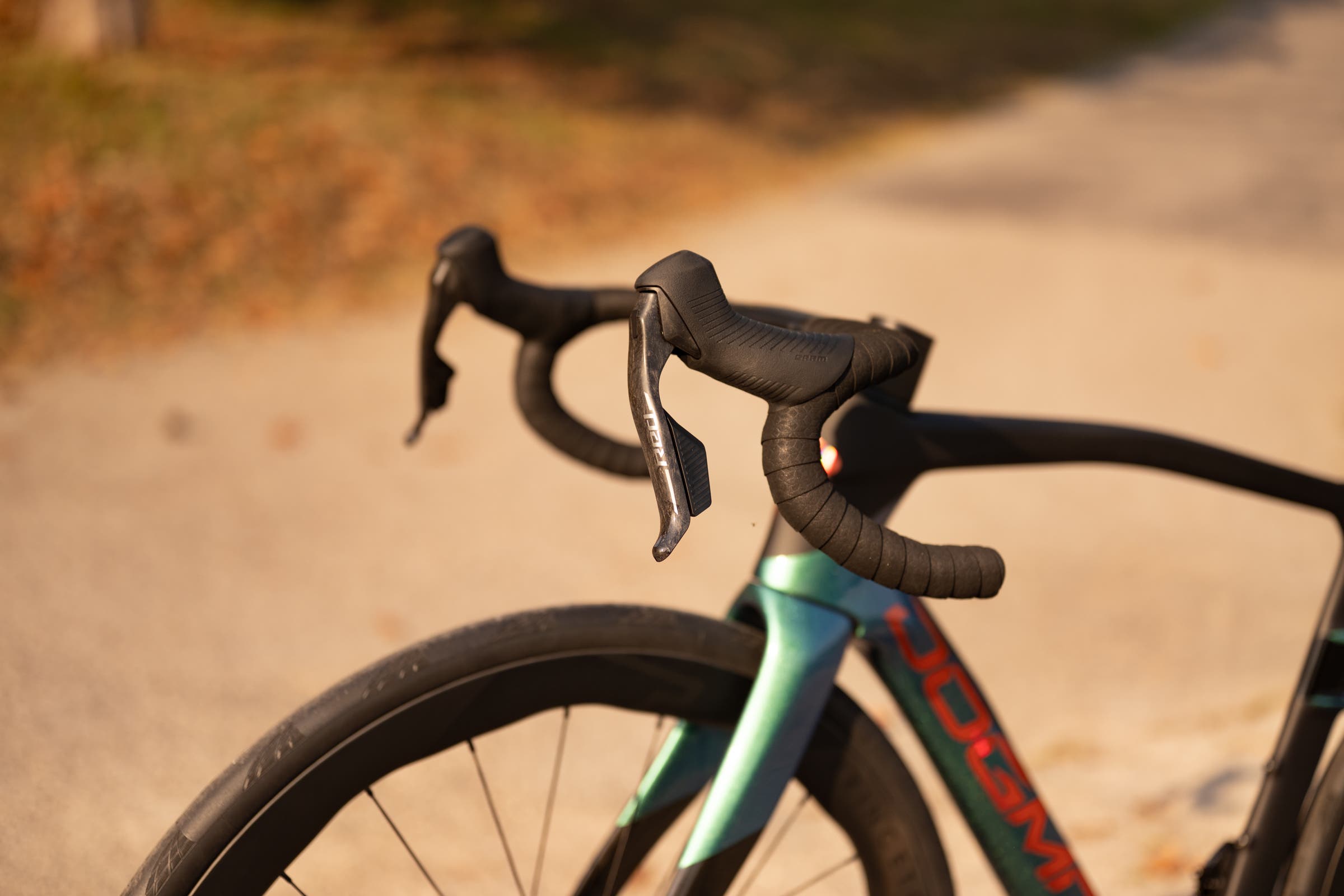
The shared engineering also extends into the aerodynamic details. Like the latest Dogma F, you’ll find an ovalized steerer tube that frees up room for internal cabling. This allows Pinarello to narrow the headtube width for less material punching through the wind. The frame also incorporates shielded thru-axle bolts and the lower fork fairings known as “fork flaps.” Essentially, you have got a Dogma F with a few small changes.
What I like about the Pinarello Dogma X
This all boils down to my personality on a bike. I don’t like to ride bikes that feel like a compromise. It wasn’t long ago that I wrote an article titled The Endurance Category is Officially Obsolete. Now I am here to tell you that I like this endurance bike. How does that align?
Simple, it doesn’t. This isn’t an endurance bike or an all-road bike, no matter what Pinarello tries to say. When you ride this bike, it feels like an all-out race bike. At no point during the ride will you question if it feels dull, because it doesn’t. You can tuck in and get aero, it’s stiff when you climb, and descents are precise. As I was riding, I was mentally questioning what Pinarello could possibly be pointing to in calling this an endurance bike. Surely it was just the latest version of the flagship race bike, right?
The answer is: kind of. The Pinarello Dogma X is what happens if you were to look at the Dogma F and ask how it could be modernized and made better for more people. The first thing that changes is the clearance for 35mm tires. Most people probably won’t run 35mm tires on this bike, but there are certainly riders who want more volume than the 30mm max clearance on the Dogma F. During my time on the bike, I was running 32mm tires and, like the rest of the frame, it felt like a fast race bike. I could have easily mistaken the feel of the bike for the Colnago Y1RS when I put 32mm tires on it.
| Seat Tube Center – End | Seat Tube Center – Center | Top Tube Center – Center | Seat Tube Angle (°) | Headtube Angle (°) | Chainstay | Headtube | BB Drop | Fork Rake | Fork Height | Reach | Stack |
| 415 | 430 | 505 | 74.4 | 70.0 | 422 | 111 | 77 | 47 | 375 | 349.3 | 524.2 |
| 425 | 465 | 515 | 74.4 | 70.0 | 422 | 123 | 77 | 47 | 375 | 358.1 | 535.5 |
| 450 | 500 | 525 | 74.0 | 70.5 | 422 | 128 | 77 | 47 | 375 | 365.4 | 542.1 |
| 470 | 515 | 535 | 73.7 | 71.0 | 422 | 133 | 77 | 47 | 375 | 371.7 | 548.6 |
| 495 | 530 | 545 | 73.7 | 71.5 | 422 | 142 | 77 | 47 | 375 | 379.4 | 559.0 |
| 510 | 540 | 552 | 73.4 | 72.0 | 422 | 150 | 77 | 47 | 375 | 381.2 | 568.4 |
| 520 | 550 | 557 | 73.4 | 72.0 | 422 | 161 | 77 | 47 | 375 | 383.0 | 578.9 |
| 525 | 560 | 565 | 73.0 | 72.5 | 422 | 169 | 77 | 47 | 375 | 384.6 | 588.4 |
| 540 | 575 | 575 | 73.0 | 72.8 | 422 | 182 | 77 | 47 | 375 | 390.8 | 601.7 |
| 560 | 595 | 595 | 72.4 | 73.0 | 422 | 218 | 72 | 47 | 375 | 395.3 | 632.0 |
| 600 | 620 | 620 | 72.0 | 73.0 | 422 | 258 | 72 | 47 | 375 | 403.8 | 670.3 |
What has changed is that the geometry is slightly altered compared to the Dogma F or other race bikes like the Specialized Tarmac SL9. It’s both not a lot and also quite comprehensive. Basically, Pinarello has touched everything, but with a light touch. The reach is only 3.9mm shorter than the Dogma F, but there’s 16mm more stack, a 16mm longer chainstay (and therefore longer wheelbase), a 5mm lower bottom bracket, and a full degree slacker headtube.
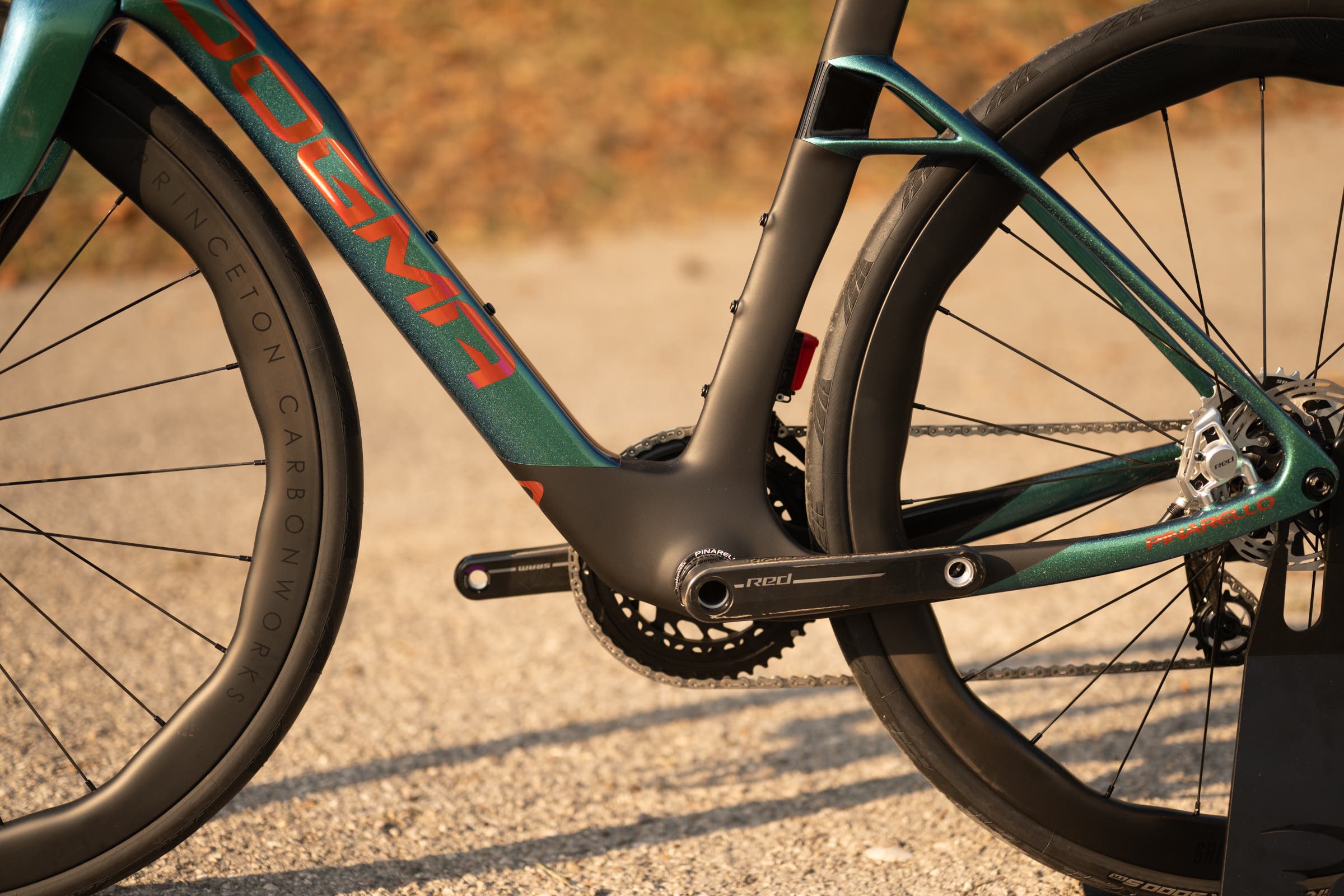
Although it sounds like a lot written out, it doesn’t amount to much on the road. Part of that is the extra stack in particular. Most of the time, press bikes have way too many spacers, so it can be difficult to understand stack changes. This time, there wasn’t a huge stack of spacers, and that’s partly the point for consumers. Like the ENVE Fray, the idea is to take a race bike and build the spacers many riders use anyway directly into the headtube. The result is fewer spacers, but the position doesn’t feel different. If this is an endurance bike, this is how an endurance bike should be.
What I don’t like about the Pinarello Dogma X
Although the section about what I like is always going to be inherently positive, this one is extra positive. I like this bike a lot because it generally fits my riding style, but that’s a double-edged sword. As much as I want to tell you that this isn’t really a typical endurance bike, a part of me wonders why it exists at all. Alternatively, if I were to judge it strictly as an endurance bike, it would fall short.
First, on the “why does this exist” front, let’s talk tire size. The thing I keep trying to wrap my head around is that the Dogma F actually has a max tire clearance of only 30mm. I had to keep checking to be sure I had that right. Surely a bike released in 2024, even a race bike, couldn’t have a max of only 30mm? Except it does, and that matters here because the Dogma X is being billed as an endurance—or all-road—bike, partly because it boasts a 35mm tire clearance.
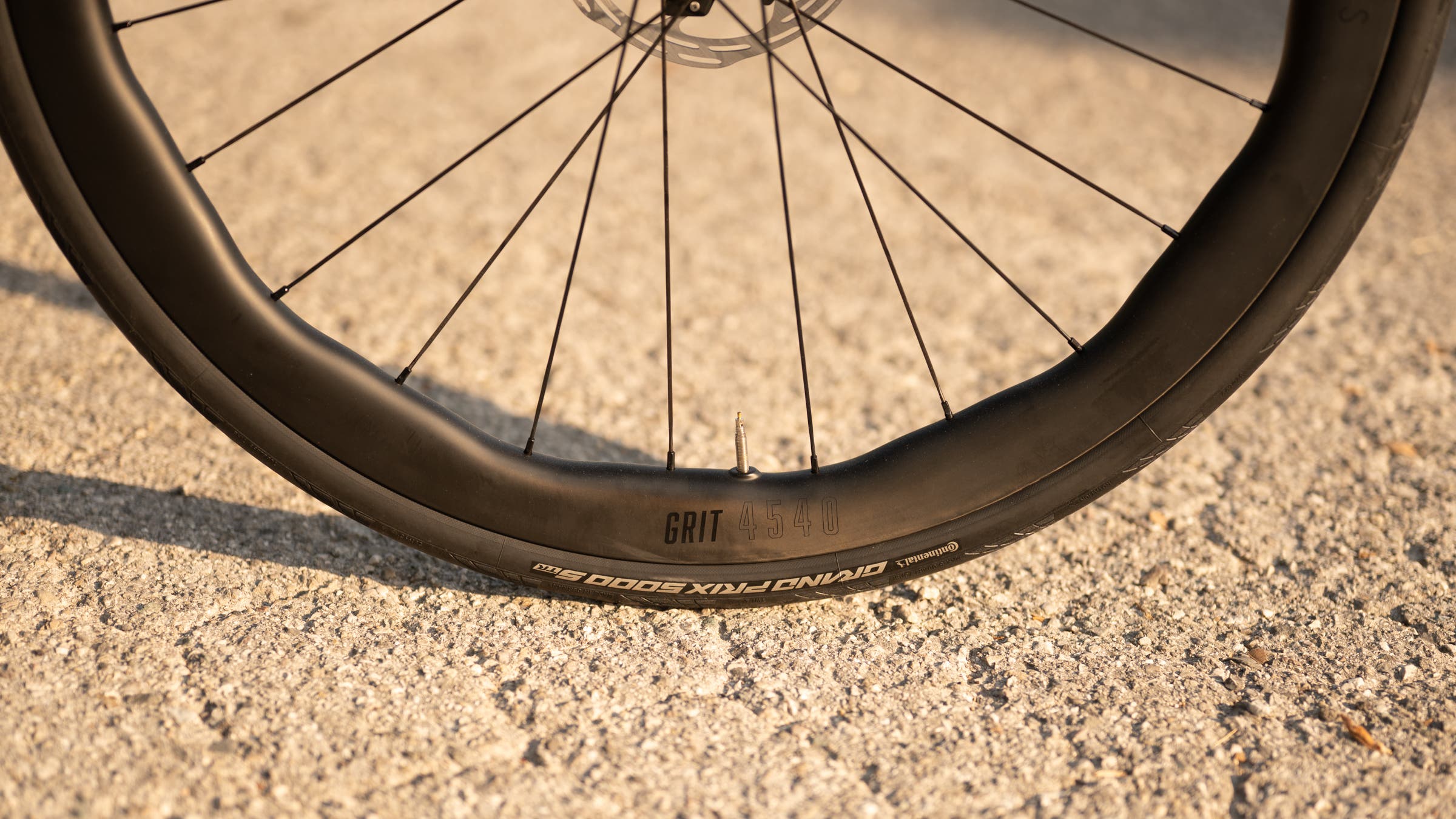
Just so we are all clear, none of that makes sense. A 30mm max tire clearance on a modern race bike is oddly restrictive, even if most people don’t run anything bigger. While 28mm or 30mm is common, plenty of riders run 32mm, and a 34mm max clearance is very standard on race bikes today, with some going even higher. For Pinarello to laud 35mm and claim it makes this an all-road bike is worth a chuckle.
Let’s play along for a moment, though. In some alternate universe, let’s pretend 35mm is a true all-road tire width in 2026, and someone looks at the Dogma X because that’s how it’s billed. Well, now you’ve got a bike that has no top tube mounts and no in-frame storage—features that nearly every competitor in the space offers. If you actually pretend this bike is what Pinarello claims it to be, it is missing key features.
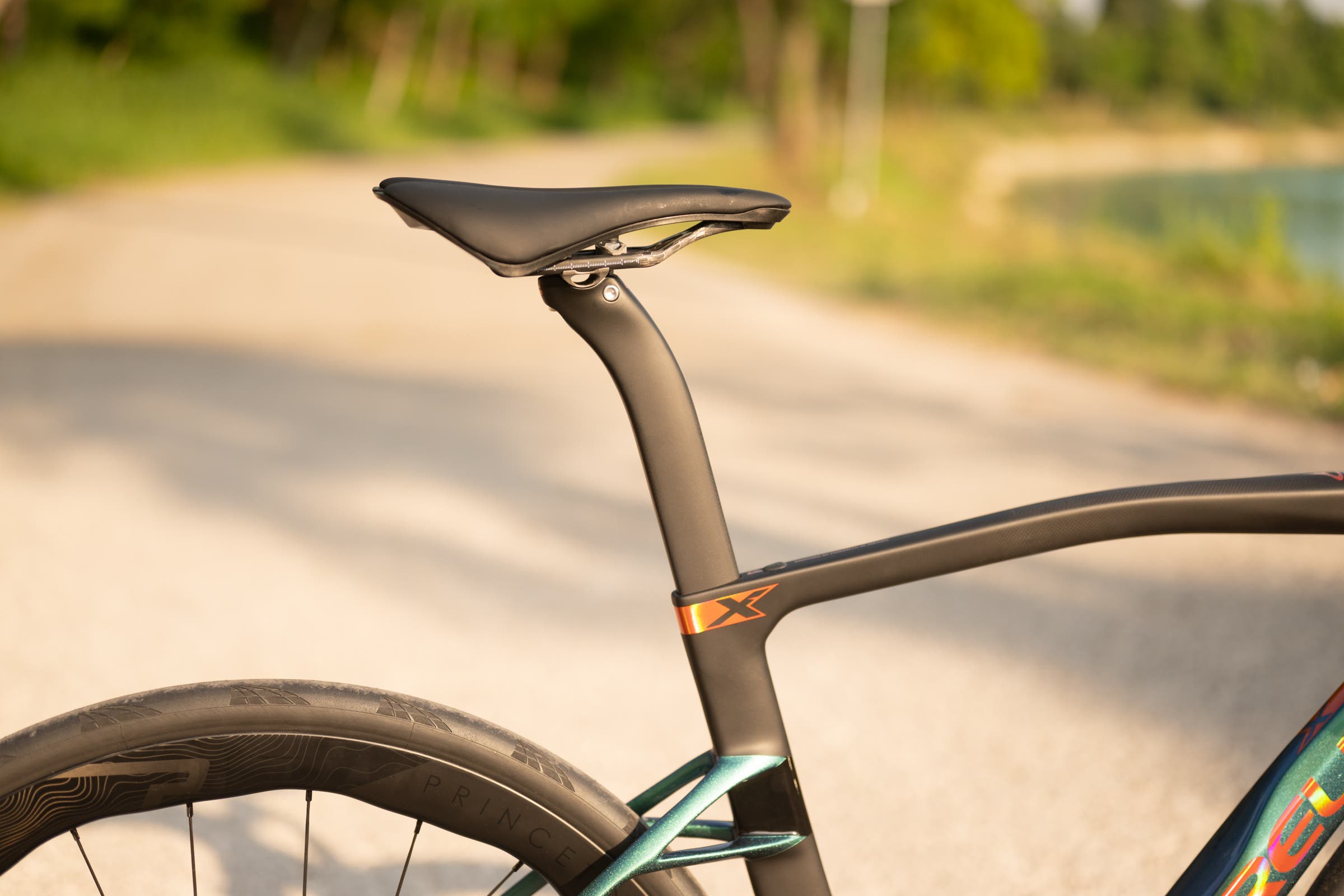
I am also not convinced the X-Stays do a whole lot. Obviously, I can’t know this for sure, but it smacks of differentiation just for the sake of it. It is not a huge issue, but the geometry, carbon layup, and bigger tires should be doing plenty of work on their own, so why not just simplify the design right there and save a little weight?
Again, I don’t want to harp on this too much. It is fine to have a cool little X mark built into the frame. The point is really more about differentiation in the lineup. The concept of this bike feels a lot like Trek’s old “single bike, multiple geometries” approach. That went away because it confused consumers, and having both the Dogma F and the Dogma X feels like a missed opportunity to create two truly different products that cater to distinctly different riders. As it stands, the Dogma X is not an endurance bike, nor is it an all-road bike.
From the moment I swung a leg over the Dogma X, I knew it was a race bike. The early part of my test ride was up a hill, and it felt like attacking was the only thing to do—exactly how a good race bike should feel. There was a champagne gravel section on the ride too, and while you can technically ride any bike on anything, this is not a bike that feels comfortable on even light gravel. Ultimately, this feels like a race bike with a slightly taller headtube, and based on the marketing, that is a miss.
Liveability
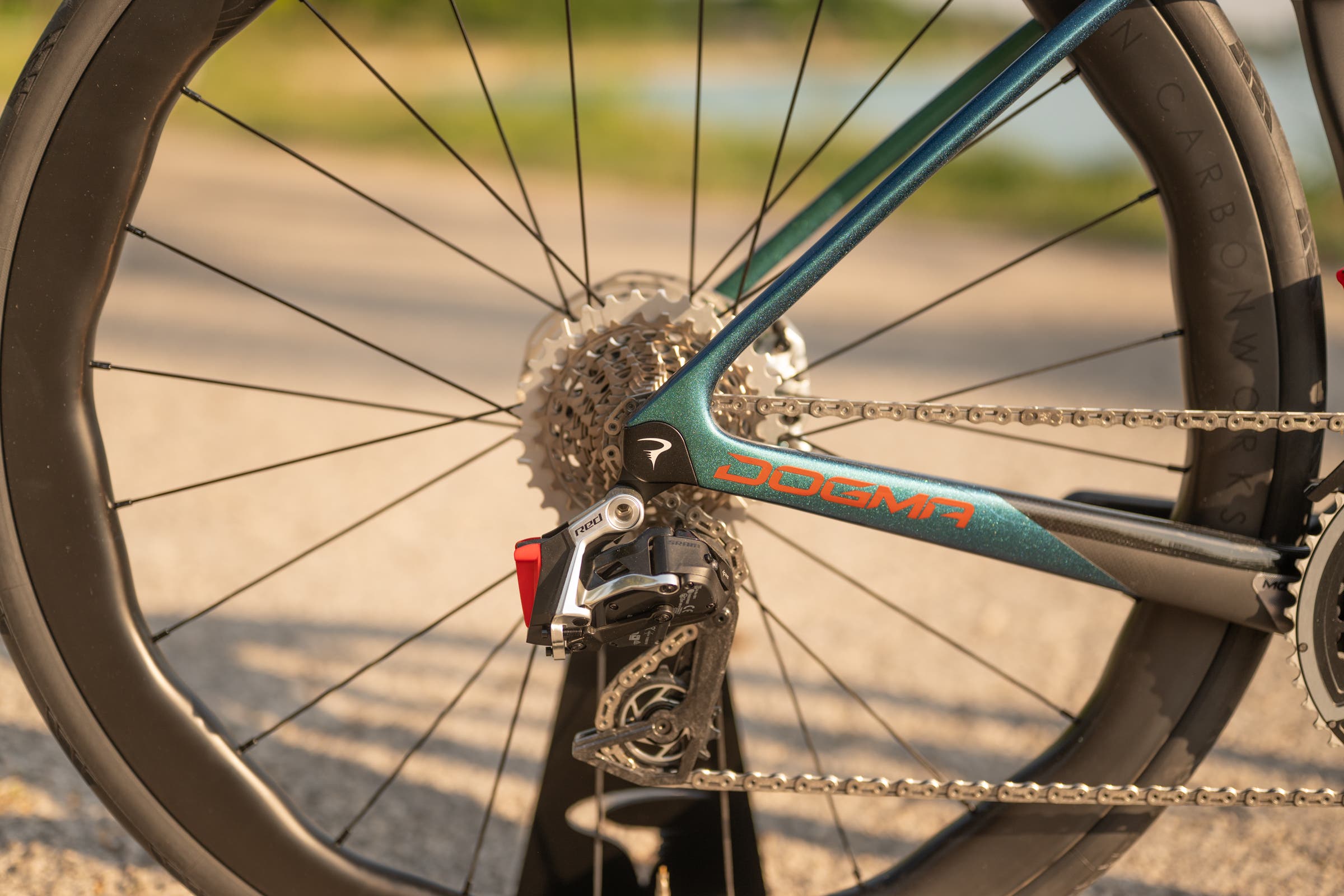
There are actually a few flags here. I tend to consider modern bikes with internal routing a non-issue; it is just the way of things now. However, Pinarello does have some quirks. The use of a threaded bottom bracket is a good thing but an Italian threaded bottom bracket means it’s a little different than most modern bikes. Not the end of the world but worth noting. On the upside, although the Di2 battery lives down by the bottom bracket, it does not require BB removal to access it. Thanks to a dedicated hatch, it actually seems easier to manage than a standard seatpost installation.

That leaves what appears to be a slightly odd UDH implementation as the main red flag. Pinarello refers to this as a dual-mount system that “ensures full compatibility with both SRAM UDH groupsets.” However, compatibility is not the same as a standard implementation. It is a positive that it works, but requiring extra proprietary pieces degrades the universally available, basic concept of UDH.
Who is the Pinarello Dogma X for?
What I like and what I don’t like could be interpreted as a misunderstanding of who this bike is for. I get that, and there’s an intentionality there. I want to make it clear that I’m not sure what’s marketed is entirely accurate to the product, but I’m also highlighting just how good I actually think this bike is. It’s good enough that I wonder if the Dogma F shouldn’t just absorb it.
Pinarello does have a buyer in mind, though, and it might be you. Part of what is happening is that the Dogma F is being interpreted as a race bike through a very narrow lens. In turn, Pinarello seems to understand it won’t work for a lot of people. At the same time, Pinarello is known for providing a very granular approach to fit, offering more sizes than other brands.
When you add all these pieces up, the Dogma X makes sense. You could call it a modern race bike and be done with it. Instead Pinarello is giving a choice. You can get more extreme in the Pinarello family, but if you just want to go fast and do it with a few spacers and maybe 32mm tires, this is your bike.
This is not really an endurance bike unless you, like me, don’t mind using a race bike as an endurance bike. If you go shopping for a traditional endurance bike or a modern all-road bike, the Dogma X will fall short. Instead, ignore those labels. This one is for anyone who isn’t a WorldTour rider but likes to ride as fast and hard as they are able.
[analyse_source url=”https://velo.outsideonline.com/road/road-gear/pinarello-dogma-x-review/”]