[analyse_image type=”featured” src=”https://velo-cdn.outsideonline.com/wp-content/uploads/2026/07/Z8A_5768-21.jpg”]
Tadej Pogačar is widely recognized as the best rider in modern day cycling but, amid ever-growing claims he is the greatest of all time, how much is truth and how much is hyperbole?
Specifically, just how dominant is he really at the Tour de France?
Pogačar has won four out of the past six Tours and may well be on his way to victory again this year.
But even if he joins Jacques Anquetil, Eddy Merckx, Bernard Hinault and Miguel Indurain in the five-time winners’ club, how does he compare to them in terms of obliterating the opposition at the Tour?
The answer is surprising: he’s not any way as dominant as you might think.
Thus far Pogačar’s biggest winning margin is 6:17 over Jonas Vingegaard in 2024. He collected six stages along the way, having also landed six in the Giro, and dropped Vingegaard and third-placed Remco Evenepoel almost at will in the race.
That was an authoritative display, and the best Tour showing — thus far — of his career.
But it is nothing at all like the best displays of those in the five-time club.
Let’s break it all down.
Anquetil breaks new ground, Merckx raises the game
Jacques Anquetil’s first Tour victory came in 1957, when he was 23 years old. He was making his grand tour debut and wasn’t regarded as a top favorite, but soon stamped his mark all over the race. His France squad won the TT on stage 3a. Anquetil then triumphed into his home town of Rouen on stage 3b and put in a much bigger display on stage 9.
He gained 11 minutes on his main rivals there, seizing yellow. He further extended his advantage by scooping the stage 15b and stage 20 time trials.
His final winning margin was a mighty 14:56 over the Belgian Marcel Janssens.
Anquetil also won the 1961 Tour by 12:14, almost twice the size of Pogačar’s gap over Vingegaard in 2024.
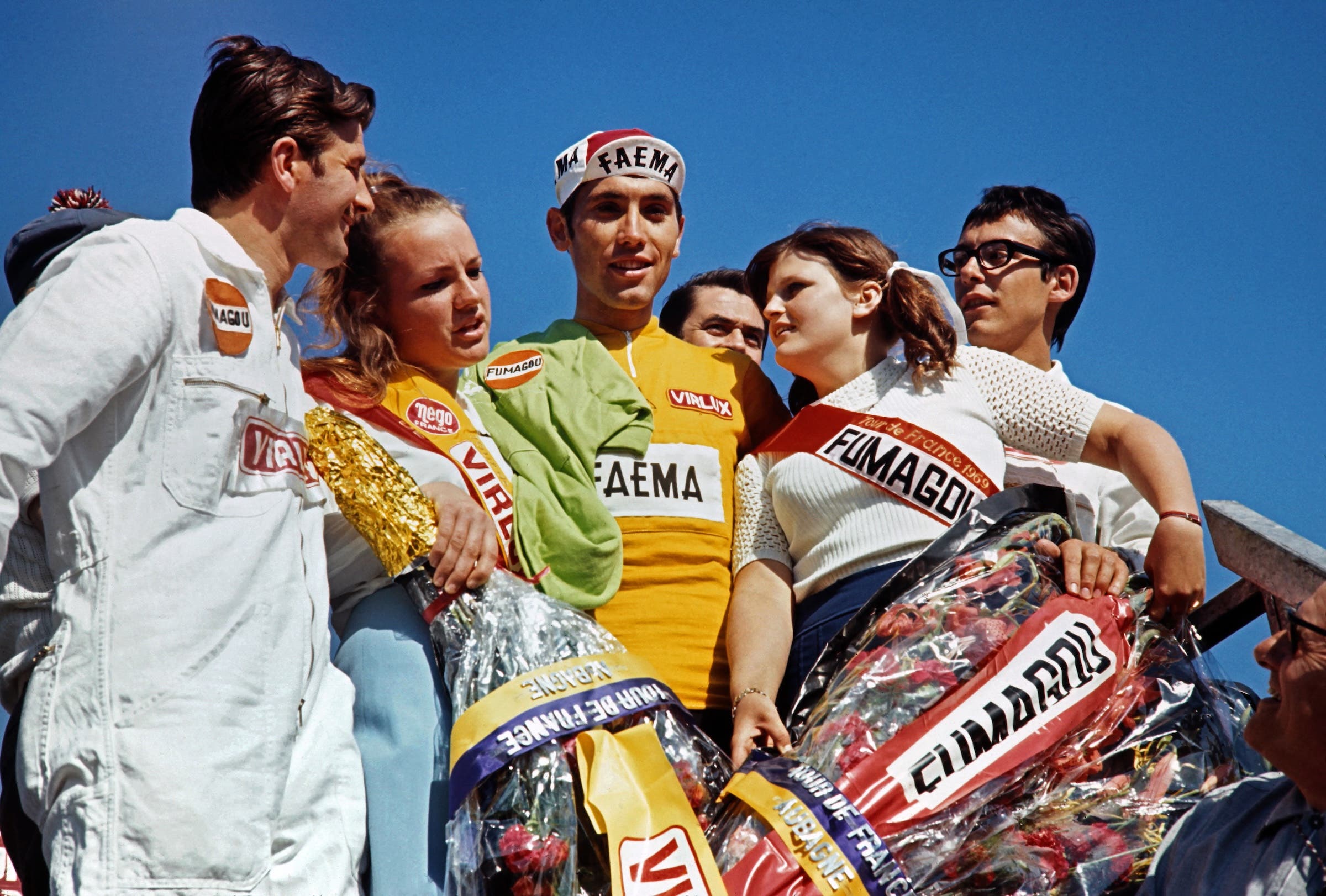
Eddy Merckx made his own debut in 1969 and was even more assertive. He went into that first Tour under a cloud after testing positive for a stimulant in the Giro d’Italia and insisted on his innocence. Angry and frustrated, he was determined to prove a point.
The Belgian seized the race lead on stage 1b when his Faema squad won the team time trial, then allowed it pass to his teammate Julien Stevens one day later. He recaptured it when he won stage 6, the first day in the mountains.
He triumphed again on the stage 8a time trial, on stage 11 and in the stage 15TT. But it was stage 17 where he really pummeled his competitors, taking off on the Tourmalet and reaching the finish line 140km later almost eight minutes ahead of the next riders.
It was arguably the greatest day of his career.
Together with the gains in his stage 21 time trial success, he ended the race a staggering 17:54 ahead of the Frenchman Roger Pingeon.
Merckx was head and shoulders above the rest in that Tour. He won the general classification, points classification, mountains competition, and the combination classification. He also took six stage wins, plus that team time trial victory, and was named the most aggressive rider.
Of Merckx’s five Tour de France wins, three saw him finish more than 10 minutes ahead of his nearest rival.
The Cannibal’s ravenous appetite also saw him take eight stage wins in 1970 and 1974.
Hinault shows his class
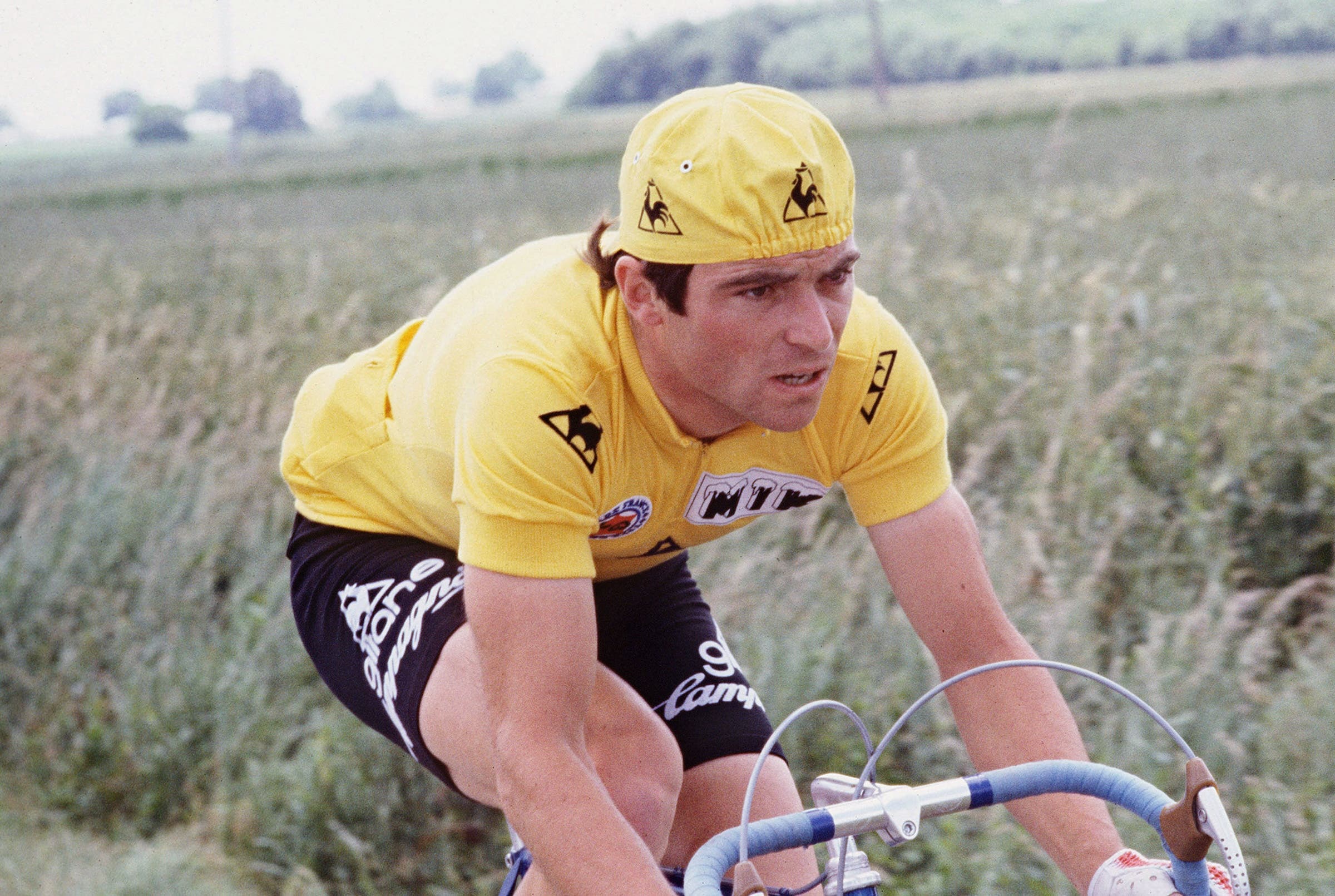
Like Anquetil, Bernard Hinault is French. And like Anquetil he would also win five Tours, starting with his debut in 1978. The following year was a domination, the Badger hoovering up seven stage wins and beating the Dutch rider Joop Zootemelk by 13:07.
But his biggest winning margin was in 1981, when he captured the maillot jaune early on in winning the stage 6 time trial. He continued to pad his lead by taking bonus sprints and then piled on another two minutes by winning the stage 14 time trial.
Assertive performances in the mountains on stages 16, 17 and 18 — including a stage win in the latter — opened a far bigger advantage, with another time trial victory on stage 20 ensuring a staggering final GC success of 14:34 over Lucien Van Impe.
The most recent five-time winner Miguel Indurain was a far more reserved character than Hinault and, indeed, Pogačar. Not given to flash displays of power, he took his Tours by dominating time trials and by largely marking his rivals in the mountains.
He was the least flamboyant in terms of winning margins, with his 1994 victory the largest of his five victories, 5:39 ahead of Piotr Ugrumov.
Indurain aside, though, the other five-time champions crushed the race in a way that Pogačar is yet to do. Each of them more than doubled the Slovenian’s 2024 advantage over runner-up Vingegaard.
Merckx and Hinault also have more stage wins, 34 and 28 respectively, although Pogačar is fast approaching the latter’s tally with 23 victories.
Putting things in perspective
So what’s the takeaway from all this?
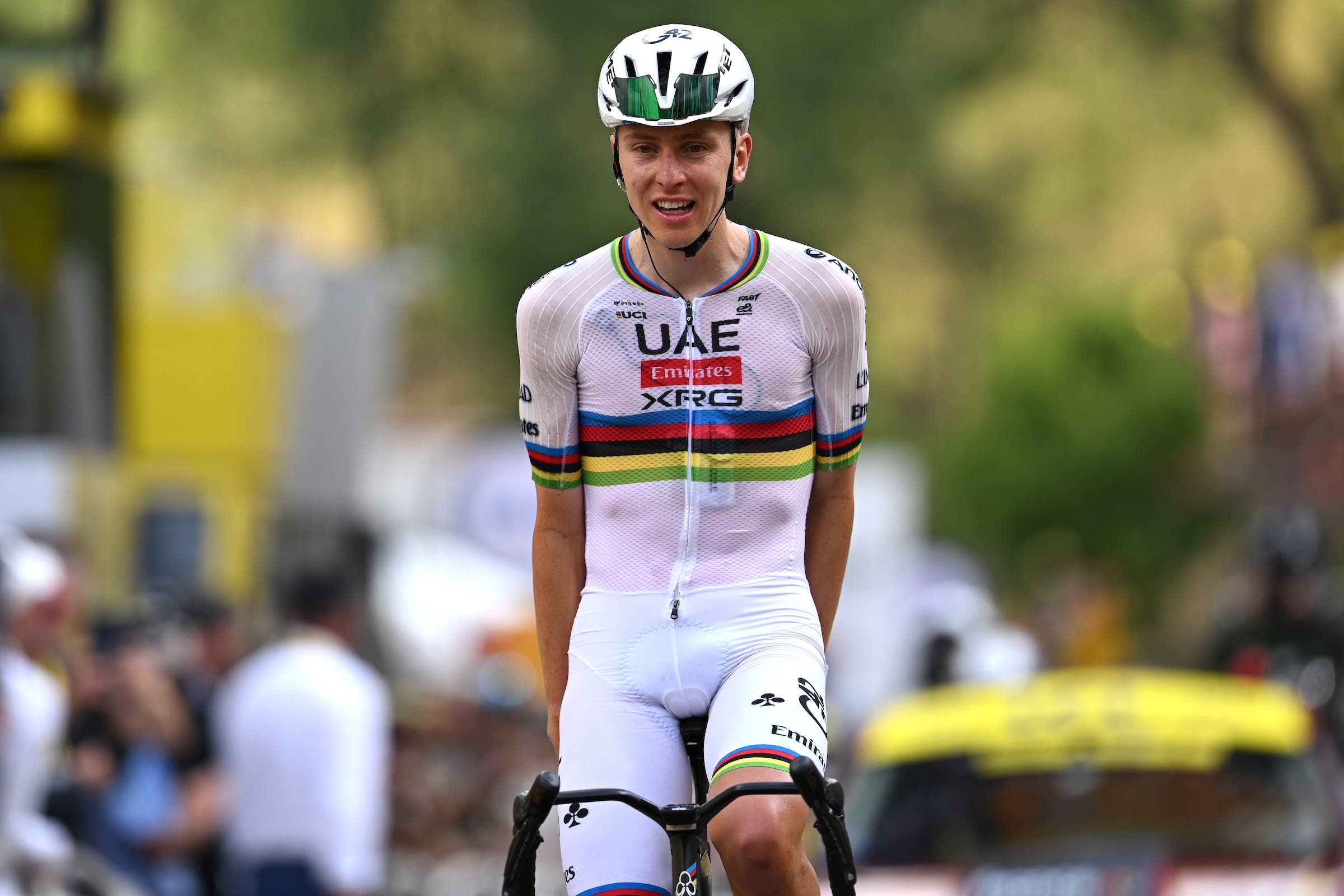
Pogačar is undoubtedly the best rider in modern cycling. He’s the most complete, winning grand tours and classics and also week-long stage races. Thus far he’s clocked up 123 career wins, including 15 already this year.
Many claim he’s the greatest of all time, although Merckx’s vast number and range of victories make that a very debatable argument.
Pogačar does already have a commanding lead in this year’s Tour. While anything could happen in the two weeks ahead, and while there are parallels from the past which could yet see Vingegaard or anther rival win overall, he does look on course for his fifth Tour victory.
And he may well go on to take a record sixth, or seventh, or maybe even eighth triumph in the years ahead.
What also must be kept in mind is that modern cycling is also a lot different to how it was in the decades past. Times have changed significantly since the days of Anquetil, Merckx, Hinault and Indurain. Training knowledge has evolved, equipment has gotten a lot better, and the general standard across the peloton has improved.
But in terms of pure domination, of crushing rivals and asserting superiority, any suggestions that Pogačar is the greatest of all time have to be met with reality.
For the Tour de France, at least, it’s simply not true.
Tadej Pogačar’s winning margins at the Tour de France:
- 2020: 59 seconds
- 2021: 5 minutes 20 seconds
- 2024: 6 minutes 17 seconds
- 2025: 4 minutes 24 seconds
Winning margins of five time Tour de France champions:
Jacques Anquetil:
- 1957: 14 minutes 56 seconds
- 1961: 12 minutes 14 seconds
- 1962: 4 minutes 59 seconds
- 1963: 3 minutes 35 seconds
- 1964: 55 seconds
Eddy Merckx:
- 1969: 17 minutes 54 seconds
- 1970: 12 minutes 41 seconds
- 1971: 9 minutes 51 seconds
- 1972: 10 minutes 41 seconds
- 1974: 8 minutes 4 seconds
Bernard Hinault:
- 1978: 3 minutes 56 seconds
- 1979: 13 minutes 7 seconds
- 1981: 14 minutes 34 seconds
- 1982: 6 minutes 21 seconds
- 1985: 1 minute 42 seconds
Miguel Indurain:
- 1991: 3 minutes 36 seconds
- 1992: 4 minutes 35 seconds
- 1993: 4 minutes 59 seconds
- 1994: 5 minutes 39 seconds
- 1995: 4 minutes 35 seconds
Biggest Tour de France winning margins of all time:
- Maurice Garin, 1903: 2 hours 59 mins 21 seconds
- Henri Cornet, 1904: 2 hours 16 mins 14 seconds
- Nicolas Frantz, 1927: 1 hour 48 mins 41 seconds
- Firmin Lambot, 1919: 1 hour 42 mins 54 seconds
- Lucien Buysse, 1926: 1 hour 22 mins 25 seconds
- Philippe Thys, 1920: 57 minutes 21 seconds
- Ottavio Bottecchia, 1925: 54 mins 20 seconds
- Nicolas Frantz, 1928: 50 mins 7 seconds
- Maurice De Waele, 1929: 44 mins 23 seconds
- Firmin Lambot, 1922: 41 mins 15 seconds
48. Tadej Pogačar, 2024: 6 minutes 17 seconds
Biggest post-war winning margins:
- Fausto Coppi, 1952: 28 mins 17 seconds
- Gino Bartali, 1948: 26 mins 16 seconds
- Hugo Koblet, 1951: 22 mins
- Eddy Merckx, 1969: 17 mins 54 seconds
- Luis Ocaña, 1973: 15 mins 51 seconds
25. Tadej Pogačar, 2024: 6 minutes 17 seconds
[analyse_source url=”https://velo.outsideonline.com/road/road-racing/tour-de-france/pogacar-tour-hype/”]