[analyse_image type=”featured” src=”https://images.euronews.com/articles/stories/09/83/34/77/1200x675_cmsv2_5faf53fb-5b59-52e2-9d85-c82c10f9964c-9833477.jpg”]
Belgium to introduce new road tax in 2027, even for transiting drivers
Georgia left off NATO summit partner list as critics decry isolation

Slick Sinner scuppers Djokovic record bid to make Wimbledon final

Toxic cloud forces La Bisbal del Penedès residents indoors
Belgium to introduce new road tax in 2027, even for transiting drivers
Georgia left off NATO summit partner list as critics decry isolation
Slick Sinner scuppers Djokovic record bid to make Wimbledon final
Toxic cloud forces La Bisbal del Penedès residents indoors
Exclusive: ‘Big mistake to believe we’re off the hook in Europe and beyond,’ IEA tells Euronews
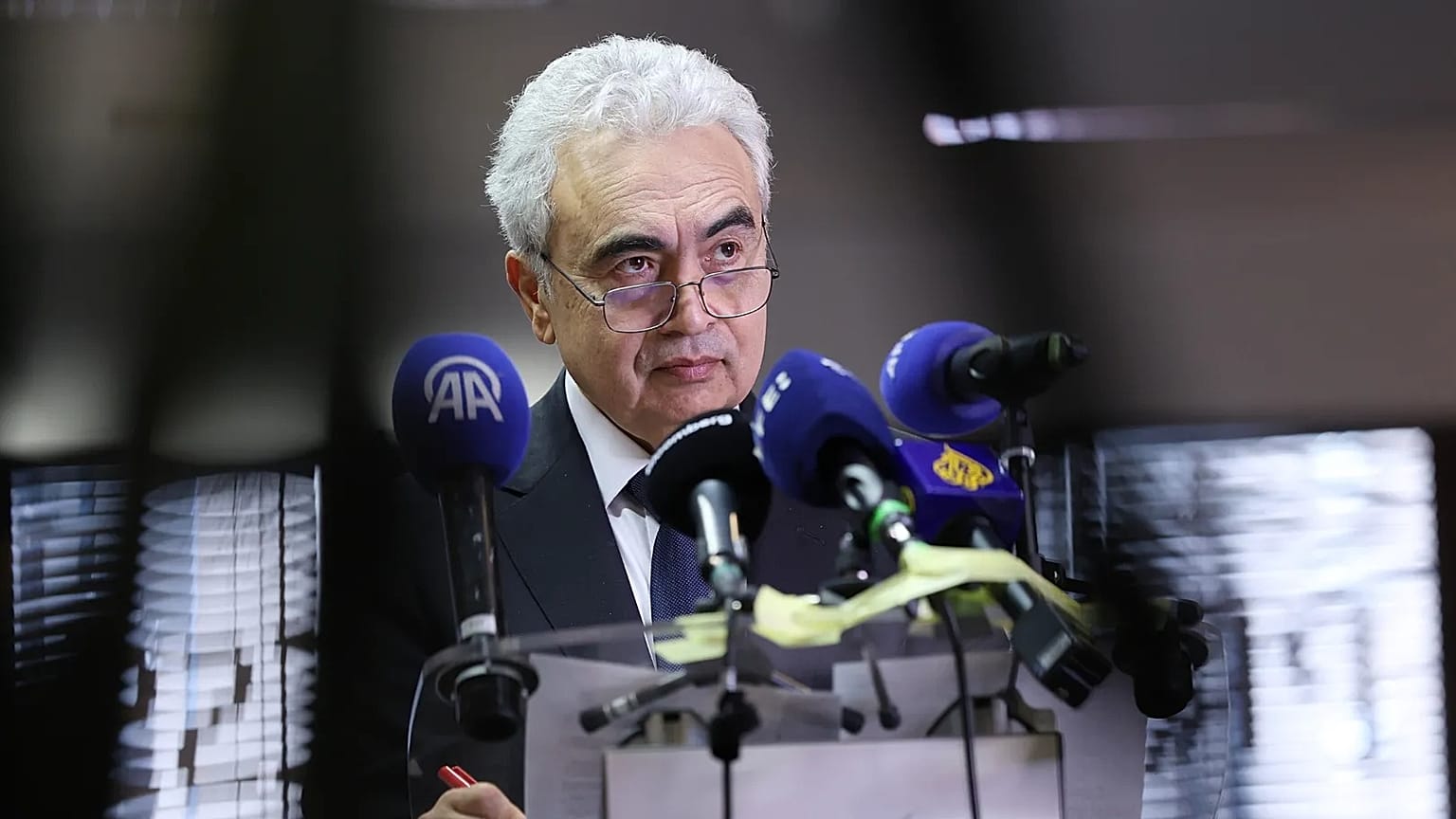
International Energy Agency Executive Director Fatih Birol.
– Copyright AP Photo / Omar Havana

 Facebook
 Twitter
 Flipboard
 Send
Send Reddit
 Linkedin
 Messenger
 Telegram
 VK
VK Bluesky
 Threads
 Whatsapp
If the Strait of Hormuz is closed indefinitely, Europe and the rest of the world will face dire consequences, International Energy Agency chief Fatih Birol told Euronews in an exclusive interview.
The head of the International Energy Agency (IEA) has issued a stark warning that while international fuel supplies remain secure for now, the latest attacks on tankers near the Strait of Hormuz show that Europe’s dependence on imported fossil fuels continues to threaten its economy.
 ADVERTISEMENTADVERTISEMENT
“The entire world should be prepared for the worst case, which we hope will not materialise, but we really need to be prepared for the worst case scenario,” IEA chief Fatih Birol told Euronews, referring to a complete blockade of the strait, through which flows 20 percent of the world’s oil and gas transit.
Birol stood by his previous warnings about jet fuel shortages, rejecting the spread of fearmongering and instead calling it a “wake-up call” for European refineries and politicians to take preventive measures quickly.
“Thanks to the outstanding work of the commissioners, the refiners and support from the United States and Nigeria, we are now able to balance out the refined products, but still, we have many challenges ahead if the Strait of Hormuz is not open fully,” he added.
Besides energy, the Middle East conflict has had knock-on effects for global commodities including fertilisers, chemicals and pharmaceuticals.
Ditching Moscow
Birol rejected the idea of returning to Russian gas, which the European Union is officially banning as of 2027, noting that long-term dependence on Moscow for energy was both the reason the bloc was plunged into today’s high electricity prices and an epiphany for Europe to end its foreign dependencies.
“We suffered a lot in Europe from the over-reliance on Russia, after the cutting of the Russian gas,” Birol said. “And our economies, businesses and households suffered from high energy prices.”
While energy ministers have recently mulled new domestic oil and gas drilling because of energy security concerns, with Romania and Cyprus leading the way, the IEA’s chief warned that “Europe tomorrow cannot suddenly discover oil or gas,” suggesting that the best remedy is to invest in electrifying the bloc’s economy.
“If there were oil and gas in Europe, we would have already discovered many years ago,” Birol said, clashing with industry figures who claim there are untapped fossil fuel resources across EU countries.
The important thing, Birol said, is for European nations to produce as much energy as possible at home and avoid reliance on other countries.
The EU has shifted its energy dependencies in recent years, with the United States now the first supplier of EU exports of liquefied natural gas (LNG). But Washington is currently pressuring the European Commission to scrap its methane rules or face cuts to LNG supplies.
The Trump administration argues that the rules, which require oil and gas producers to monitor and report the emissions linked to their production, will increase costs for its energy producers.
Asked whether the Commission intends to accommodate US demands, Energy Commissioner Dan Jørgensen told Euronews: “There will be tweaks and we’ll have to do things differently (…) But we’re not going in any way to step back on our targets and our obligations.”
‘Electrification is the answer’
Nonetheless, for Birol, the main path towards energy sovereignty is electrification, as it will lead to fewer imports of fossil fuels.
“We have to electrify our energy, our economy as much as possible, which means more electric cars, more heat pumps, and more electrified industry,” the IEA boss said.
However, Birol recognised that even though the bloc excels at producing clean energy, the EU has stagnated with a 23 percent electrification rate over the past decade, far behind countries like Japan, Korea, and China, which don’t have abundant oil and gas resources.
“Last year, 85 gigawatts of renewables were added to the European grid. This is a big number. But 600 gigawatts, almost seven times that, of renewable projects finished because there was no grid to bring it to the homes and to the industry,” Birol said, stressing how obsolete the European grids are, technically unfit to cope with the pace of clean power production.
“This is really an economic crime, if I may say so. I fully support the Commission for putting in place the grids and building a robust European energy system.”
Despite billions spent on clean energy, electricity is still two to three times more expensive than gas in many EU countries. There are fears that medium-term electrification ambitions will be a hard sell unless governments make electricity cheaper.
“We should make the electricity prices affordable for the people, so that the consumers, households and industry can go for a cheaper option. They will not go for electricity because it is clean. They would go for electric because it’s cheap,” Birol said.
After a summer break, the European Parliament and the Council will kickstart political negotiations to revamp Europe’s power lines, following the adoption of a common position among member states in June under the rotating EU Cyprus Presidency of the EU Council.
The daunting task of mediating the delicate file is now in the hands of the Irish Presidency, which has expressed hopes of sealing the deal by the end of the year.
Go to accessibility shortcuts
Read more
Brussels eyes €200bn in savings by electrifying Europe’s economy, draft reveals
Electrification, climate finance and Just Transition: Key outcomes of Bonn Climate Change Conference
‘Electrification is the answer to save Europe’s industry,’ IEA tells Euronews
Georgia left off NATO summit partner list as critics decry isolation
Was Erdoğan’s gun gift a faux pas or an old-school diplomatic tradition?
Man arrested on suspicion of murder after former British MP found dead
Majority of 12 victims of Spain wildfires believed to be foreigners
Belgium to introduce new road tax in 2027, even for transiting drivers
Panic on Ryanair flight from Thessaloniki as debris shatters window
Up to 38°C this weekend: How long will the heatwave last?
Why Chat Control 1.0 is the EU’s most Orwellian law yet
EU Parliament excludes end-to-end chats from message-scanning regime
11 people killed as wildfires tear through southern Spain
[analyse_source url=”https://www.euronews.com/my-europe/2026/07/10/exclusive-big-mistake-to-believe-were-off-the-hook-in-europe-and-beyond-iea-tells-euronews”]