[analyse_image type=”featured” src=”https://velo-cdn.outsideonline.com/wp-content/uploads/2026/07/Pogacar-Tourmalet-record-tour-de-france-stage-6.jpg”]
Stage 6 of the Tour de France was the first day in the high mountains in this year’s race, and thus the first real opportunity for the GC favorites to test one another. Tadej Pogačar wasted no time.
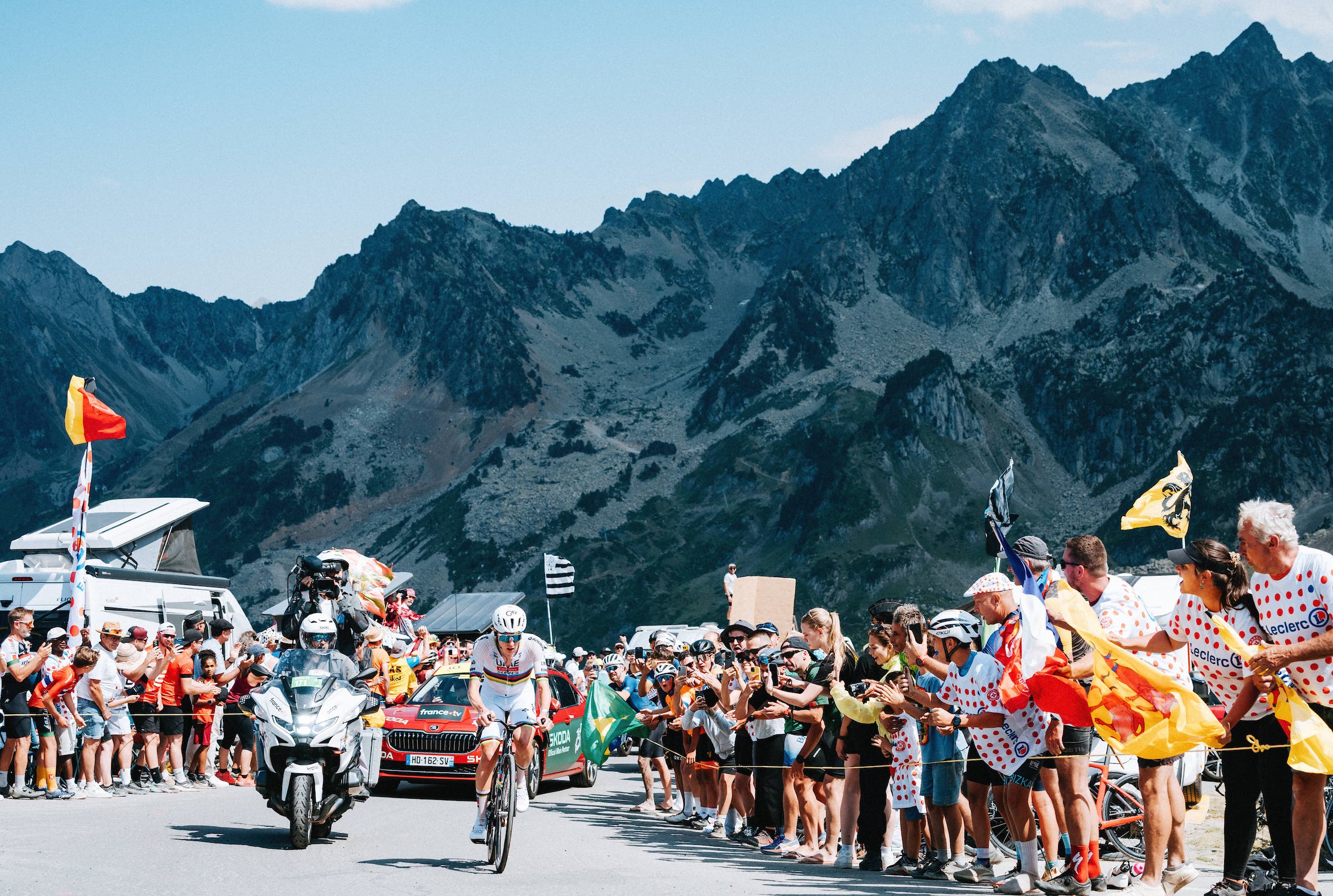
With 5km to go on the famed Col du Tourmalet, Pogačar attacked with no one in his wheel. Actually, there was one rider in his wheel: his teammate, Isaac Del Toro. The Mexican had just done the final leadout for Pogačar on one of the hardest climbs in this year’s Tour de France. Del Toro hung on momentarily, but it wasn’t long before Pogačar went solo.
Jonas Vingegaard was lurking in the background, keeping the gap to Pogačar at eight seconds for the longest time. But then, in the final few kilometers of the Tourmalet, the gap began increasing. First it was 10 seconds, then 20, and then 30 by the top of the climb. That would have been a brilliant result for Vingegaard, finishing only half a minute behind Pogačar doing one of the best climbing performances of his life. But there was still 35km to go, including a long false flat to the finish where Vingegaard would start bleeding time.
By the time they reached the finish, both Pogačar and Vingegaard had destroyed the record on the Tourmalet they set three years earlier, but the world champion gained more than two and a half minutes in the GC. Vingegaard was nearly caught by the chase group that included Remco Evenepoel, Florian Lipowitz, Paul Seixas, and more. Despite the long descent and false flat to the finish, the group of chasers finished three minutes down on Pogačar.
How did this happen? How did Tadej Pogačar beat the Tourmalet record by over two minutes? And what does this mean for the rest of the Tour?
To understand what truly happened in Stage 6 of the Tour de France, we need to rewind to kilometer zero and the ridiculous fight for the breakaway. It seemed like half the peloton wanted to get up the road before the Tourmalet, so the attacks came and went over the first 80 kilometers. Mads Pedersen and Victor Campenaerts were the only riders able to get a significant gap, but then with 135km to go, the race was nearly flipped on its head.
Matteo Jorgenson started launching attacks in an attempt to form another breakaway. The American attacked multiple times on an non-categorized four-minute climb, and the peloton blew to smithereens. Many of you reading hadn’t even turned on the TV yet, but these are the types of efforts that make the time gaps so big at the end of the stage. Quinn Simmons was following the attacks one-by-one, and the American produced more than 550w for four minutes on this climb.
They say that the UAE Team Emirates-XRG black book — a list of riders that aren’t allowed in the breakaway or to win a stage at the Tour – doesn’t exist, but as Jorgenson continued pushing on the climb, Pogačar himself launched to close the gap. There were no GC riders in the leading split, and Pogačar had plenty of teammates to help him, but in that moment, he rode across the gap to the split created by Jorgenson, shutting down the breakaway attempt at more than 500w.
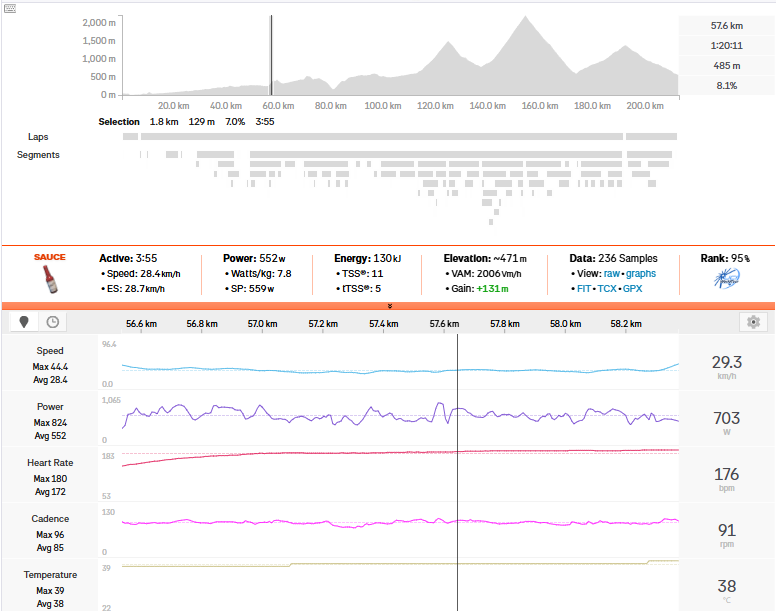
Simmons – non-categorized climb with 135km to go
- Time: 3:55
- Average Power: 552w (7.8w/kg)
- Pogačar: 3:58 at ~7.7w/kg
Up next was the Col d’Aspin, a 12km climb with an average gradient of 6.5% that began with 80km to go. Surely it would be an inconsequential climb, surely…
UAE Team Emirates-XRG had a plan to make the race as hard as possible. They paced the Aspin at 6w/kg for half an hour, an output that not long ago would have put you on the podium at the Tour de France. But this was just the appetizer, and it wasn’t long before the peloton began climbing the Col du Tourmalet.
Before the stage, the question on everyone’s minds was would the Col du Tourmalet be ridden all-out? The 17.2km climb topped out with nearly 40km to go in the stage, and it was followed by a fast descent and long false flat to the finish. A solo rider could lose heaps of time to a chase group, and with average temperatures well above 30°C (86°F), attacking at high-altitude on the first mountain stage of the Tour was a risky strategy. Pogačar even said in his post-race interview that it was an all-in move to attack on the Tourmalet, and attack he did.
With 5km to go on the Tourmalet, Del Toro and Pogačar attacked together, the Mexican leading the world champion as Vingegaard dropped off the wheel. The rest of the GC contenders were even further behind, so that question became not was Pogačar going to win, but by how much. He climbed the Tourmalet in just over 43 minutes, crushing the all-time record and going more than two minutes and 20 seconds faster than in the 2023 Tour de France when Vingegaard was the aggressor. It was an average pace of nearly 6.5w/kg, but that doesn’t tell the full story.
Pogačar – Col du Tourmalet
- Time: 43:02
- Estimated Average Power: ~6.4w/kg
- Vingegaard: 43:32 at ~6.3w/kg
Pogačar rode the Col du Tourmalet like a ramp test. When UAE Team Emirates-XRG set the pace at the bottom, the peloton was hardly touching 6w/kg. This is Zone 3 for Pogačar, something that gets his heart rate up but doesn’t cause a significant amount of fatigue. The gradients of the Tourmalet steepen in the middle portion of the climb, reaching 9-10% for a few kilometers. This is where UAE Team Emirates-XRG would increase the pace from 6w/kg to 6.5w/kg. The riders on the front were likely doing more, while Pogačar was sitting in the draft at a pace just under his FTP.
With 25 minutes of climbing in his legs, Pogačar hadn’t even gone above his threshold until he attacked with 5km to go. That’s why he was able to increase the pace dramatically, while his rivals like Vingegaard, Evenepoel, and Seixas could only sustain the pace they were already doing.
Pogačar rode the final 5km of the Tourmalet at over 7w/kg, which makes it even more impressive that Vingegaard was able to stay so close. Had the finish line been atop the Tourmalet, perhaps Vingegaard would have lost less than a minute in the GC. But with nearly 40km remaining in the stage, Pogačar might have actually been pacing himself, leaving a bit left in the tank for the long descent and false flat to the finish. Either way, we saw two career-level climbing performances from Pogačar and Vingegaard on the Tourmalet, especially in the final 5 kilometers.
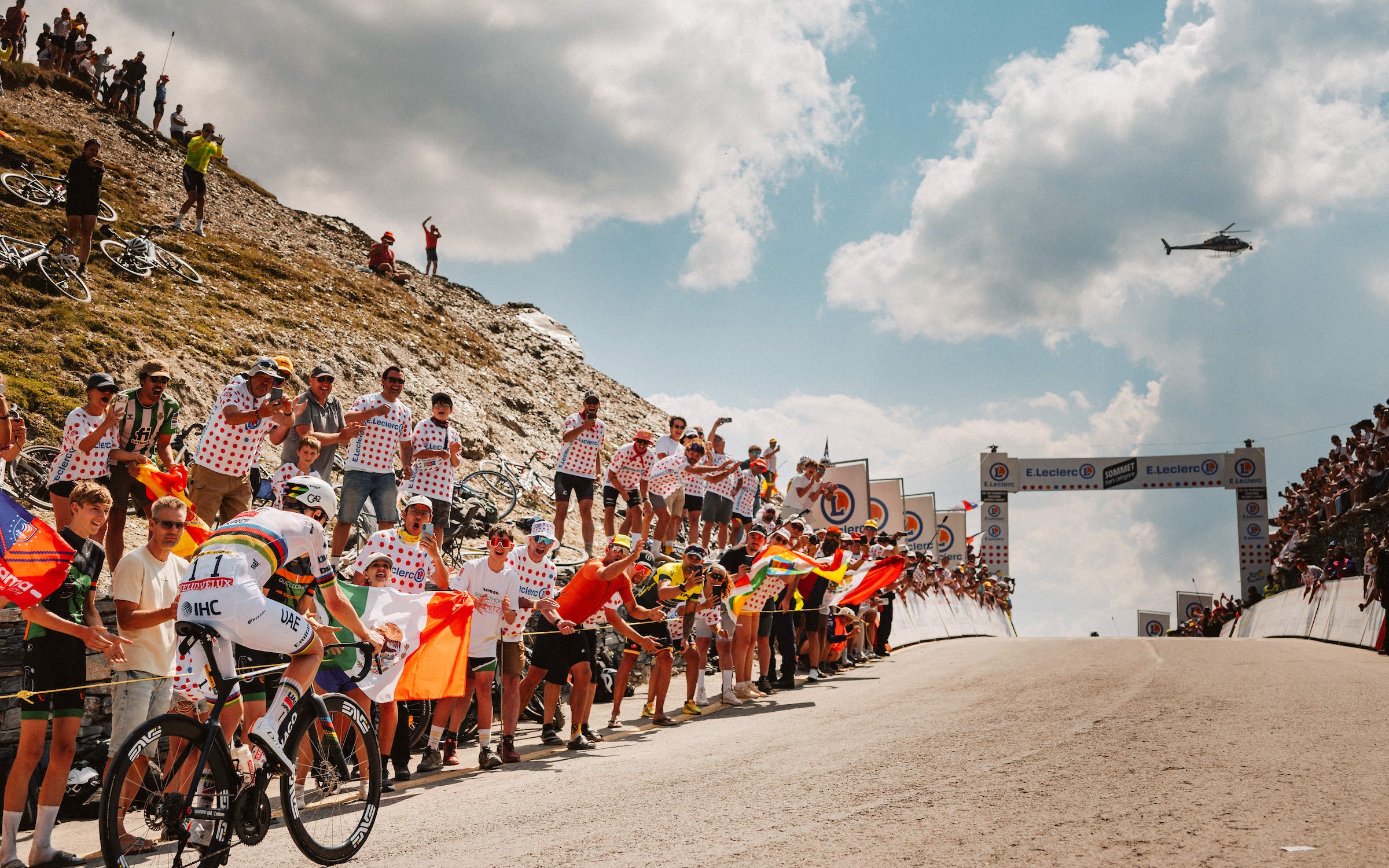
Pogačar – Final 5km of the Col du Tourmalet
- Time: 13:12
- Estimated Average Power: ~7.2w/kg
We have to wait all the way until stage 15 for the first summit finish of the Tour, but the numbers suggest that Vingegaard is within touching distance of Pogačar on long climbs. While it’s easy to say that the GC is over, let’s not forget about stage 17 of the 2023 Tour de France. After a number of close battles in the mountains, Pogačar and Vingegaard were separated by less than two minutes in the GC before the 166km stage to Courchevel. The Slovenian cracked that day, losing more than five and a half minutes to Vingegaard in a single stage. At the Tour de France, especially with extreme heat and altitude, we’ve seen time and time again that anything can happen.
Power Analysis data courtesy of Strava
Strava sauce extension
Riders:
- Tadej Pogačar
- Quinn Simmons
[analyse_source url=”https://velo.outsideonline.com/road/road-racing/tour-de-france/power-analysis-col-du-tourmalet-record-tour-de-france-tadej-pogacar/”]