[analyse_image type=”featured” src=”https://images.euronews.com/articles/stories/09/82/57/43/1200x675_cmsv2_fa93c903-fab8-5ed1-bbac-8a4f67a719cd-9825743.jpg”]

Zelenskyy and Putin hold Fourth of July phone calls with Trump

Boutique hotel with pools and Jacuzzis for every room opens in Paros

‘The American Dream is back,’ Trump says during Fourth of July speech

Serbs are not ‘little Russians’, says former PM Ana Brnabić
Zelenskyy and Putin hold Fourth of July phone calls with Trump
Boutique hotel with pools and Jacuzzis for every room opens in Paros
‘The American Dream is back,’ Trump says during Fourth of July speech
Serbs are not ‘little Russians’, says former PM Ana Brnabić
Spectacular find: 1,000-year-old Viking textile workshop unearthed
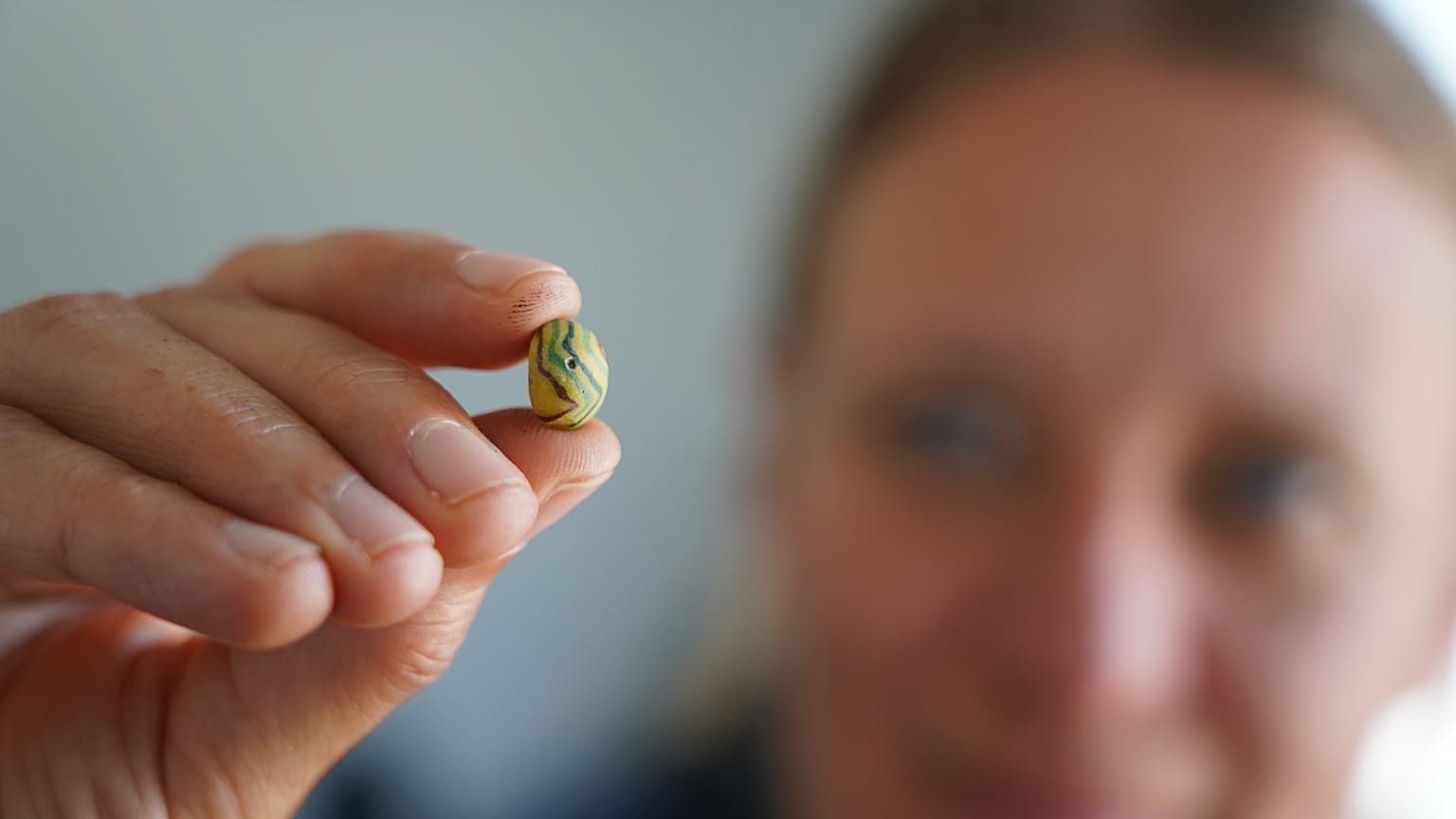
Archaeologist at the Moesgaard Museum, Liv Stidsing Reher-Langberg, holds a Viking Age glass bead discovered on 22 June 2026 during excavations near Aarhus in Denmark.
– Copyright AP Photo

 Facebook
 Twitter
 Flipboard
 Send
Send Reddit
 Linkedin
 Messenger
 Telegram
 VK
VK Bluesky
 Threads
 Whatsapp
An excavation near Aarhus in Denmark may fundamentally alter how we see the Viking Age: 82 pit houses identified as specialised textile workshops have been uncovered.
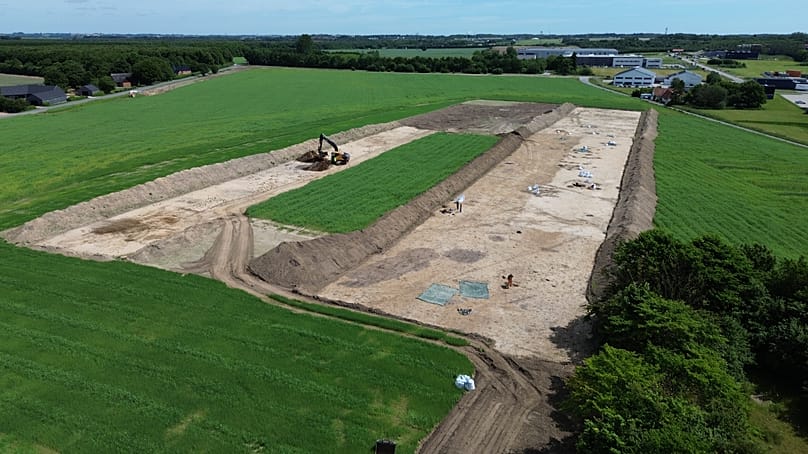
The Vikings were apparently not only a warlike people: In Søften, a small village in the Mid Jutland region north of Aarhus, archaeologists have uncovered the remains of an exceptionally large craft settlement. The complex dates from the 7th to 10th centuries and covers 100,000 square metres. In total, the archaeologists excavated 82 pit houses.
 ADVERTISEMENTADVERTISEMENT
The area seems to have served as a specialised craft zone, with numerous workplaces operating in parallel. The large number of identical workshops suggests that division of labour, and possibly centralised control, played a role.
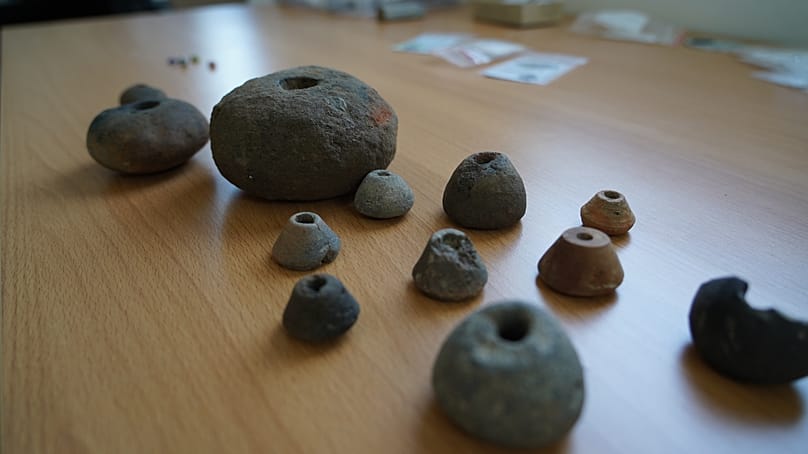
The excavations brought to light an enormous number of loom weights, spindle whorls and glass beads, indicating that textiles were produced there on a scale far exceeding the needs of the local population. The finds document a complete production chain, from processing the fibres to the finished fabric.
The researchers also found Arabic coins from the Middle East, as well as mintings from what is now France and Germany. These artefacts show that the inhabitants of Søften were part of far-reaching trade networks that extended as far as Asia.
The site was strategically well placed near the then trading centre of Aros. Its location made it easy to channel the goods produced into trade and export them.
In the researchers’ view, the finds prove that the Vikings had a highly developed economy. Historian Kasper H. Andersen from the Moesgaard Museum stressed: ‘It shows us that the Viking Age was not just an uncivilised, barbaric and backward era, as is often assumed.’
It is not yet clear when the artefacts, probably including those to be displayed at the Moesgaard Museum, will be available for public viewing. The analysis of the finds is still ongoing and could take several months to several years.
Go to accessibility shortcuts
Read more

Author Orhan Pamuk welcomes Euronews to his Museum of Innocence

Cave lost for millennia resurfaces with untouched secrets

Taylor Swift and Travis Kelce marry at Madison Square Garden
Author Orhan Pamuk welcomes Euronews to his Museum of Innocence
Cave lost for millennia resurfaces with untouched secrets
Taylor Swift and Travis Kelce marry at Madison Square Garden
Author Orhan Pamuk welcomes Euronews to his Museum of Innocence

Taylor Swift and Travis Kelce marry at Madison Square Garden

Karlovy Vary film festival celebrates diamond anniversary

Have England finally got a decent World Cup anthem?

Meet My Mama: how home cooks turned chefs spice up French gastronomy
After the Lefebvrists, Redemptorists threaten new schism in Scotland
Did The Simpsons really predict the final of the 2026 World Cup?
Try the Roman Empire’s version of Google Maps
Cave lost for millennia resurfaces with untouched secrets
‘A heartbreaking loss’: Celebrities pay tribute to James Van Der Beek
[analyse_source url=”https://www.euronews.com/culture/2026/07/05/spectacular-find-1000-year-old-viking-textile-workshop-unearthed”]