[analyse_image type=”featured” src=”https://velo-cdn.outsideonline.com/wp-content/uploads/2026/07/Z8A_0043.jpg”]
The prospect of one or more Tour de France stages being cancelled has just become a whole lot more possible.
That’s the takeaway from a decision by France’s Interior Ministry, which has given a green light for regional governments to scrap stages if they feel the heat has made things too dangerous for those on or at the race.
“As an exceptional measure and in consultation with the organizer and all those involved, you can decide to cancel a stage when the health or operational conditions no longer allow us to simultaneously ensure the safety of spectators, staff and the continuity of emergency assistance to the population,” the ministry stated in a set of guidelines issued before the race start, and reported by l’Equipe.
The decision will be taken by local prefectures, a form of regional government or administration.
The guidelines appear to pertain more to the health of those working on or attending the race, with the riders themselves being governed by the UCI’s heat protocol plus the plans of race organizer ASO.
Of course, any decision by prefectures to cancel stages will affect everyone involved.
Other options open are to close certain public areas, modify the race course or even ban alcohol consumption in public.
The news is very relevant as, following a severe heatwave across Europe in June, it appears at least one other block of stifling weather may be on the cards.
That will concern the riders, of course, and so too ASO itself.
Tour de France race director Christian Prudhomme told l’Equipe the steps are logical and said that ASO is in constant contact with the Interior Ministry.
“This whole system is set up in the same way every year. A prefect can always make these kinds of decisions in the interest of the population. It’s all common sense.”
“For the riders, we apply the UCI protocol and for the public we regularly broadcast reports about the heat on TV, radio, local channels and along the Tour’s course. This year, the caravan will distribute 2.5 million caps, 550,000 cans of water and 400,000 liters of water.”
Puzzling performance changes
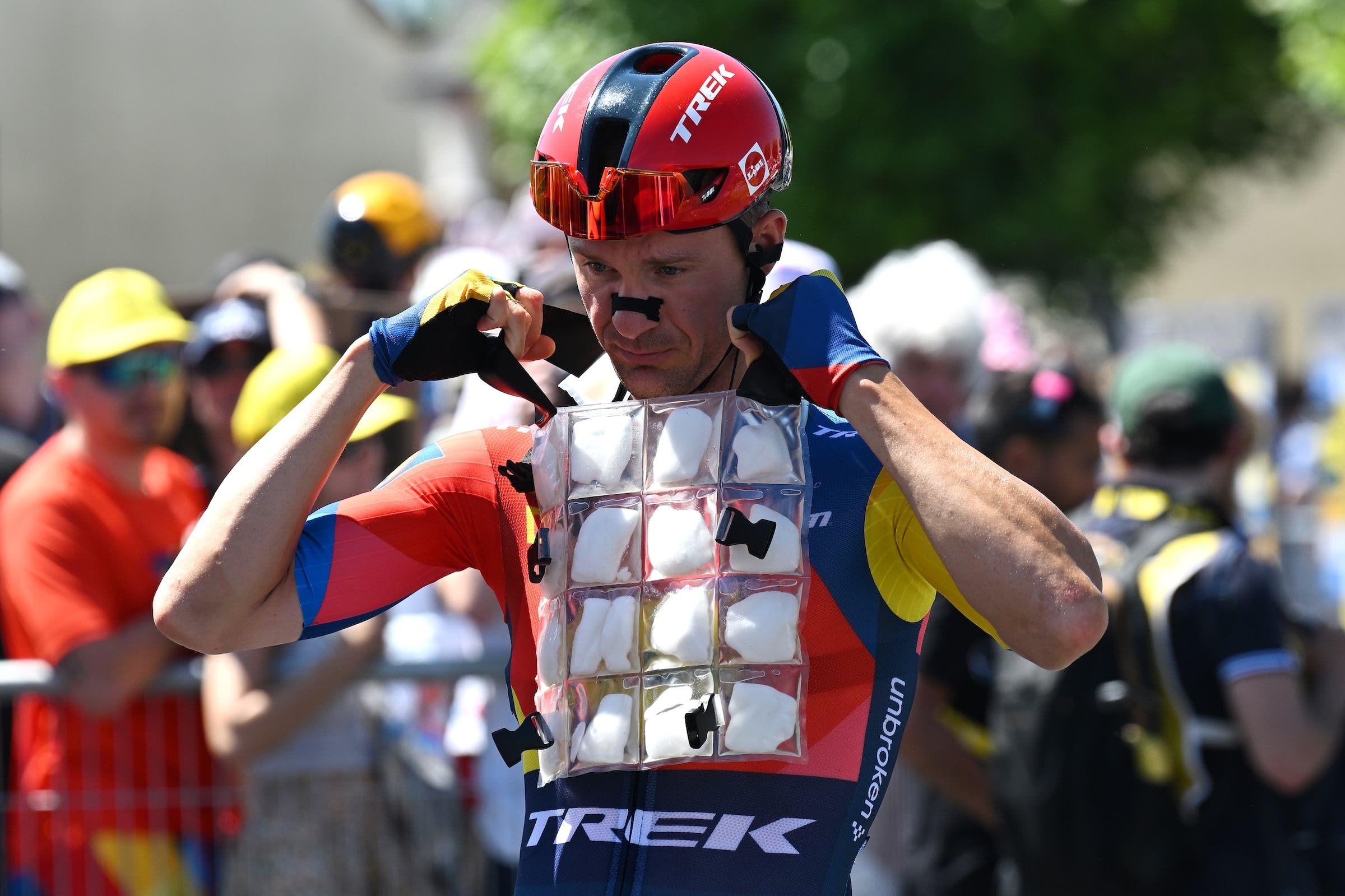
Safety is one very important consideration. But could the actual outcome of the race be affected?
If the heat continues, you can bet on it.
The final stage of the Tour de Suisse Women was an example in point. Elisa Longo Borghini started the day just 10 seconds off the yellow jersey of Marlen Reusser. She was upbeat about her chances of winning overall but, instead, she cracked dramatically and lost almost ten minutes to the Swiss rider.
She later revealed that she had heat stroke and said she couldn’t remember much of that final climb.
If the same thing happens to one or more of the Tour’s GC favorites, it could reshape the whole Tour.
Indeed, that’s something EF Education-EasyPost boss Jonathan Vaughters emphasized during the team press conference on Friday.
“If this heat wave continues through July, that usually changes the race, though we don’t know exactly how,” he said. “When you get extended stretches of 35–40°C, day after day, for two or three weeks, it creates cumulative fatigue that reshapes the race. It makes it more attritional, less explosive.
“Bluntly, the human body can’t produce as much power at 35–40°C as it can at 20–25°C. That shifts things toward a gritty, durable rider willing to suffer, and away from a hyper-talented, explosive one.”
Advantage Vingegaard?
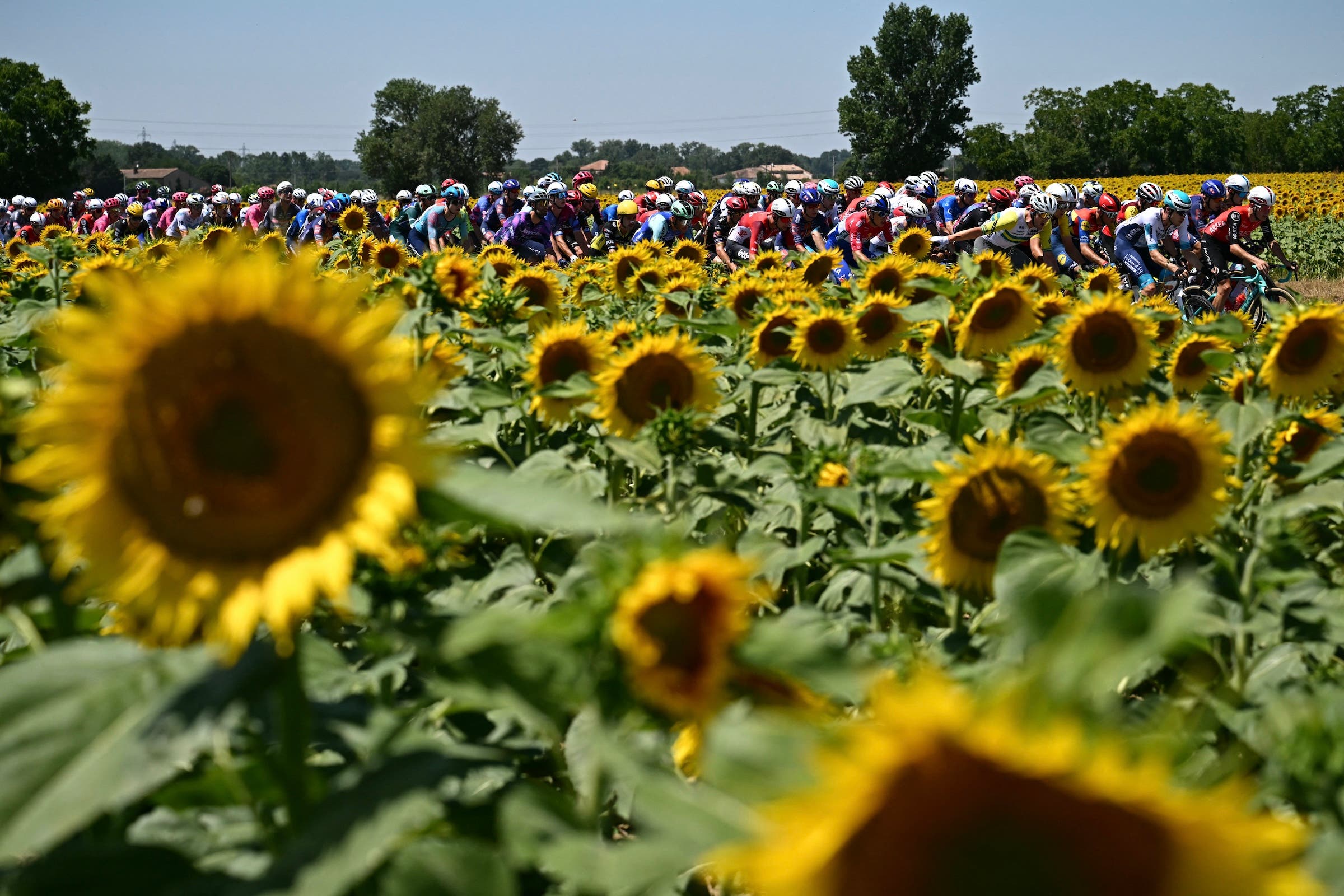
Could the weather affect Tadej Pogačar, the number one favorite for the race?
Speaking to Velo back in 2021, his-then coach Iñigo San Millán said his time gain on stages 8 and 9 was likely due to the cold, wet weather in the Alps.
“We all know that Tadej loves bad weather and he always performs well with bad weather.”
Conversely, when Vingegaard beat Pogačar in 2022 and 2023 it was said that part of his dominance was down to a better ability to handle heat.
Could that tip the balance in the Dane’s favor this month?
If so it will be fascinating twist to their annual rivalry in the race. That’s even more so the case after Vingegaard took yellow in the opening team time trial, giving him a small but morale-boosting advantage.
Other GC riders could be affected too, either positively or negatively.
It’s an additional degree of uncertainty introduced to what is a very chaotic race.
“There are riders who are simply better suited to heat,” said Vaughters on Friday. “A small, compact rider is more aerodynamic but dissipates heat less well, versus a taller rider with more surface area who dissipates heat better but is less aerodynamic. It’s not obvious which wins out in extreme heat.”
Tour debutant Paul Seixas’ height is listed at 1m86, considerably taller than the 1m76 and 1m75 of Pogačar and Vingegaard respectively.
Of the other GC riders, Florian Lipowitz is 1m81 and Isaac Del Toro 1m80. That puts them well ahead of Remco Evenepoel’s 1m71, which is one centimeter taller than Tom Pidcock.
‘For me, the hotter the better’
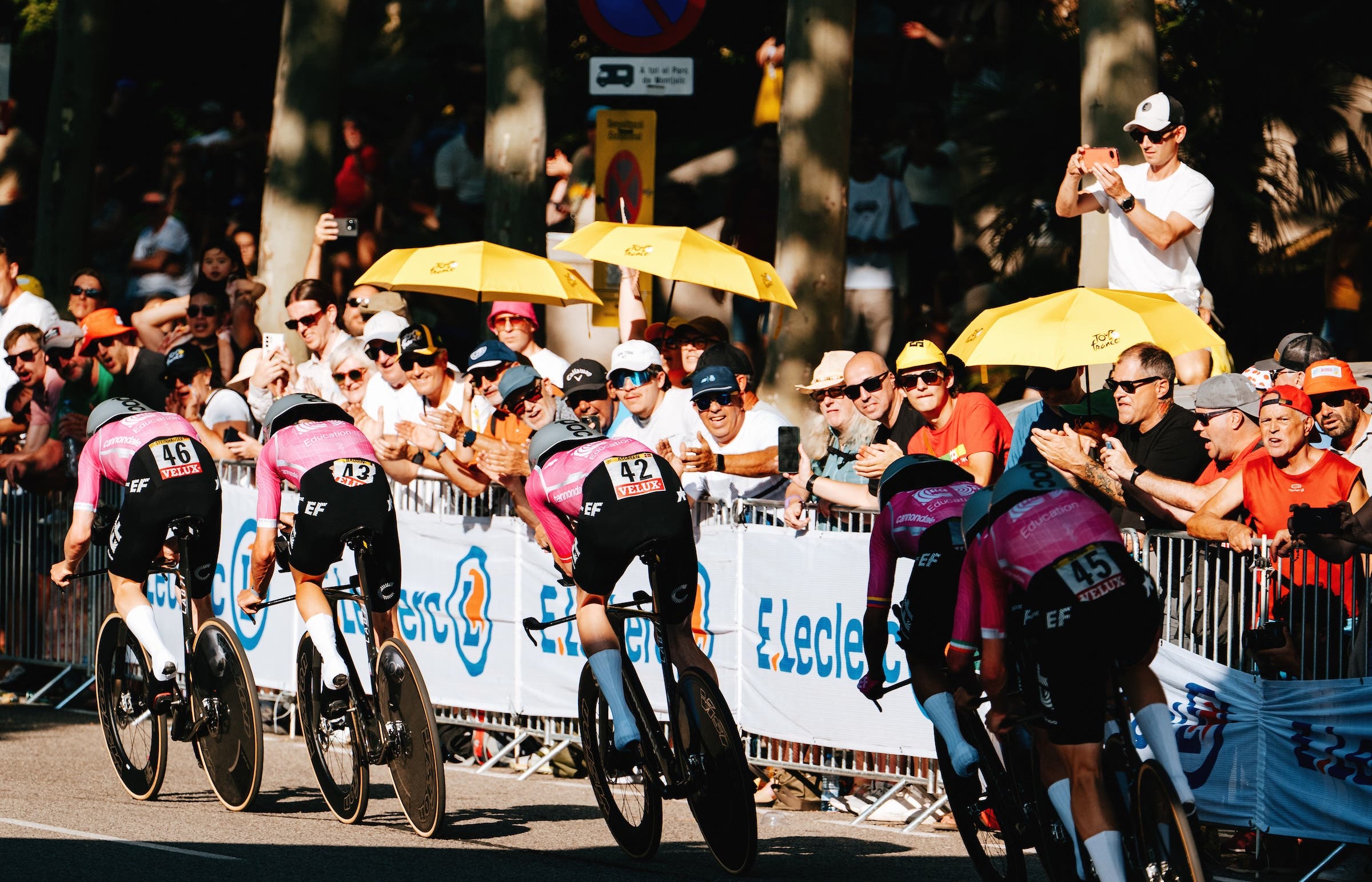
Time will tell if the heat is indeed a big issue for the whole race, and which riders are most affected.
For his part, Vaughters hopes that his riders will have the edge if the conditions persist.
“I don’t know what the weather will be three weeks from now — but I hope for a great battle. In a heavily attritional scenario, I think Richie [Carapaz] does quite well, and I think our team overall is set up for that kind of racing: we’re ahead of the curve on cooling technology and hydration procedures.
“It comes down to taking care of the human body, so for me, the hotter, the better. Ben [Healy] has actually been incredibly disciplined in his heat-adaptation training, too — which is no fun to do — but he’s been great about it.”
Other teams have doubtlessly also focused on such training, making calculations at this point difficult to do.
The takeaway message, though, is that if the race is hit by heatwaves, a tough race will suddenly become far more difficult and key stages could be removed.
[analyse_source url=”https://velo.outsideonline.com/road/road-racing/tour-de-france/heat-waves-could-upend-race/”]