[analyse_image type=”featured” src=”https://velo-cdn.outsideonline.com/wp-content/uploads/2026/07/GettyImages-2283853436-scaled.jpg”]
It’s unlikely but not impossible that Paul Seixas could triumph in his first Tour de France.
Since World War Two, a total of nine riders have pulled off that feat. Jean Robic, Fausto Coppi and Hugo Koblet each did it two years apart between 1947 and 1951, with the five-time Tour de France winners Jacques Anquetil, Eddy Merckx and Bernard Hinault taking wins in their debuts in 1957, 1969 and 1978 respectively.
The others to scoop yellow and spray the bubbly on their first try were Felice Gimondi (1965), Laurent Fignon (1983) and, of course, Tadej Pogačar in 2020.
On that basis, winning in his first participation isn’t out of the question for the new French hope Seixas.
And yet it will be far from easy.
Seixas is just 19 years of age, becoming the youngest rider to line out in the Tour since Adrian Cento back in 1937. That’s a gap of 89 years.
In fact, Pogačar was slightly more than two full years older than Seixas when he clocked up his first Tour win in 2020. He’s regarded by some as the greatest rider of all time, so the young Frenchman is going to have to be something very special indeed if he is to triumph.
But it’s not completely out of the question.
He’s had a runaway success this season, starting the year with no pro wins yet ending up with seven in the months since.
The first of those was a stage in the Volta ao Algarve in February. The Faun-Ardèche Classic followed that same month, while he clocked up three stage wins plus the overall classification in Itzulia Basque Country in April.
That in turn led on to Flèche Wallonne, where he raced with calm and confidence to drop his rivals on the concluding wall of the Mur de Huy.
Head to head with Pogačar
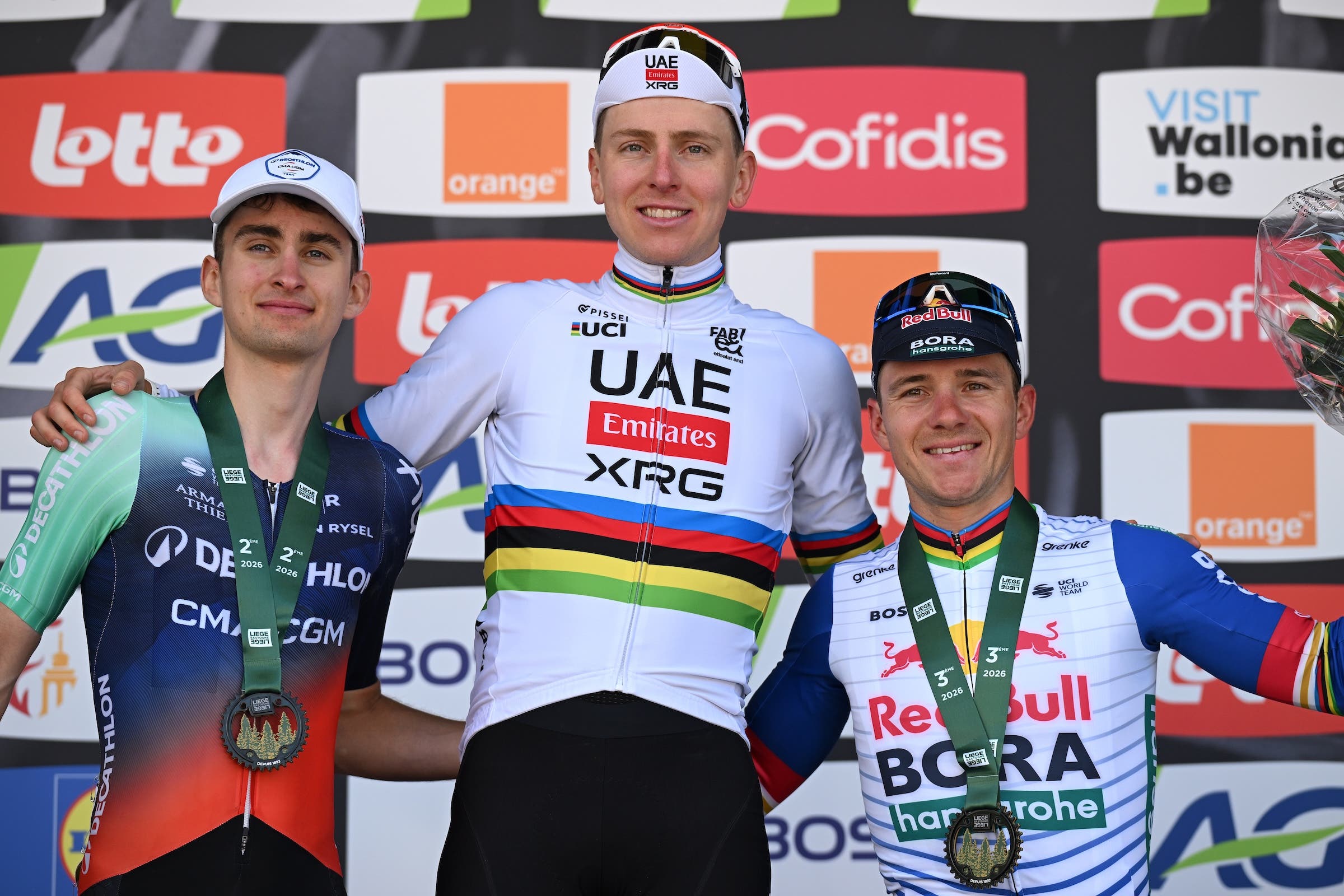
But it was his near-misses this season which may reveal more about just how good the Decathlon CMA CGM rider is.
He finished second to Pogačar in Strade Bianche, just one minute behind.
And he was the only rider able to hold the Slovenian when he went all out on the Côte de la Redoute in Liège-Bastogne-Liège.
They remained together for another 21 kilometers, Seixas trading pulls with a rider eight years his senior, and putting in such a good performance that Pogačar started to believe the race would come down to a sprint.
The four-time Tour winner eventually gapped the Frenchman on the Côte de la Roche-aux-Faucons and was able to breathe a sigh of relief, but the race served as a clear warning: Pogačar’s time will eventually come to an end, and Seixas could be the one to replace him.
No wonder his UAE Emirates XRG team is rumored to be chasing his signature.
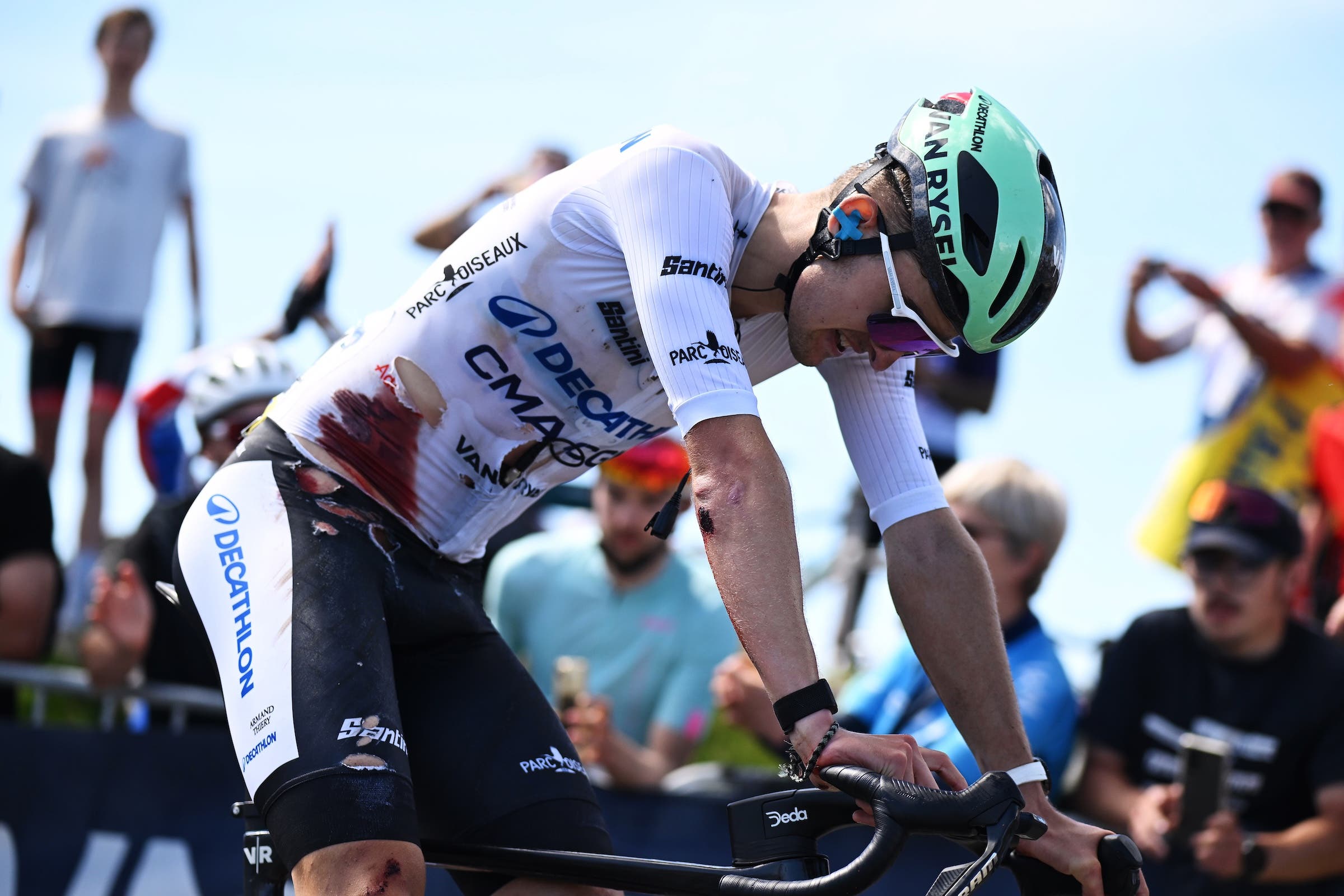
For now, though, he is very much part of the Decathlon team, leading its hopes in this Tour. His first campaign gets underway Saturday in the team time trial in Barcelona, where he hopes to log a strong performance and prove he’s over the big crash which saw him leave the Tour Auvergne Rhône Alpes.
That was an unwelcome outcome in his final preparation race, but even if journalists at the Tour say he still appears to be affected by his crash, at least when moving around off the bike, he’s insisting there’s nothing to panic about.
“Rest assured, everything is fine,” Seixas told l’Equipe in recent days. “I am in really good shape and I feel very good.”
He is, he said, at the Tour to achieve the best possible performance.
“The priority is still going for the general classification,” he reaffirmed. “In what position, I don’t know yet. We’ll see. But I won’t take risks for anything other than the general classification…”
Lacking three week experience
Age aside, another factor for Seixas to deal with is the fact that he’s never done a grand tour.
If we return to that list of riders who won their debut Tour de France, only two of those nine—Robic and Anquetil—had not done either the Giro d’Italia or the Vuelta a España prior to that first Tour.
Those seven had already exposed themselves to a three week event.
For Seixas, he’s only done two eight-days races: the past two editions of the Tour Auvergne-Rhône-Alpes.
And so once the Tour gets into week two he’s chartering new territory.
There’s no guarantee at all that he won’t crack.
But, equally, if the hype about him is based in reality, he could do something really, really big.
Some French journalists are suggesting—say this quietly—that he might be more talented than Hinault himself.
What may also be important is his ability to handle heat. Europe has been hit by heatwaves in recent weeks, with another one building up.
There’s talk of possible stage cancellations or, at the very least, of big disruptions.
If Seixas can handle the heat well, this could give him an advantage over some of his rivals.
It was said in the past that Pogačar can’t handle the high temperatures as well as some others, Vingegaard included.
If that’s indeed the case and if the Slovenian gets into difficulties, the race could be wide open.
A dream debut
While we are stretching for possibilities, Vingegaard could end up paying the price for his Giro d’Italia preparation. Unless he’s fully recovered, he could find his legs fading in week three.
If both he and Pogačar ended up below their potential, the race would suddenly be thrust wide open.
Seixas has already beaten the other contenders, ending up ahead of Isaac Del Toro in both Strade Bianche and Itzulia Basque Country, and bettering Florian Lipowitz in the latter.
He also finished ahead of Remco Evenepoel in last year’s Il Lombardia, the last race the two of them competed together.
As you can see, there’s a lot of what ifs, with some sort of collapse by Pogačar and Vingegaard likely necessary to put him in the frame to triumph overall.
It’s theoretically possible, though, and that will thrill his fans.
What’s more likely is that he has a solid first Tour, taking some very good results and amassing vital experience prior to an even bigger assault in the years to come.
Previous Tour winners in their debut:
1903 — Maurice Garin
1904 — Henri Cornet
1905 — Louis Trousselier
1947 — Jean Robic
1949 — Fausto Coppi
1951 — Hugo Koblet
1957 — Jacques Anquetil
1965 — Felice Gimondi
1969 — Eddy Merckx
1978 — Bernard Hinault
1983 — Laurent Fignon
2020 — Tadej Pogačar
[analyse_source url=”https://velo.outsideonline.com/road/road-racing/tour-de-france/could-seixas-actually-win-first-tour/”]