[analyse_image type=”featured” src=”https://velo-cdn.outsideonline.com/wp-content/uploads/2026/06/Tarmac-SL9-Cover-Photo.jpg”]
Pros
- Weight that goes right up against the UCI weight limit
- Aerodynamics that rival any bike in most road race scenarios
- Tight handling that allows for nimble riding
Cons
- Has remained conservative in its changes between its different iterations
- The bike does not go as far as other race bikes in chasing pure speed.
Specs
Size tested: 56
Weight: 6.8kg / 15lbs (as measured for size 54 in Gloss Ruby Metallic ready to ride minus pedals)
Price: $13,999 (as tested)
Brand: Specialized
Verdict
The Specialized Tarmac SL9 might not be a return to the ambitious aero designs of past Specialized superbikes, but it never needed to be. At this point, the Tarmac is such a proven platform that even a marginal 3.8-watt improvement proves Specialized is still finding ways to refine road racing’s gold standard.
Specialized is launching the new Tarmac SL9 today, and it brings up a question. At what point is it okay to admit that the bike was already fast enough? In cycling’s interminable march to optimization, when is it okay for a company to admit that the previous product set a bar for itself that was hard to clear?
In the launch of the new Tarmac SL9, Specialized is choosing not to admit defeat. Instead, the brand has a stack of marginal improvements, such as aerodynamic optimization for one water bottle, not two. It is a small detail, but Specialized is wagering that most of the key racing moments for the Tarmac SL9 will take place in one-bottle scenarios. That is the level of specificity the brand is using to find gains in this racing platform.
Yet, even if the details are correct, the improvements are marginal. The Tarmac SL9 is changing things around the edges, growing in steps, not leaps. But who can blame Specialized? While the launch was happening, the Tarmac SL8 was winning Giro d’Italia sprints against newer, more aero-optimized bikes.
Improving something so proven is a delicate dance. Need I even say it? If it isn’t broken, why fix it? With the Tarmac SL9, Specialized certainly lived by that model. Nevertheless, with the top bikes in the world, there are always interesting things to unpack.
Quick hits: 7 standout details of the Specialized Tarmac SL9
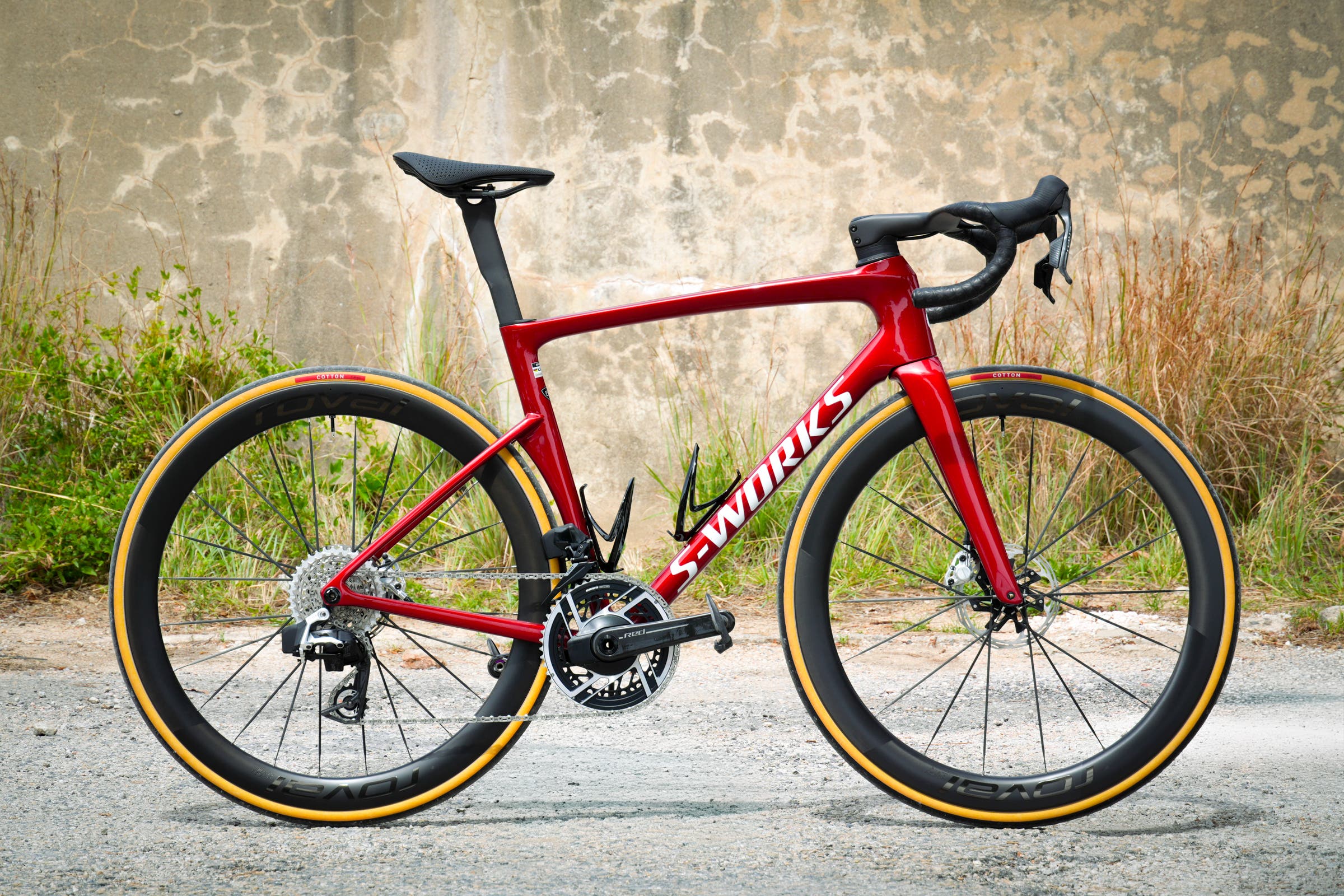
- 6.5kg claimed for the full system weight, 687g claimed frame weight size 56
- A claimed 3.8 watts aerodynamic gain at 45kph
- Speed sniffer gets a makeover
- Geometry remains unchanged
- Compatible with 2x, 1x, and mechanical groupsets
- CeramicSpeed headset and bottom bracket
- Newly contoured aero seatpost captures watts lost to pedaling.
- For more information, visit the Specialized website
Specialized Tarmac SL9 frame details
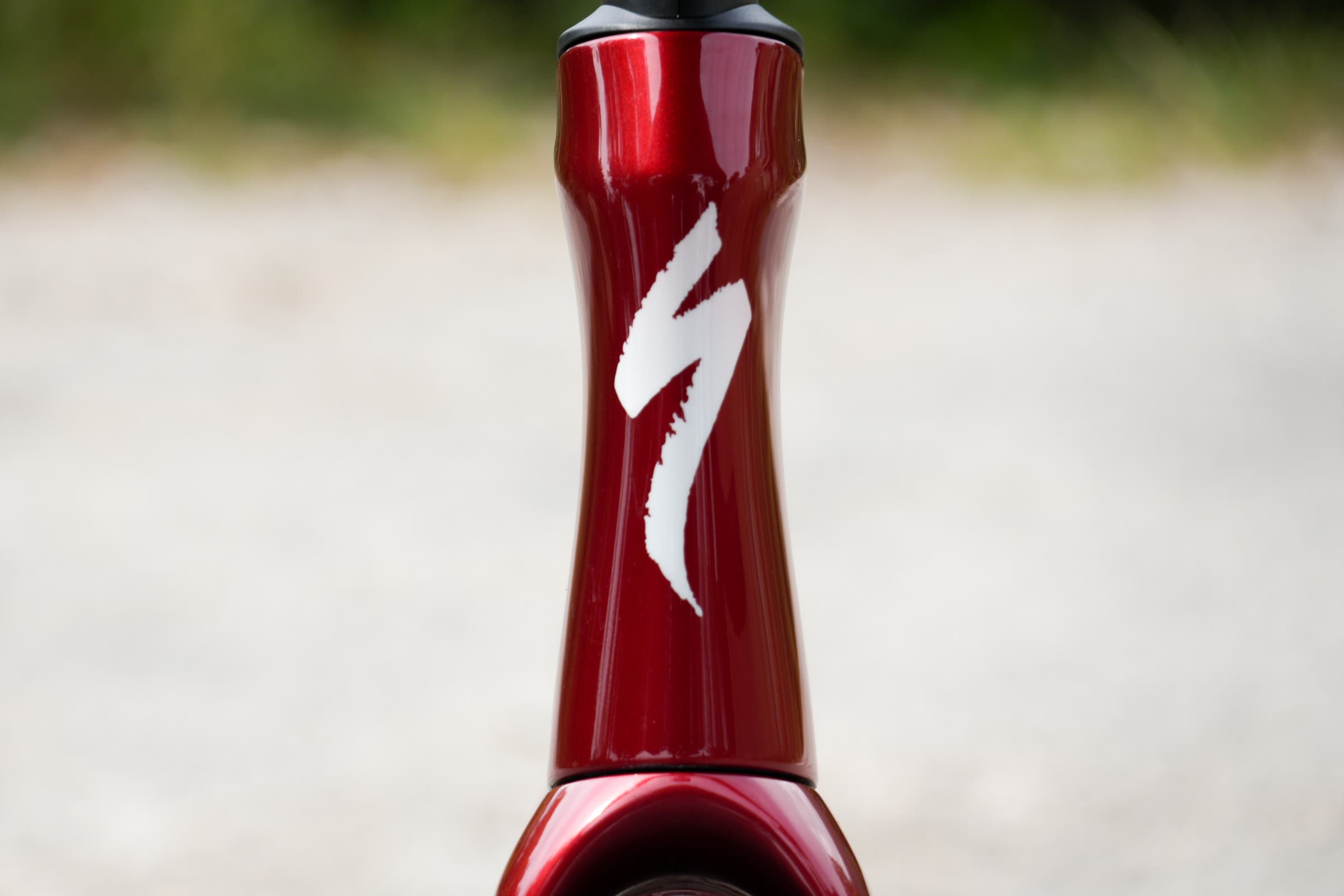
When the Tarmac SL8 launched in late 2023, its elongated “speed sniffer” head tube grabbed the headlines, largely because the rest of the frame remained so similar to the outgoing SL7. That SL7 marked the end of the dedicated Venge and the start of Specialized’s “one bike to rule them all” strategy. Since then, the brand has favored iterative updates over radical redesigns. The new Tarmac SL9 continues that legacy. While there are obvious tweaks to the frame shape from front to back, the design relies on finding speed around the margins rather than reimagining the platform.
These marginal aerodynamic adjustments reflect Specialized’s stated philosophy of building bikes for the fastest time to the finish line, not necessarily the absolute fastest time in a wind tunnel. The Tarmac SL9 works towards that goal by strictly balancing the competing demands of climbing weight and flat-out speed. To find that balance, Specialized combined detailed computer modeling with direct feedback from its sponsored teams. This process defined the exact performance goals for the Tarmac SL9 while allowing the brand to benchmark the new frame directly against its top competitors.
This is a similar strategy to the one Colnago reported when developing the Y1RS. Like Colnago, Specialized realized that part of the process involved adjusting the basic methodology to create a more accurate model. Beyond optimizing around one bottle instead of two, a major change was adjusting yaw angles to better reflect actual cycling conditions.
Wind-tunnel testing uses a range of yaw angles to simulate how wind hits a bike in the real world. Most companies use standard global weather data to determine that range. Specialized argues that this standardized data measures wind at a height that isn’t appropriate for bicycles. When utilizing data gathered closer to the ground, the math suggests a narrower range of yaw angles provides a more accurate representation of bike racing.
So, what does all this mean for bike design? According to Specialized, when these adjusted angles are considered, the deeper aero profiles of some hyper-aerodynamic bikes are less impactful than intentionally designed shallower profiles. In other words, using this dataset, aerodynamics matter, but weight becomes relatively more important in optimizing bikes for WorldTour racing.
To prove this, Specialized used its models to show the speed differential between the Tarmac SL9 and its key competitors on pivotal WorldTour race days. In presenting the bike to the assembled global cycling media, Specialized backed these claims with speed comparisons that pitted the Tarmac SL9 against the brand’s own SL8, the Colnago Y1RS, the Cervelo S5, and the Factor One.
Across a range of key race profiles—including Mount Ventoux, Alpe d’Huez, Liège-Bastogne-Liège, and the Montreal World Championship course—the Tarmac SL9, according to Specialized, significantly outpaced its predecessor and the competition.
| Scenario | Tarmac SL9 Time | Tarmac SL8 Gap | Cervélo S5 Gap | Colnago Y1Rs Gap | Factor ONE Gap |
| TdF Stage 19 – Attack at Alpe d’Huez | 00:38:18.000 | +5.5s | +16.4s | +18.2s | +30.9s |
| Liège–Bastogne–Liège – Attack with 34km Remaining | 00:52:00.399 | +10.8s | +2.4s | +6.4s | +7.7s |
| Worlds 2026 Montreal – One Lap Only | 00:19:17.100 | +3.7s | +0.5s | +1.9s | +2.1s |
| TdFF Stage 7 – Attack at Last 44km | 01:53:57.799 | +20.0s | +38.4s | +45.2s | +74.5s |
Changes to the leading edge of the Tarmac SL9 lead to even more speed sniffing
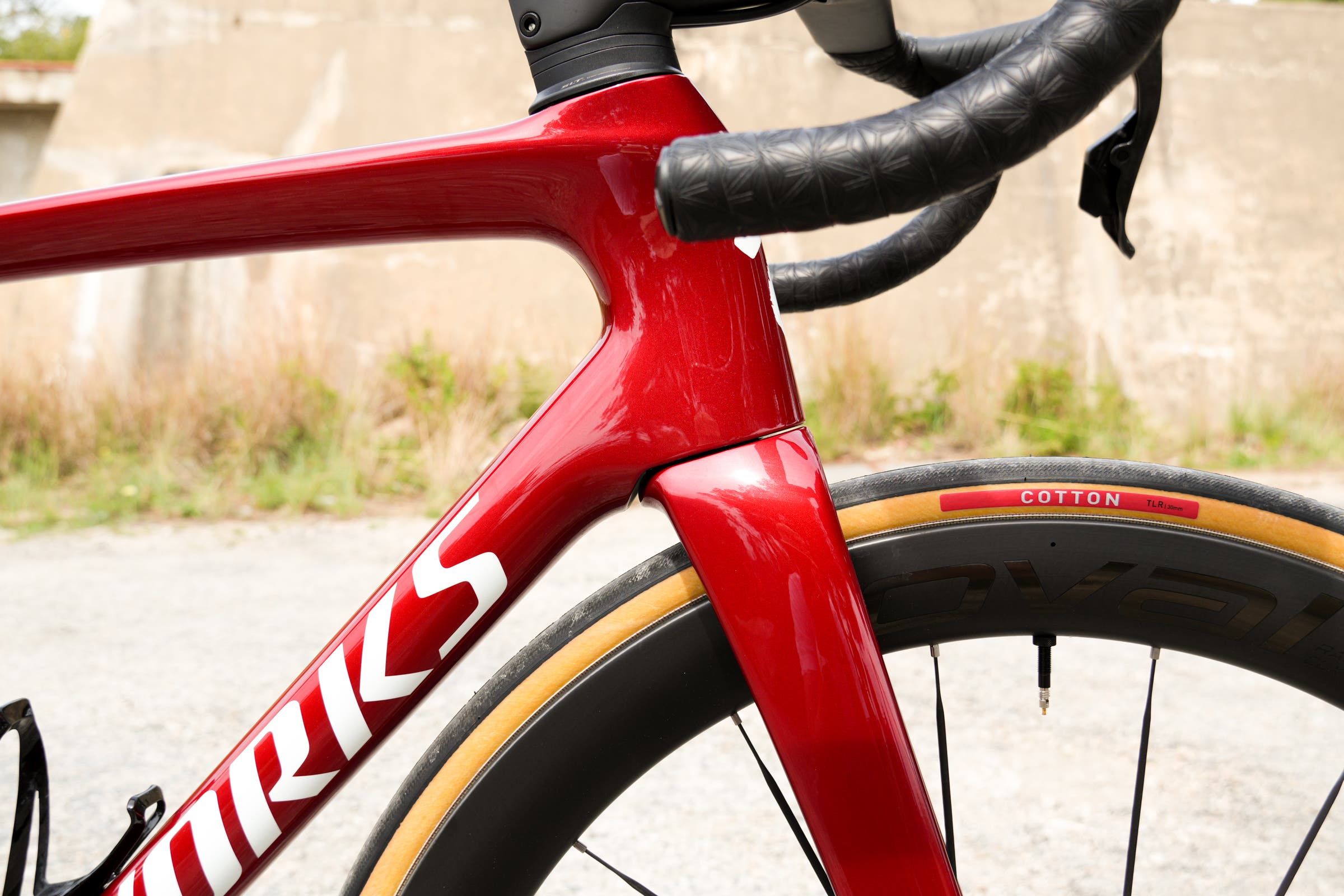
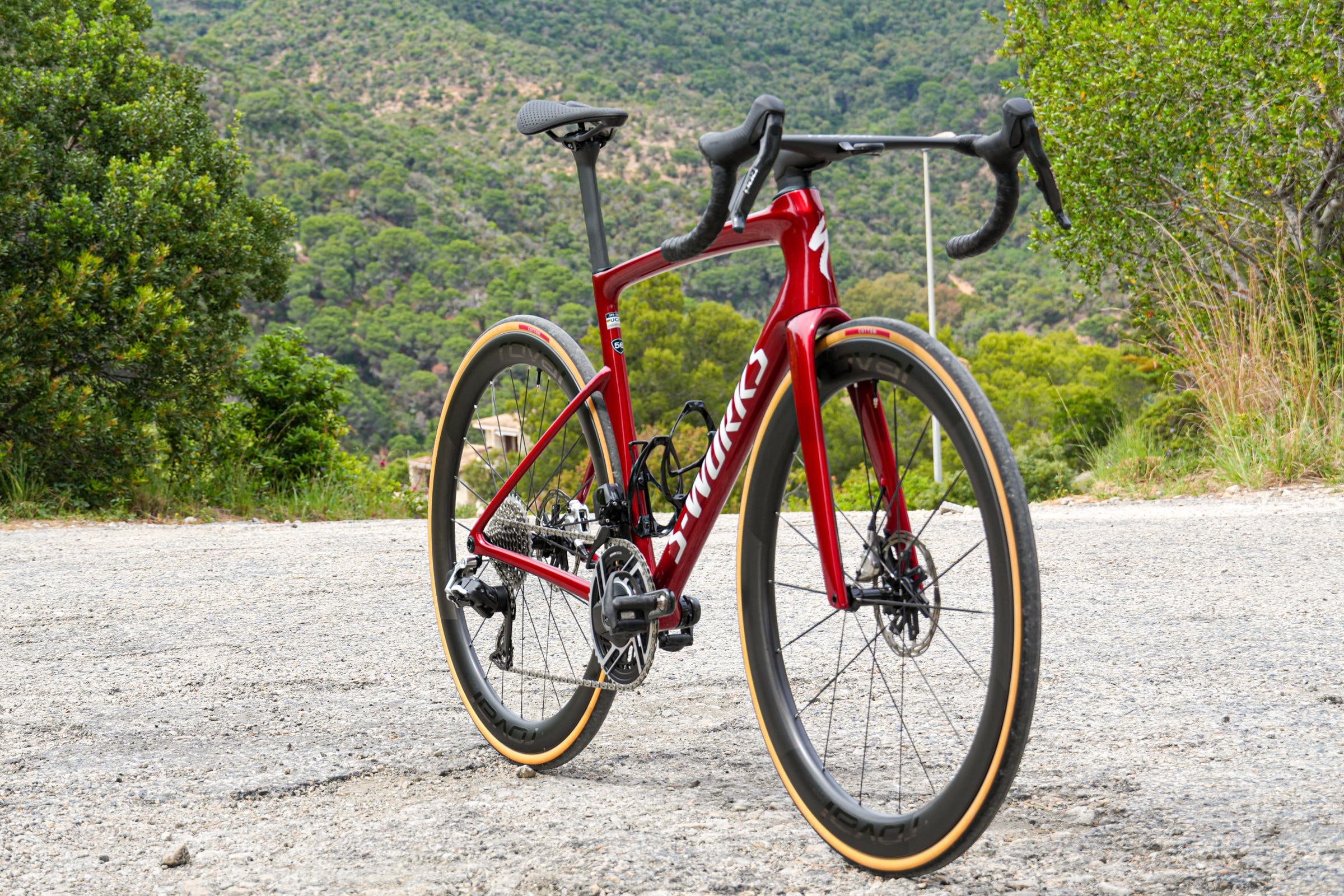
First and foremost, the speed sniffer has not gone anywhere. In fact, Specialized has doubled down, pushing the leading edge of the fork forward significantly to create a deeper tube profile and matching the depth of the speed sniffer along the head tube. That depth is melded with the down tube to create more integration throughout the front end of the bike.
The Tarmac SL9 has not gone as far as brands like BMC and Factor in creating deep and wide fork blades, but the changes are pronounced on both fronts. Not only are the fork blades deeper, but the arch at the top of the fork is also much more angular, featuring a wider stance that aligns with the broader design trends of recent aero bike releases.
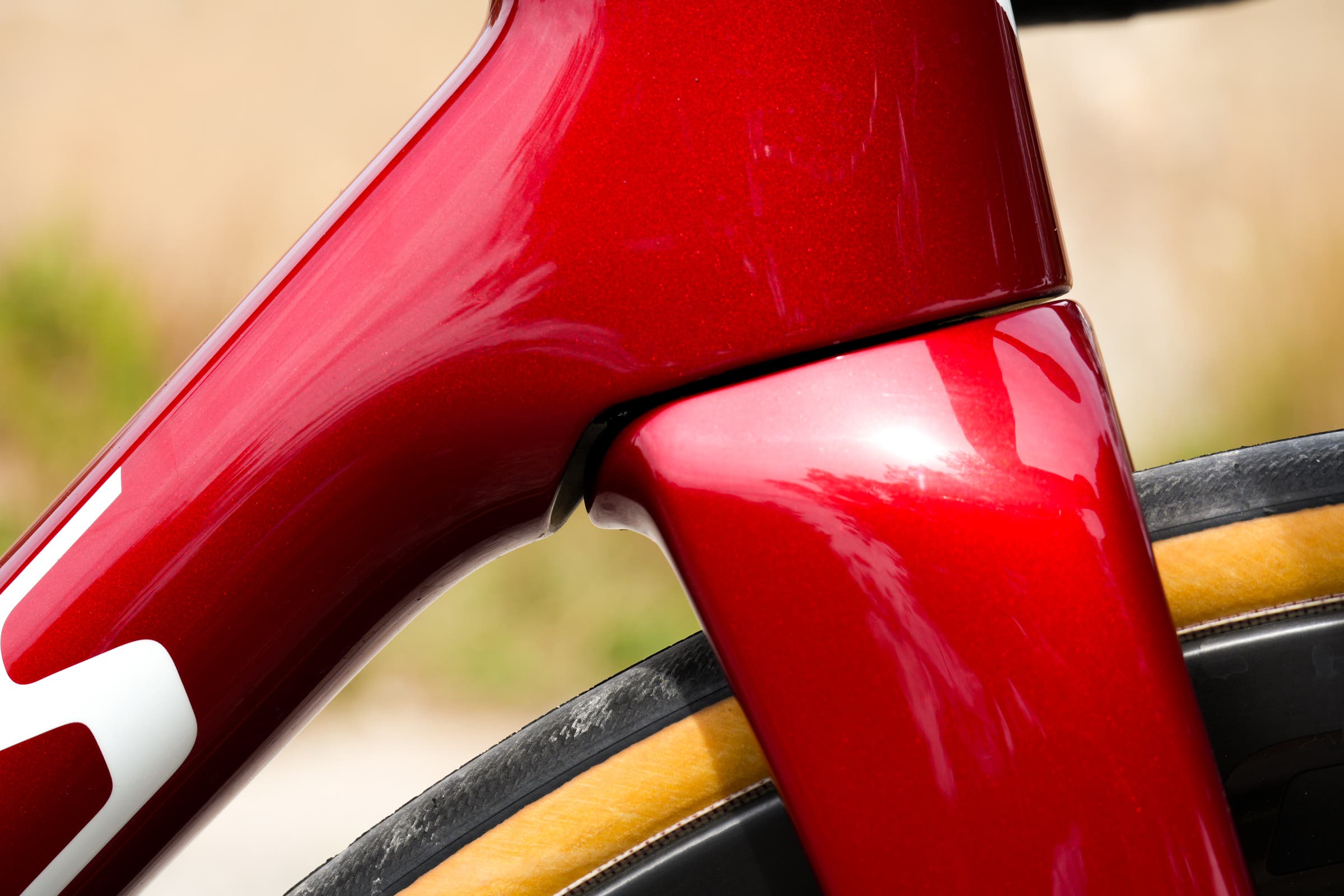
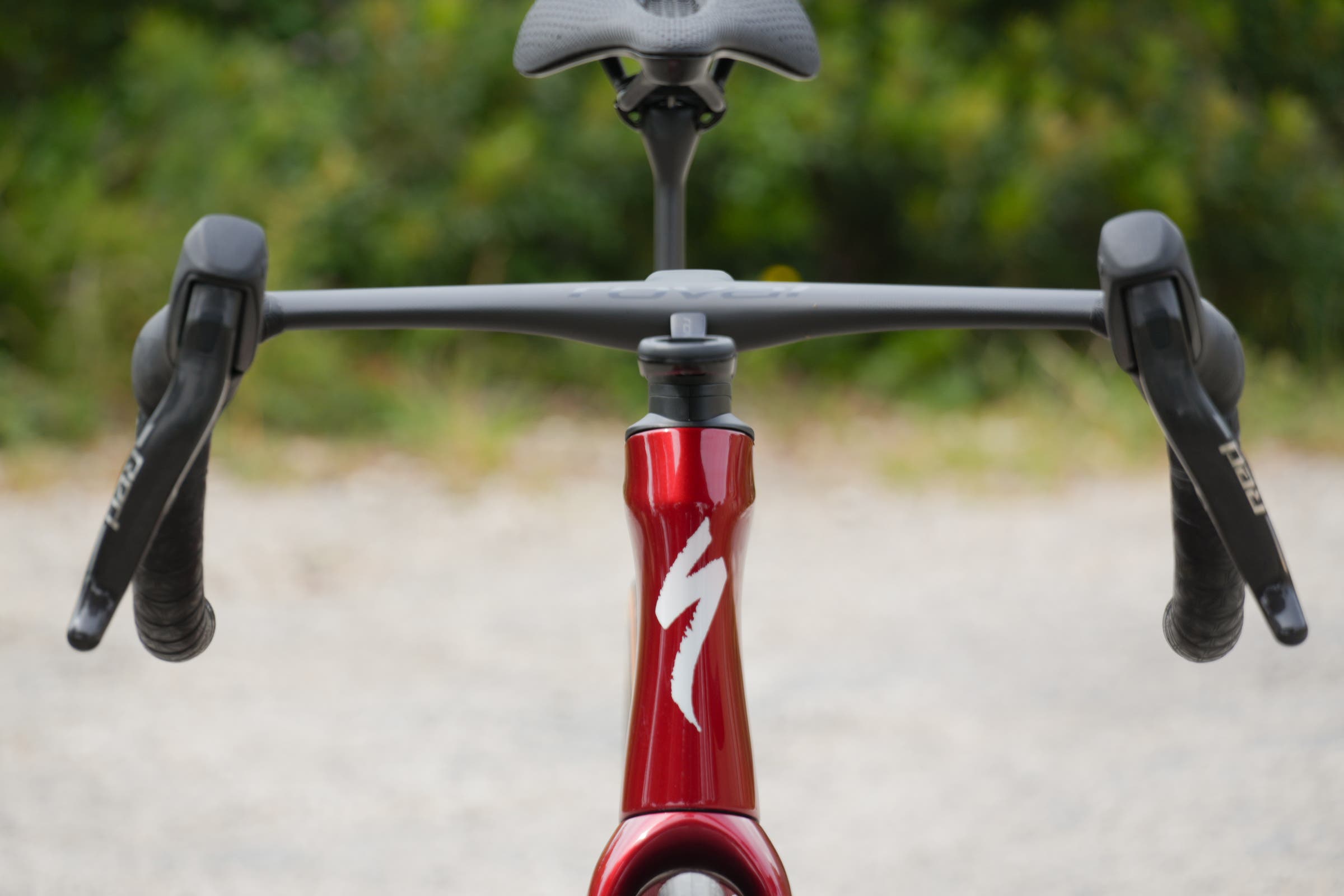
The head tube has also been slimmed down to further decrease the frontal area of the bike. To accomplish this sleeker profile, Specialized fashioned a kink in the steerer tube that allows the brake hoses to sneak alongside it, minimizing frontal area while retaining the requisite stiffness and lightweight construction.
One small quirk of shifting the leading edge of the fork forward is the risk of the fork blades spinning around and damaging the frame in a crash. To prevent this, Specialized added an internal steering stop—a trick the brand developed when a similar issue arose during the Venge’s development years ago.
Optimizing around moving legs and one water bottle
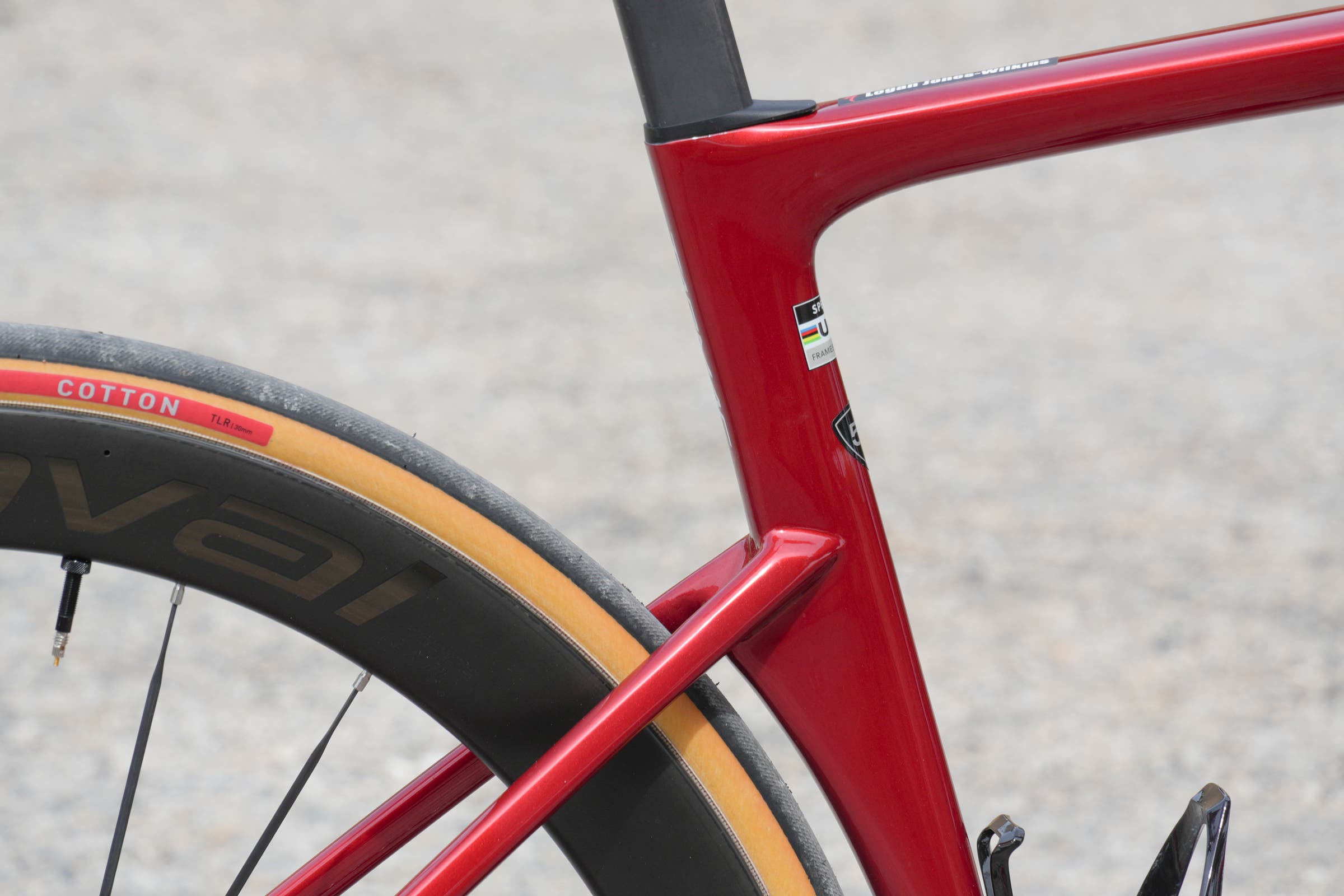
The other obvious area of reshaping is the seat tube and seatpost. On both counts, the changes have been aimed at fairly specific aerodynamic gains that demonstrate how Specialized is left to look at the margins to squeeze out more speed.
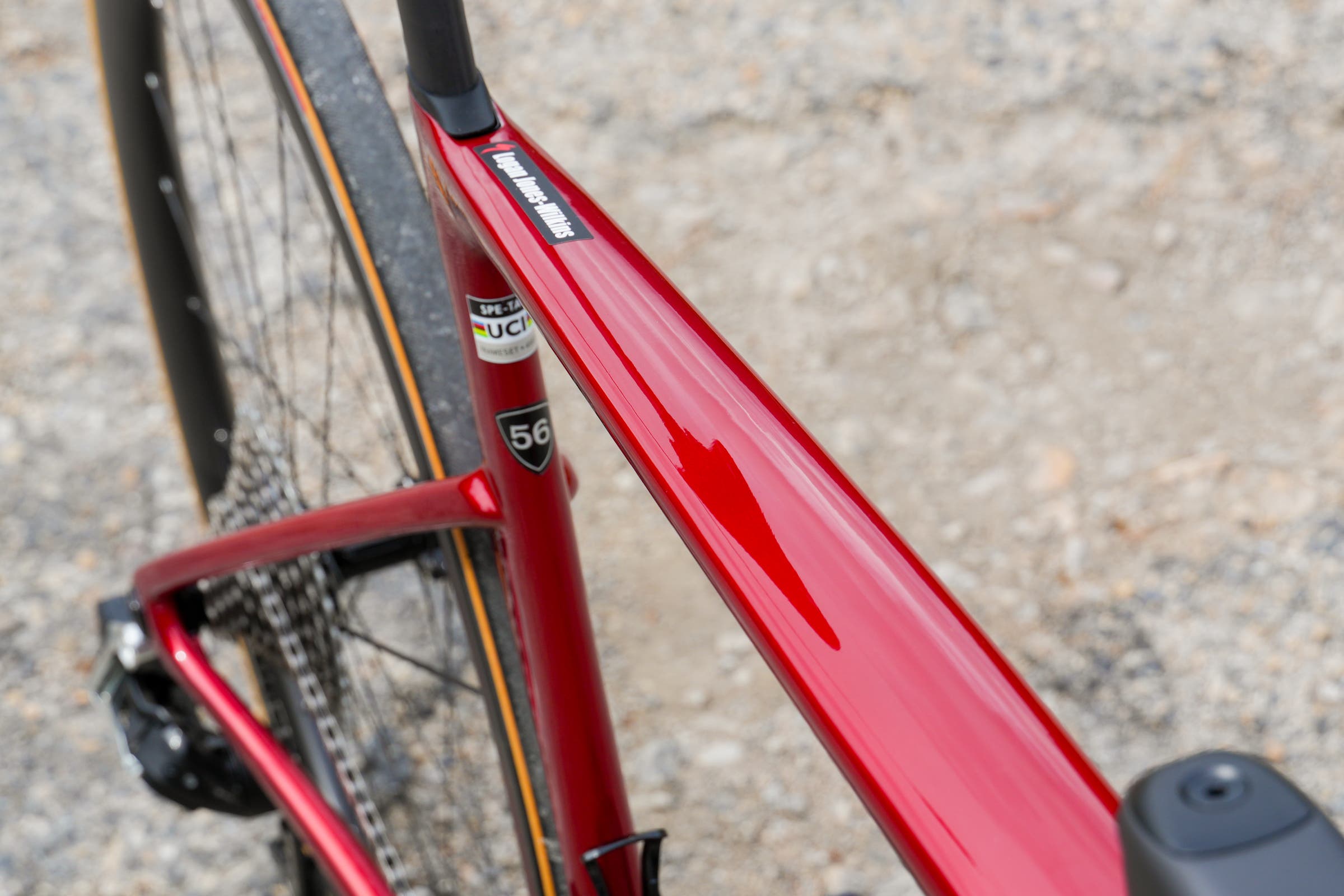
The seat tube is reshaped to create a deeper profile, extending around the rear wheel from the bottom bracket to the dropped seat stays. The frame does not hug the rear wheel as much as bikes have done in the past, keeping a minimum gap of a centimeter throughout the rear of the bike, but it is a significant change in look from the Tarmac SL8.
That larger foil shape around the rear wheel is an adjustment made to better optimize airflow when the frame only has one bottle. While this may seem like a trivial detail, it represents a significant shift in how Specialized approaches designing a race bike for the world’s fastest road racers.
Through close relationships with WorldTour teams like FDJ-Suez and Red Bull-Bora-Hansgrohe, Specialized concluded that the vast majority of race-deciding moments—whether through sprints, breakaways, or long alpine climbs—occur when riders have either ditched their second bottle or can easily grab a new one when needed. That isn’t to say the bike lacks the ability to carry a second bottle, or that it is slow with one mounted. It simply means that designing around a single bottle increases the importance of the airflow around the seat tube and the rear wheel.
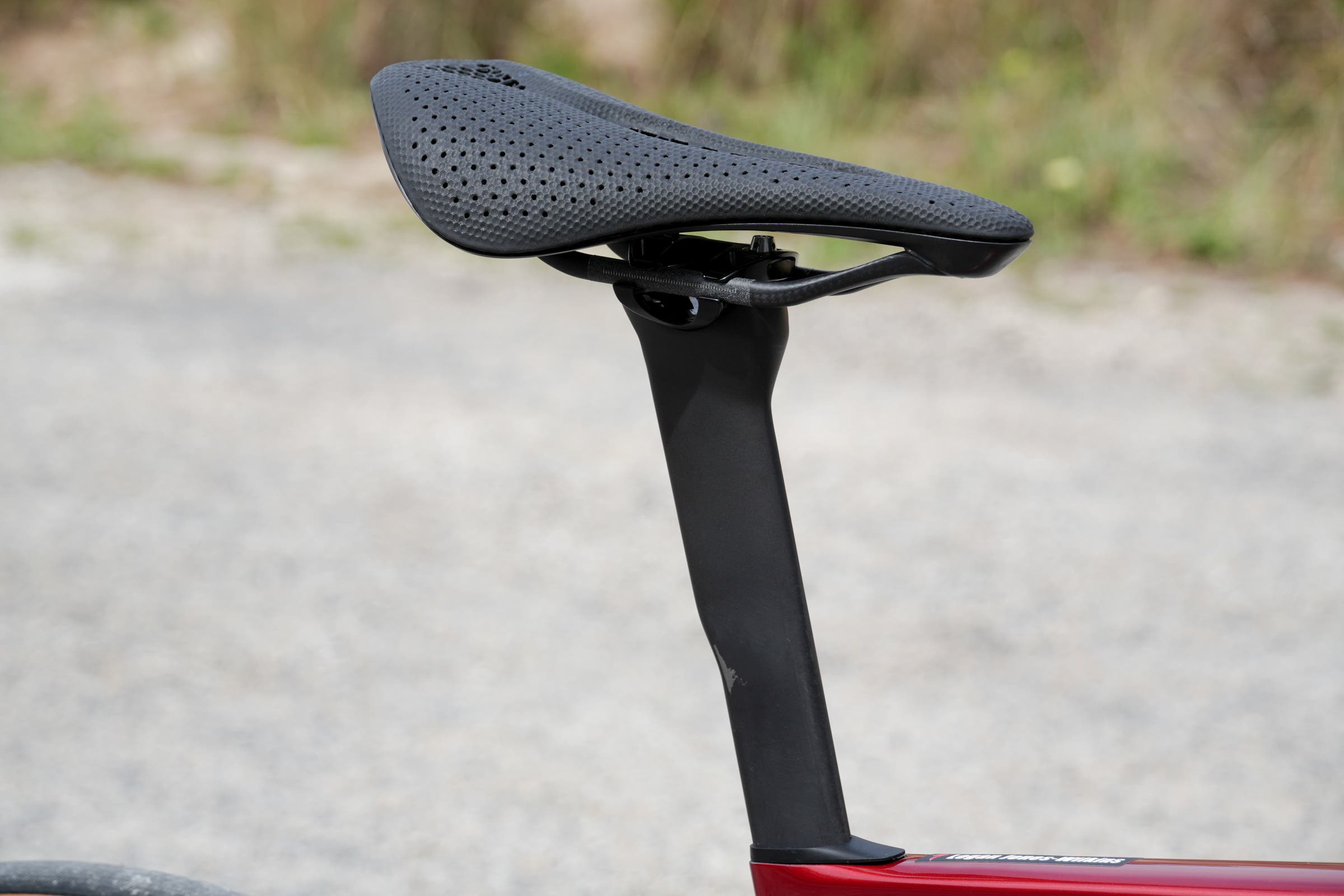
Likewise, Specialized looked higher up the rear end of the bike for potential optimization. The brand found it through a reshaped seatpost that shares its bottom half with the stock post found on the Tarmac SL8 and the new Crux 5. The top half, however, is thinner and longer, creating an extended foil shape closer to the saddle. That two-tiered structure is designed to capitalize on what Specialized says is increased air speed between a rider’s legs. Essentially, the legs act like a narrow canyon, funneling and accelerating the air. The longer airfoil at the top of the seatpost is specifically shaped to take advantage of this localized, high-speed airflow.
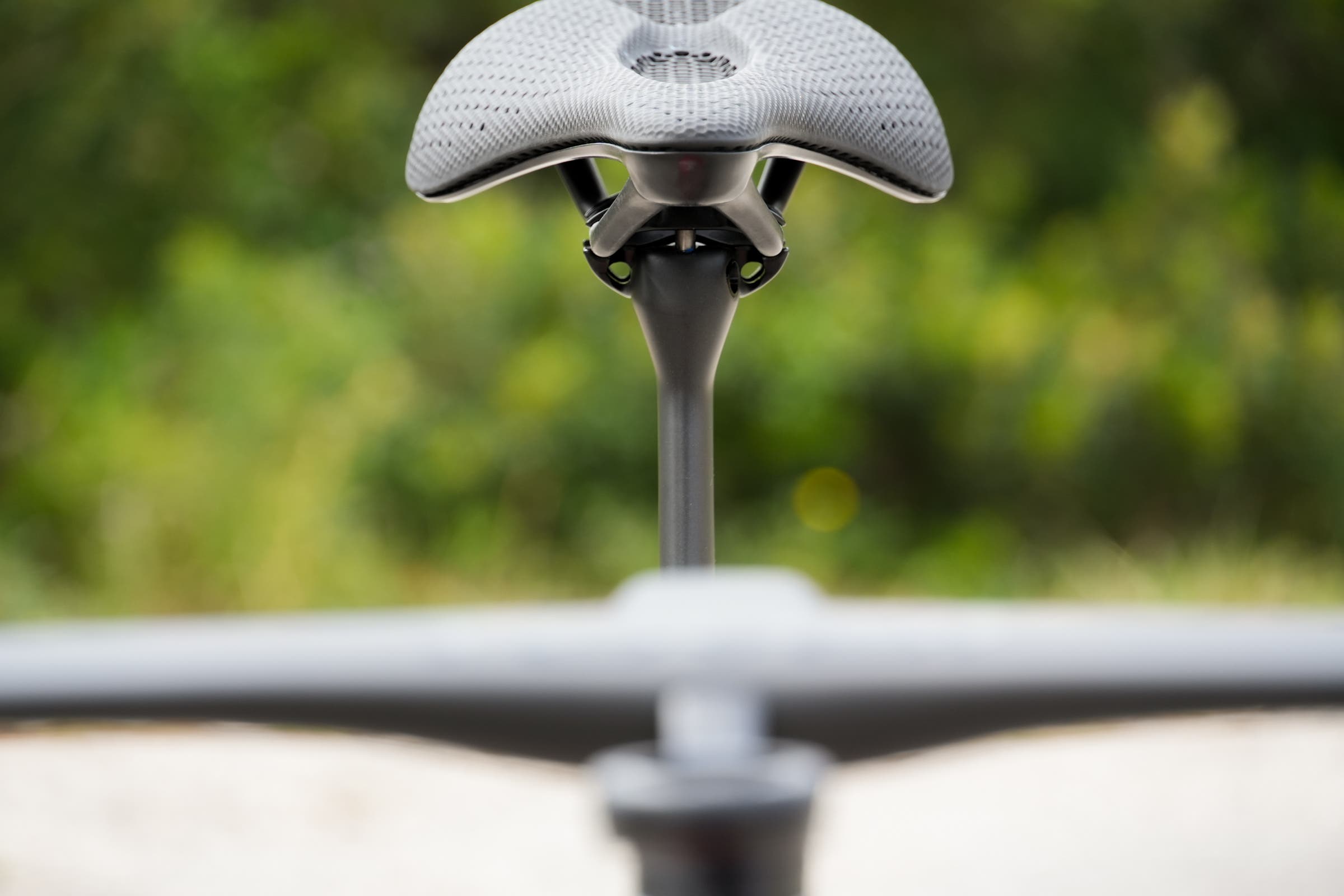
Specialized doesn’t state exactly what the watt savings are for the seatpost. Engineers told Velo that the number is far too dependent on the size of the rider to reduce to a single metric, but it was clearly an opportunity to add aerodynamic gains without overhauling the entire seatpost design.
Specialized Tarmac SL9 build details
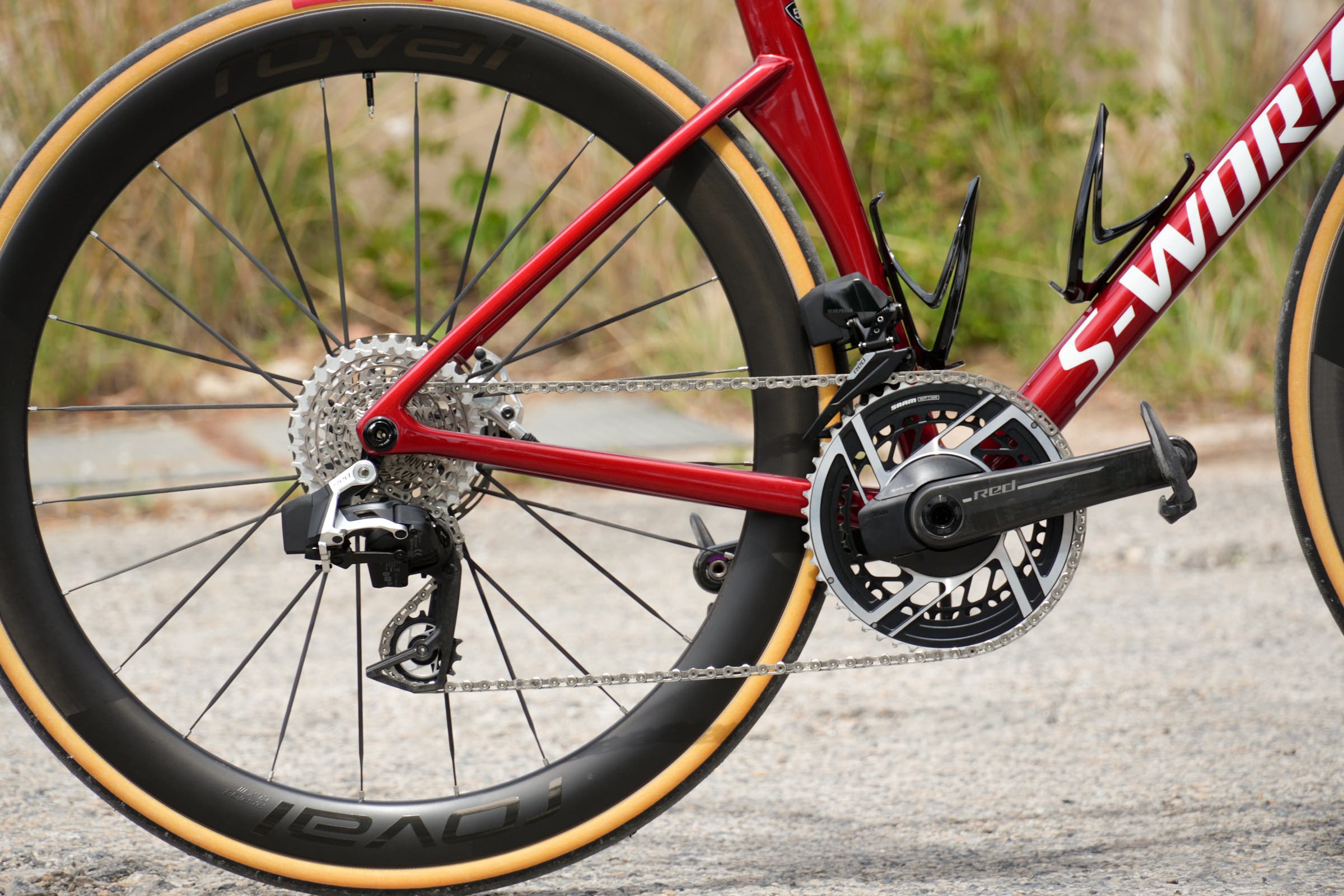
As a complete bike, the Specialized Tarmac SL9 benefits from a collection of components the brand has unveiled over the past few seasons. Compared to the launch of the Tarmac SL8, the Tarmac SL9 arrives with a new bar, saddle, wheels, and tires. Aside from the Power EVO saddle, all of these separate elements have already been proven on top-flight Specialized road bikes over the last couple of years.
As a unified package, the finishing kit from Specialized and its Roval sub-brand remains a key part of the performance picture. More than almost any other major brand, Specialized keeps as much of the spec in-house as possible. Really, it is only the groupset that escapes the corporate umbrella.
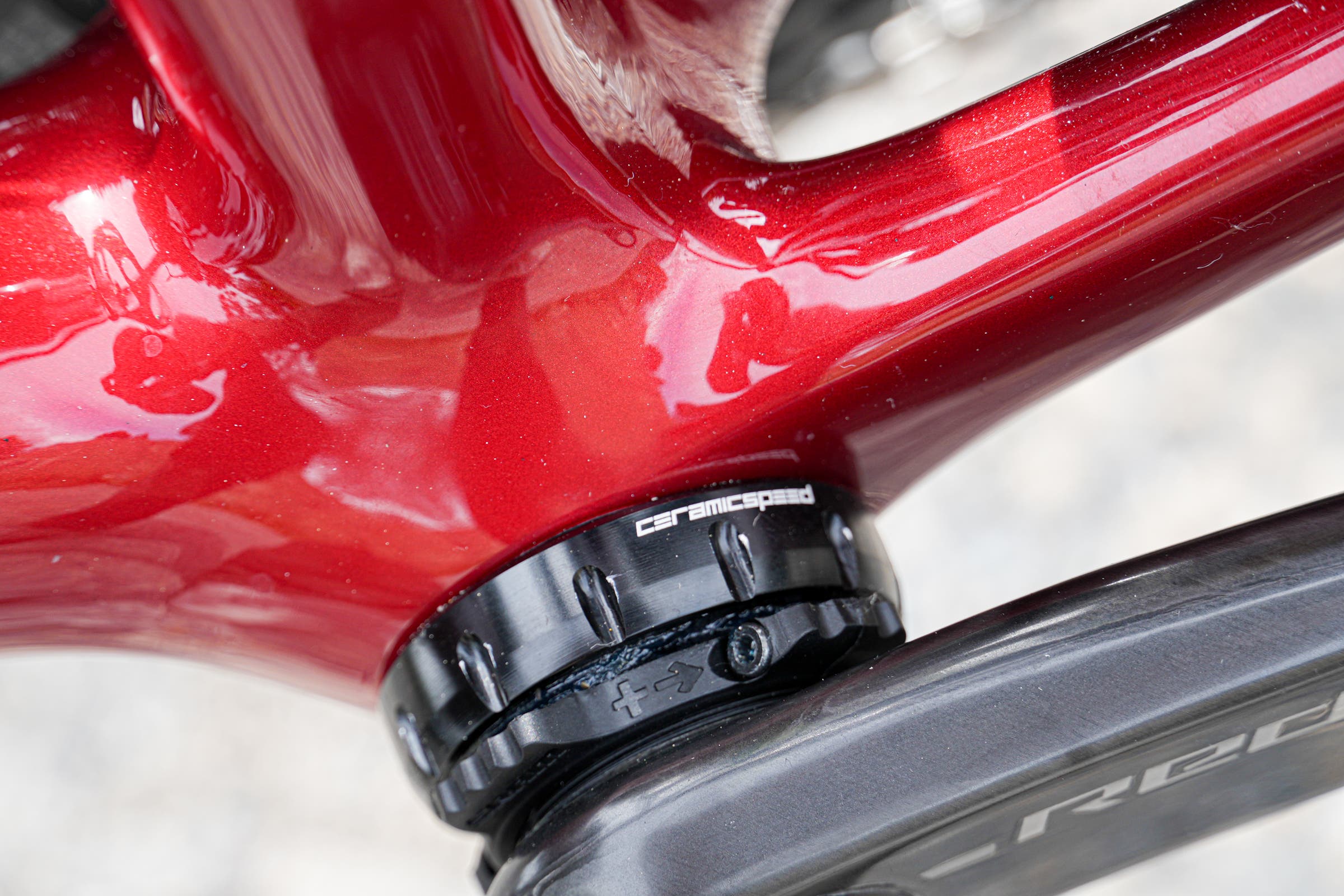
CeramicSpeed headsets and bottom brackets will come stock on the S-Works level of the Tarmac SL9, with the finishing components adding even more premium touches—and premium cost—to the top-of-the-line builds.
| Component | Specification |
| Frame | FACT 12r Carbon Frame |
| Fork | FACT 12r Carbon Fork |
| Wheelset | Rapide CLX III Wheels |
| Bottom Bracket Bearings | CeramicSpeed |
| Headset Bearings | CeramicSpeed |
| Saddle | S-Works Power with Mirror |
| Cockpit | Rapide Integrated Cockpit |
| Groupset Options | SRAM RED AXS or Shimano Dura-Ace Di2 |
The S-Works builds are available in Shimano Dura-Ace and SRAM Red AXS, with a slight change in costs. Additionally, the S-Works Tarmac SL9 is available in both standard frameset and WorldTour Team Edition frames. At the time of release, the S-Works build is the only available bike; however, expect more build options to come soon.
| Model | USD | EUR (€) | GBP (£) | AUD |
| S-Works Tarmac SL9: SRAM RED AXS Build | $14,000 | €13,999 | £11,999 | $21,500 |
| S-Works Tarmac SL9: Shimano Dura-Ace Di2 Build | $13,500 | €13,999 | £11,999 | $20,500 |
| S-Works Tarmac SL9: 2026 World Tour Team Edition (Frameset) | $6,000 | €5,999 | £5,499 | $9,500 |
| S-Works Tarmac SL9 (Frameset) | $5,800 | €5,799 | £5,249 | $9,500 |
Specialized Tarmac SL9 Geometry
| Geometry | 44 | 49 | 52 | 54 | 56 | 58 | 61 |
| Stack (mm) | 501 | 514 | 527 | 544 | 565 | 591 | 612 |
| Reach (mm) | 366 | 375 | 380 | 384 | 395 | 402 | 408 |
| Head Tube Length (mm) | 99.6 | 108.8 | 119.8 | 139.7 | 157.2 | 184.3 | 204.4 |
| Head Tube Angle (°) | 70.5 | 71.75 | 72.5 | 72.5 | 73.5 | 73.5 | 74 |
| BB Height (mm) | 266 | 266 | 266 | 268 | 268 | 268 | 268 |
| BB Drop (mm) | 74 | 74 | 74 | 72 | 72 | 72 | 72 |
| Trail (mm) | 71 | 63 | 58 | 58 | 55 | 55 | 52 |
| Fork Length (mm) | 369 | 369 | 369 | 369 | 369 | 369 | 369 |
| Fork Rake / Offset (mm) | 47 | 47 | 47 | 47 | 44 | 44 | 44 |
| Front Center (mm) | 572 | 574 | 577 | 587 | 591 | 606 | 613 |
| Chainstay Length (mm) | 410 | 410 | 410 | 410 | 410 | 410 | 410 |
| Wheelbase (mm) | 970 | 973 | 975 | 986 | 991 | 1005 | 1012 |
| Top Tube, Horizontal (mm) | 496 | 508 | 531 | 540 | 562 | 577 | 595 |
| Standover Height (mm) | 722 | 734 | 745 | 767 | 785 | 807 | 833 |
| Seat Tube Length (mm) | 433 | 445 | 456 | 473 | 494 | 515 | 545 |
| Seat Tube Angle (°) | 75.5 | 75.5 | 74 | 74 | 73.5 | 73.5 | 73 |
With the Tarmac SL9, Specialized has changed the dimensions of a few key specifications of the bike. The bike will come with updated one-piece handlebar widths to better match current bike fits. The same is true for the specced cranks, which are also adjusted towards shorter options. That said, many will find the stock handlebars too wide and the cranksets too long.
| Frame Size (cm) | 44 | 49 | 52 | 54 | 56 | 58 | 61 |
| Stem Length (mm) | 70 | 80 | 90 | 100 | 100 | 110 | 110 |
| Handlebar Width (mm) | 380 | 400 | 420 | 420 | 420 | 440 | 440 |
| Crank Length (mm) | 165 | 170 | 170 | 172.5 | 172.5 | 175 | 175 |
Specialized Tarmac SL9 ride experience
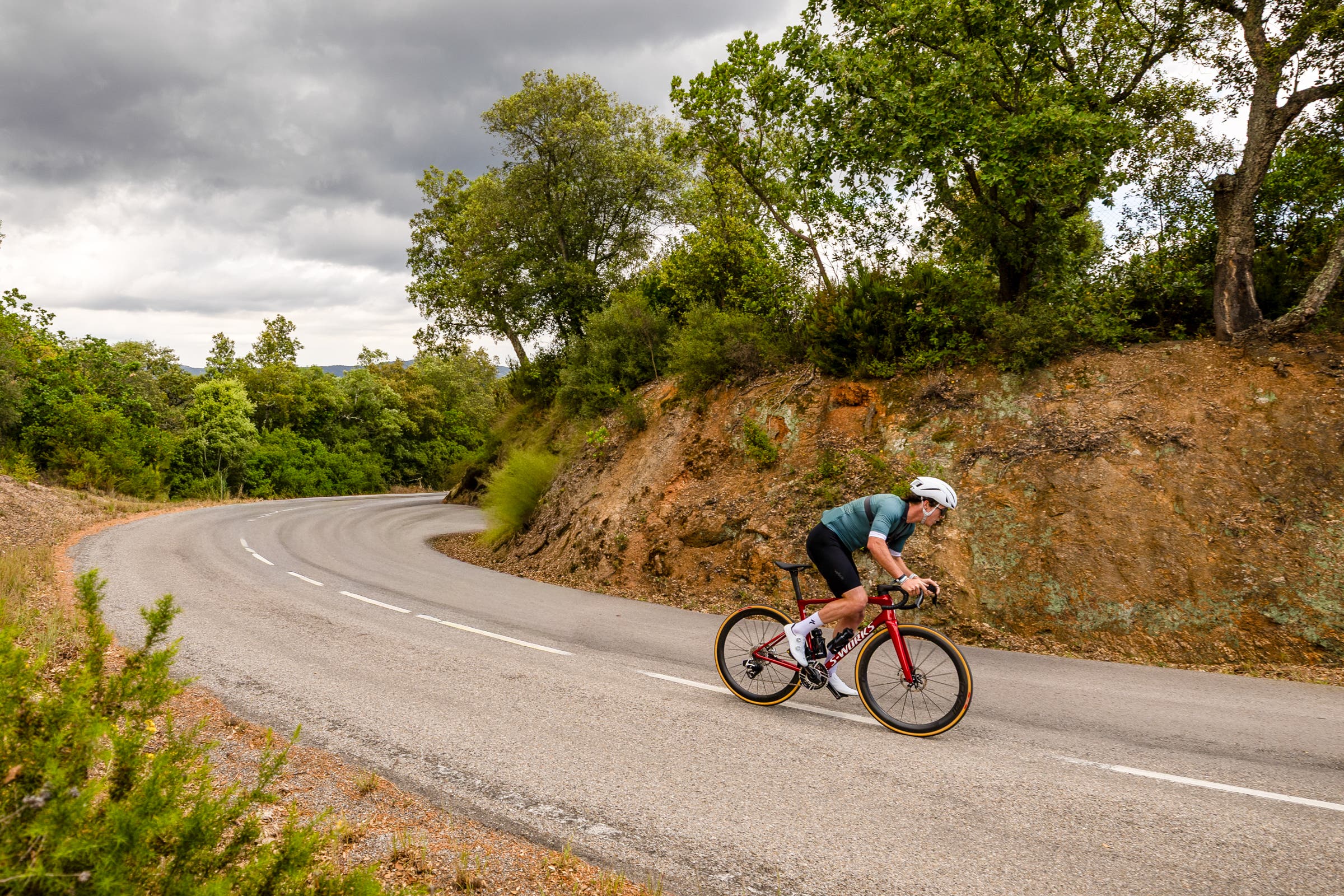
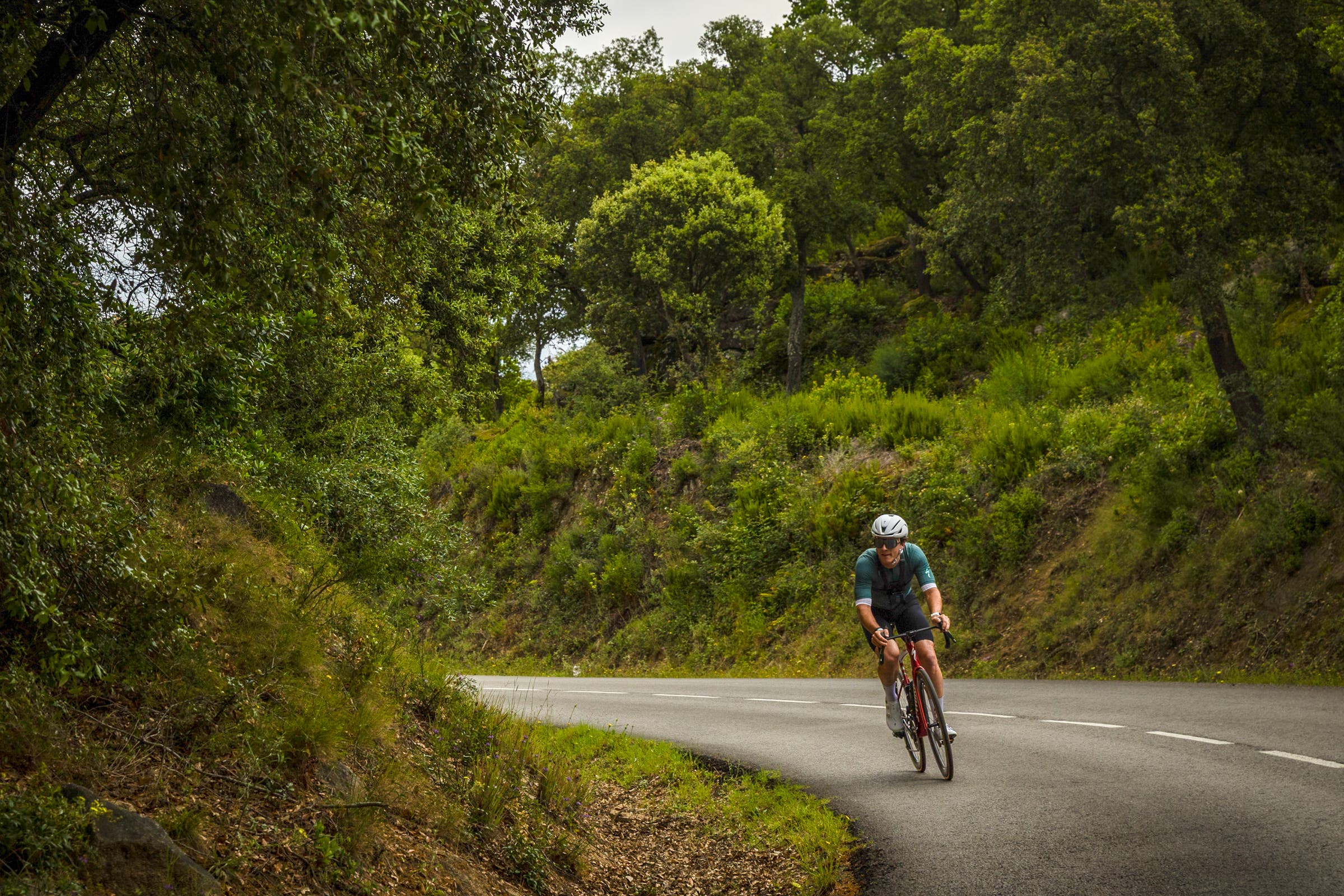
I tested the Tarmac SL9 at the launch camp on the Costa Brava in Spain this spring. The punchy terrain, flat connections, and long climbs provided a broad perspective right away, even if persistent rain tried to dampen the experience. Straightaway, the Tarmac SL9 felt like an old friend; the familiar geometry made everything feel second nature. The wet roads could have quickly exposed any quirks in the handling, but the bike remained precise and quick. Even in the rain, I had the confidence to finish turns quickly and reasonably lean the bike to manage the twisty coast road that we started our ride on.
On the flats, the bike holds a lot of pace despite the lack of deep tubing. A few times, I found my way off the back of the group and made an effort to ramp the speed up to 45 to 50 kph. While I can’t say it felt a specific number of watts faster than a competitor, it feels every bit as aerodynamic as bikes with much deeper tube shapes. Even without my sharpest legs, I could hit max speed quickly and hold it with ease.
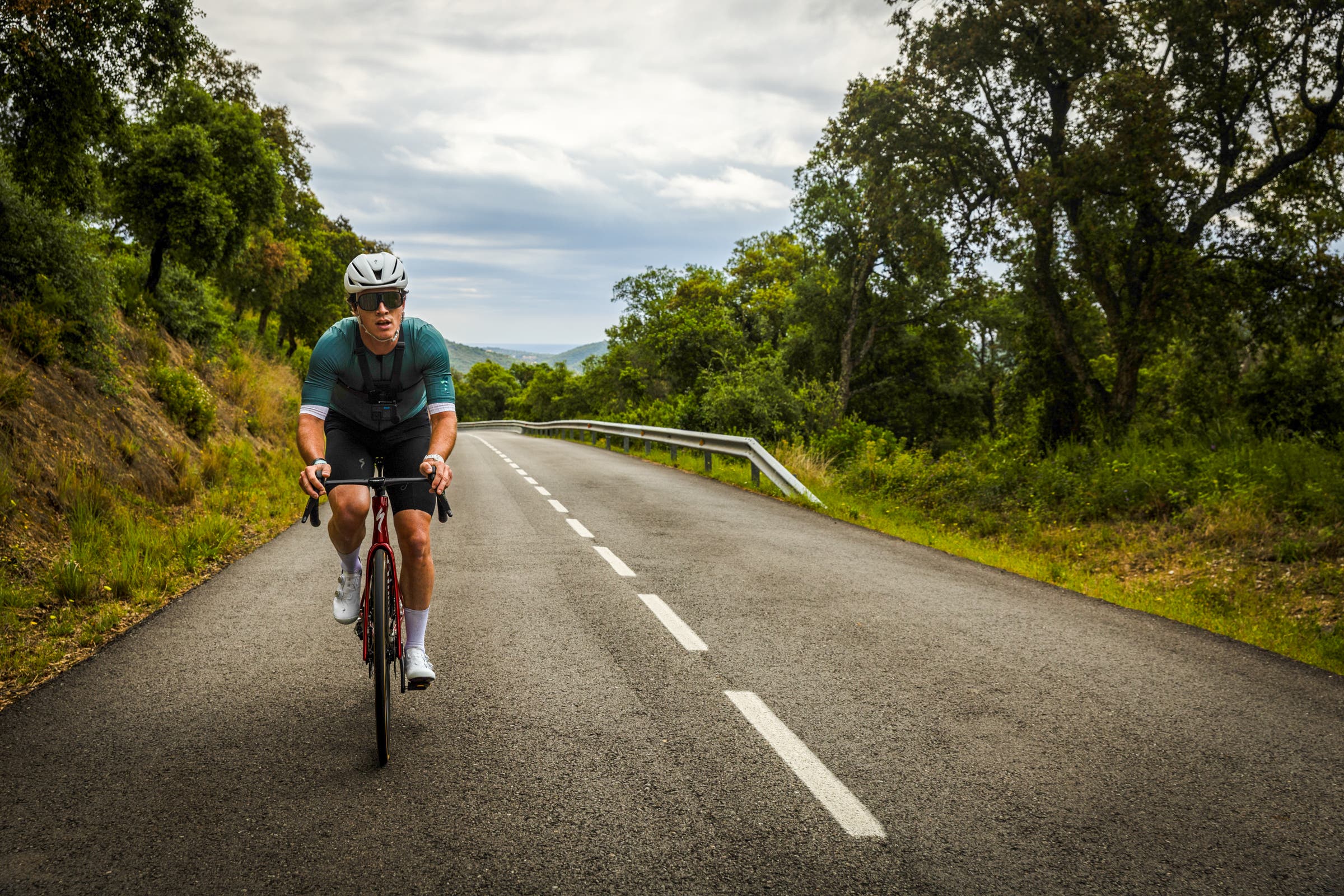
In conjunction with that speed is how smoothly the bike rides. Spanish roads are good, but there are still plenty of imperfections that would cause a clunking sensation on a more rigid aero bike. The Tarmac SL9 instead manages road buzz and bumps incredibly well. This mixture of vertical compliance, lateral stiffness, and aerodynamics creates a package that begs to be ridden hard, and I found myself taking every opportunity to get my chest low, stomp on the pedals, and push the pace.
Ultimately, despite its ability on flat terrain, the Tarmac SL9 comes into its own on the climbs when the low weight and lateral stiffness are at the forefront. Over the first two major ascents, the bike felt light and snappy both in the saddle and standing on the pedals. The feedback was immediate through every acceleration, and all the power put into the pedals translated straight to forward momentum.
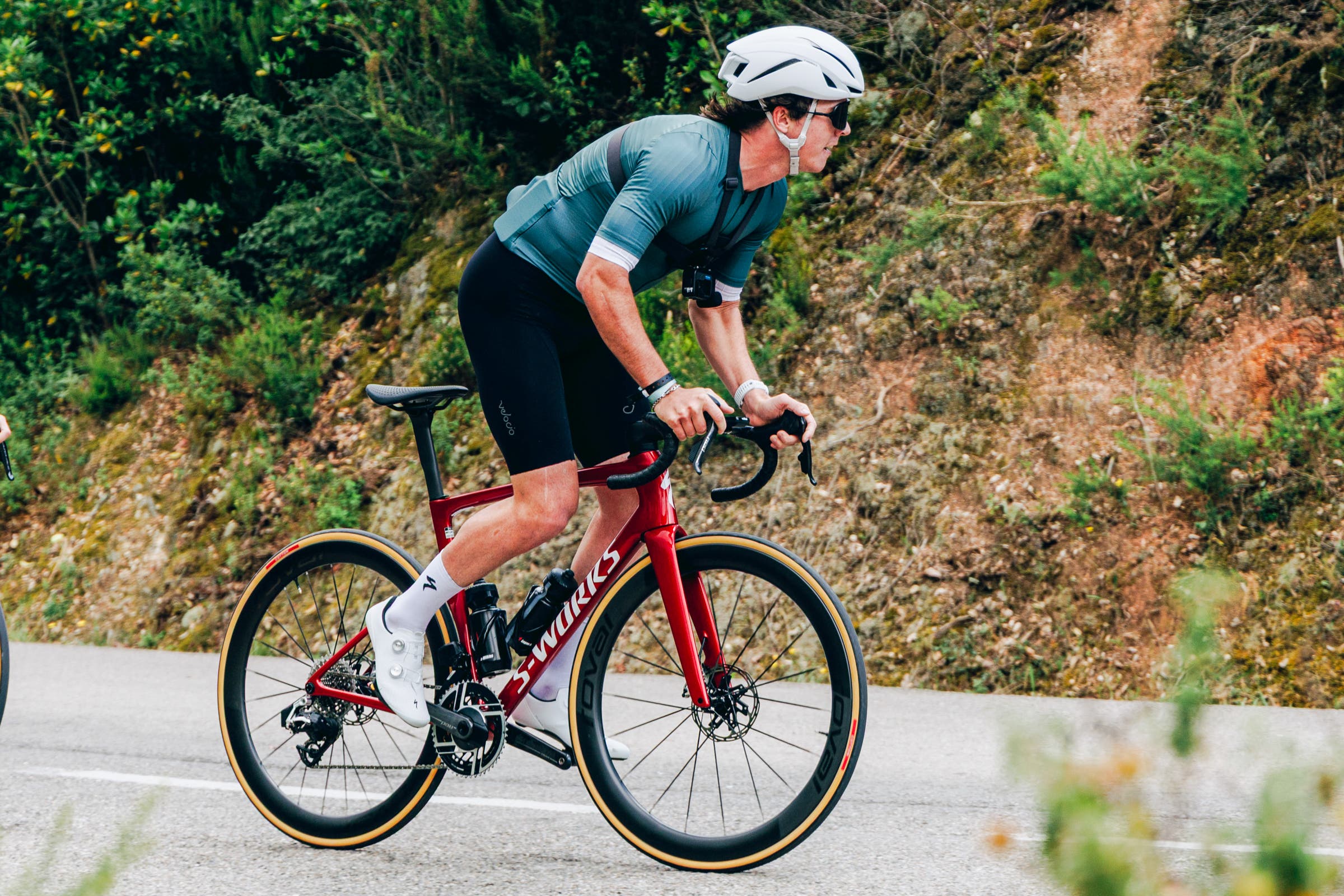
However, there are a few byproducts of that tight handling and the lack of deeper aerodynamic shaping. On descents and fast flat sections, crosswinds occasionally caught me by surprise as gusts hit the deep Roval Rapide wheels. It wasn’t a catastrophe, but it did require correction. A bike with slightly slower steering, or tube shaping designed to create more of a sailing effect in a crosswind, might have handled that buffeting a bit better.
Specialized Tarmac SL9 Usability
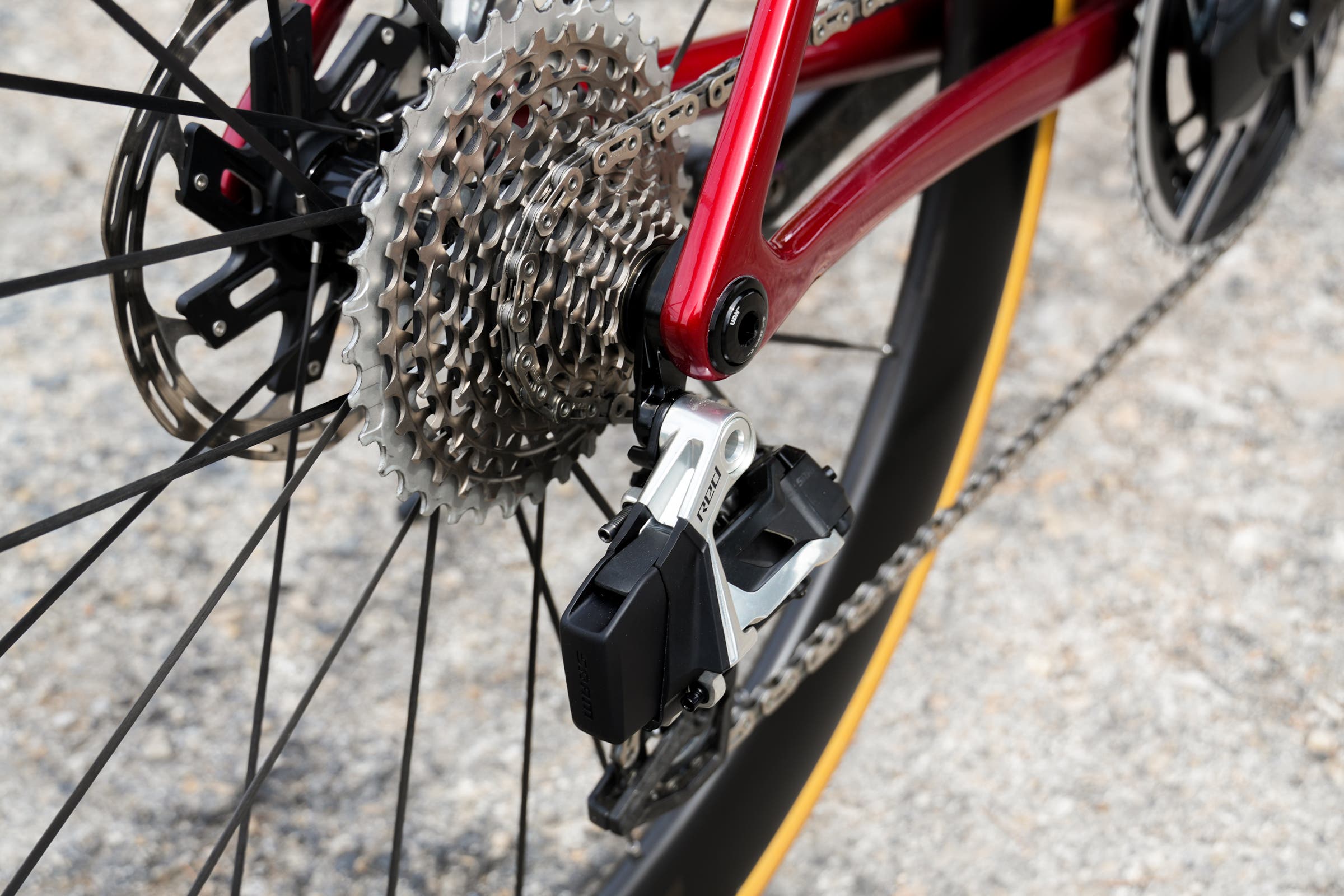
The modern features of the Tarmac SL9 are exactly what you expect, including a one-piece cockpit, CeramicSpeed bearings, and a UDH derailleur hanger. Nevertheless, Specialized has gone out of its way to preserve a few tried-and-true aspects that make the bike easier to live with. First and foremost, the Tarmac SL9 remains compatible with mechanical groupsets. Even though mechanical shifting is becoming increasingly rare in the era of electronic groupsets, that backward compatibility is baked into the frame.
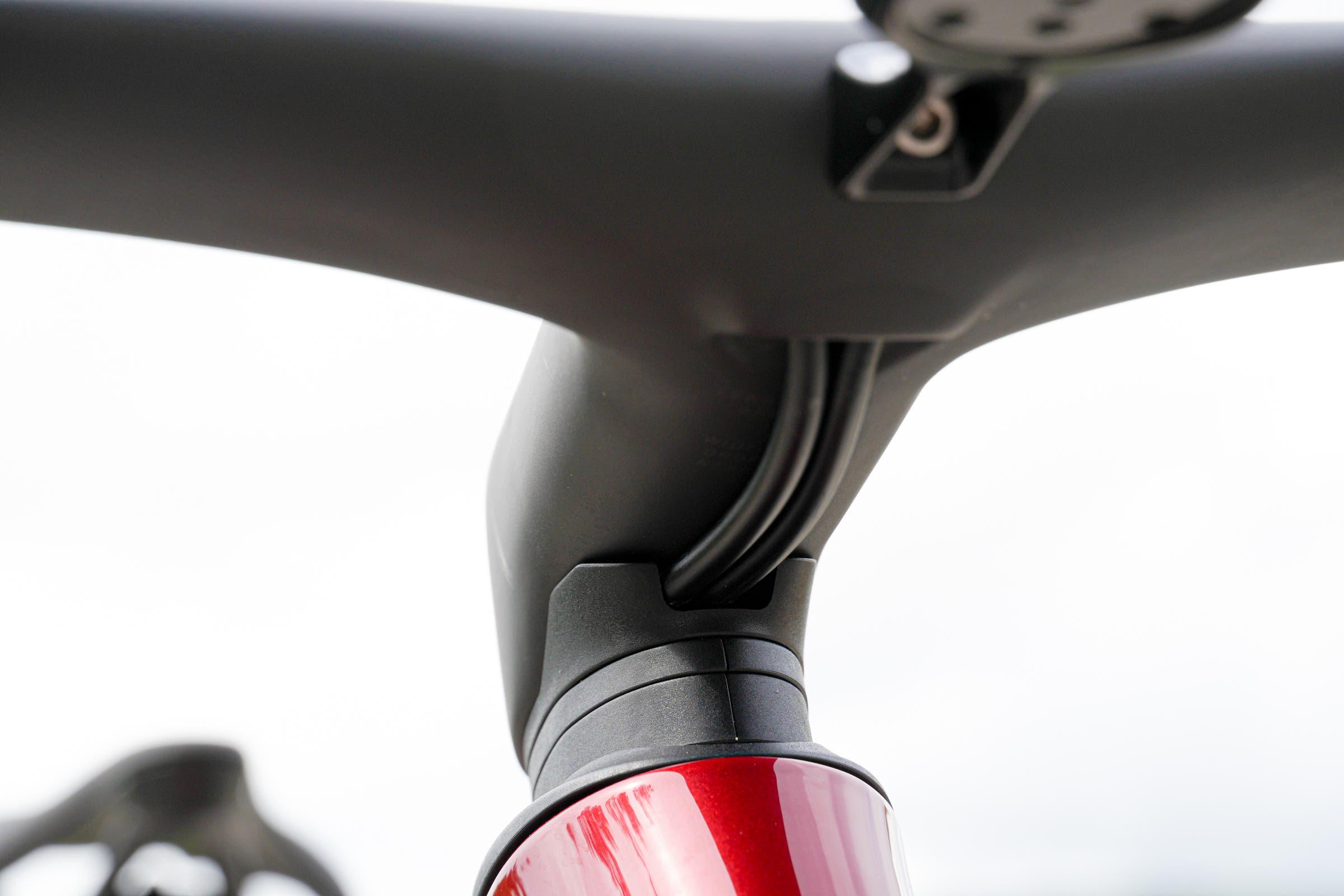
The one-piece cockpit also creates more flexibility than options from other brands. Instead of running fully internal brake hoses, the cockpit uses a semi-integrated system where the hoses run covertly underneath the stem and into the headset. From the front, the lines are completely hidden by the shape of the bars. This routing strategy simplifies maintenance and installation, but most importantly, it makes traveling with the Tarmac SL9 much easier by allowing the bar and stem enough space to hinge and stow alongside the frame in a bike box.
Conclusion
There is a temptation to evaluate the Tarmac SL9 merely as the ninth model in a long line of Tarmacs—asking what is new, what changed, and exactly how much better it is. That comparative business is the core of most storytelling surrounding this release. In that regard, the Tarmac SL9 mirrors Apple’s approach to the iPhone: delivering iterative updates that you only truly notice when actively hunting for the improvements. Does that mean the brand isn’t doing enough, or should we just accept that the product is already operating at an incredibly high baseline?
There is no doubt that Specialized could make a drastically different bike that is more aerodynamic in many circumstances. The Tarmac used to have a sibling in the Venge, after all, and many hoped the Tarmac SL9 would be built more in that spirit as an out-and-out speed machine. But the brand chose a different path because it simply didn’t believe a radical redesign would yield a faster overall race bike. Instead, Specialized fixated on the margins and doubled down on creating the optimal balance of speed and weight. It is the prudent move—the right move—for the goals the brand is targeting with its “one bike to rule them all” philosophy. Still, it is hard to blame a rider for wanting a little more Venge in the new Tarmac, even if that deep-tube aesthetic might not actually be better for winning WorldTour races.
Fortunately for those riders, there are other options on the market that bring all-out aerodynamic flair. The Factor One, Colnago Y1RS, and Cervelo S5 are all top-tier, WorldTour-oriented race bikes that prioritize that specific aerodynamic aesthetic. Ultimately, though, the Tarmac SL9 is for racers looking for a platform with more all-around ambitions. It makes a strong argument for being the best race bike in the world because it does everything an elite road machine should do at the absolute highest level. Climbing, sprinting, powering along the flats—check, check, check. If you are looking to buy a new flagship race bike, you would be crazy not to consider it.
[analyse_source url=”https://velo.outsideonline.com/road/road-gear/review-specialized-tarmac-sl9/”]