Wonderland
SORRY TO THE MANOSPHERE, SS27 PROVES INFINITE WAYS TO BE A MAN
Whether through Simone Rocha’s romanticism, Saul Nash’s sensual sportswear or Prada’s reconsideration of normcore, in Florence and Milan SS27 revealed a season less concerned with how men should dress than with how they might choose to express themselves.
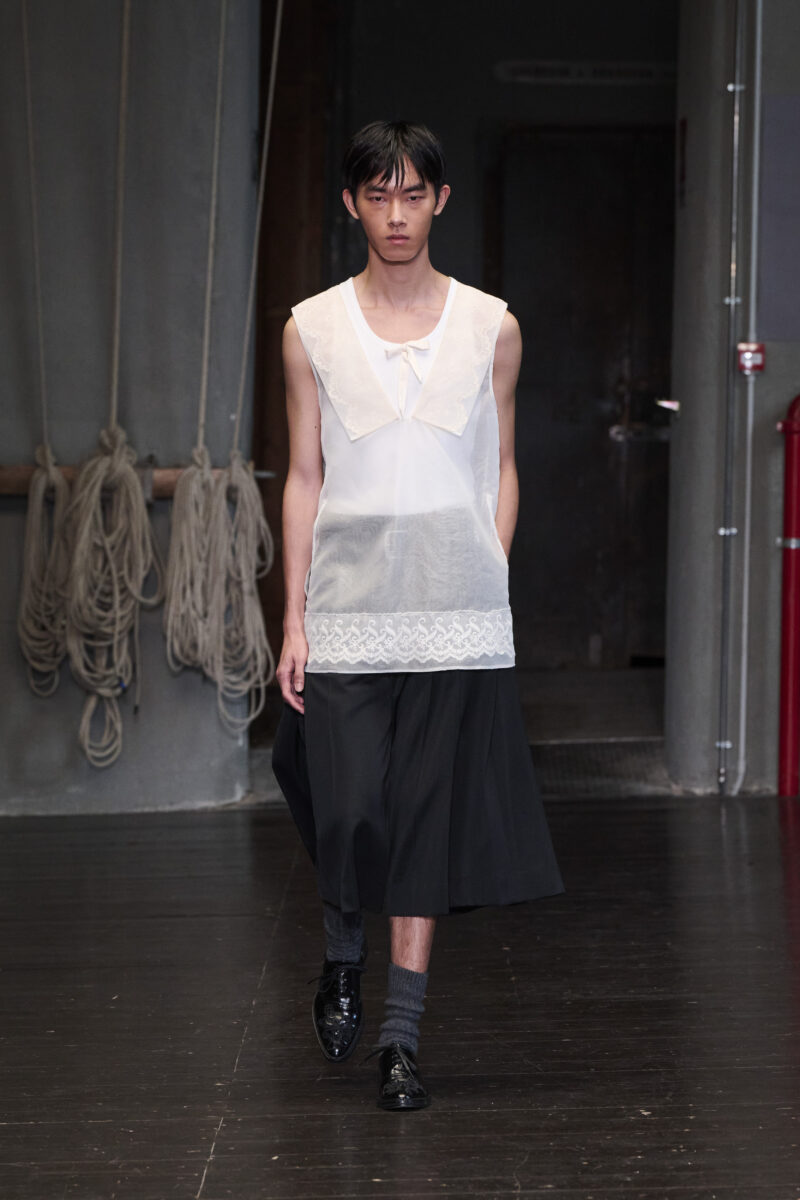
Simone Rocha’s debut at Pitti Uomo for SS27 felt significant because it marked a new chapter for the designer, who presented her first full menswear collection, but also because of where it happened. Pitti Uomo has long been one of menswear’s most influential and commercially driven stages, a place traditionally associated with established ideas of masculinity and male dress, where one would often find men in three-piece suits and in loafers without socks, even in 40-degree weather.
Rocha’s menswear proposed tenderness and vulnerability as qualities that can comfortably exist within masculinity rather than threaten it, bringing in lace, embellishments, organza boas and ruffled jerseys at a moment when the online manosphere remains deeply invested in telling men to maximise their testosterone. If Rocha’s boys looked ready to write poetry, the internet’s ideal man growingly seems busy selling a morning routine or hosting a finance podcast.
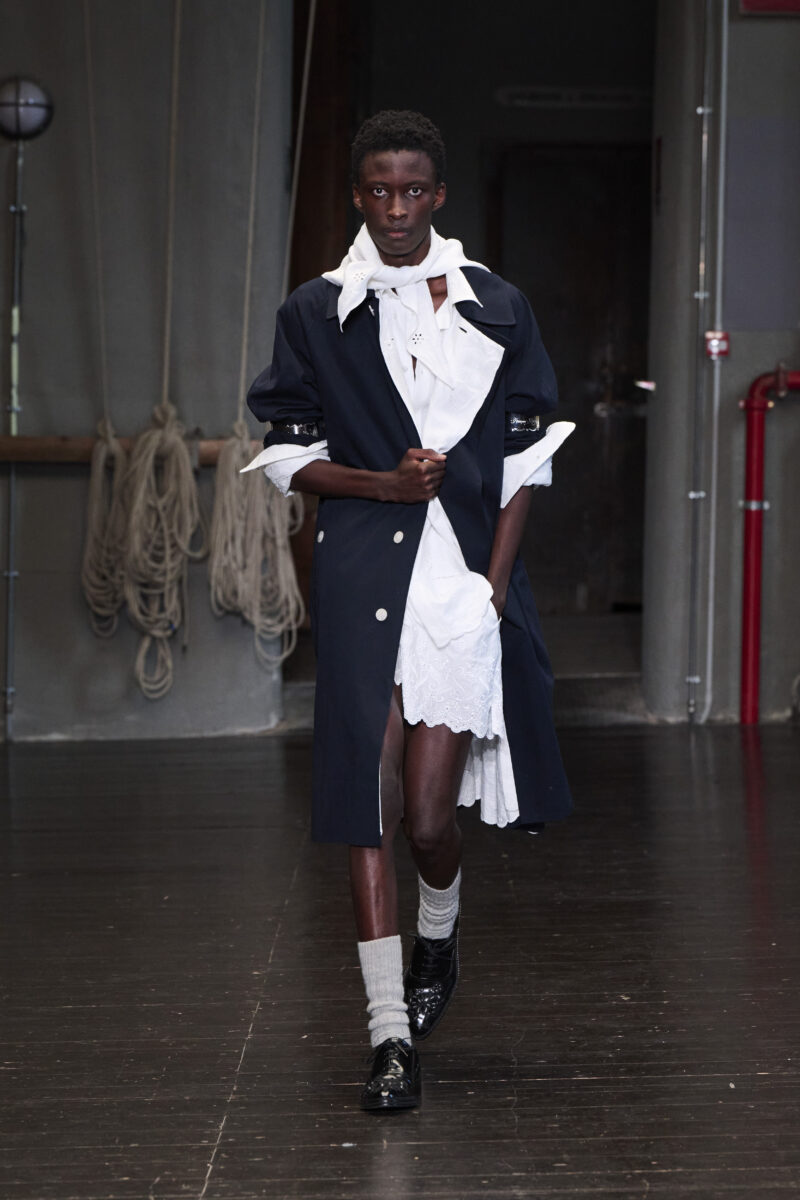
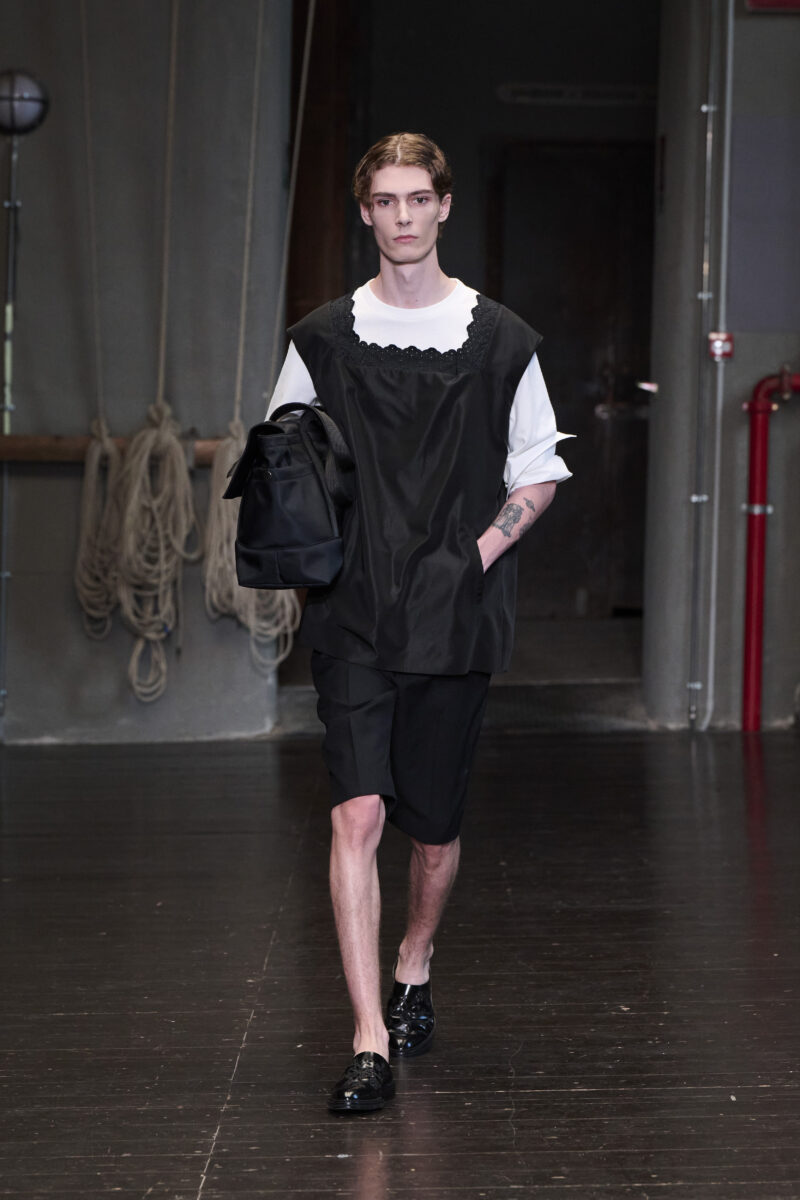
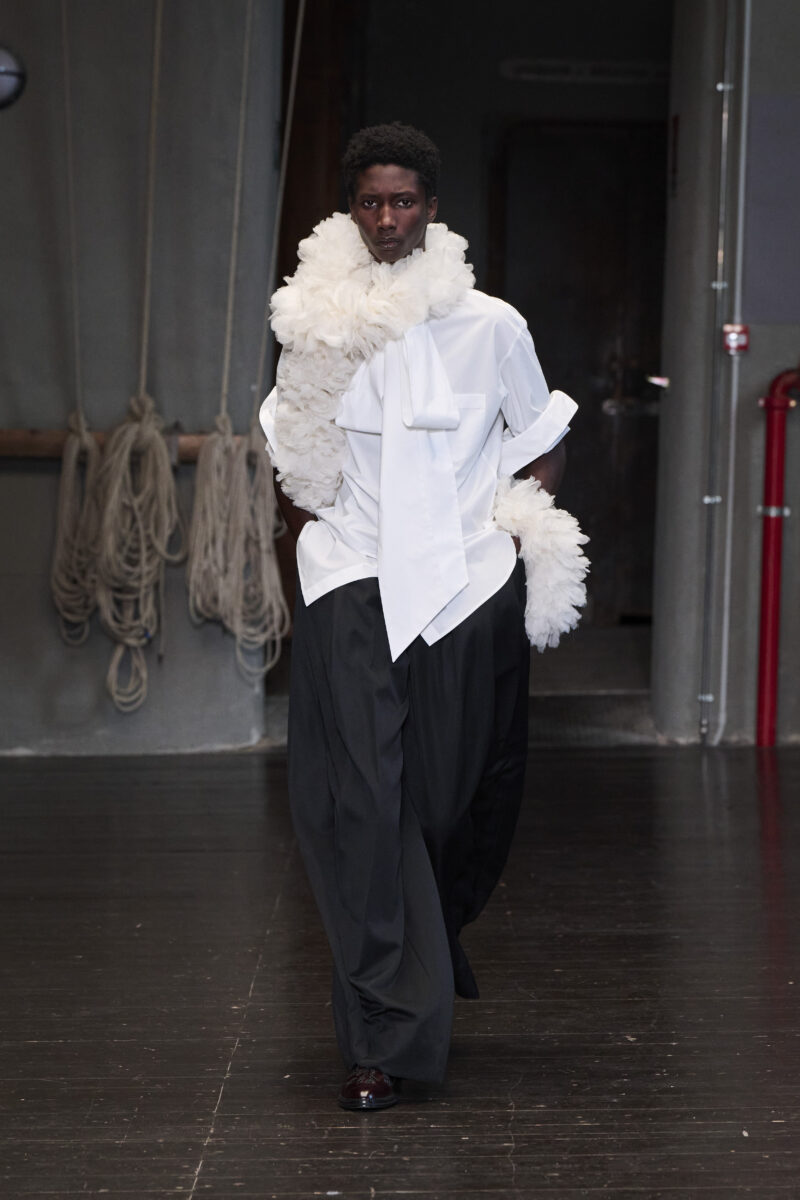
The significance of Rocha’s work doesn’t lie in femininity appearing in a menswear collection – something fashion has explored for decades – but in seeing it occupy such a prominent position within a space historically associated with conventional masculine ideals. Rocha’s debut opened up space for another way of being a man: one rooted in sensitivity, beauty, care and self-expression that felt, for those who see more of themselves in Rocha’s vision than in the aggressive masculinity that increasingly dominates parts of the internet and the streets, like an invitation to breathe. Its presence at Pitti Uomo was a reminder that softness is not the opposite of masculinity, but one of its many possible expressions.
Elsewhere, Pitti Uomo guest designer Kei Ninomiya offered yet another challenge to conventional menswear codes. Best known for his eponymous label, Noir Kei Ninomiya, which sits within the Comme des Garçons universe and has earned a devoted following for its sculptural and experimental approach, the Japanese designer arrived in Florence under as DSM Kei Ninomiya, the first in-house label launched by Dover Street Market. Conceived as a more accessible proposition than his main line and described as being for all ages and genders, the project operates under the tagline “untitled, untethered, undefined”, rejecting easy categorisation in favour of a more fluid approach to dress.
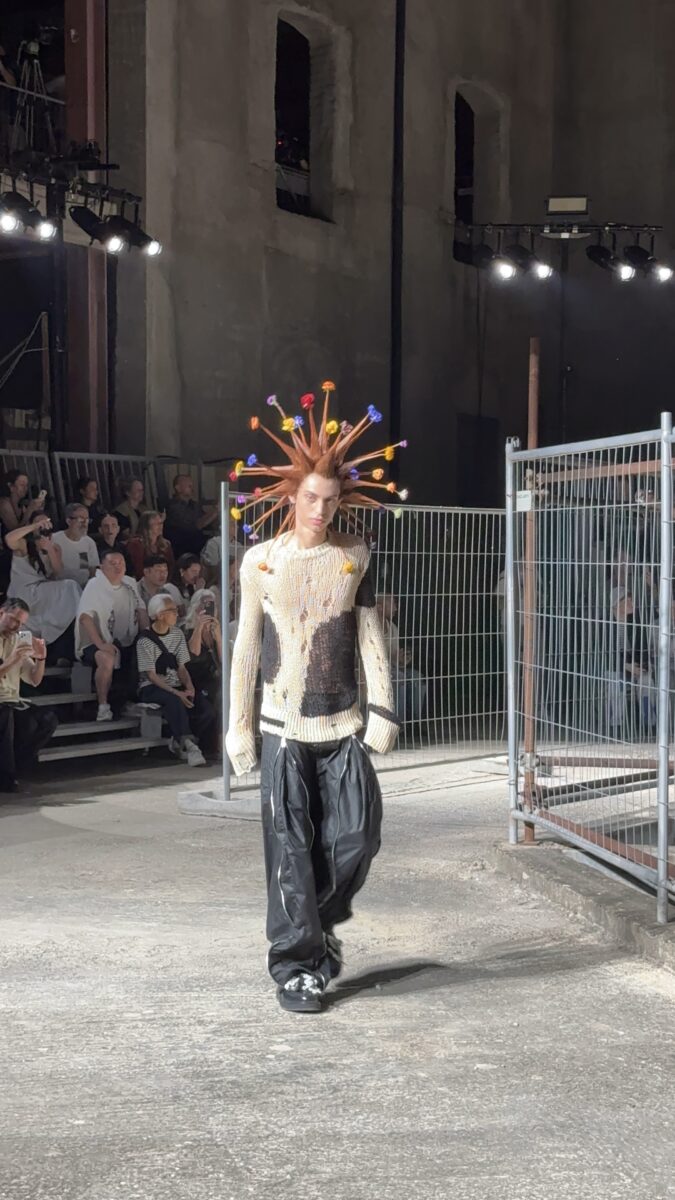
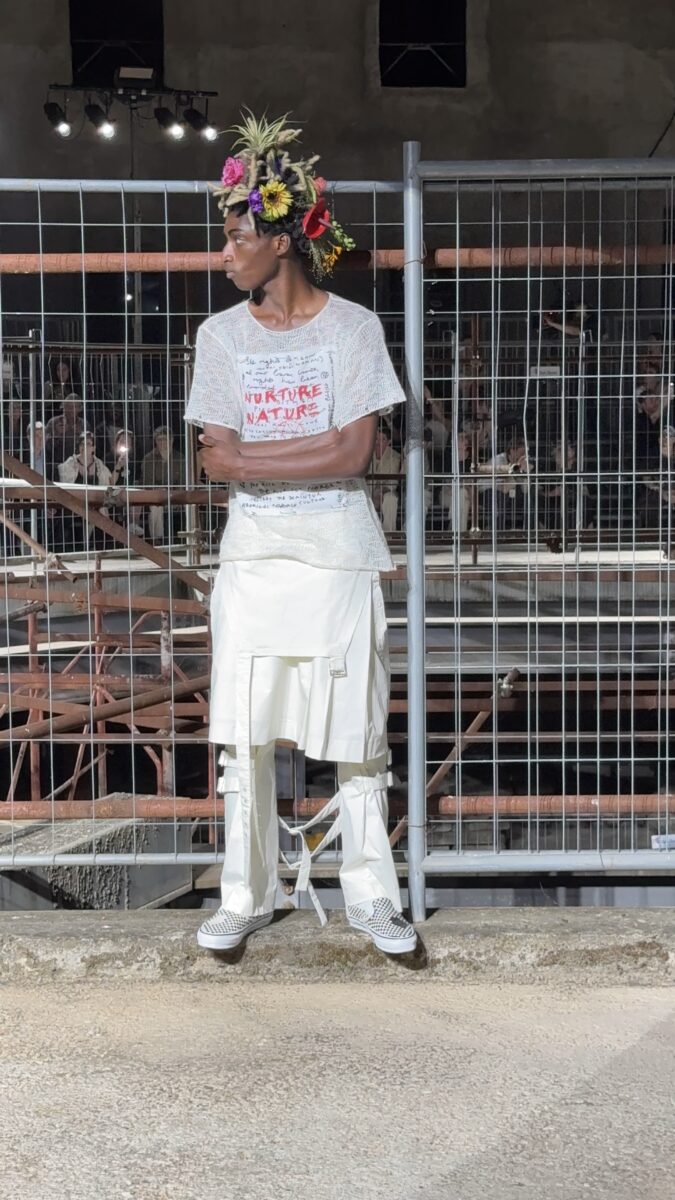
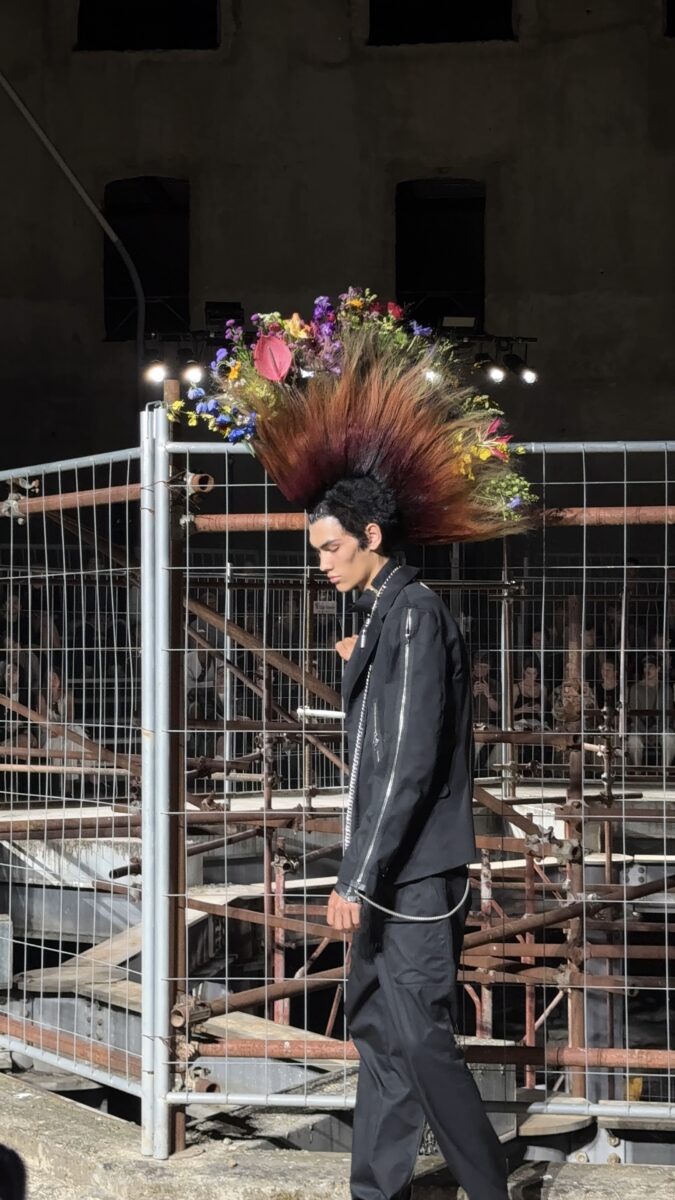
Presented in the courtyard of the former Sant’Orsola convent, Ninomiya’s SS27 collection drew on the visual language of punk, from tartan kilts and leather biker jackets to chains and safety pins. You have probably already seen through social media Ninomiya’s gravity-defying, flower-decorated mohawks. Alongside them, fluid silhouettes and genderless styling suggested a wardrobe completely unconcerned with traditional distinctions between menswear and womenswear. If Simone Rocha proposed tenderness, Ninomiya largely sidestepped the question of masculinity altogether, instead presenting clothing as a vehicle for self-expression unrestricted by age, gender or convention.
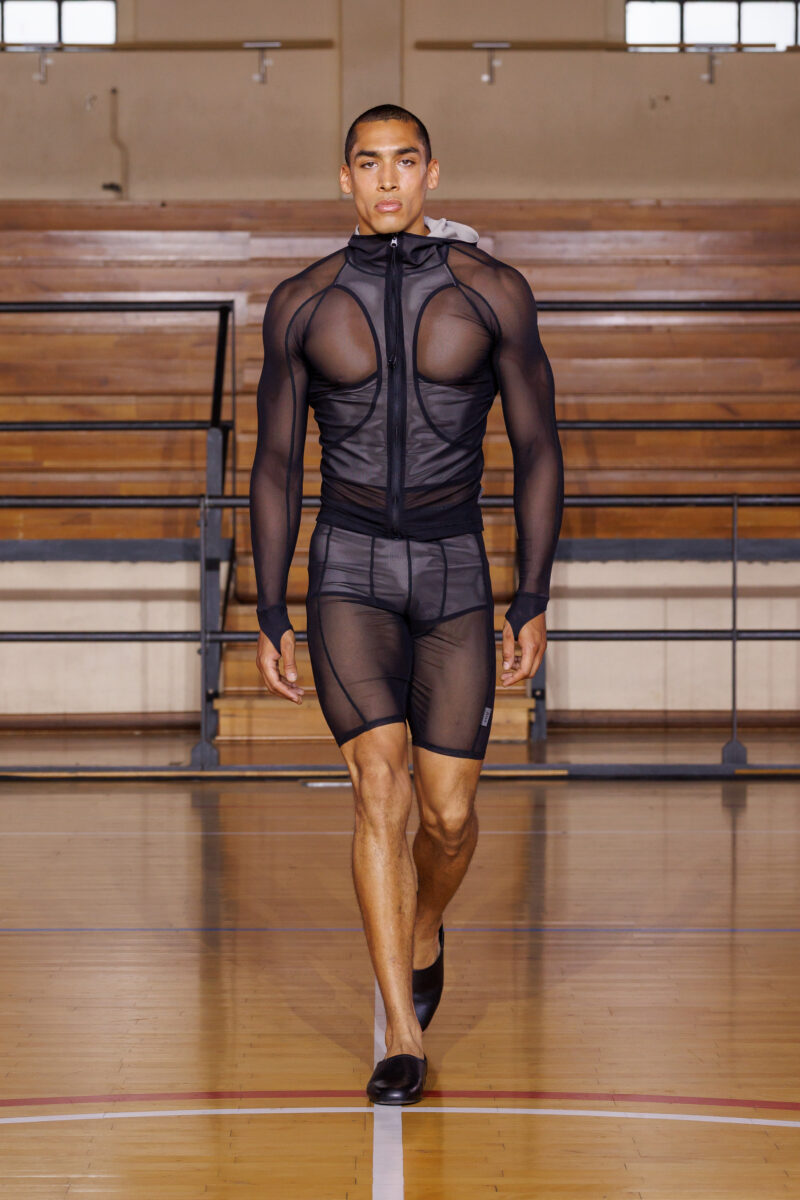
In Milan, Saul Nash’s SS27 collection continued that conversation from a different angle. Showing in one of the city’s oldest sporting societies, Nash turned his attention to the performance of masculinity itself, drawing on archival imagery of athletes and male pin-ups to explore the intersections of strength, desire and self-presentation. Through semi-sheer track jackets, mesh knits and his signature nipple-baring Henley shirts, the collection embraced a sensuality rarely afforded to menswear, simultaneously revealing and concealing the body.
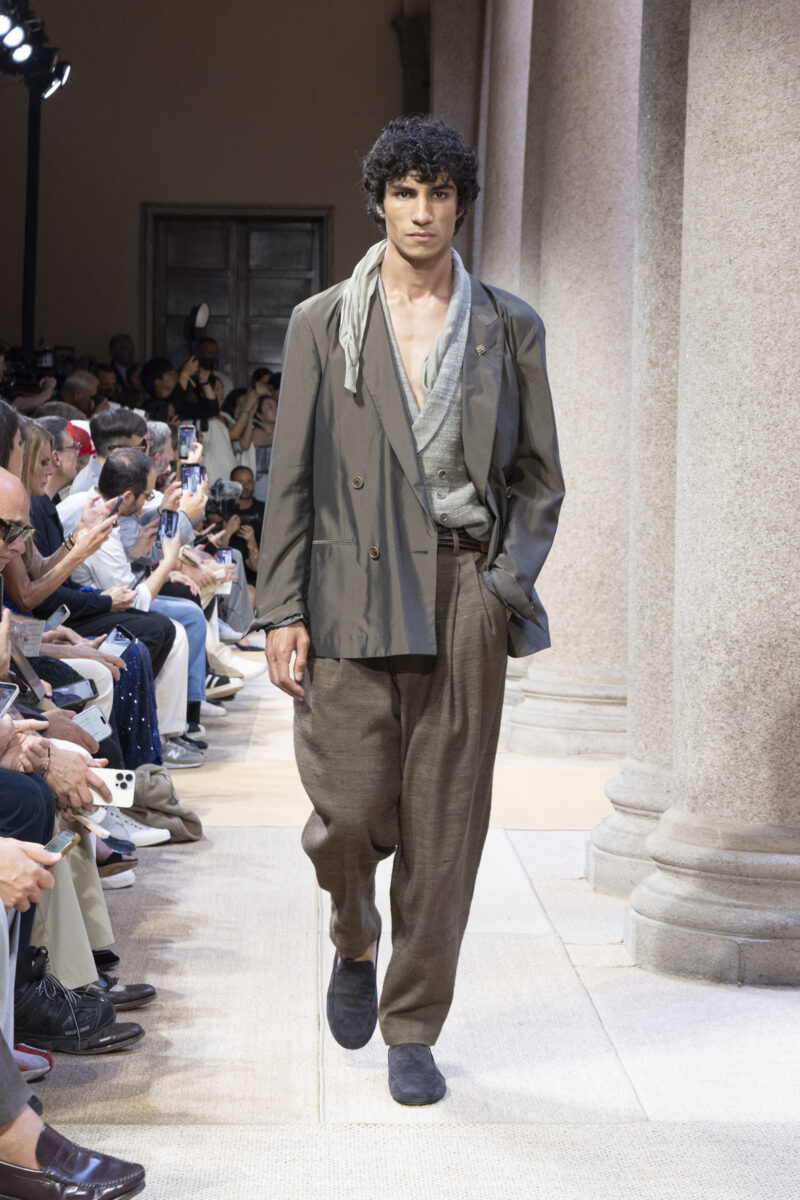
Taking over the courtyard of Palazzo Orsini alongside womenswear, the Giorgio Armani collection suggested a house increasingly interested in ease, softness and informality, while remaining entirely faithful to the codes that have defined the Italian house for decades. There were shirts and unstructured jackets crafted from silk shantung that mimicked the appearance of worn denim, paired with combat trousers, utility vests layered over shirting and tailored trousers. Throughout, the Mediterranean-inspired collection appeared washed and sun-faded, while evening-wear was stripped back to little more than great black shirts and trousers.
The collection also arrived amid industry speculation that Dario Vitale could join the house as creative director. Vitale’s work has demonstrated a sensitivity to heritage alongside a talent for modernising established codes, and there are interesting parallels between the worlds of Versace and Armani: both emerged from a distinctly Italian vision of glamour in the late 1970s and 1980s, shaped by a generation of designers who fundamentally altered how men dressed.
That desire for a more relaxed and intuitive wardrobe, or what the internet calls normcore, also surfaced at Prada, though here it was approached less through questions of modern masculinity than through a broader interrogation of fashion itself. In a season where many designers appeared concerned with challenging conventions, Miuccia Prada and Raf Simons turned their attention to some of the most familiar garments in existence.
Jeans, as skinny as they come, became the collection’s central proposition, though rarely in their expected form. Cut from leather, tailoring fabrics and even translucent organza, they retained the archetypal five-pocket construction while being transformed through material and colour. Classic Prada signatures, V-neck knits and Peter Pan-collared coats were similarly reworked, stripped back and reconsidered. The result felt surprisingly direct. Rather than proposing an entirely new silhouette, Prada focused on reframing garments that already exist in the collective wardrobe, encouraging wearers to see them differently.
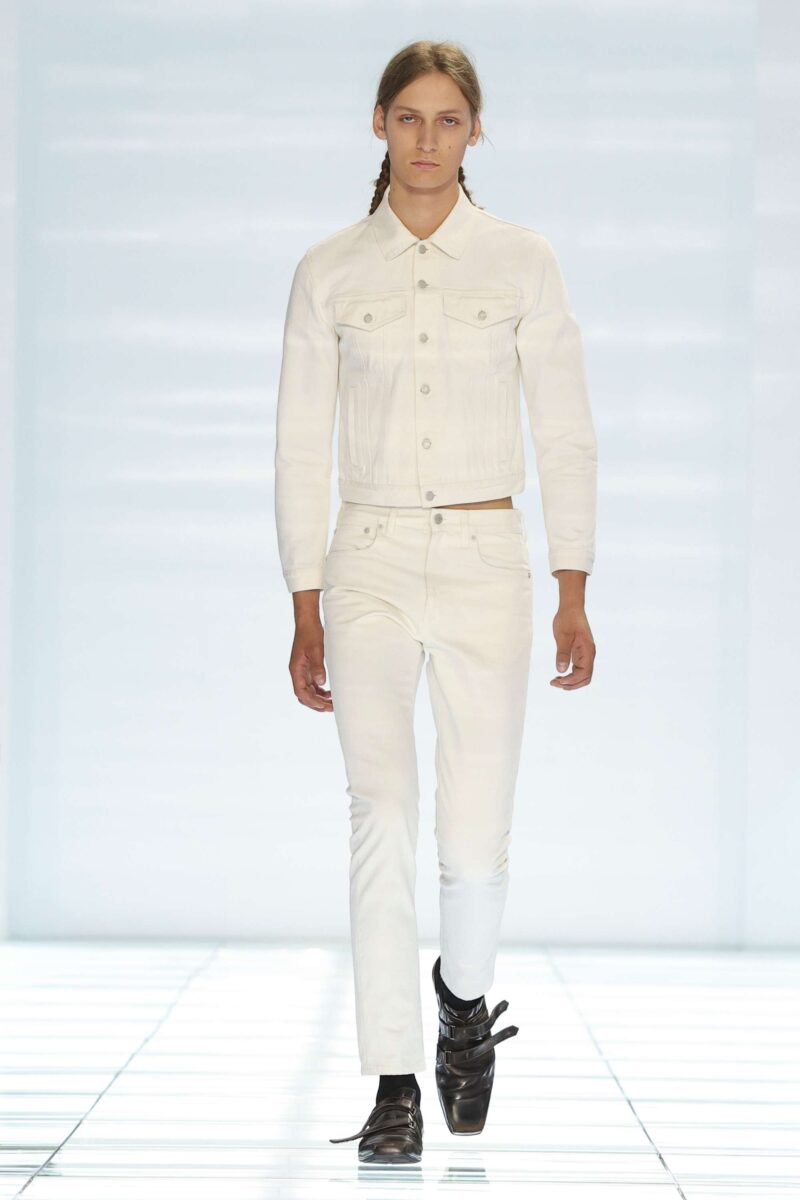
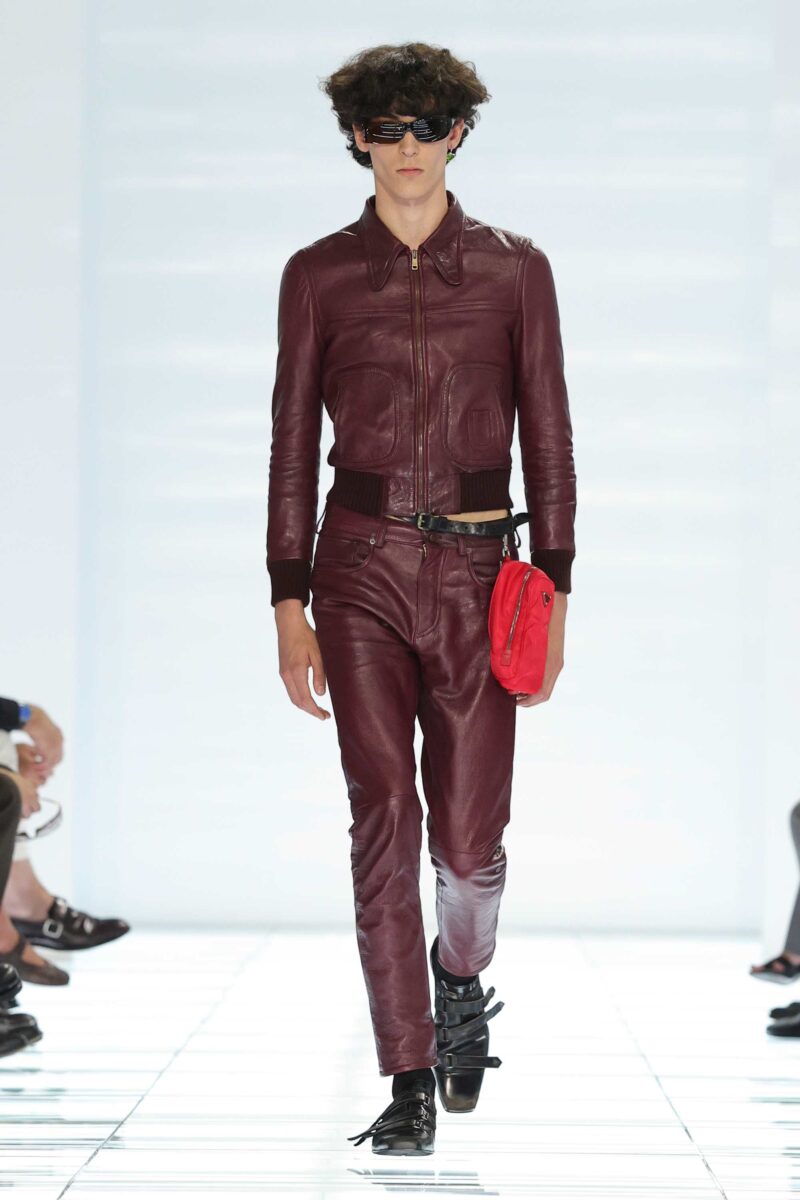
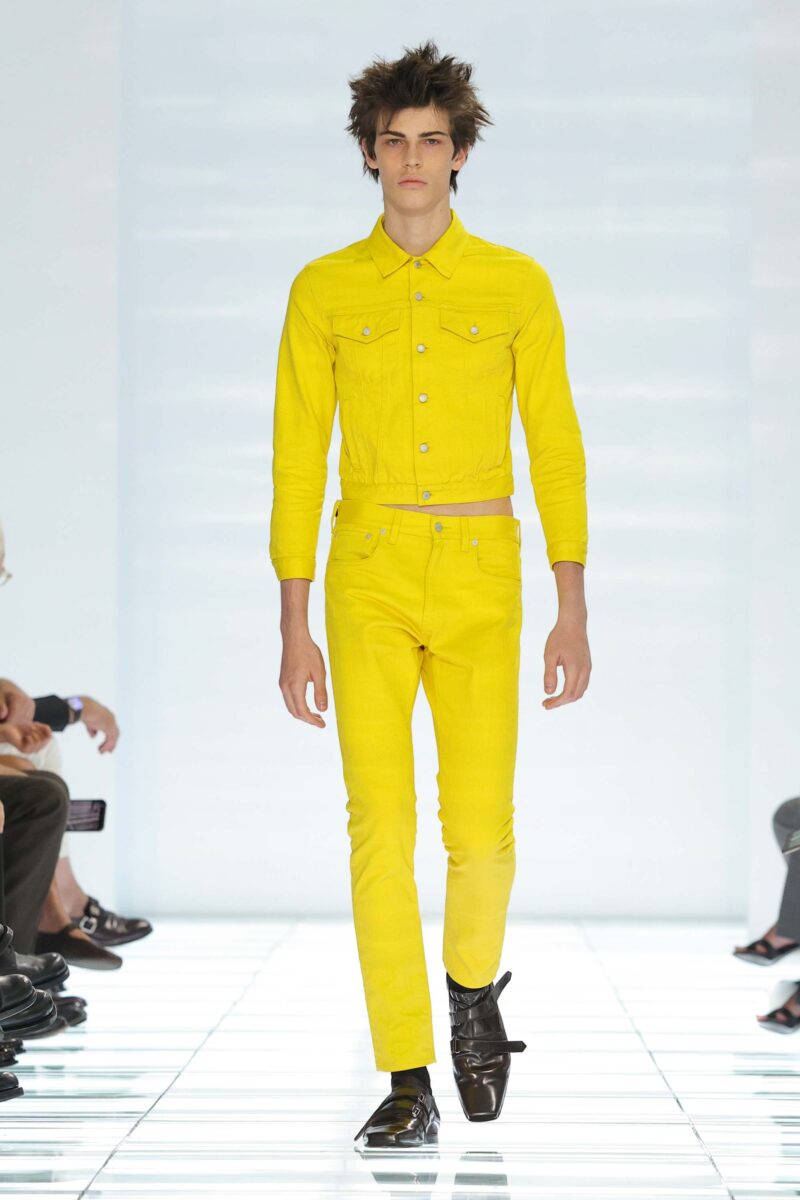
Courtesy of Prada
Underlying the collection was a broader resistance to fashion’s current cycle of excess and constant reinvention. Both Prada and Simons spoke of wanting clarity and rejecting what Miuccia described as “useless design”, proposing instead clothes that could be interpreted, personalised and ultimately lived in. If other designers this season were expanding the possibilities of male dress, Prada seemed more interested in expanding the possibilities of everyday dress itself.
While Prada argued against useless design, Thom Browne took the final bow wearing an oversized frog headpiece. Thankfully, fashion is large enough to contain both positions. Returning to Milan for his first standalone menswear show since SS23, Browne transformed the courtyard of Palazzo Serbelloni into a surreal fairytale populated by insects, a prince and a frog. When many designers are pursuing ease, utility and wearability, Browne remains committed to the idea that menswear can be a vehicle for fantasy, and humour. His impeccably structured tailoring, rendered in seersucker, madras and poplin, was adorned with intricate embroideries of bees, dragonflies and spiders, while his familiar uniform of jackets, ties and cropped trousers was disrupted through playful proportions and untucked shirting. Browne’s boys have the ability to escape reality.
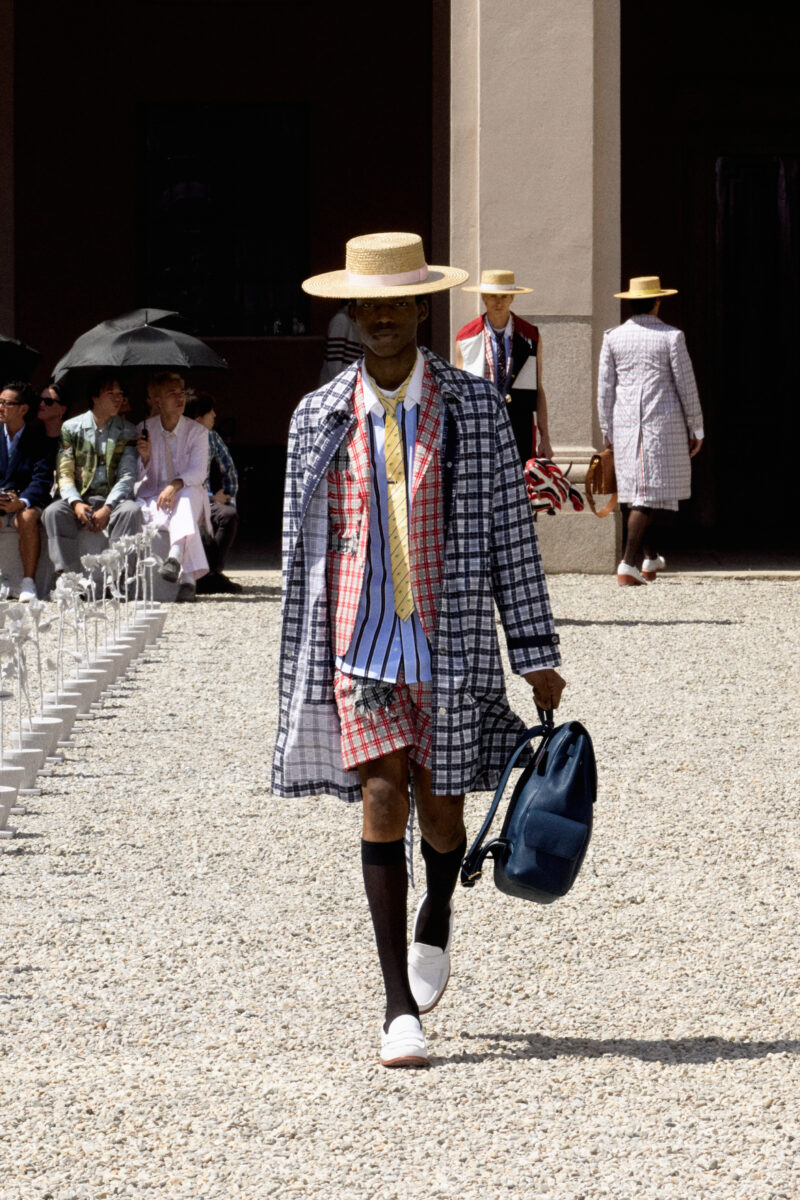
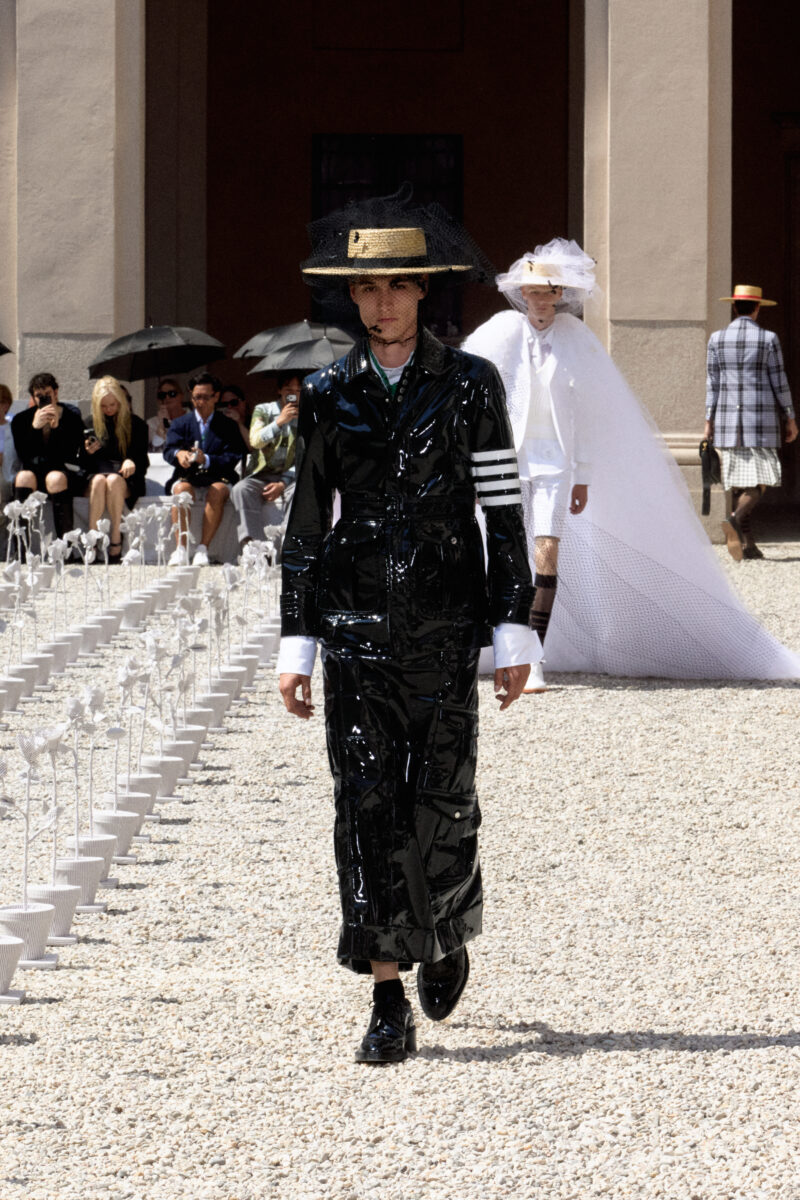
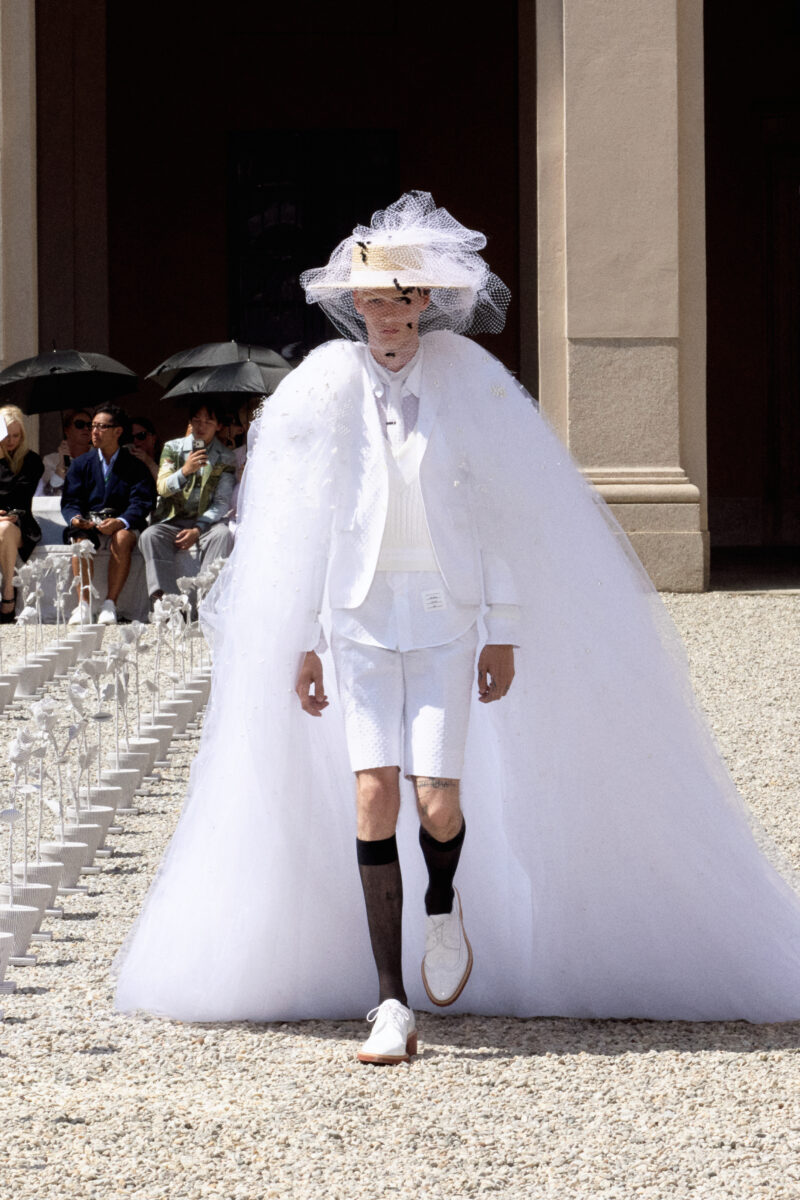
Courtesy of Thom Browne
As other shows this season were concerned with expanding, softening or dismantling traditional ideas of masculinity, Paul Smith and Ralph Lauren instead returned to the foundational grammar of menswear itself. At Paul Smith, airy tailored pieces were drawn from the designer’s own archive, Ralph Lauren, meanwhile, continued his long-running meditation on American sportswear and the gentleman athlete.
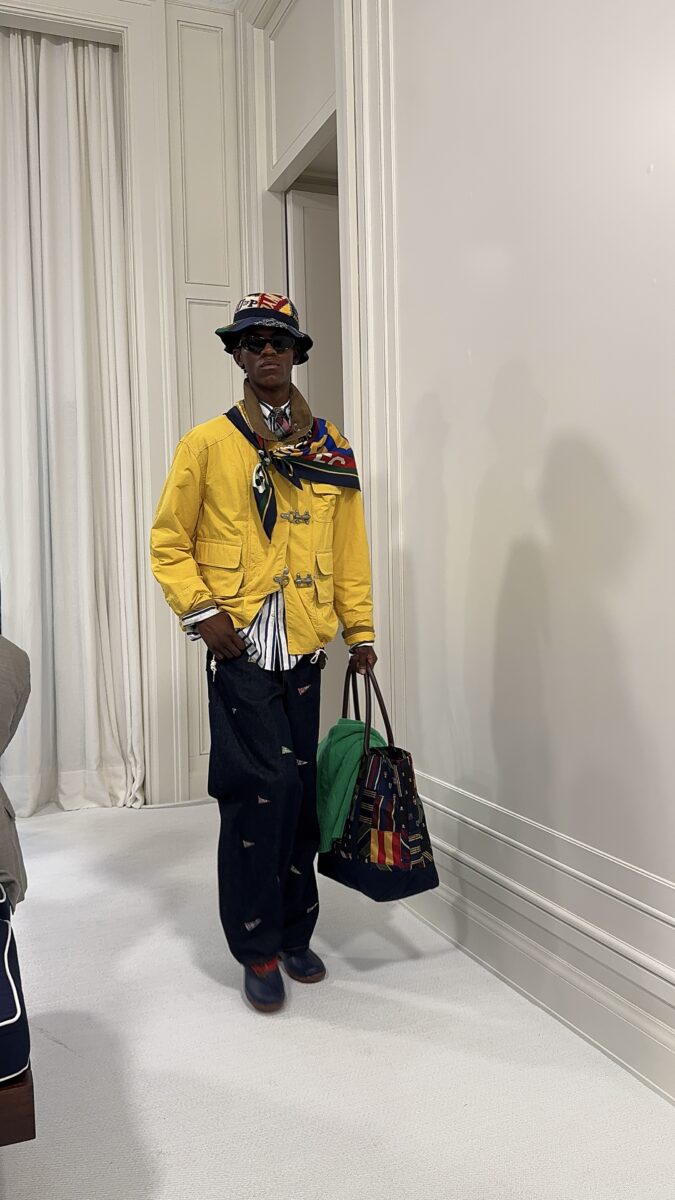
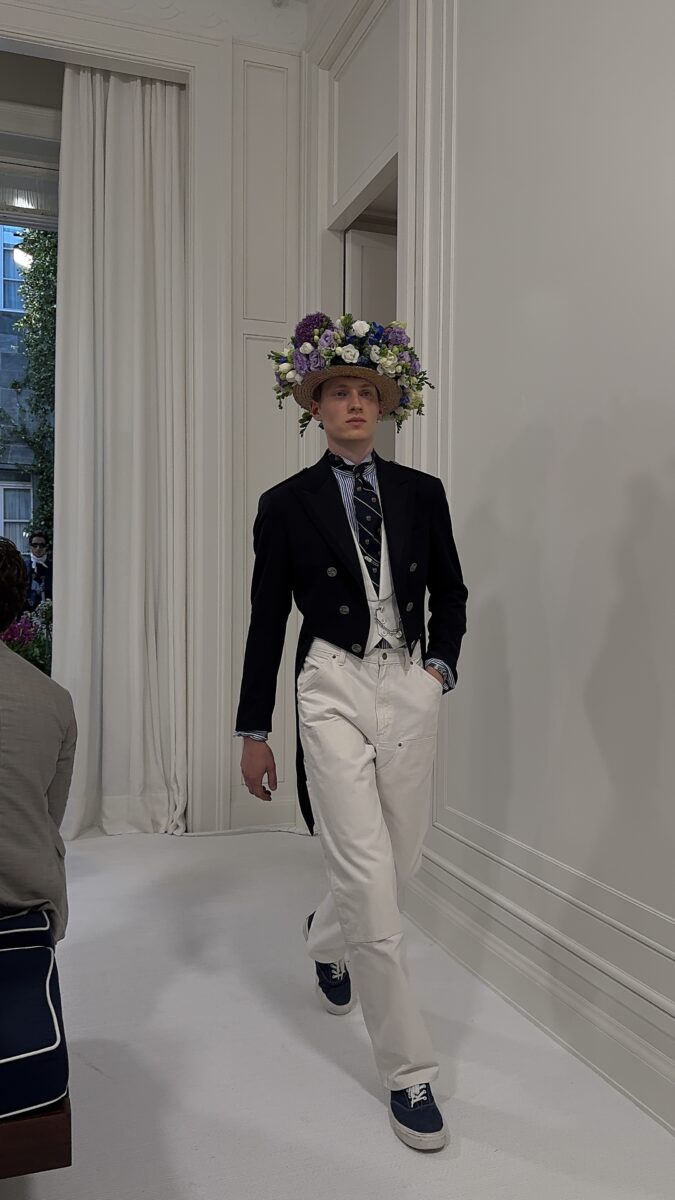
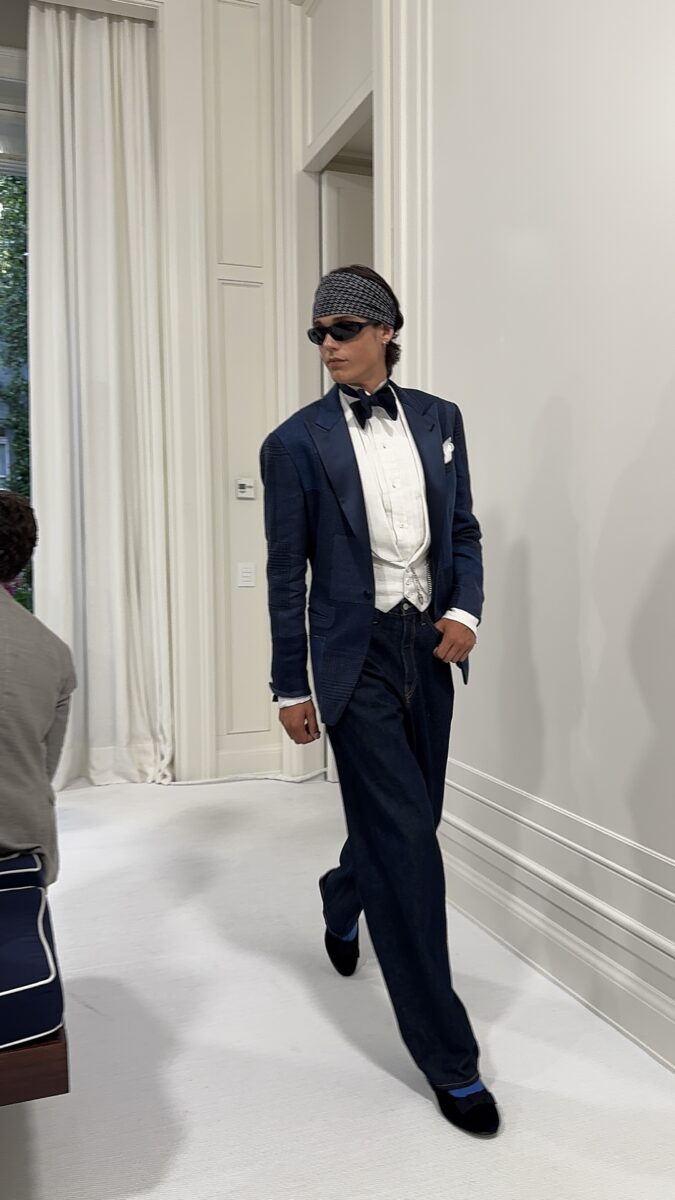
The brand, so often read as the safe end of American dressing, veered deliciously into exaggeration. Tuxedos, headscarves, tinted glasses, and all-out Americana that felt very much the antidote to quiet luxury or to any narrow vision of manhood.