Wonderland
THE FUTURE IS HERE: WELCOME TO GENER8ION
Clips of Yung Lean at a boarding school, Charli xcx at their exhibition opening, and a dystopian world built for 2034: Romain Gavras and Surkin’s project turns London’s 180 Studios into a glitchy vision of where culture might be heading next. Not to mention their seminal debut album.
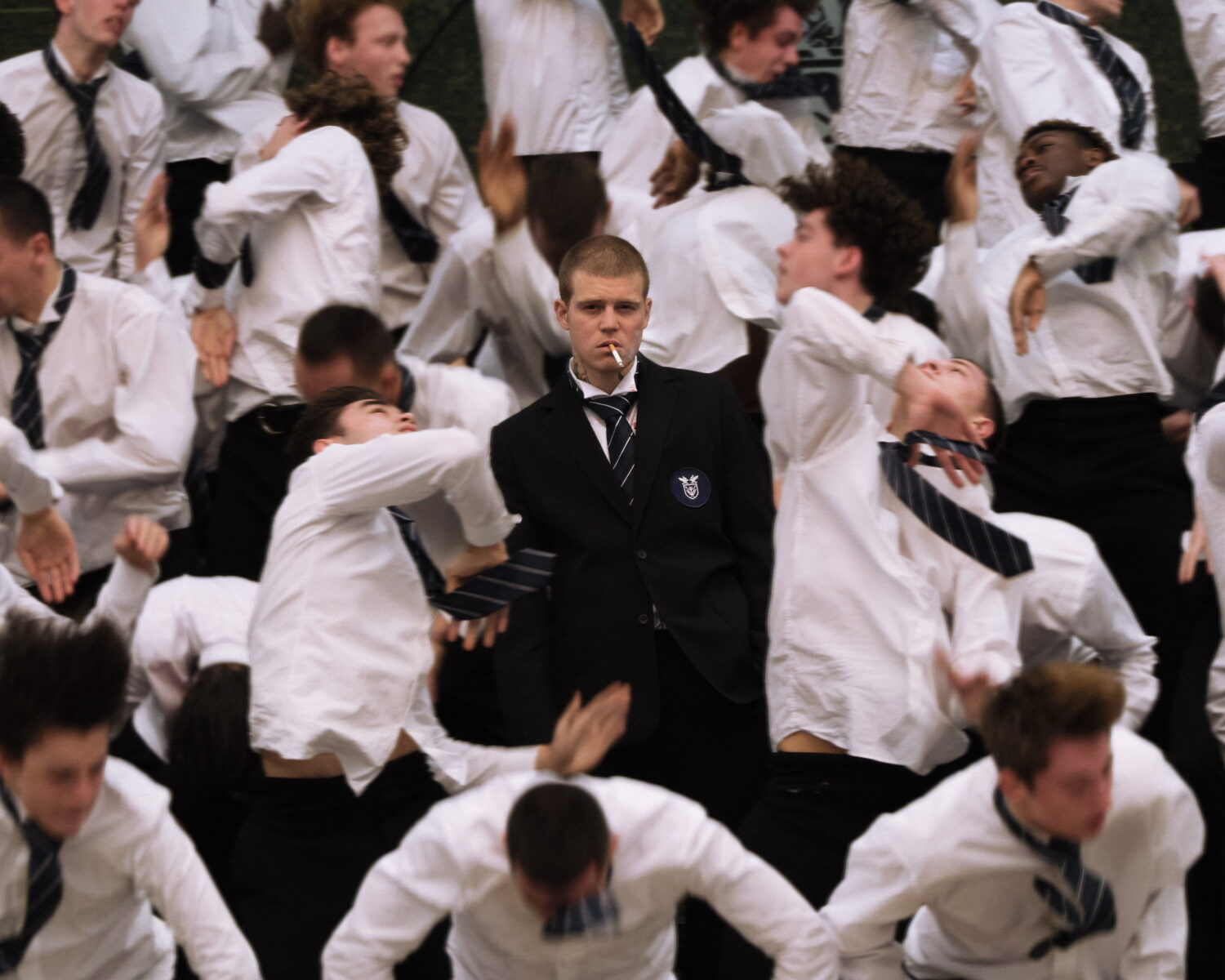
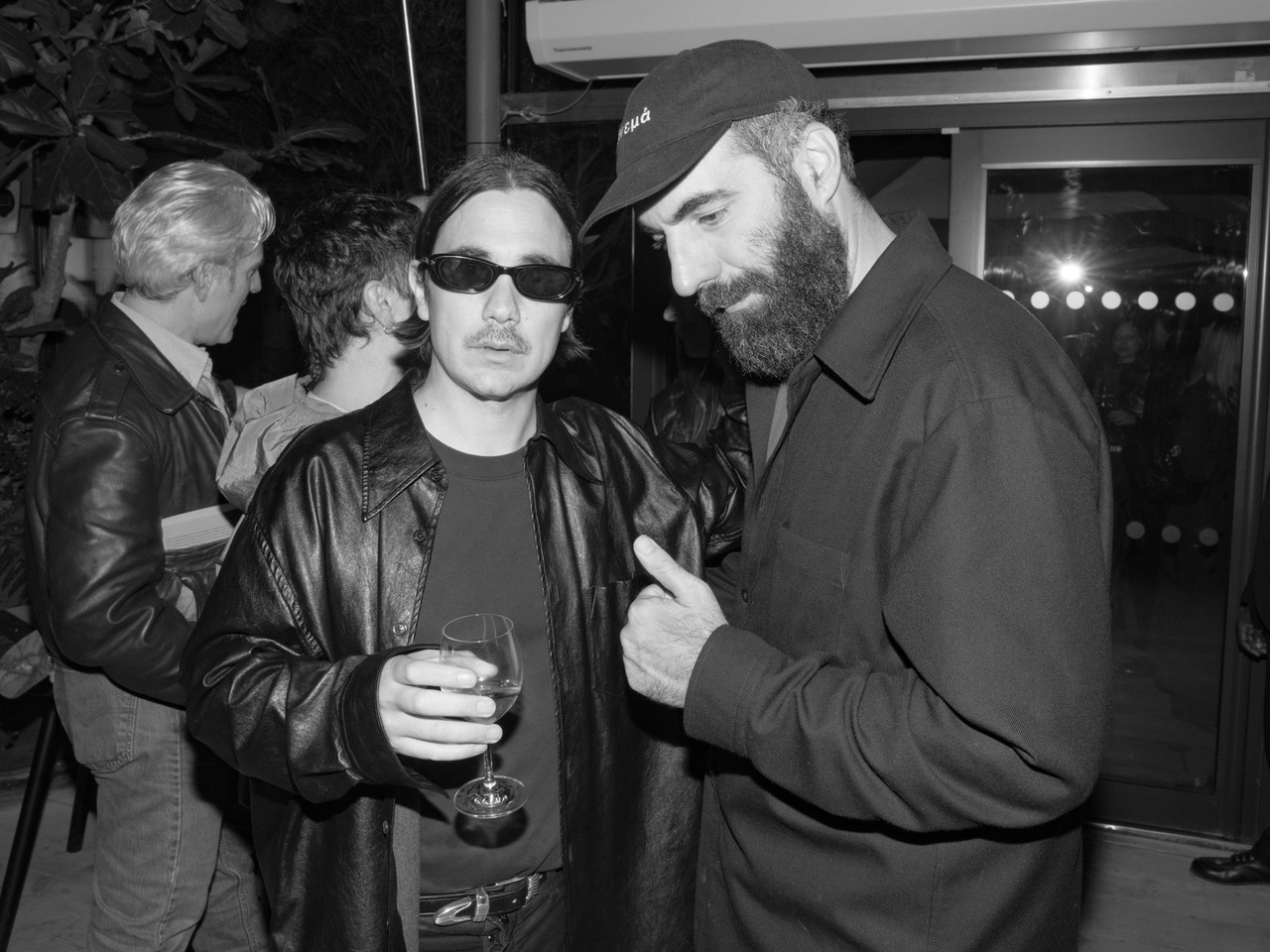
You might have already seen the viral short film starring Yung Lean. Maybe it appeared on your TikTok For You page. Or perhaps you caught clips from the exhibition’s opening night, where a crowd including Charli xcx, 070 Shake and a host of artists, musicians and fashion figures gathered in central London. Either way, chances are you’ve come across GENER8ION without quite realising it.
The multimedia project, created by French filmmaker Romain Gavras and electronic producer Surkin, has spent the past few years building a cult following through a series of films, music releases and collaborations that sit between cinema, contemporary art and visionary pop. Now, that world has expanded into its most ambitious form yet with GENER8ION: Visions of 2034, the duo’s first major exhibition, currently taking over the underground spaces of London’s 180 Studios, and a full-length album entitled Love & Tears.
For those unfamiliar, Gavras and Surkin are hardly newcomers. Gavras is best known for directing some of the most influential music videos of the past two decades, working with artists including M.I.A., Justice and Jamie xx, while Surkin emerged from France’s electronic music scene in the mid-2000s, earning a reputation as one of its most inventive producers. Together, they formed GENER8ION as an audiovisual project where music, film, performance and world-building collide.
Visions of 2034 imagines a fragmented near future, presenting a series of interconnected stories set across different parts of the world. Rather than focusing on futuristic themes like flying cars or robot uprisings, the project is interested in stranger, more human questions: what youth culture might look like in ten years’ time, how technology reshapes identity, and the absurd ways people adapt to an increasingly distorted reality. The exhibition blends new films, immersive sound installations and previously unseen footage to create a dystopian world that feels unsettlingly close to our own.
The accompanying album, Love & Tears, also brings together an impressive cast of collaborators, Yung Lean stars and features on “STORM” the double track and accompanying film that recently exploded online thanks to its striking choreography by Damien Jalet. Across the record, the music moves between electronic production and more cinematic, score-like composition, with tracks going from tense, abrasive sections to more melodic passages. Elsewhere, 070 Shake returns to the GENER8ION universe with “Neo Surf” – a track first released in 2021 – and “God Hates Space”, while Foals frontman Yannis Philippakis and Charlize Theron contribute to the stunning title track.
Running at 180 Studios from 12th June to 26th July, GENER8ION: Visions of 2034 marks the first time Gavras and Surkin’s world has been presented on this scale. For fans who discovered the project through a viral video, it offers a chance to step inside that universe. For everyone else, it’s an introduction to one of the most ambitious cross-disciplinary collaborations currently operating between music, film and contemporary art. Below, Wonderland speak to Surkin about how it all came together.
Listen to Love & Tears…
Read the interview…
You’ve been developing LOVE & TEARS for over a decade. What was the original spark, and how has the vision changed between its inception and the album we’re hearing now?
LOVE & TEARS did not really start as a traditional album. It was more like a world I wanted to build with my friend, the director Romain Gavras, somewhere between sound, images, pop music and installation.
I come from electronic music, from sampling, from working alone on a computer, so at first the sound itself often came before the song. Over the years, it became less about control and more about emotion. Less about making something perfect, and more about making something that felt alive
Was this project conceived as a multimedia world from the start? Do the visuals lead the sound or does the sound lead the visuals?
It is really a back and forth process. The images affect the music, and the music affects the images. With Romain, the video is not just something that comes after a finished track. Everything keeps moving until the end.
Even when we are writing the films, we listen to demos, fragments, random ideas, atmospheres. Then the edit can change the music, and the music can change the edit. It is a much more open way of making music videos. Less fixed, less clean, and more alive.
Have there been moments where a concept or storyline you originally conceived as satire or exaggeration became real by the time it was released?
Yeah, totally. Some of the images we showed in Visions of 2034 were shot years ago, some as early as 2019. By the time we presented them, reality had almost caught up with the fiction. Sometimes you start with satire or exaggeration, and a few years later it becomes weirdly plausible, or even more stupid than what you had imagined.
We had that feeling especially with ideas around American conspiracy culture. We thought we were pushing things into fiction, but human stupidity moved faster than us. That is also what gives the project this uncanny feeling. It is not completely real, but it is never completely invented either.
What thread connects all the different stories and characters across the project?
The main thread is the near future. Everything happens around 2034, but not in a classic sci-fi way. It is more like snapshots from that world.
I see it a bit like a retrospective of the year 2034, but made in advance. Each story, each character, is a different fragment of that future, with its own mood, its own contradictions, its own weird cultural dissonance. It is almost like doing archaeology on a future that has not happened yet.
The video for “STORM” with Yung Lean got so much attention. How did this collaboration come about, and how did Yung Lean fit into the world you were building?
A lot of the people involved in LOVE & TEARS are either close friends, or people we met while making the album. In Yung Lean’s case, he had been a long-time friend of Romain’s, and I met him in Paris at the premiere of Romain Gavras’ film Athena.
He came to see the film, and we started talking to him about the world we were building with GENER8ION. After that, it developed through a lot of back and forth between Stockholm and Paris.
What was interesting was the contrast he brought. STORM has something emotional and almost anthemic, but his voice and presence make it stranger, rougher, less predictable. It is almost like an ABBA hit sung by a fucked up hooligan at 3am in a pub in Manchester.
The collaborators list is very diverse, from 070 Shake to Yannis Philippakis and Charlize Theron. What do you look for in collaborators and what made them the right people for this project?
The human side was really important. I was not trying to make some cool list of names. Most of the collaborators are people close to us, or people we met naturally while making the album.
What I look for is a very specific voice, but not only in the musical sense. It can be a presence, a way of being, a sensitivity, a whole world they carry with them. I like working with people I really admire, but also people who are ready to go somewhere a bit different from what they usually do.
That was important for LOVE & TEARS. Everyone brought something very personal, but they also agreed to step into our world and let it mess with them a little.
Were the collaborators responding to pretty developed projects, or were they helping shape the narrative from an earlier stage?
It really depended on the person and on the moment. Sometimes there was already a demo. Sometimes it was just a few musical ideas. And sometimes the starting point was not music at all, but a video, an image, or a world we wanted to explore.
In some cases, the visuals were already there, and they helped define the atmosphere of the song. In other cases, the collaborator’s voice or presence changed the direction of the piece. So it was very case by case.
They were not just reacting to something finished. In many ways, they helped shape the project and gave it something more human.
Young people seem to sit at the centre of many of these films. What is it about youth culture that continues to fascinate you as a storyteller?
I am not sure it is an obsession, but youth is a very interesting lens when you are trying to imagine the near future. Young people change the world, but at the same time youth always remains youth, whatever the period.
In fifty years, young people will probably still do stupid things, test the same limits, look for freedom, danger, love, identity, all the basic stuff. They will just do it inside a different world, with different drugs, different fears and different dreams.
Why was it important to move these works beyond the screen?
It was important because music videos are mostly watched in a pretty shitty way now. People see them on their phones, in the street, in the metro, often without even turning the screen horizontally. So we liked the idea of taking them out of that context.
In a physical space, you can show the films differently. Sometimes it is not even the same edit as the music video. It can become slower, longer, louder, stranger. You can play with scale, sound, screens, the way people move around it. It gives the work another life, beyond just being a video on the internet.
Looking back over the decade-long journey to this release, what surprised you most about the project once it finally came together?
Honestly, “STORM” went way further than we expected. We knew we had made something strong, and we were really proud of it, but we did not expect that kind of reaction around the world.
A lot of things aligned. We were lucky, too. But the best part was seeing it leave our own little bubble and connect with people from completely different places. At some point, it stopped being just our video and became part of pop culture, which was always the dream in a way. But you cannot really plan that. When it happens, it is pretty amazing.