
Once considered a niche pursuit reserved for mountaineers and hardcore backcountry skiers, uphill skiing has become one of the fastest-growing segments of the winter sports industry. Designated resort uphill access routes have increased by nearly a third over the past decade. As lift ticket prices continue to rise and more resorts open designated uphill tracks, more skiers and snowboarders are discovering the appeal of earning their turns.
A standard lift ticket at Whistler Blackcomb, British Columbia, during peak periods can exceed CAD 300 (about USD 220). By contrast, there is no charge for skinning up designated uphill routes. If you plan to use specific chairlifts to skip the lower mountain and access the Garibaldi Park backcountry gates, a discounted backcountry lift ticket is available for just CAD 45 (USD 33). Out here on the east coast a day of skiing or riding during peak periods at ‘Le Grand,’ Mont Orford is about CAD 95 (USD 70), whereas an uphill pass will run you CAD 29 (USD 21), and just CAD 10 (USD 7) for children twelve and under.
This price gap highlights one reason why alpine touring is moving from a niche trend to mainstream movement. But it’s not just about the money; the shift represents a cultural swing back to the sport’s human-powered roots. Whether driven by resort accessibility, athletic stamina, environmental advocacy, or a desire for a quieter, self-directed wilderness experience, the motivations to ditch the lift line remain personal.
- Related: The High Cost of Powder: 9 of the World’s Most Expensive Ski Destinations, According to Our Readers
This “earn your turns” movement continues to grow alongside investments in modern resort infrastructure. Mega-resorts and independents are balancing both worlds by pairing full-service amenities with dedicated uphill tracks. What follows is a regional breakdown of uphill terrain across North America and Europe to guide your next adventure. Pro tip: Always travel with uphill gear, because when you expand your perspective, you never know where a ski day might take you.
Where to Go Uphill Skiing: A Regional Breakdown
The East Coast: Glades and Public Land
When skiing crossed the ocean, the rugged terrain of the North Atlantic coast demanded pure grit. The immensity of some of the East Coast’s premier touring mountains is not by accident. Because these resorts operate on, or directly border, vast State and Provincial public lands, their boundaries encompass massive acreages of protected glades.
Mont Sutton, Quebec

While 2026 marks the beginning of a significant lift upgrade initiative, earning your turns has long been a part of the culture at Sutton. Because it shares boundaries with the Parc d’environnement naturel de Sutton (PENS) and the Green Mountains Nature Reserve, its layout feels completely integrated into the surrounding wilderness. The mountain features 230 skiable acres, with 45% of that footprint maintained as continuous, tight hardwood glades and tree-skiing zones.
- Regular Peak Day Lift Pass: CAD 102 (USD 75)
- Alpine Touring / Skin Track Pass: CAD 26 (USD 19) online; CAD 31 (USD 23) if purchased at the window
Bolton Valley, Vermont

Less than two hours south, the same mountain chain rolls into Vermont’s Bolton Valley Resort. Bolton’s lift-served terrain accounts for 300 acres, and it directly owns and protects a 1,200-acre powder preserve dedicated entirely to Nordic and back country use. Beyond resort boundaries, this footprint integrates with over 4.600 acres of adjoining Vermont State Forest land along the spine of the Green Mountains, providing seamless access to high-elevations bowls and deep wilderness terrain.
- Regular Peak Day Lift Pass: USD 119–139
- Alpine Touring / Skin Track Pass: USD 20 (Midweek) / USD 40 (Weekend/Peak)
Saddleback Mountain, Maine

The legend of the Rangeley Lakes, Saddleback Mountain is the largest independent mountain in the East with a 600+ skiable acre footprint. This enormous playground is buffered by a protected 8,000 acre wilderness preserve, immersing human-powdered ascents into high-elevation krummholz forests.
- Regular Peak Day Lift Pass: USD 139
- Alpine Touring / Skin Track Pass: USD 25
The West Coast: Scale and Exposure
While the East Coast rewards riders with tight, rugged terrain and deep historical roots, the West Coast is defined entirely by scale. Here, the relationship between public land and resort operations changes completely. Resort boundaries act as gateways, positioning skiers directly on the edge of vast, wide open, federal wilderness.
Whistler Blackcomb, British Columbia
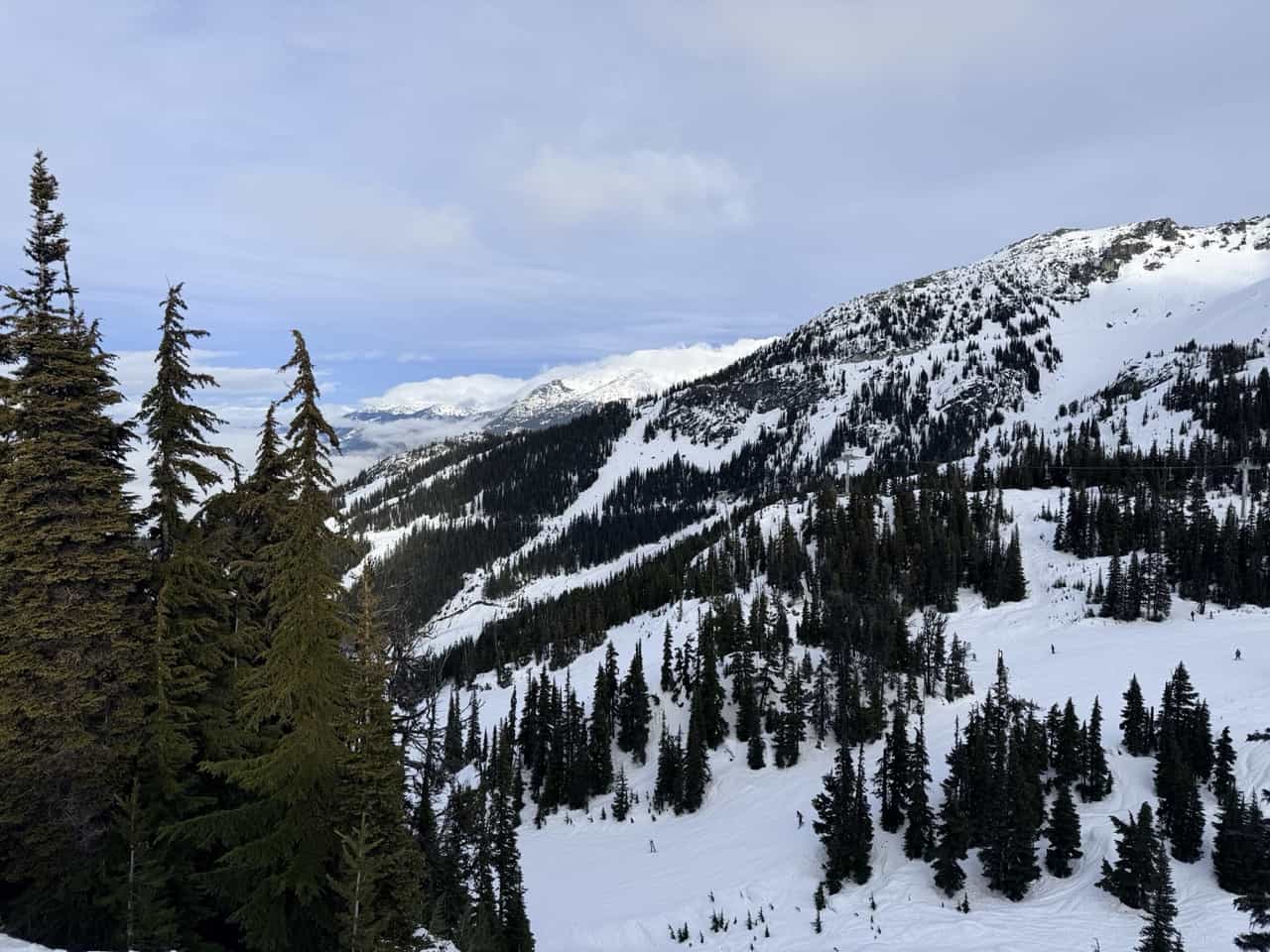
Whistler showcases how massive resort infrastructure can be leveraged for backcountry efficiency. For those looking to access Garibaldi Provincial Park, the resort offers a highly functional alternative to the standard day pass. Their CAD 45 single-ascent backcountry ticket operates strictly as a transit utility. It allows alpine tourers and splitboarders to bypass thousands of feet of lower-mountain bushwhacking, instantly dropping them at the high alpine gates.
- Regular Peak Day Lift Pass: CAD 300+ (USD 220+)
- Alpine Touring / Backcountry Access Pass: CAD 45 (USD 33)
Mount Baker, Washington

Baker sits entirely within the Mt. Baker-Snoqualmie National Forest, meaning the resort footprint is legally hemmed in by federal wilderness. Because of this boundary layout, human-powered access isn’t regulated or monetized by a corporate uphill policy. The resort simply steps aside, letting skiers transition access unregulated wilderness directly from the parking lot.
- Regular Peak Day Lift Pass: USD 98
- Alpine Touring Pass: Free (Regulated strictly by US Forest Service wilderness parking and access rules)
Jackson Hole, Wyoming

Jackson Hole pairs high-capacity lifts with a famous open-gate policy leading directly into Grand Teton National Park. By utilizing the resort’s lift infrastructure, uphill skiers and riders skip the valley floors, instantly placing themselves at the base of high-consequence alpine faces.
- Regular Peak Day Lift Pass: USD 225+
- Backcountry Access: Open-boundary gates (Requires valid day ticket or season pass to ride lifts; backcountry travel itself is free)
Europe: Infrastructure Meets Tradition
In the Alps, uphill touring is a foundational part of mountain culture. European infrastructure treats the high country as a public commons, meaning their access models look entirely different from the strictly managed corporate boundaries of North America.
Chamonix, France

Chamonix is the blueprint for using mechanical lifts as a public mountain utility. Here, a single-ascent ticket brings mountaineers onto high glaciers. Once off the lift, resort rules disappear, and skiers transition immediately into traditional, self-guided alpine travel.
- Regular Peak Day Lift Pass: €81 (USD 94)
- Single-Ascent Glacier Access Ticket: €42 (USD 49)
Zermatt, Switzerland

The Swiss approach actively encourages human-powered travel directly alongside its massive lift network. Uphill touring on designated, marked resort tracks is entirely free and the infrastructure is designed to connect seamlessly with historic high-alpine mountain huts.
- Regular Peak Day Lift Pass: CHF 95 (USD 121)
- Alpine Touring Pass: Free (On designated uphill routes; lift-assists are extra)
Verbier, Switzerland

Anchoring the 4 Vallées network, Verbier offers an uphill pass for a nominal fee to unlock its interconnected valleys. This single ticket grants access to a vast grid of marked touring tracks, allowing riders to travel freely across the massive network. .
- Regular Peak Day Lift Pass: CHF 87 (USD 110)
- Mandatory Regional Uphill Pass: CHF 12 (USD 15)
Essential Uphill Gear
Human-powered touring requires gear that manages different elements and energy levels on a single mission. Think: lightweight on the climb, waterproof on the track, and warm for the descent.
-
- Bindings and Hardware: Skiers should look for low-weight tech pin bindings. Snowboarders need a reliable, responsive splitboard system paired with a split-specific boot to provide solid edge-hold and ankle support when traversing steep slopes.
- Mixed-Fiber Skins: A mohair-nylon blend delivers the ideal balance of uphill grip on icy Eastern tracks and smooth forward glide through deep Western powder.
- Temperature Regulation: Layer with a breathable Merino wool base, wear a lightweight softshell jacket for active climbing, and keep a packable, windproof hardshell dry in your pack for the cold descent.
- The Avalanche Safety Essentials: A modern digital transceiver, a collapsible metal shovel, and a rigid snow probe. Never step past a backcountry gate without all three.
Uphill Etiquette
As crowds grow, the longevity of our uphill access depends entirely on mutual respect. It isn’t about arbitrary politeness, but a framework designed to keep paths efficient, safe, and open to the public:
- Yield to Downhill Traffic on Resort Runs: When skinning inside resort boundaries, downhill traffic moves fast. Clear the track immediately if a descending skier or rider is heading down toward you.
- Preserve the Skin Track: Keep your boots, snowshoes, and dogs completely out of the established skin track. Boot-packing directly in the track creates icy post-holes that compromise skin traction for those behind you.
- Step Off to Transition: Blockages cause traffic jams and safety hazards. Step completely off the trail to hydrate, adjust your layers, or transition your gear.
- Pack Out All Trash: This includes organic waste like apple cores and banana peels. Cold alpine environments take years to decompose organic matter.
- Never Drop in Blind: Always look down-valley before entering a chute or bowl. Ensure you aren’t dropping loose snow, sluff, or a pocket avalanche onto a group climbing up below you.
- Share the Hut Space: In high-alpine huts, space is a shared premium. Keep your gear tightly packed, dry your clothes respectfully, and strictly respect quiet hours.
Additional Resources for the Dedicated Alpinist
The mountains highlighted here are a sample of coordinated global shift toward human-powered mountain access. Resort policies, lane designations, and ticket structures evolve with every winter season. Navigating the expanding uphill map requires live, verified data. Dedicated national registries and crowdsourced databases centralize uphill logistics and provide the most up-to-date information.
- The American Registry: The USA Ski Mountaineering Association, maintains a comprehensive USA Skimo Resort Uphill Policy Database. It provides standardized tracking of open/closed status, fee structures, and route links across the United States.
- The Canadian Registry: The Skimo Canada Uphill Registry aggregates the shifting wilderness boundaries, pass requirements, and route maps for resorts across British Columbia, Alberta, and Quebec.
- The Collective Passes: For skiers and riders in the northeast, the Uphill New England Pass functions as a centralized season pass. It handles liability waivers and grants uphill access to 24 distinct northeastern mountains – including Saddleback, Bolton Valley, Bromley, Jay Peak, and Waterville Valley – under a single framework.
This growing interest in alpine touring represents a shift in how riders value their time on the snow. Stepping away from resort queues and choosing the skin track connects directly back to the core of the sport. Whether the goal is balancing a budget, pushing physical limits, or supporting environmental advocacy, human-powered travel offers an experience that mechanical lifts simply cannot replicate. The investment requires maximum physical effort and mental focus, but the return is complete freedom.