[analyse_image type=”featured” src=”https://images.euronews.com/articles/stories/09/77/76/47/1200x675_cmsv2_6259d5c1-a62e-5a3b-925f-05c680594eda-9777647.jpg”]
France testing AI battlefield system in NATO excercise
Pompeii excavations reveal equid skeleton

One killed and five injured in shooting attack in central Israel

Cannes winner Jafar Panahi now faces prison and travel ban from Iran
France testing AI battlefield system in NATO excercise
Pompeii excavations reveal equid skeleton
One killed and five injured in shooting attack in central Israel
Cannes winner Jafar Panahi now faces prison and travel ban from Iran
Washington could tap into Iran’s frozen billions to pay for Gulf attack damage
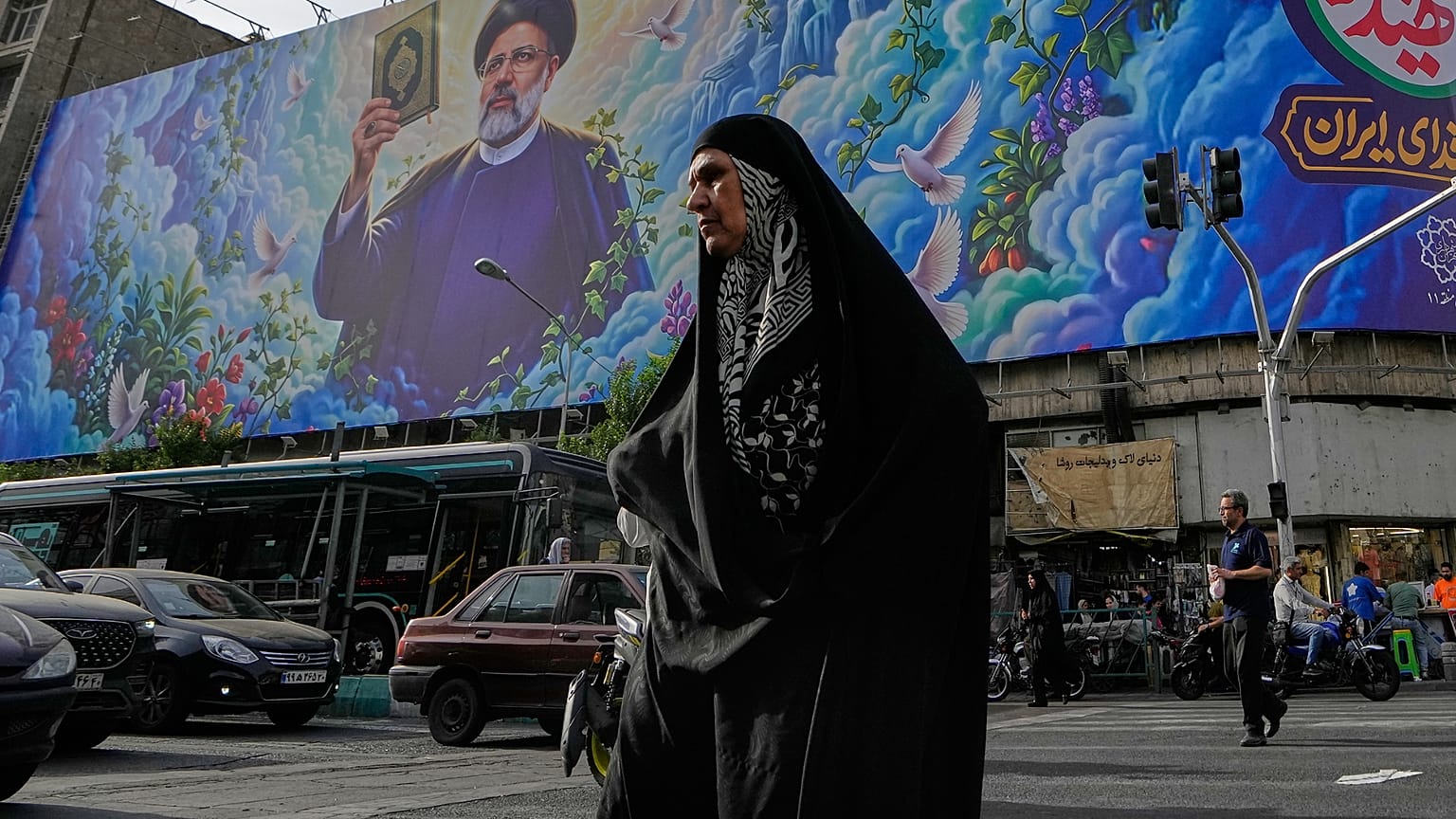
A woman crosses a junction past a billboard showing the late Iranian president Ebrahim Raisi, killed in a 2024 helicopter crash, in central Tehran, Iran, Thursday 28 May.
– Copyright AP Photo

 Facebook
 Twitter
 Flipboard
 Send
Send Reddit
 Linkedin
 Messenger
 Telegram
 VK
VK Bluesky
 Threads
 Whatsapp
The Iranian assets Washington is considering reallocating could include frozen funds, along with ships previously seized by the United States.
The United States is considering reallocating Iranian assets to support its allies in the Gulf region with reconstruction efforts and compensation for damage resulting from Iranian attacks, according to a Reuters report.
 ADVERTISEMENTADVERTISEMENT
US Treasury Secretary Scott Bessent has reportedly tasked a specialised team with drawing up a comprehensive assessment of the cost of the damage sustained by Washington’s Gulf allies since the escalation began, as well as exploring options for using Iranian assets to cover those losses and any potential future damage.
The Fox Business network quoted another source as saying that Bessent had asked Treasury officials to draw up comprehensive estimates of the cost of damage linked to attacks that have taken place since the start of the war on Iran on 28 February this year.
The source also said that the US Treasury intends to use all available tools to make these assets accessible to the affected Gulf states, ensuring funding for reconstruction and repair efforts, whether for past damage or potential damage in the future.
The source noted that this step could deal a fresh blow to the fragile truce between the US and Iran.
An informed ABC News source also corroborated reports that the US administration is currently in contact with its Gulf allies and is requesting a precise assessment of the scale of the damage.
According to the network, the Iranian assets Washington is considering using may include frozen funds as well as ships previously seized by the United States.
No official statement has yet been issued confirming that the US Treasury intends to utilise Iranian assets to support its allies in the Gulf.
Since the Islamic Revolution in 1979, Iran has been under strict US sanctions that include frozen assets abroad, an issue that remains one of the main sticking points in the faltering negotiations between Washington and Tehran.
The Iranian Supreme Leader’s military adviser, Mohsen Rezaei, said earlier in an interview with CNN that any potential agreement with the United States remains contingent on the release of Iran’s frozen assets abroad, describing this issue as a test of Washington’s seriousness.
Rezaei added that any positive signal from the US side on this issue could open a new perspective in bilateral relations, stressing: “If Trump wants to reach an agreement with Iran, the sum of 24 billion dollars is a test of trust that the United States must pass; once it does, the path will be opened for it.” He stressed in the same context that “this is our money, not the money of the United States.”
Tehran is demanding the immediate release of 12 billion dollars of frozen funds upon signing an interim agreement with the United States, with a further 12 billion dollars to be released at a later stage.
US officials fear that unfreezing these funds at this stage would deprive Washington of a key point of leverage in the negotiating process with Tehran.
Negotiations between the two sides have stalled, despite ongoing regional and international mediation efforts to revive them. Iran’s semi-official ISNA news agency reported that a Pakistani minister arrived in Tehran on Saturday carrying a special message to the Iranian leadership from Pakistan’s army chief and the prime minister.
The military confrontation erupted on 28 February, following coordinated air strikes by Israel and the United States on Iran that killed the Supreme Leader and several senior commanders.
Iran swiftly responded by targeting Gulf states and announcing that it had struck US bases located there.
Go to accessibility shortcuts
Read more
Toronto: A travel guide to the 2026 World Cup host city
Ebola cases surge over 400 as fears grow over central Africa outbreak
Washington could tap into Iran’s frozen billions to pay for Gulf attack damage

EPP chief warns of EU-China trade war
European leaders to meet Zelenskyy at Downing Street
Pentagon raises counterintelligence alert regarding Israel

Cannes winner Jafar Panahi now faces prison and travel ban from Iran

One killed and five injured in shooting attack in central Israel
Alternatives to air con: Cheap and easy ways to cool your home
D-Day 82nd anniversary honoured in France
Ukraine launches large-scale drone attack as Putin meets Schröder
Ebola cases surge over 400 as fears grow over central Africa outbreak
Off the Record: Politics, protests and dead flamingos dominate EU-Western Balkans summit
[analyse_source url=”https://www.euronews.com/2026/06/07/reports-washington-could-tap-into-irans-frozen-billions-to-pay-for-gulf-attack-damage”]