[analyse_image type=”featured” src=”https://ichef.bbci.co.uk/news/1024/branded_news/48c6/live/483418b0-602b-11f1-a33a-8765d90528ad.jpg”]

 Getty Images
More than 20,000 fish have been killed after a river in the Republic of Ireland was polluted.
Inland Fisheries Ireland (IFI) said the “harmful ecological event”, covering a 15 mile (25km) stretch of the River Glyde in County Louth, was first discovered on Tuesday evening.
In a statement IFI said the source of the pollution has been identified as an agricultural discharge and has been stopped.
It added that a file is now being prepared for potential prosecution.
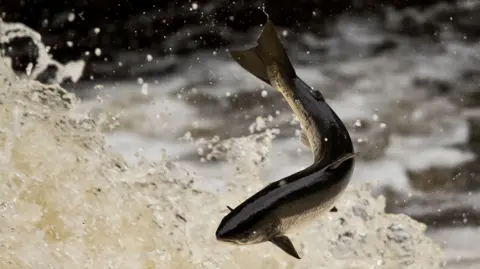
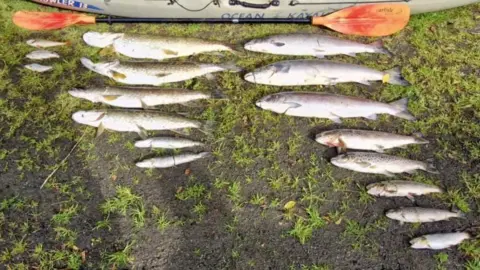
Species of fish discovered dead include Atlantic salmon, eel, brown trout, pike, minnow, and coarse fish species.
The impacted area spans from Aclint Bridge in County Monaghan to Lynns Weir near Castlebellingham in County Louth.
 Inland Fisheries Ireland
IFI said its officers have been conducting sampling and clean-up operations on the river, and deploying kayak, drone and foot patrols to assess the affected area.
Water samples taken at the river have been sent for laboratory analysis.
The agency’s eastern river basin district director Ronan Matson told Irish broadcaster RTÉ the agricultural discharge is believed to have occurred upstream of the village of Tallanstown.
“Right now, you can see a few dead fish around Tallanstown,” he said.
“Where I am it’s kind of washed down a bit but there are other locations where there’s thousands. So the current estimate is in excess of about 20,000 fish.”
Matson said the majority of dead fish are made up of minnow and stickleback, which are both tiny, common, freshwater fish.
“Pollution will wash out relatively quickly, but it can take a few years for the fish to come back,” he said.
Matson added that the pollution appears to have occured away from where “most of the spawning seems to be occurring.”
“So, there should be good regeneration once the source of pollution is stopped, which we’re confident it is,” he said.
[analyse_source url=”https://www.bbc.com/news/articles/cj4p4dyvjkeo”]