Wonderland
POPPY LIU’S A SCENE STEALER
Chinese-American actor Poppy Liu shines as justice trooper Jianhu in Boots Riley’s dark comedy sophomore feature-length, I Love Boosters. Sharing the screen with some of Hollywood’s leading ladies – we’re talking Keke Palmer, Naomi Ackie and Taylour Paige – she makes the surrealist seem simple.
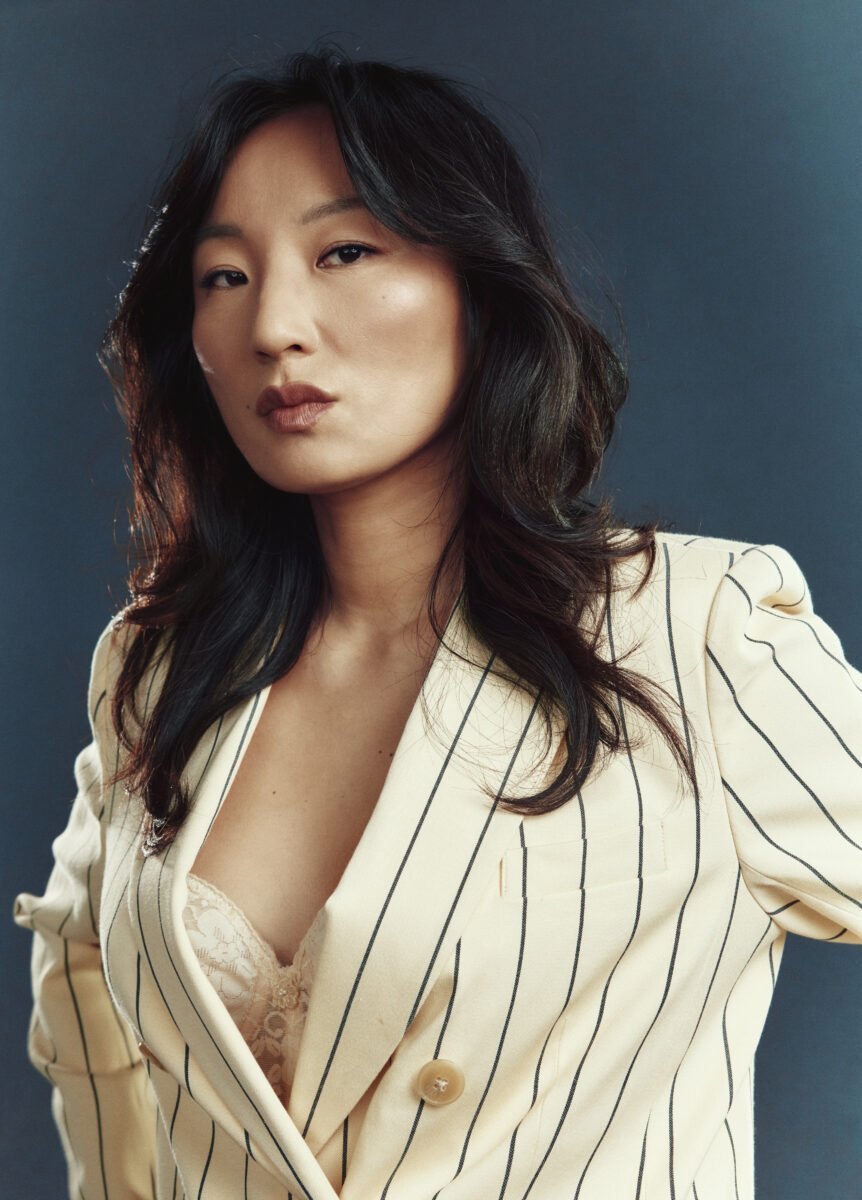
Whether she’s skewering morality through razor-sharp humour and magnetic charm in HBO Max’s Hacks or chiming in on the sinister and aloof with unnerving ease in Prime Video’s Dead Ringers, for the past half-decade, Chinese-American actor Poppy Liu has flourished through a dismissal of the status quo. In an industry still obsessed with confining its talented women into familiar archetypes, she basks in spotlighting their fullness and multiplicity through humour, wit and an infectious charm.
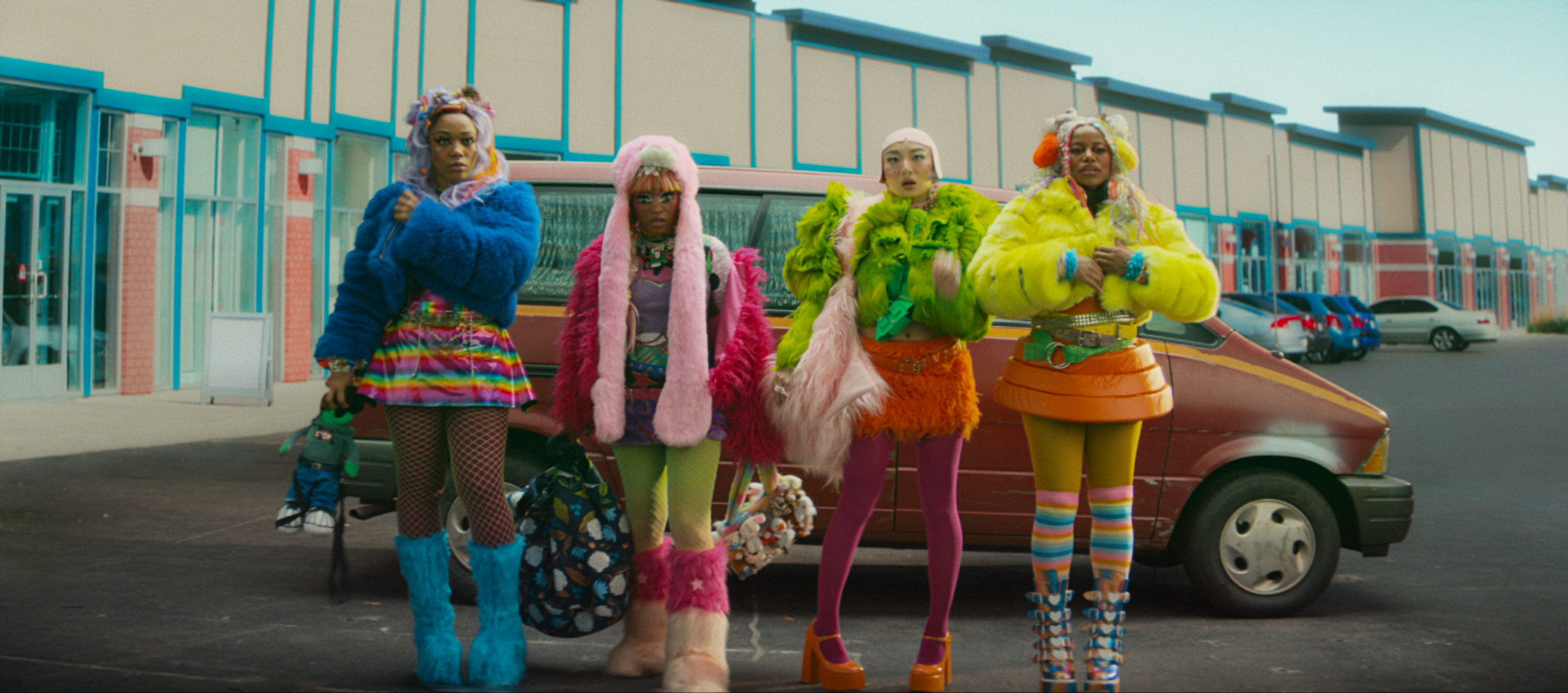
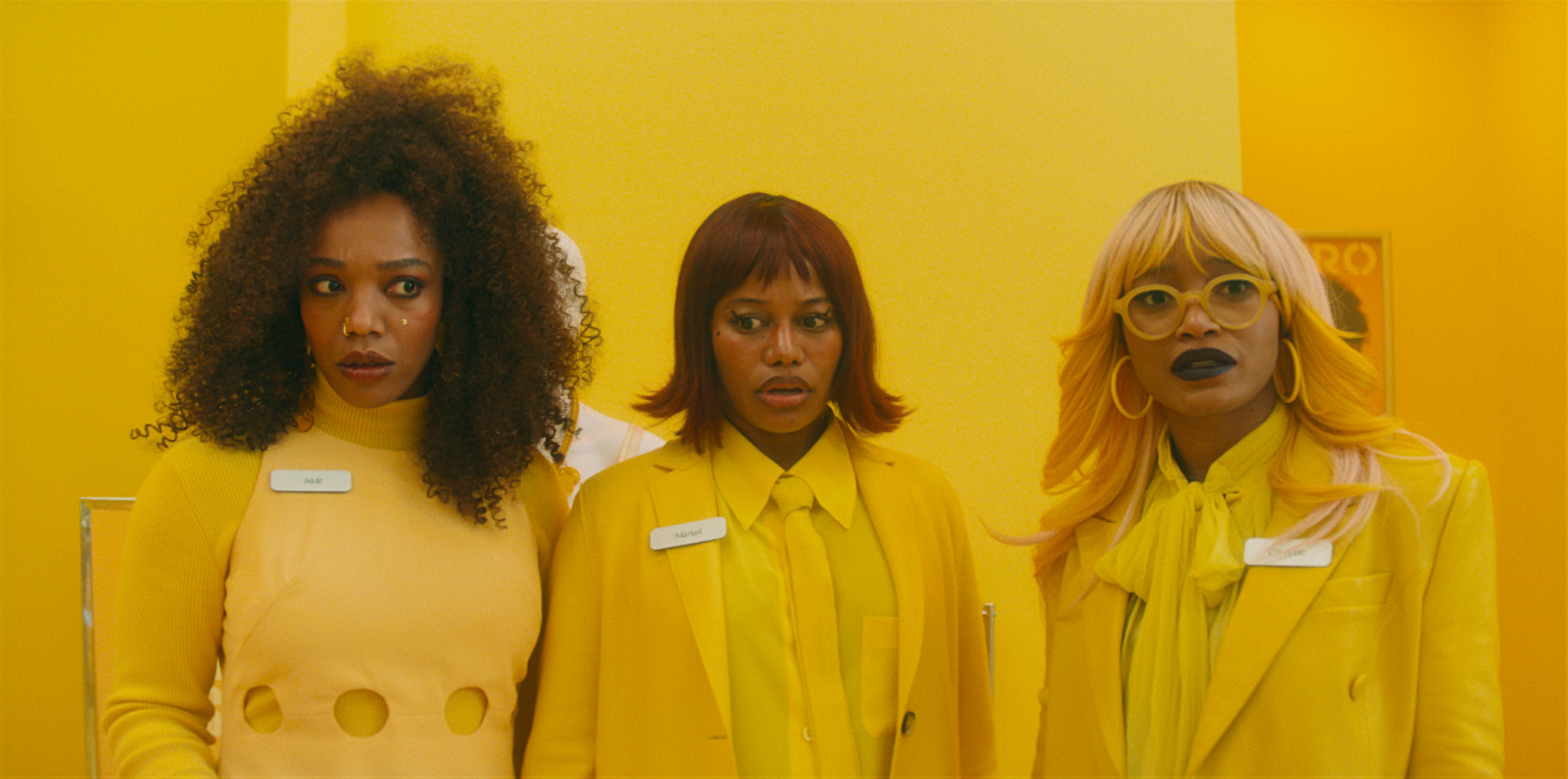
In her latest scene-stealing role in I Love Boosters, the latest polychromatic-spangled fever dream from distinct and daring rising director Boots Riley, out today in the US (22nd May) – Liu is stepping right to the front of this satire-slicked crime comedy. Starring as Jianhu in arguably her most ambitious role yet, a Chinese factory worker whose pursuit of justice gains her fortuitous friendships – rather alliances – with shoplifters aka ‘Boosters’, Corvette (Keke Palmer), Sade (Naomi Ackie) and Mariah (Taylour Paige). The latter three women have a savvy knack for selling high-end clothing at a criminally good discount, but as expected, that could only be too good to be true. The story follows them as they go to extreme lengths to take down the unjust system contrived by designer-villain Christie Smith (Demi Moore). It captures the inequity of fashion’s labour issue that has – and is still being – dissected. On the surface, it borders on petty practice, but at its core, it tackles systemic class issues and capitalist qualms. So, no wonder Liu was so invested in the storyline from her first read.
Liu’s performance as Jianhu falls entirely in step with Riley’s absurdist, colourful world – anti-capitalist, hyper-stylised, politically charged. She will not stop by any means to fulfil her mission, resorting to oddly-stylish costumes and cross-portal cardio, in a way that may not too largely differ from Liu herself. In fact, the similarities are endearingly uncanny – she may just be a less larger-than-life version. Amid a stacked cast of magnetic Hollywood heavyweights, she firmly holds her own; her own personality bleeding into her character without ever feeling performative.
In conversation, it becomes clear that there’s little separation between Liu’s artist and personhood, politics and punchline. She talks about activism with the same emotional fluency and fervour that she describes building her characters. She approaches storytelling, and therefore acting, as an opportunity to interrogate often ludicrous systemic injustices, making her remarks through well-timed witticism and strong visual cuts. In Poppy’s hands, Jianhu becomes more than a vessel for revolution. She simply becomes a mirror to one’s inner clarity: someone who sees exploitation plainly and refuses to look away.
Aside from the glamour, glow and glitz of her very fun, very exciting gig, Poppy is warm, intellectually restless, and genuinely funny – the kind of person who can pivot from labour rights to conspiracy theories in the same breath. Down to her process for developing Jianhu’s Mandarin accent, built around voice notes from her mother rather than recycled cinematic references, her artistic license and process speak to a wider commitment to rightfulness.
In a moment when audiences seem to be growing hungrier for satirical, system-challenging stories, Poppy speaks with Wonderland about I Love Boosters, stealing (the good kind…) and why she’ll never trade passion for conviction – and vice versa.
What drew you to the script for I Love Boosters?
It was one of the best and most exciting scripts I had read all year, and Boots [Riley] has been on my bucket list as a director I have always wanted to work with. At a time when stories are getting rehashed and recycled over and over again, with the same repeated IPs and franchises saturating our media, reading a truly original script like I Love Boosters was a breath of fresh air.
What was it like to work under the cinematic guidance of director Boots Riley?
It is a colourful and whimsical joy ride to step into Boots’ mind. He is someone who understands the game and plays it well. He knows the balance to strike between entertainment and social commentary and how to use art as his political mouthpiece. He is incredibly observant. He knows when someone is putting on airs versus being authentic. I think he has a lot of respect for people who don’t take themselves too seriously yet care about the world very deeply.
The film has already been met with high praise. Could you have anticipated the response it was going to garner?
To be honest, yes. I knew it right after I finished reading the script, even before I was cast. I knew this was special. Sometimes a work of art taps into the cultural zeitgeist in such a visceral way that it becomes undeniable and takes on a life of its own. That’s how I felt about this script.
You’ve used your own platform to advocate for socio-political issues. Where did your heart for activism come from?
It’s hard for me to understand why anyone who considers themselves an artist wouldn’t have a heart for activism. For me, they feel very linked. Both roles ask my heart to exercise the muscle of empathy, to see beyond myself and to imagine and care about someone else’s lived experience, to remain curious and questioning of the human condition, to dare to imagine the world as something different to what it currently is. Indifference is the death of the human spirit. I want to keep my heart open for it all, and even if that means being constantly connected to heartbreak and rage and grief. I will always choose that over indifference.
What makes this film feel particularly timely or important in the current global moment?
We are in late-stage capitalism. The facade of social order is crumbling. Society only works if there is a large enough buy-in, and people are disillusioned, exhausted and opting out. Sadistic criminals in positions of power are using our tax dollars for heinous crimes against humanity while the people they allegedly represent and serve are left without even the most basic human rights. The system that is meant to take care of us has left so many people within our communities to fend for themselves, so people are taking matters into their own hands. The willingness to survive is strong. And when all else fails, you find a way to exist amidst the cracks. This is the landscape in which we meet the ‘velvet gang’.
In this, you play a Chinese factory worker who transports herself to the US to help alleviate the issue at hand. What was it like to honour your heritage in this way?
Jianhu is one of my favourite characters that I have ever gotten to play. Her name is based on a Chinese revolutionary (Jianhu Nuxia) who was executed after a failed uprising against the Qing Dynasty and is heralded as a feminist martyr and national heroine in China. Jianhu, the character, has, comparatively, more humble ambitions than the feminist icon she is named after, but I think they share a similar activist spirit. She cannot tolerate the exploitation and unjust working conditions her people are experiencing, so she takes matters into her own hands to obtain labour rights for them. From the second she appears on screen, her objective is straight and unwavering as an arrow. I love her singular focus and dogged determination. I felt proud that the clarity in her heart allowed her to risk so much of herself for the betterment of her people. I admire her a lot as a character.
What were some of the references you used to nail your character while making her uniquely your own?
I worked really hard on her accent. I wanted to make it authentic without falling into any sort of Chinese accent tropes that have been caricaturized by Hollywood. The most common “Chinese accent” that you hear in Hollywood films is most often a Cantonese accent. But my family speaks Mandarin, and the accent is very different. I actually asked my mum to send me voice notes of her reading some of my lines, so I could base the accent on her. So, if anything, a lot of the references I had for the character came from my mum.
You worked with a stellar female cast for this – what was that experience like working with Keke Palmer, Naomi Ackie, Taylour Paige, and Demi Moore?
We are constantly marvelling at how lucky we got, because this is a really, really good group of people. I admire all of these women for so many reasons, for their talent and their kindness, for the grace with which they move through work and life, for their genuineness and groundedness, for the thoughtful ways in which they see the world. I feel lifted being around them. We are genuinely rooting for one another and cheering each other on.
What was the collaborative process like to build that chemistry?
It kind of just happened. We were all cast without even a chemistry read – I guess, Boots just knew. During one iconic rehearsal (I think the only rehearsal we ever had…) Boots wanted me, Keke, Taylour and Naomi to read through two scenes. I think we read through them once (maximum twice) over the span of a three-hour ‘rehearsal’ during which we talked about everything under the sun, from exes to conspiracy theories, from politics to our personal lives. Boots just watched us, grinning the whole time. At the end, we cracked up about how little rehearsing we had actually done, how we had been yapping and cackling instead of reading the scene, but Boots was like “no, that was the rehearsal” and we were like ohhhh!
So much of this film is about reclaiming power in systems designed to exclude people. Where in your own life do you feel most powerful right now?
I feel most powerful as a mother. Having my child and loving my child and wanting to be the best mother possible for my child has given me so much strength, clarity and alignment with my priorities and values. I have said in the past that motherhood softens you, but it also turns you into a knife. Things that used to plague me – what other people think about me, being scared of conflict, bending over backwards for others even at the expense of myself – have more or less vanished. My energy, my attention is finite. I alone get to decide where it is directed. And when the knife part of me cut off the extraneous baggage of the thoughts and perceptions of others, I suddenly became so much more present for my own life, and so much space was freed up to be filled with love, joy and wonder.
If audiences could understand one thing about these characters beyond the comedy and absurdity of it all, what would that be?
How each of their seemingly individualistic goals are only able to be accomplished through collective action.
Not to encourage stealing by any means, but if you could “boost” an item, what would it be and why?
I would boost all of the stolen artefacts currently sitting in museums and return them all to their country of origin – kind of like Zohran Mamdani just did! (Minus the boosting part.) It would be a pretty big operation, but this question implies I would have the support and resources needed to pull this off, so why not dream big?
Words – Aswan Magumbe